Brahminy Starling
Sturnia pagodarum
黑冠椋鸟
Introduction
A member of the starling family Sturnidae. Native to the Indian subcontinent, occurring as a resident breeder in Nepal and India, a winter visitor to Sri Lanka, and a summer visitor to the western and northeastern Himalayas. Also found in the plains of Pakistan. Typically inhabits dry forest, scrub jungle, and cultivation, often near human settlements with preference for waterlogged or marshy areas. Seen mainly in pairs or small flocks in open habitats on plains, with occasional records above 3,000m in Ladakh. Characterized by musical call notes consisting of long series of slurred notes ending abruptly.
Description
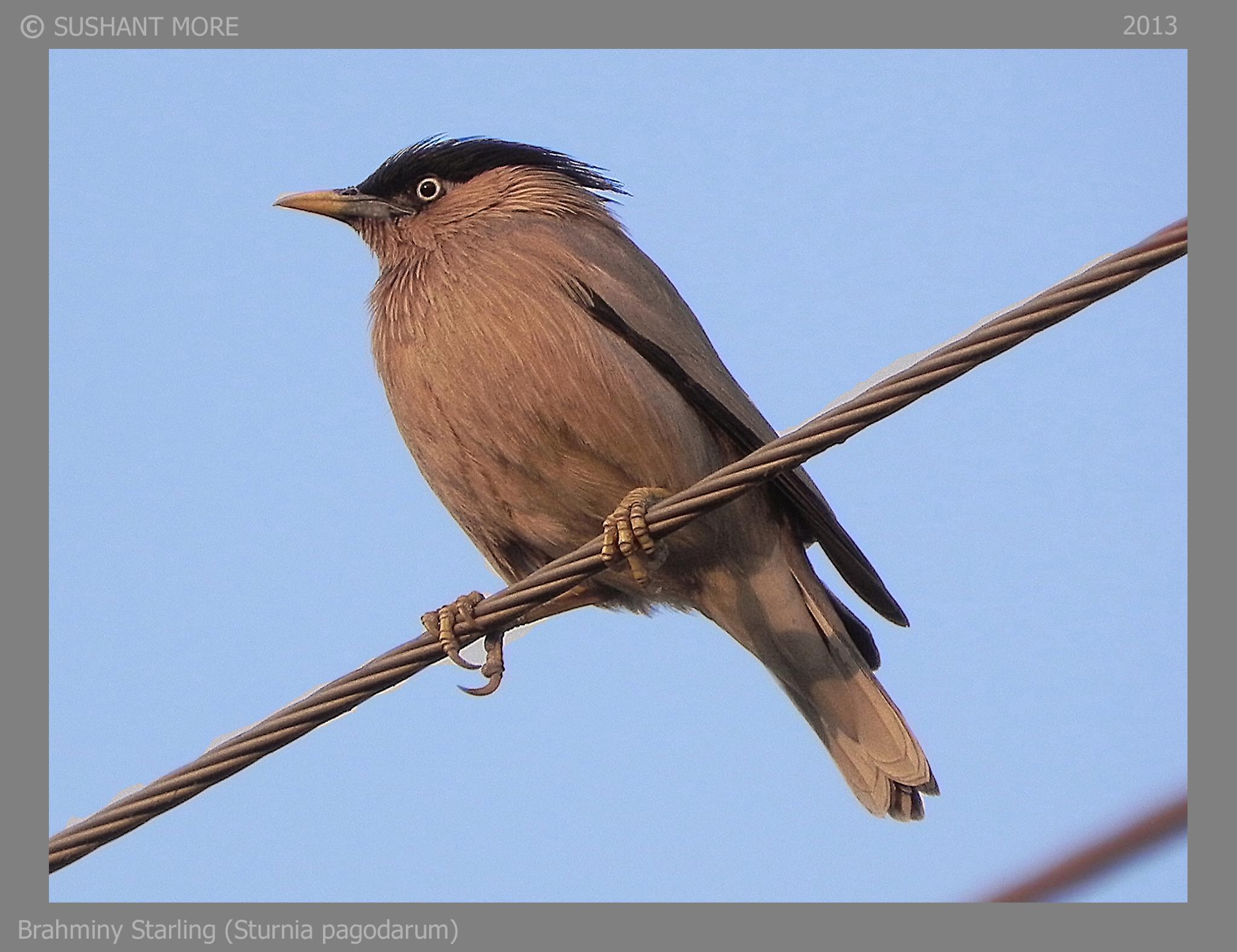
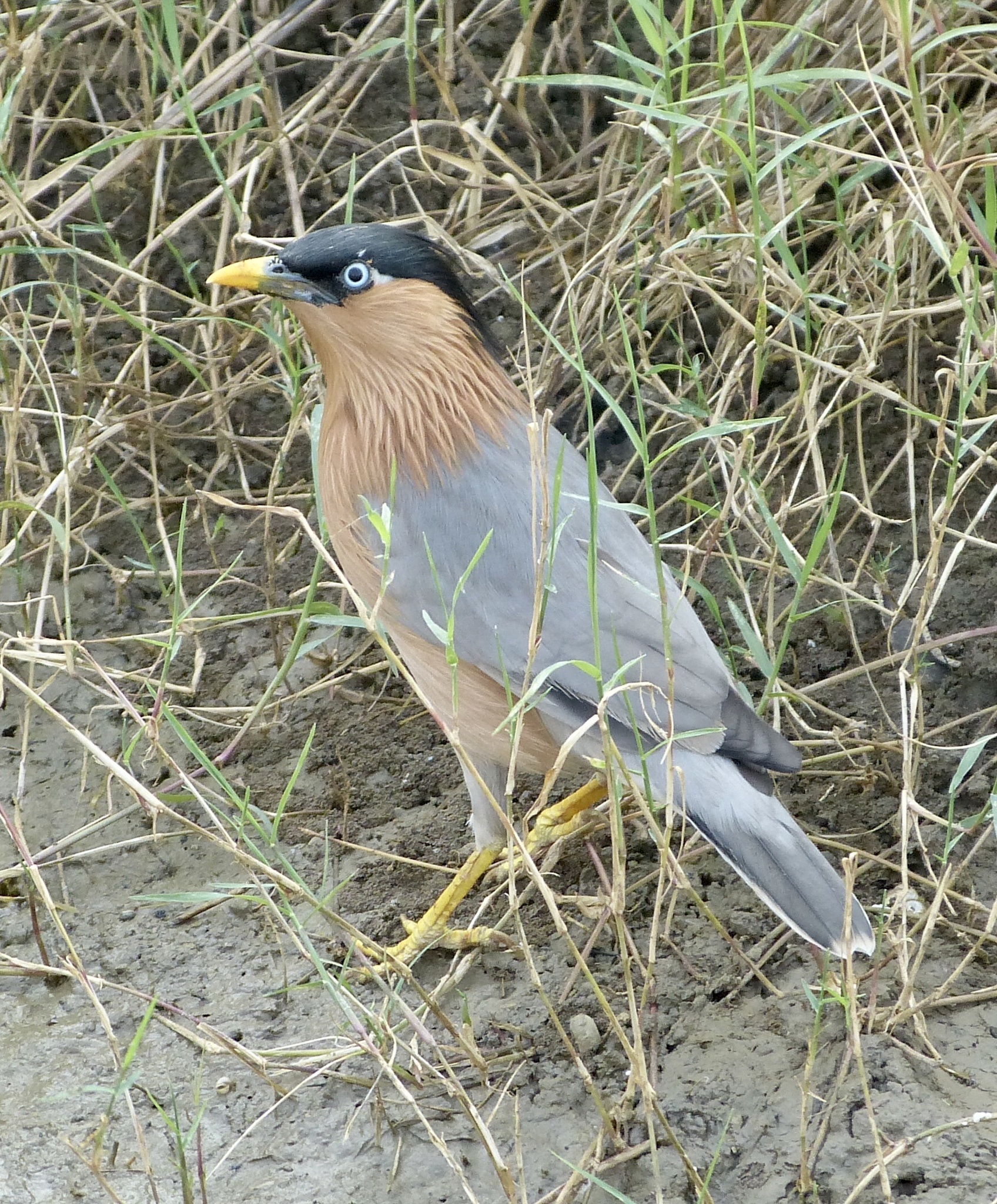
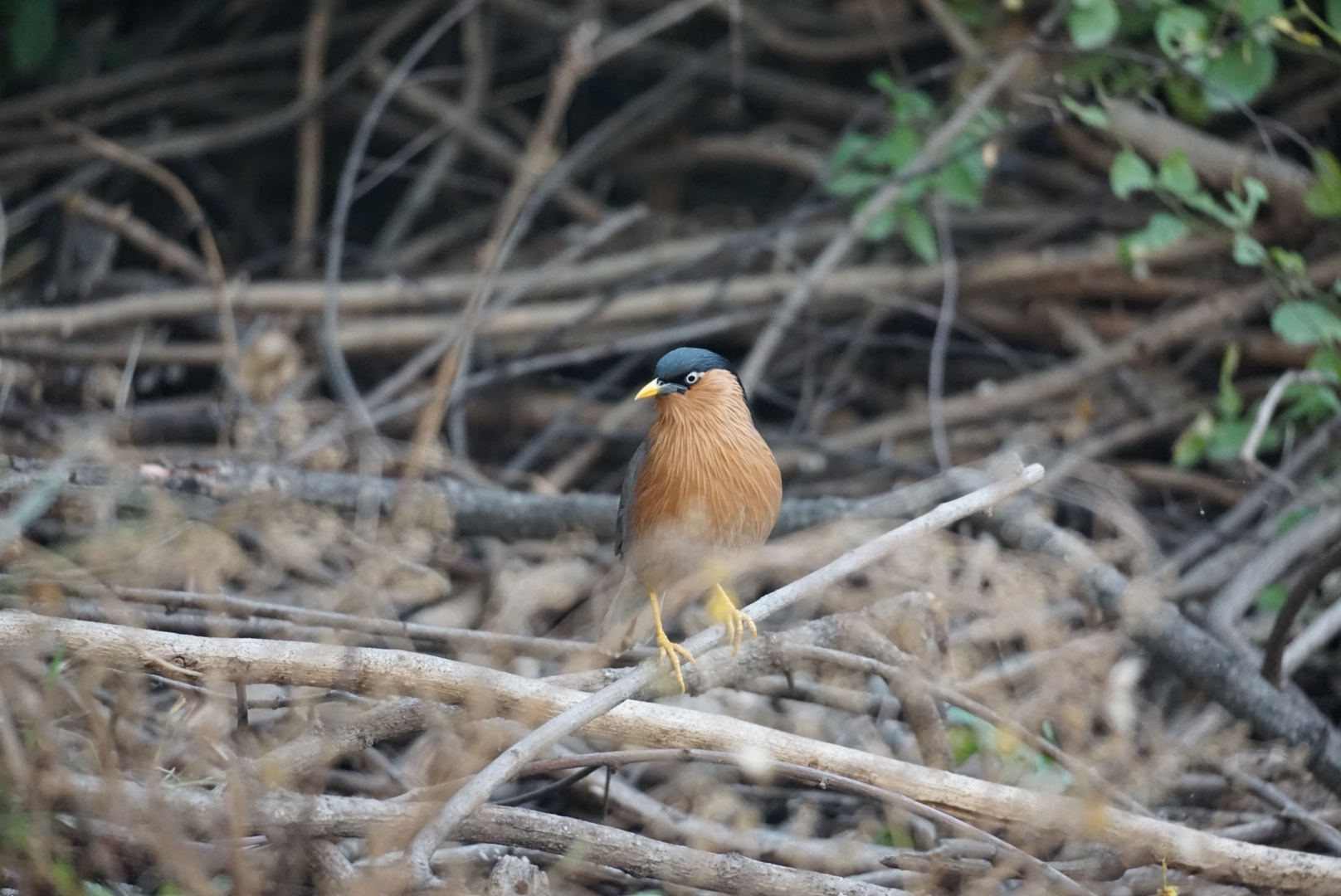
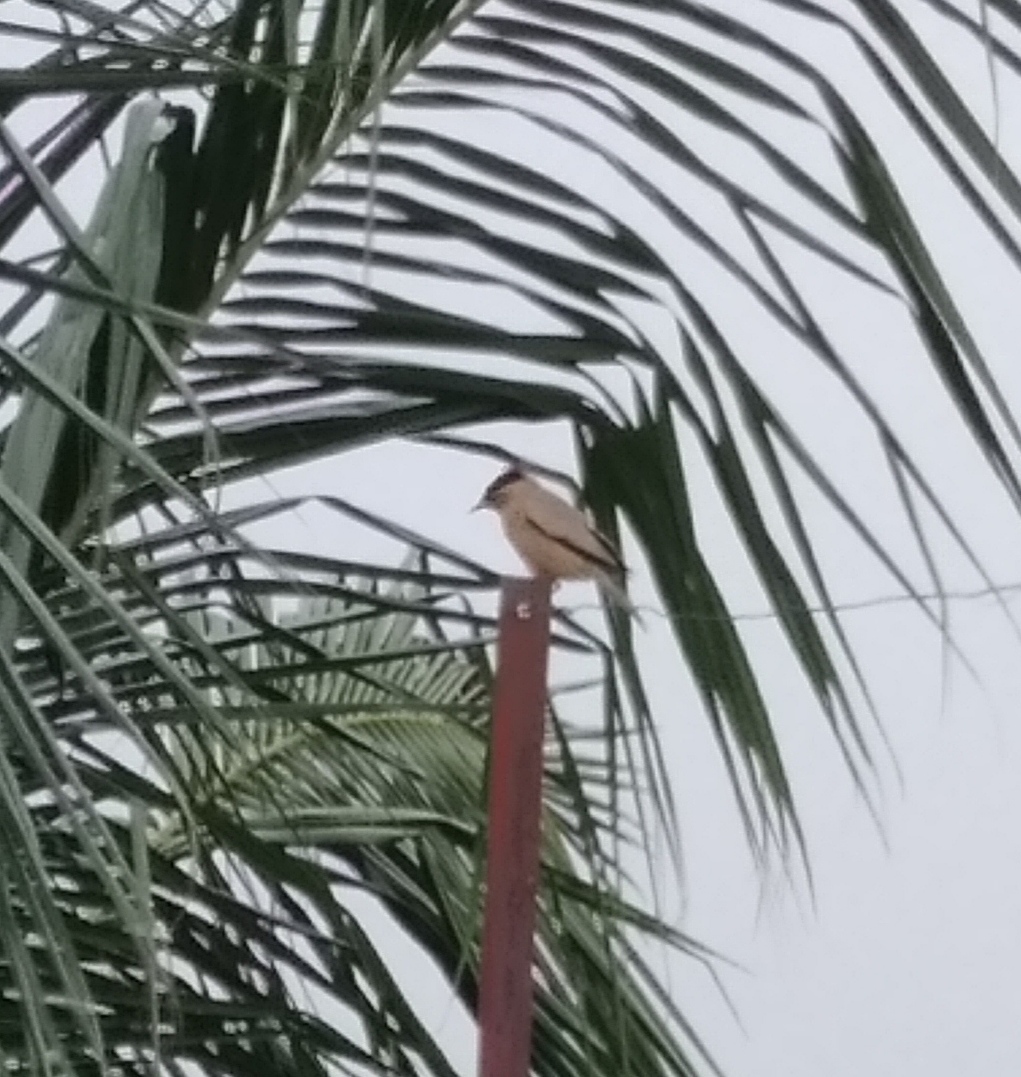
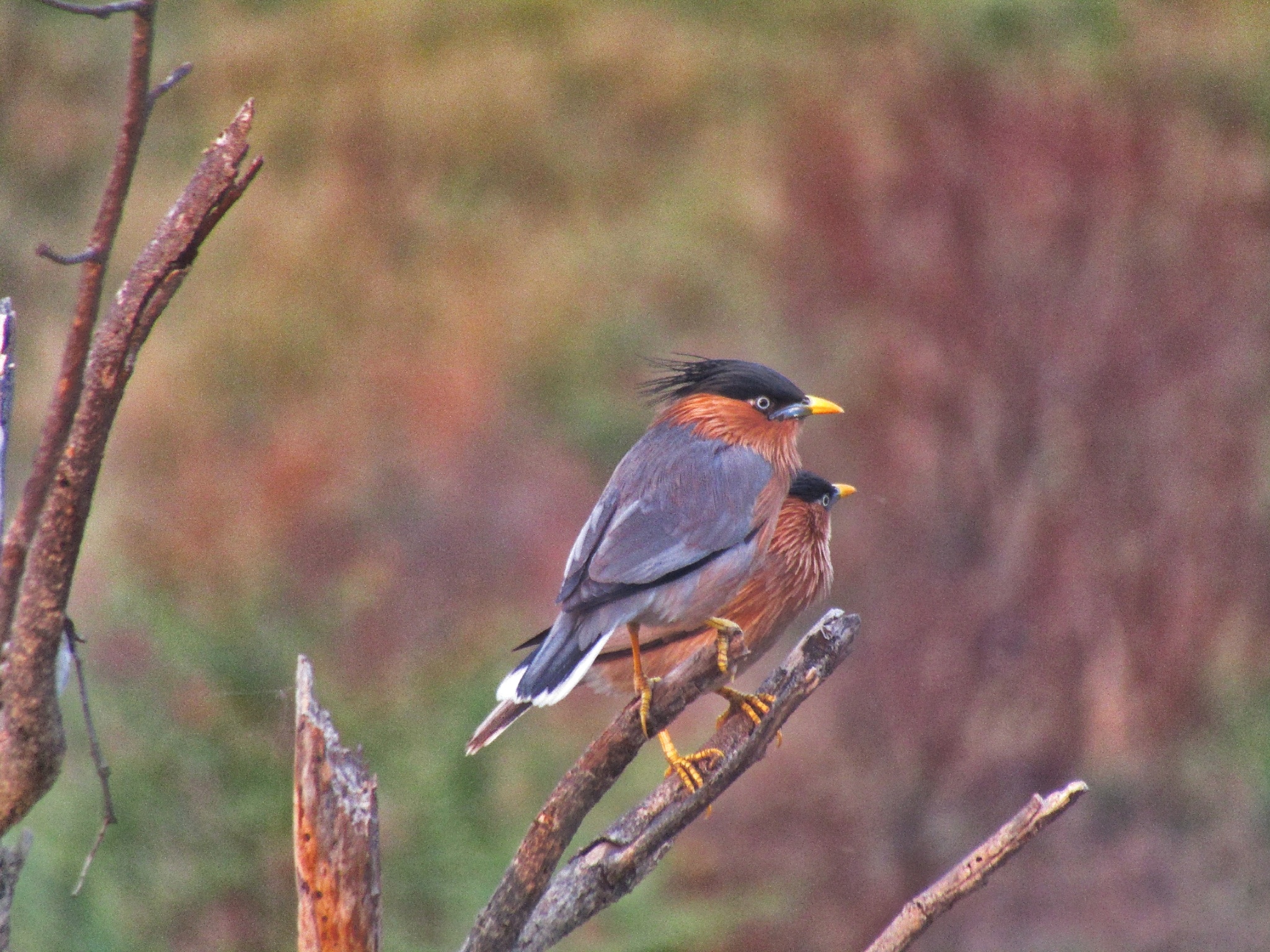
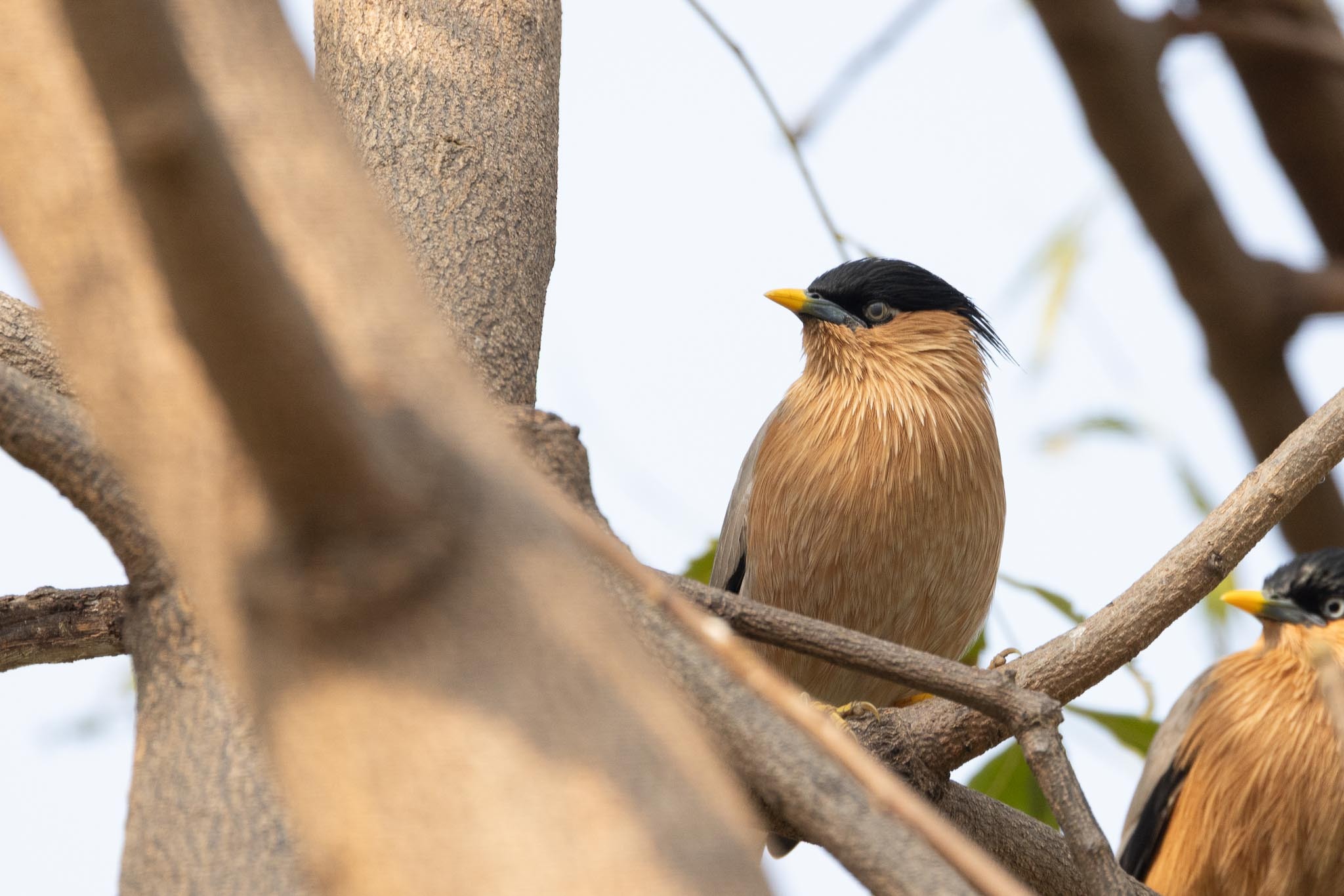
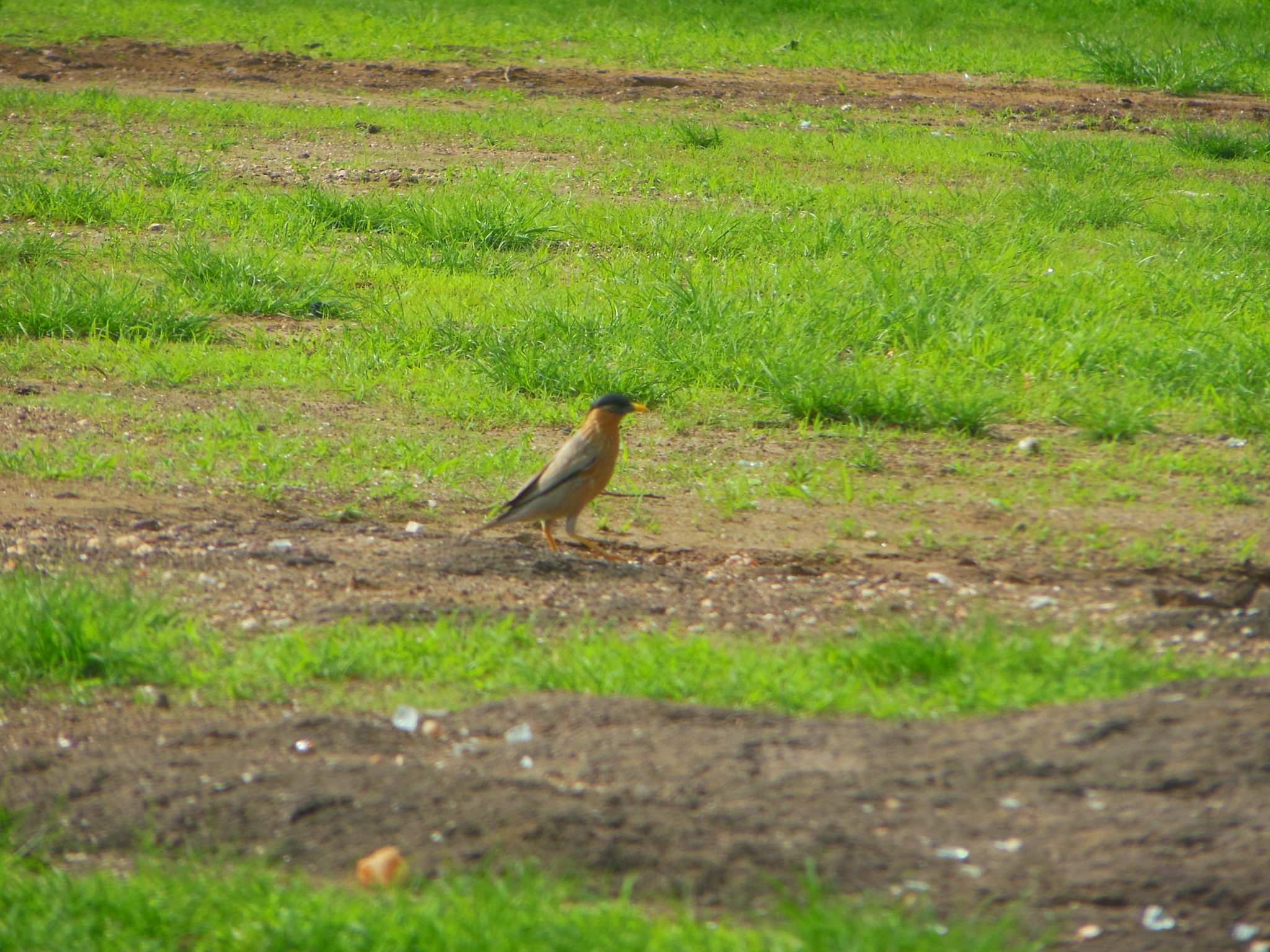
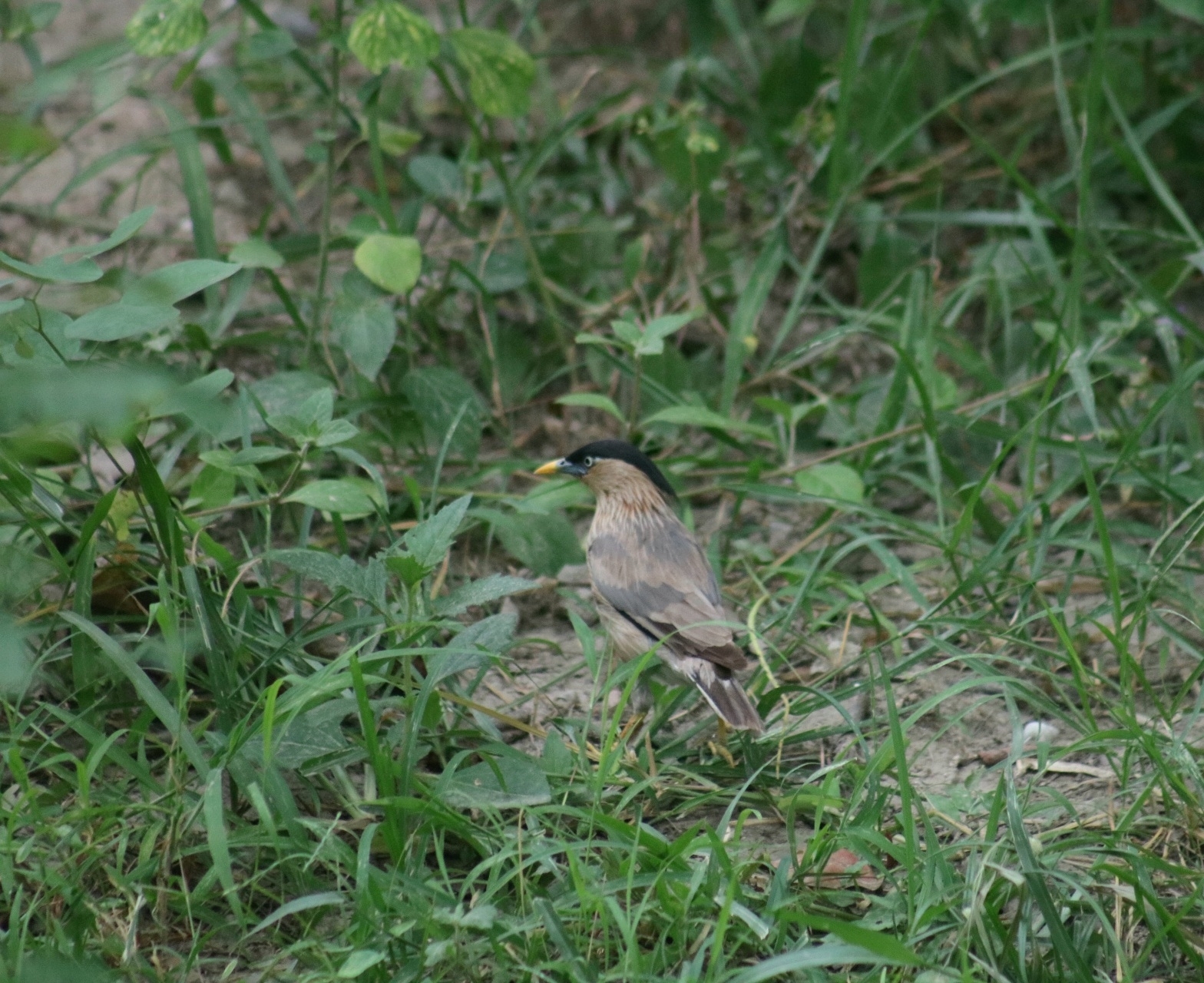
A small passerine with pale buff-creamy plumage and a distinctive black cap with a loose crest. The bill is yellow with a bluish base. The iris is pale, and there is a bluish patch of bare skin around the eye. The outer tail feathers are white, while the black wing primaries lack white patches. The adult male displays a more prominent crest and longer neck hackles compared to the female. Juveniles are duller overall with a browner cap.
Identification
Key distinguishing features include the pale buff-creamy body contrasting with black cap and crest, yellow bill with bluish base, and bluish eye patch. The absence of white on the black wing primaries helps separate it from similar starling species. Males can be identified by their more prominent crest and elongated neck hackles. Juveniles appear duller with a less defined, browner cap compared to adults.
Distribution & Habitat
Resident breeding populations occur throughout Nepal and India. Winter visitor to Sri Lanka, while summer populations inhabit the western and northeastern Himalayas. Also found in the plains of Pakistan. Although predominantly a bird of lowlands, there are records from elevations above 3,000 meters, particularly from Ladakh. Inhabits dry forest, scrub jungle, and cultivation, frequently occurring near human settlements and showing preference for areas with waterlogged or marshy conditions.
Behavior & Ecology
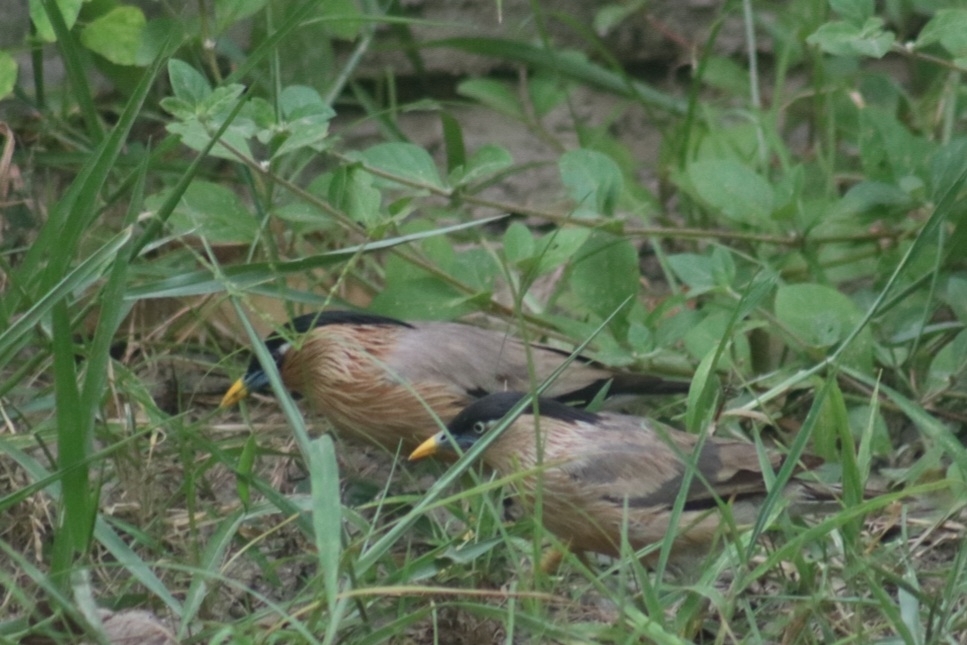
Omnivorous diet comprising fruit and insects, including the toxic fruits of Thevetia peruviana. Less arboreal than grey-headed mynas, foraging in small flocks on grass-covered ground, sometimes alongside grazing cattle. Also visits flowers for nectar from Salmalia, Butea monosperma, and Erythrina trees. Roosts communally in large numbers in leafy trees, often with parakeets and other mynas. Breeding season runs March to September, varying by region. Nests in tree holes or artificial cavities, with both sexes building using grass, feathers, and rags. Clutch size is 3-4 pale bluish-green eggs, incubated for 12-14 days. Young fledge at three weeks and may raise 2-3 broods consecutively. Parents remove fecal pellets dropped approximately 20 meters from the nest.
Conservation
IUCN conservation status and population trends not provided in source material.
Culture
The specific epithet 'pagodarum' (meaning 'of the temples' or 'of the pagodas' in Modern Latin) is thought to reference the bird's occurrence on temple buildings and pagodas in southern India.
Source: Wikipedia · CC BY-SA 3.0
Taxonomy
- Order
- Passeriformes
- Family
- Sturnidae
- Genus
- Sturnia
- eBird Code
- brasta1
Distribution
eastern Afghanistan to Bangladesh, southern Nepal, India, and Sri Lanka
Data Sources
Species description from Wikipedia, licensed under CC BY-SA 3.0.
Bird images and sounds sourced from GBIF, contributed by citizen scientists worldwide under Creative Commons licenses.
Taxonomy data from AviList 2025.