European Turtle Dove
Streptopelia turtur
欧斑鸠
Introduction
A member of the bird family Columbidae (doves and pigeons). It is a threatened or vulnerable species that breeds over a wide area of the southwestern Palearctic including north Africa and migrates to northern sub-Saharan Africa to winter. It is one of the latest migrants, rarely appearing in Northern Europe before the end of April and returning south again in September. The species forms strong pair bonds and is known for its cooing or purring song.
Description
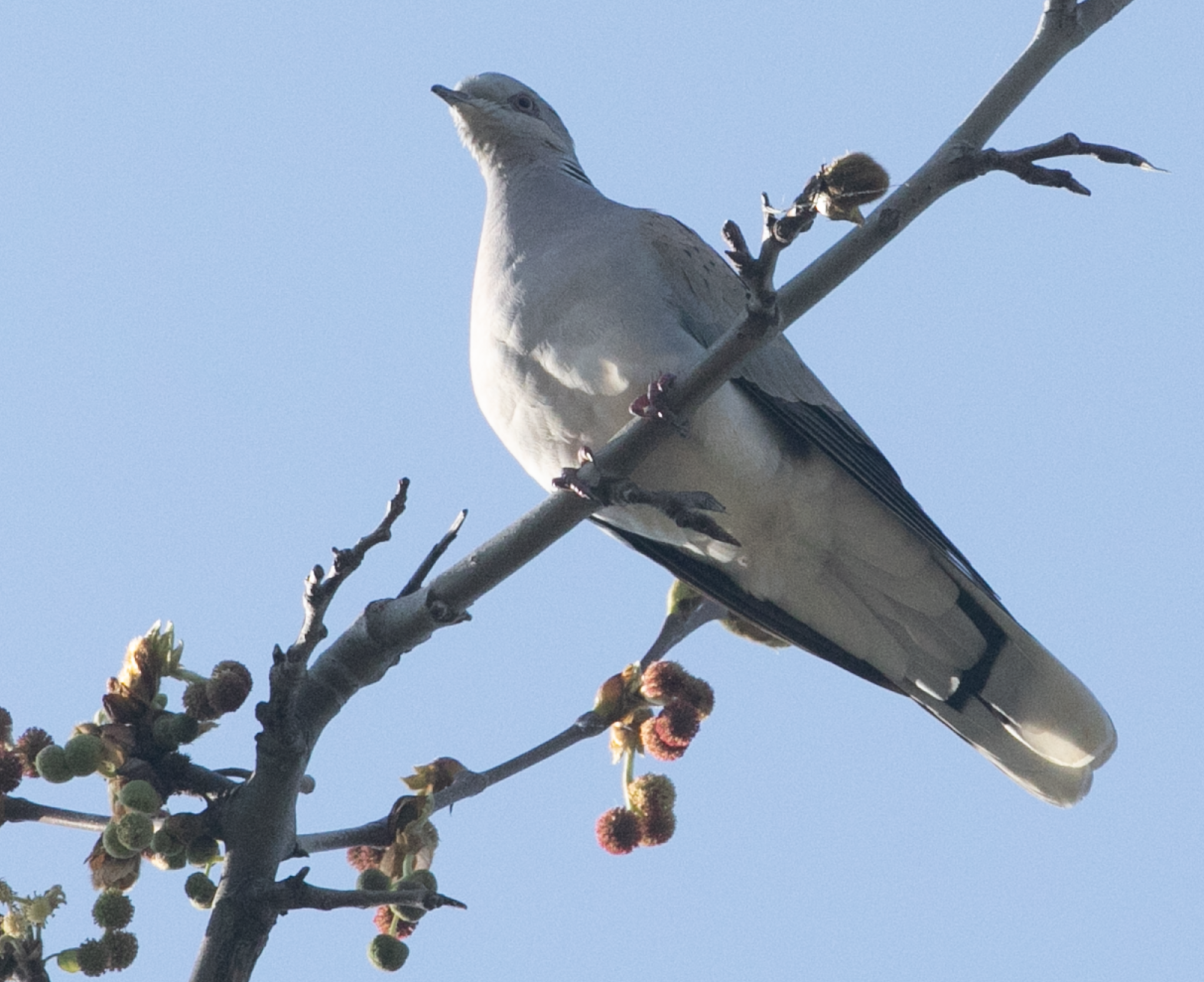
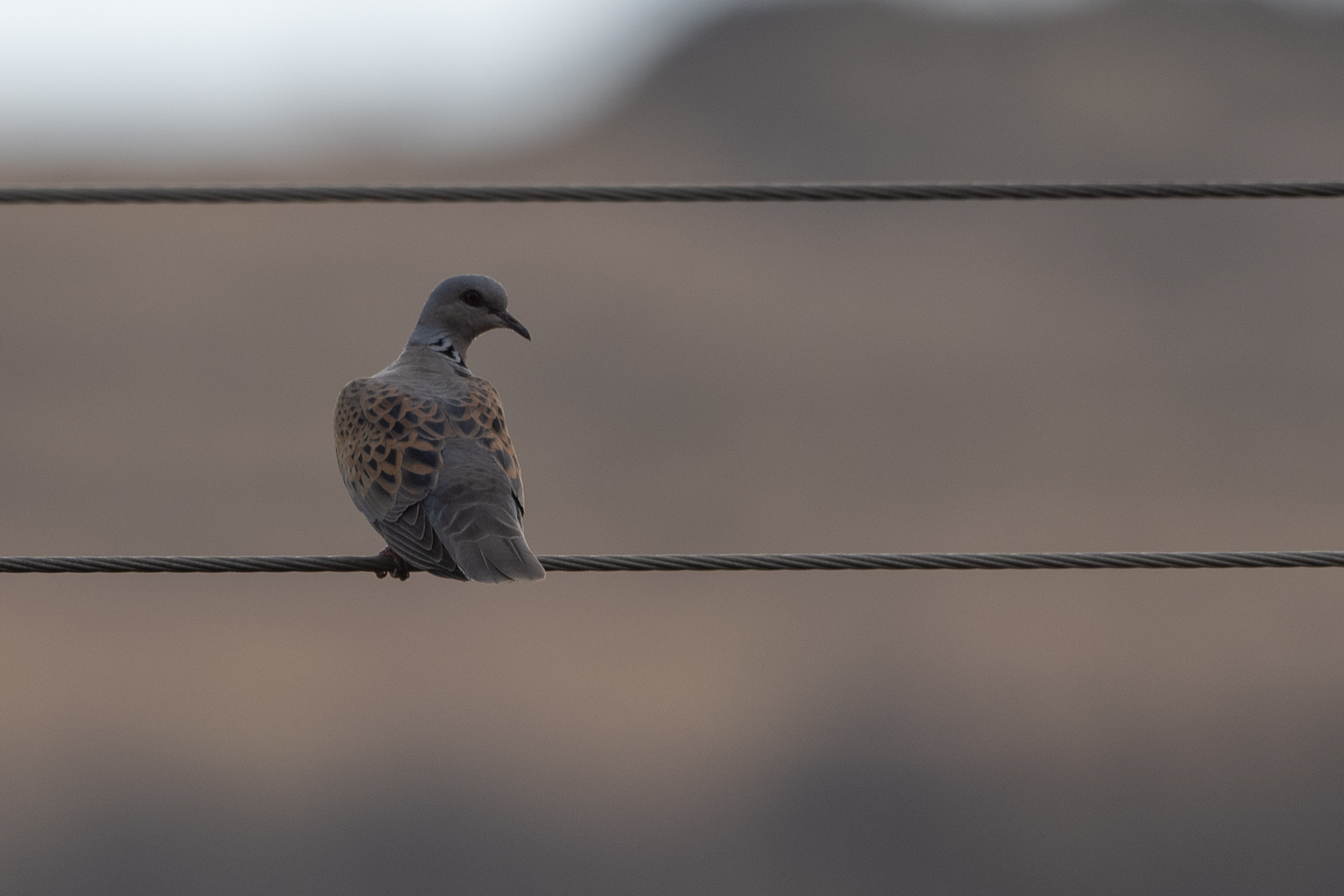
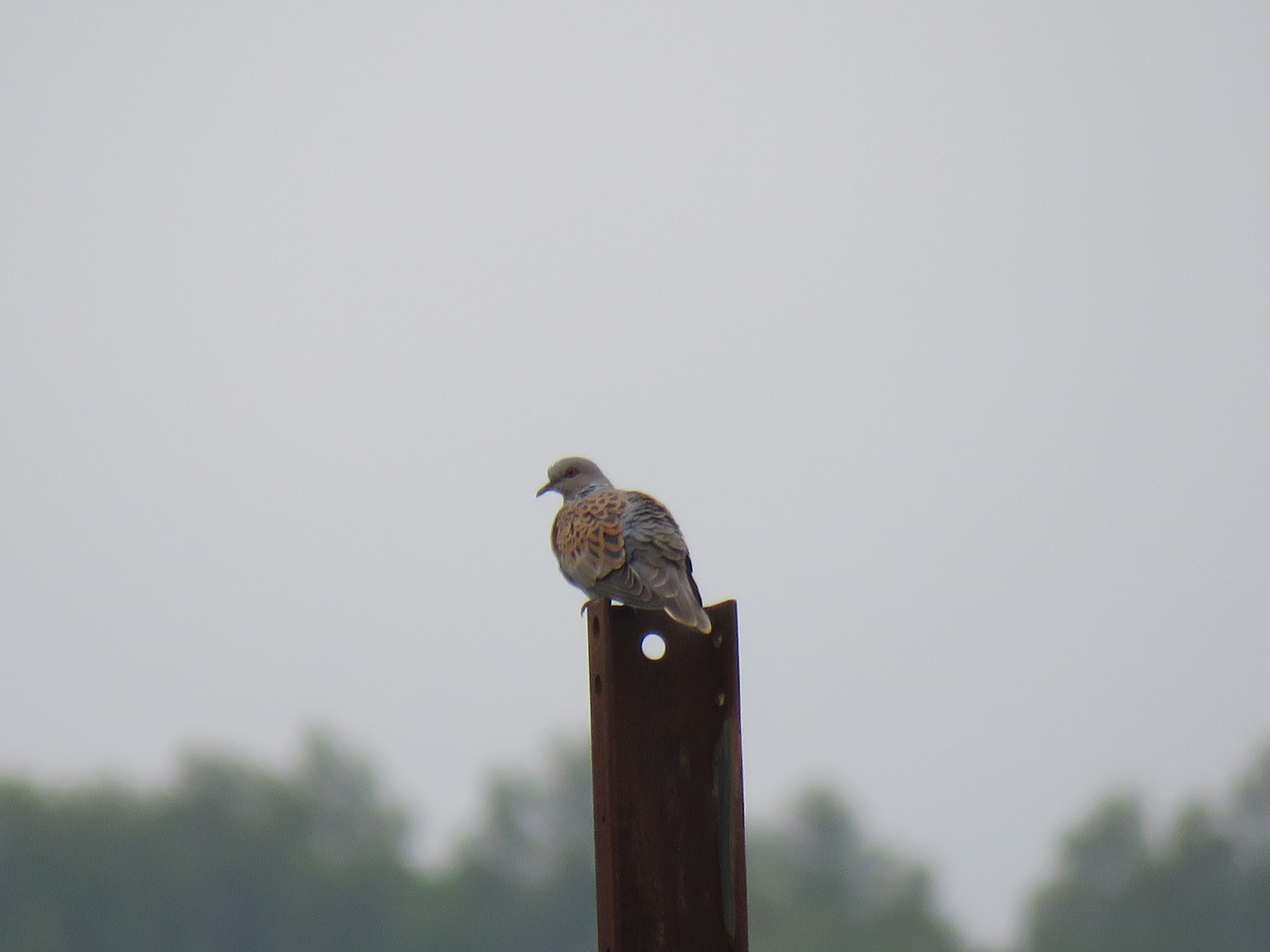
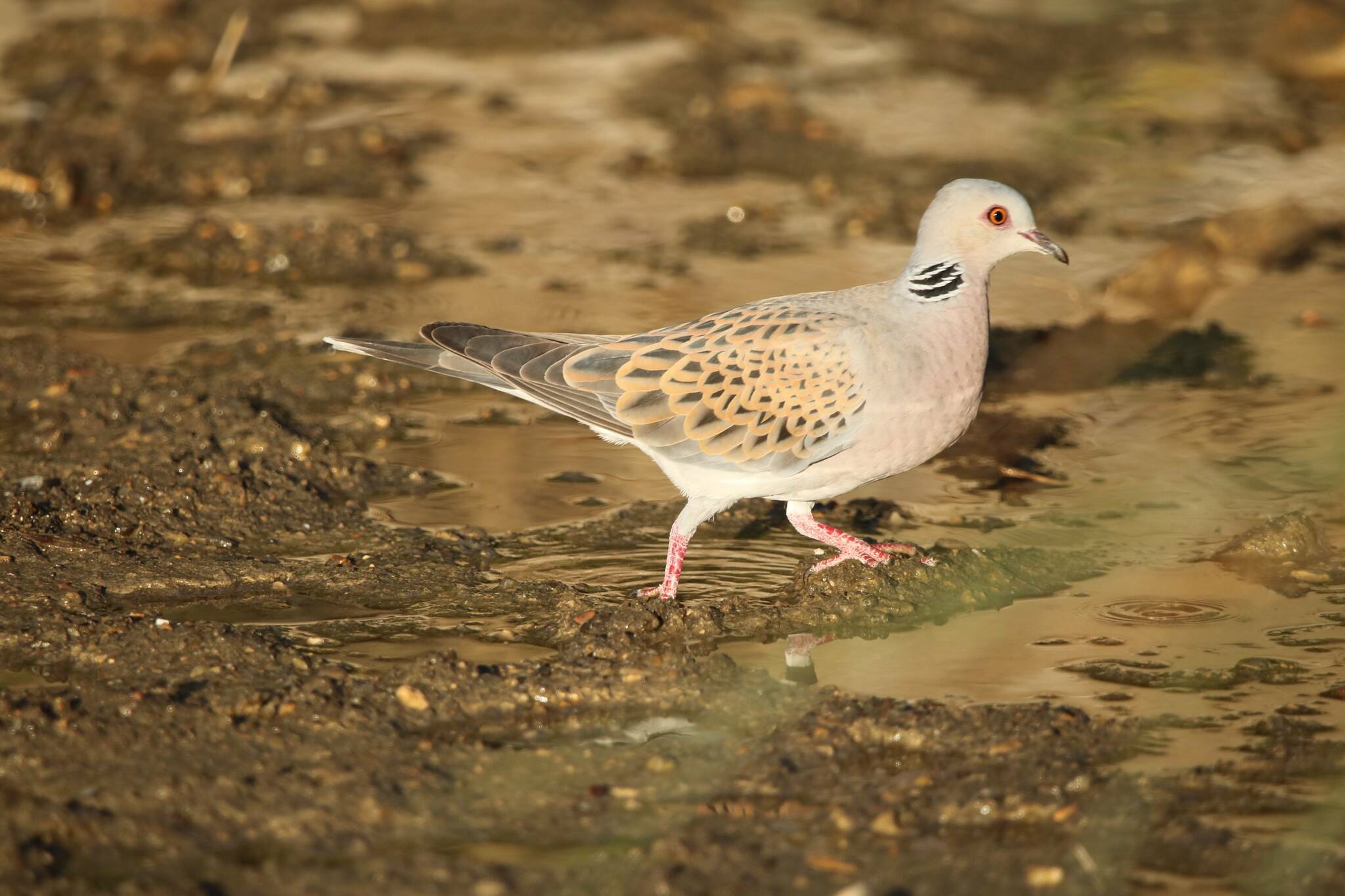
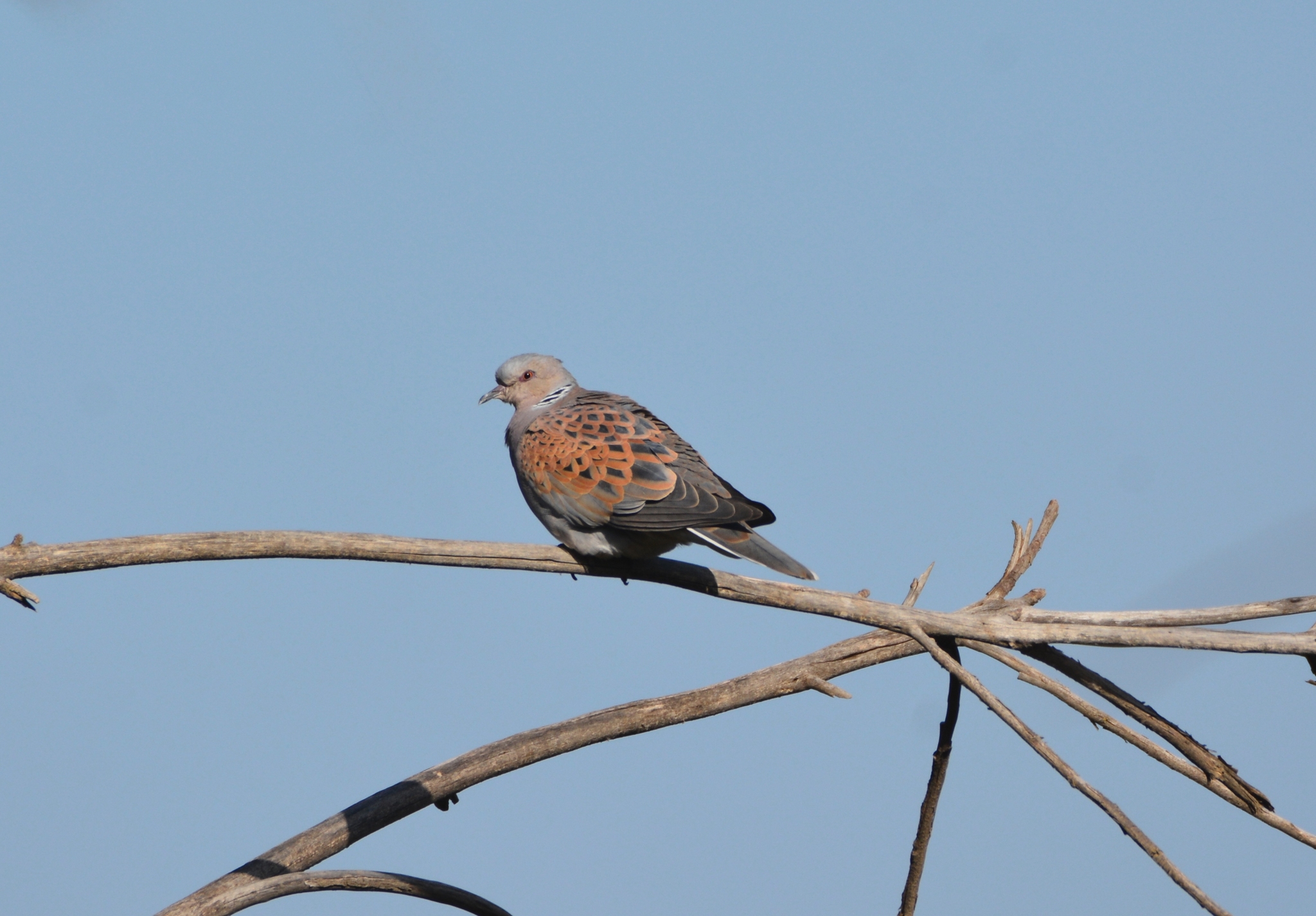
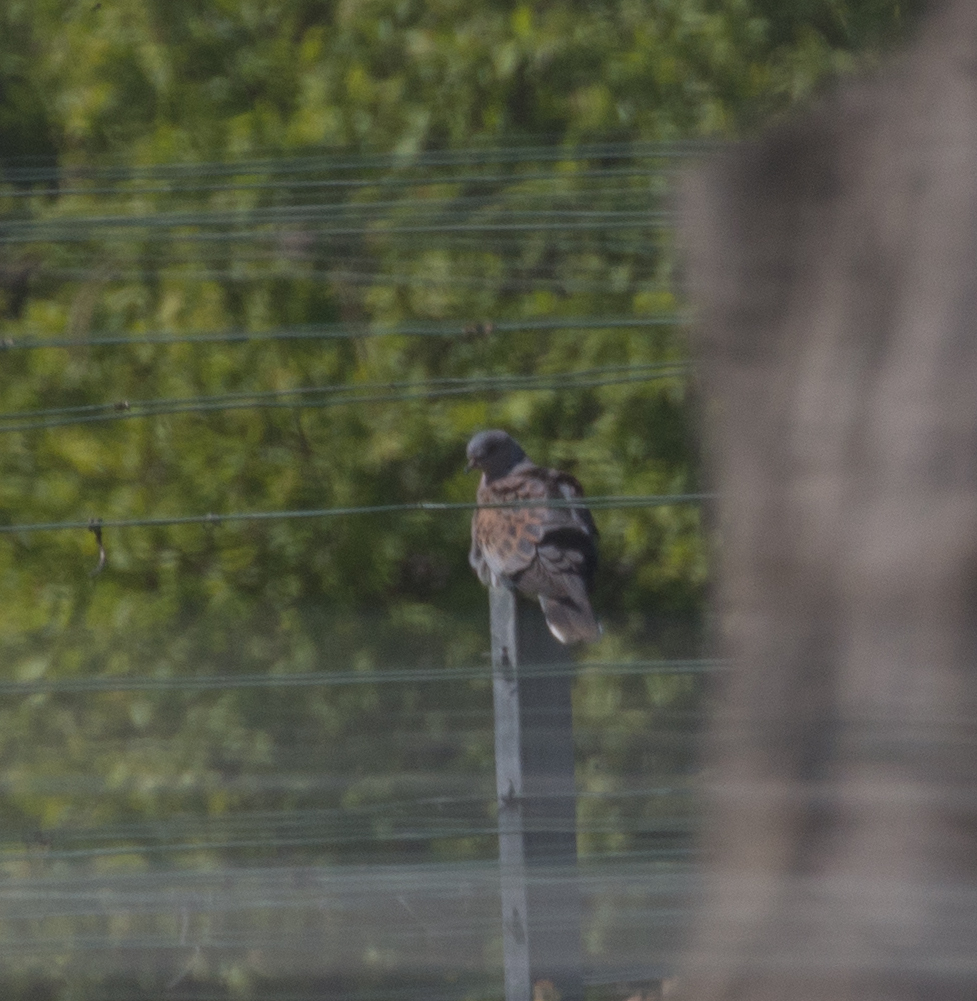
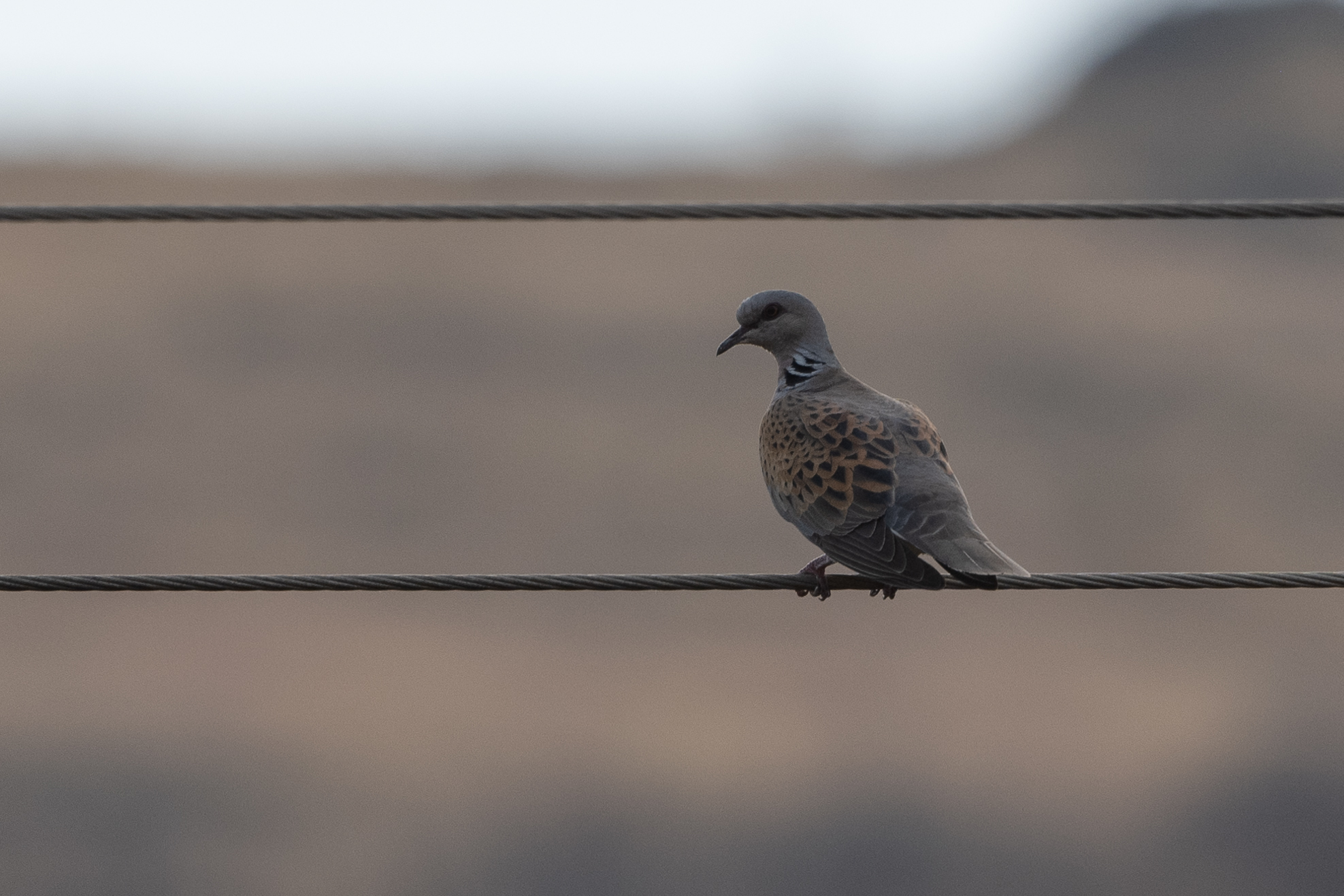
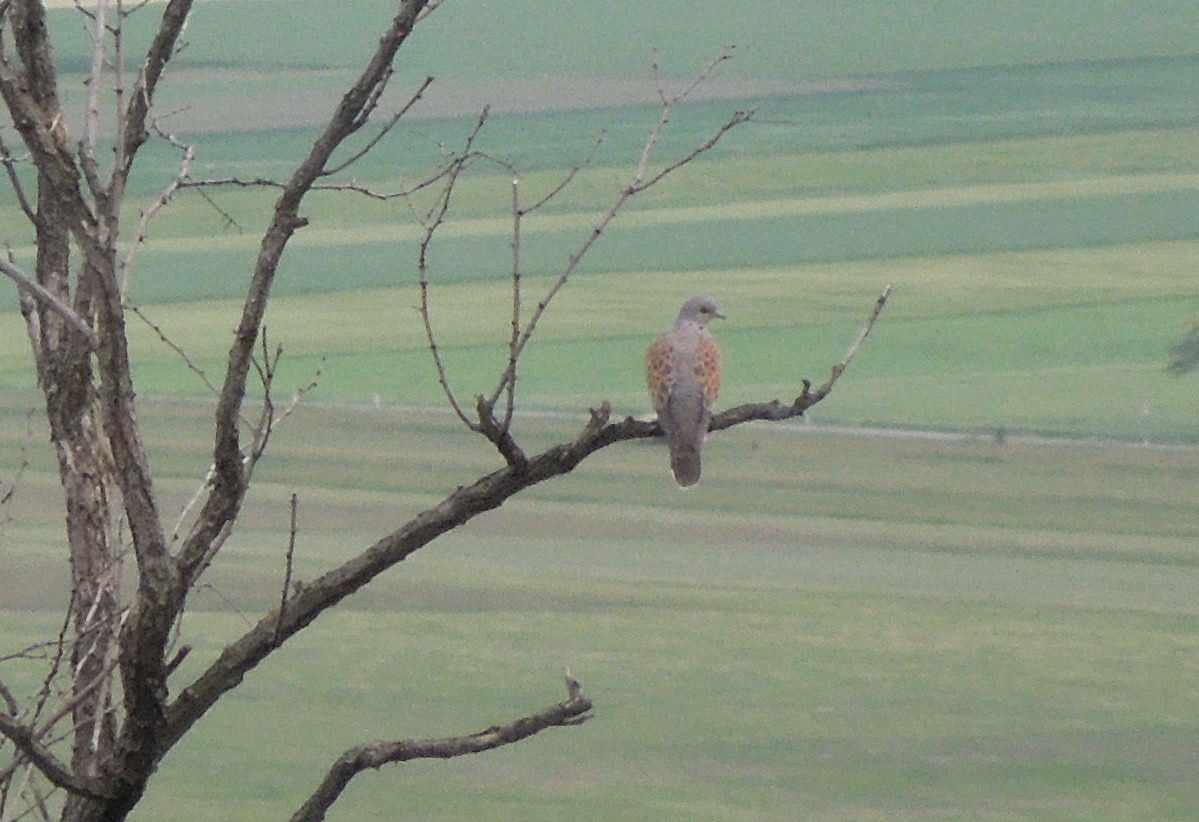
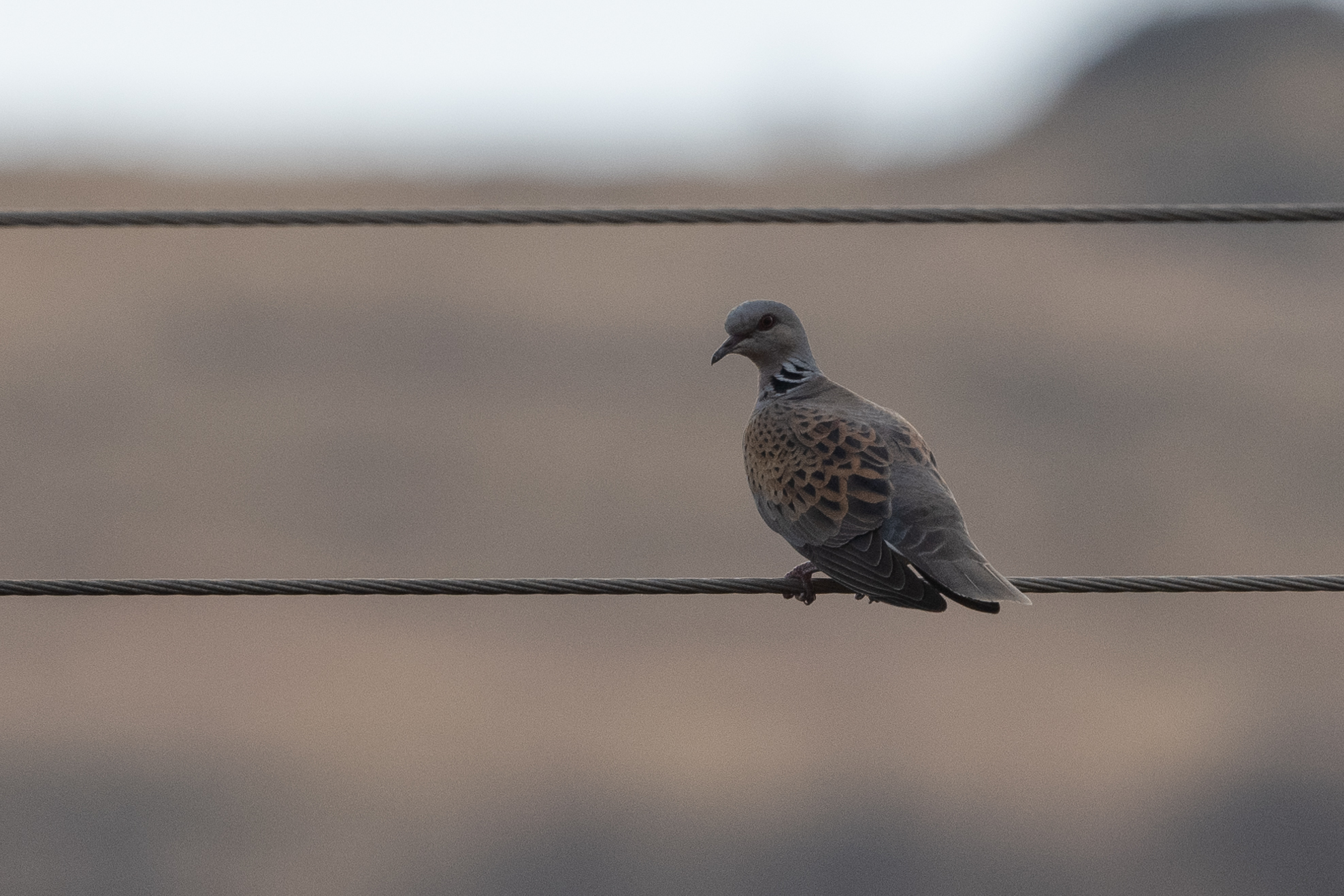
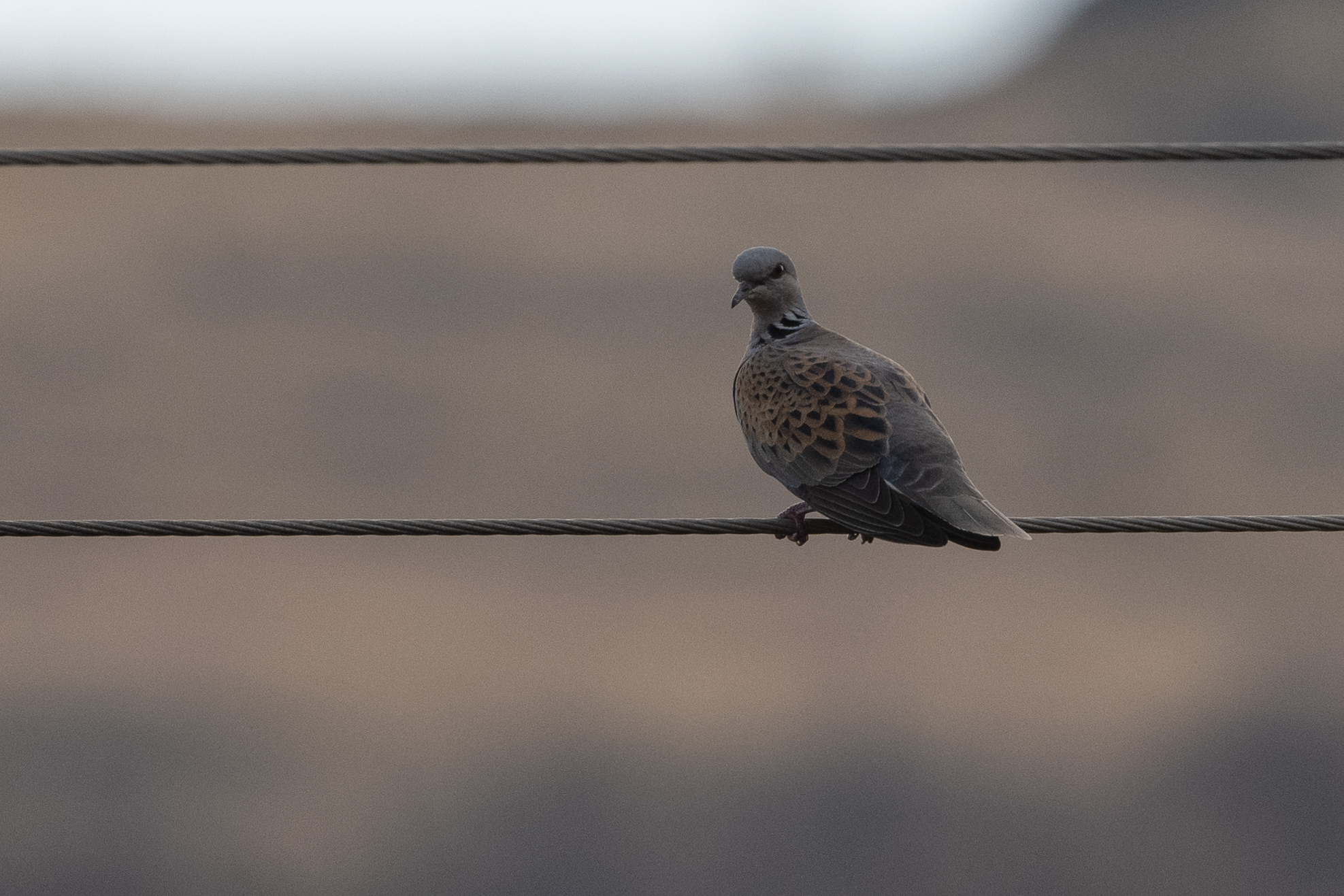
Smaller and more slender than many other doves, measuring 26-28 cm in length with a wingspan of 47-53 cm and weighing 100-156 g. Recognizable by its brown coloring and the black-and-white-striped patch on the side of the neck. The mature bird has a blue-grey head, neck, flanks, and rump, with cinnamon-colored wings mottled with black. The breast is vinaceous and the abdomen and undertail coverts are white. The bill is black and the legs and eye rings are red. The tail is wedge-shaped with a dark centre and white borders and tips, appearing as a blackish chevron on white when the bird stoops to drink. Juveniles are browner and duller with no neck patch and brown legs.
Identification
Distinguished from similar doves by its black-and-white-striped neck patch and overall brown coloring. The wedge-shaped tail with dark center and white edges is visible in flight. The combination of blue-grey head and neck with cinnamon-mottled wings separates it from the collared dove. Smaller and more slender than the wood pigeon, with a less erratic undulating nuptial flight. The deep vibrating cooing song 'turrr, turrr' is distinctive.
Distribution & Habitat
Migratory species with a western Palearctic range covering most of Europe and the Middle East including Turkey and north Africa, though rare in northern Scandinavia and Russia. Winters south of the Sahara. Prefers open woodlands to dense ones and feeds on the ground. Arrives in Northern Europe by late April and departs south by September. Rare vagrants in North America with records from Massachusetts, Florida, and Saint Pierre and Miquelon.
Behavior & Ecology
Feeds on the ground, particularly on weed seeds and shoots including fumitory. The cooing or purring song is a deep vibrating 'turrr, turrr'. The nuptial flight is high and circling with undulations accompanied by a whip-crack sound from the downward flicked wings. Forms strong pair bonds. The flight is often described as arrow-like but not particularly fast. Extremely timid due to hunting pressure during migration.
Conservation
Red-listed global conservation status with populations in rapid decline across Europe. UK numbers declined by 93% since 1994; European numbers fell 78% during 1980-2013. Primary threats include changes in farming practices reducing weed seed availability and hunting in Mediterranean countries, where 2-4 million birds are shot annually in Malta, Cyprus, France, Italy, Spain, and Greece. Trichomonosis parasites also pose a threat. A temporary hunting ban enforced in 2021 in France, Spain, and Portugal resulted in a 25% population increase in western Europe by summer 2024, indicating hunting was a major contributor to the decline.
Culture
According to Roman mythology, it was one of the emblems of Fides, goddess of trust and good faith. Ancient Greeks considered it sacred to Demeter. Biblical references, particularly from the Song of Songs, established it as a symbol of devoted love. Two turtle doves were the customary offering during the Presentation of Jesus at the Temple. In Renaissance Europe, it was seen as the devoted partner of the Phoenix, featured in Robert Chester's Love's Martyr and William Shakespeare's poem 'The Phoenix and the Turtle'. Featured in folk songs about love and loss, the tavern song 'There Is a Tavern in the Town', and Ralph Vaughan Williams' folk settings. Appears in 'The Twelve Days of Christmas' as a gift on the second day. Also appears in the Georgia Sea Islands spiritual 'Turtledove Done Drooped His Wings' and the Shaker hymn 'In Yonder Valley'.
Source: Wikipedia · CC BY-SA 3.0
Taxonomy
- Order
- Columbiformes
- Family
- Columbidae
- Genus
- Streptopelia
- eBird Code
- eutdov
Subspecies (4)
-
Streptopelia turtur arenicola
Balearic Islands and northwestern Africa to Iran and far western China
-
Streptopelia turtur hoggara
southern Sahara (Aïr Massif and Hoggar Mountains)
-
Streptopelia turtur rufescens
Egypt (Dakhla and Kharga oases) and northern Sudan (Faiyûm)
-
Streptopelia turtur turtur
breeds Azores, Canary Islands, and Europe to western Siberia and Kazakhstan; winters to Sahel zone of north-central Africa
Data Sources
Species description from Wikipedia, licensed under CC BY-SA 3.0.
Bird images and sounds sourced from GBIF, contributed by citizen scientists worldwide under Creative Commons licenses.
Taxonomy data from AviList 2025.