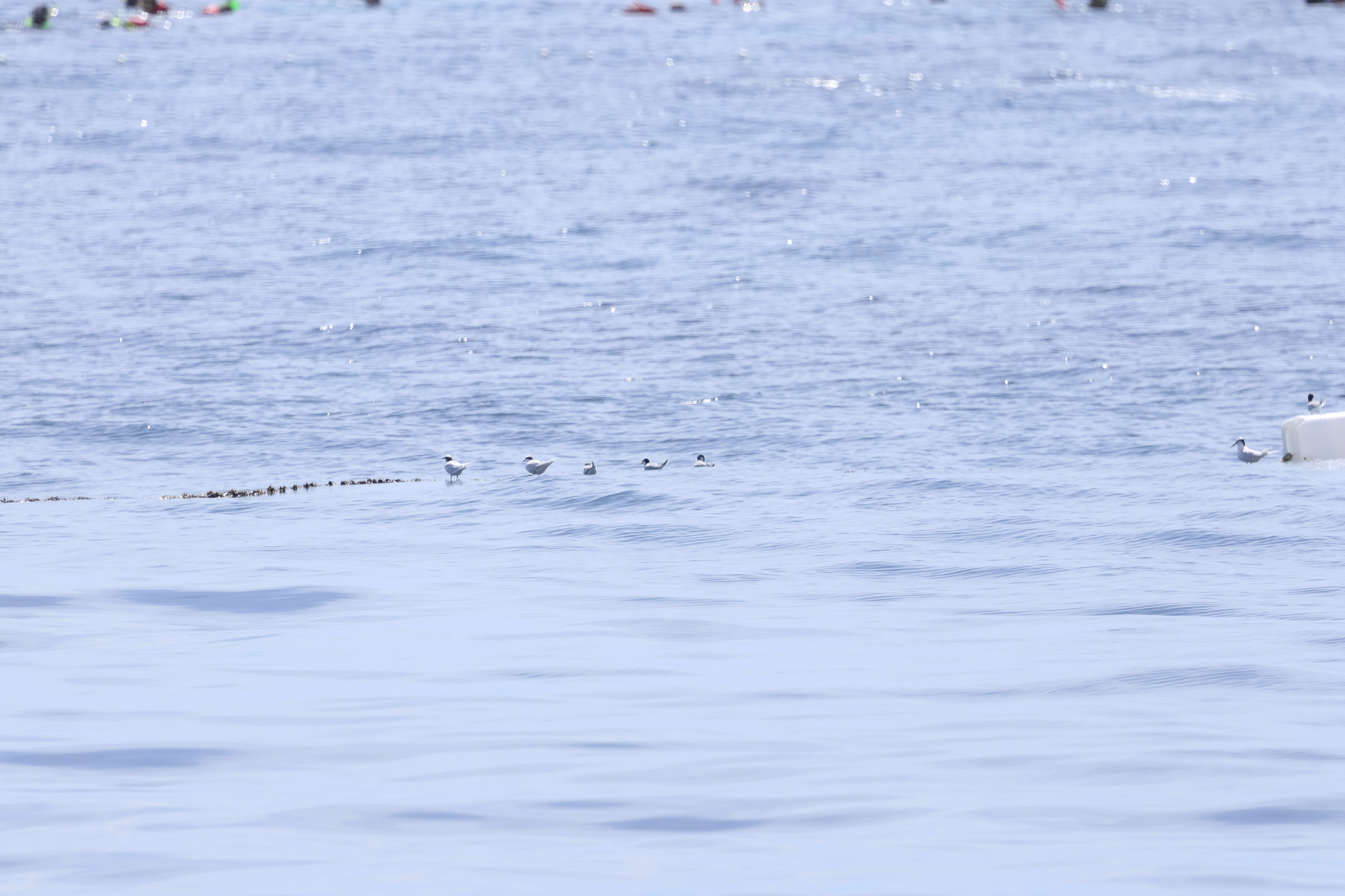
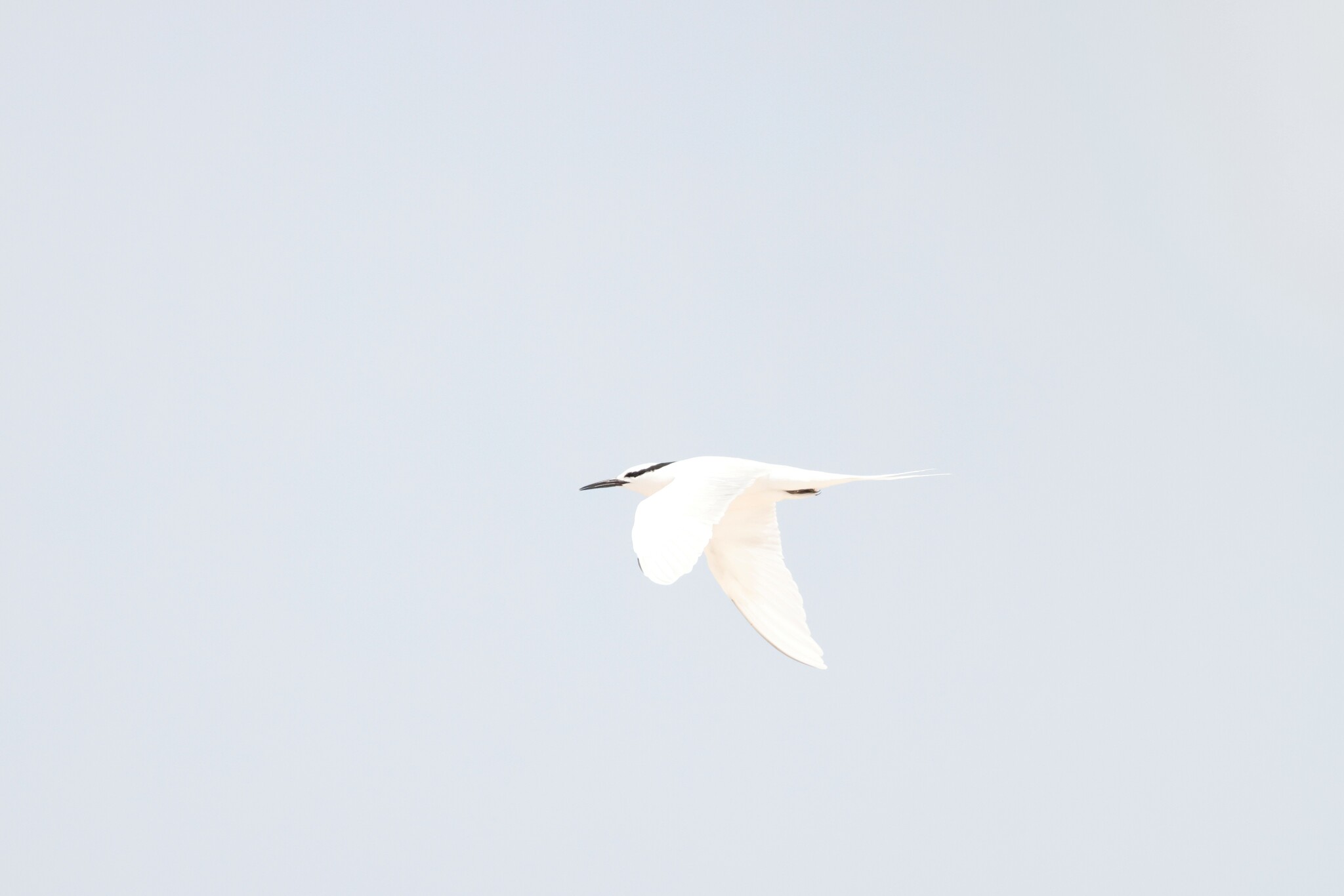
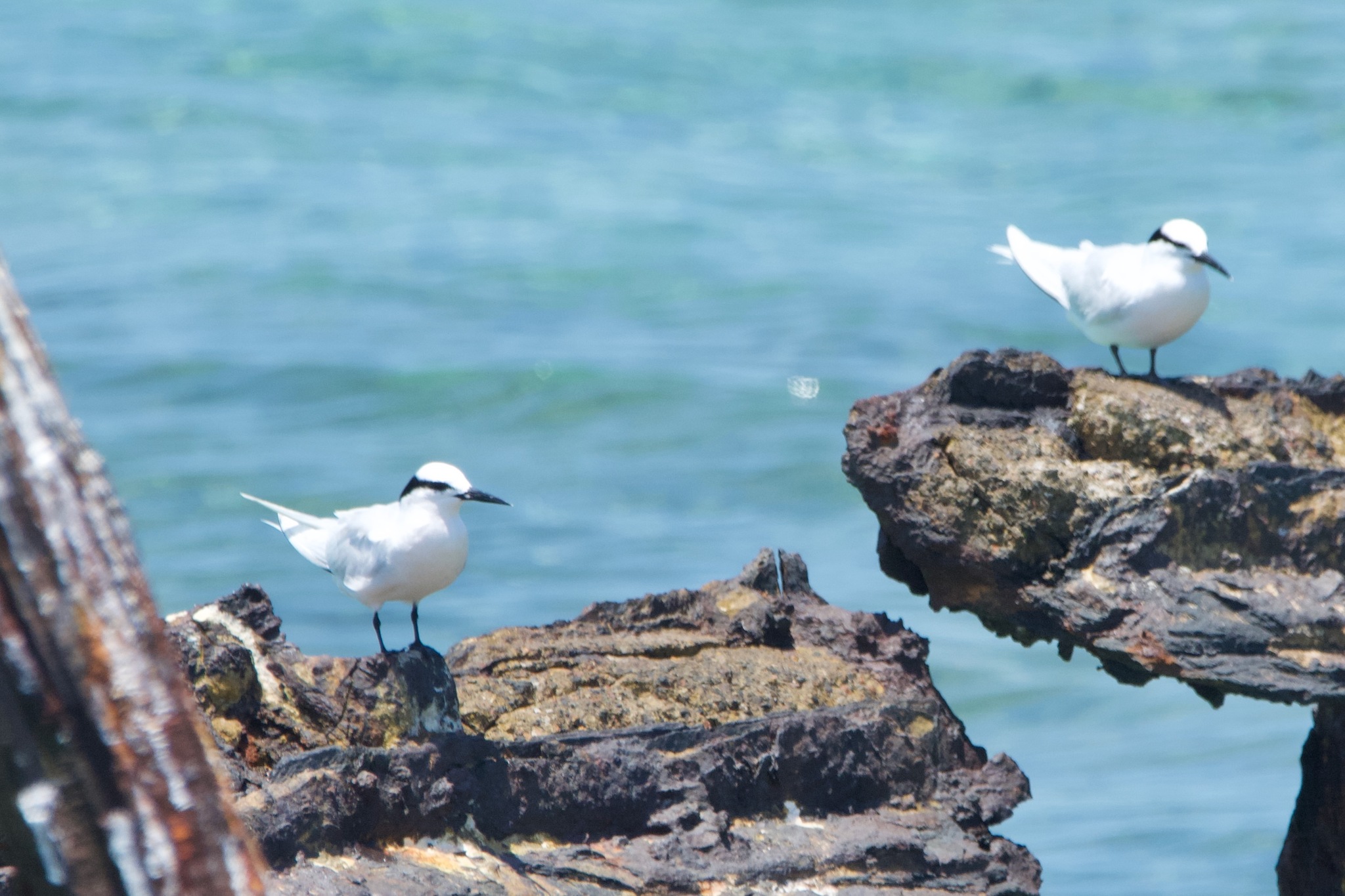
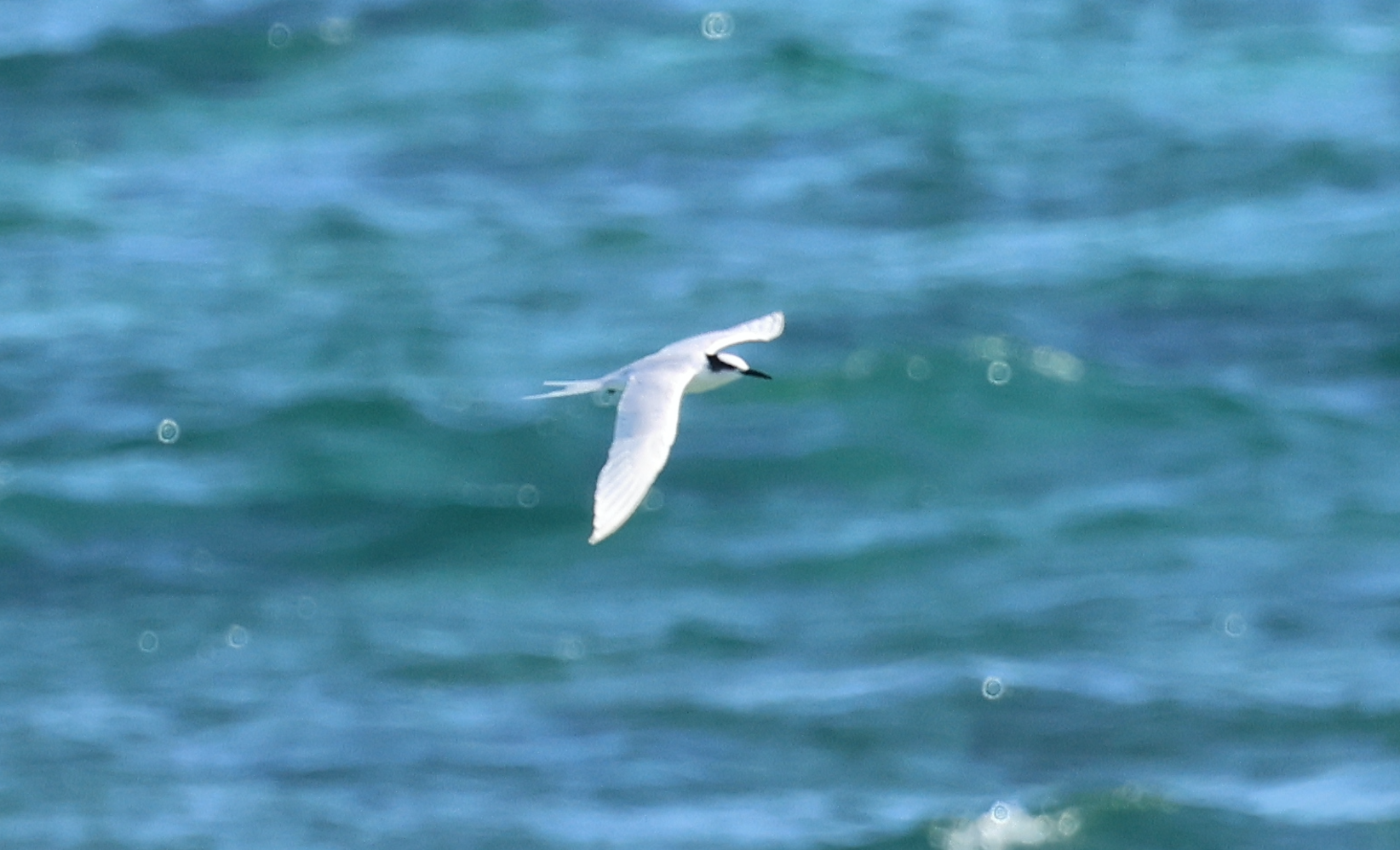
Black-naped Tern
Sterna sumatrana
黑枕燕鸥
Introduction
A species of tern in the family Laridae. Inhabits tropical and subtropical areas of the Indian Ocean and western Pacific Ocean, rarely found inland. Breeds on oceanic islands and rocky shores. Named for the distinctive black band extending from the eyes over the head and down the back of the neck. Closely related to roseate tern and white-fronted tern. Two recognized subspecies: S. s. sumatrana across the eastern Indian Ocean to western Pacific, and S. s. mathewsi in the western Indian Ocean islands.
Description
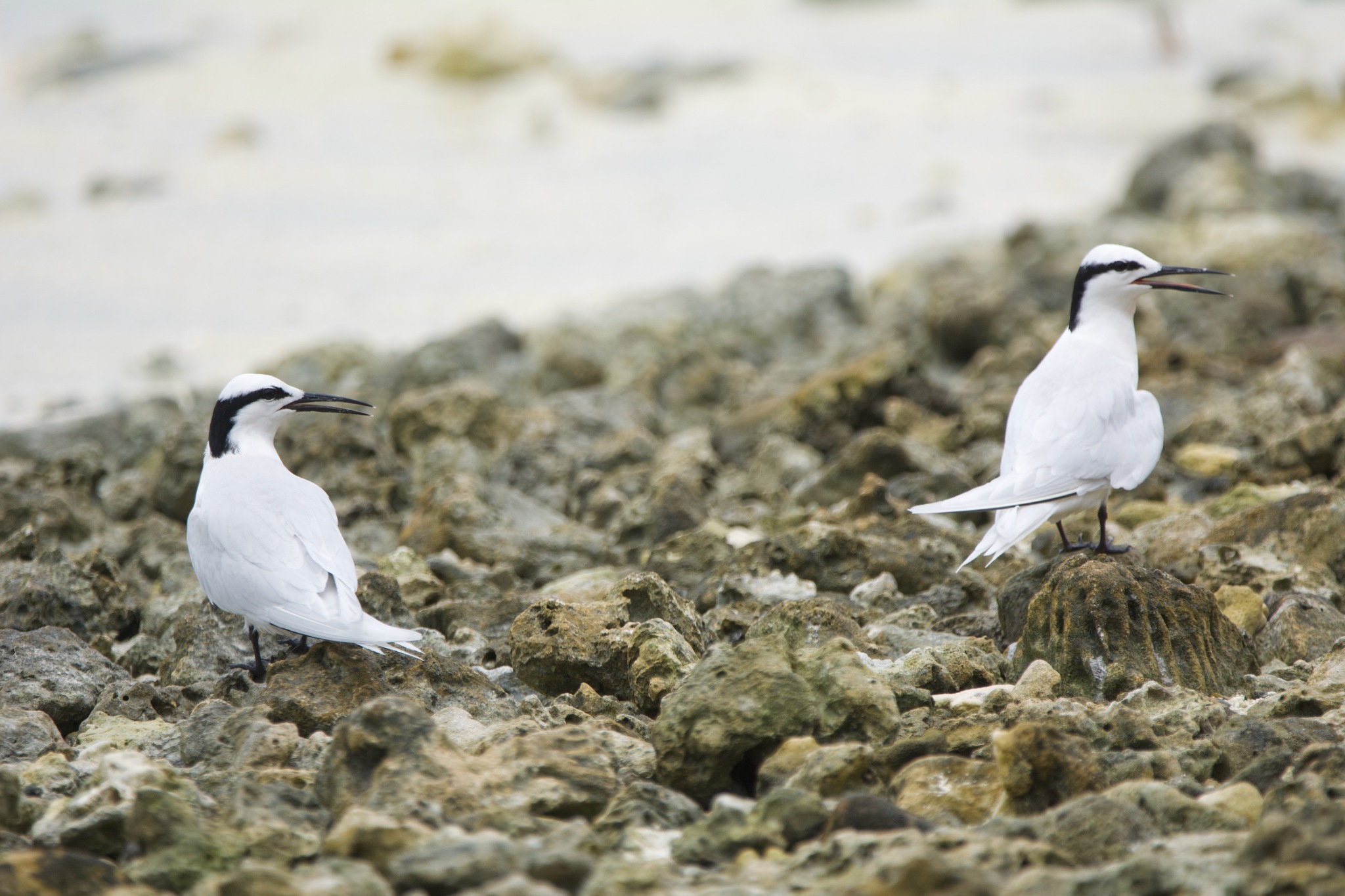
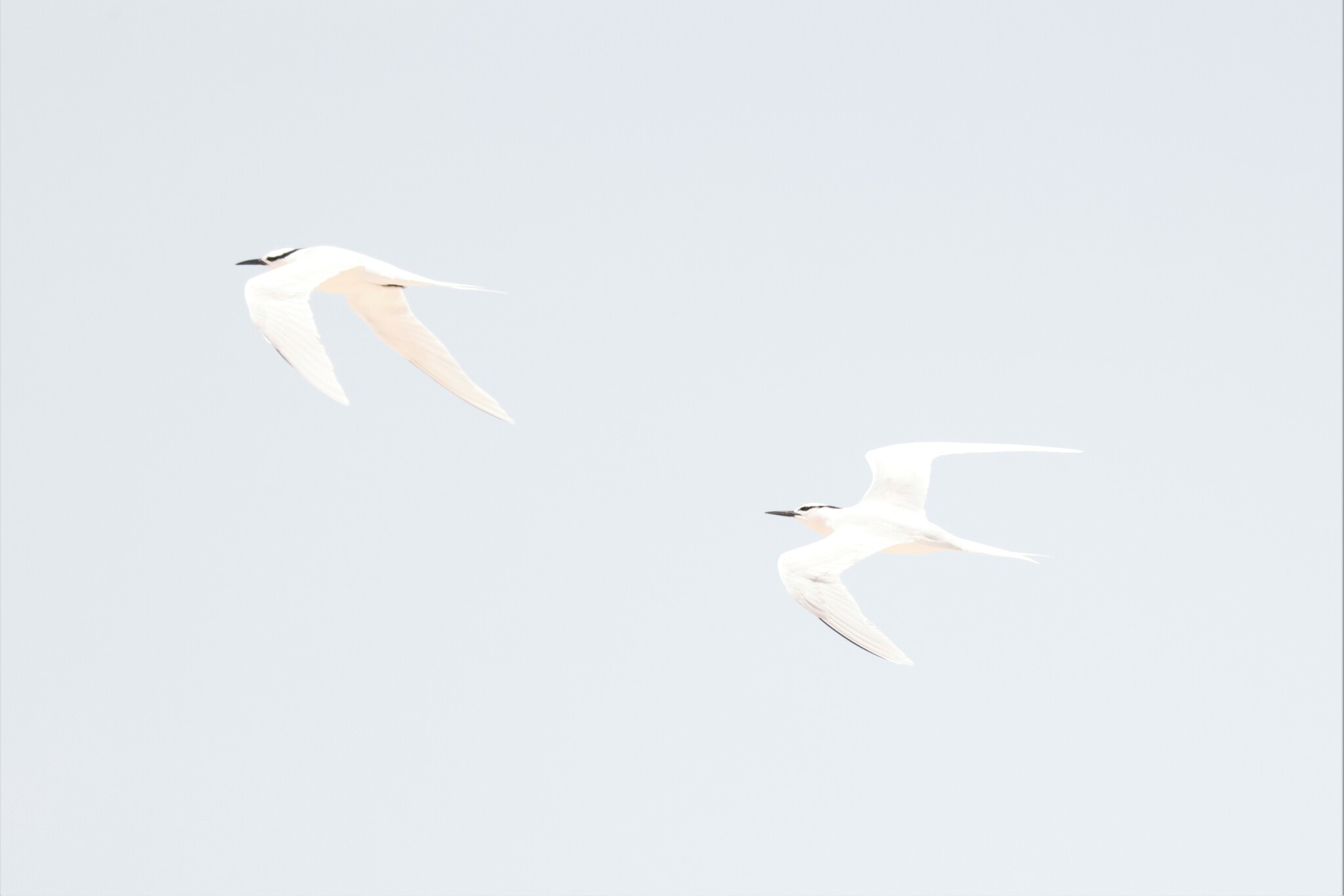
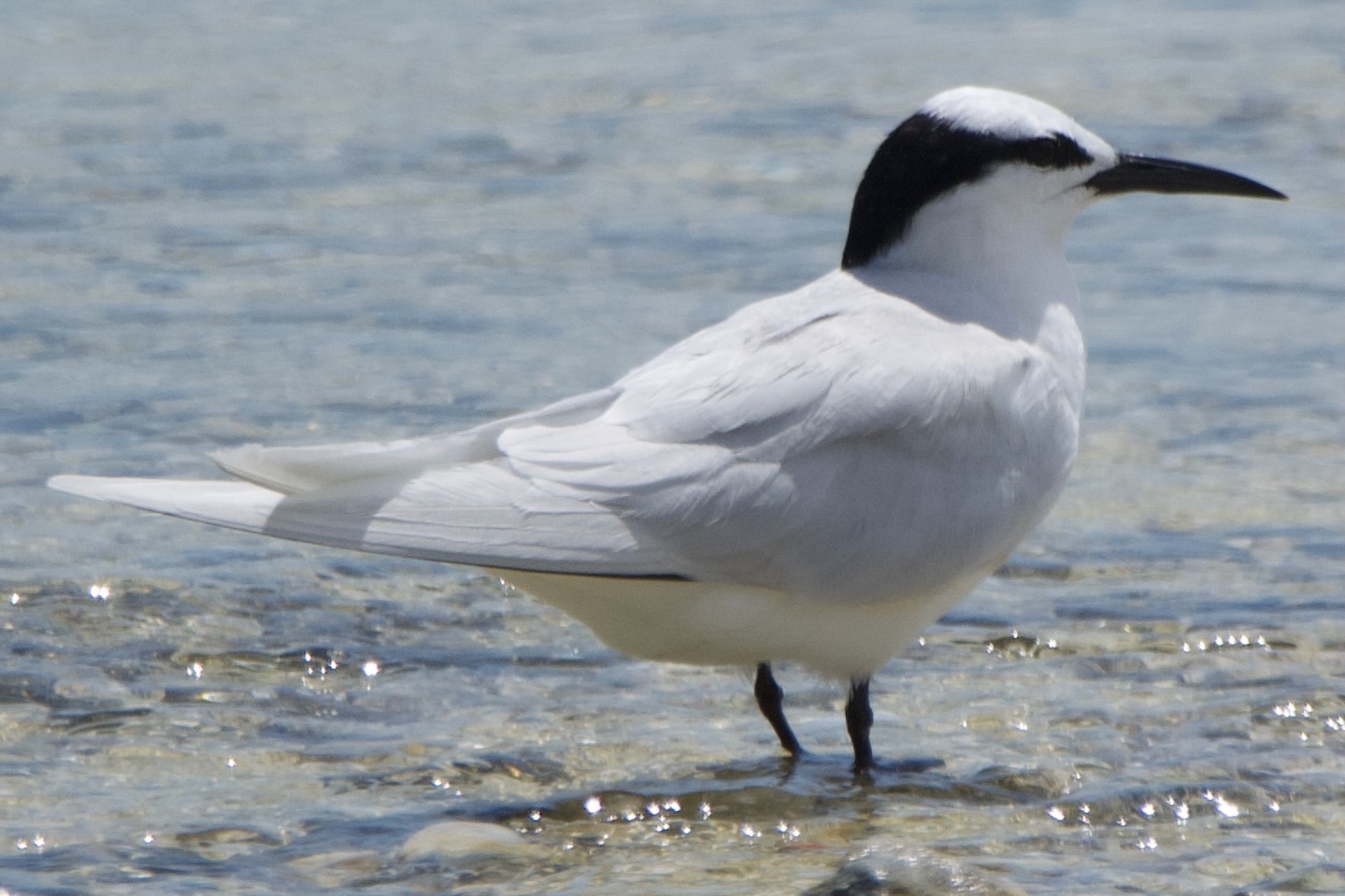
A medium-sized tern with distinctive plumage. Named for the black band beginning at the eyes, connecting behind the head, and descending the back of the neck. Overall white plumage with pale silvery-grey wings and mantle; the outermost primary feather has a narrow black outer web. The tail is white and deeply forked, extending beyond the wingtips on perched birds. The beak and legs are black. Body length measures 30–35 cm with a wingspan of 66 cm. Adults weigh between 97 and 120 grams. Hatchlings are mottled brown.
Identification
The black nape band is the most distinctive field mark, visible at considerable distance. The deeply forked white tail extending beyond the wingtips helps distinguish it from similar species. The black beak and legs, combined with pale grey upperparts, differentiate it from other white terns. Best distinguished from close relatives roseate tern and white-fronted tern by the extent and placement of the black head marking.
Distribution & Habitat
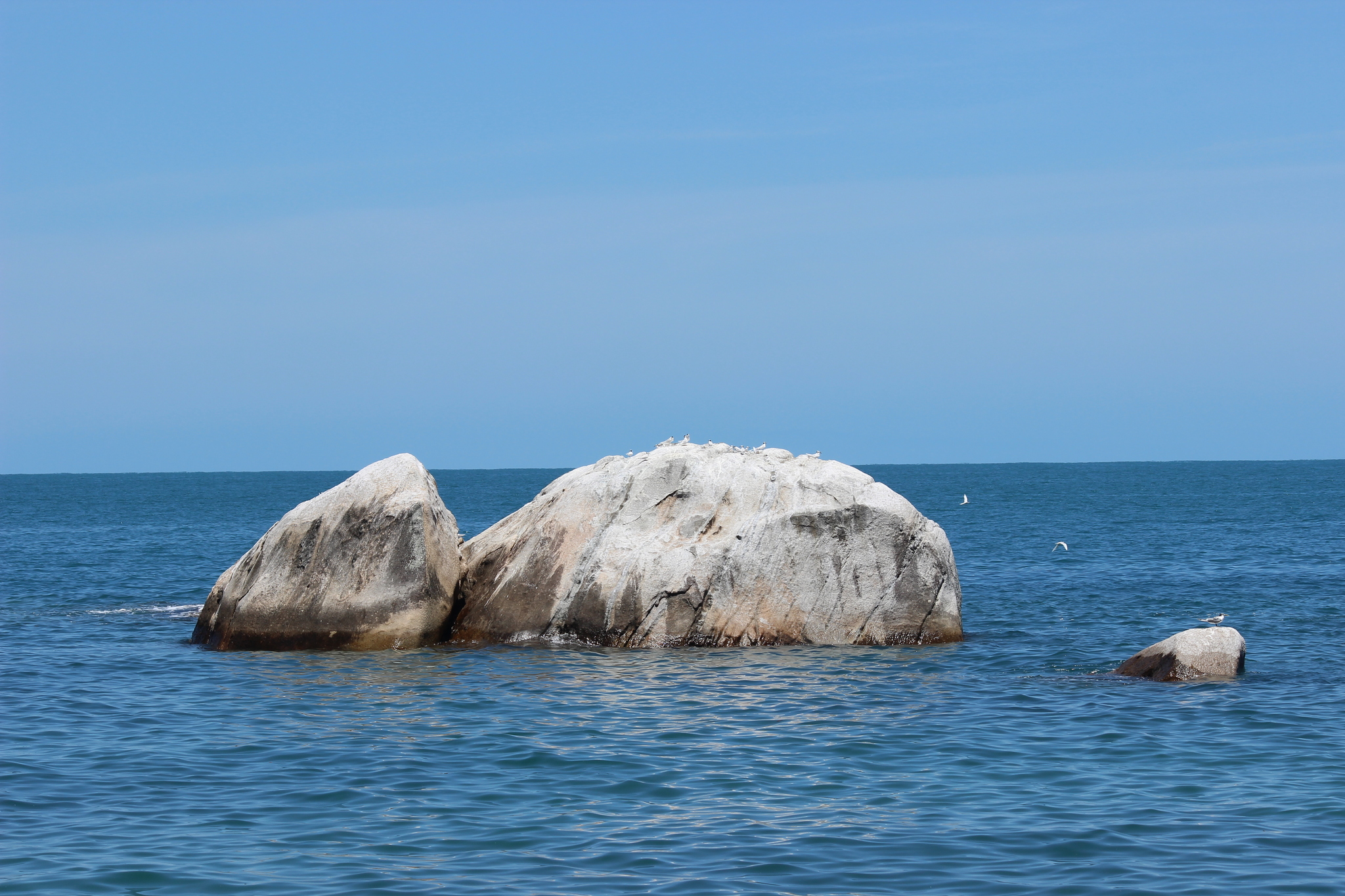
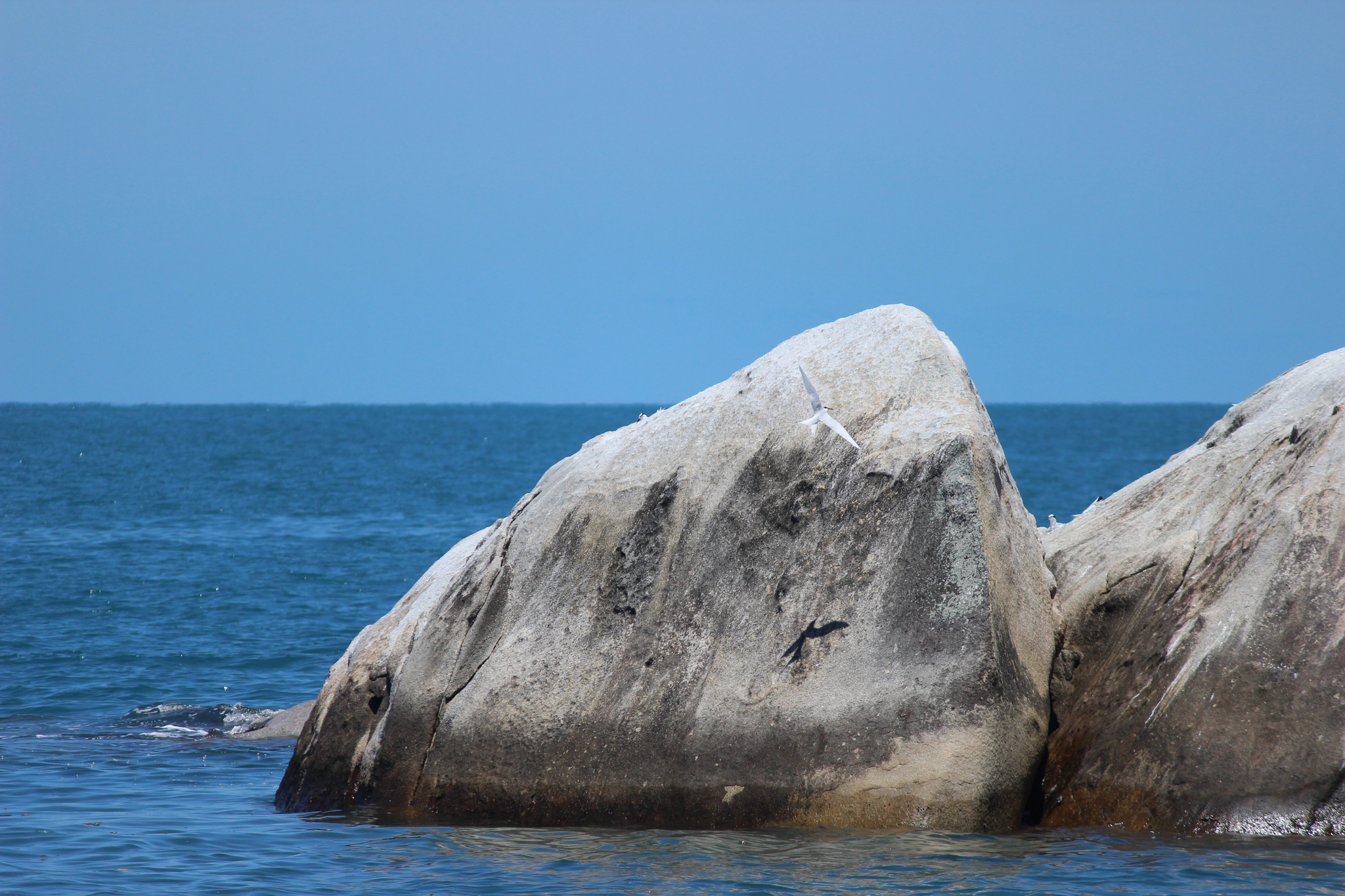
Inhabits rocky shores throughout the Western Pacific and Indian oceans. One subspecies ranges from islands of the eastern Indian Ocean through to the western Pacific, north to Taiwan and south to Queensland, Australia. The other subspecies occurs on islands of the western Indian Ocean. Migrates yearly to specific islets and islands serving as breeding grounds. Found almost exclusively in marine environments, rarely inland.
Behavior & Ecology
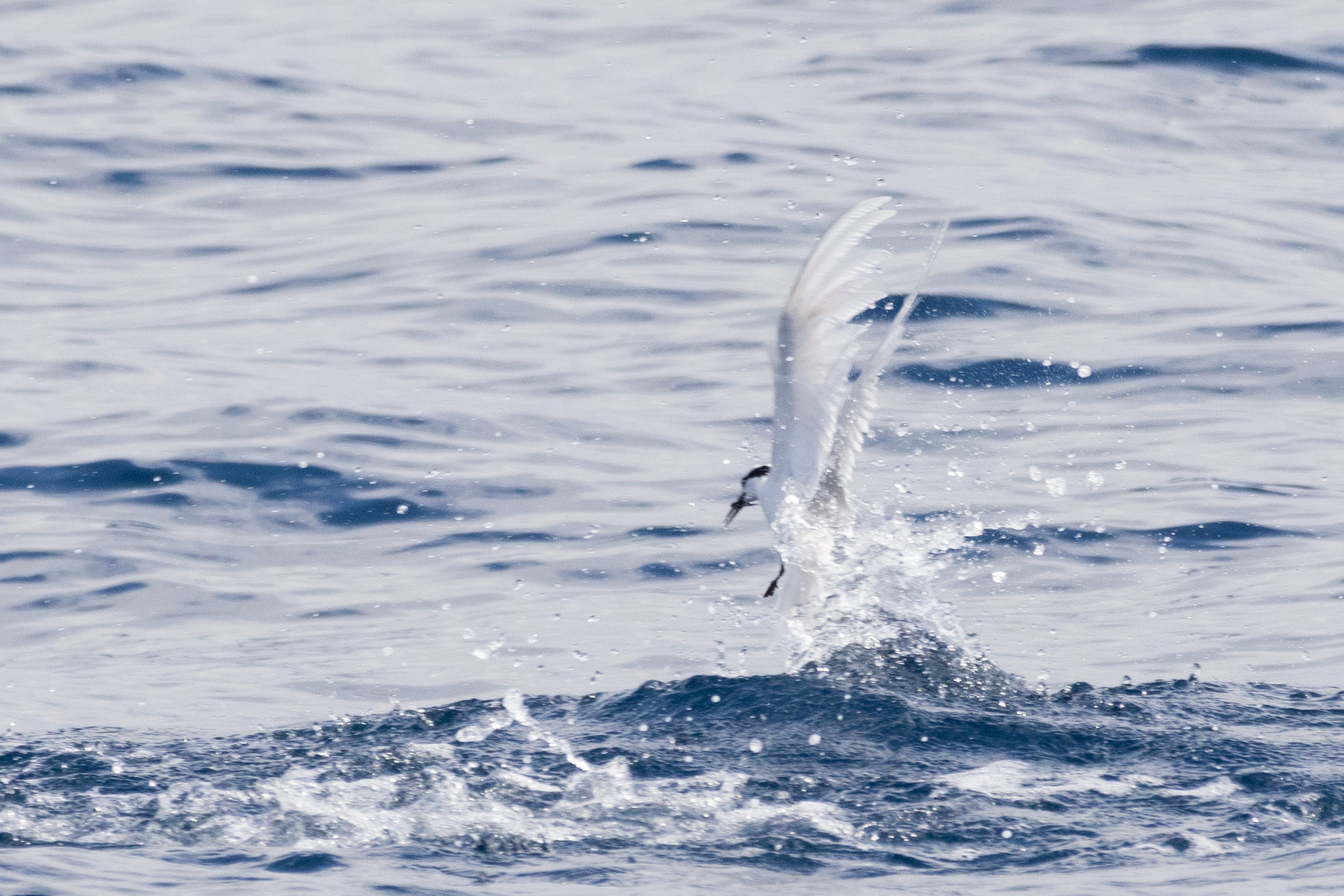
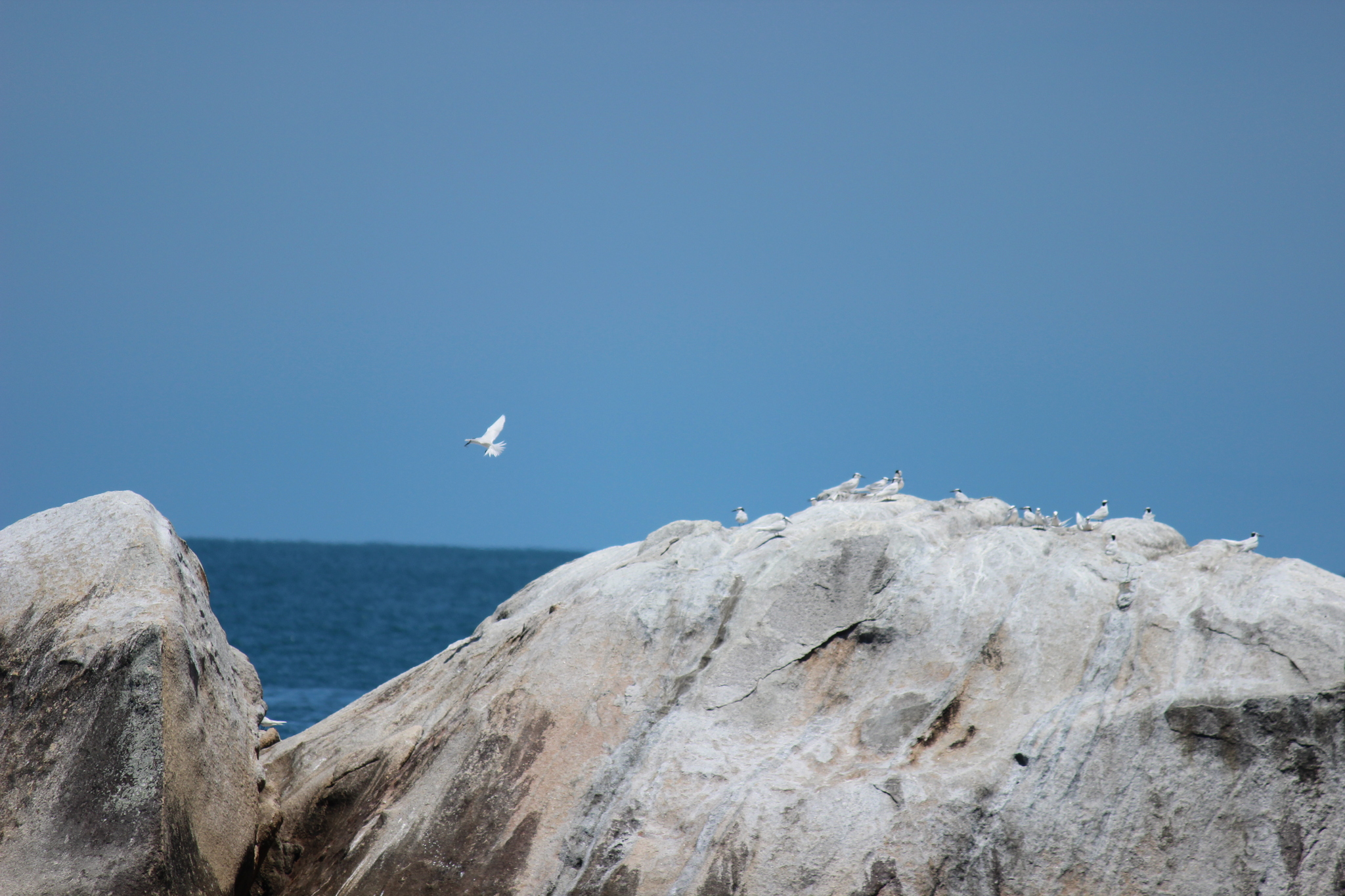
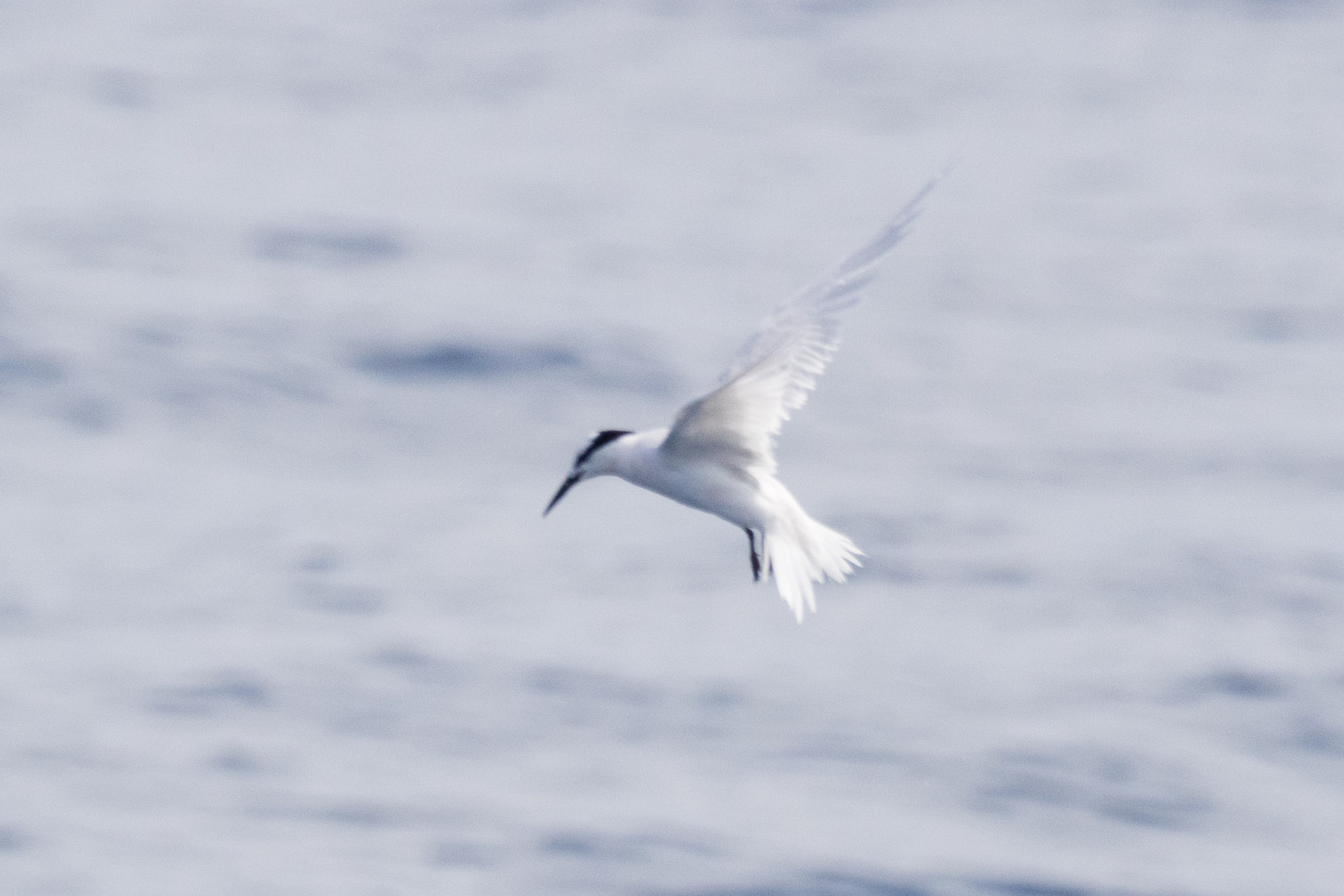
Hunts by diving and partially breaching the water surface to capture prey, carrying fish horizontally in the beak. Solitary hunting at sea is typical, switching to nearshore hunting in surf when feeding nestlings and mates. Diet consists of small fish up to 10 cm, including hardyheads, anchovies, garfish, flying fish, mullet, barracudas, trevally, and tuna. Breeds in small colonies of 5–20 pairs, occasionally up to 200. Nests in depressions in sand or rock with minimal lining. Both parents share 21–23 day incubation and alternate feeding duties. Chicks fledge after 21–23 days but remain dependent for 2 months. Vocalizations include short, high-pitched repeated notes: 'chit', 'chip', 'chrrut', and 'tsip'.
Conservation
IUCN conservation status and population data not provided in source material.
Culture
No cultural significance or folklore documented.
Source: Wikipedia · CC BY-SA 3.0
Taxonomy
- Order
- Charadriiformes
- Family
- Laridae
- Genus
- Sterna
- eBird Code
- blnter1
Subspecies (2)
-
Sterna sumatrana mathewsi
Aldabra, Amirantes, Chagos, and Maldives (northern Indian Ocean)
-
Sterna sumatrana sumatrana
Andaman and Nicobar islands eastward to eastern China and southern Japan, southward through southeastern Asia to Philippines, Sundas, New Guinea, northern Australia, Micronesia, Melanesia, and west-central Polynesia (eastward to Cook Islands and Samoa)
Data Sources
Species description from Wikipedia, licensed under CC BY-SA 3.0.
Bird images and sounds sourced from GBIF, contributed by citizen scientists worldwide under Creative Commons licenses.
Taxonomy data from AviList 2025.