Black-bellied Tern
Sterna acuticauda
黑腹燕鸥
Introduction
A tern species (Sterna acuticauda) found near large rivers in the Indian subcontinent. Range extends from Pakistan, Nepal and India to Myanmar and Bangladesh. Inhabits lowland rivers, marshes, ditches and pools at altitudes up to 730 meters. Characterized by a black belly in breeding plumage and a deeply forked tail. Classified as Endangered by the IUCN due to severe population declines across its range.
Description
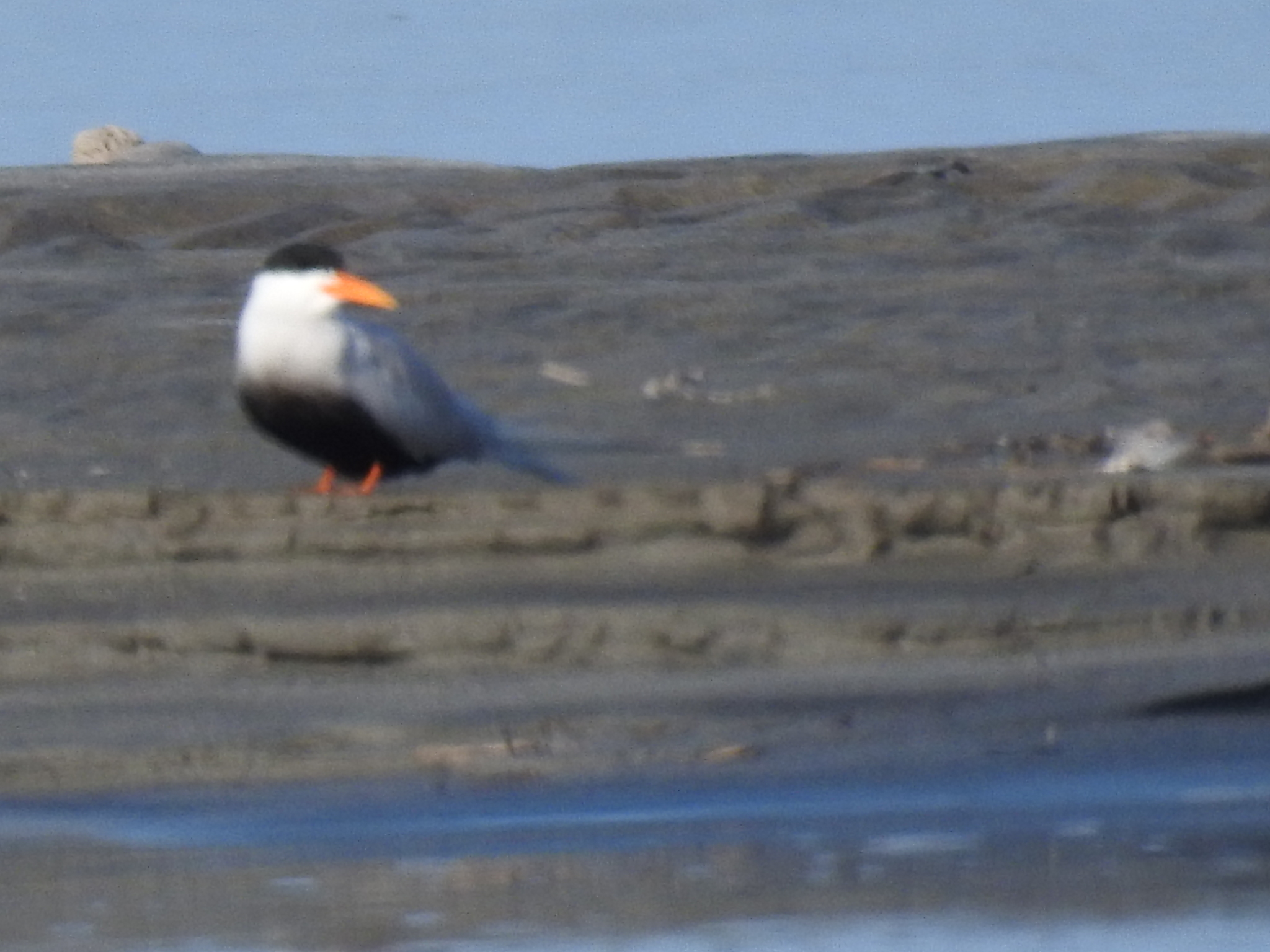
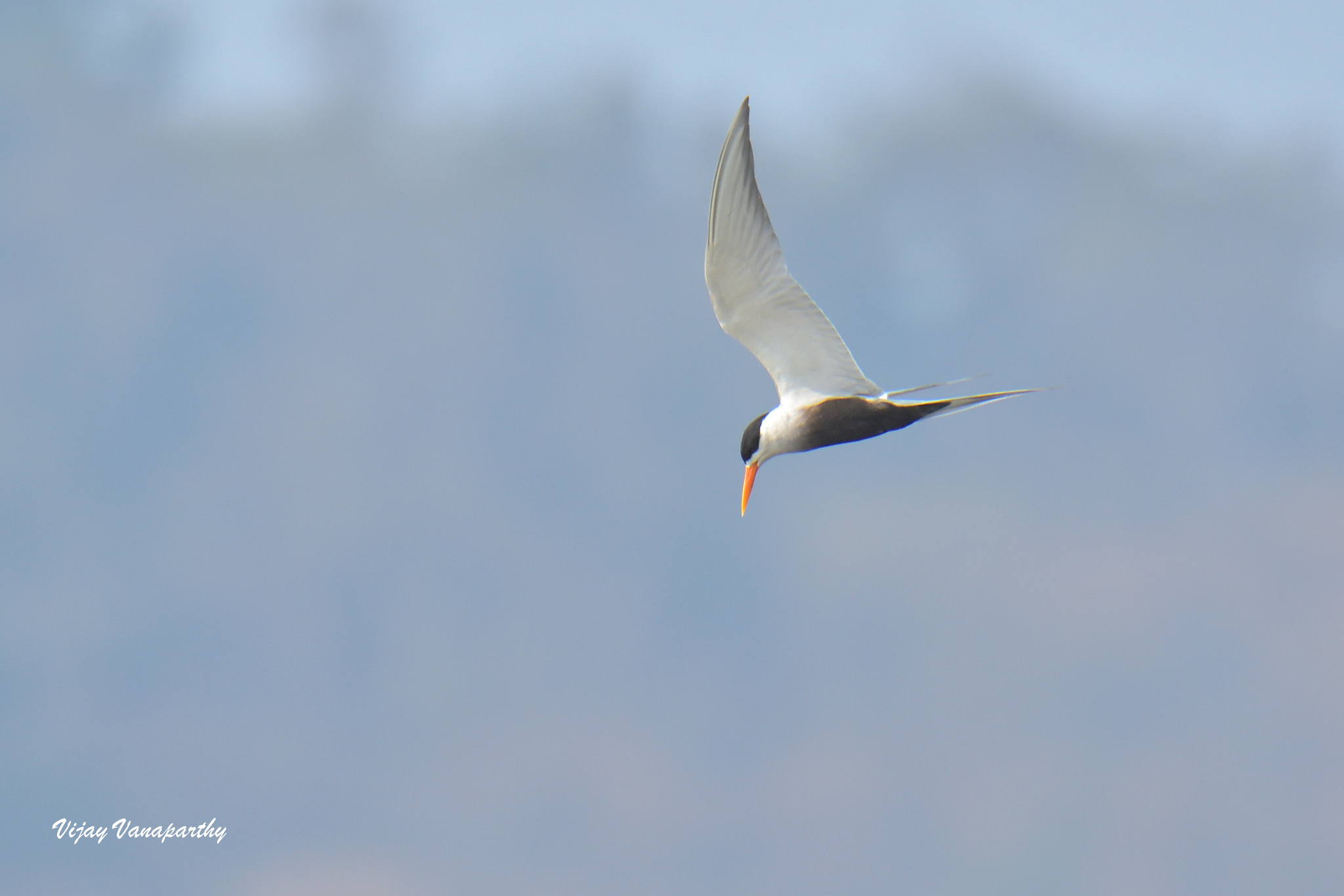
A medium-sized tern growing to 32-35 cm in length. Breeding plumage features a black crown and nape, pale grey upper parts, white throat, and breast that gradually darkens to a black belly. Wings are long, slender and pointed. Tail is deeply forked with sharply pointed tips. Bill and feet are yellow or orange; iris is reddish brown. Non-breeding plumage shows a whitish belly, reduced tail length and a dark-tipped bill.
Identification
Can be confused with whiskered terns (Chlidonias hybrida). Distinguished by the deeper fork in the tail and black coloration restricted to the lower belly, whereas whiskered terns have a shallower tail fork and black plumage extending closer to the breast.
Distribution & Habitat
Occurs primarily in Pakistan, Nepal, India and Bangladesh, with a separate population in Myanmar. An entirely inland species, inhabiting lowland rivers, marshes, ditches and pools at elevations up to 730 meters. Not found in coastal areas. Believed to be extinct in southern China, Nepal, Thailand, Laos, Cambodia and Vietnam.
Behavior & Ecology
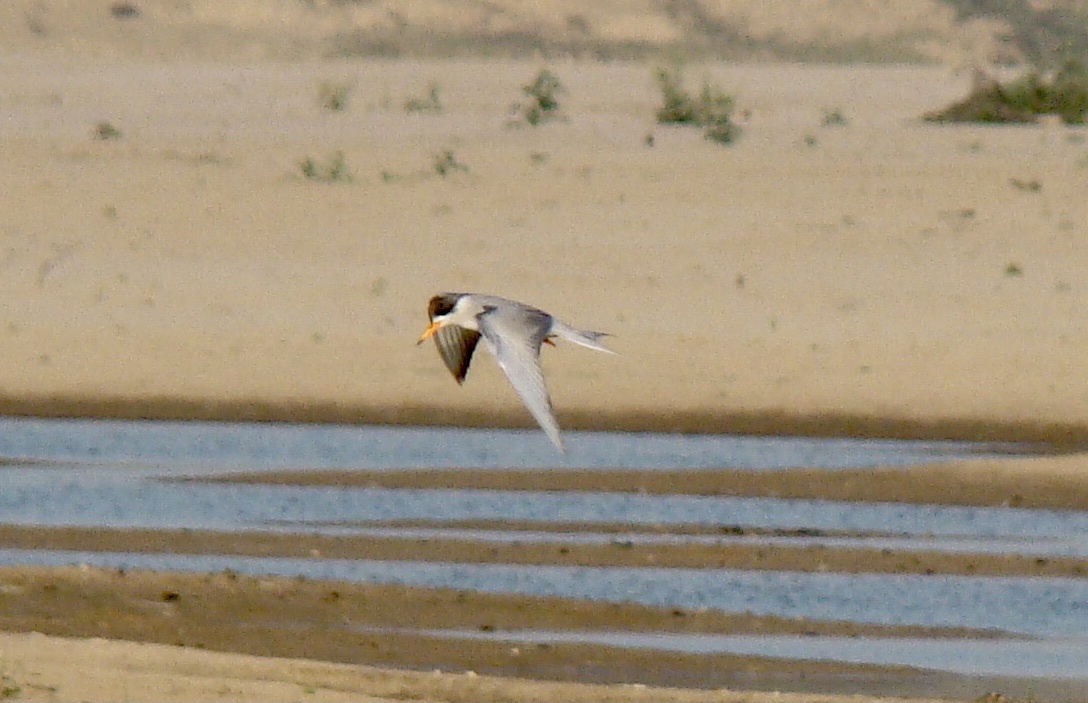
Feeds on insects, small fish, crustaceans and tadpoles. Forages by skimming water surfaces and ground to pick up insects, or plunging obliquely into water. Flight is slow with frequent flapping despite having long wings. Breeding occurs from February to April. Nests solitarily on flat sandy locations near rivers or lakes, sand spits or sandy islands. May nest alongside river terns, pratincoles and Indian skimmers.
Conservation
Classified as Endangered by the IUCN. The species is seriously declining throughout most of its range, with fewer than 1,000 mature individuals remaining. Threats include degradation of breeding islands and sandspits, egg collection for food, predation by dogs, cats and crows, flooding from dam construction, fishing competition, net entanglement, human disturbance, water extraction, sand and gravel dredging, and pollution.
Source: Wikipedia · CC BY-SA 3.0
Taxonomy
- Order
- Charadriiformes
- Family
- Laridae
- Genus
- Sterna
- eBird Code
- blbter1
Distribution
inland Indus Valley (Pakistan), sub-Himalayan India and Irrawaddy River (central Myanmar); formerly to southern China and Vietnam
Data Sources
Species description from Wikipedia, licensed under CC BY-SA 3.0.
Bird images and sounds sourced from GBIF, contributed by citizen scientists worldwide under Creative Commons licenses.
Taxonomy data from AviList 2025.