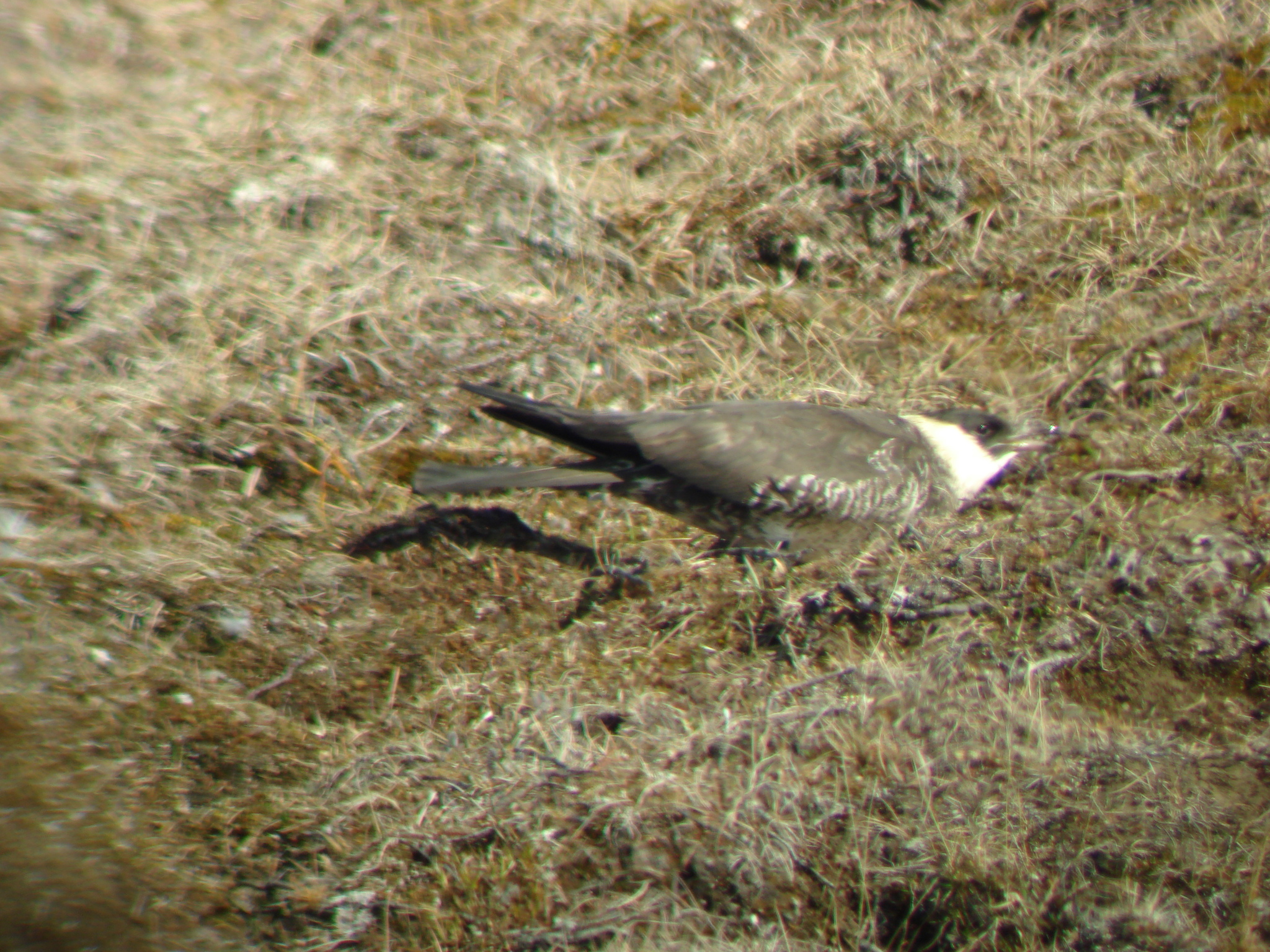

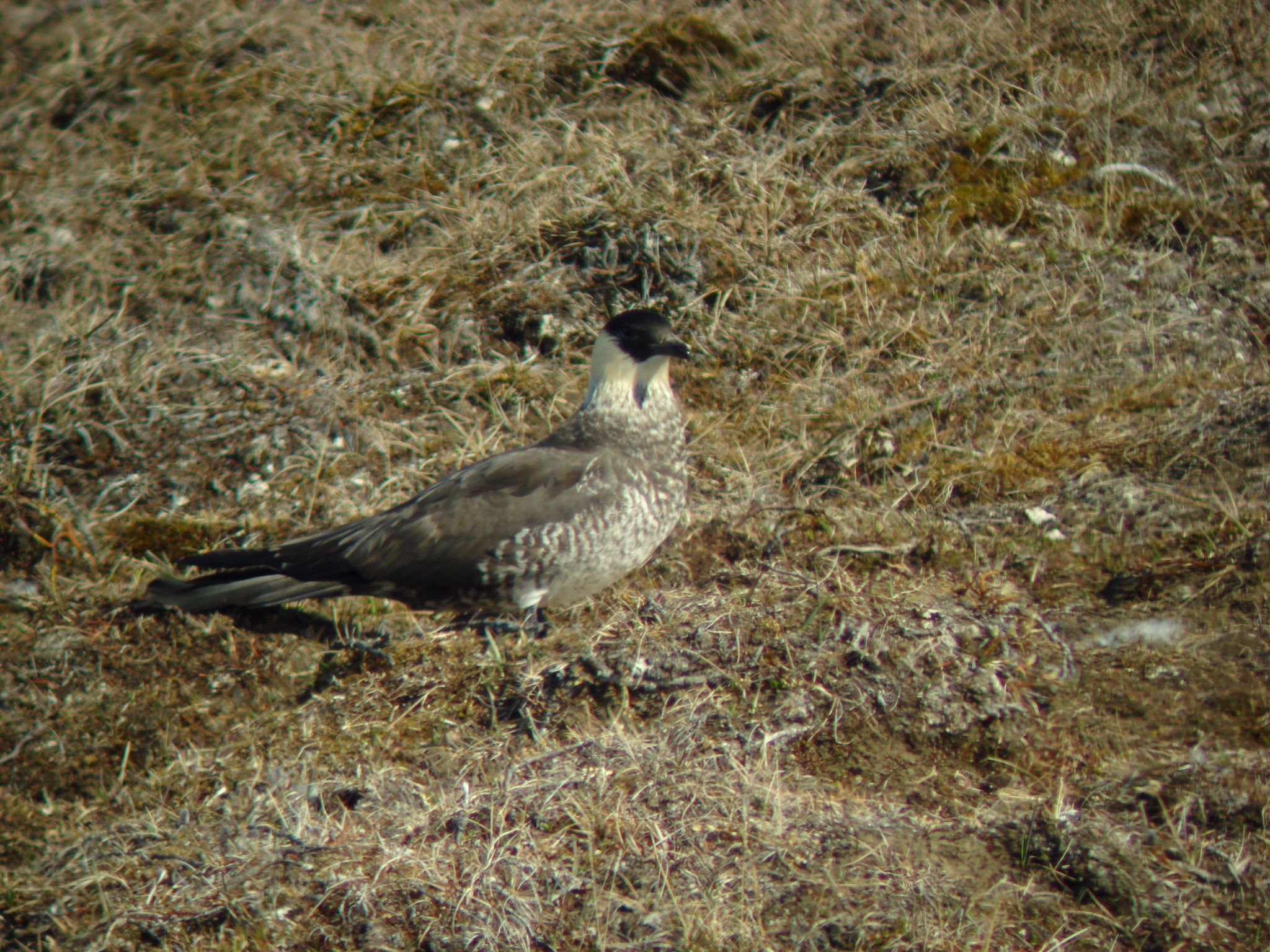


Pomarine Jaeger
Stercorarius pomarinus
中贼鸥
Introduction
The pomarine jaeger (Stercorarius pomarinus) is the largest and most robust of the three jaeger species. It breeds on Arctic tundra across Eurasia and North America and migrates south to winter at sea in tropical oceans. It exhibits kleptoparasitic behavior, pursuing gulls, terns, and gannets to steal their catches. Genetic studies indicate complex phylogenetic relationships with the great skua and smaller jaeger species. The species displays three distinct color morphs: light, dark, and intermediate. During breeding season, it exhibits aggressive territorial defense behaviors, flying directly at intruders.
Description
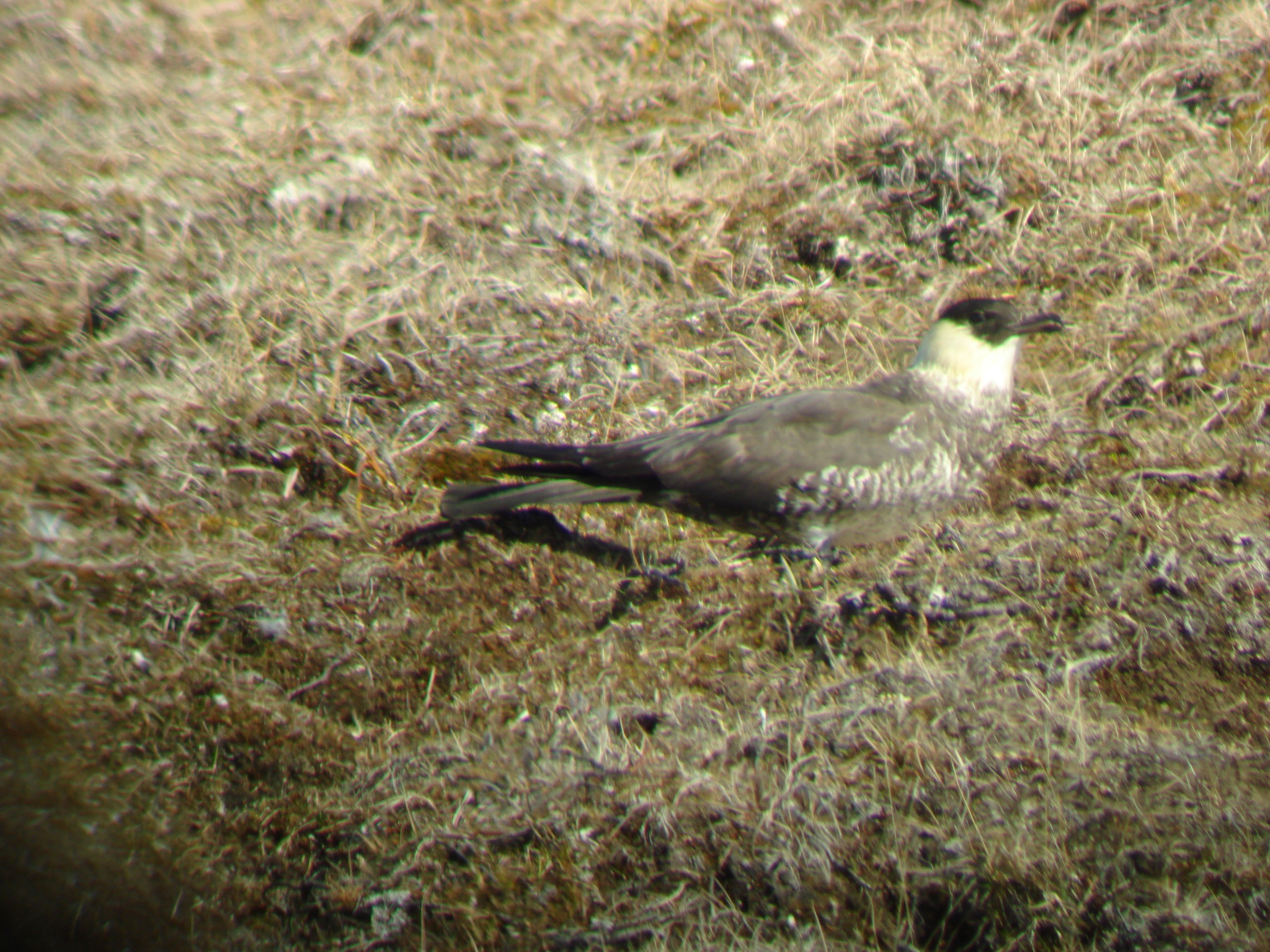
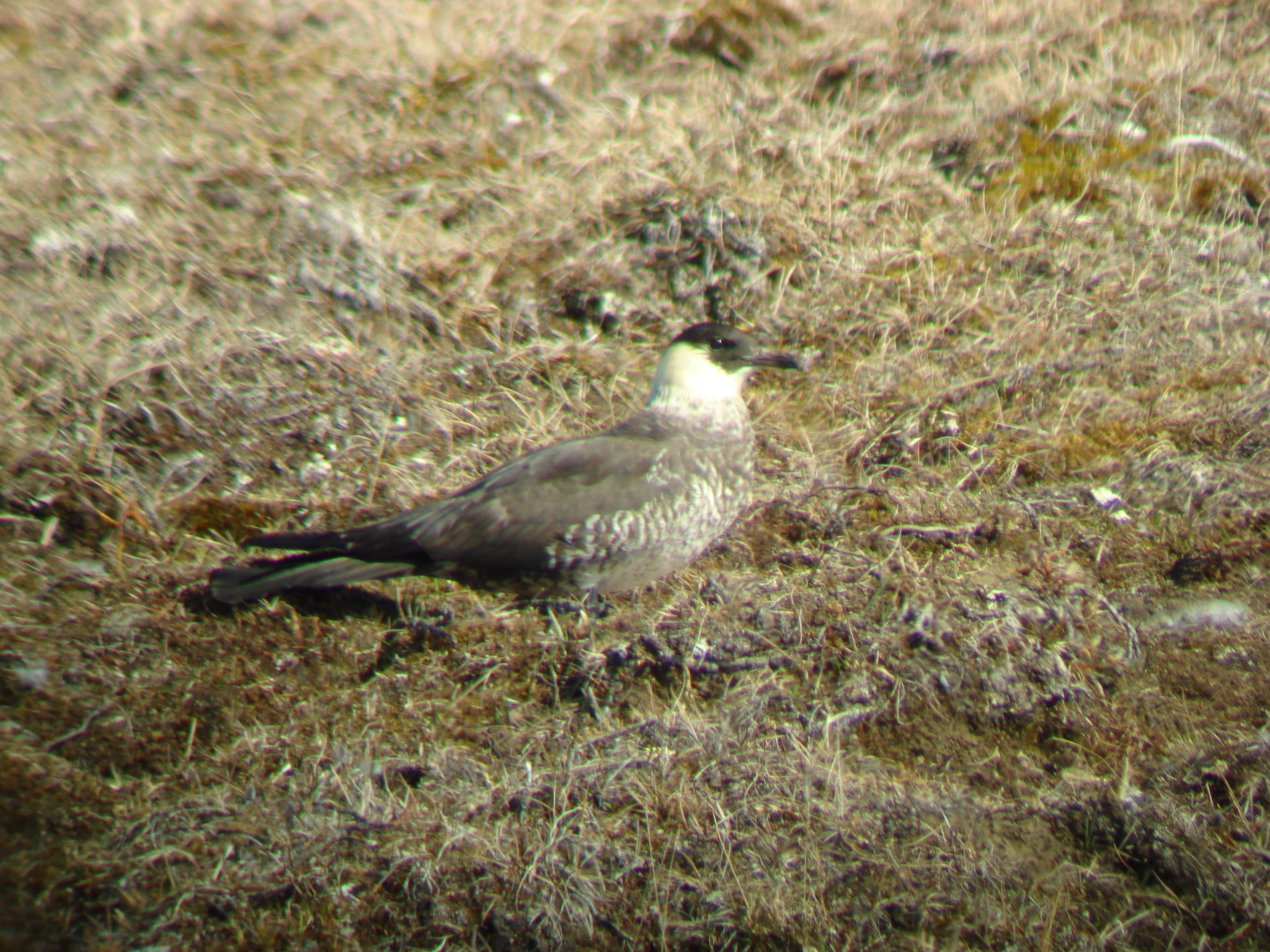
This large jaeger measures 46 to 67 cm in length with a substantial wingspan of 110 to 138 cm and weighs between 540 and 920 grams. Breeding adults display elongated central tail feathers approximately 10 cm long, which are spoon-shaped and twisted horizontally—a distinctive feature among jaegers. The species appears much bulkier and broader-winged than the parasitic jaeger, with a more measured flight style rather than the falcon-like agility of its smaller relatives. Light-morph adults show a brown upperparts, predominantly white underparts, dark primary wing feathers with a conspicuous white flash, yellowish-white head and neck, and a contrasting black cap. Dark morphs are entirely chocolate brown, while intermediate morphs show dark plumage with paler underparts and head/neck regions. All morphs reveal a diagnostic white double flash on the underwing. Juveniles present the greatest identification challenge, as their brown, barred plumage closely resembles juvenile parasitic jaegers.
Identification
Distinguishing pomarine jaegers from similar species requires attention to several key features. Compared to the parasitic jaeger, the pomarine is notably larger, bulkier, and broader-winged, with a slower, more powerful flight style. The forked or twisted tail streamers of breeding adults are diagnostic, though these are absent in juveniles and non-breeding birds. The prominent white wing flash appears as a double flash on the underwing, visible at considerable distances. Size comparison with common gulls provides a useful reference point—pomarine jaegers are substantially larger. Dark and intermediate morphs can be confused with dark-phased parasitic jaegers, though the pomarine's greater bulk and different flight style aid separation. Juveniles remain extremely difficult to distinguish from parasitic jaegers at range, with structural characteristics often proving more reliable than plumage details.
Distribution & Habitat
This species breeds across the high Arctic regions of both Eurasia and North America, nesting on open tundra and island landscapes. Breeding habitat consists of grass-lined depressions on well-drained terrain. Following the breeding season, these birds migrate south to winter at sea, dispersing throughout tropical oceanic regions. They are passage migrants through temperate coastal waters, where birdwatchers may encounter them during spring and autumn movements. The species' pelagic wintering habits mean most observations occur well offshore in tropical and subtropical waters.
Behavior & Ecology
Breeding behavior begins in the Arctic summer, with females laying 2 to 3 olive-brown eggs in shallow depressions lined with grass vegetation. Both parents participate in incubation and chick-rearing. Like all skuas, this species vigorously defends its nest territory, launching coordinated attacks on any intruder—including humans—by flying directly at their heads. While these strikes are more frightening than harmful, they demonstrate the species' tenacious protective instincts. The diet is diverse and opportunistic, comprising fish, carrion, scraps, rodents (especially lemmings), and smaller birds up to the size of common gulls. The species is infamous for its piratical feeding strategy, harassing gulls, terns, and northern gannets until they relinquish their catches. This kleptoparasitic behavior continues throughout the year. The vocal repertoire includes harsh chattering calls and distinctive notes resembling 'which-yew.' Predation on healthy adults is rare, limited only to great black-backed gulls, white-tailed eagles, and golden eagles.
Conservation
The pomarine jaeger is currently listed as Least Concern by the IUCN, with a stable population estimated at numerous individuals across its extensive range. The species benefits from its remote Arctic breeding grounds and pelagic wintering areas, which offer protection from many human impacts. Climate change poses potential long-term threats to Arctic breeding habitat, though current populations remain robust. Monitoring efforts continue to track population trends, particularly in relation to lemming cycles that influence breeding success.
Culture
The name 'jaeger' derives from the German word Jäger, meaning 'hunter,' reflecting this species' predatory and piratical nature. The genus name Stercorarius is Latin for 'of dung,' originating from the historical misconception that the food skuas obtain through piracy is excrement. No significant folklore or cultural traditions are specifically associated with this species.
Source: Wikipedia · CC BY-SA 3.0
Taxonomy
- Order
- Charadriiformes
- Family
- Stercorariidae
- Genus
- Stercorarius
- eBird Code
- pomjae
Distribution
breeds high Arctic tundra, mainly northwestern to northeastern Russia (including many high Arctic islands), northern and southwestern Alaska, eastward through Arctic Canada to Baffin Island (northeastern Canada); winters to temperate to tropical coasts and offshore waters worldwide
Data Sources
Species description from Wikipedia, licensed under CC BY-SA 3.0.
Bird images and sounds sourced from GBIF, contributed by citizen scientists worldwide under Creative Commons licenses.
Taxonomy data from AviList 2025.