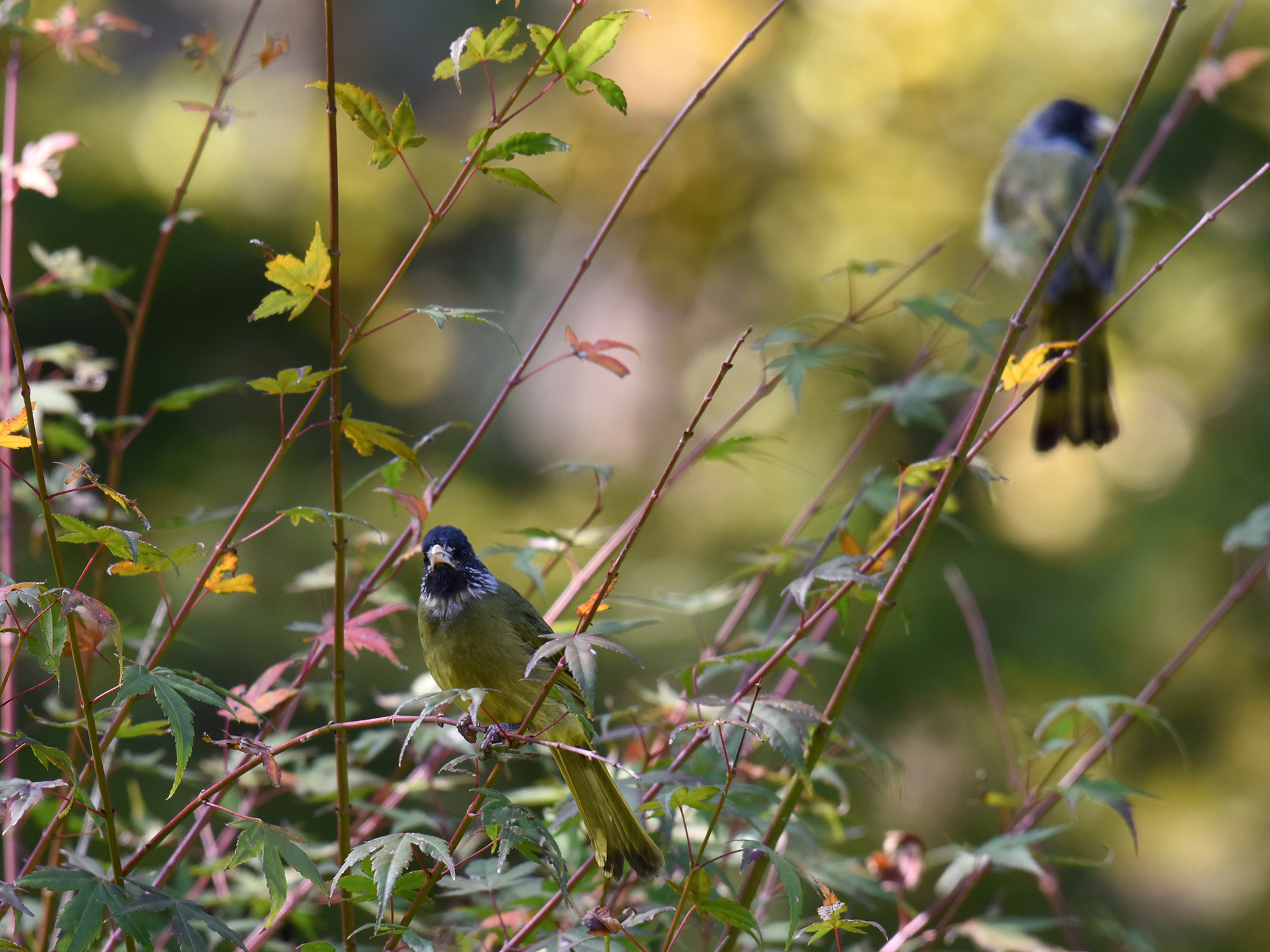
Collared Finchbill
Spizixos semitorques
领雀嘴鹎
Introduction
Collared finchbill is a bulbul species (Pycnonotidae family) that inhabits forested hills and mountains of East Asia. It occurs in China, Taiwan, Japan, and Vietnam in woodland edges and secondary forests at elevations of 300-1,800 meters. Moves through mid-canopy in small groups or pairs. Forages actively during early morning. Frugivorous diet; acts as seed disperser for several plant species. Conservation status: not globally threatened, populations stable. Habitat loss in lowlands has concentrated populations in hilly and mountainous regions. Two subspecies recognized, with Taiwanese and southern Japanese populations showing subtle differences in coloration. Detected by calls that carry through forest understory.
Description
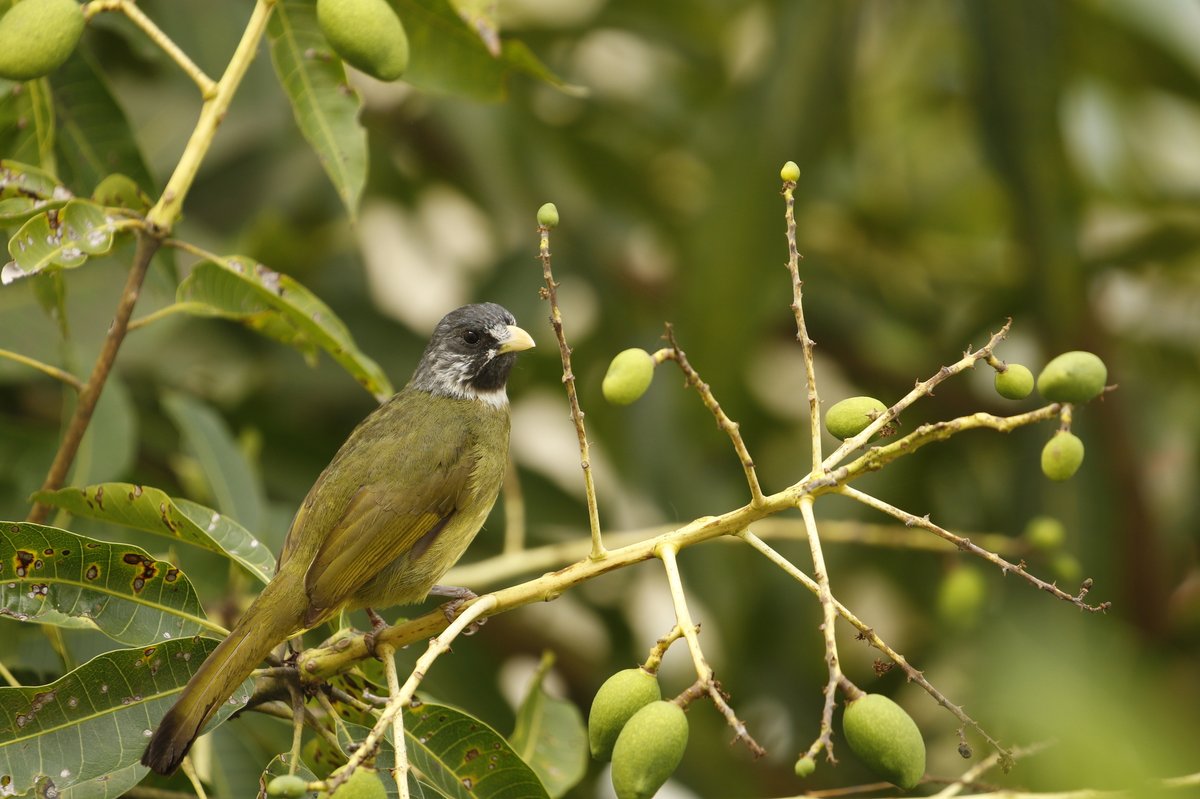
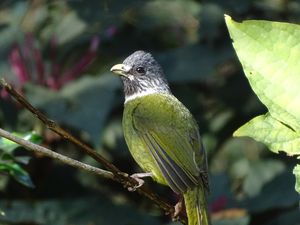
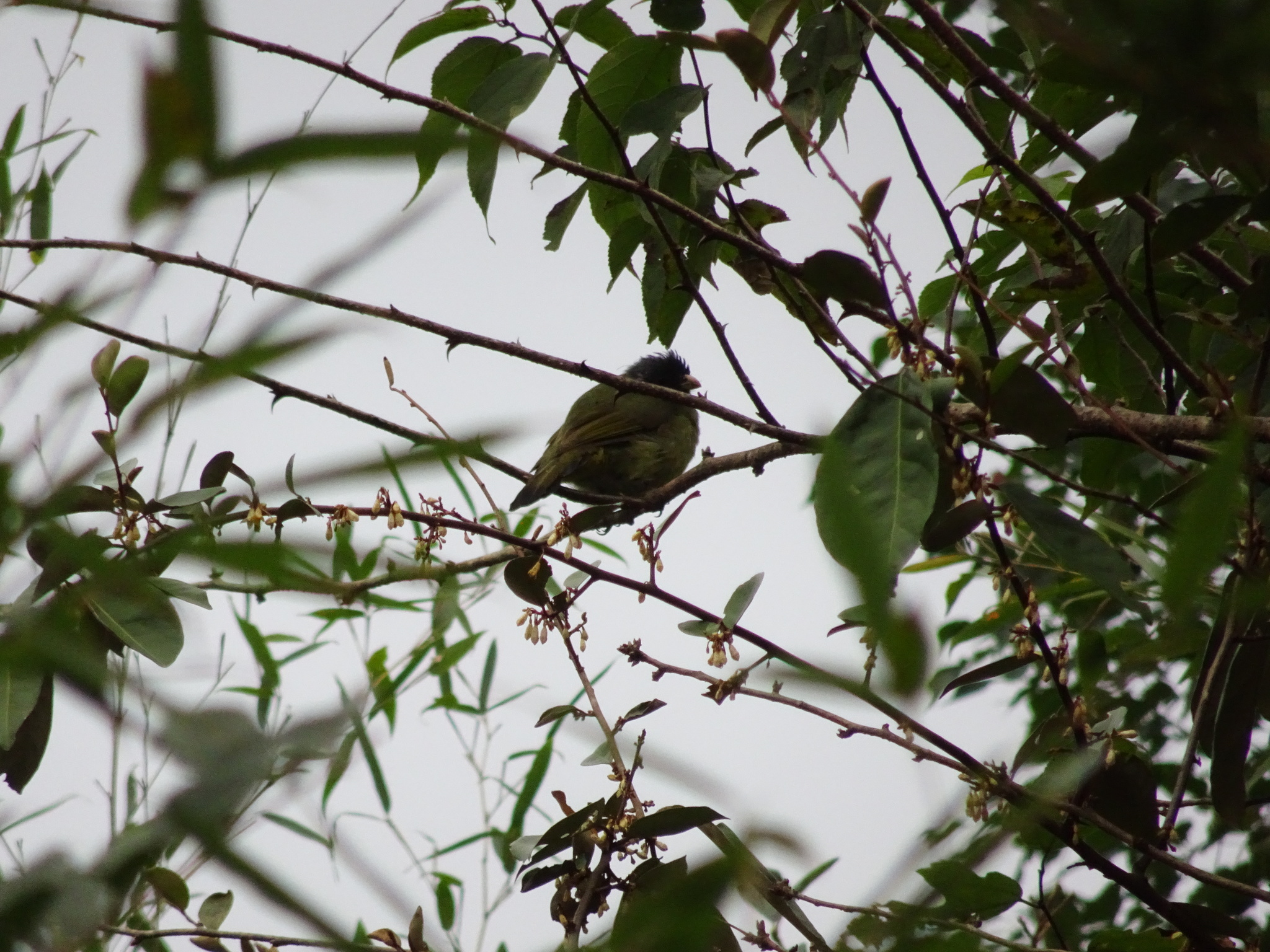
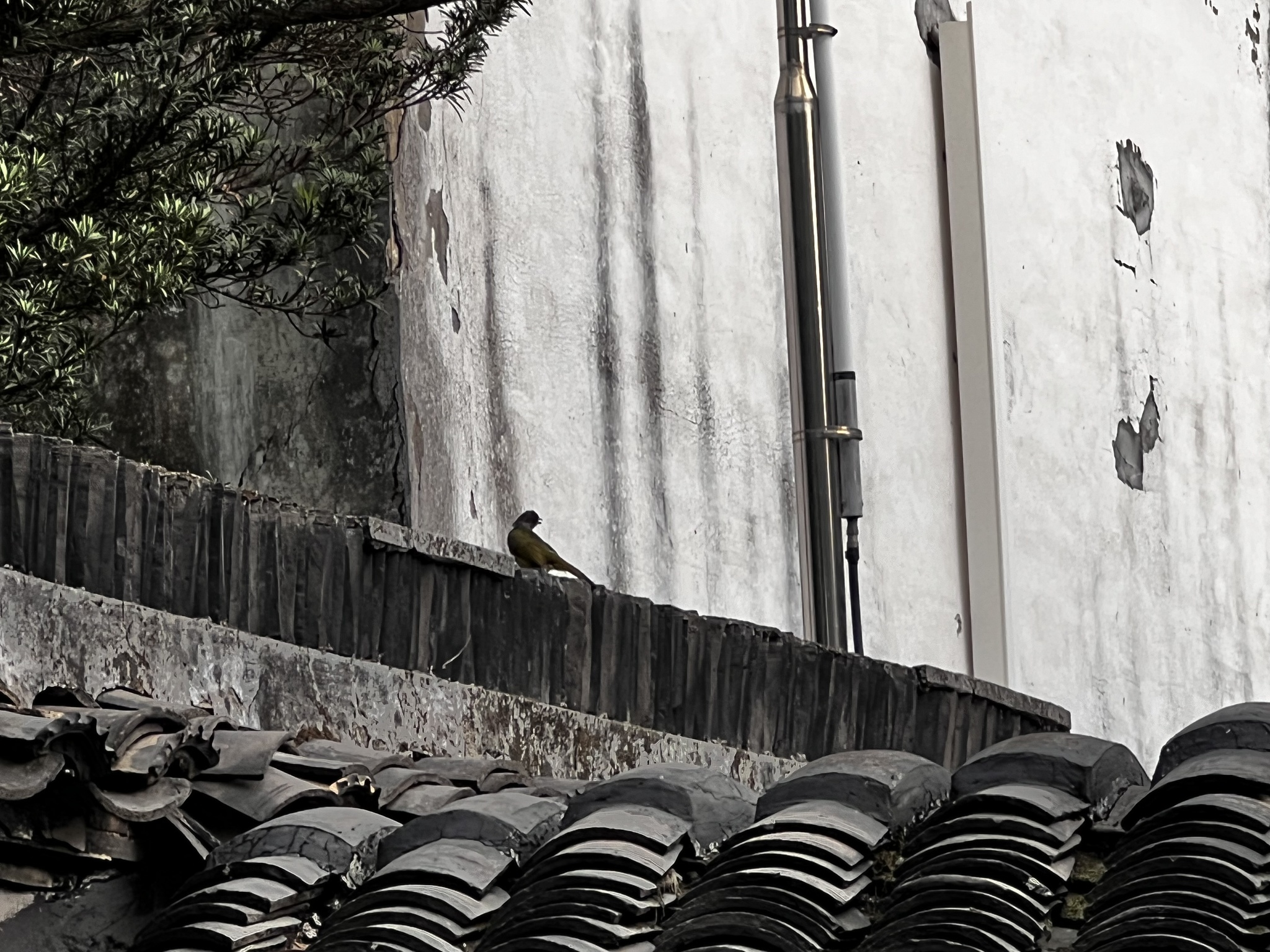
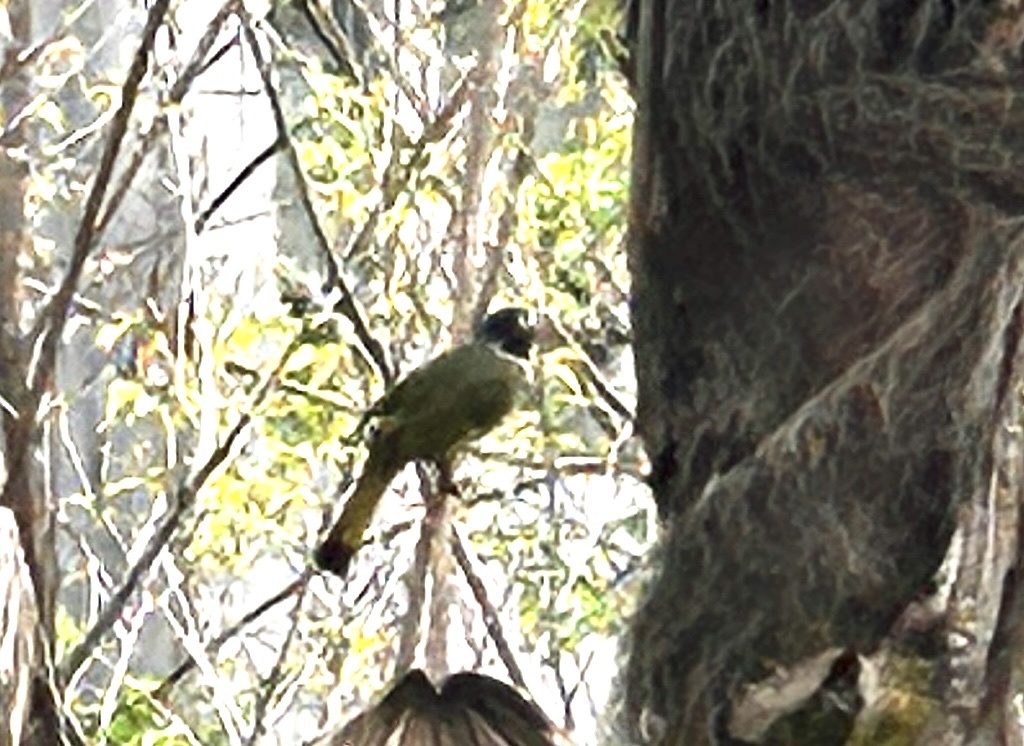
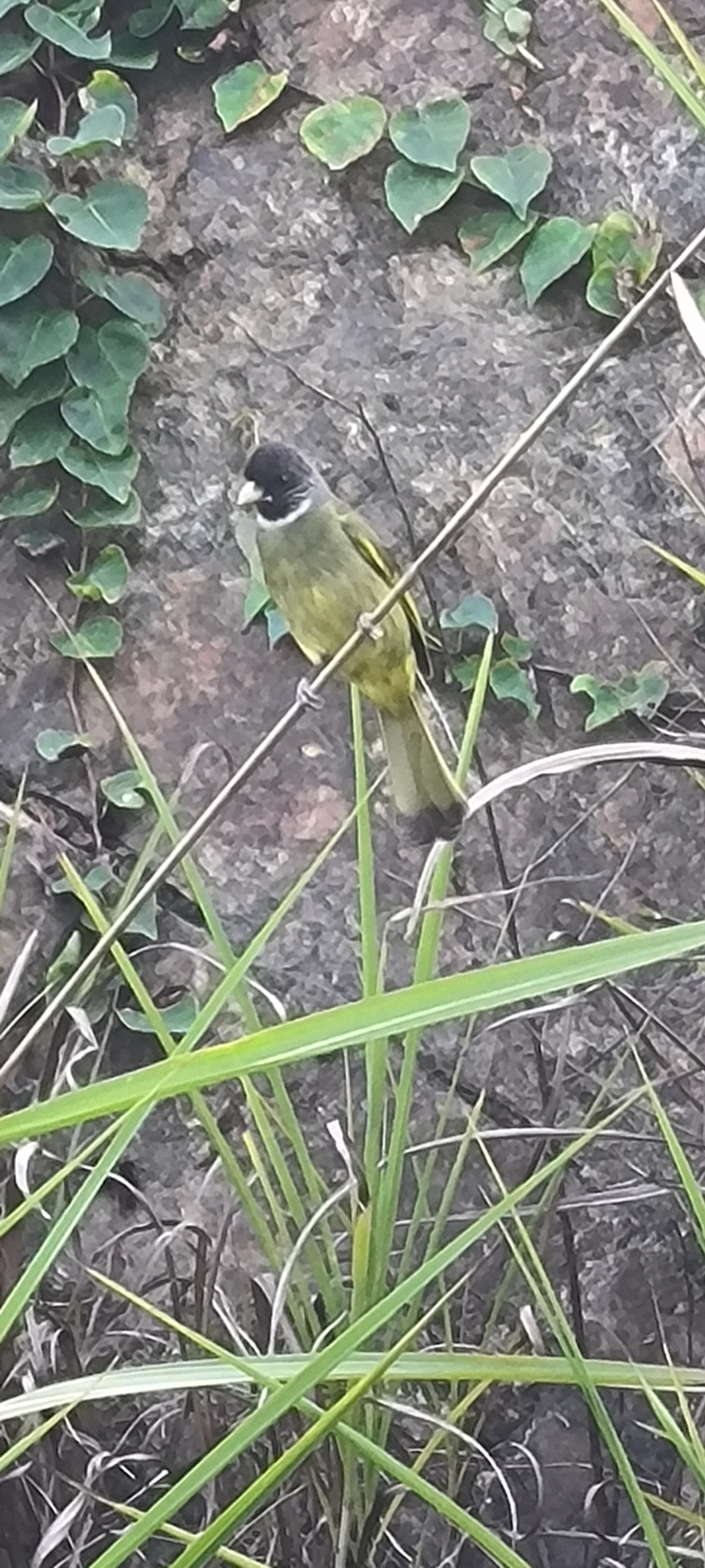
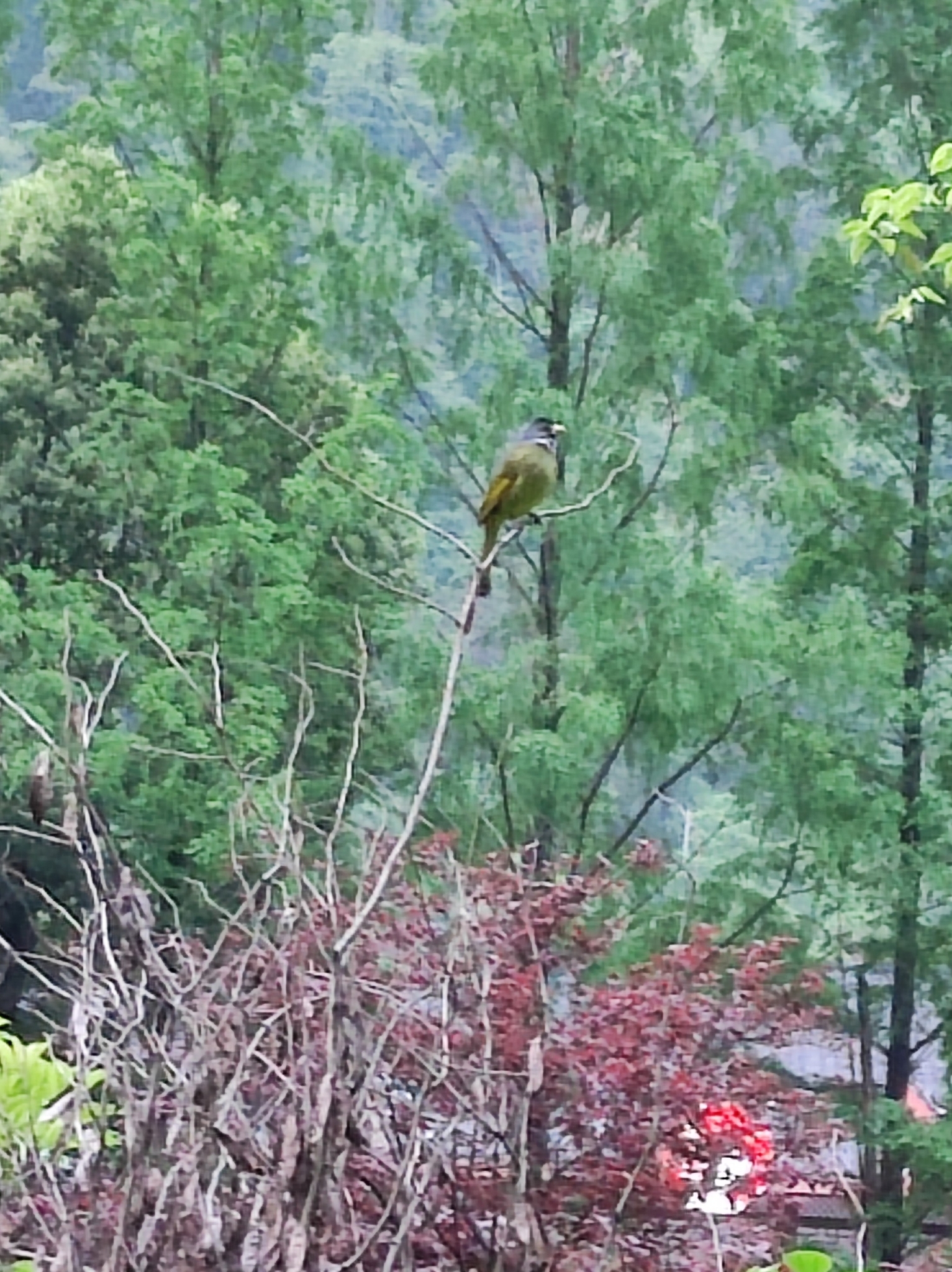
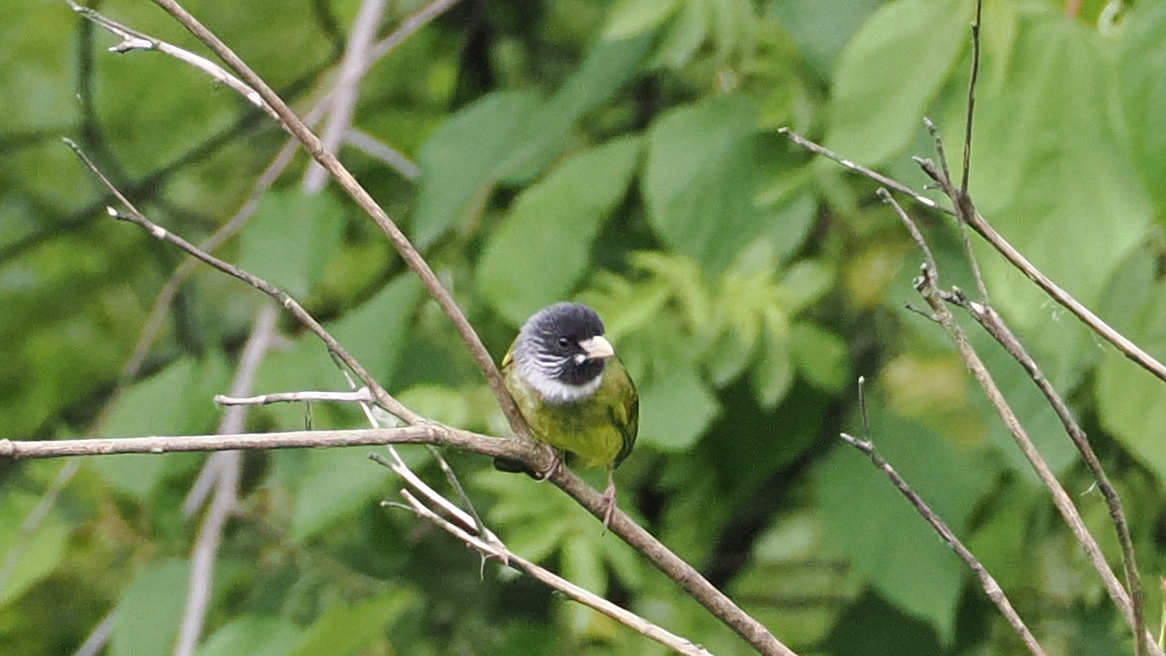
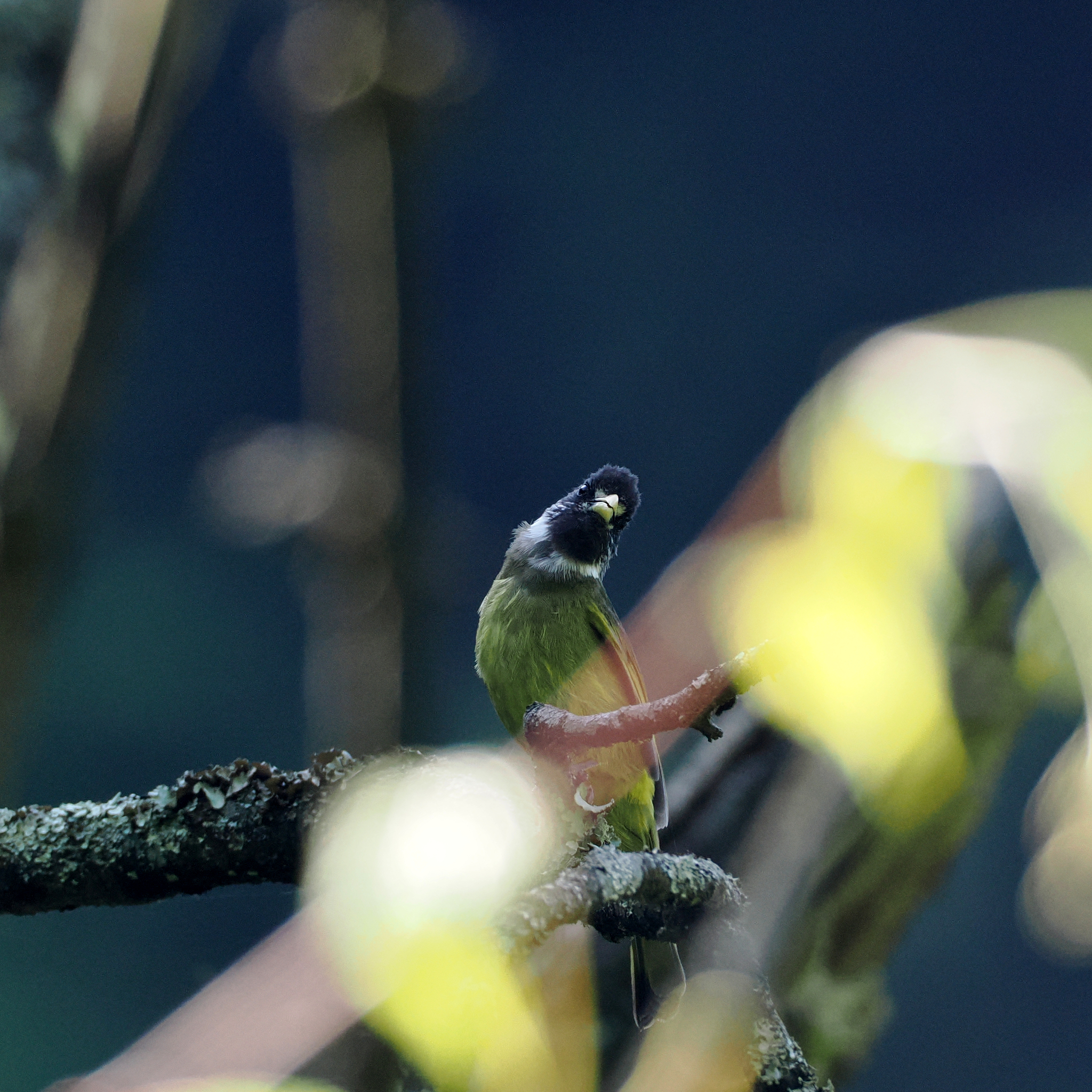
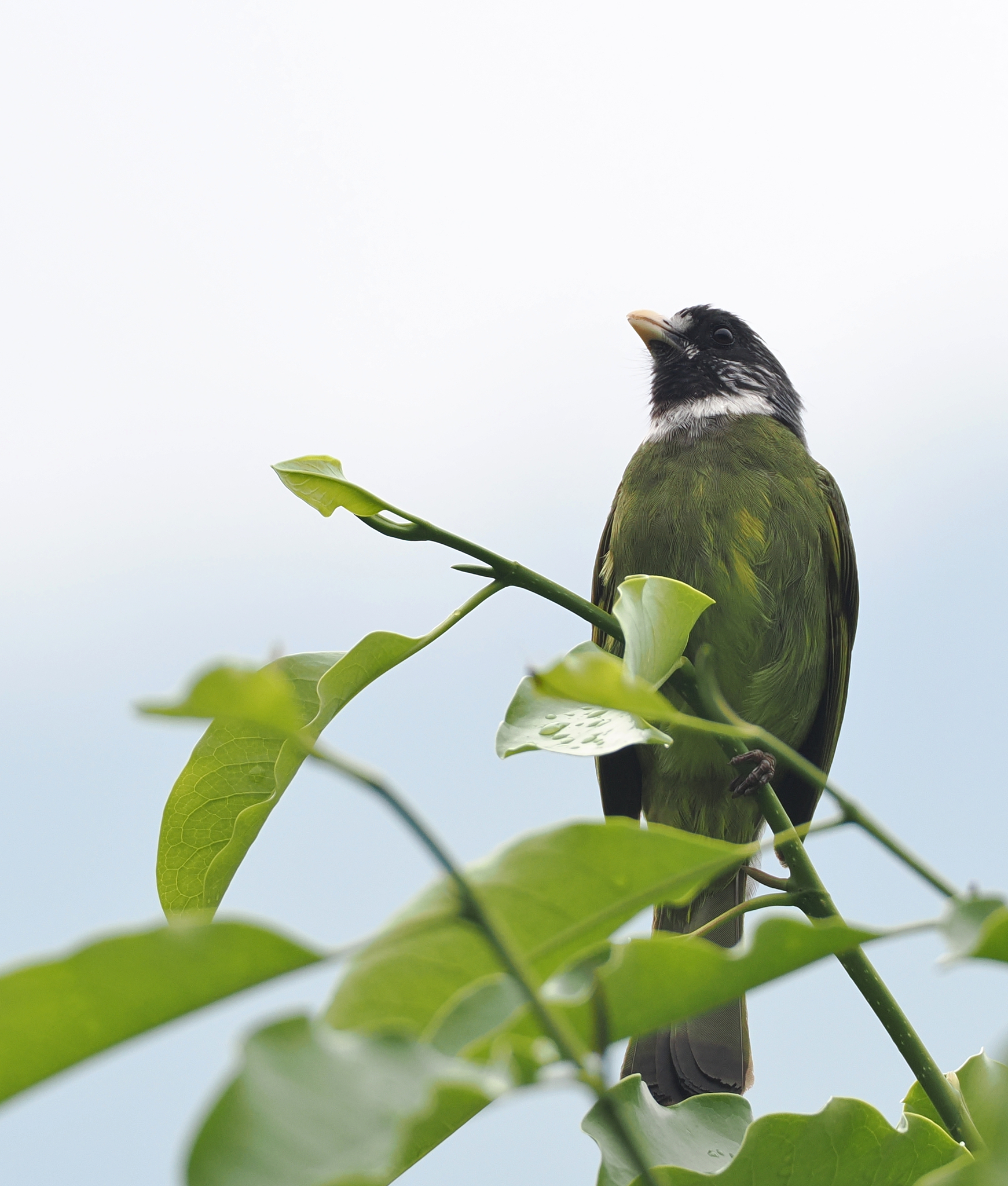
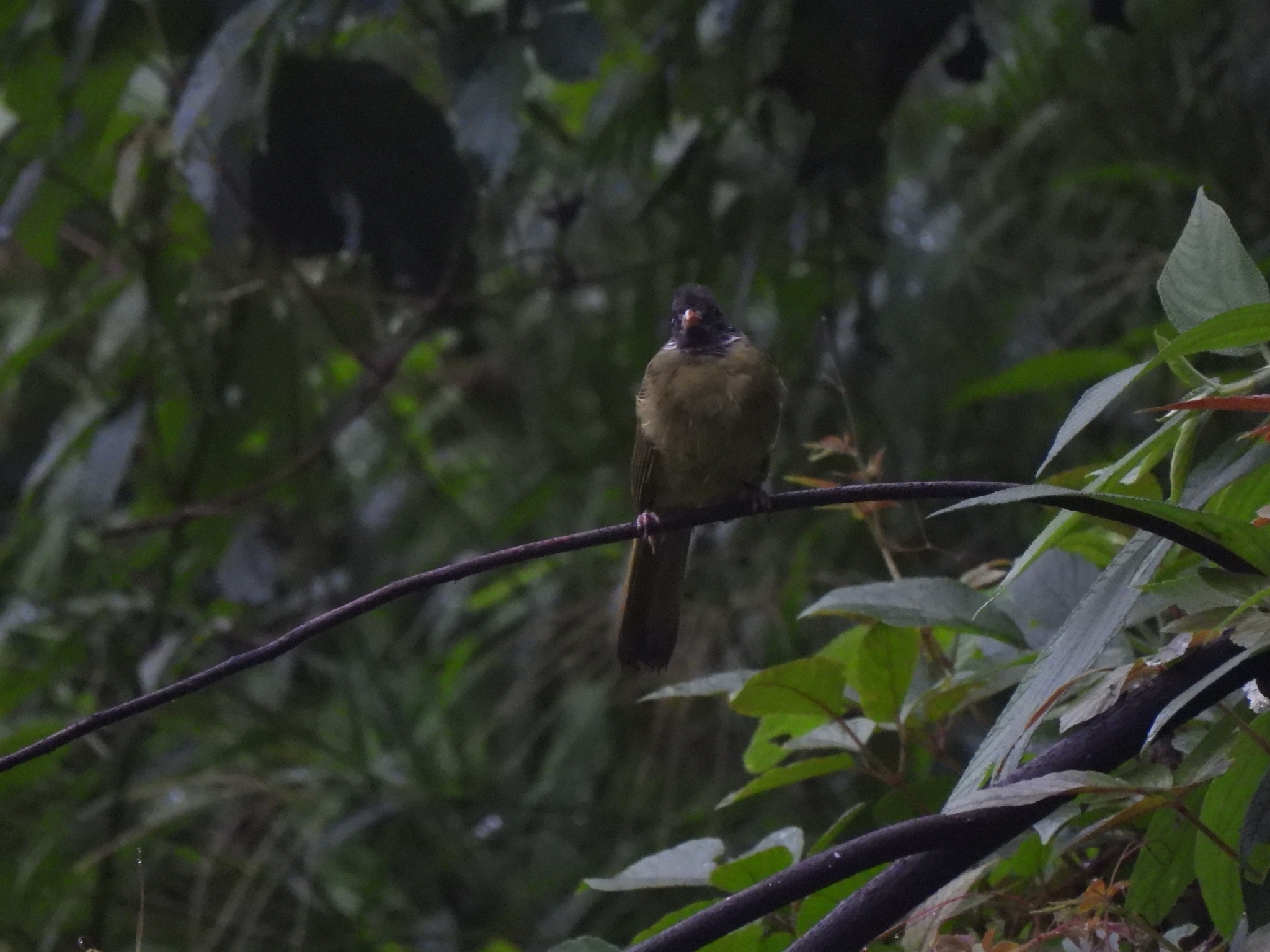
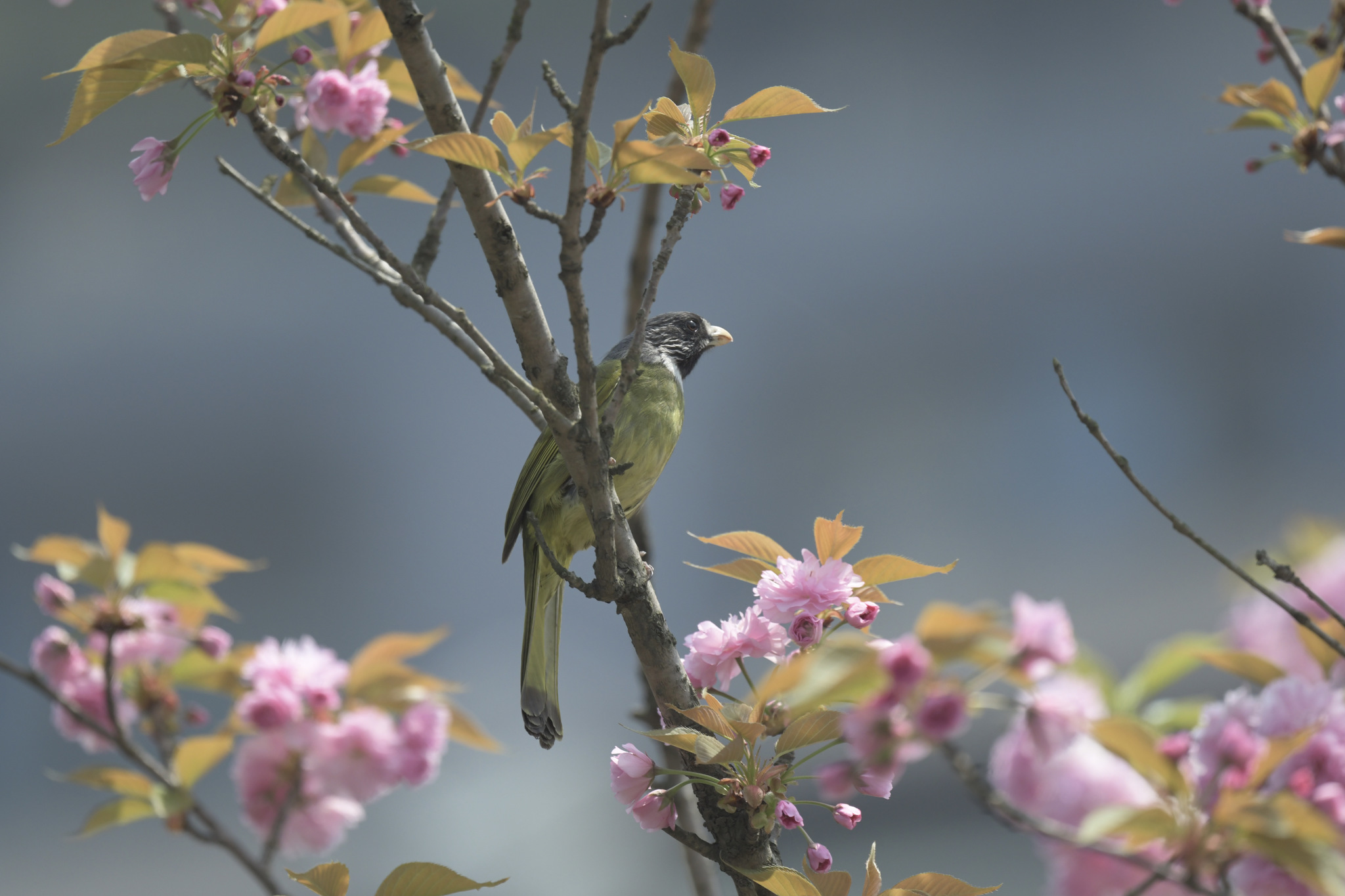
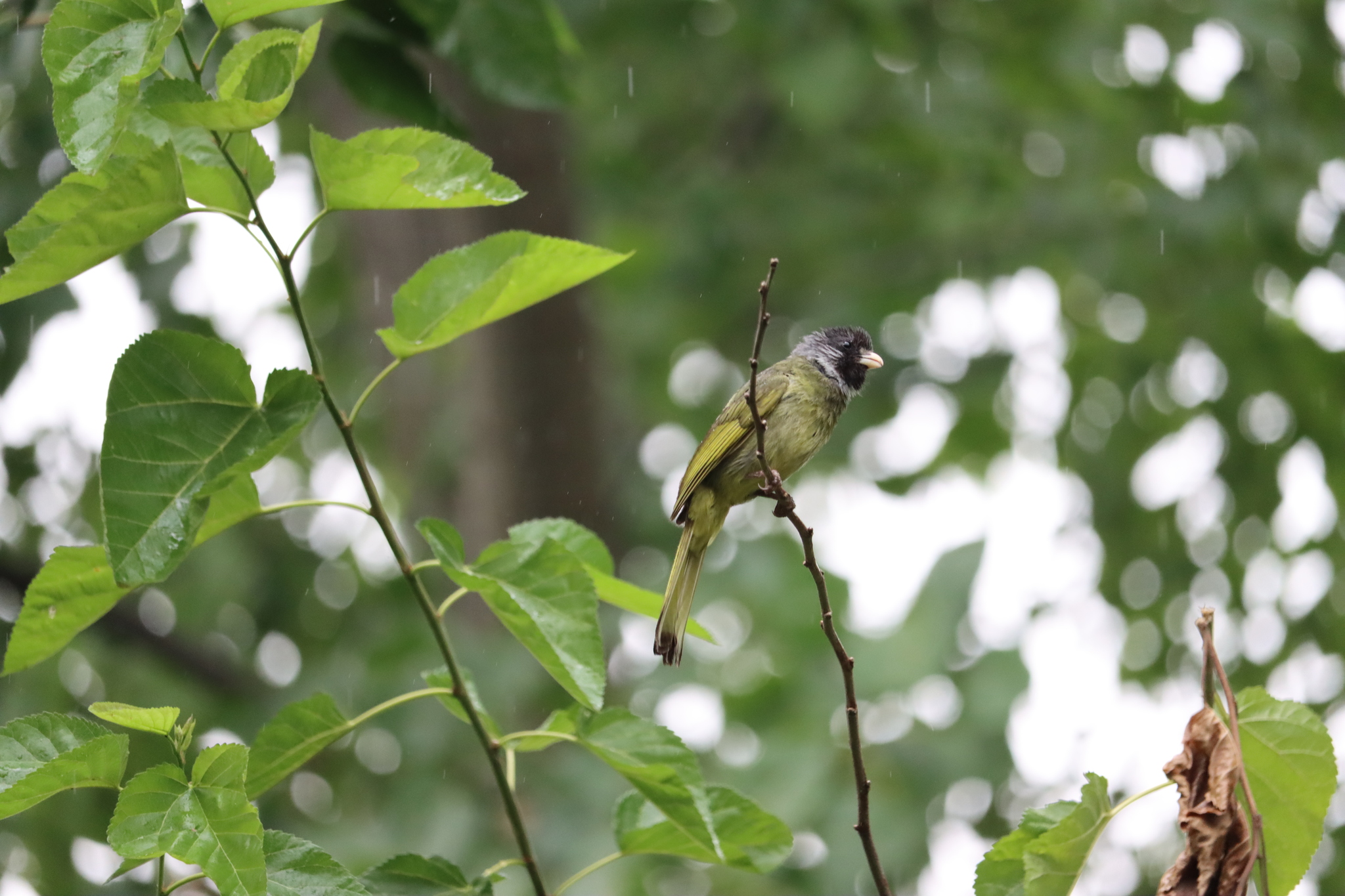
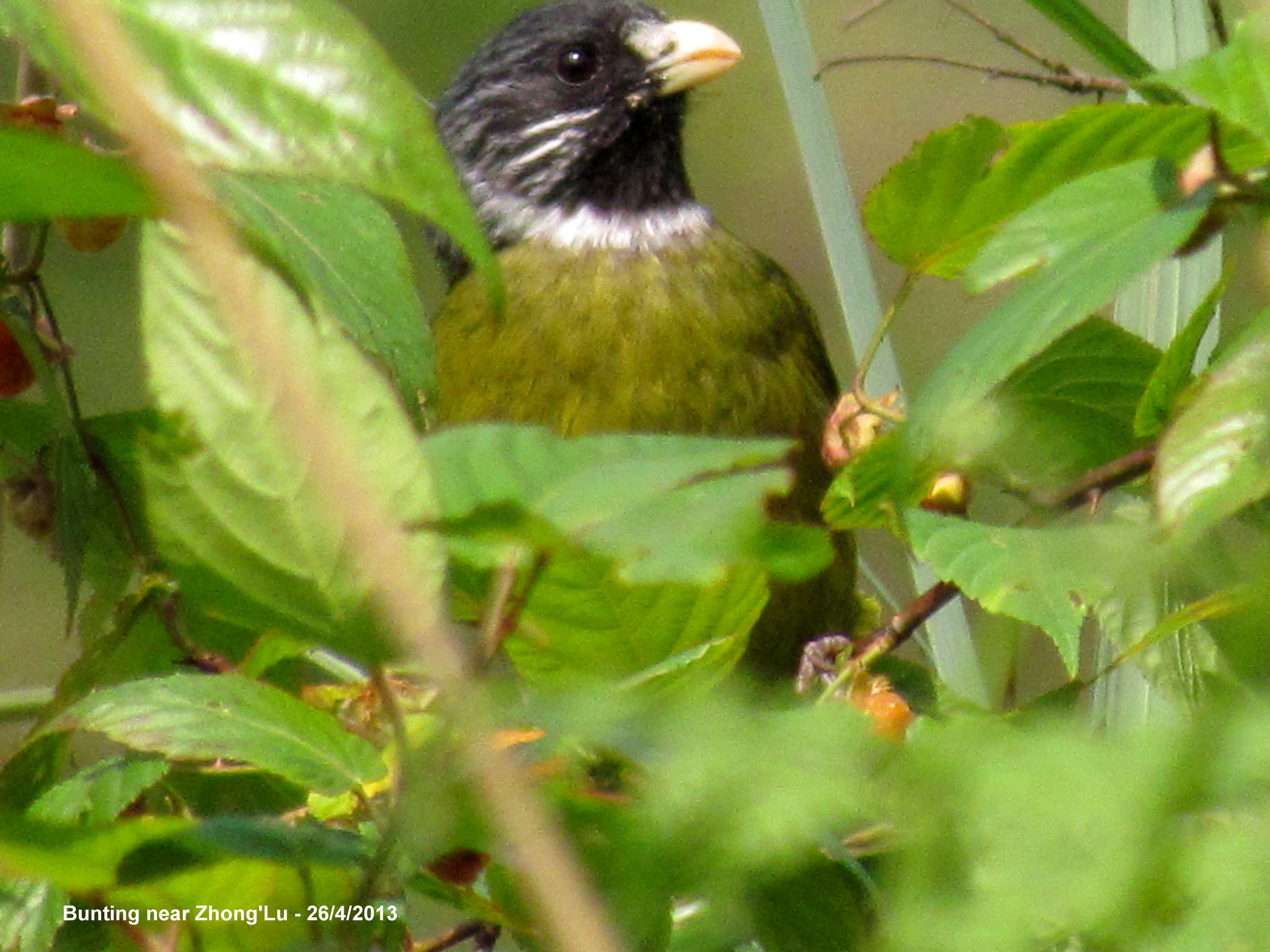
The collared finchbill is a medium-sized bulbul with a distinctive heavy, finch-like bill that gives the species its common name. It displays the stocky build and active posture characteristic of its family. plumage is primarily greyish-green above and lighter below, with subtle variations between subspecies. The head shows darker coloration, and the underparts typically exhibit a yellowish wash. The species measures approximately 20-22 centimeters in length, though precise measurements for body mass and wingspan are not documented in available sources.
Identification
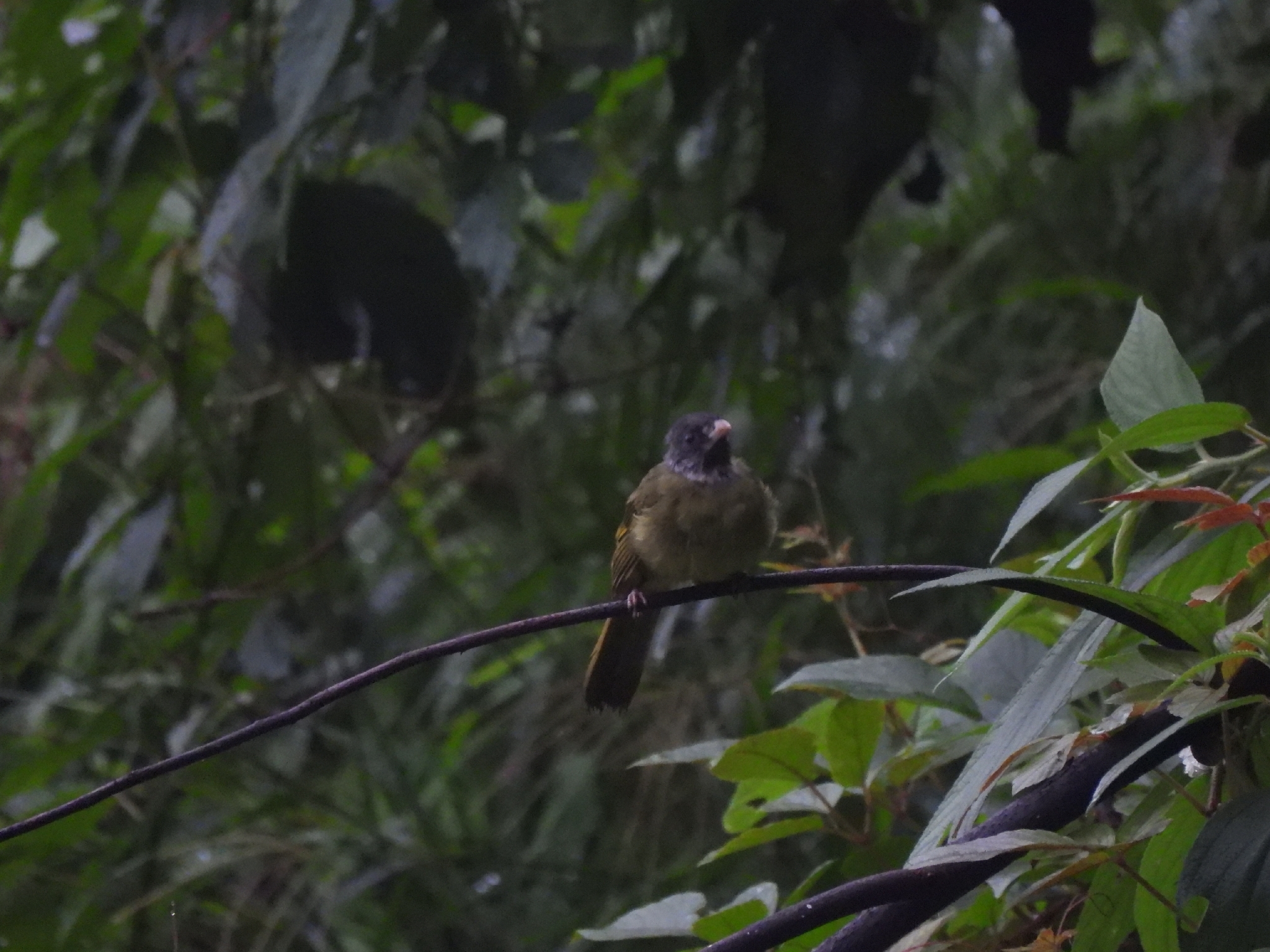
The collared finchbill's heavy, finch-like bill is its most distinctive field mark, setting it apart from other bulbul species in its range. It can be separated from the similar white-cheeked bulbul by its darker head, different bill shape, and the collared pattern that gives it its name. The subspecies in Taiwan and the Yaeyama Islands (S. s. cinereicapillus) shows a distinctly grey-capped appearance compared to the darker-headed nominate race. In flight, the species displays its typical bulbul silhouette with rounded wings and active wingbeats. Voice is an important identification aid, with the species producing sharper, more metallic notes compared to the sweeter calls of some relatives.
Distribution & Habitat
This species ranges across eastern and southern China, Taiwan, the Ryukyu Islands of Japan, and northern Vietnam. Two subspecies reflect its disjunct distribution pattern: the nominate race occupies central and southern China and northern Vietnam, while the distinctly colored S. s. cinereicapillus is restricted to Taiwan and the Miyako and Yaeyama Islands of Japan. The collared finchbill favors forested hills at moderate elevations, typically between 300 and 1,800 meters above sea level. It inhabits primary and secondary forests, forest edges, and wooded areas near cultivation. The species is generally resident within its range, though some elevational movements may occur in response to food availability or seasonal changes.
Behavior & Ecology
The collared finchbill is primarily frugivorous, with a diet that includes the fruits of Hedera nepalensis and Paederia scandens. It also consumes seeds and insects, providing protein particularly during the breeding season. The species forages actively in the mid-canopy and understory, often moving through mixed-species flocks outside the breeding period. Breeding behavior is monogamous, with pairs establishing territories in their preferred forested habitat. Females construct cup-shaped nests in trees, where they lay and incubate their eggs. Both parents participate in rearing the young. The species produces a variety of calls typical of bulbuls, including sharp notes used for contact and more complex songs during the breeding season.
Conservation
The collared finchbill is currently listed as Least Concern by the IUCN, reflecting its relatively large range and apparently stable population trend. The species benefits from its ability to persist in secondary forests and forest edges, though it may face localized pressure from trapping for the cagebird trade in parts of its range. Agricultural expansion and urbanization in lowland areas have reduced available habitat, potentially concentrating populations more in hilly regions. No specific conservation measures are currently in place, though the species occurs in several protected areas across its range.
Culture
The collared finchbill has limited cultural significance compared to some other Asian bulbuls, though it is known locally by several vernacular names including Chinese finch-bill and Japanese finch-bill reflecting its geographic distribution. The species is sometimes kept as an aviary bird in parts of its range, though it is not a major species in the traditional cagebird trade. No significant folklore or mythological associations are documented in available sources.
Source: Wikipedia · CC BY-SA 3.0
Taxonomy
- Order
- Passeriformes
- Family
- Pycnonotidae
- Genus
- Spizixos
- eBird Code
- colfin1
Vocalizations
Subspecies (2)
-
Spizixos semitorques cinereicapillus
Taiwan
-
Spizixos semitorques semitorques
mountains of southern China to northern Vietnam (northwestern Tonkin)
Data Sources
Species description from Wikipedia, licensed under CC BY-SA 3.0.
Bird images and sounds sourced from GBIF, contributed by citizen scientists worldwide under Creative Commons licenses.
Taxonomy data from AviList 2025.