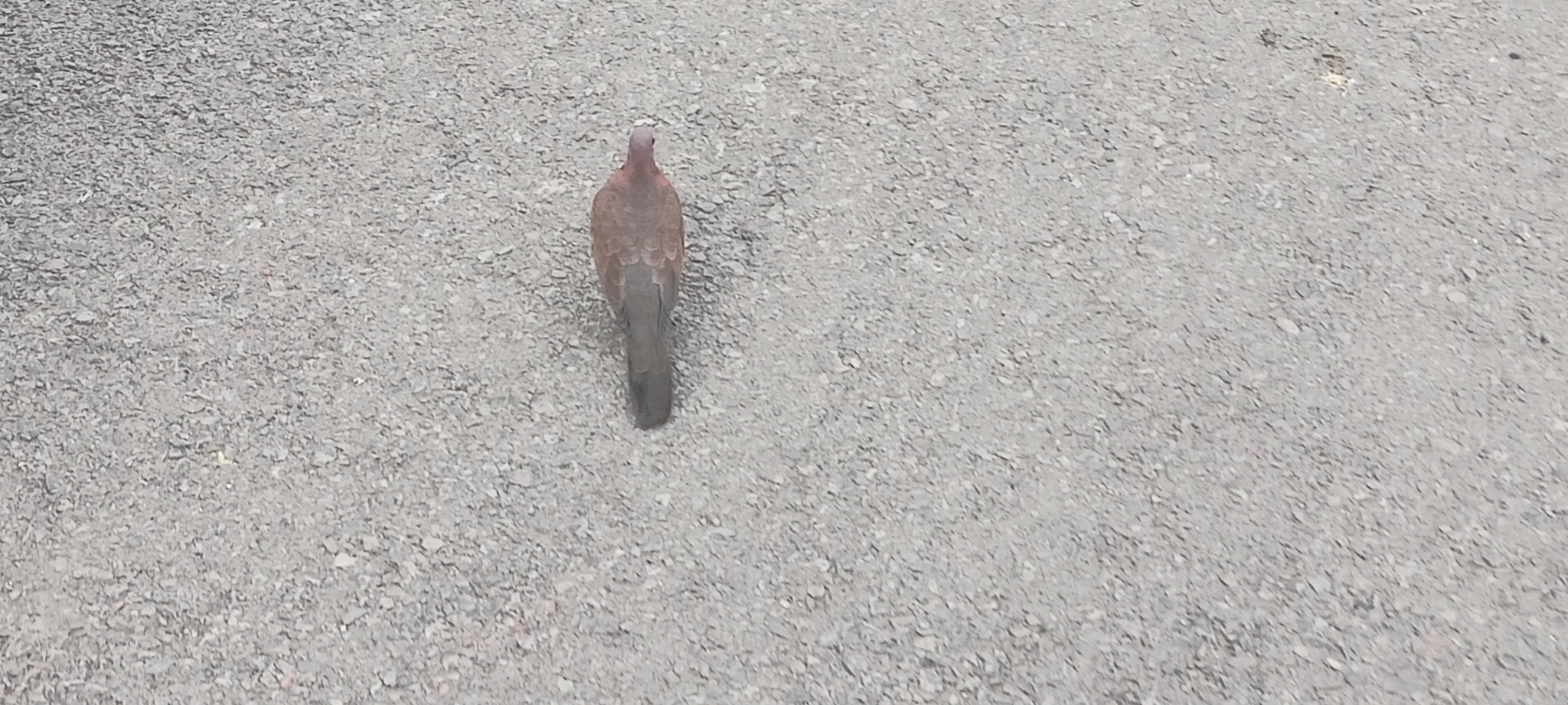
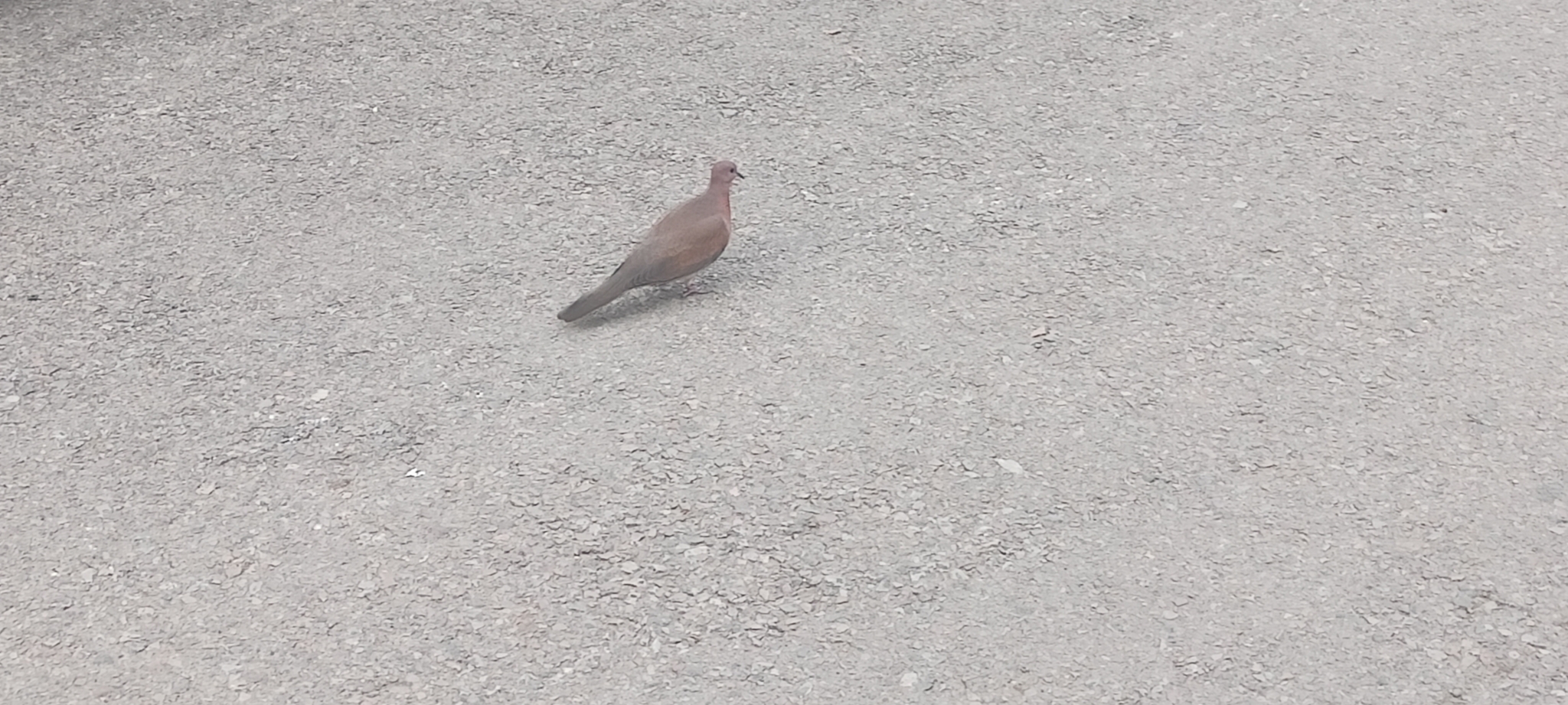
Laughing Dove
Spilopelia senegalensis
棕斑鸠
Introduction
Small long-tailed pigeon (Spilopelia senegalensis) native to Africa, the Middle East, and South Asia. Also established in Western Australia after release from Perth Zoo in 1898. Inhabits dry scrub and semi-desert habitats where pairs frequently feed on the ground. Closely related to the spotted dove (Spilopelia chinensis), distinguished by its white and black chequered necklace. Other names include laughing turtle dove, palm dove, Senegal dove, and little brown dove.
Description
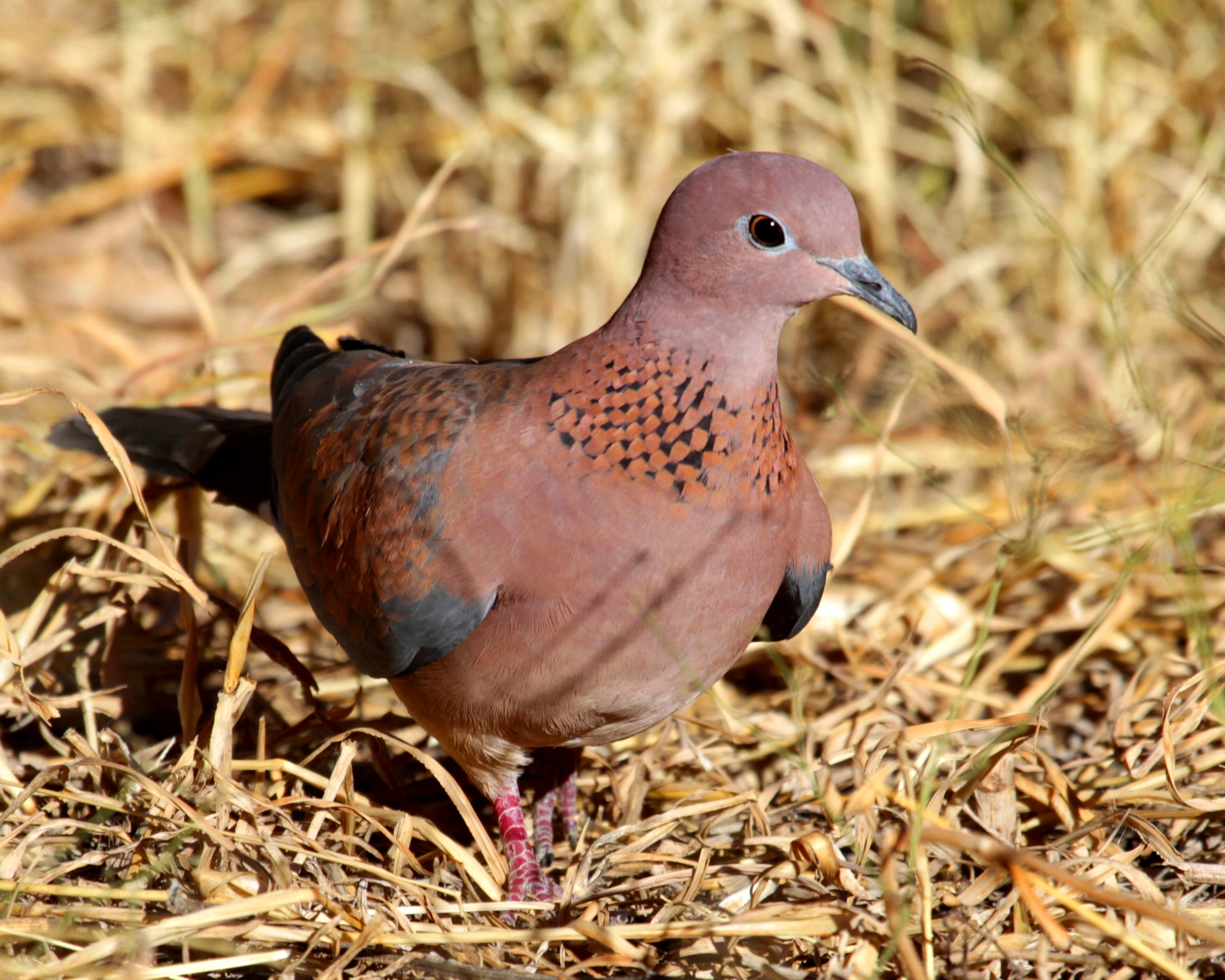
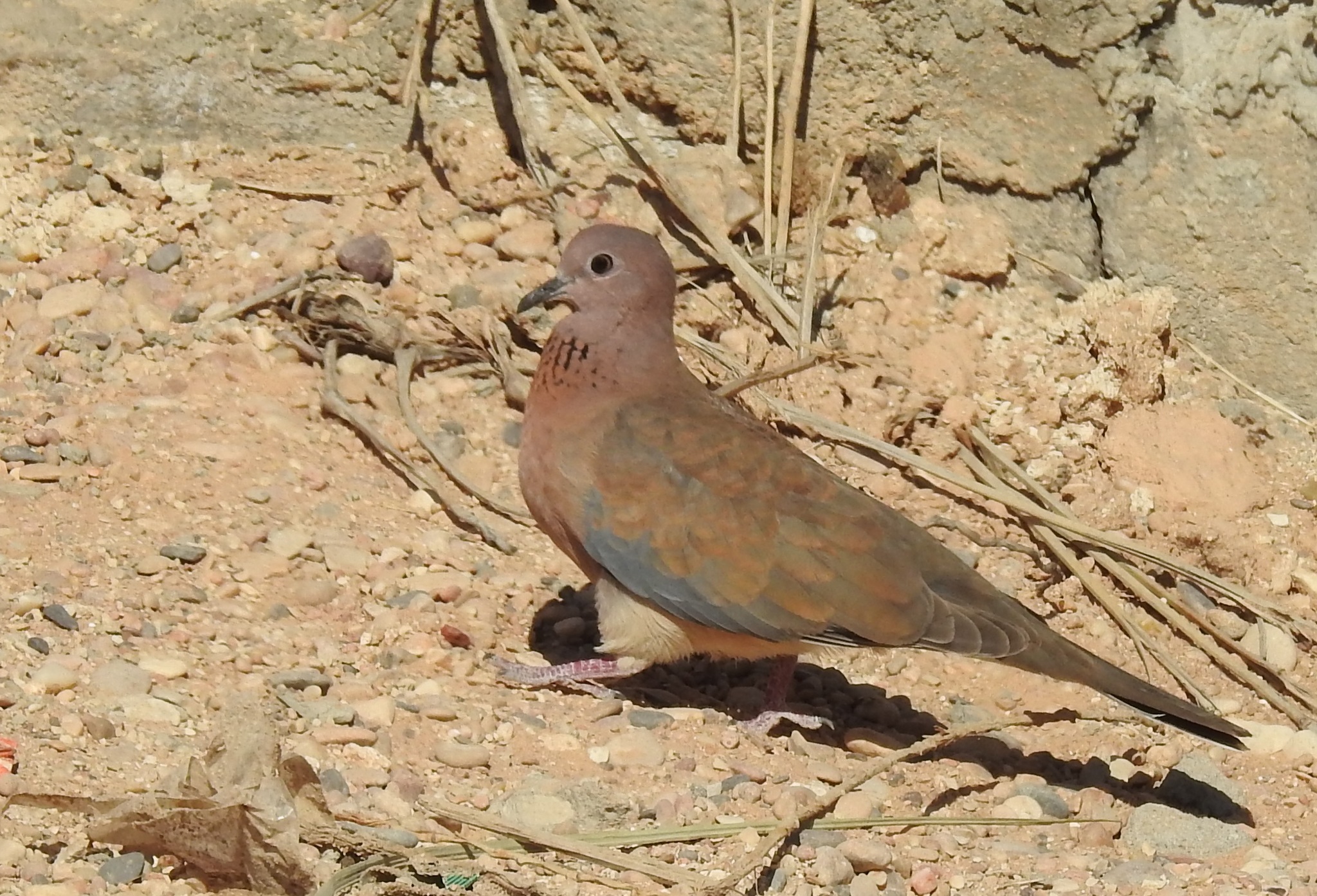
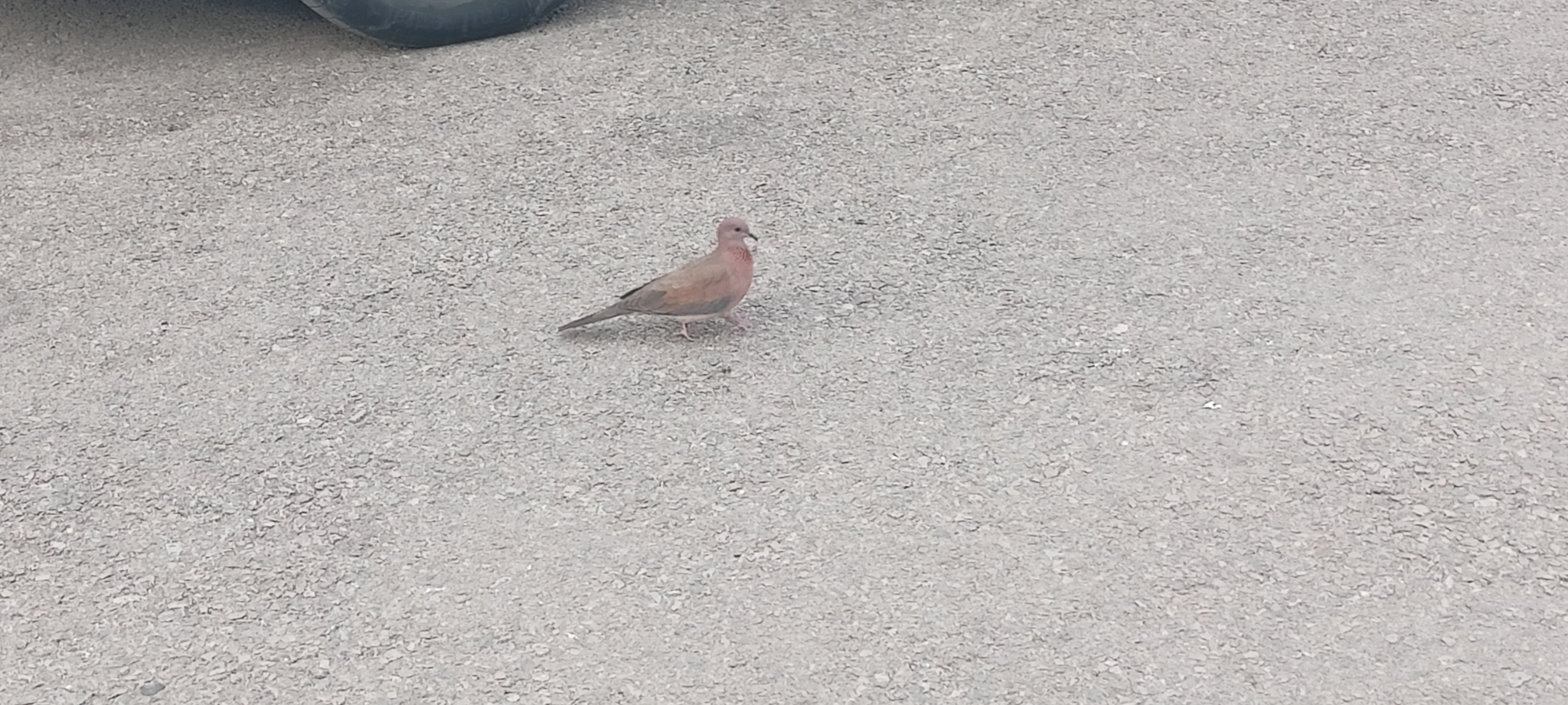
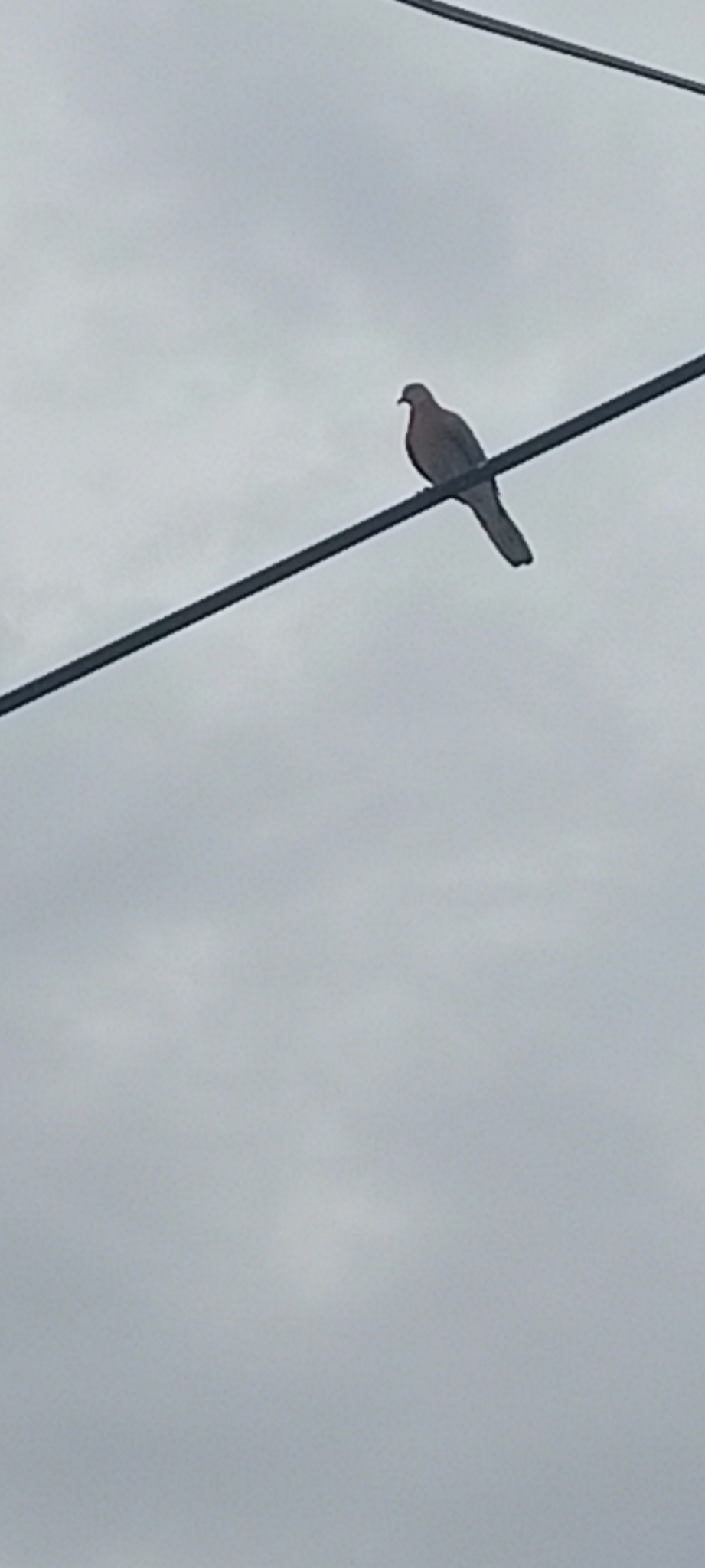
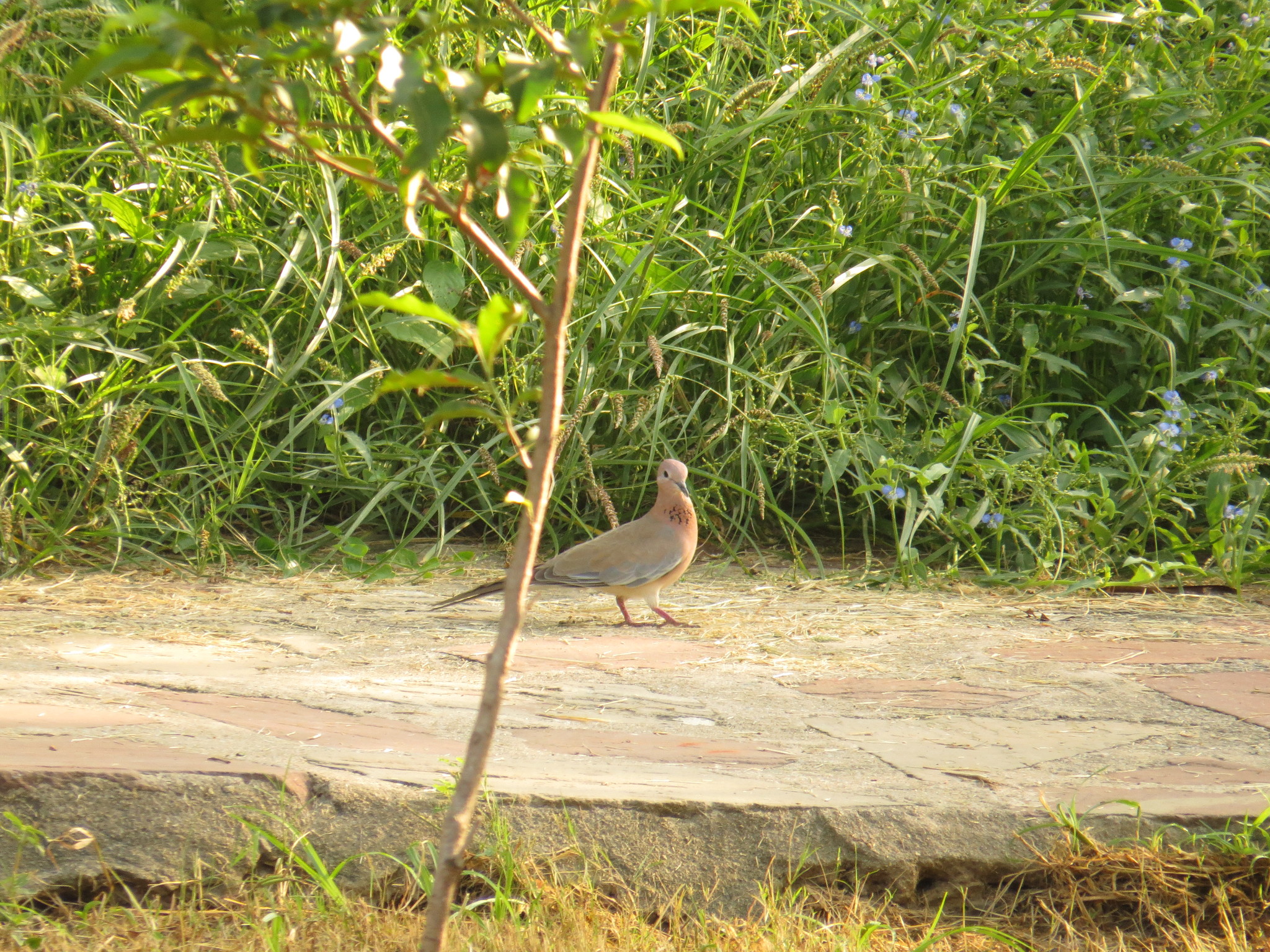
Long-tailed, slim pigeon measuring 25 cm (9.8 in) in length. Underparts pinkish brown with lilac-tinged head and neck, shading to buff on lower abdomen. Adults display a chequered rufous and grey patch on sides of neck composed of split feathers. Upper parts brownish with bluish-grey band along wing. South Asian population has uniform dull brown back. African populations (S. s. senegalensis and S. s. phoenicophila) show bluish-grey rump and upper tail coverts with varying neck and wing feather shades. S. s. aegyptiaca is larger with vinous head and nape and rufous upper wing coverts. Tail graduated with white-tipped outer feathers. Sexes field-identical; juveniles lack neck markings. Legs red. Arid-zone populations are paler.
Identification
Distinguished from similar doves by the chequered rufous and grey neck patch and pinkish underparts with lilac-tinged head. Separated from the closely related spotted dove by the latter's prominent white and black chequered necklace. The long graduated tail with white-tipped outer feathers is diagnostic. Small size (25 cm) and slim profile help distinguish it from larger columbid species. Sexes appear identical in the field; juveniles lack the characteristic neck markings.
Distribution & Habitat
Common and widespread across Sub-Saharan Africa, Saudi Arabia, Iran, Iraq, Afghanistan, Pakistan, India, Cyprus, Palestine, Israel, Lebanon, Syria, Jordan, UAE, and Turkey. Inhabits scrub, dry farmland, and human habitation areas, often becoming very tame. Populations in Turkey, Cyprus, and the Levant may derive from human introductions. Mostly sedentary; some populations make local movements. Ringed birds in Gujarat have been recovered 200 km north in Pakistan. Exhausted individuals recorded landing on ships in the Arabian Sea. Introduced to Perth in 1889 and established throughout Western Australia.
Behavior & Ecology
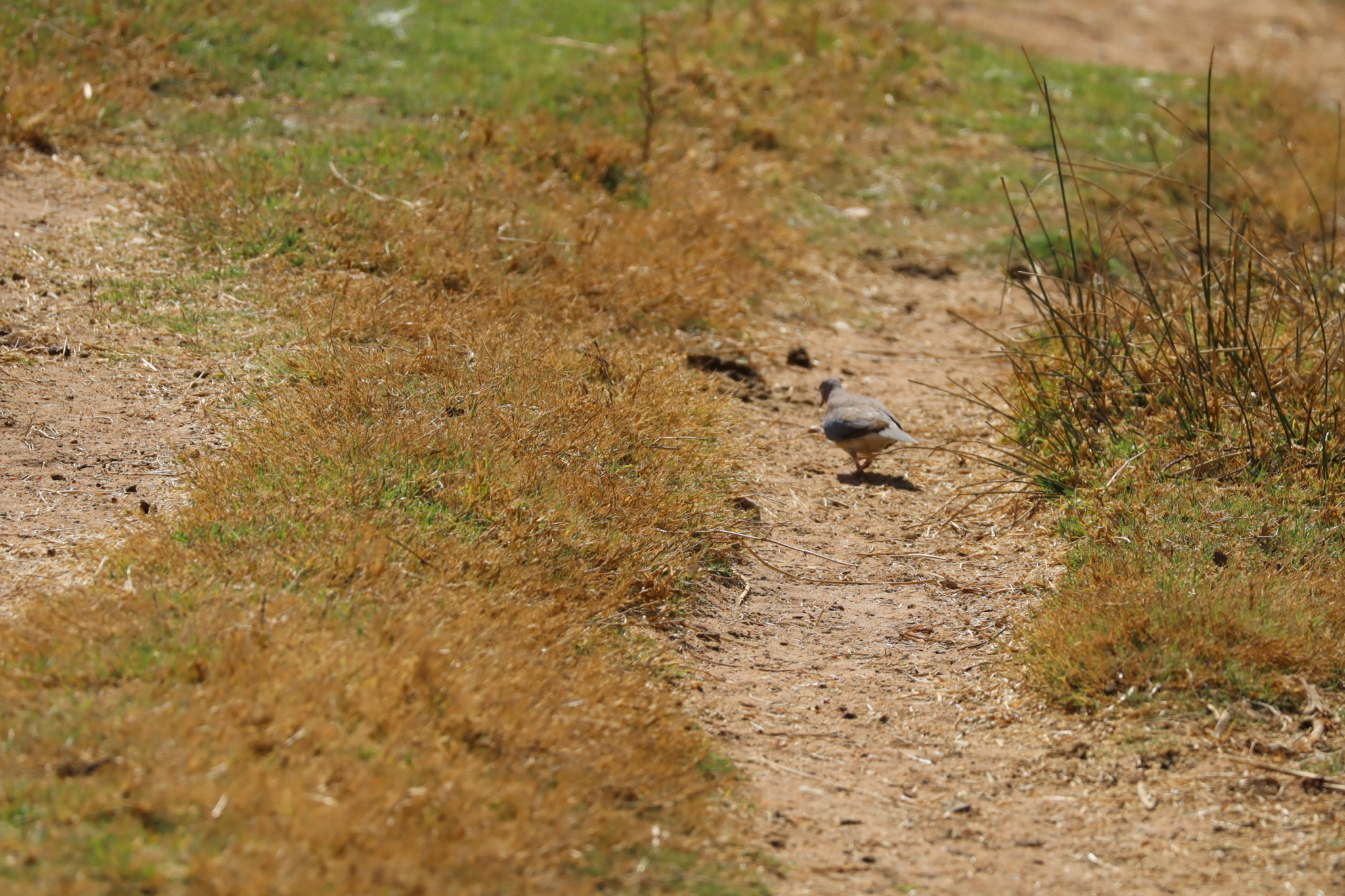
Usually seen in pairs or small parties, rarely in larger groups. Larger congregations form when drinking at waterholes in arid regions. Feeds on fallen grass seeds, vegetable matter, and small ground insects including termites and beetles. Forages terrestrially in grasslands and cultivation. Flight is quick and direct with regular wing beats and occasional sharp flicks. Male courtship includes head-bobbing displays, wing-clapping above the back, and displacement-preening. Female accepts by crouching and begging. Both parents build nest (flimsy twig platform in low bush), incubate, and feed young. Two eggs laid one day apart, incubated after second egg, hatching after 13-15 days. Fledging occurs after 14-16 days. Multiple broods per season; up to seven broods recorded in Turkey. Altricial hatchlings initially fed crop-milk. Chuckling call is a low rolling croo-doo-doo-doo-doo with rising and falling amplitude.
Source: Wikipedia · CC BY-SA 3.0
Taxonomy
- Order
- Columbiformes
- Family
- Columbidae
- Genus
- Spilopelia
- eBird Code
- laudov1
Vocalizations
Subspecies (5)
-
Spilopelia senegalensis aegyptiaca
Nile Valley (Suez Canal and delta southward to Wadi Halfa)
-
Spilopelia senegalensis cambayensis
eastern Arabia and eastern Iraq eastward to Pakistan and India
-
Spilopelia senegalensis ermanni
Transcaspia and Kazakhstan eastward to western China (western Xinjiang), southward to northern Afghanistan
-
Spilopelia senegalensis phoenicophila
oases south of Atlas Mountains in Morocco, Algeria, and Tunisia
-
Spilopelia senegalensis senegalensis
sub-Saharan Africa, western Arabian Peninsula, and Socotra
Data Sources
Species description from Wikipedia, licensed under CC BY-SA 3.0.
Bird images and sounds sourced from GBIF, contributed by citizen scientists worldwide under Creative Commons licenses.
Taxonomy data from AviList 2025.