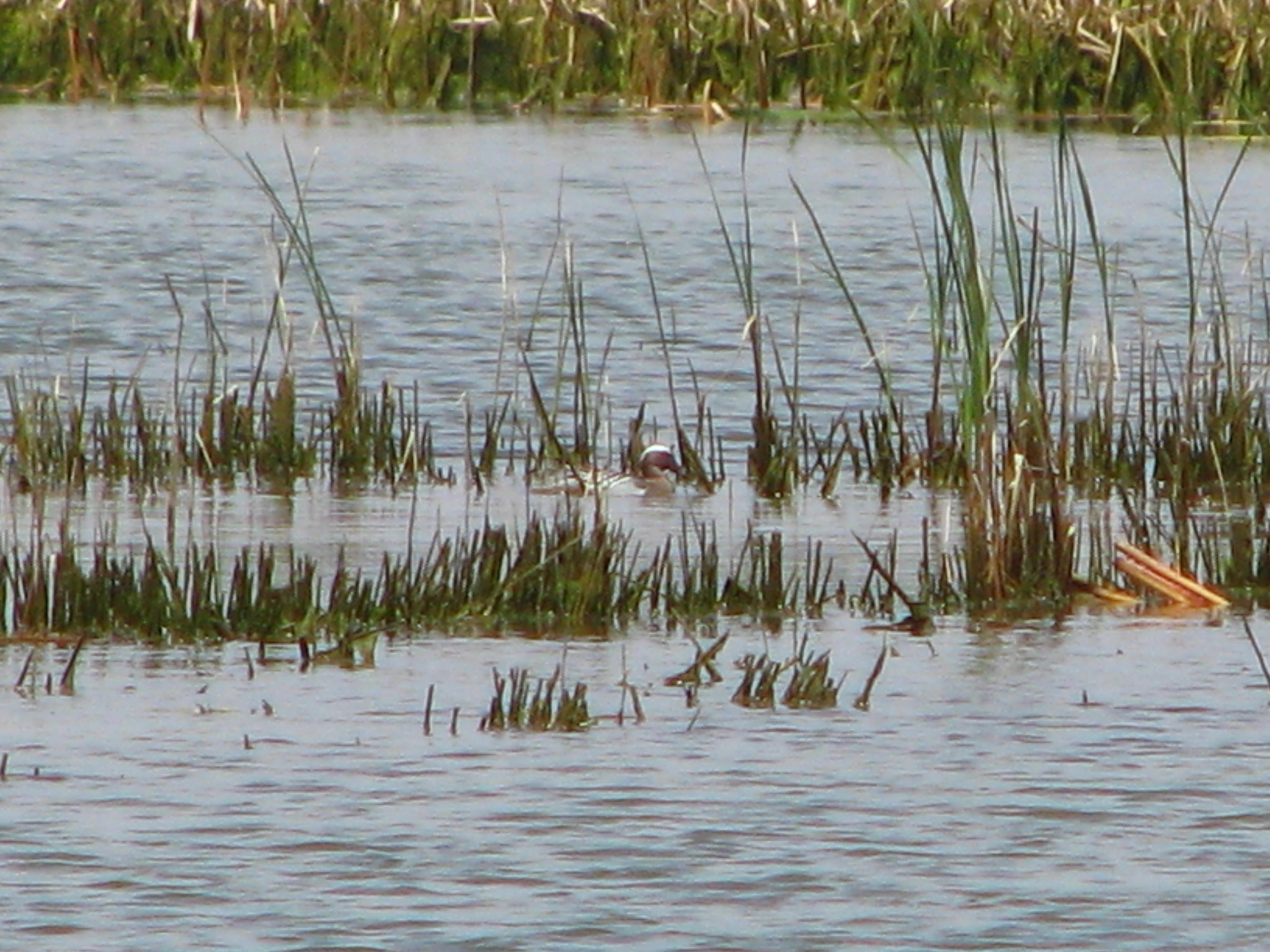
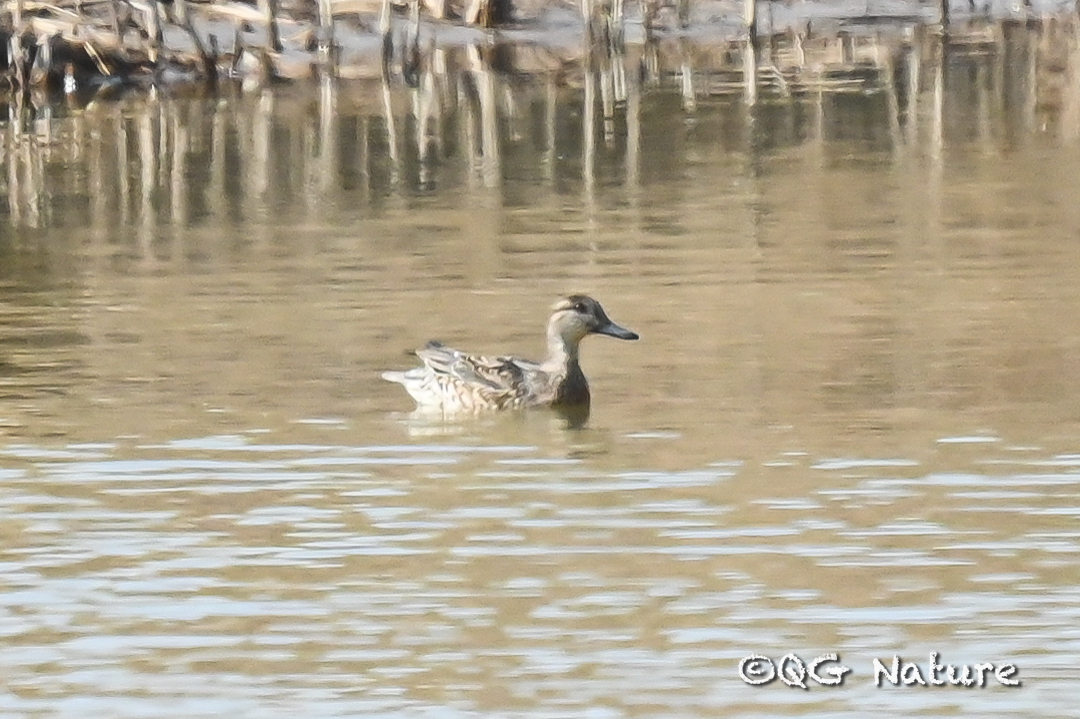
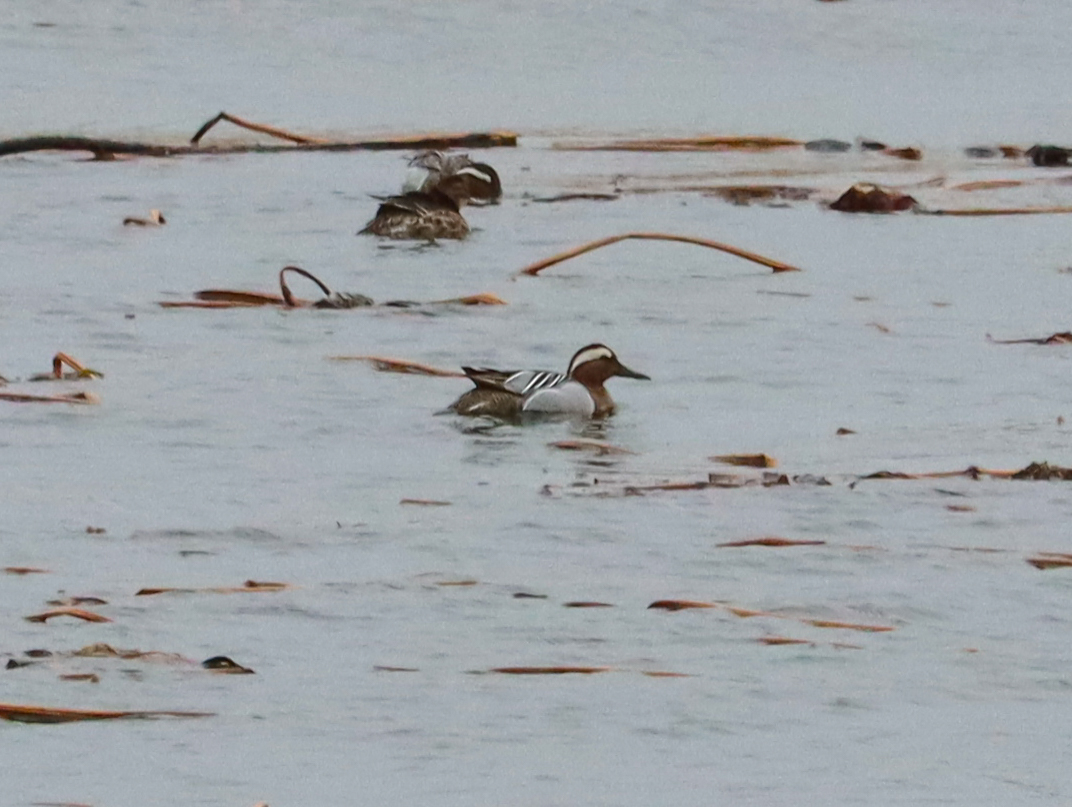
Garganey
Spatula querquedula
白眉鸭
Introduction
The species is a small dabbling duck. It is strictly migratory, with the entire population moving southward each winter. During flight, it rises easily from water with a fast, twisting, wader-like movement. Winter flocks congregate in Africa, India, Bangladesh, and Australasia. Breeding habitat consists of grassland adjacent to shallow marshes and steppe lakes, where nesting occurs in quiet wetland environments. The British Isles support a small breeding population, concentrated primarily in the marshes of Norfolk and Suffolk.
Description
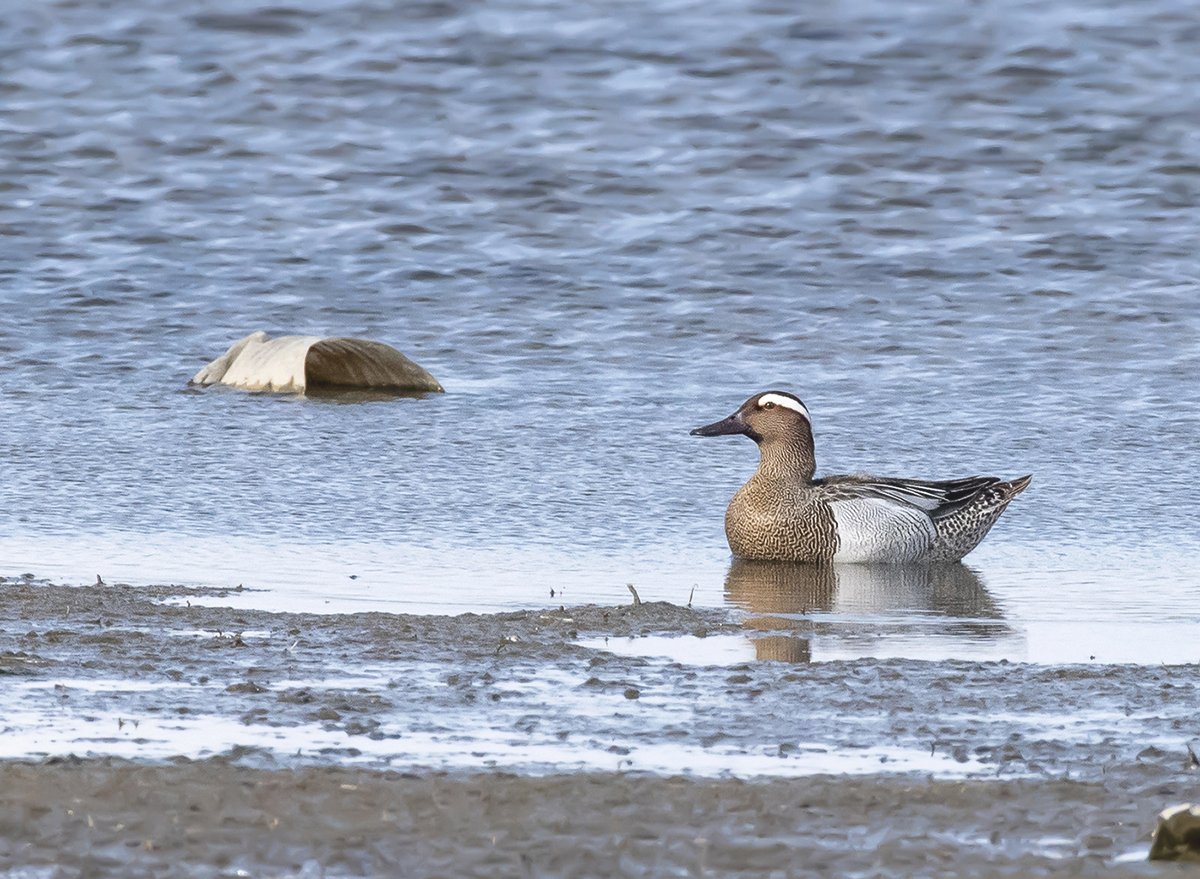
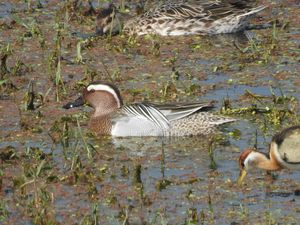
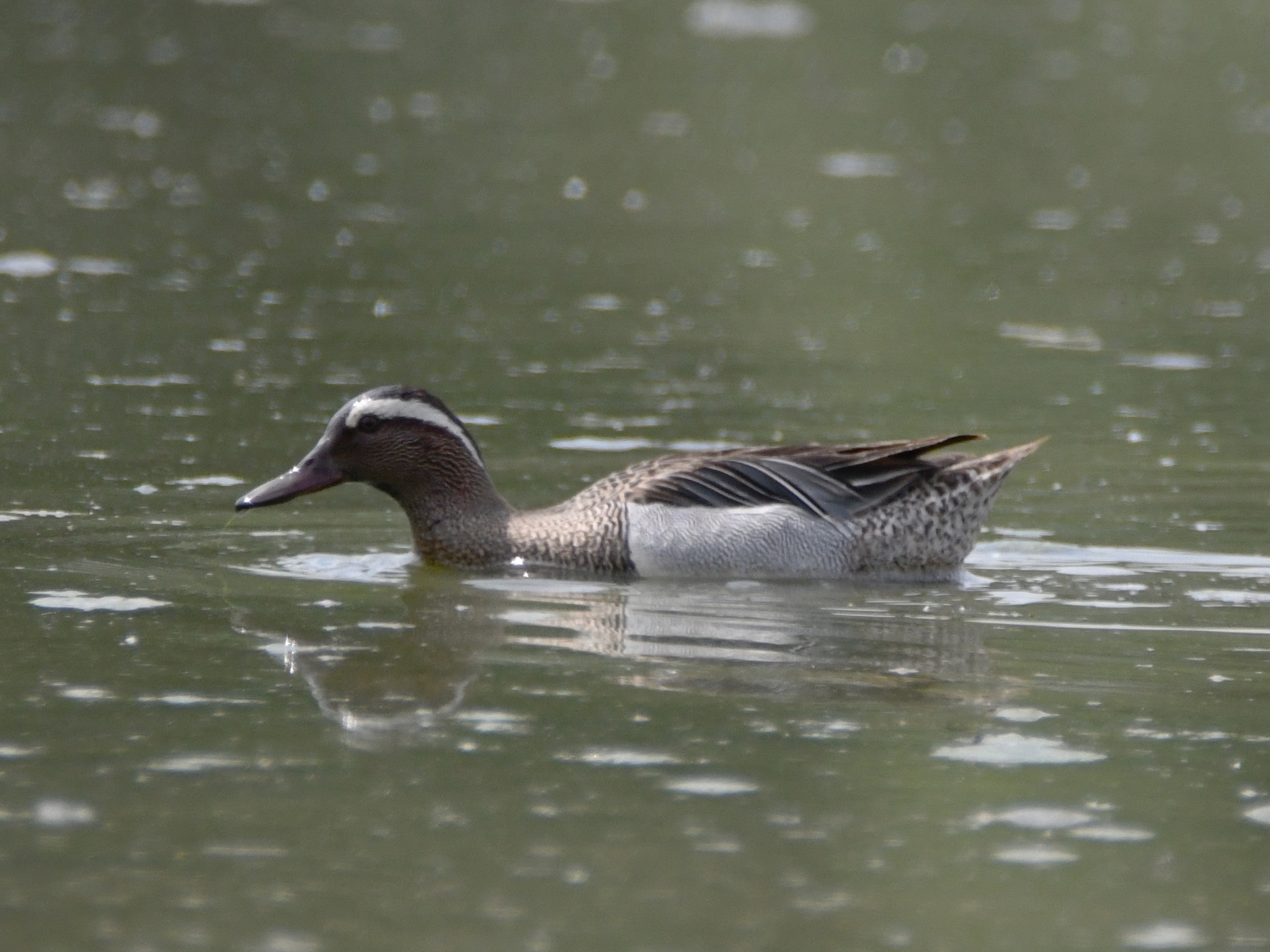
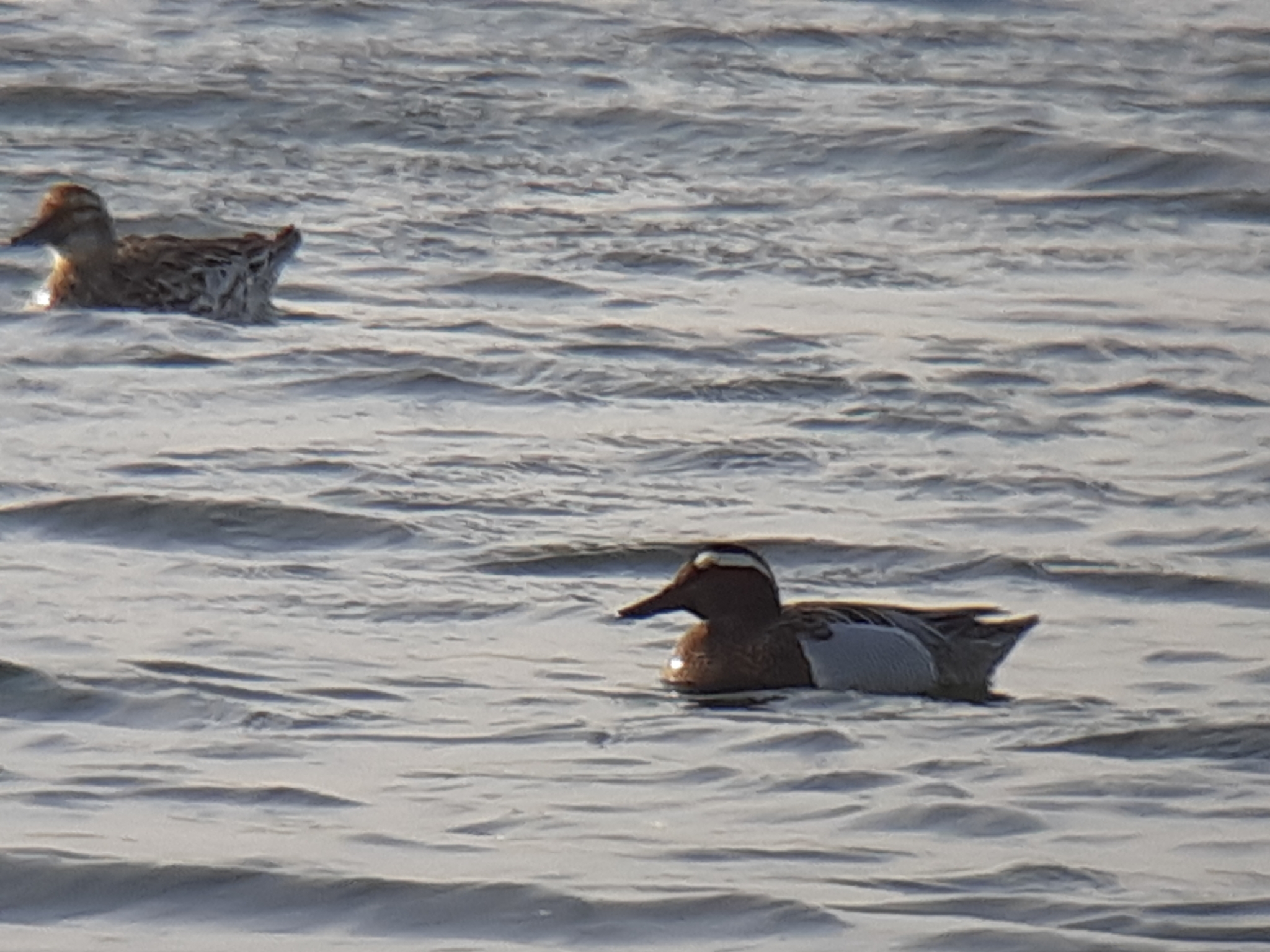
This is a compact dabbling duck measuring 41 centimeters in length with a wingspan of 58 to 69 centimeters. Adults weigh between 300 and 440 grams. The male is striking with a brown head and breast contrasted by a broad white crescent curving over the eye. The remainder of the plumage is grey, featuring loose grey scapular feathers that give the bird a somewhat textured appearance. The crown is dark while the face shows reddish-brown coloring. Both the bill and legs are grey. In flight, the wing reveals a pale blue speculum bordered in white. When swimming, the male displays prominent white edges on its tertial feathers. Females are more subdued in coloration, showing a brown overall appearance with pale eyebrow markings and facial details.
Identification
The adult male is unmistakable with its unique combination of brown head and breast with the distinctive white eye crescent. Female identification requires more care, as they closely resemble female common teal. Key distinguishing features include stronger facial markings and more frequent head-shaking behavior while feeding. Female birds can also be confused with female blue-winged teal, but the head and bill shape differ noticeably, and the blue-winged teal has yellow legs rather than the grey legs of this species. Female birds show a pale eyebrow, dark eye line, and a pale lore spot bordered by a second dark line, creating a more defined facial pattern than the common teal female.
Distribution & Habitat
This species breeds extensively across much of Europe and throughout the Palearctic region. However, it is strictly migratory, with the entire population vacating breeding grounds for warmer regions during the Northern Hemisphere winter. The wintering range encompasses Africa, India (particularly Santragachi), Bangladesh's natural reservoirs in Sylhet district, and Australasia. During winter, large flocks form at these southern locations. In the British Isles, breeding is rare and localized, with most pairs found in the quiet marshes of Norfolk and Suffolk. In Ireland, a few pairs breed in County Wexford and at Lough Beg in County Londonderry, with occasional breeding occurrences elsewhere.
Behavior & Ecology
These ducks feed primarily by skimming the water surface rather than upending like many other dabbling ducks. The male produces a distinctive crackling mating call that is quite different from typical duck vocalizations. In contrast, the female is remarkably quiet for a duck, though she can produce a feeble quack when necessary. Breeding occurs in grassland areas adjacent to shallow wetlands, with nests typically hidden among vegetation near water. The species forms large flocks during migration and winter, creating impressive concentrations at key wetland sites throughout their southern range.
Conservation
The species holds a Least Concern status on the IUCN Red List, indicating that it is not currently at significant risk of extinction. As a migratory waterbird, it receives protection through its inclusion in the Agreement on the Conservation of African-Eurasian Migratory Waterbirds (AEWA), an international treaty focused on protecting migratory waterbird habitats across the agreement's extensive range. This legal framework helps ensure appropriate conservation measures throughout the species' migratory route and across multiple jurisdictions.
Source: Wikipedia · CC BY-SA 3.0
Taxonomy
- Order
- Anseriformes
- Family
- Anatidae
- Genus
- Spatula
- eBird Code
- gargan
Distribution
breeds Palearctic (except north); winters to central Africa through Indonesia
Data Sources
Species description from Wikipedia, licensed under CC BY-SA 3.0.
Bird images and sounds sourced from GBIF, contributed by citizen scientists worldwide under Creative Commons licenses.
Taxonomy data from AviList 2025.