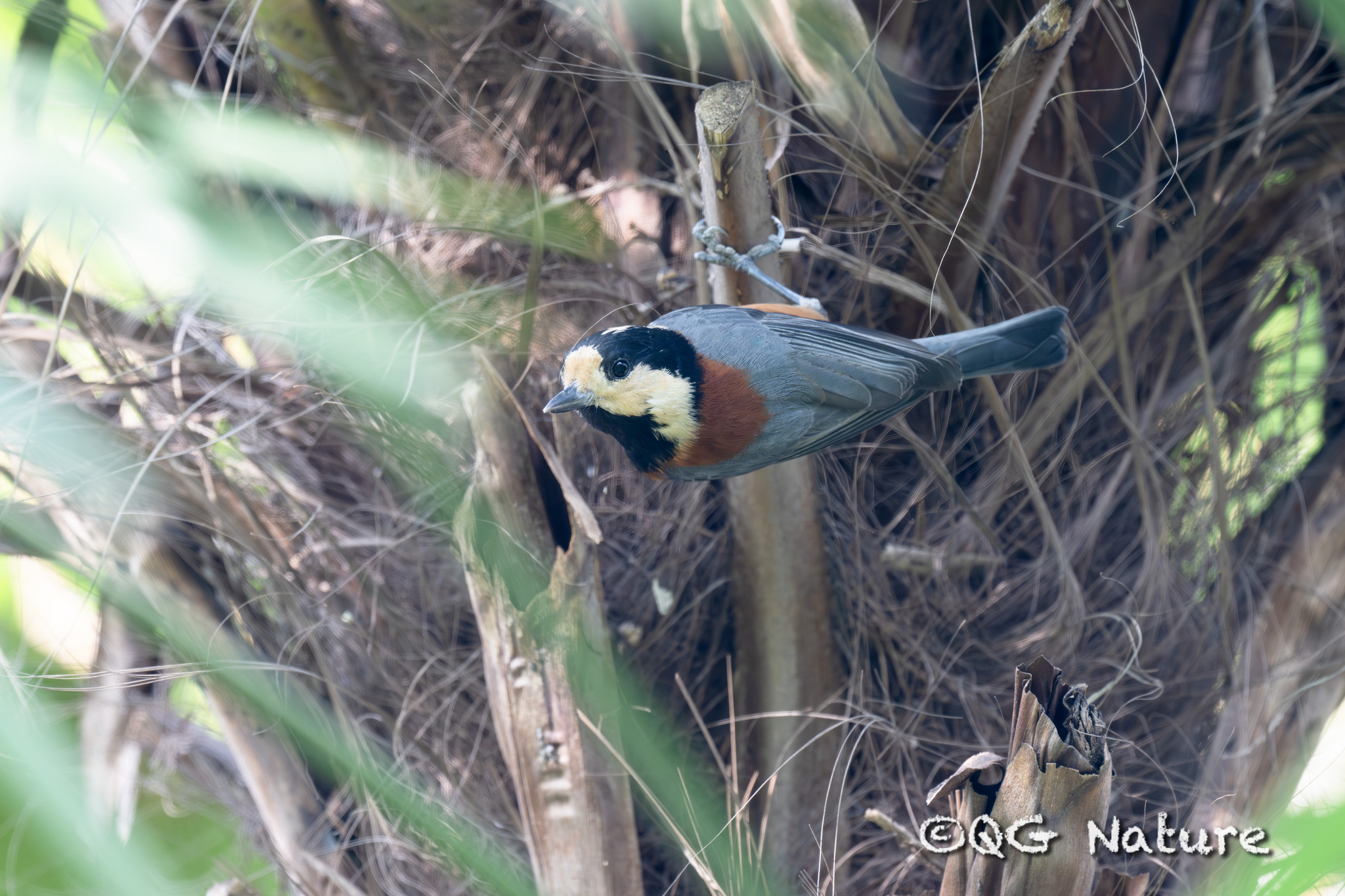
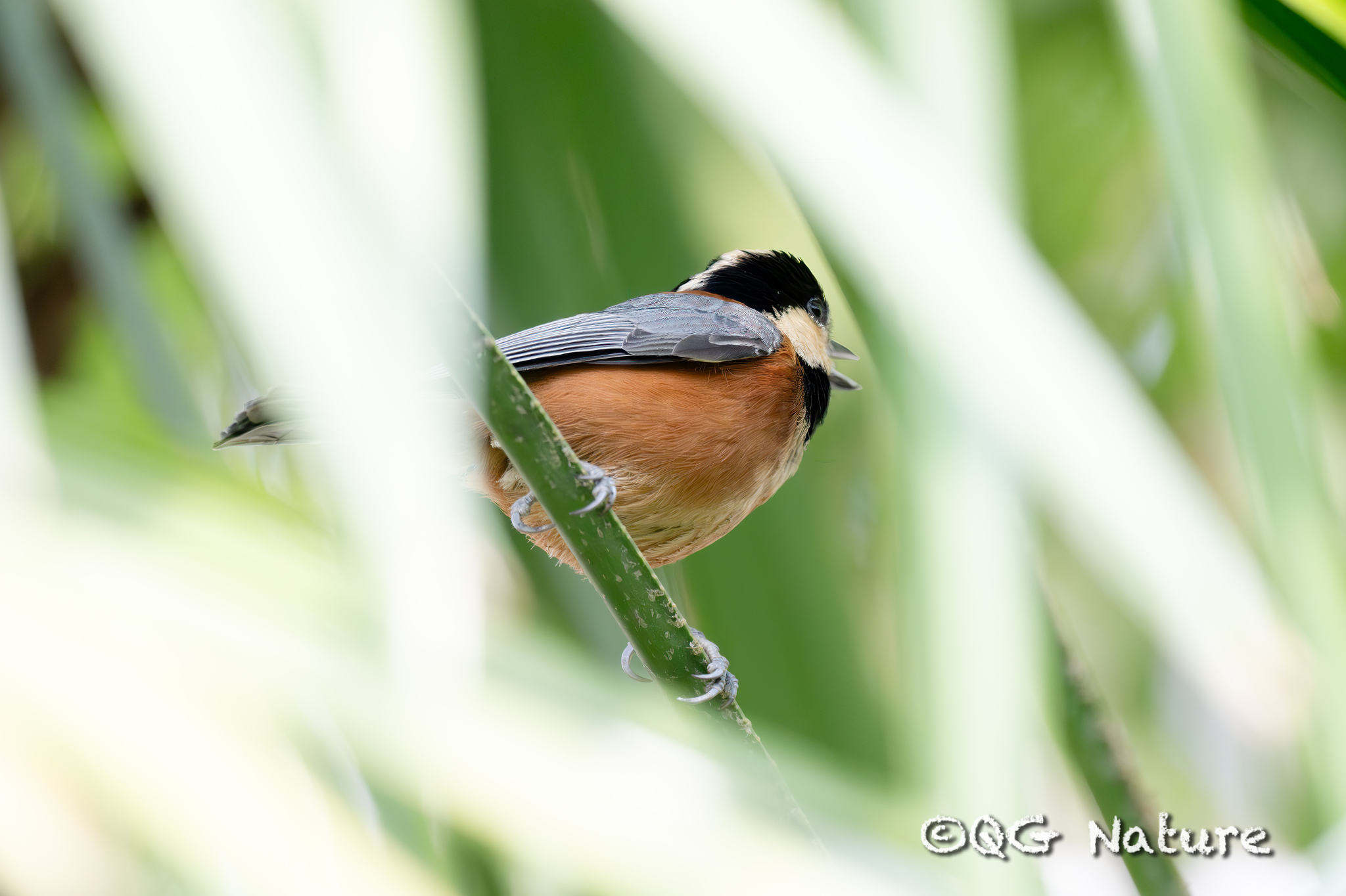
Varied Tit
Sittiparus varius
杂色山雀
Introduction
A perching bird in the tit family Paridae. Occurs in the eastern Palearctic in Japan, Korea, locally in northeastern China (southern Liaoning) and extreme southeastern Russia (southern Kurile Islands). Inhabits open mixed forests with Castanopsis cuspidata and Japanese larch, coniferous forests with Japanese yews, Cryptomeria, and pines, as well as bamboo forests at mountain slopes and river valleys. Exhibits a mixed diet of seeds and insects including caterpillars, and produces a distinctive call of repetitive 'tzu....tzu....tzu...' tones. One subspecies (S. v. orii) became extinct around 1940.
Description
Small tit measuring 12-14 cm in length and weighing 16-18 g, with wing length of 6.0-7.8 cm. The crown, bill, throat, upper breast, and nape are black. Forehead, face, and cheeks are white. Back, wings, and tail appear bluish grey. Mantle, lower breast, belly, and undertail coverts are chestnut colored. A thin white central line runs from the crown to the nape. Feet are dark grey.
Distribution & Habitat
Eastern Palearctic range including Japan, Korea, northeastern China (southern Liaoning), and southeastern Russia (southern Kurile Islands: Kunashir, Shikotan, Iturup). Inhabits various forest types including mixed forests, coniferous forests, and bamboo forests at mountain slopes and in river valleys.
Behavior & Ecology
Feeds on a mixed diet of seeds and insects, particularly caterpillars. Produces a call consisting of repetitive high-pitched tones described as 'tzu....tzu....tzu...'.
Conservation
One subspecies (S. v. orii, the Daito varied tit) became extinct around 1940, formerly found in the Daito Islands (Kitadaitōjima and Minami Daitōjima).
Culture
In Japan, this species has been trained to participate in 'omikujihiki', a traditional show where birds deposit coins, ring bells, open shrine doors, and retrieve fortune-telling slips (omikuji) using their beaks to cut strings or tape.
Source: Wikipedia · CC BY-SA 3.0
Taxonomy
- Order
- Passeriformes
- Family
- Paridae
- Genus
- Sittiparus
- eBird Code
- vartit1
Vocalizations
Subspecies (5)
-
Sittiparus varius amamii
Amami Ōshima, Tokuno-Shima, and Okinawa (Ryukyu Islands, southern Japan)
-
Sittiparus varius namiyei
northern Izu Islands (To-shima, Nii-jima, and Kozu-shima)
-
Sittiparus varius orii
formerly Daito Islands (Kita-Daito-jima, Minami-Daito-jima, and Daito-jima); extinct
-
Sittiparus varius sunsunpi
Tanegashima and Yakushima Islands (Ozumi Islands, southern Japan)
-
Sittiparus varius varius
southern Kuril Islands, northeastern China, Korea, and main Japanese islands
Data Sources
Species description from Wikipedia, licensed under CC BY-SA 3.0.
Bird images and sounds sourced from GBIF, contributed by citizen scientists worldwide under Creative Commons licenses.
Taxonomy data from AviList 2025.