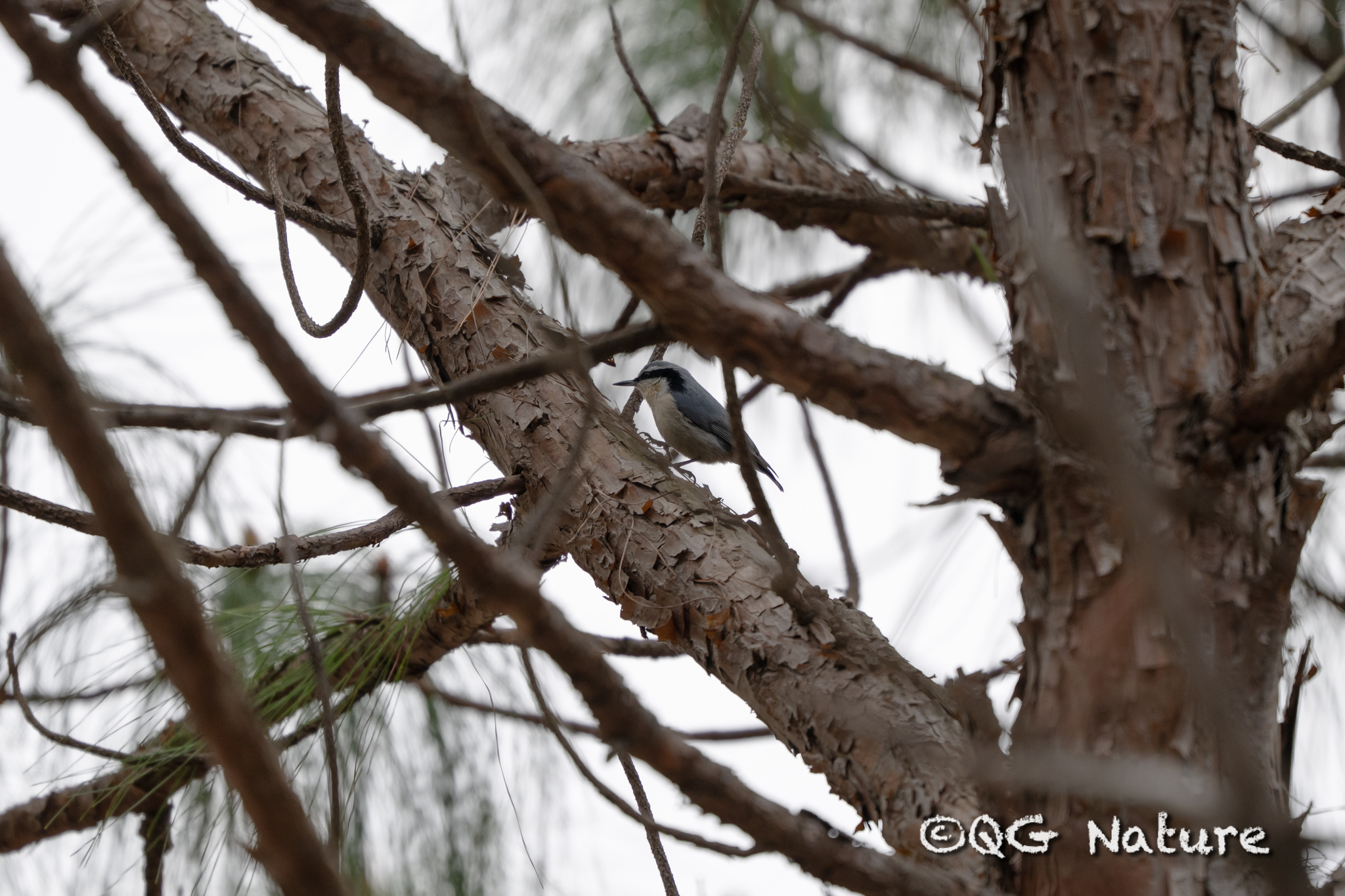
Yunnan Nuthatch
Sitta yunnanensis
滇䴓
Introduction
A bird species in the nuthatch family Sittidae. Endemic to Southwest China, occurring primarily in the prefectures of Yunnan, Sichuan, and Guizhou, with additional records from the Anjaw district of Arunachal Pradesh, India. Inhabits pine forests with sparse undergrowth, avoiding dense spruce and fir forests. A small nuthatch averaging 12 cm in length, known for producing simple, nasal calls in repetitive series. Occupies a small range of approximately 170,000 square kilometers. Classified as Least Concern by the IUCN as of 2023, having been downlisted from Near-Threatened. A 2009 study predicted a 43.6-47.7% population decrease by 2040-2069 due to climate change impacts.
Description
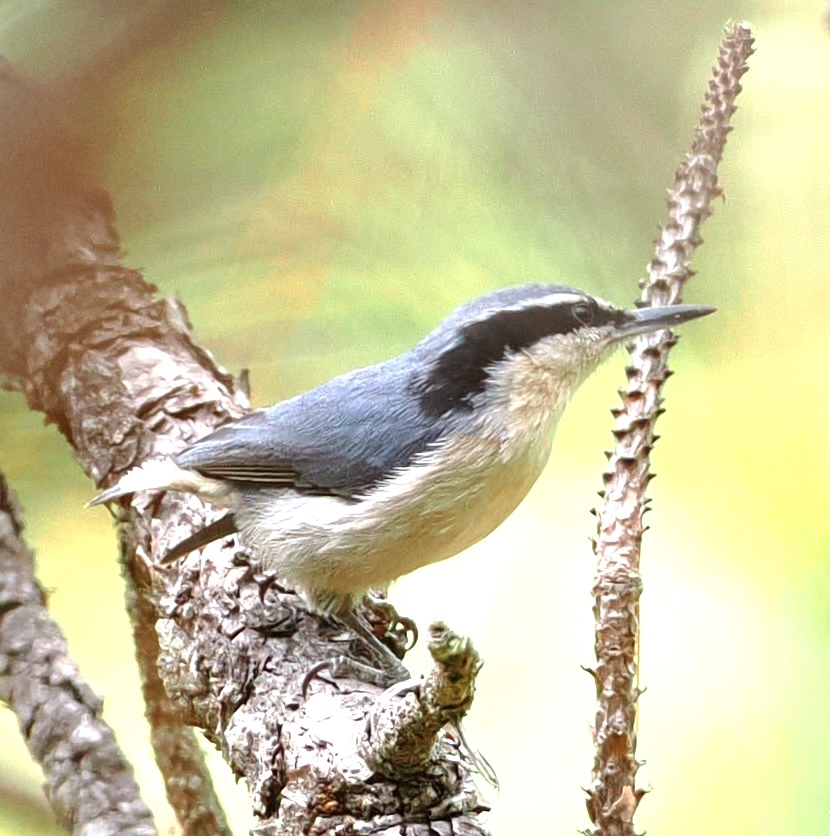
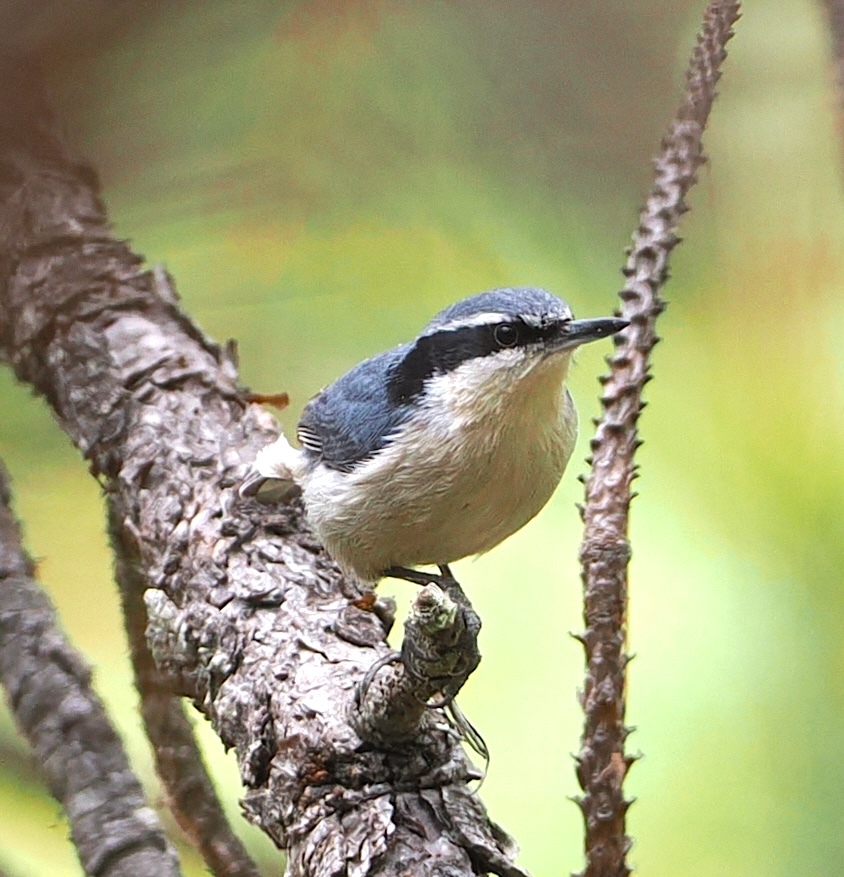
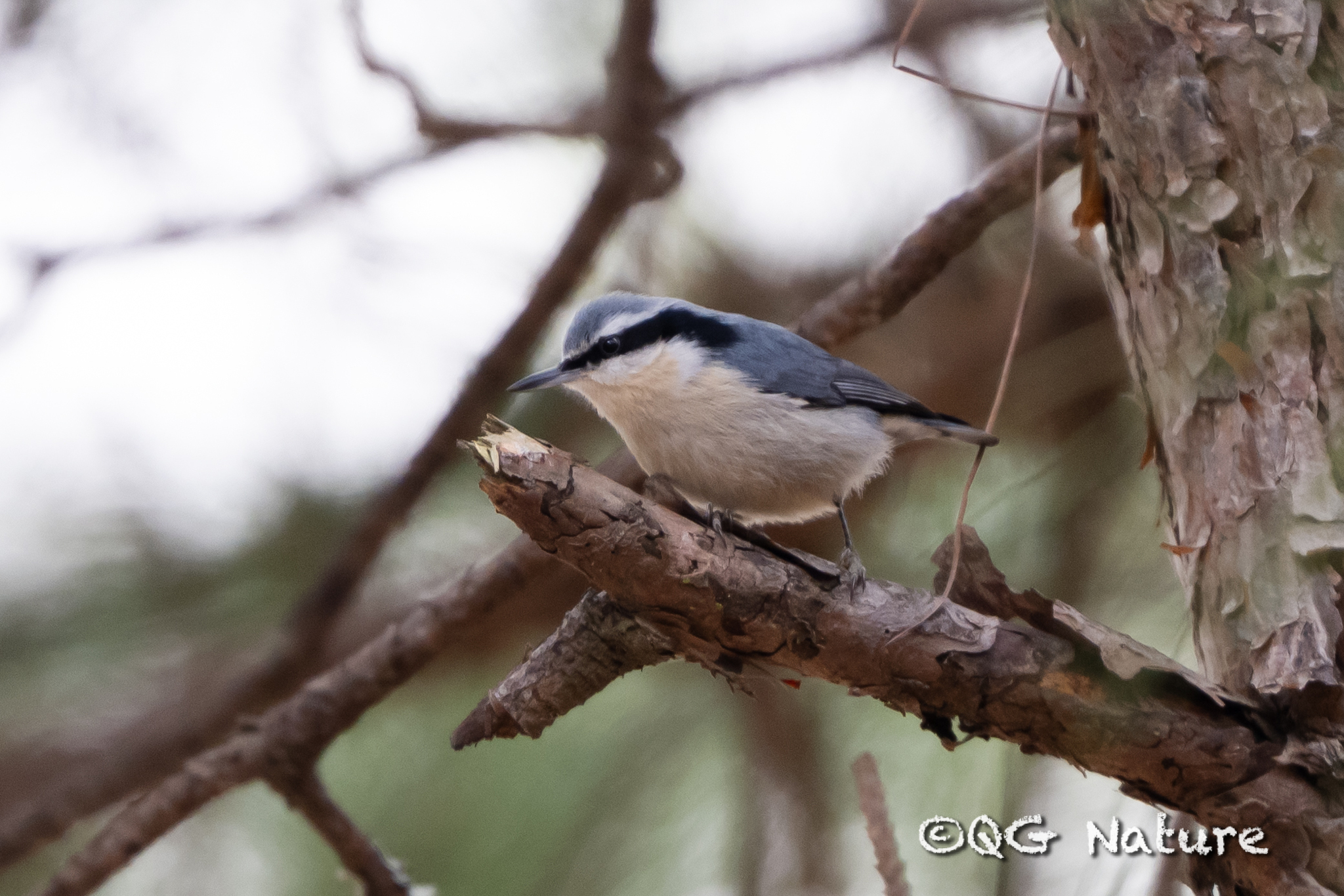
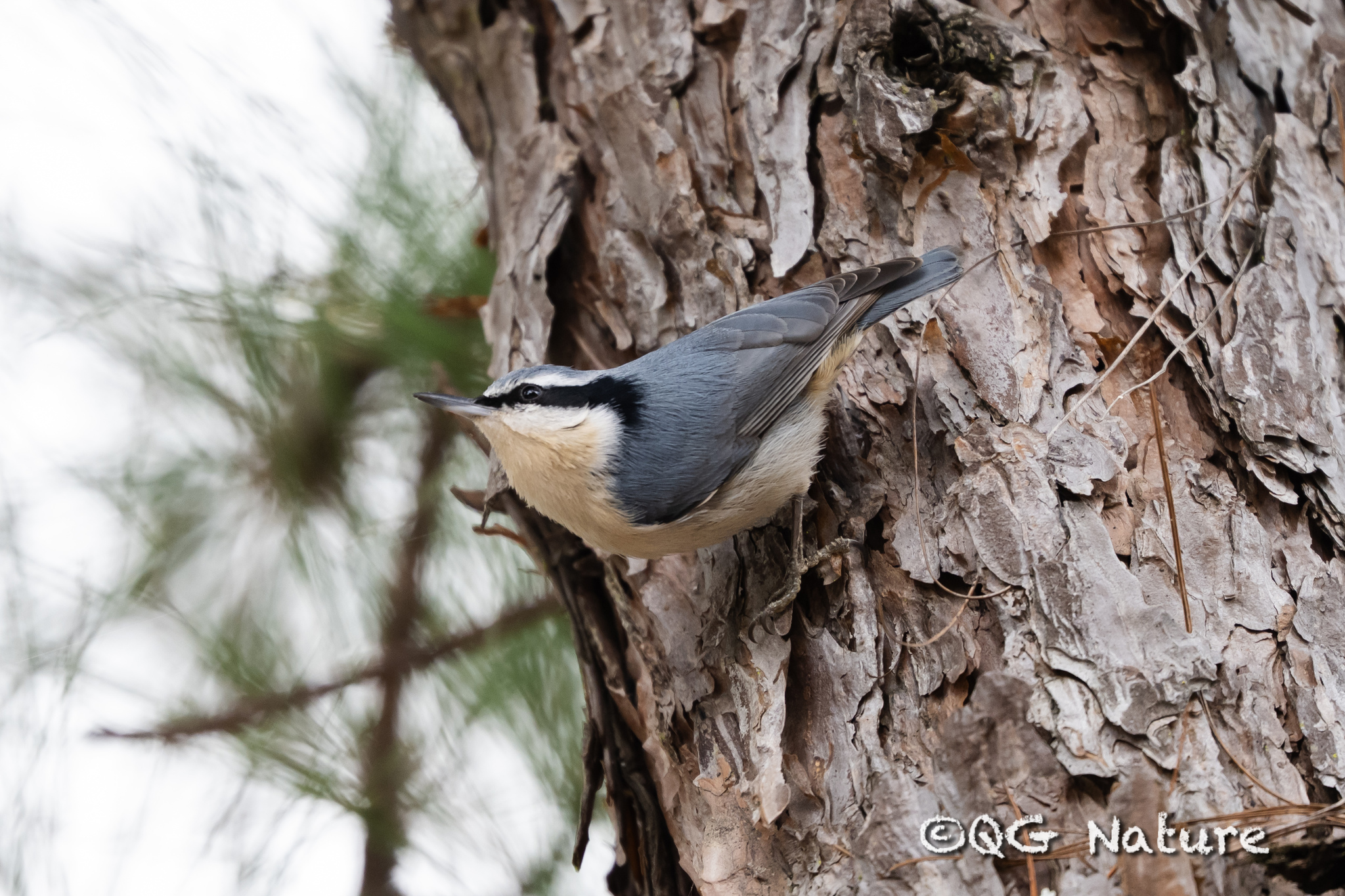
A small nuthatch with blue-grey upperparts, including the calotte, separated from the upper mantle by a paler area. Features a thin white eyebrow extending to the forehead above a black eyestripe that widens on the back sides of the mantle. Has a fine white eye-ring, white cheek and throat, and plain pale pinkish-buff underparts. The bill is thin and pointed with an almost straight culmen. Average length is 12 cm, with males having a wing chord of 69.5-74 mm and females 67-74 mm. Exhibits minimal sexual dimorphism, with females showing less intense eyestripe color and duller underparts. Adults undergo complete moult from July to September.
Identification
A small nuthatch distinguished by its blue-grey upperparts and white eyebrow above a black eyestripe. The giant nuthatch occurs in similar habitat but is much larger and lacks the white eyebrow. The chestnut-vented nuthatch is similar in size but has reddish flanks and no white eyebrow. Fresh plumage shows more distinct white eyebrow and brighter upperparts; worn plumage becomes duller with a less conspicuous eyebrow line.
Distribution & Habitat
Endemic to Southwest China, occurring in Yunnan, Sichuan, and Guizhou prefectures, with a isolated population in the Anjaw district of Arunachal Pradesh, India. Inhabits pine forests with sparse undergrowth, avoiding dense spruce and fir forests. Occasionally found on small pine trees 2-3 m high in open forests. Summer altitude range is 2,440-3,960 m ASL, descending to valleys at around 1,200 m in winter. Observations at 2,600-4,000 m have been recorded between November and January in Shuangbai County.
Behavior & Ecology
Diet consists of insects caught on pine branches. Breeding behavior is poorly documented; a female collected on 9 March was close to laying, and recently fledged young have been collected on 21 May. A noisy species producing simple, nasal calls including 'nit', 'kni', 'tit', 'pit', and low nasal 'toik' sounds. Calls are repeated in rapid series lasting 4-10 seconds. Also produces harsh 'schri-schri-schri' calls and nasal 'quit-quit-quit' sounds. Social behavior includes moving through pine branches to forage.
Conservation
Classified as Least Concern as of 2023 (formerly Near-Threatened). The species has a small range of approximately 170,000 square kilometers and disappeared from several locations in the early 20th century. Generally rare but locally common in areas such as Lijiang's pine forests. Primary threats include habitat destruction and climate change; the species depends on old pine forests but can utilize degraded habitats. A 2009 climate change impact study predicted a 43.6-47.7% reduction in distribution by 2040-2069.
Culture
No cultural significance or folklore documented in available sources.
Source: Wikipedia · CC BY-SA 3.0
Taxonomy
- Order
- Passeriformes
- Family
- Sittidae
- Genus
- Sitta
- eBird Code
- yunnut1
Distribution
mountains of western Sichuan to western Yunnan, southeastern Tibet, and northwestern Guizhou
Data Sources
CBR Notes: IUCN红色名录等级由NT降为LC
Species description from Wikipedia, licensed under CC BY-SA 3.0.
Bird images and sounds sourced from GBIF, contributed by citizen scientists worldwide under Creative Commons licenses.
Taxonomy data from AviList 2025.