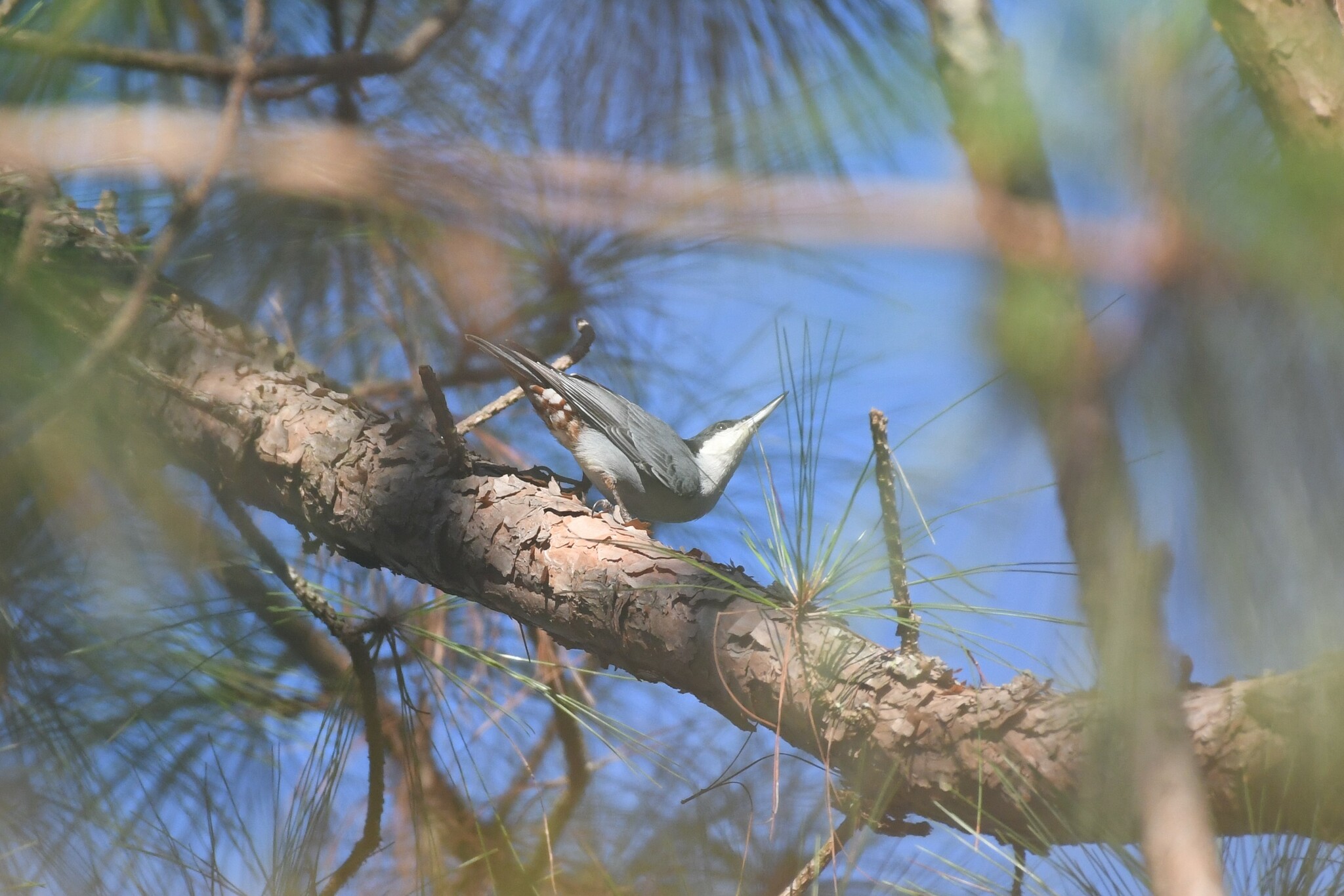
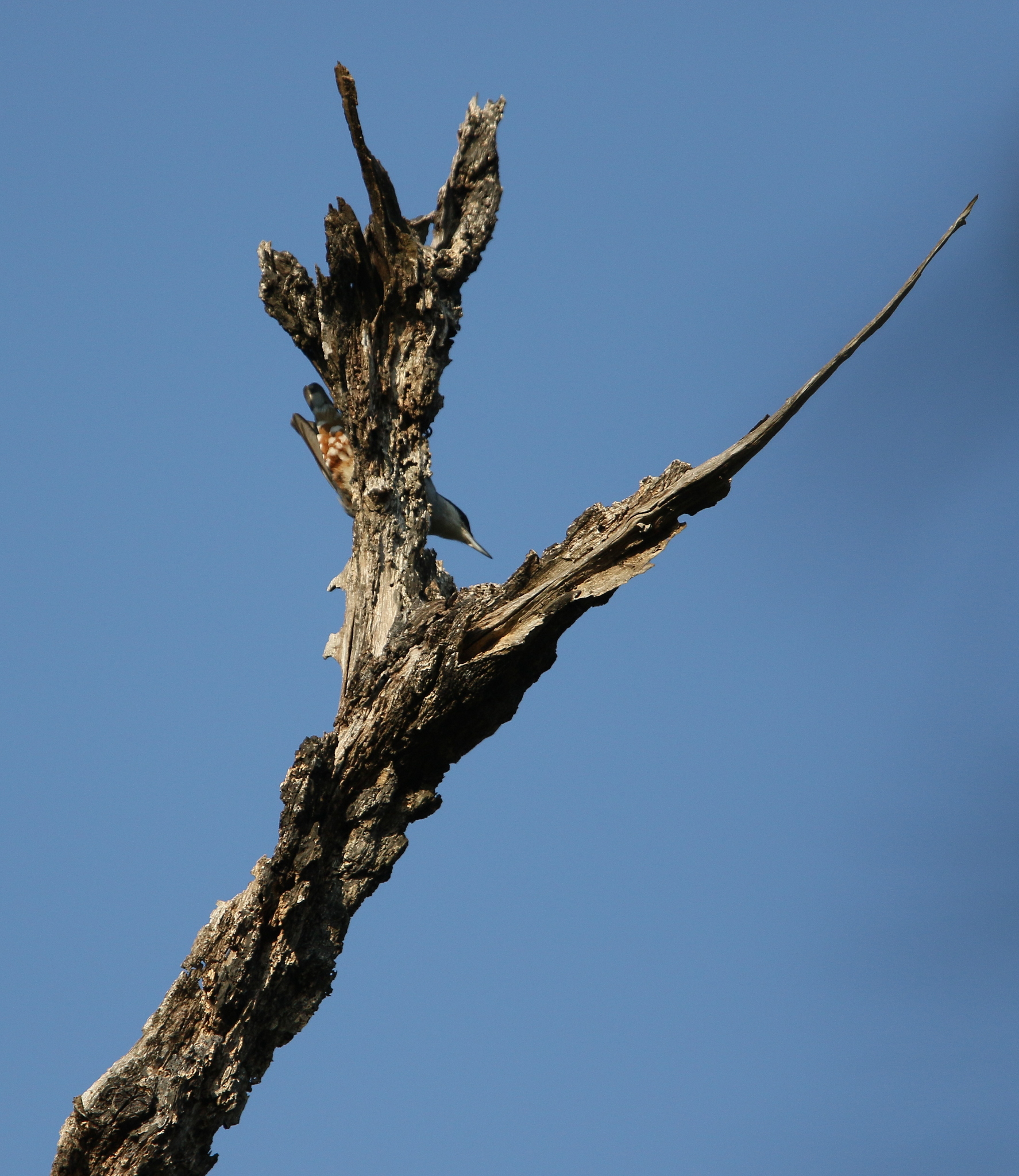
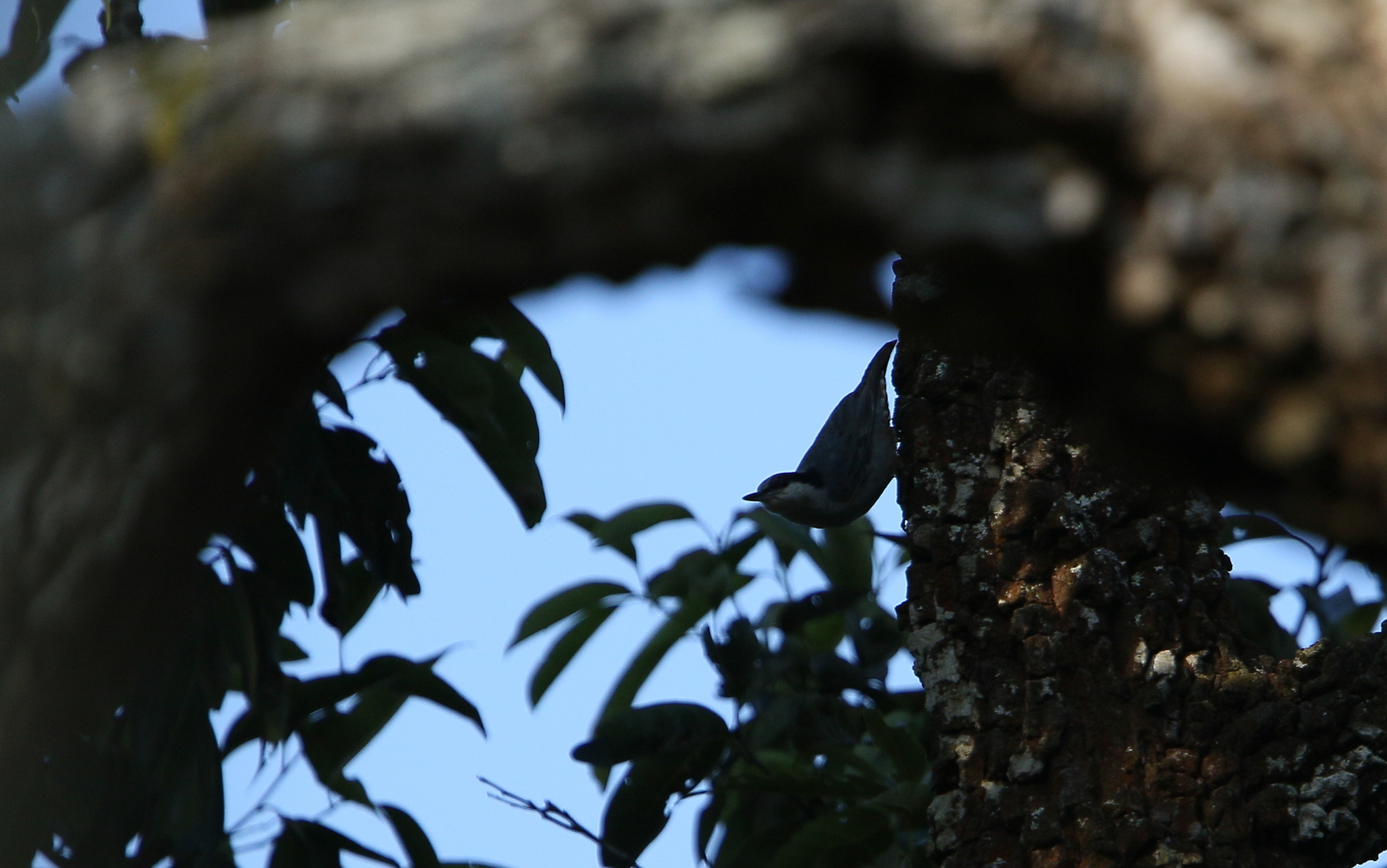
Giant Nuthatch
Sitta magna
巨䴓
Introduction
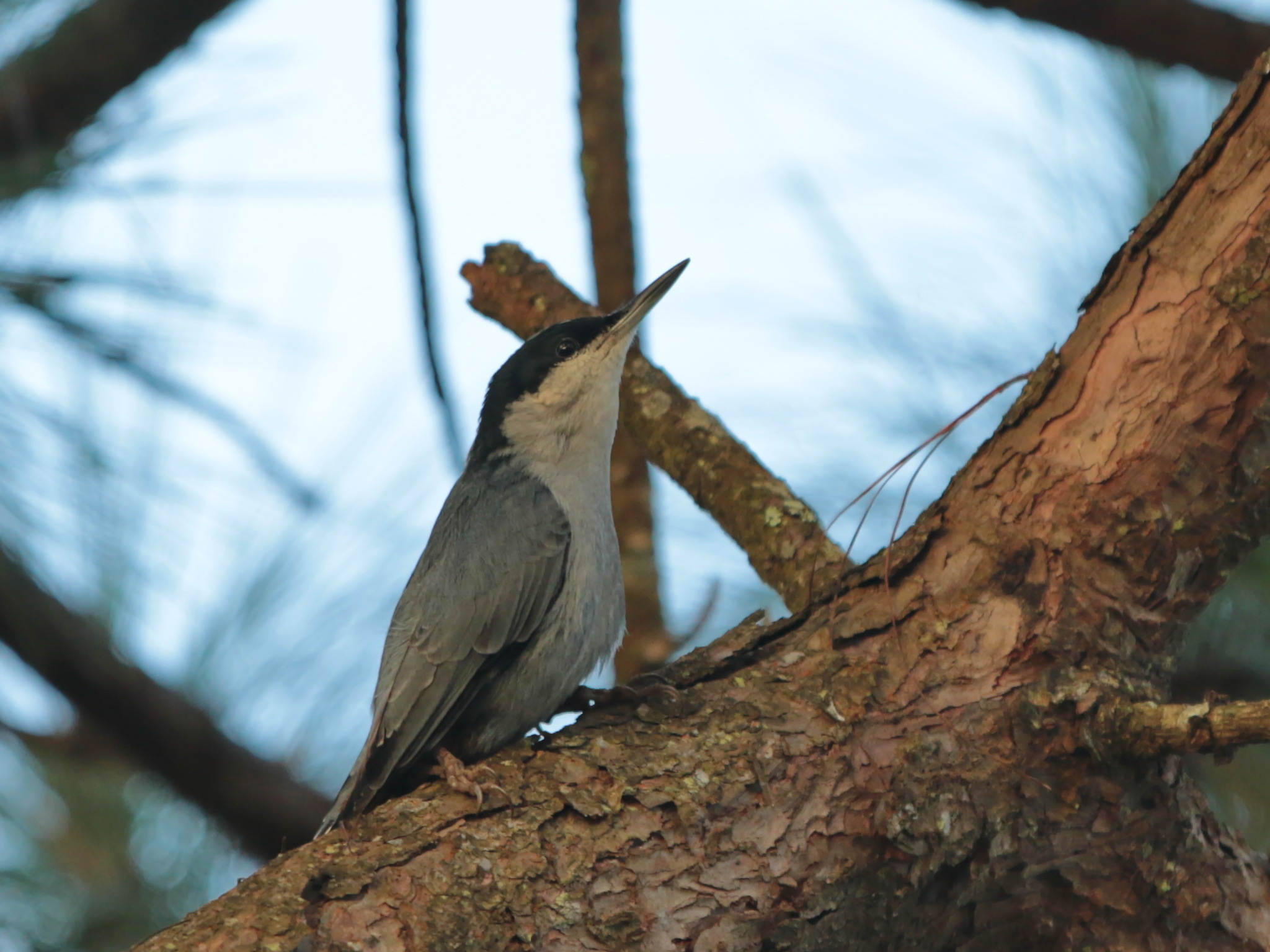
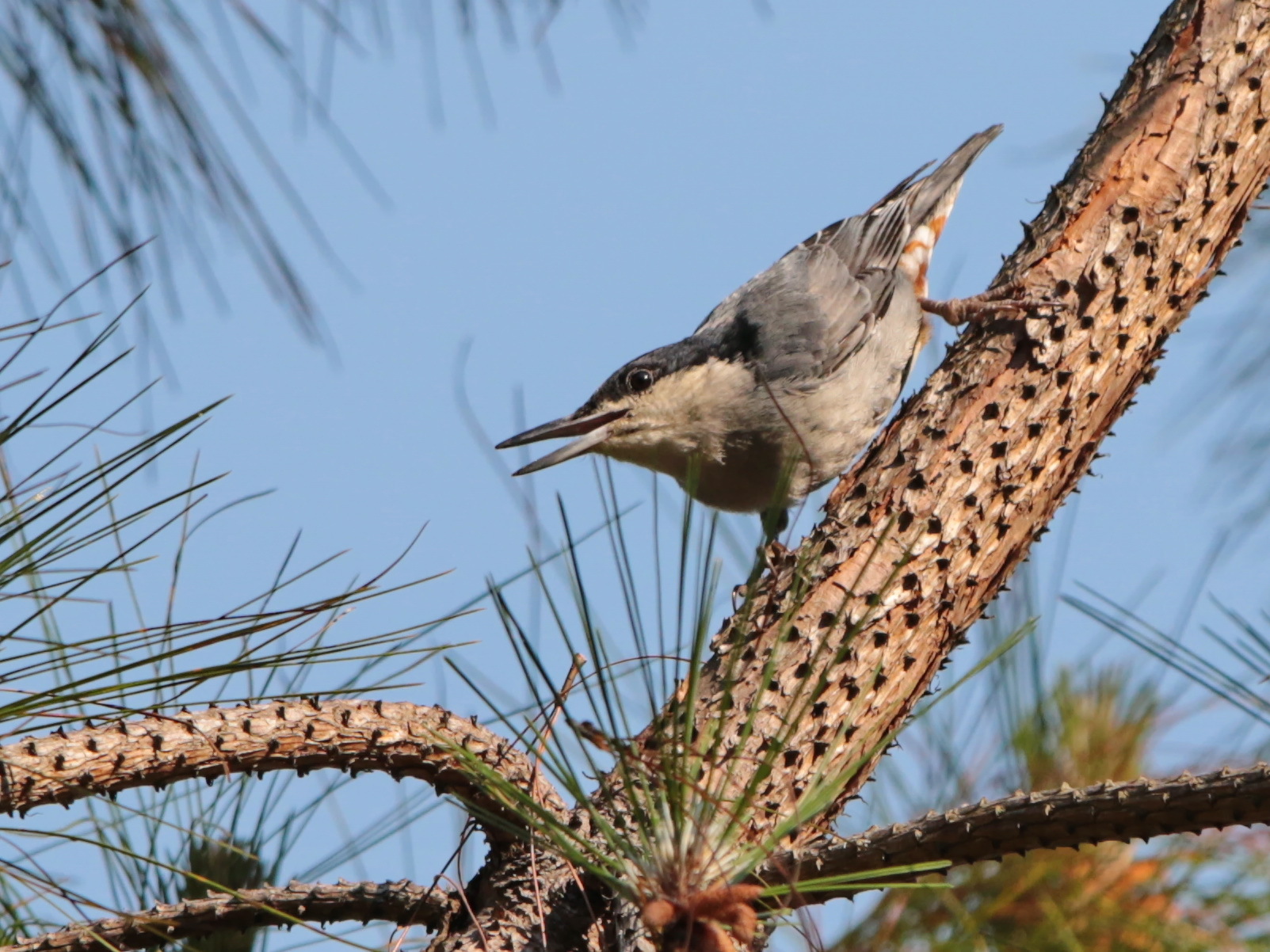
A species of bird in the family Sittidae found from southwest China to east-central Myanmar, northwest Thailand, and probably the far northwest of Laos. Inhabits pine stands, particularly old Khasi pine on mountain ridges, among oak-chestnut groves at elevations from 1,000 m to at least 3,350 m. The longest nuthatch species at 19.5 cm, it has a distinctive long beak and tail for its genus. Vocalizations are powerful, consisting of repetitions of simple patterns. The IUCN changed its status from vulnerable to endangered in 2013 due to declining populations and habitat destruction.
Description
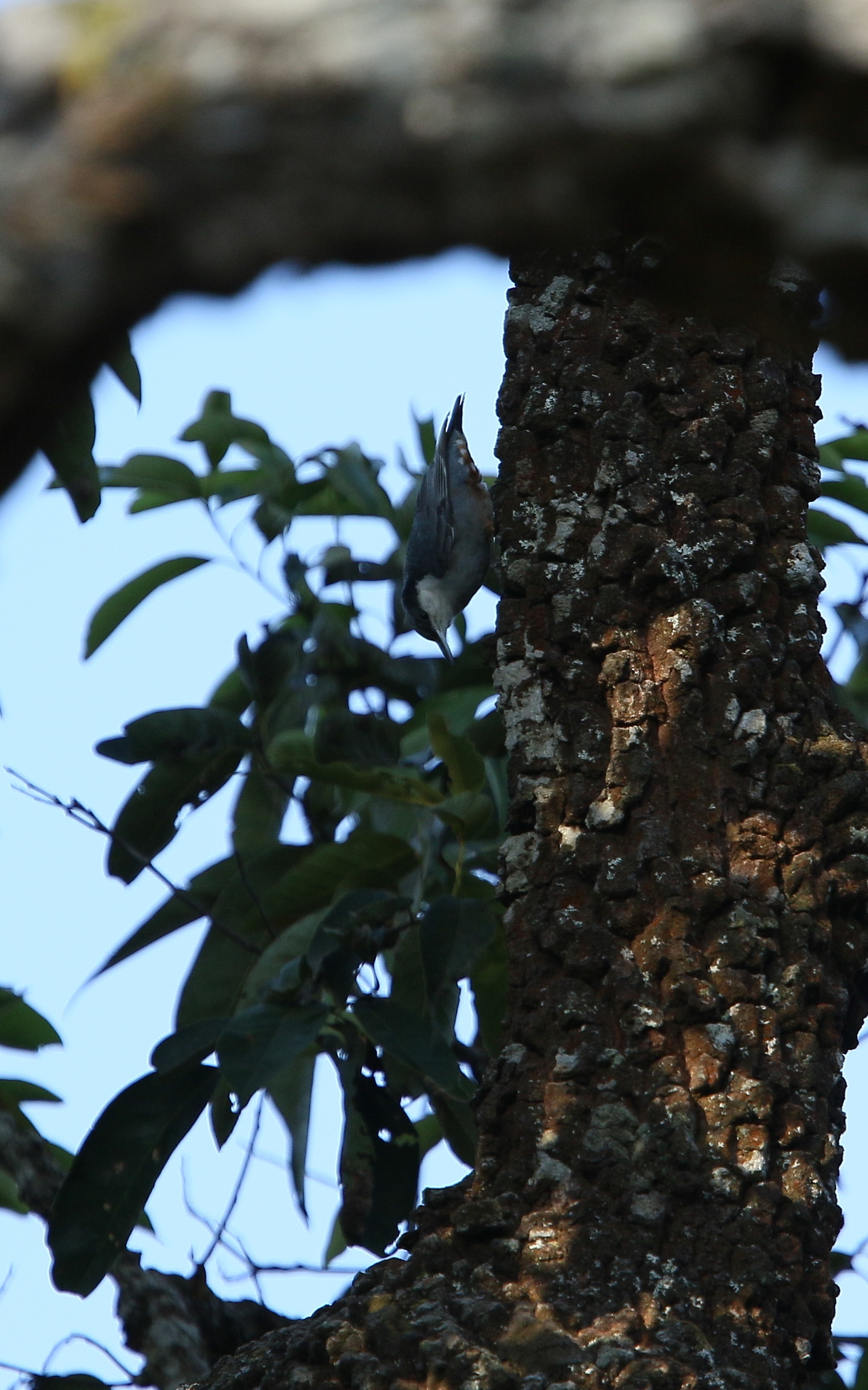
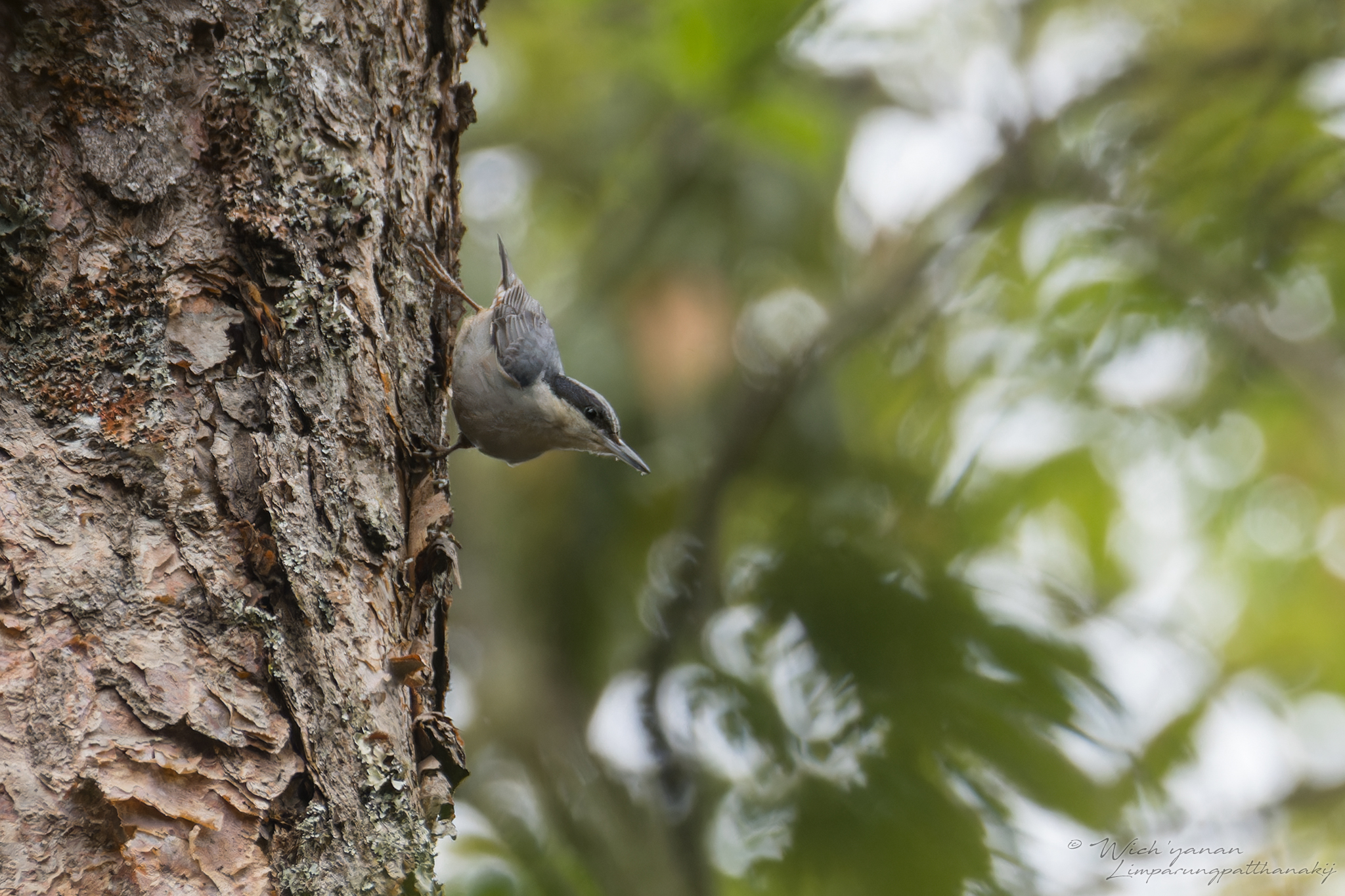
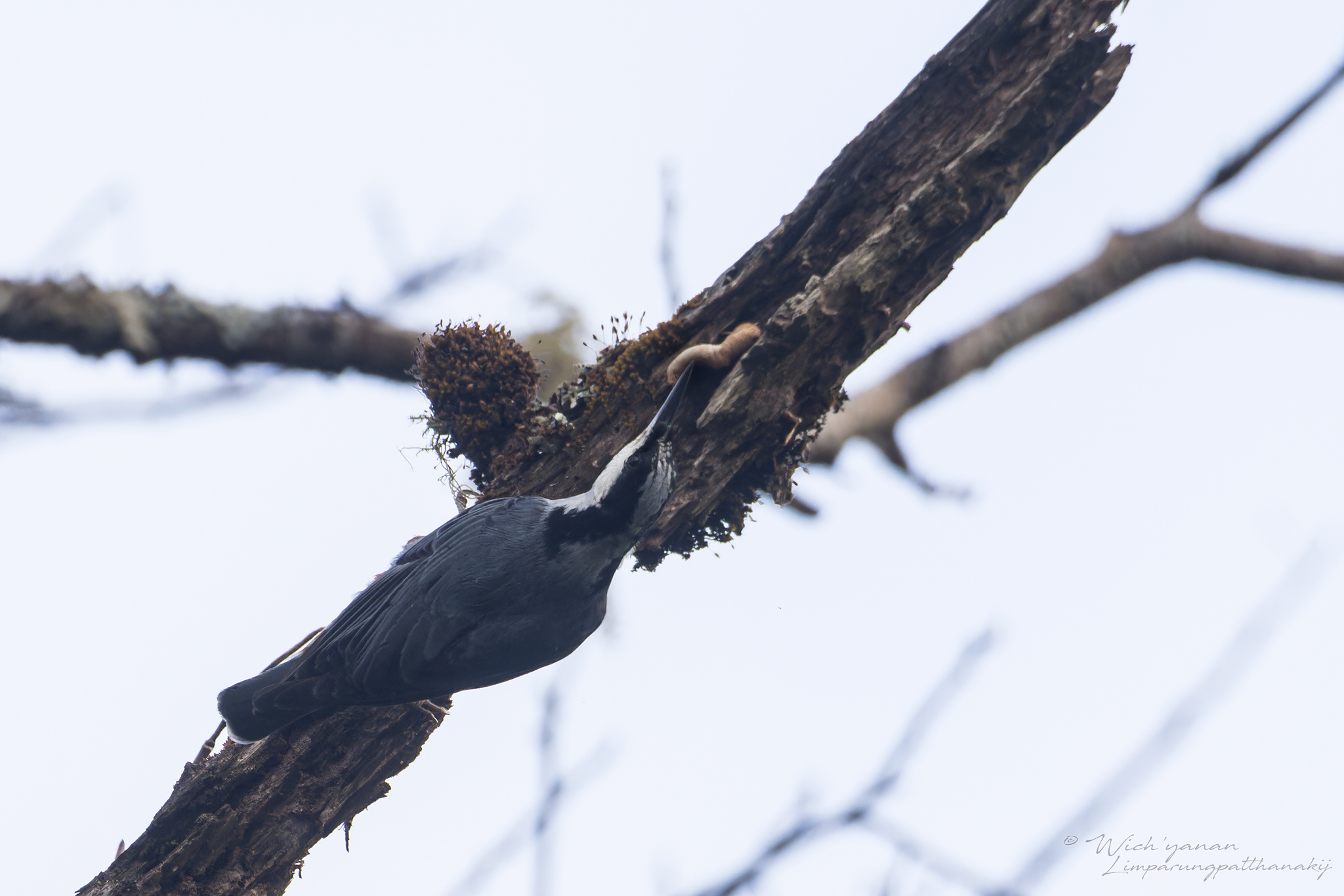
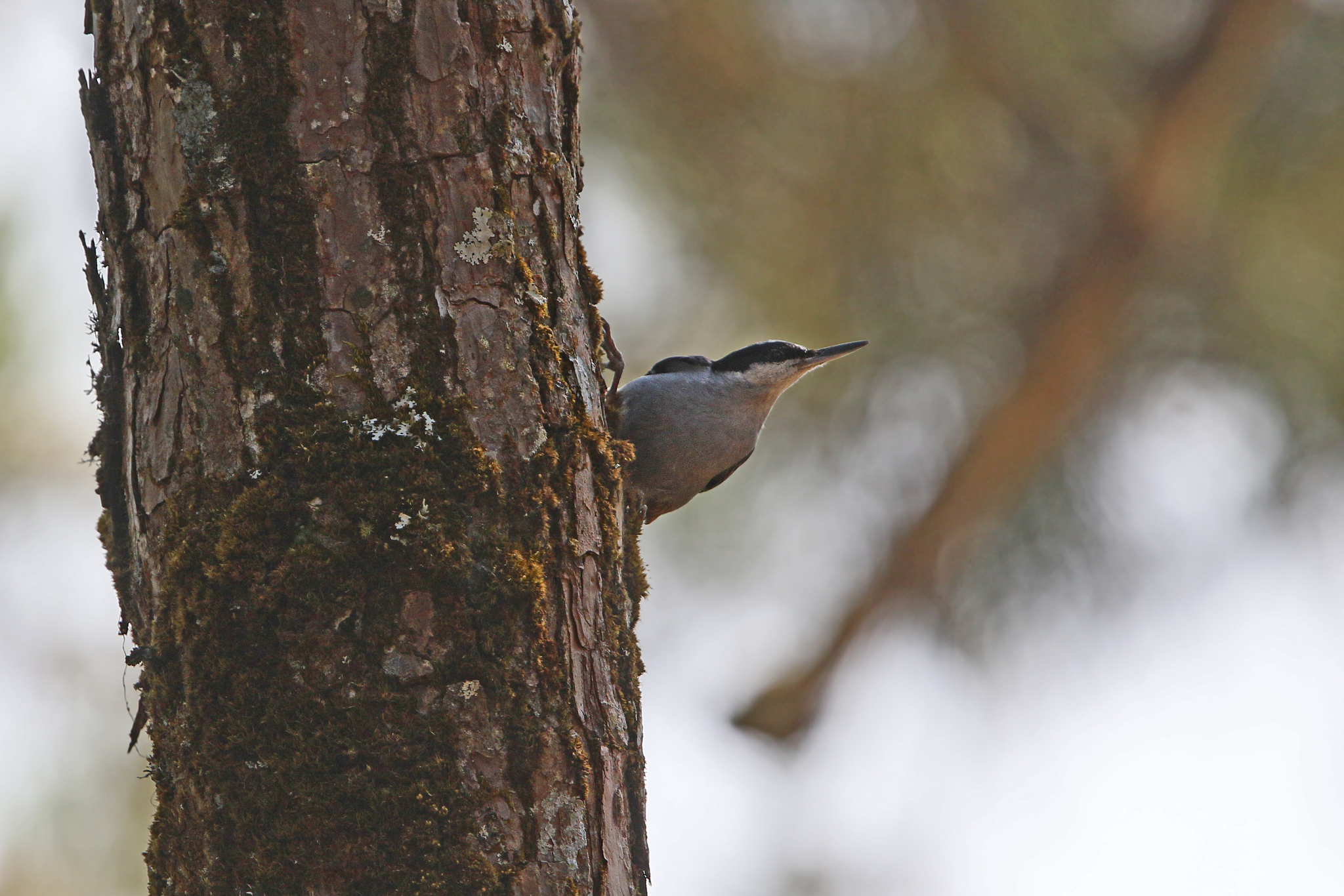
The largest nuthatch, measuring 19.5 cm in length and weighing 36-47 g. Upperparts are dark bluish-grey with the crown, nape, and upper mantle much lighter grey, sometimes streaked with black. Two thick black eyestripes extend to the mantle. Underparts are light grey with almost white cheeks and throat; belly is washed with cinnamon. Undertail coverts are rufous with large white spots. The bill is black with half of the lower mandible lighter (bluish white or bluish lilac). Feet are greyish slate to yellowish brown. Sexual dimorphism is slight: males have deeper black eyestripes and whiter cheeks, while females show less contrast in upperparts and have buff tinges on nape and mantle.
Identification
Large size makes this species distinctive, but potential confusion exists with similar nuthatches. Differs from the chestnut-vented nuthatch by having much thicker black eyestripes and lacking reddish flanks; the crown and upper mantle are noticeably lighter than the rest of the upperparts in the giant nuthatch. The Yunnan nuthatch can occur in the same southern Yunnan habitats but is much smaller and has a white eyebrow.
Distribution & Habitat
Ranges from south-central China through Myanmar to northwest Thailand. In China, occurs in southern Sichuan, Guizhou, and much of Yunnan from Mount Yulong and Lijiang south to Xishuangbanna. In Myanmar, inhabits much of Shan State with outlying populations in the Mogok Hills and Mount Nat Taung. Probably present in extreme northwest Laos. Altitudinal range: 1,000-3,350 m in China; 1,220-1,830 m in Myanmar; 1,200-1,800 m in Thailand. Prefers mature pine forests and open environments among oak-chestnut forests on ridge tops.
Behavior & Ecology
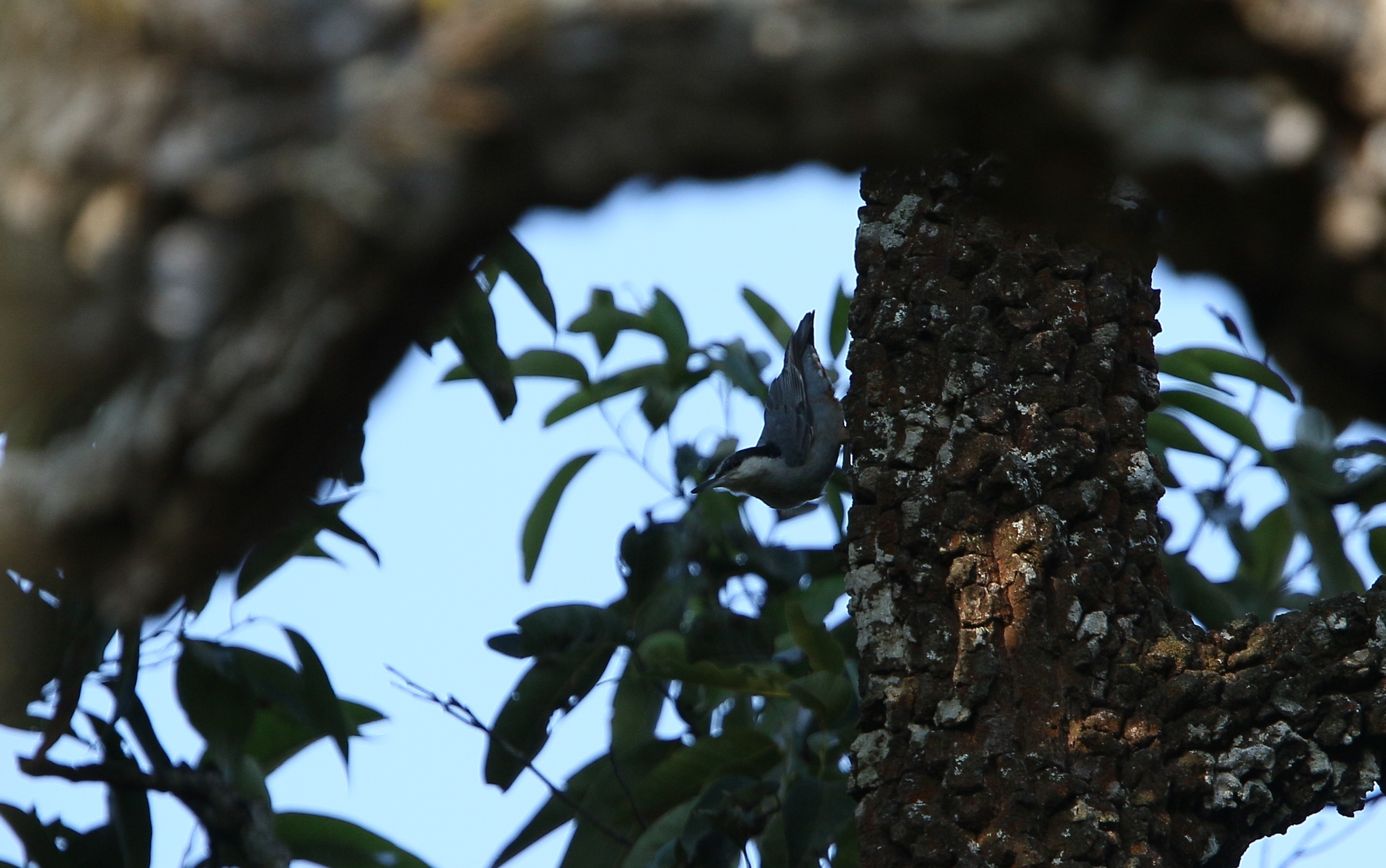
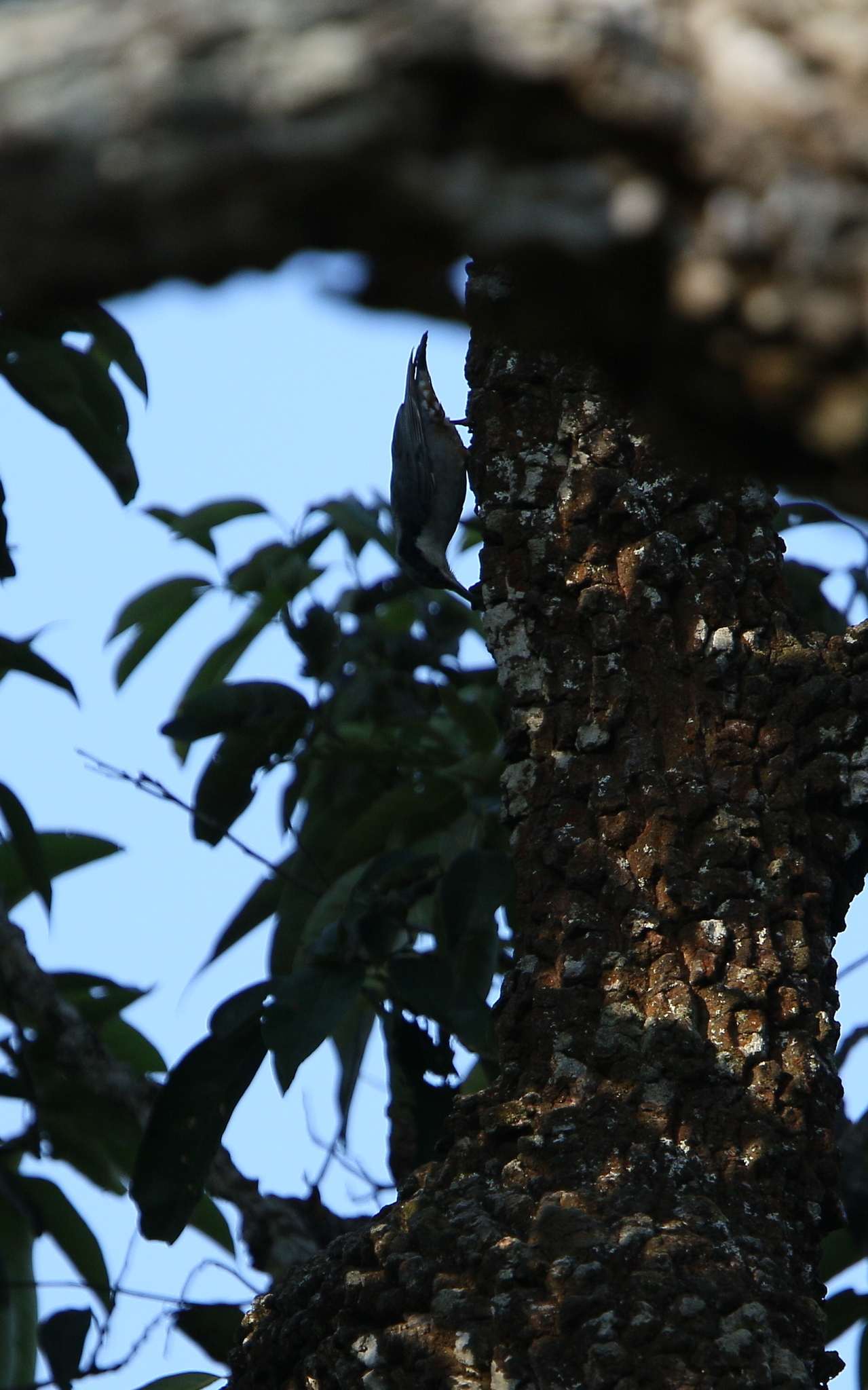
Forages alone or in pairs, primarily in pines, exploring trunks and large branches for insects. Diet includes berries and arthropods such as beetles, butterflies, and ants. Often climbs head-down on trunks like other nuthatches but is generally less agitated. Flight is straight with whirring wingbeats over short distances; longer flights have a drooping, woodpecker-like quality. Vocalizations are sonorous and corvid-like, including harsh chattering notes transcribed as gd-da-da or dig-er-up, and a clear whistling song. Nests around March in natural tree hollows 2-8 m above ground without mud-plastered entrances; broods of three young have been documented.
Conservation
Classified as Endangered by the IUCN since 2013 (previously Vulnerable). Global population estimated at 1,500-3,800 individuals, with only 1,000-2,499 mature individuals. The majority (800-2,000 mature individuals) occur in Yunnan; the largest subpopulation contains only 6-50 mature individuals. Populations are declining and fragmented. Primary threats include logging for resin and firewood, agricultural conversion, and drought conditions. Climate models predict a 18-24% range reduction by 2040-2069. The species occurs in several protected areas, and a public awareness program was established in Yunnan in 2007.
Culture
No significant cultural or folklore information documented.
Source: Wikipedia · CC BY-SA 3.0
Taxonomy
- Order
- Passeriformes
- Family
- Sittidae
- Genus
- Sitta
- eBird Code
- gianut1
Vocalizations
Subspecies (2)
-
Sitta magna ligea
southwestern China (far southern Sichuan, northwestern Yunnan, and southwestern Guizhou)
-
Sitta magna magna
southern China (western Yunnan) to southeastern Myanmar and northwestern Thailand
Data Sources
Species description from Wikipedia, licensed under CC BY-SA 3.0.
Bird images and sounds sourced from GBIF, contributed by citizen scientists worldwide under Creative Commons licenses.
Taxonomy data from AviList 2025.