White-tailed Nuthatch
Sitta himalayensis
白尾䴓
Introduction
A species of bird in the family Sittidae. Ranges across the northern and northeastern parts of the Indian subcontinent, existing mainly in the low-to-middle Himalayas and associated mountain ranges. Found in Bhutan, India, Laos, Myanmar, Nepal, Tibet, and Thailand. Resident in the sub-Himalayan range from Himachal Pradesh to Arunachal Pradesh and into the South Assam Hills. Breeds from March to May in broad-leaved and mixed forest.
Description
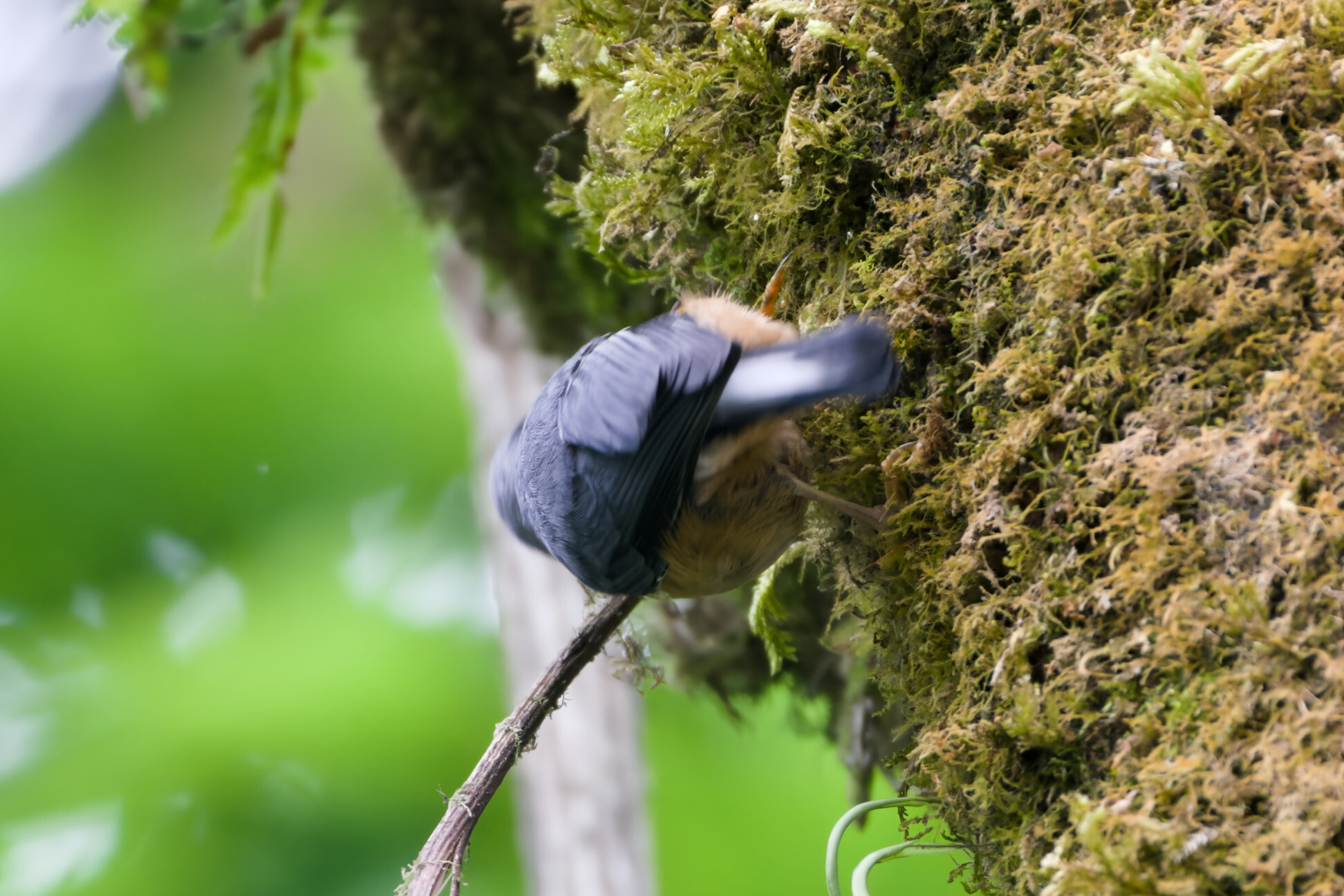
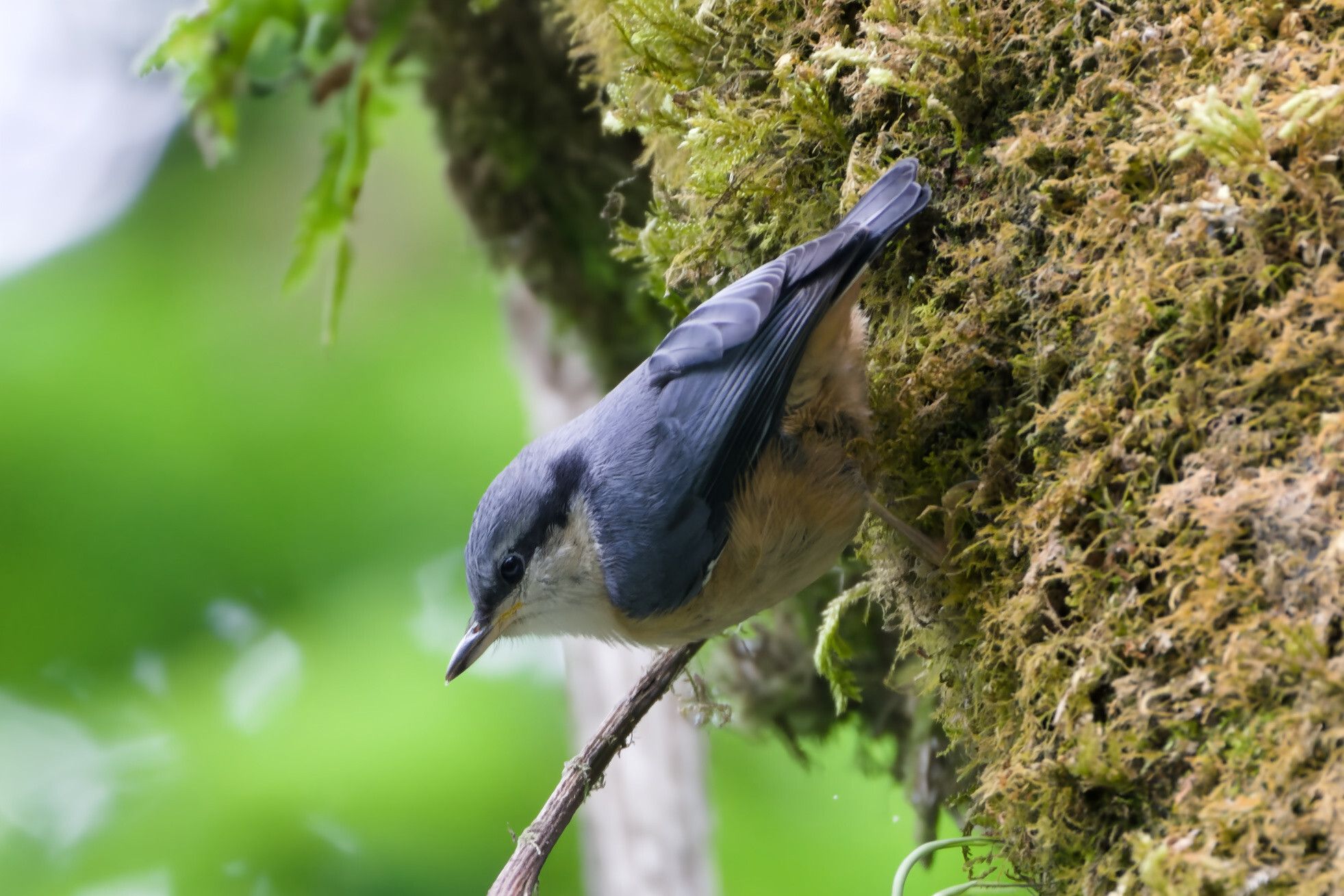
A small nuthatch, 12 cm long, slightly smaller than related Himalayan species. The buff underside and small bill distinguish it from the Kashmir nuthatch. The mantle is pale blue-grey, similar to the Kashmir nuthatch but paler than other Himalayan nuthatches. Underparts are pale orangey with unmarked bright rufous undertail-coverts. The black eyestripe is broader than that of the Kashmir nuthatch and flares wider behind the eye. The white patch on the center of the upper tail coverts is typically difficult to observe in the field.
Identification
Distinguished from the similar Kashmir nuthatch by its smaller bill, broader black eyestripe that flares more widely behind the eye, and paler blue-grey mantle. The buff-colored underside and smaller overall size also help separate it from other Himalayan nuthatch species.
Distribution & Habitat
Occurs from Himachal Pradesh eastward through Arunachal Pradesh to the South Assam Hills (Lushai Hills). Extends across Bhutan, India, Laos, Myanmar, Nepal, Tibet, and Thailand. Resident throughout its range.
Behavior & Ecology
Breeds from March to May in broad-leaved and mixed forest. No detailed information available on diet, social structure, or vocalizations.
Source: Wikipedia · CC BY-SA 3.0
Taxonomy
- Order
- Passeriformes
- Family
- Sittidae
- Genus
- Sitta
- eBird Code
- whtnut1
Distribution
Himalayas from northern India to southeastern Tibet, southwestern China, and Indochina
Data Sources
Species description from Wikipedia, licensed under CC BY-SA 3.0.
Bird images and sounds sourced from GBIF, contributed by citizen scientists worldwide under Creative Commons licenses.
Taxonomy data from AviList 2025.