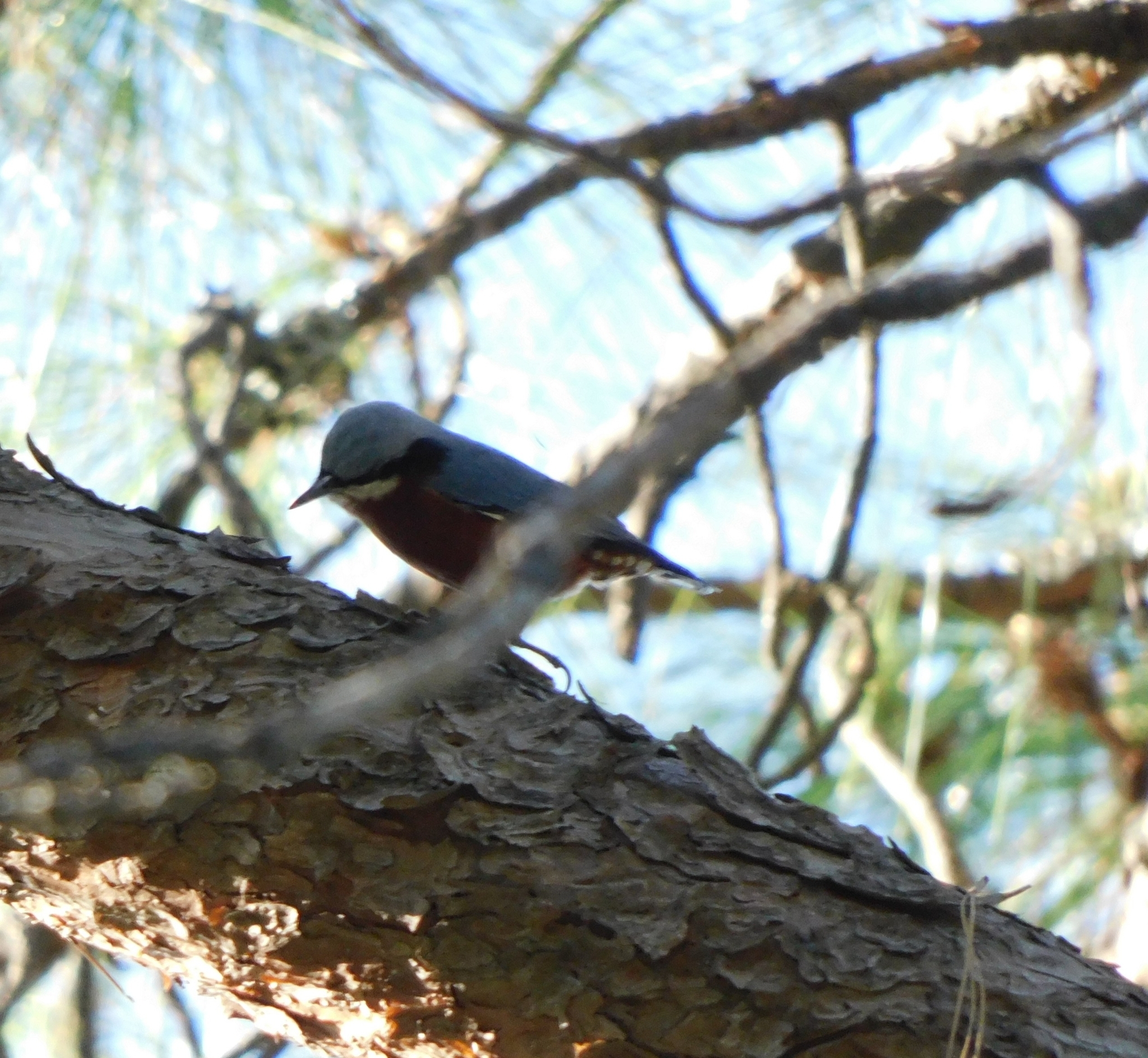
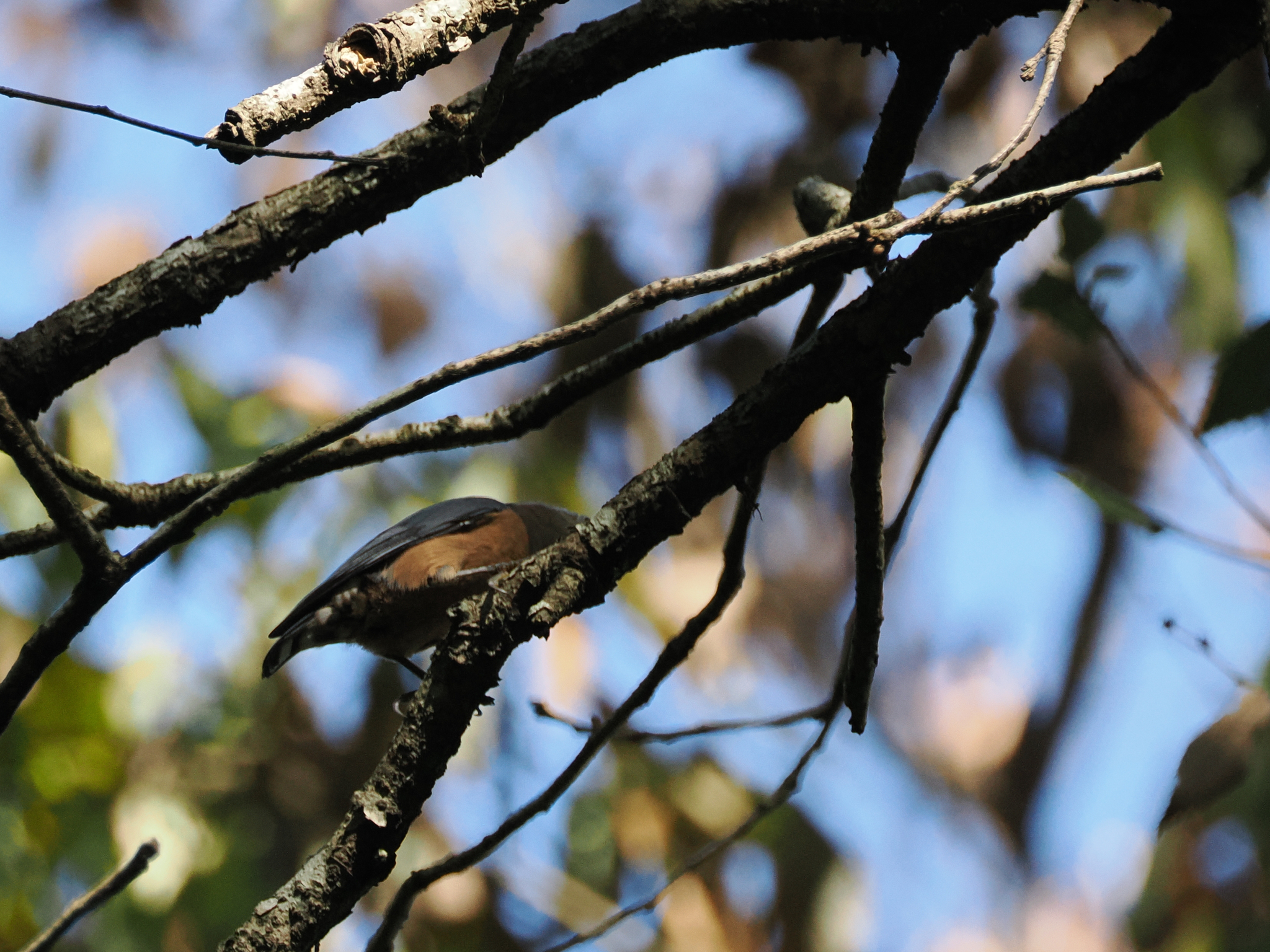
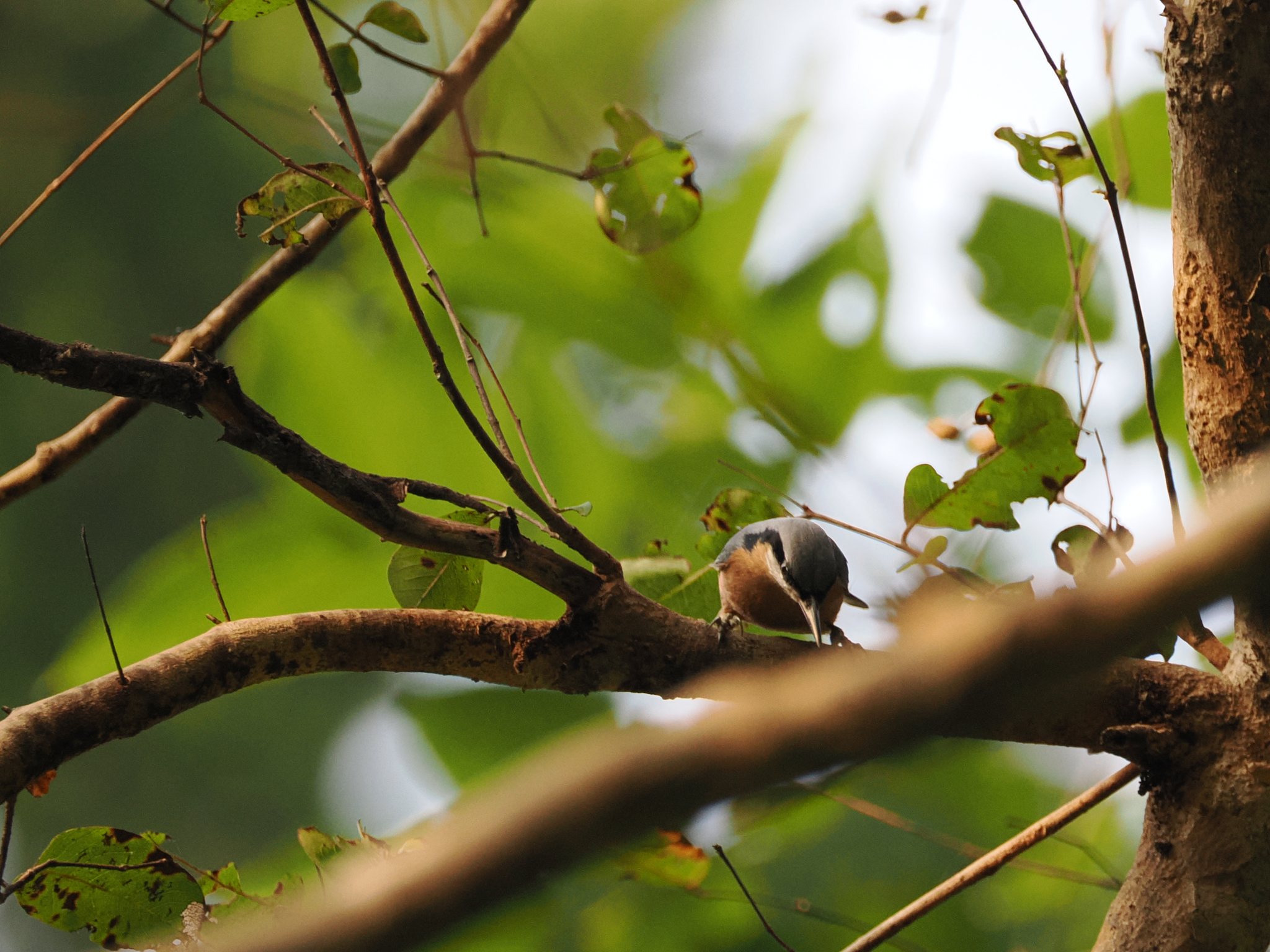
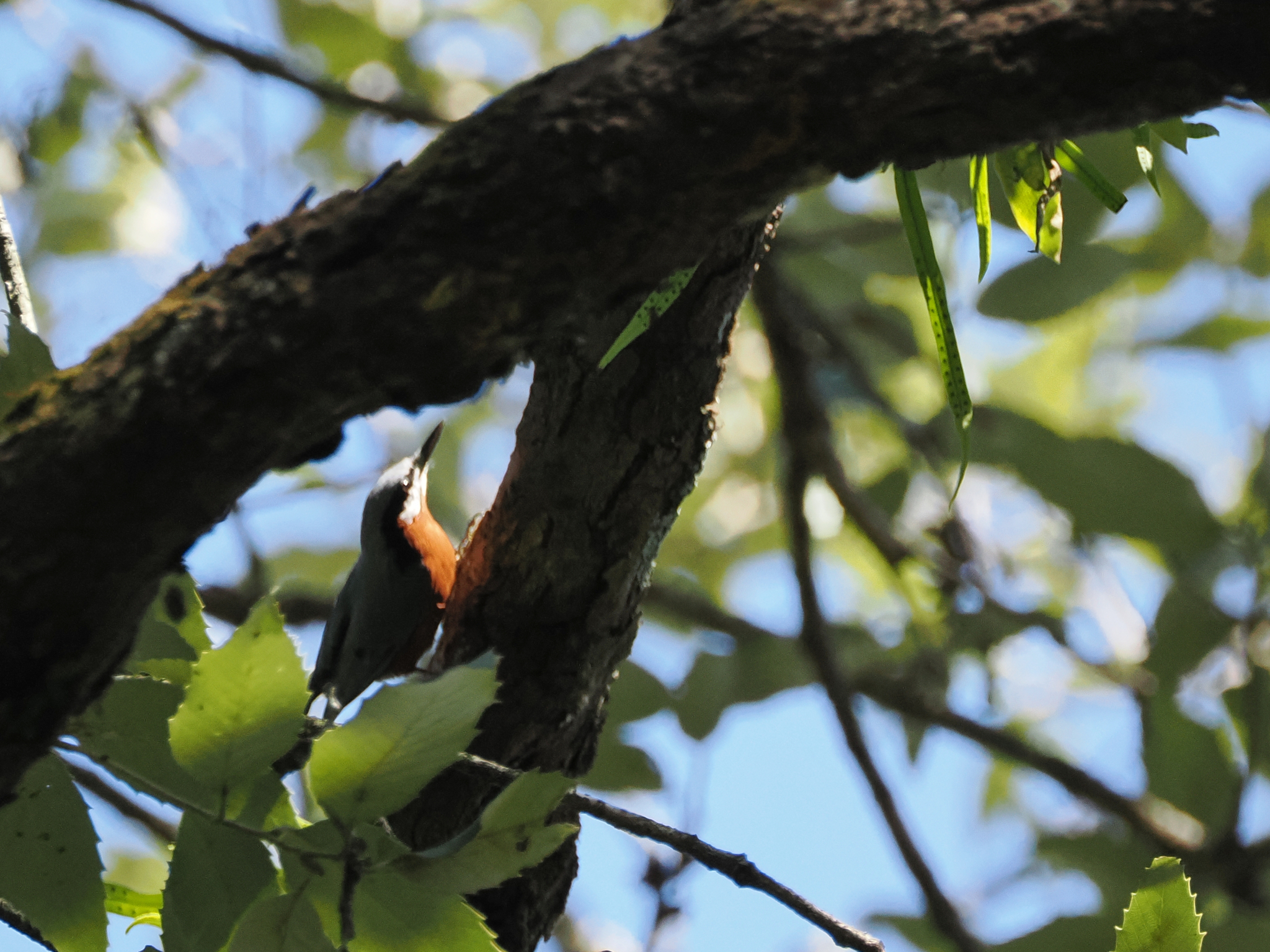
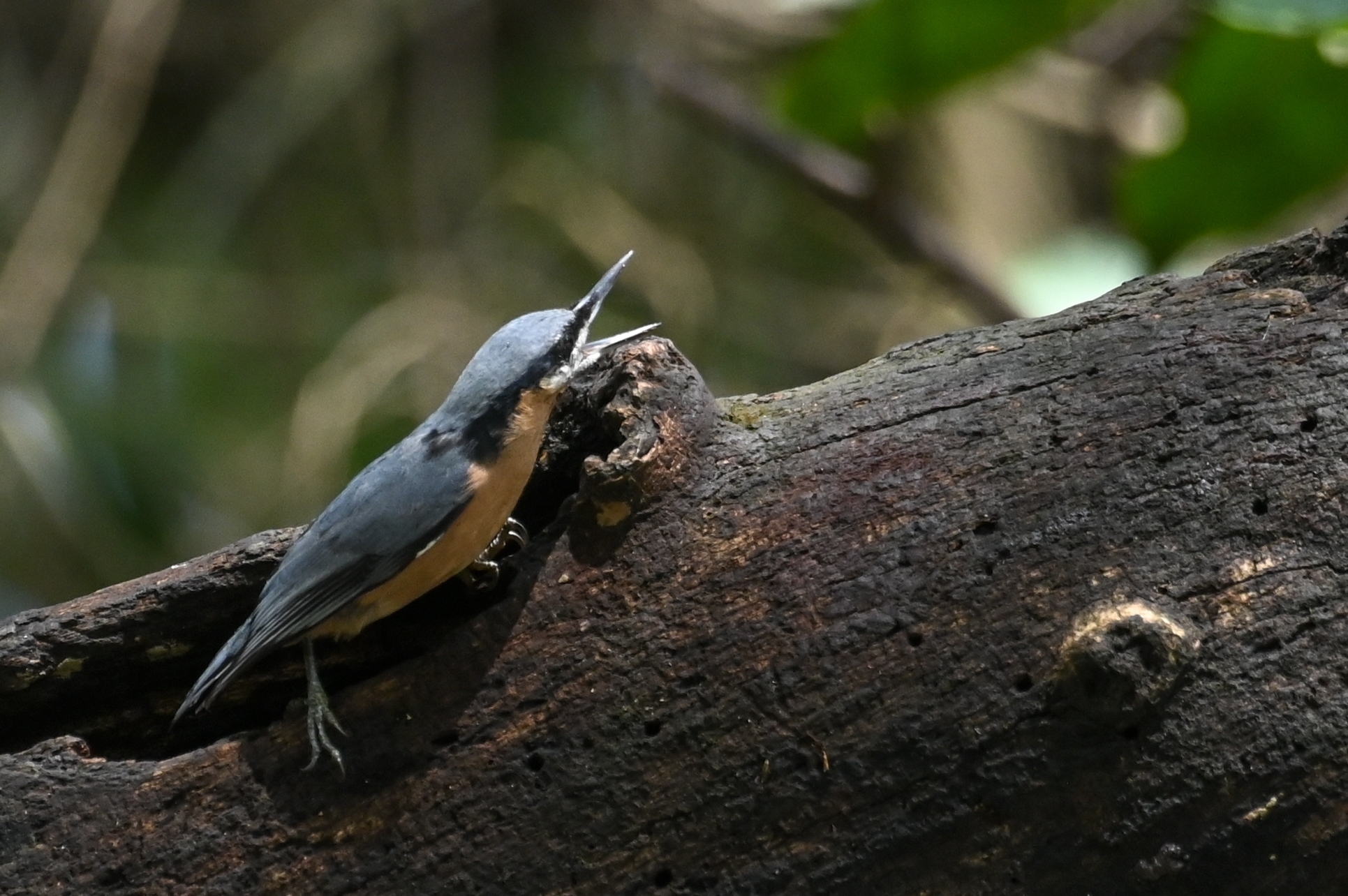
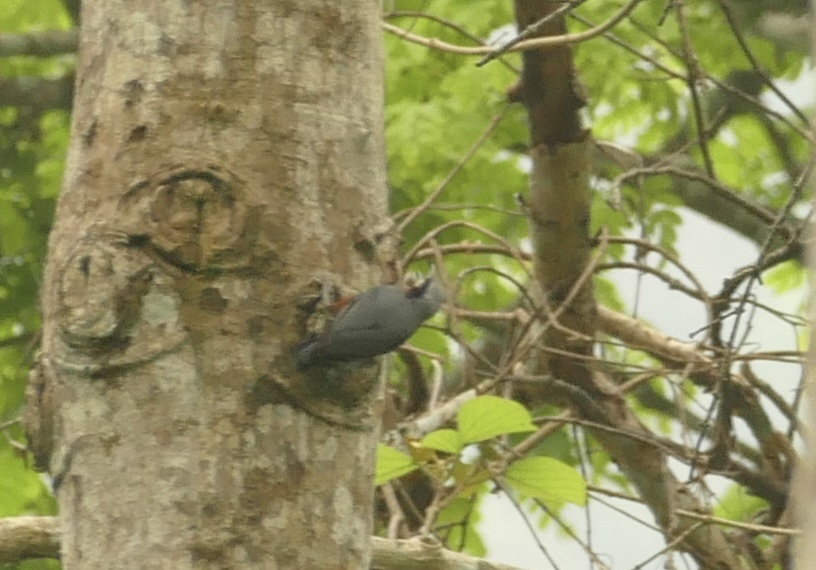
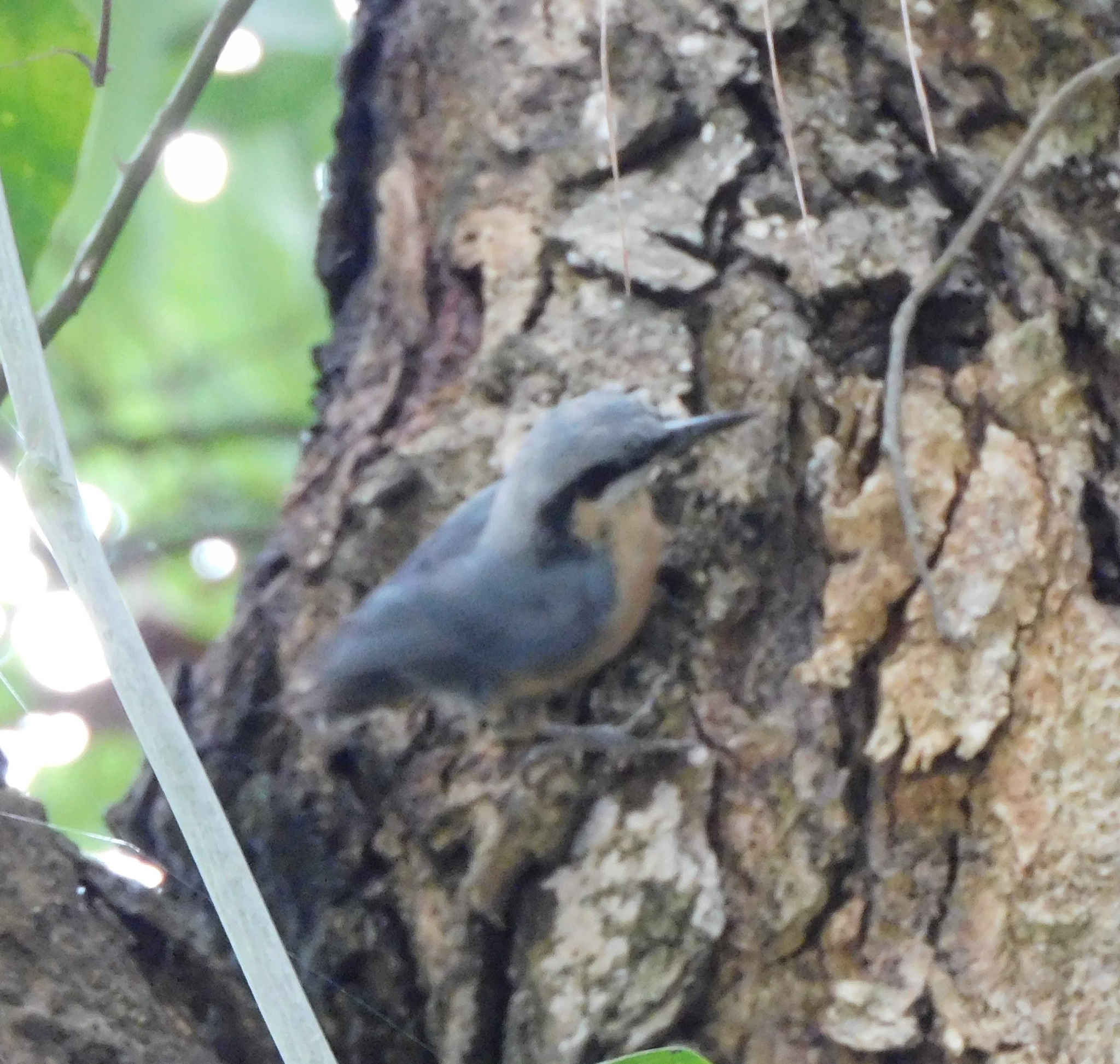
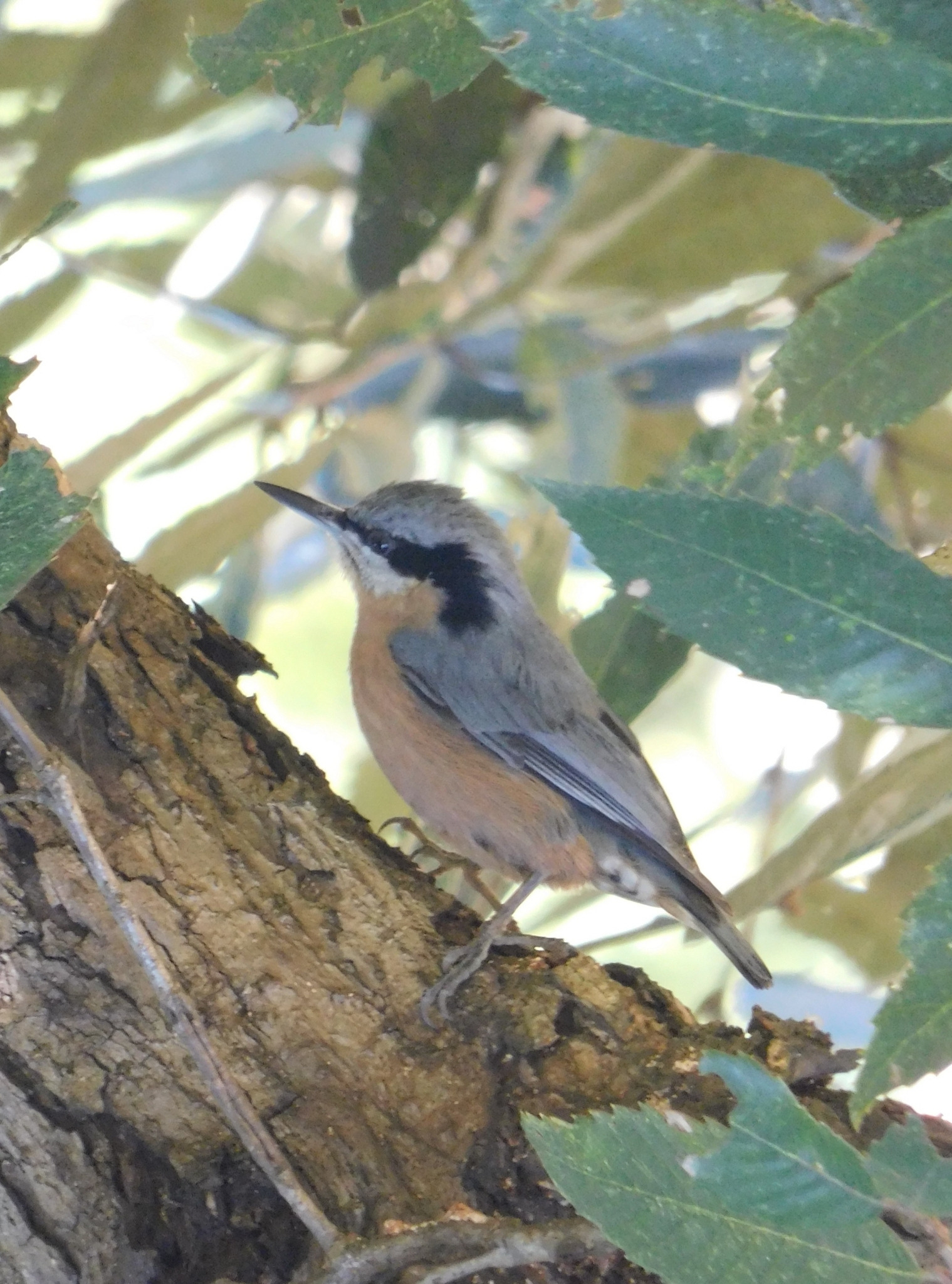
Chestnut-bellied Nuthatch
Sitta cinnamoventris
栗腹䴓
Introduction
A species of bird in the nuthatch family Sittidae. Occurs throughout the Indian subcontinent including India, Tibet, Bangladesh, Bhutan, and Nepal. Inhabits subtropical or tropical forests, both dry and moist types, as well as montane and lowland forests. Distinguished from similar species by its heavier bill, contrasting wing and tail markings including silvery-edged primaries and large white spots on the tail. The white on ear coverts does not extend into the chin, differentiating it from the Indian nuthatch.
Description
A small nuthatch with a heavy bill. The crown and mantle are of the same shade. Wing and tail show contrasting markings with silvery edges to the primaries, blackish inner webs to the tertials, and large white spots in the tail. Race almorae of Nepal and northwestern Himalayas has paler underparts; race koelzi of the eastern Himalayas has females darker than other races.
Identification
Very similar to the Burmese nuthatch but distinguished by its heavier bill. Differs from the Indian nuthatch by the white on ear coverts not extending into the chin. Key field marks include the contrasting wing and tail pattern with silvery-edged primaries, blackish inner webs to the tertials, and prominent white spots in the tail.
Distribution & Habitat
Resident species occurring from Murree Hills to the Uttaranchal foothills, extending through the Assam Valley and Arunachal Pradesh into the Lushai Hills. Found throughout the Indian subcontinent including India, Tibet, Bangladesh, Bhutan, and Nepal. Inhabits subtropical and tropical forests, both dry and moist, in montane and lowland areas.
Behavior & Ecology
Forages in forest habitats. The article provides no detailed information on diet, breeding behavior, social structure, or vocalizations.
Conservation
No conservation information provided.
Culture
No cultural significance information provided.
Source: Wikipedia · CC BY-SA 3.0
Taxonomy
- Order
- Passeriformes
- Family
- Sittidae
- Genus
- Sitta
- eBird Code
- chbnut3
Subspecies (4)
-
Sitta cinnamoventris almorae
foothills of western Himalayas (Pakistan to eastern Nepal)
-
Sitta cinnamoventris cinnamoventris
eastern Himalayas (eastern Nepal to northwestern Yunnan and Arunachal Pradesh)
-
Sitta cinnamoventris koelzi
southeastern Arunachal Pradesh to Assam and adjacent northwestern Myanmar
-
Sitta cinnamoventris tonkinensis
southern Yunnan to northern Thailand, northern Vietnam, and northern and central Laos
Data Sources
Species description from Wikipedia, licensed under CC BY-SA 3.0.
Bird images and sounds sourced from GBIF, contributed by citizen scientists worldwide under Creative Commons licenses.
Taxonomy data from AviList 2025.