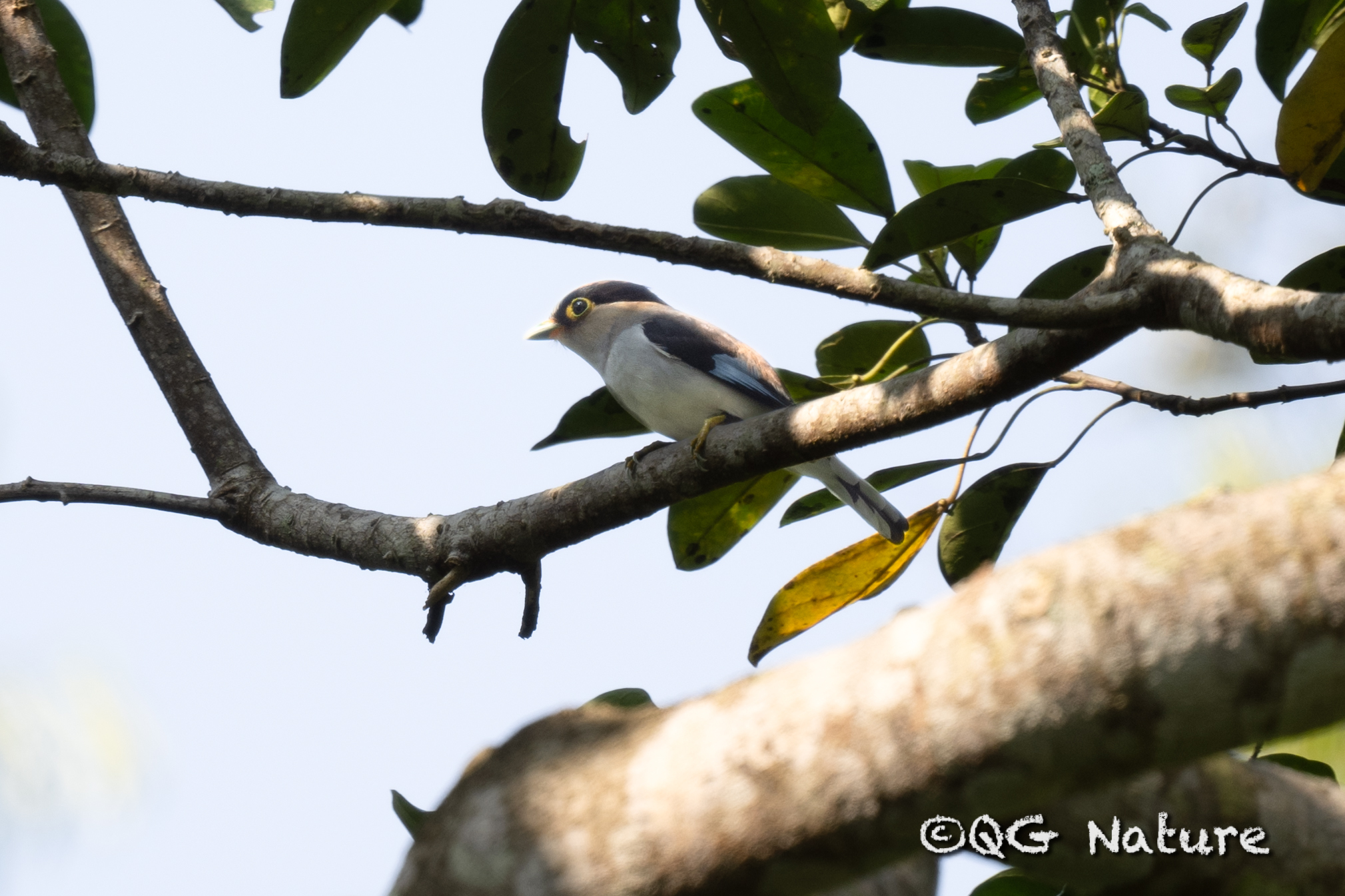
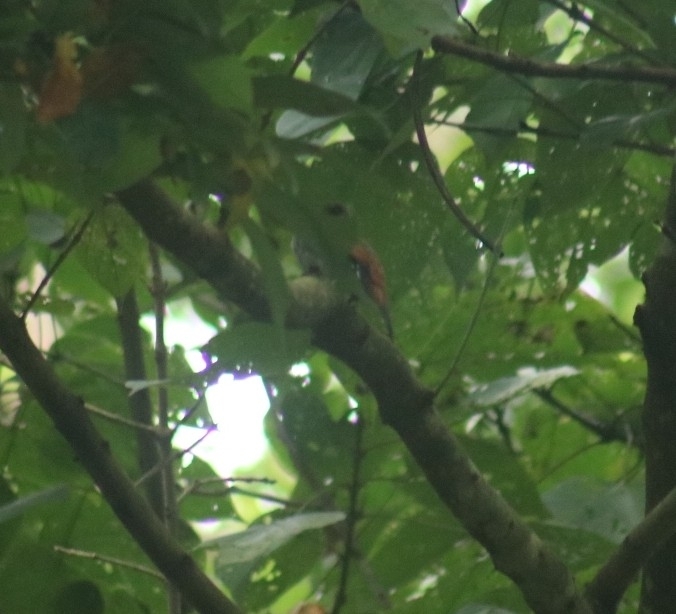
Silver-breasted Broadbill
Serilophus lunatus
银胸丝冠鸟
Introduction
A medium-sized bird in the broadbill family (Eurylaimidae) found across Southeast Asia, ranging from Cambodia, China, and Indonesia through Laos, Malaysia, Myanmar, Nepal, Thailand, and Vietnam. Inhabits subtropical and tropical moist lowland and montane forests, including semi-deciduous forests and pine, oak, and bamboo-dominated woodlands. Feeds primarily on invertebrates through flycatching and gleaning behaviors. The species exhibits slight sexual dimorphism, with females displaying a narrow silver breast band. Seven subspecies are currently recognized.
Description
A medium-sized broadbill measuring 16–17 centimeters in length and weighing 25–35 grams. The head is rusty-colored with an ash-grey forehead and a broad black supercilium stripe extending over the eye. The breast and belly are white, while the rump and upper wing coverts are bright rufous. Flight feathers are strikingly colored in blue and black, and the tail is black. Females possess a narrow silver band across the breast, providing the species' name. Juveniles resemble adults but have shorter wings and tails and slightly darker overall plumage. Subspecies show some variation in coloration.
Distribution & Habitat
Ranges across Cambodia, China, Indonesia, Laos, Malaysia, Myanmar, Nepal, Thailand, and Vietnam. Inhabits subtropical and tropical moist lowland forests and moist montane forests, including semi-deciduous forests and those dominated by pine, oak, and bamboo. May occur in selectively logged forests and occasionally enters agricultural areas and gardens. Elevation range varies by region: 800–2,000 meters in Sumatra and 300–700 meters in China.
Behavior & Ecology
Diet consists primarily of invertebrates, especially insects including grasshoppers, mantises, caterpillars, and larvae, as well as small land snails. Forages by flycatching from perches or by gleaning branches and foliage. The species occupies forest habitats throughout its range.
Conservation
Habitat loss has caused population declines, but the species is not considered threatened with extinction.
Culture
No cultural information provided.
Source: Wikipedia · CC BY-SA 3.0
Taxonomy
- Order
- Passeriformes
- Family
- Eurylaimidae
- Genus
- Serilophus
- eBird Code
- sibbro3
Subspecies (7)
-
Serilophus lunatus elisabethae
central Myanmar eastward to southern China and northern Vietnam, southward to southeastern Thailand and Cambodia
-
Serilophus lunatus impavidus
southern Laos (Bolaven Plateau)
-
Serilophus lunatus intensus
Sumatra
-
Serilophus lunatus lunatus
south-central and southern Myanmar and adjacent northwestern Thailand
-
Serilophus lunatus polionotus
mountains of Hainan
-
Serilophus lunatus rothschildi
Malay Peninsula and far southern peninsular Thailand
-
Serilophus lunatus stolidus
southern Myanmar and peninsular Thailand (except far south)
Data Sources
Species description from Wikipedia, licensed under CC BY-SA 3.0.
Bird images and sounds sourced from GBIF, contributed by citizen scientists worldwide under Creative Commons licenses.
Taxonomy data from AviList 2025.