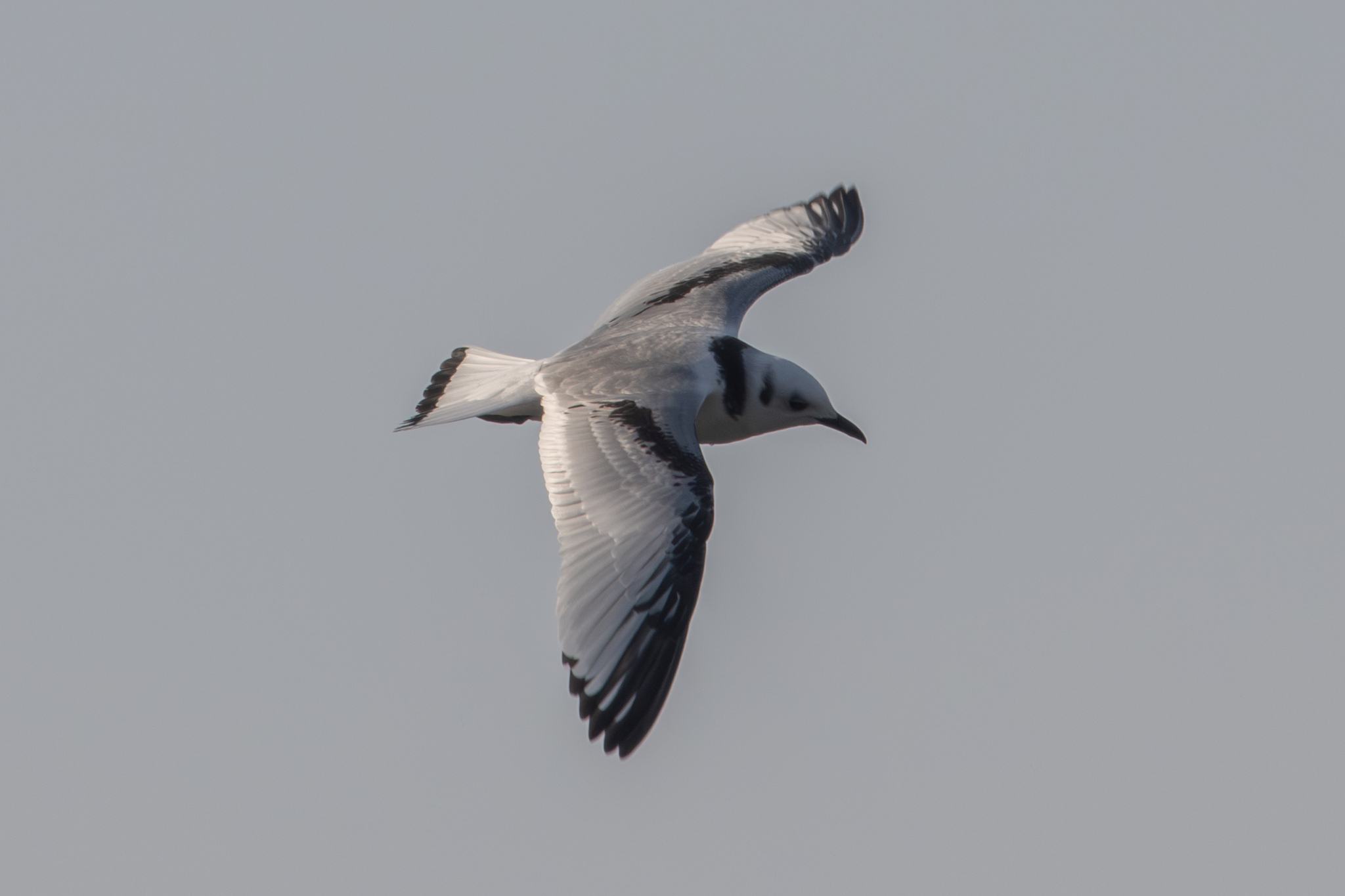
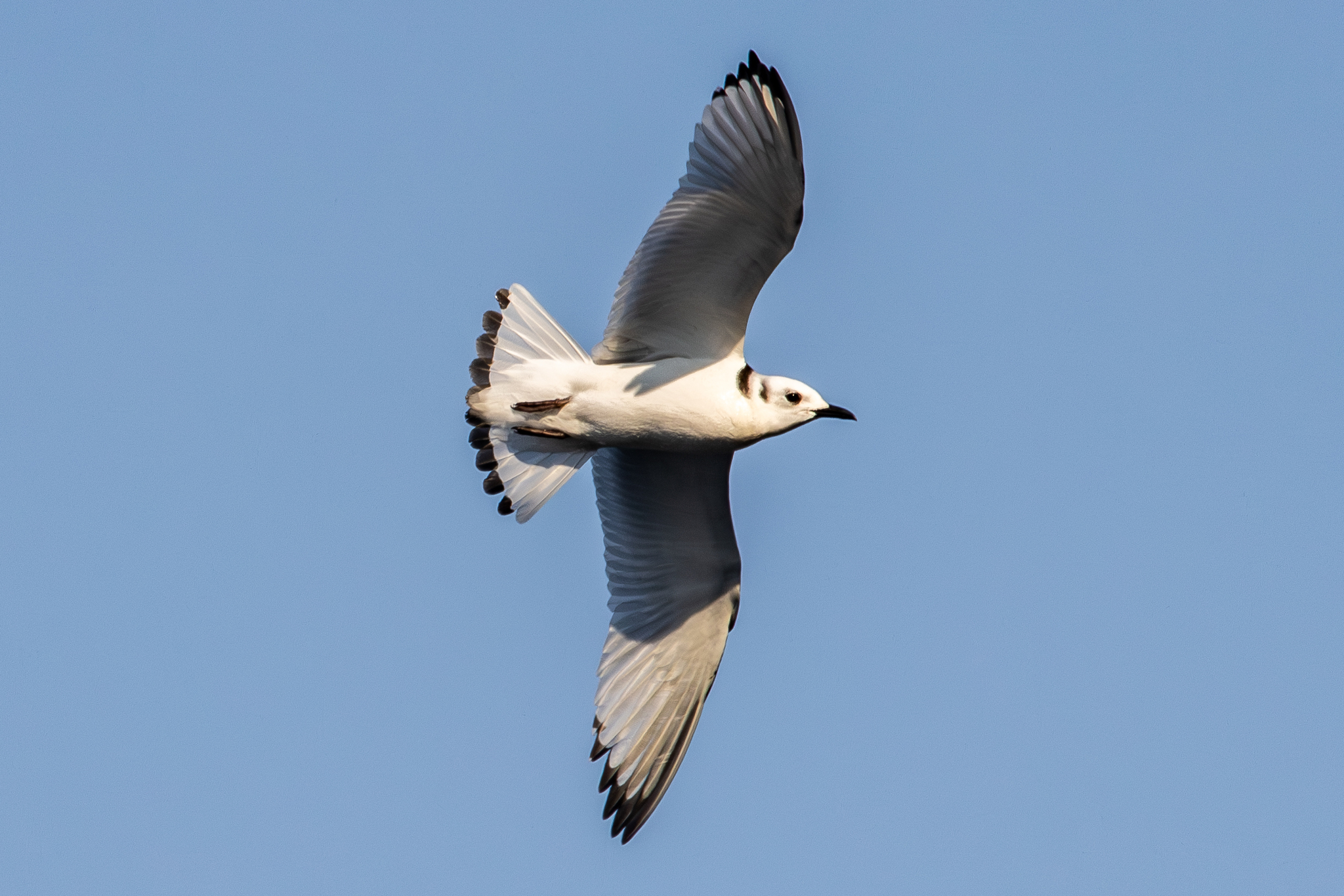
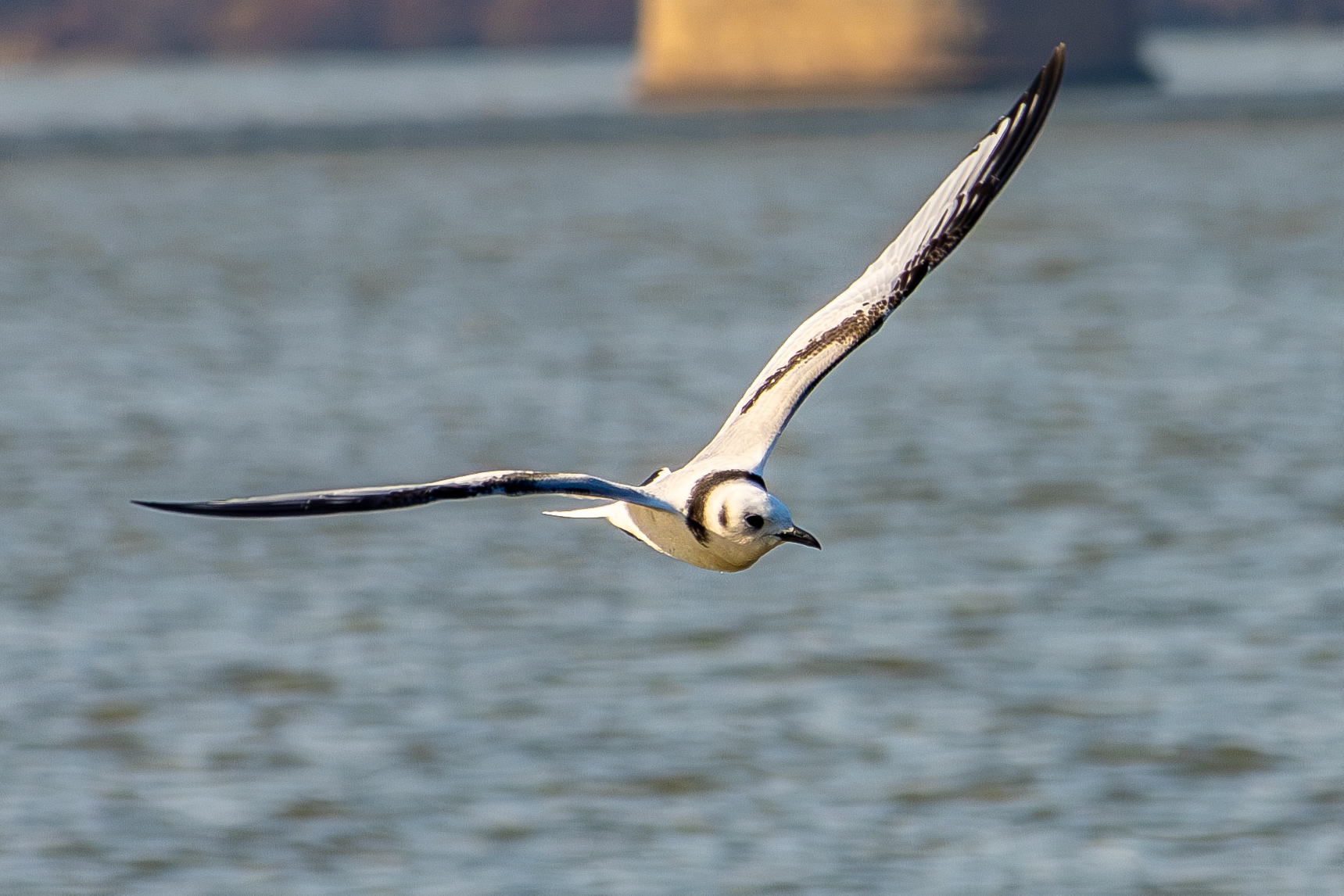
Black-legged Kittiwake
Rissa tridactyla
三趾鸥
Introduction
This seabird is a member of the gull family (Laridae). It is highly pelagic, spending most of its life at sea and returning to land only to breed on sea cliffs. It forms large breeding colonies on vertical sea cliffs. Both parents share responsibilities for nest building, incubation, and chick rearing. The species was first described by Carl Linnaeus in 1758. Populations have declined significantly in recent decades. The name derives from its distinctive call, a shrill 'kittee-wa-aaake'.
Description
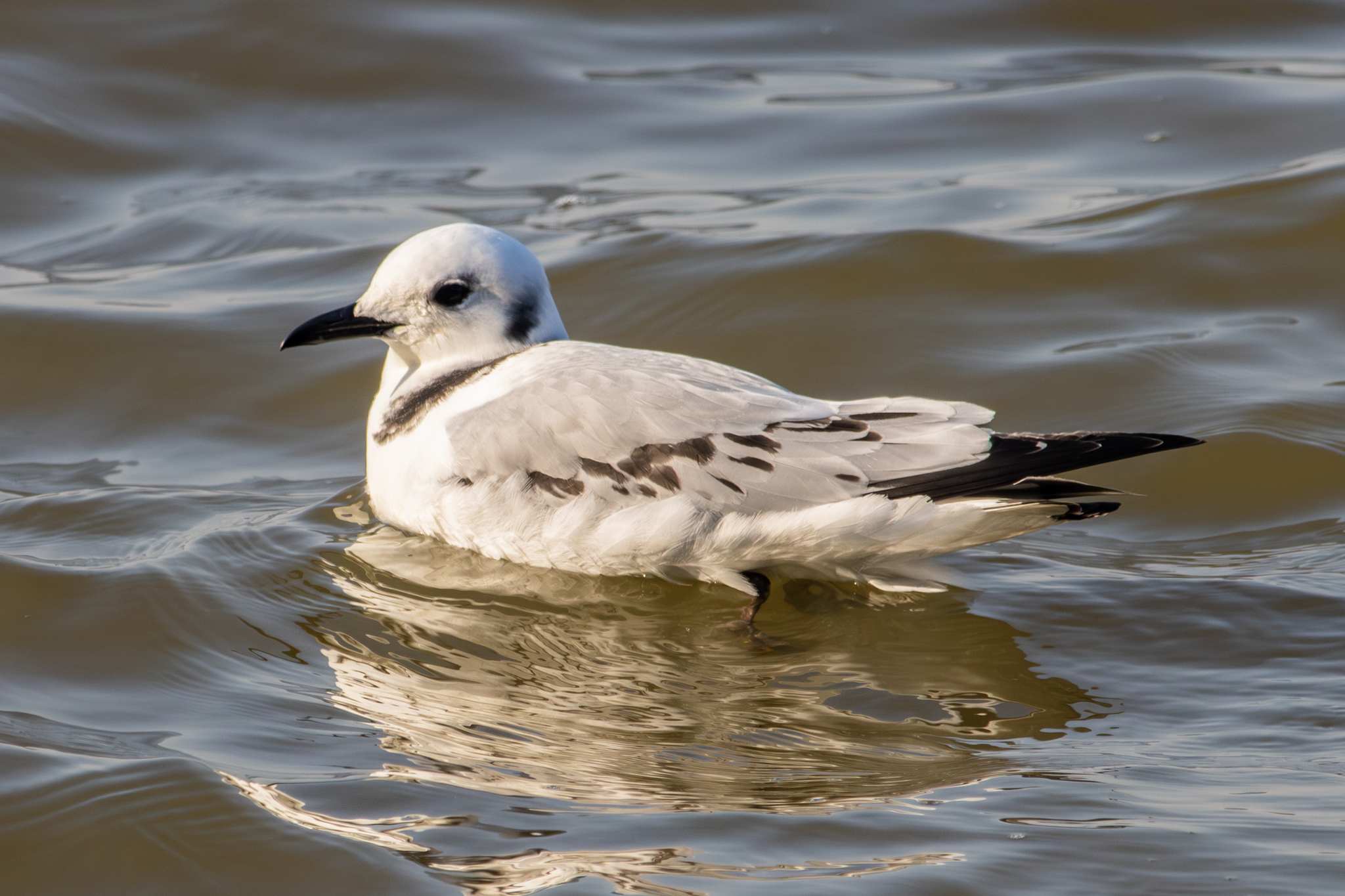
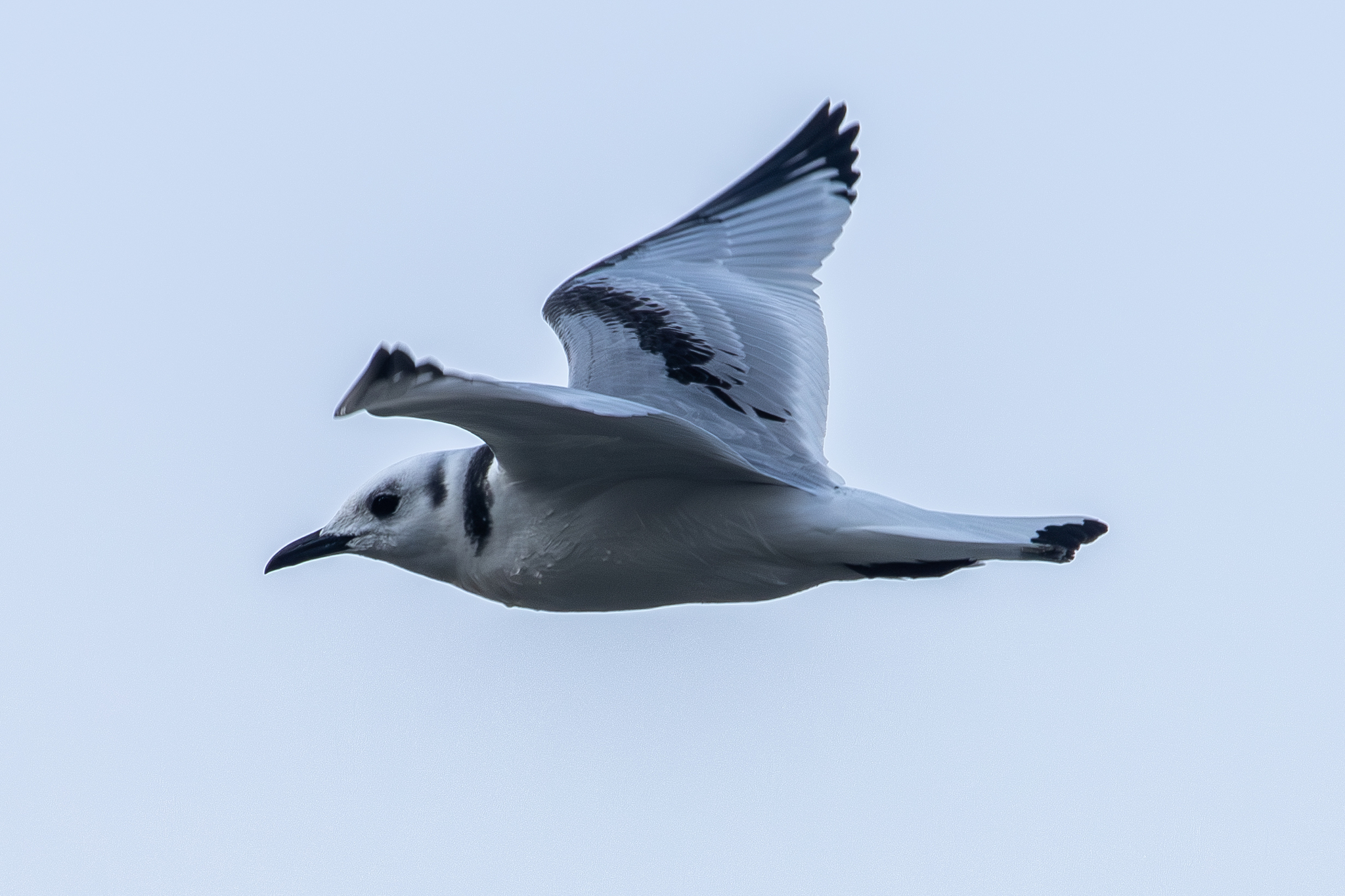
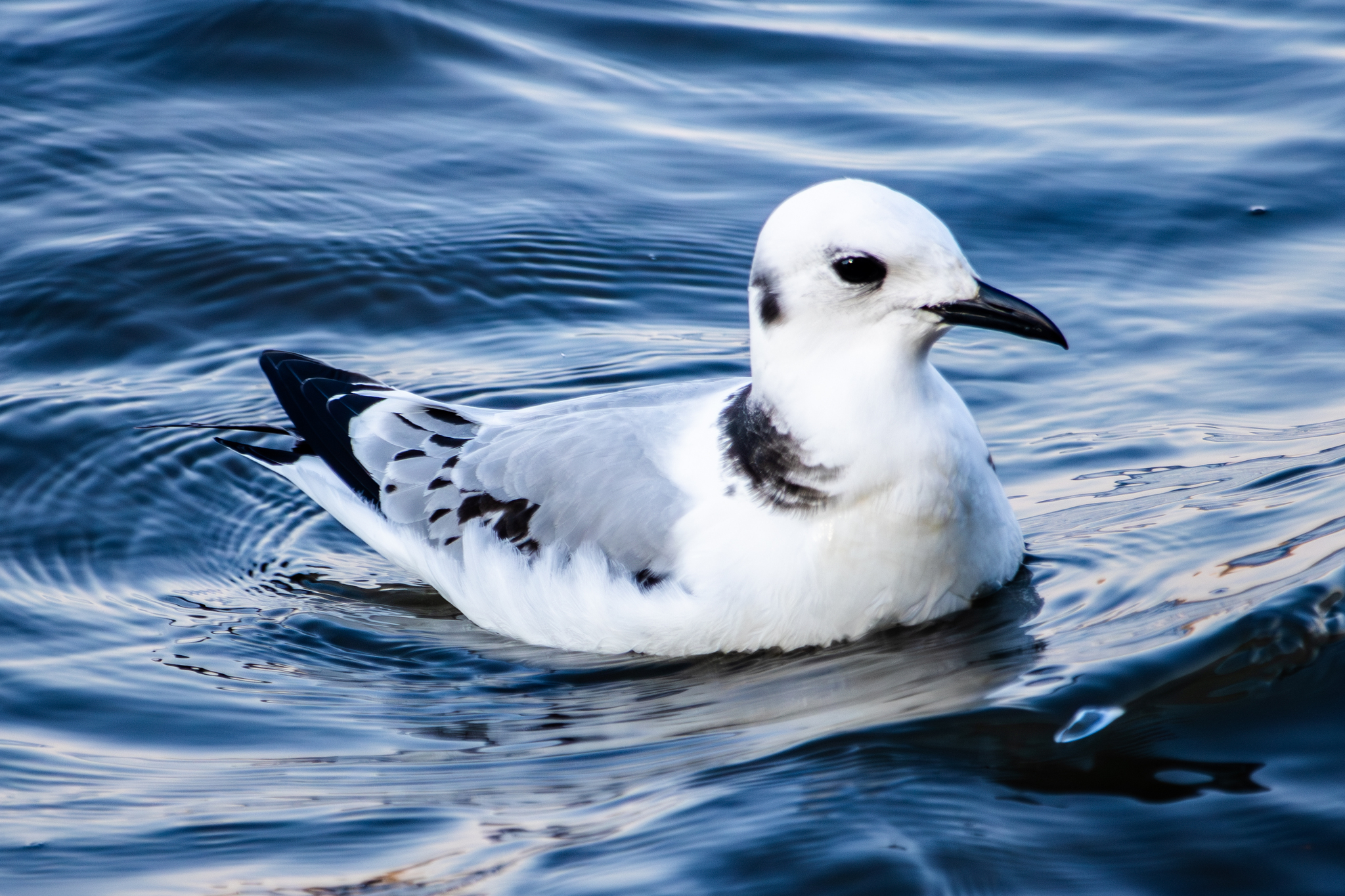
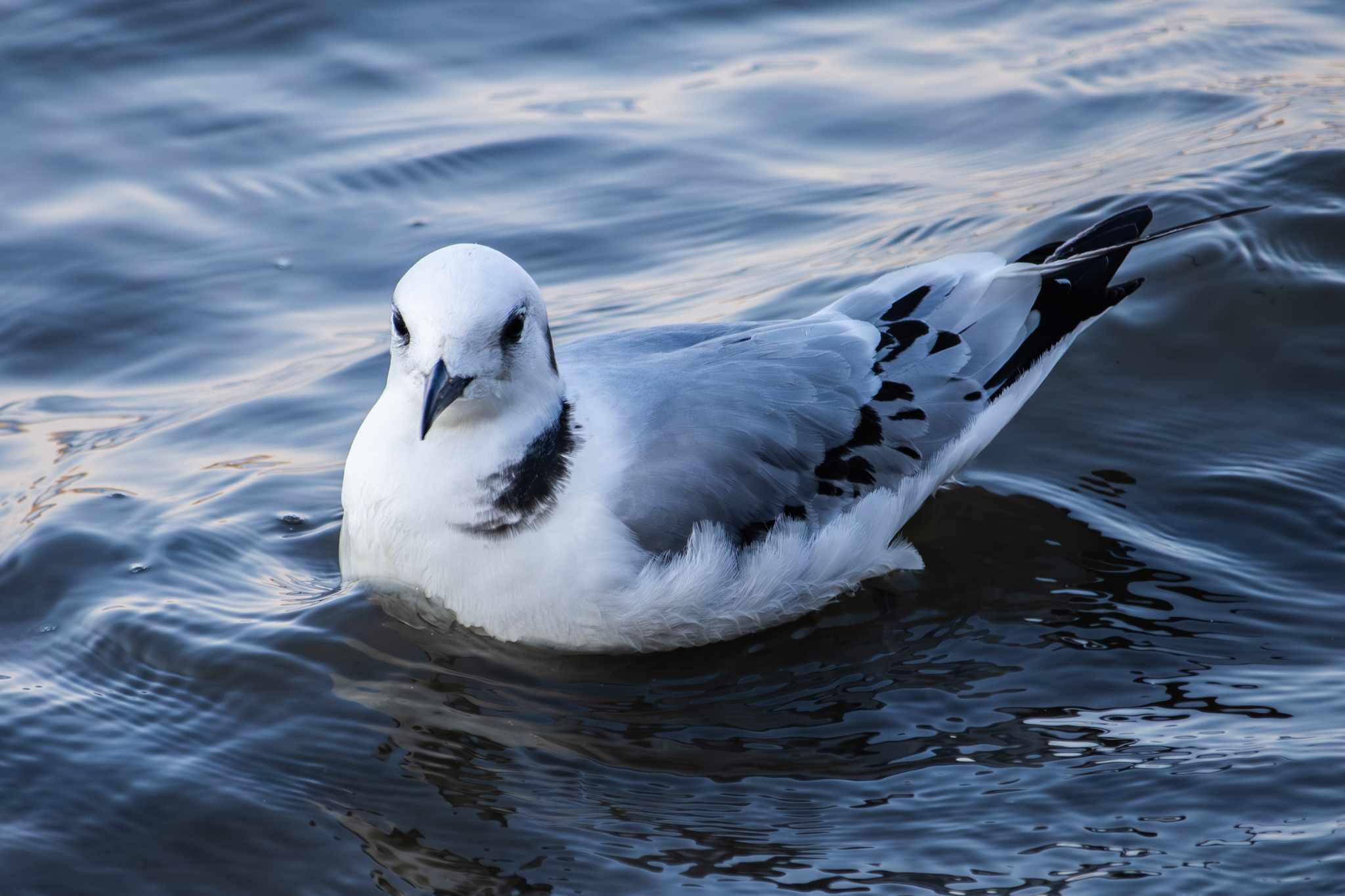
This medium-sized gull measures 37-41 cm in length with a wingspan of 91-105 cm and weighs 305-525 g. Adults have clean white head and body, grey back and wings, and distinctive solid black wingtips. The legs are black, and the bill is bright yellow. A notable feature is the rich red interior of the mouth, visible when birds greet each other at the nest. As their scientific name tridactyla suggests, they have only three toes—the hind toe is extremely reduced or absent. In winter plumage, adults develop a dark grey smudge behind the eye and a grey hind-neck collar, with the bill turning dusky-olive. Juveniles differ markedly, with a black 'W' band across the wings, black tail band, and solid black bill. They attain full adult plumage at four years old.
Identification
The black legs distinguish this species from the similar red-legged kittiwake, though occasional individuals may have pinkish legs causing confusion. The solid black wingtips with no white spots differentiate it from most larger gull species. Juveniles can be confused with juvenile little gull and Sabine's gull, but the kittiwake's broader black 'W' across the wings, black primary feathers, and distinct pattern across the coverts are distinguishing features. The absence or extreme reduction of the hind toe is unique among gulls. In flight, the lightweight, agile wingbeats and habit of hovering before diving for prey help separate it from heavier gull species.
Distribution & Habitat
This coastal bird inhabits arctic to subarctic regions across the northern hemisphere. The Atlantic subspecies ranges from high Arctic areas through temperate coasts of Greenland, Iceland, Europe, Svalbard, and Canada's eastern Arctic, with wintering grounds extending south to New Jersey and west Africa. The Pacific subspecies breeds from Siberia through Alaska, with winter movements to more temperate waters including China. Kittiwakes are the most pelagic of gulls, spending most of the year far offshore. They return to land only for breeding, May through September, nesting exclusively on sheer sea cliffs. Vagrants occasionally appear far inland, even in central Asia.
Behavior & Ecology
Breeding occurs in large colonies on sea cliffs, with monogamous pairs exhibiting biparental care. Nests are built from mud, grass, and seaweed, forming a cup-shaped structure on cliff ledges. Egg-laying occurs late April to early May, with one to three eggs incubated for approximately 27 days by both parents. Chicks are semi-precocial and may exhibit siblicide. They fledge at 34-58 days and reach sexual maturity at 4-5 years. Diet consists primarily of fish, supplemented by invertebrates. Foraging occurs at the water surface through flight-diving or hovering, sometimes following whales or fishing vessels. Birds give various calls including greeting calls at the nest, courtship squeaks, and alarm calls.
Conservation
The IUCN Red List reclassified this species from Least Concern to Vulnerable in 2017, with global populations declining approximately 40% since the 1970s. The global population is estimated at 14.6-15.7 million individuals, with Europe holding over 50% and North America about 20%. All populations except a small Canadian Arctic group are declining. Key threats include commercial fisheries depleting prey species like sandeels, ocean temperature rise affecting fish stocks, and bycatch in fishing gear. Climate change impacts on marine ecosystems pose ongoing concerns. The species is protected under the Migratory Bird Treaty Act in the US, Canada, Mexico, Russia, and Japan, though no global conservation plan exists.
Culture
In New England, this species is known as the 'winter gull' because its arrival along coastal areas signals the coming winter months. Northern Norwegian cities, particularly Tromsø, have experienced dramatic increases in urban nesting populations, with pairs growing from 13 in 2017 to over 380 in 2022. This shift is attributed to climate-related breeding failures at traditional sites and the predator-free environment cities provide. Urban nesting has created challenges including ammonia-smelling droppings, building discoloration, and noise pollution. In response, Tromsø has implemented 'kittiwake hotels'—artificial bird cliff structures—to encourage nesting away from buildings while maintaining successful breeding outcomes.
Source: Wikipedia · CC BY-SA 3.0
Taxonomy
- Order
- Charadriiformes
- Family
- Laridae
- Genus
- Rissa
- eBird Code
- bklkit
Subspecies (2)
-
Rissa tridactyla pollicaris
breeds coasts from northeastern Siberian islands to Kamchatka, Kuril, and Commander islands (eastern Russia), also Aleutian and Bering Sea islands, and western and southwestern Alaska mainland; winters to coasts and coastal waters off Japan, Korean Peninsula, and southeastern Alaska southward to southern California (western USA)
-
Rissa tridactyla tridactyla
breeds coasts from Greenland, Iceland, and northwestern Europe eastward to northwestern Siberian islands, also Canadian high Arctic to Newfoundland (eastern Canada); winters mainly North Atlantic coastal waters southward to Virginia, mid-Atlantic Ridge to Azores, and North Sea
Data Sources
Species description from Wikipedia, licensed under CC BY-SA 3.0.
Bird images and sounds sourced from GBIF, contributed by citizen scientists worldwide under Creative Commons licenses.
Taxonomy data from AviList 2025.