Wreathed Hornbill
Rhyticeros undulatus
花冠皱盔犀鸟
Introduction
A medium-sized Old World hornbill (Bucerotidae) found in tropical evergreen forests from Northeast India and Bhutan through mainland Southeast Asia to the Greater Sunda Islands (Sumatra, Java, Borneo). The species inhabits foothills and lowland forests up to 2,560 m elevation, migrating to higher elevations during non-breeding seasons. Distinguished by its pale yellow bill with distinctive ridges (wreaths) on the casque, and sexually dimorphic throat coloration—males display bright yellow gular skin while females have blue. As a frugivore feeding mainly on large fruits and figs, it plays a crucial ecological role in long-distance seed dispersal across forest ecosystems, swallowing fruit whole and depositing intact seeds. Has been listed as Vulnerable on the IUCN Red List since 2018 due to declining populations from hunting, habitat fragmentation, and deforestation.
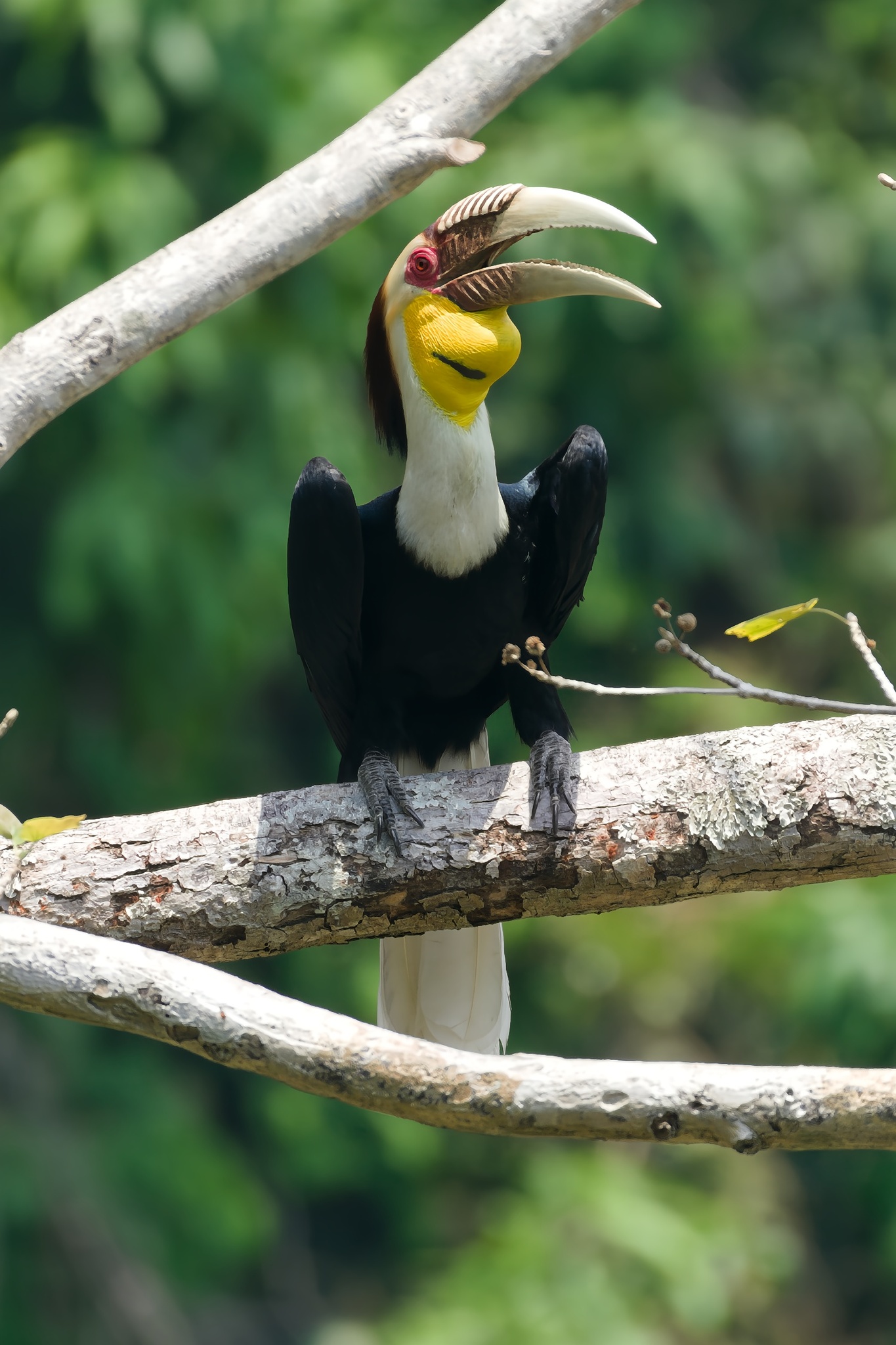
Description
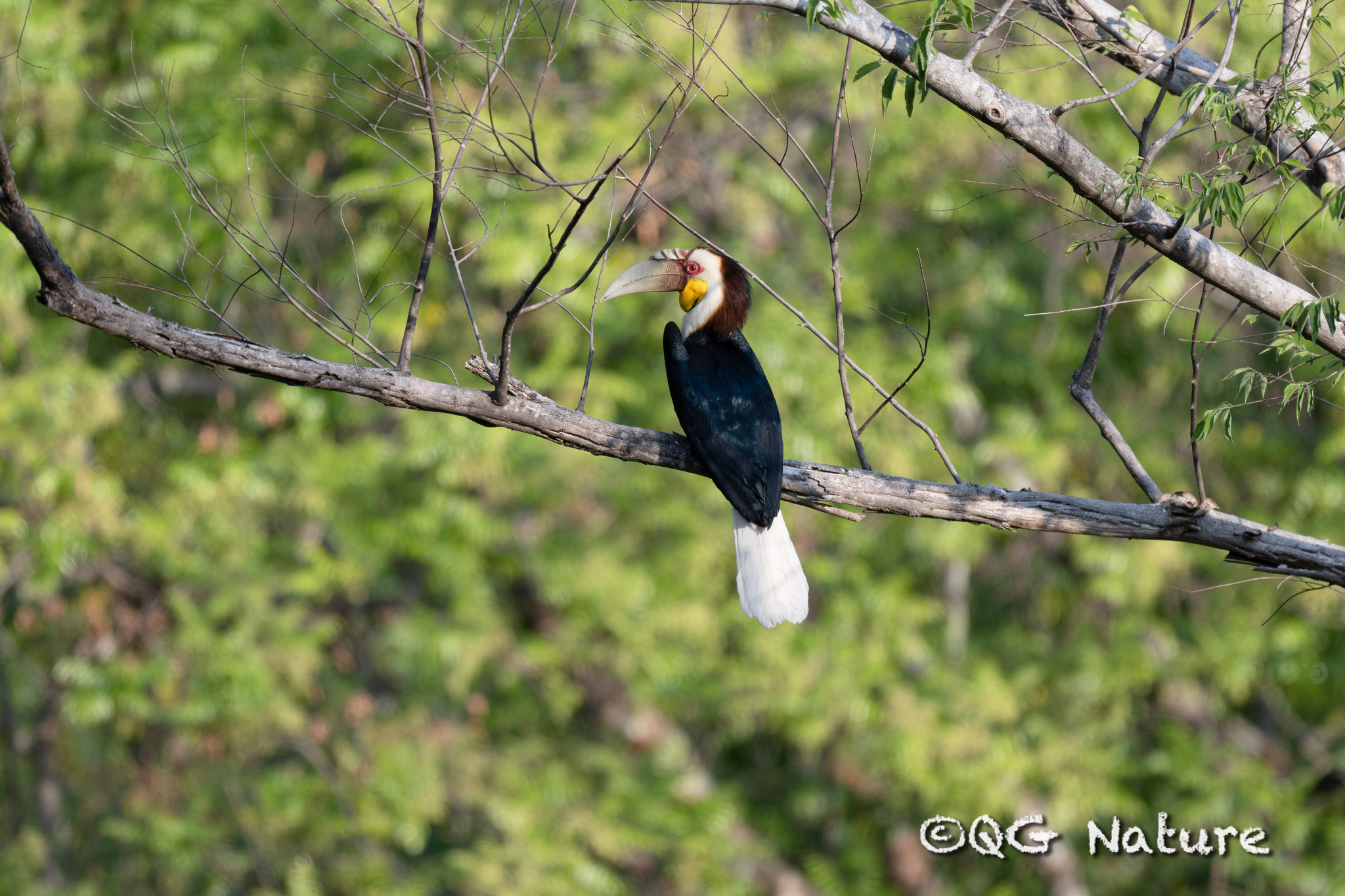
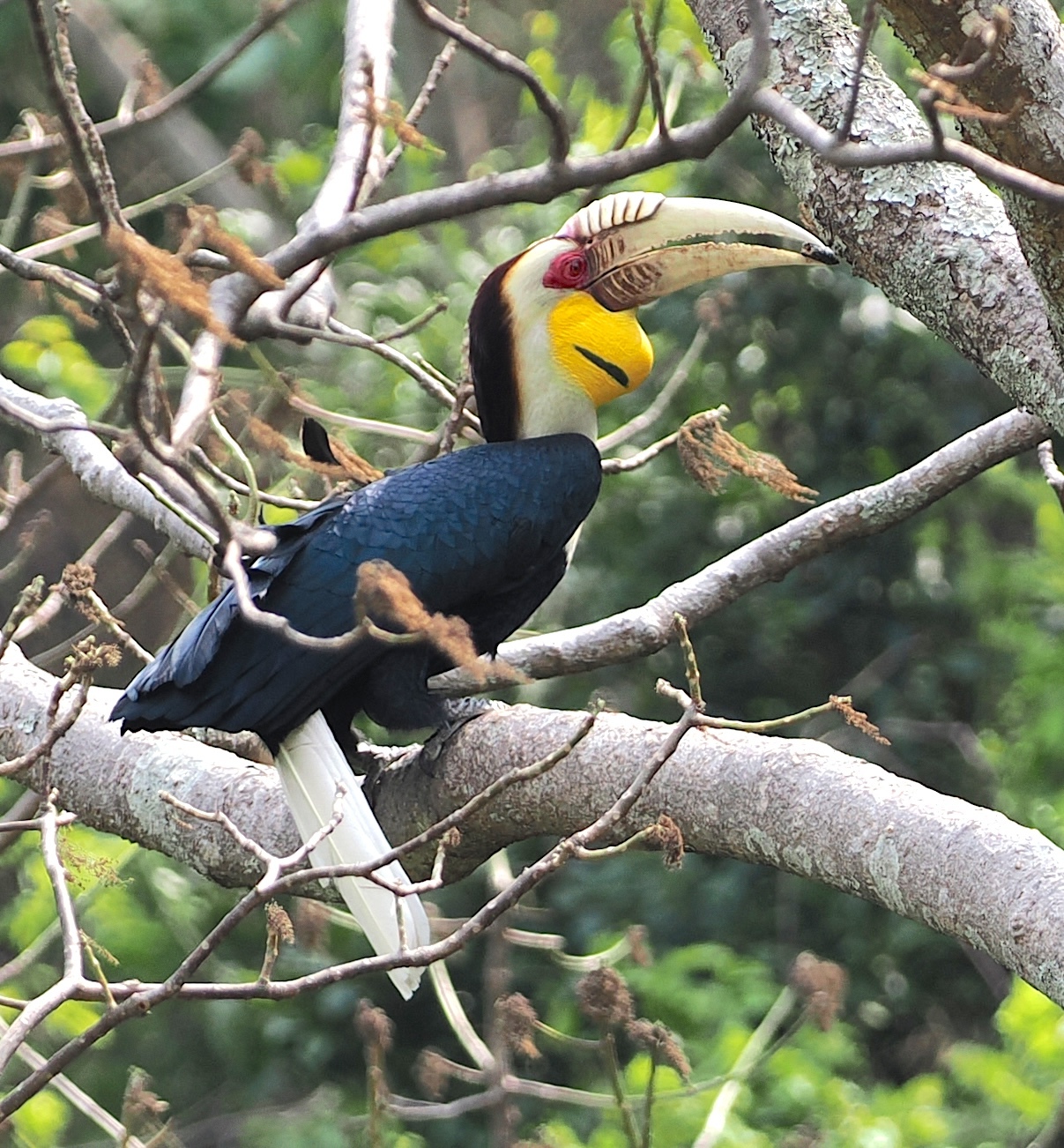
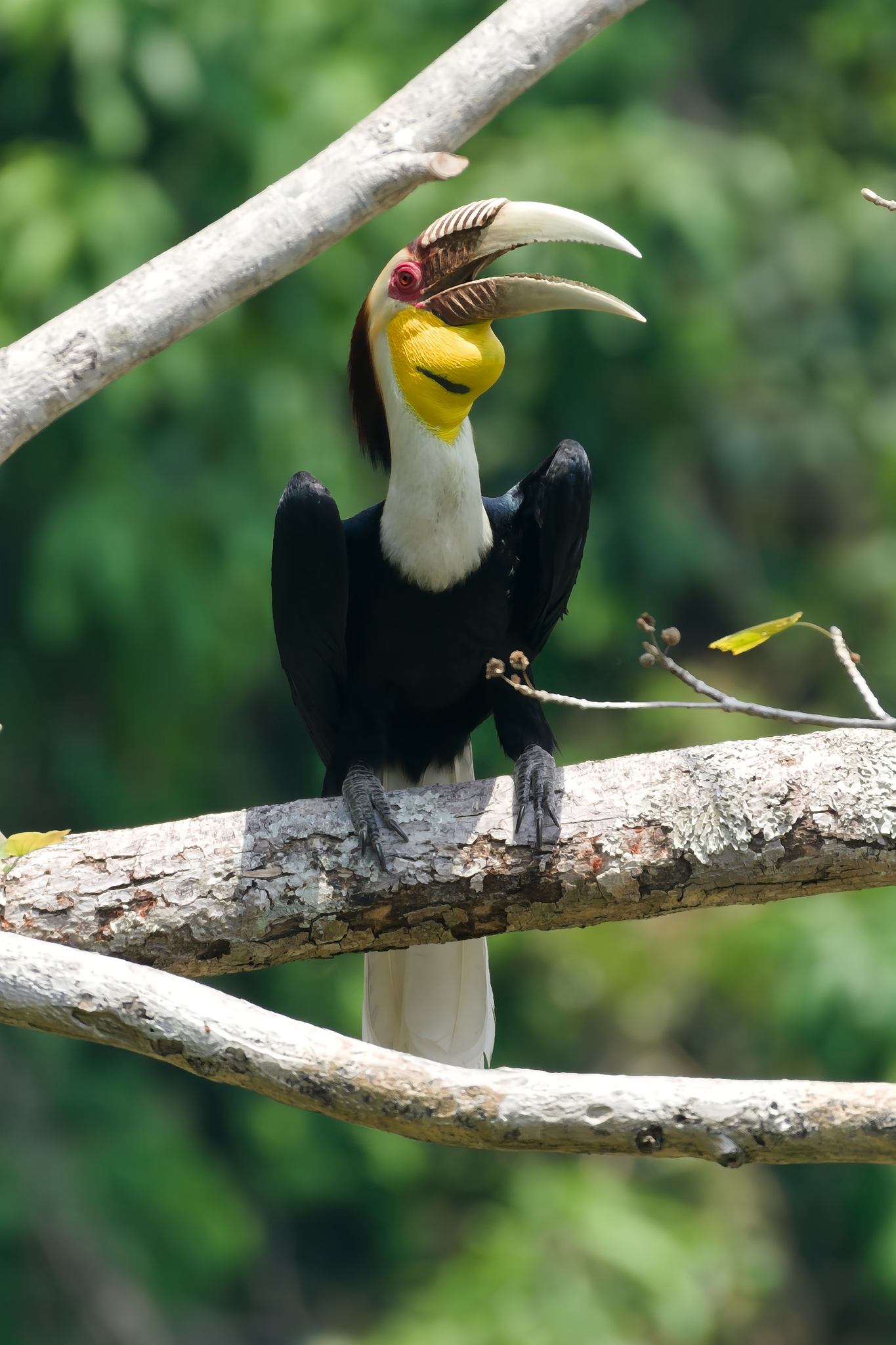
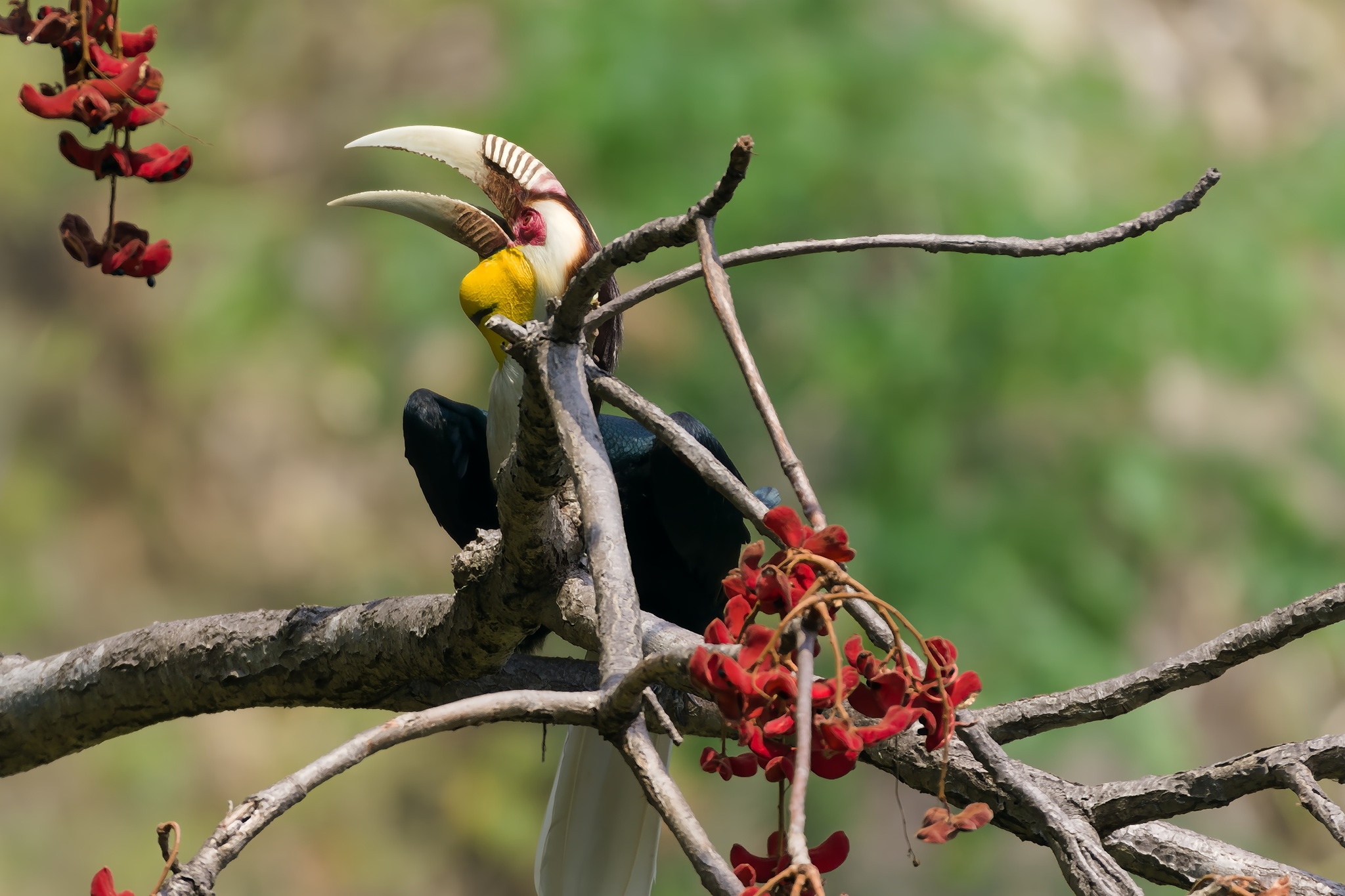
A medium-sized hornbill with body length of 75-90 cm (30-35 in). Males weigh 1.68-3.65 kg (3.7-8.0 lb), females 1.36-2.69 kg (3.0-5.9 lb). Plumage is entirely black with black legs and feet, complemented by a pale yellow bill and white tail. Bare reddish skin surrounds the eyes, while the gular skin features a distinctive black band—bright yellow in males, blue in females. The male has a white neck and dark reddish nape transitioning to black. The most diagnostic feature is the serrated casque with ridges near the base of the upper mandible. Sexual dimorphism in throat coloration becomes more pronounced as birds mature.
Identification
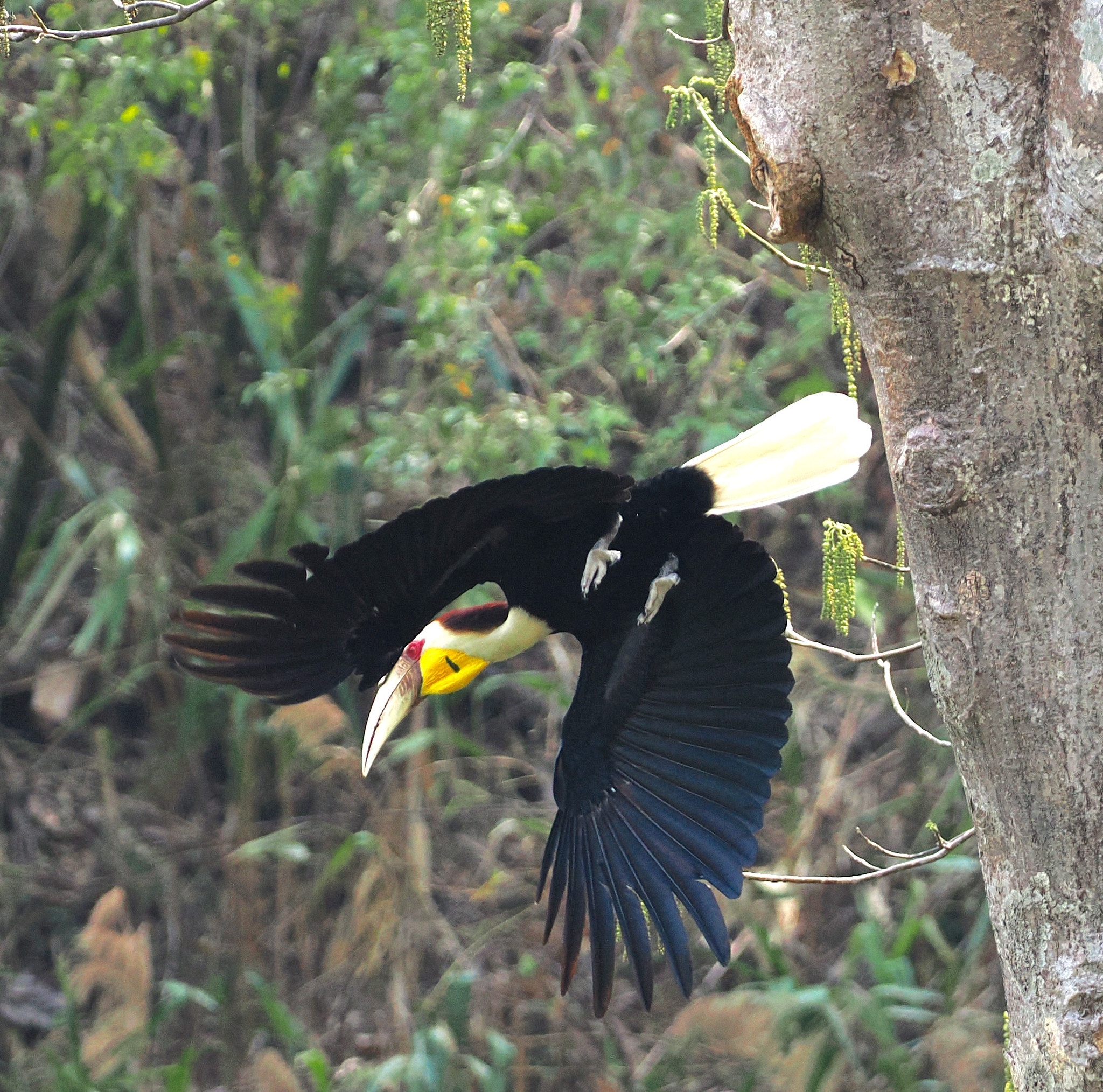
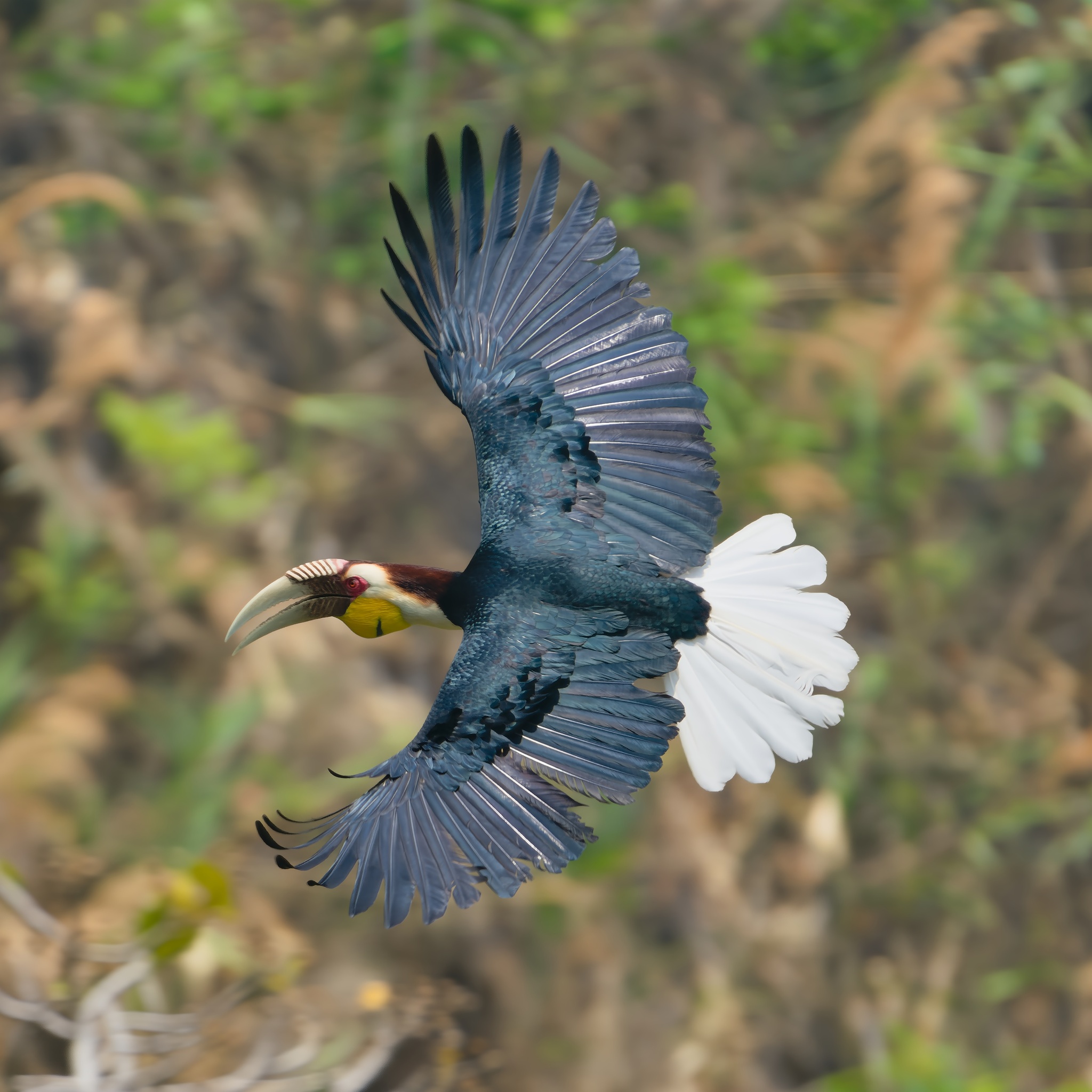
Distinguished from other hornbill species by the distinctive wreath-like ridges on the casque and the blue-black band across the lower throat sac. Males are readily identified by their bright yellow gular skin, white face and upper breast, and rufous crown. Females are uniformly black with blue throat skin. The white tail contrasts with otherwise black plumage in both sexes. In flight, the combination of large pale bill, white tail, and prominent throat coloration aids identification.
Distribution & Habitat
Ranges across tropical evergreen forests from southern Bhutan and Northeast India through Bangladesh and mainland Southeast Asia to Indonesia, where it occurs on Sumatra, Java, Borneo, and smaller islands. Recorded up to 2,560 m (8,400 ft) elevation. In Northeast India, inhabits primary and selectively logged forests in Eastern Himalayan foothills from Nameri National Park to Namdapha National Park. During breeding season occupies lowland areas; migrates to higher elevations non-breeding season. Individuals have been sighted in Myanmar's Mali River valley (800-2,500 m) and Hponkanrazi Wildlife Sanctuary. Does not undertake long-distance migration but makes seasonal elevational movements.
Behavior & Ecology
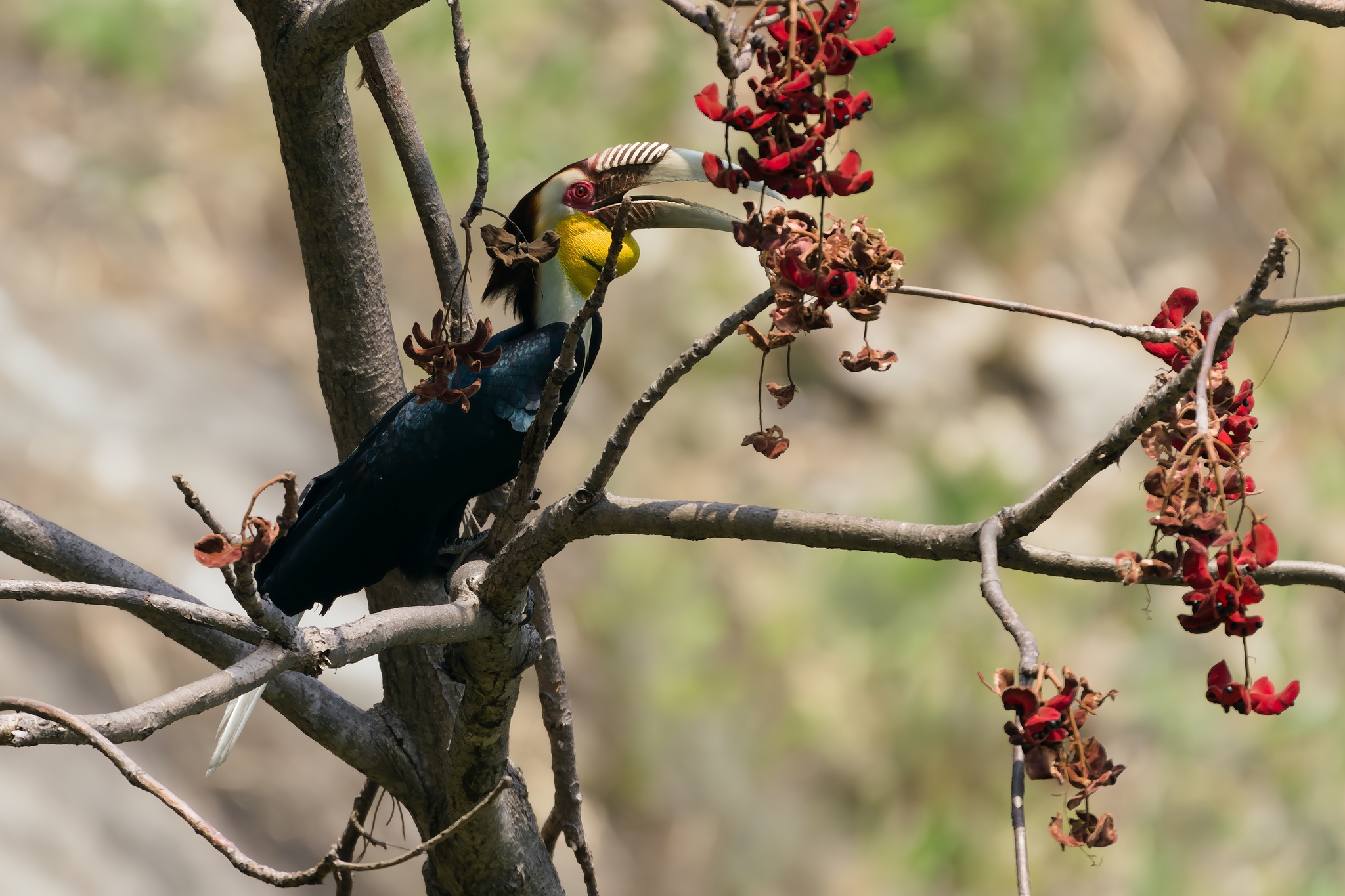
Highly social, living in larger flocks than other hornbill species year-round. Flock size varies seasonally: mean 4.7-6.3 individuals/km² in March-April to 68 birds/km² in December. Most active early mornings, resting at midday and resuming in afternoons. A male tracked by GPS moved a mean minimum daily distance of 24.8 km (15.4 mi) during breeding season. Main call is a loud double yelp sounding like 'coo-cuk' or 'wuff-wurff', repeated in sequences of three or more from perch or during flight, often accompanied by dramatic throat sac display. Diet consists primarily of figs and large drupaceous fruits; occasionally eats insects, crabs, snails, and reptiles. Uses ballistic food transport—throws head back to swallow fruit whole—allowing exploitation of large fruits unavailable to smaller frugivores. Monogamous breeder with biparental care. Nest cavity height 18-28 m; clutch size 1-3 eggs incubated for 40 days; fledging period 111-137 days.
Conservation
Listed as Vulnerable on the IUCN Red List since 2018 due to projected population decline. Major threats include hunting for meat, traditional medicine, and ornamentation; pesticide use; illegal logging; and habitat fragmentation. In Arunachal Pradesh, local communities hunt 50-70 individuals annually during migratory season. Protected under CITES Appendix II and classified as a Class II national protected species in China. Conservation efforts include the Hornbill Nest Adoption Program in Pakke Tiger Reserve (initiated 2011), where local Nyishi people serve as nest protectors. The program located eight nests during 2012-2013 breeding seasons, with two successfully fledging young.
Culture
Among the Mishmi and Adi people of Arunachal Pradesh, the species holds traditional significance. Gizzards are used medicinally to treat stomach problems, feathers decorate homes, and casques adorn headgear. Fat is used for medical purposes, and birds are hunted for sport as well as consumption. The species' cultural value has been leveraged in community-based conservation programs, with local communities participating in nest protection efforts.
Source: Wikipedia · CC BY-SA 3.0
Taxonomy
- Order
- Bucerotiformes
- Family
- Bucerotidae
- Genus
- Rhyticeros
- eBird Code
- wrehor1
Distribution
northeastern India to southwestern China, southeastern Asia, and Greater Sundas
Data Sources
Species description from Wikipedia, licensed under CC BY-SA 3.0.
Bird images and sounds sourced from GBIF, contributed by citizen scientists worldwide under Creative Commons licenses.
Taxonomy data from AviList 2025.