Desert Finch
Rhodospiza obsoleta
巨嘴沙雀
Introduction
A large brown true finch (Family Fringillidae) found in southern Eurasia. Taxonomic research indicates it is more closely related to the greenfinches (genus Chloris) than previously thought, with DNA analysis, vocalizations, and morphology suggesting it sits near the common ancestor of that group. It is a desert resident in areas where water is readily available but also inhabits low mountains, foothills, and cultivated valleys. This species does not migrate except locally.
Description
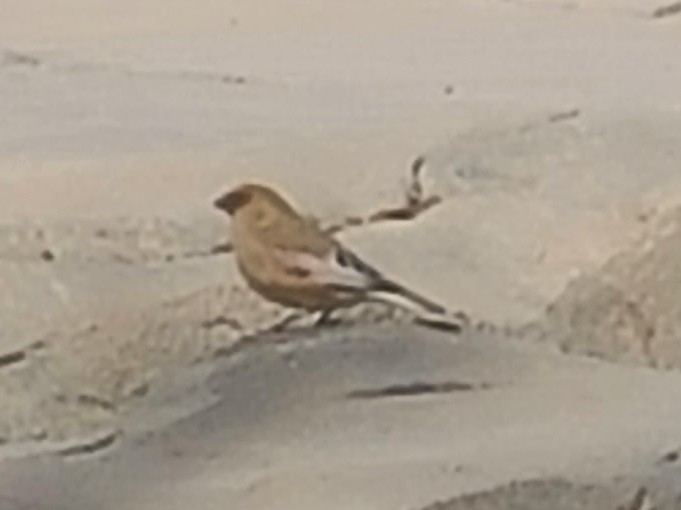
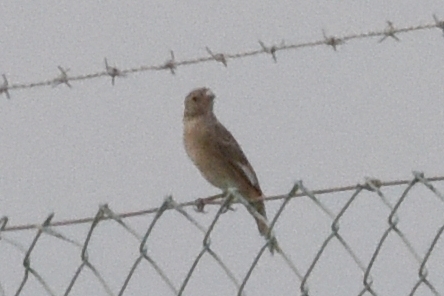
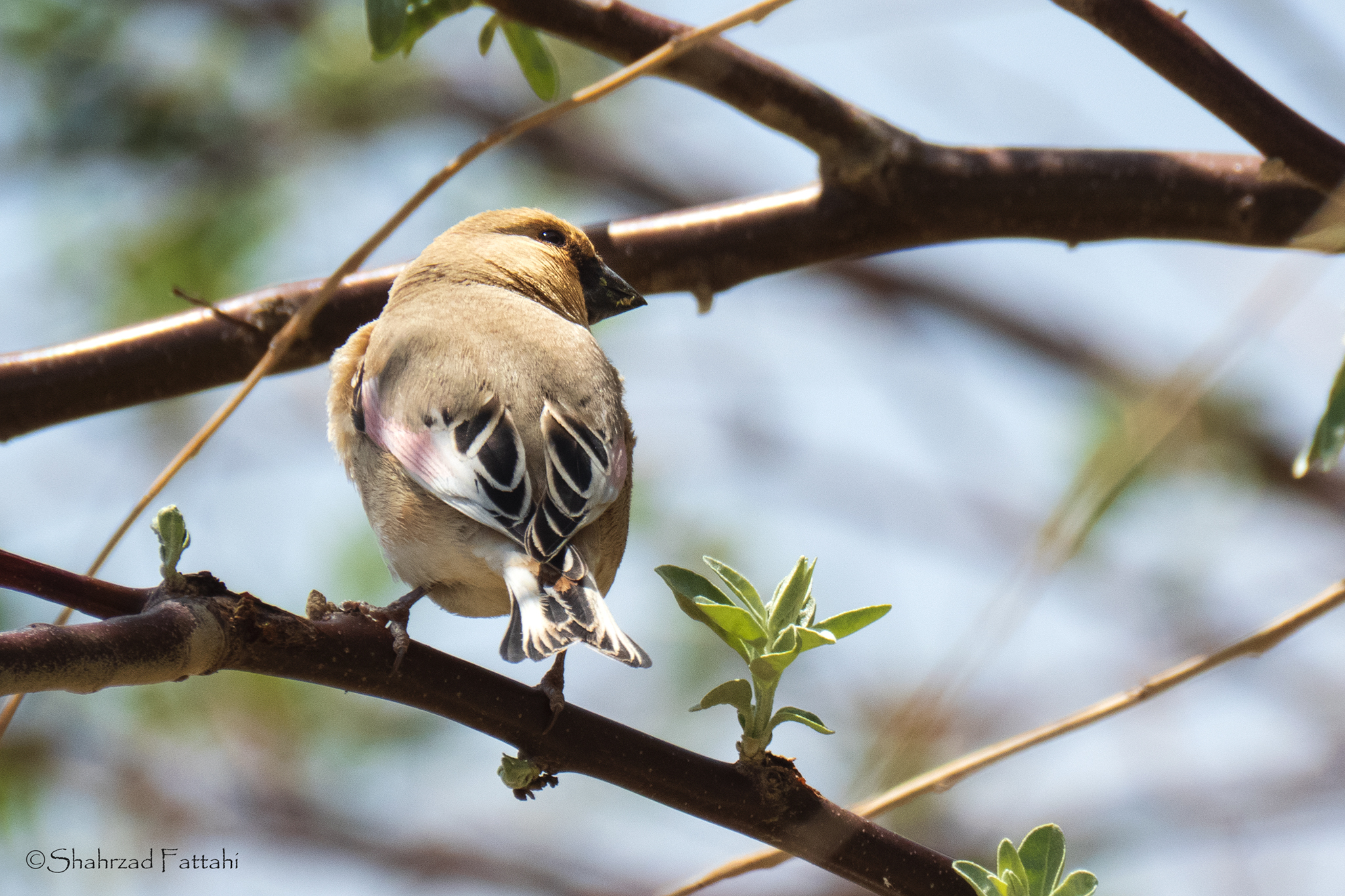
A large brown finch with an average wingspan of 26 centimeters. It has a stout black bill, black and white wing and tail feathers (remiges and rectrices), and a distinctive rosy-pink slash on each wing. The sexes are similar in color pattern, though females are duller in coloration compared to males.
Distribution & Habitat
Occurs across southern Eurasia, primarily in desert regions where water sources are available. Also inhabits low mountains, foothills, and cultivated valleys. Congregates near rural and remote human settlements, particularly in well-watered orchards within otherwise arid landscapes. Non-migratory except for local movements.
Behavior & Ecology
Feeds primarily on seeds with occasional insects. Forages in large flocks, either consisting of its own species or mixed with other finch species. Nesting occurs in spring in trees, frequently in fruit trees within orchards. The female lays and incubates a clutch of 4 to 6 pale green eggs that are lightly speckled.
Source: Wikipedia · CC BY-SA 3.0
Taxonomy
- Order
- Passeriformes
- Family
- Fringillidae
- Genus
- Rhodospiza
- eBird Code
- desfin2
Distribution
locally in mountains of southeastern Türkiye to northern China and northern Pakistan
Data Sources
Species description from Wikipedia, licensed under CC BY-SA 3.0.
Bird images and sounds sourced from GBIF, contributed by citizen scientists worldwide under Creative Commons licenses.
Taxonomy data from AviList 2025.