Crimson-winged Finch
Rhodopechys sanguineus
红翅沙雀
Introduction
A finch species (family Fringillidae) and the only species in the genus Rhodopechys. It is found across North Africa (Morocco, Algeria) and from Turkey east through Tajikistan and Afghanistan to west China and northeast Pakistan. This thickset finch inhabits rocky mountainsides at high elevations in barren landscapes with little vegetation. Two subspecies are recognized: R. s. sanguineus (Asian) and R. s. alienus (African). The species is classified as Least Concern on the IUCN Red List due to its vast range and large population, estimated at 535,000-2,060,000 mature individuals globally, with the European population comprising about 20% of the range (107,000-411,000 individuals).
Description
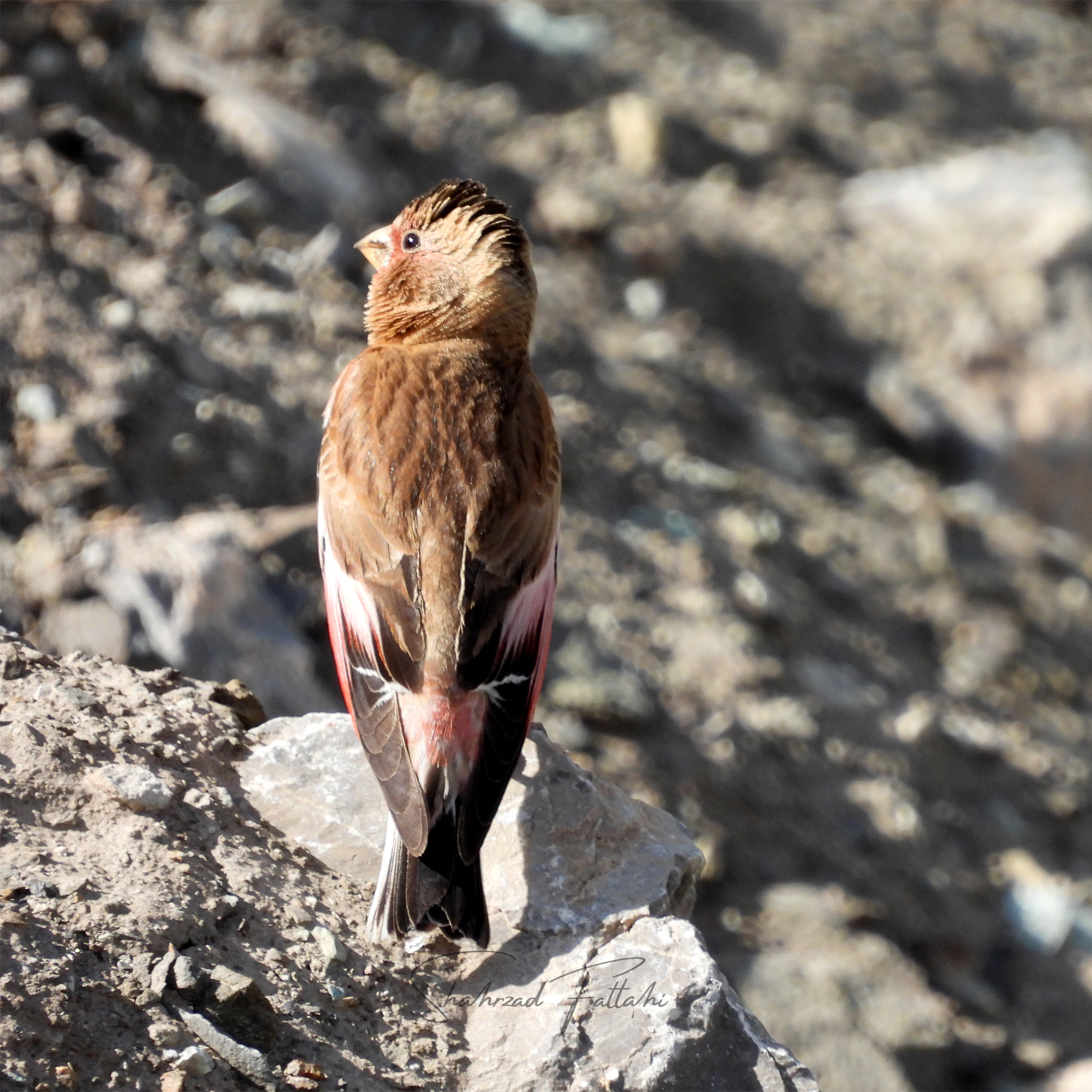
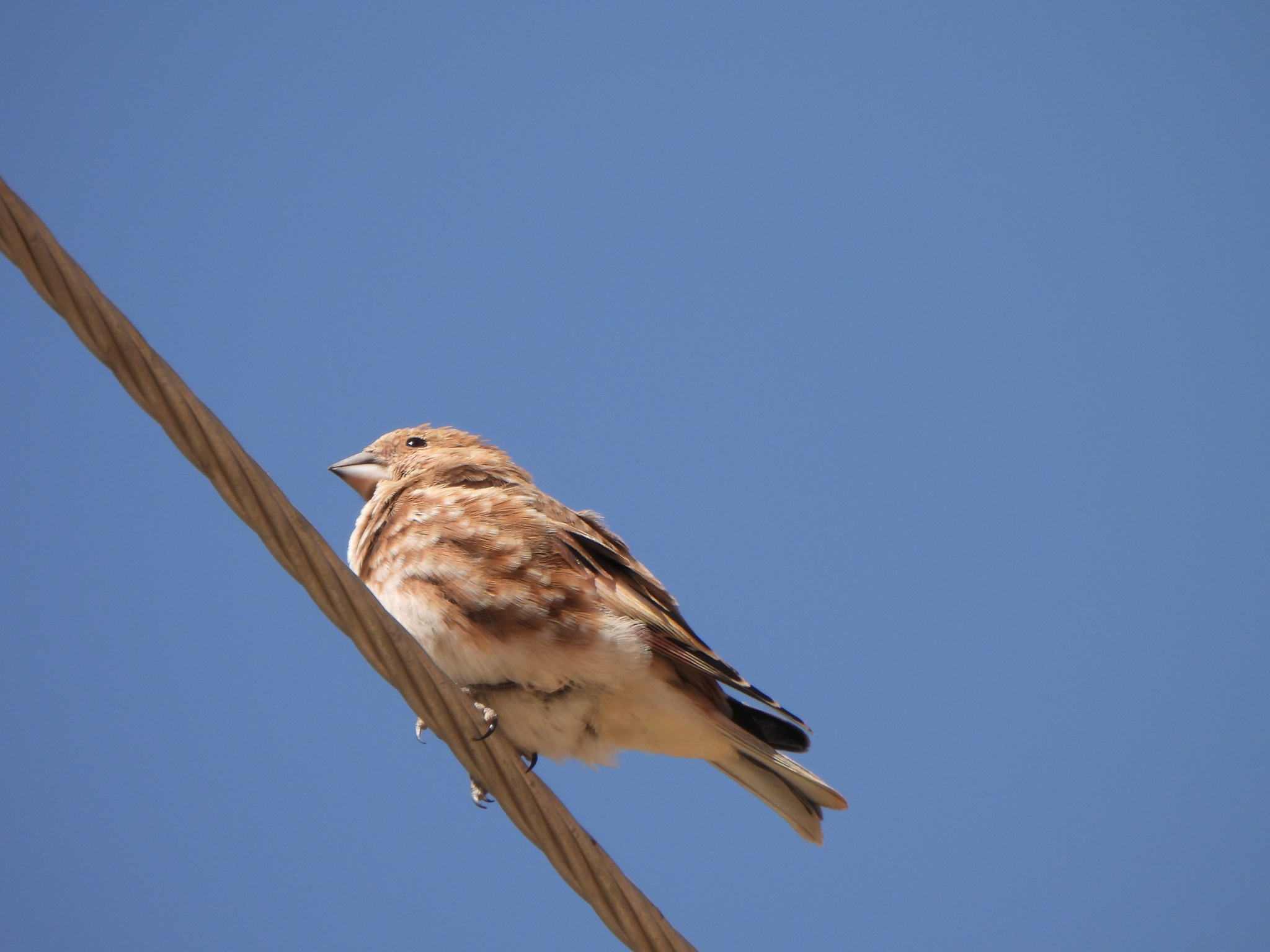
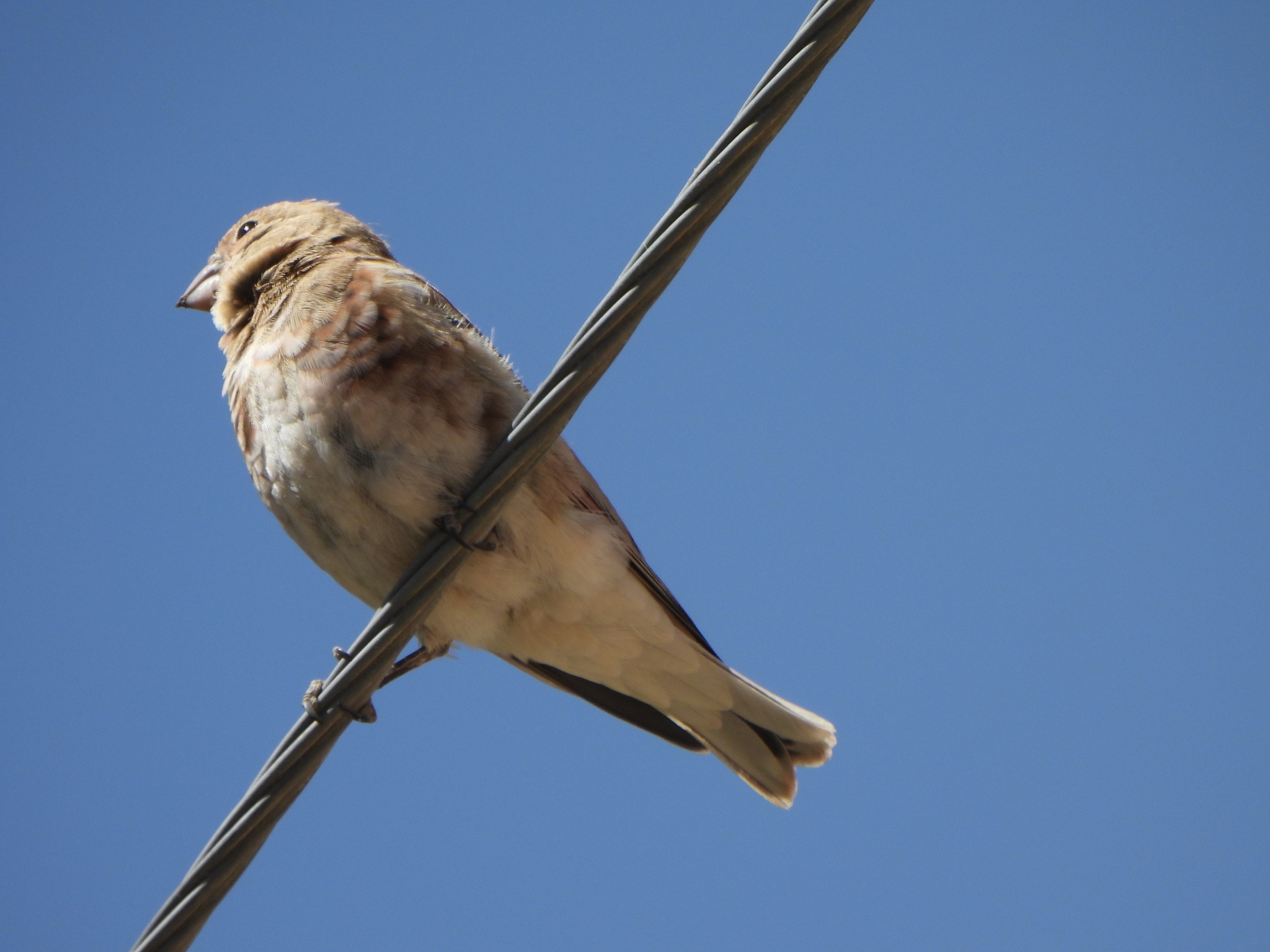
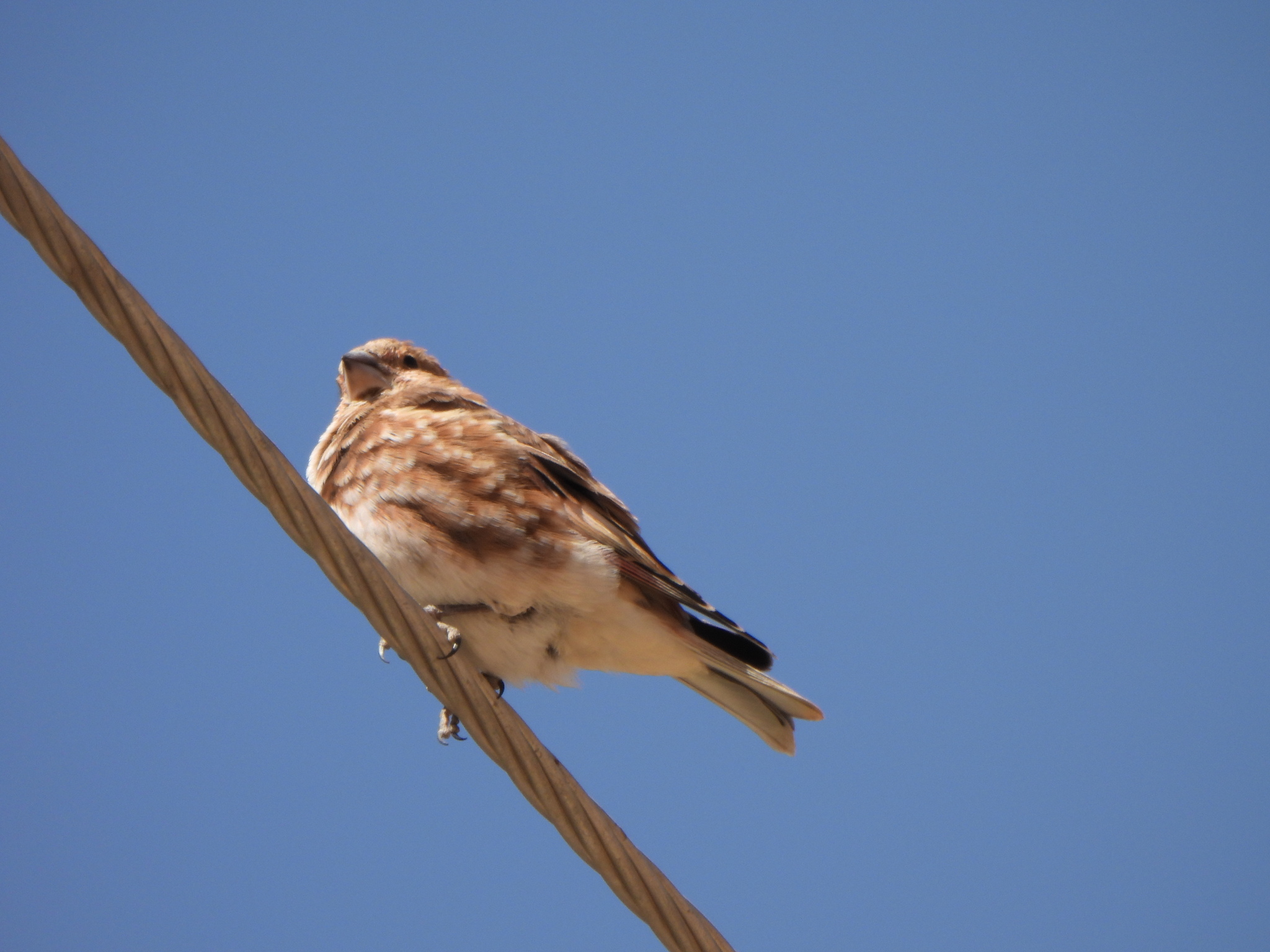
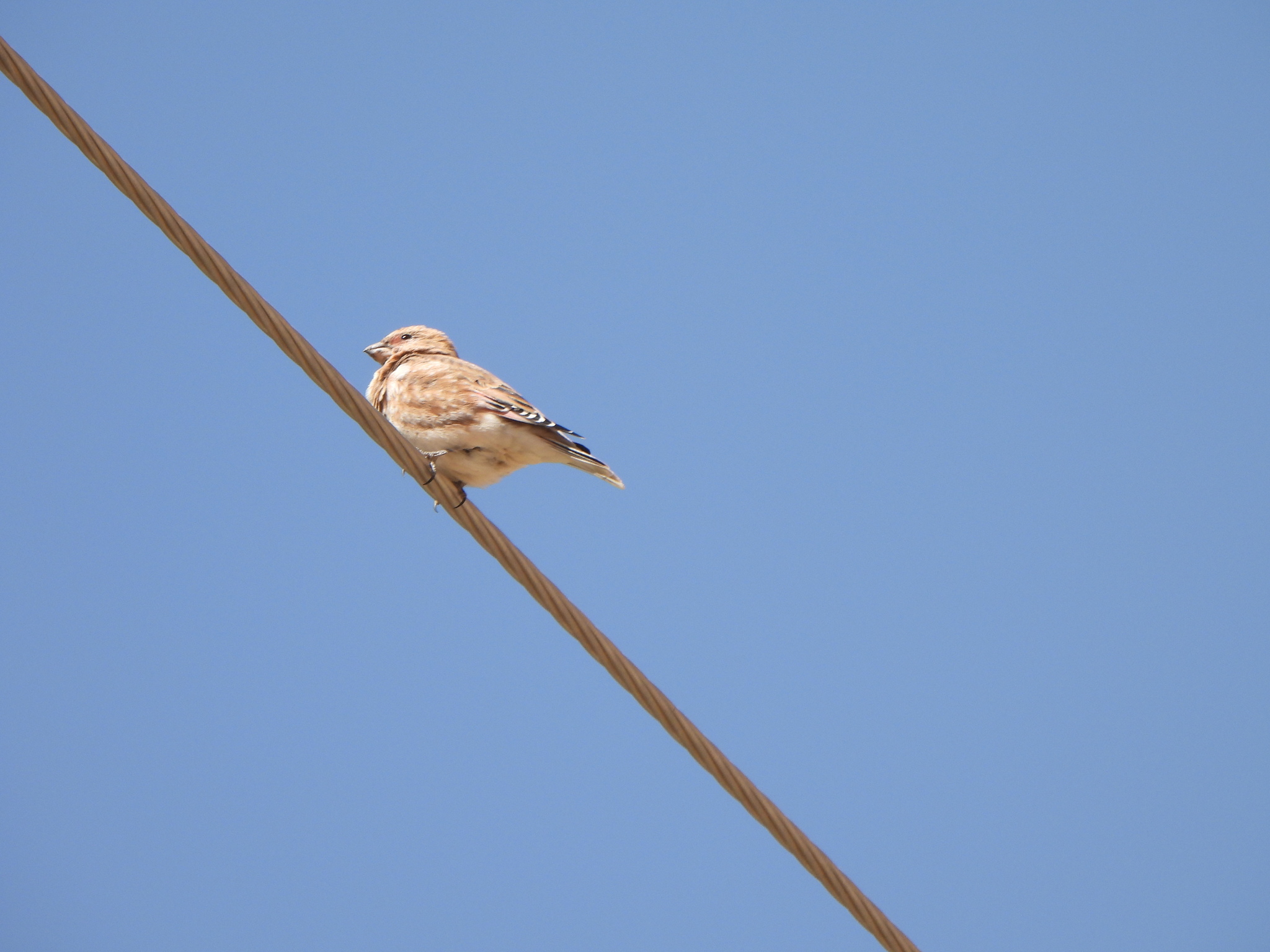
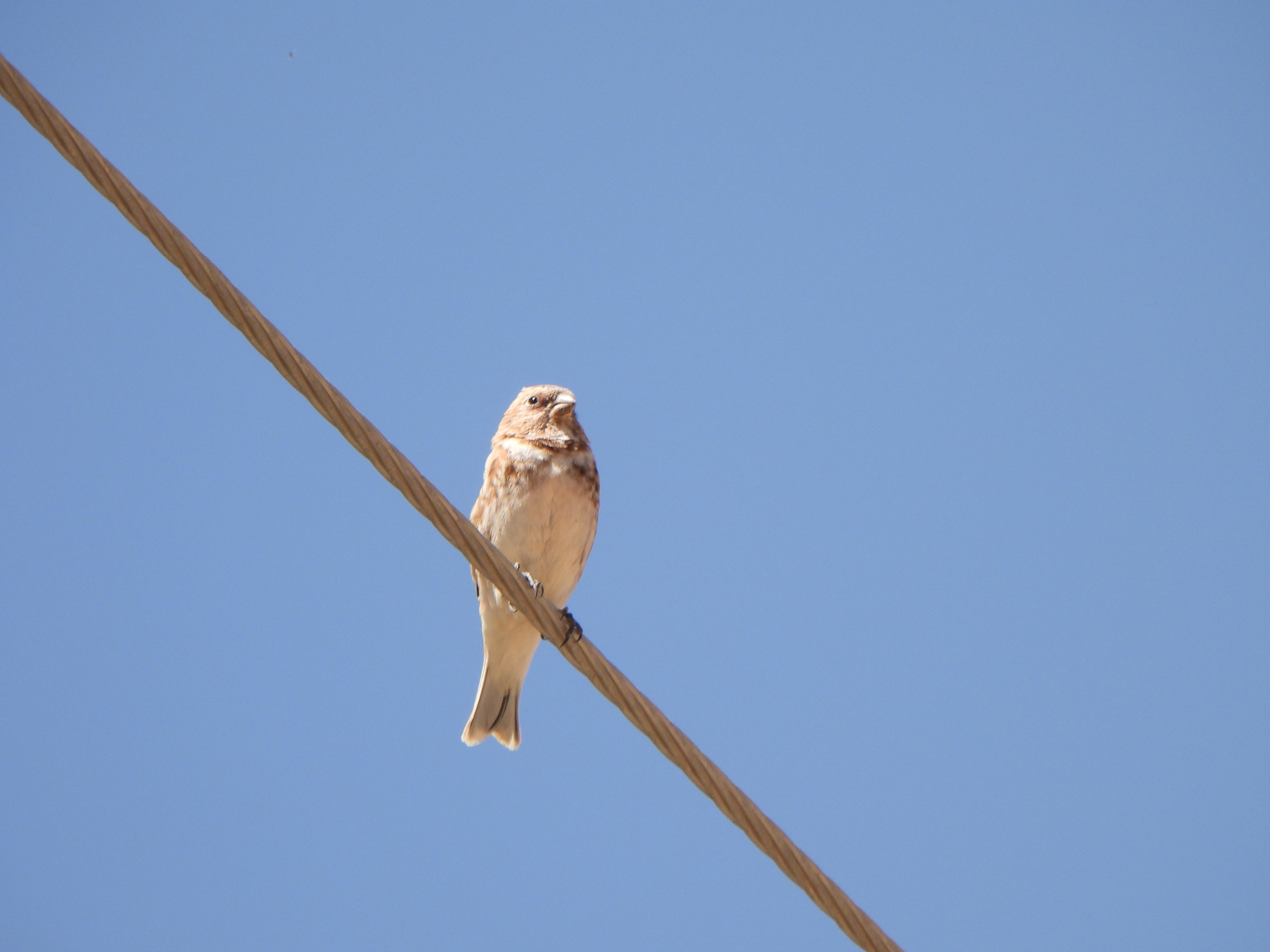
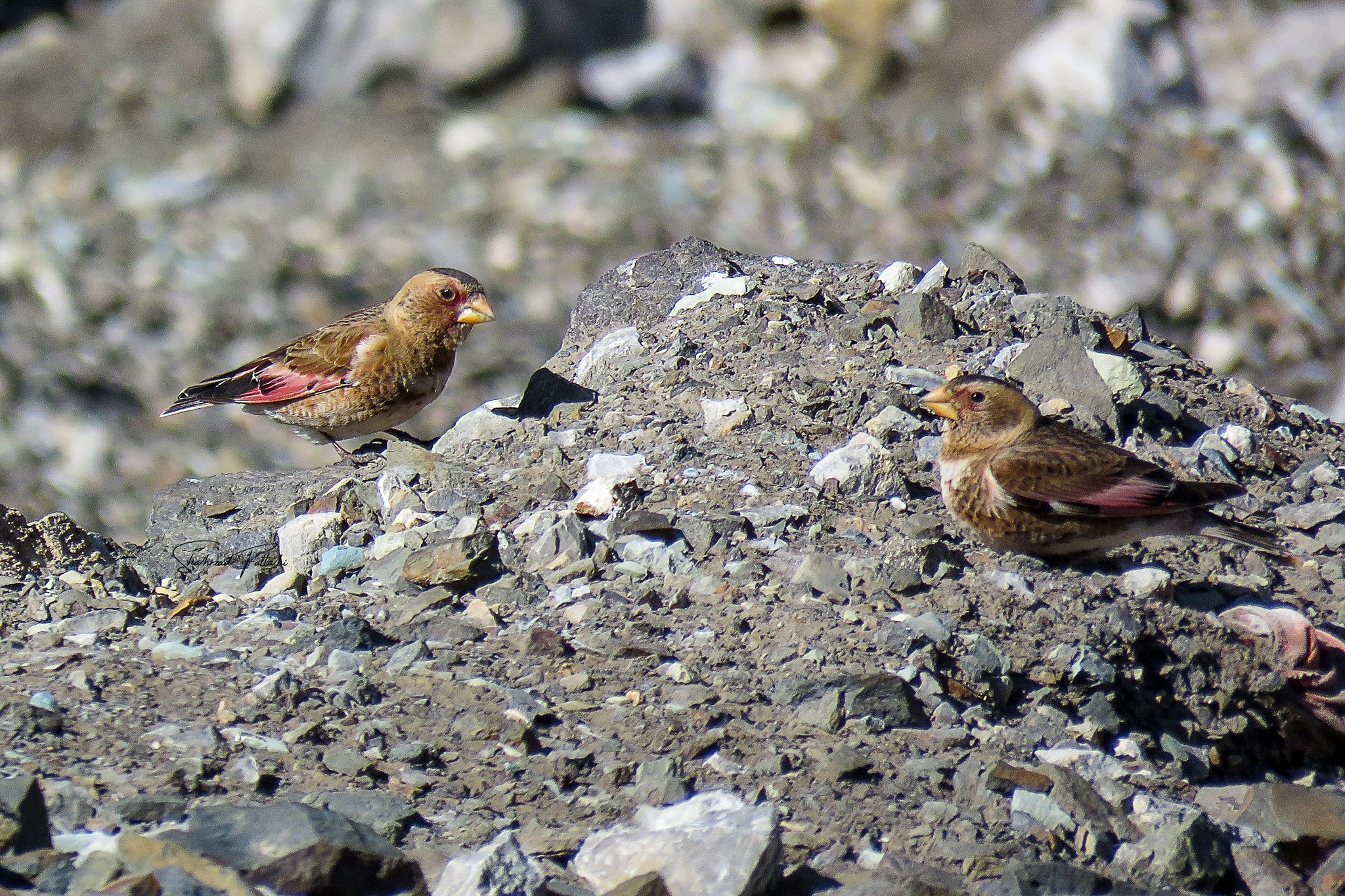
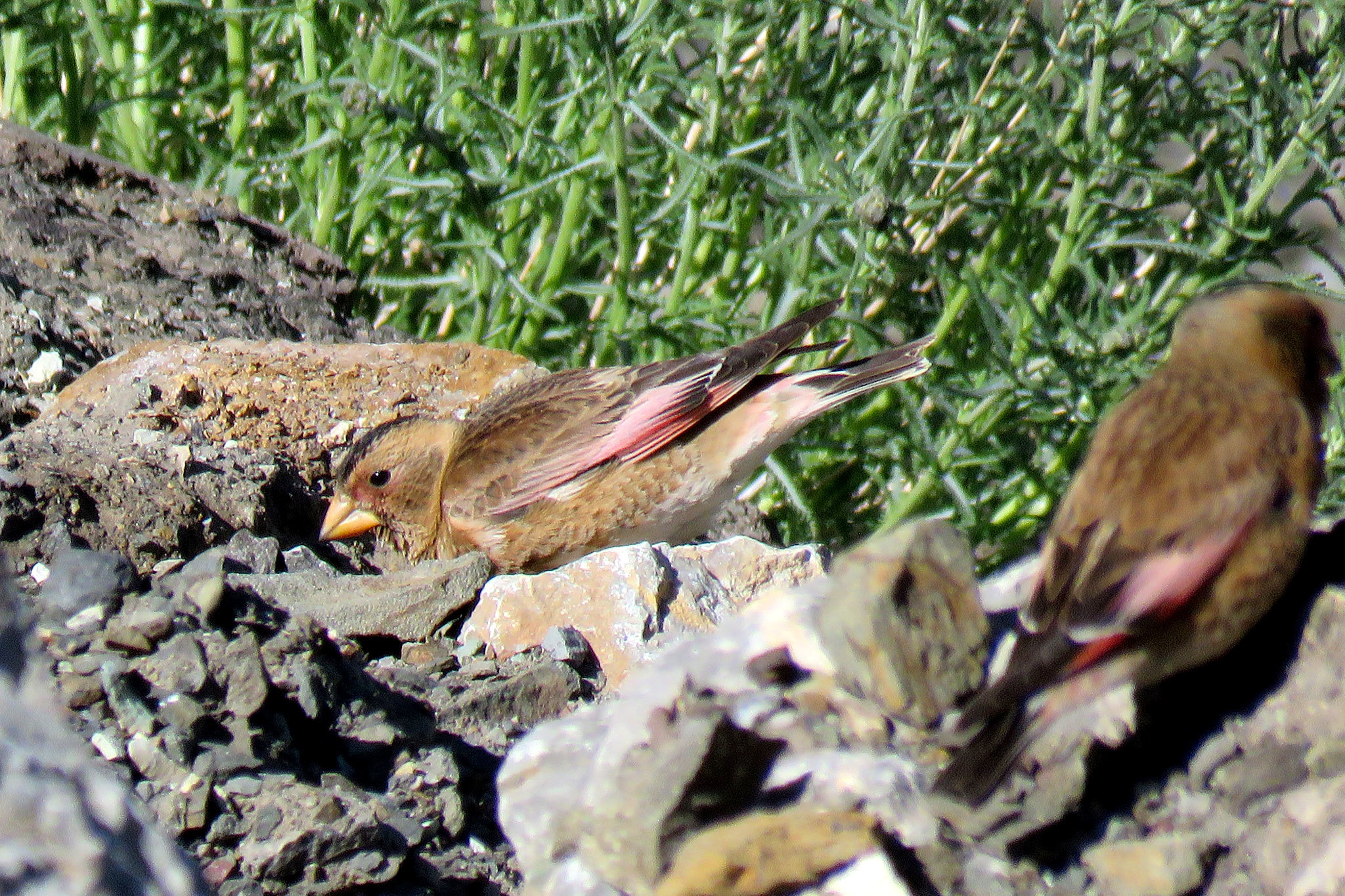
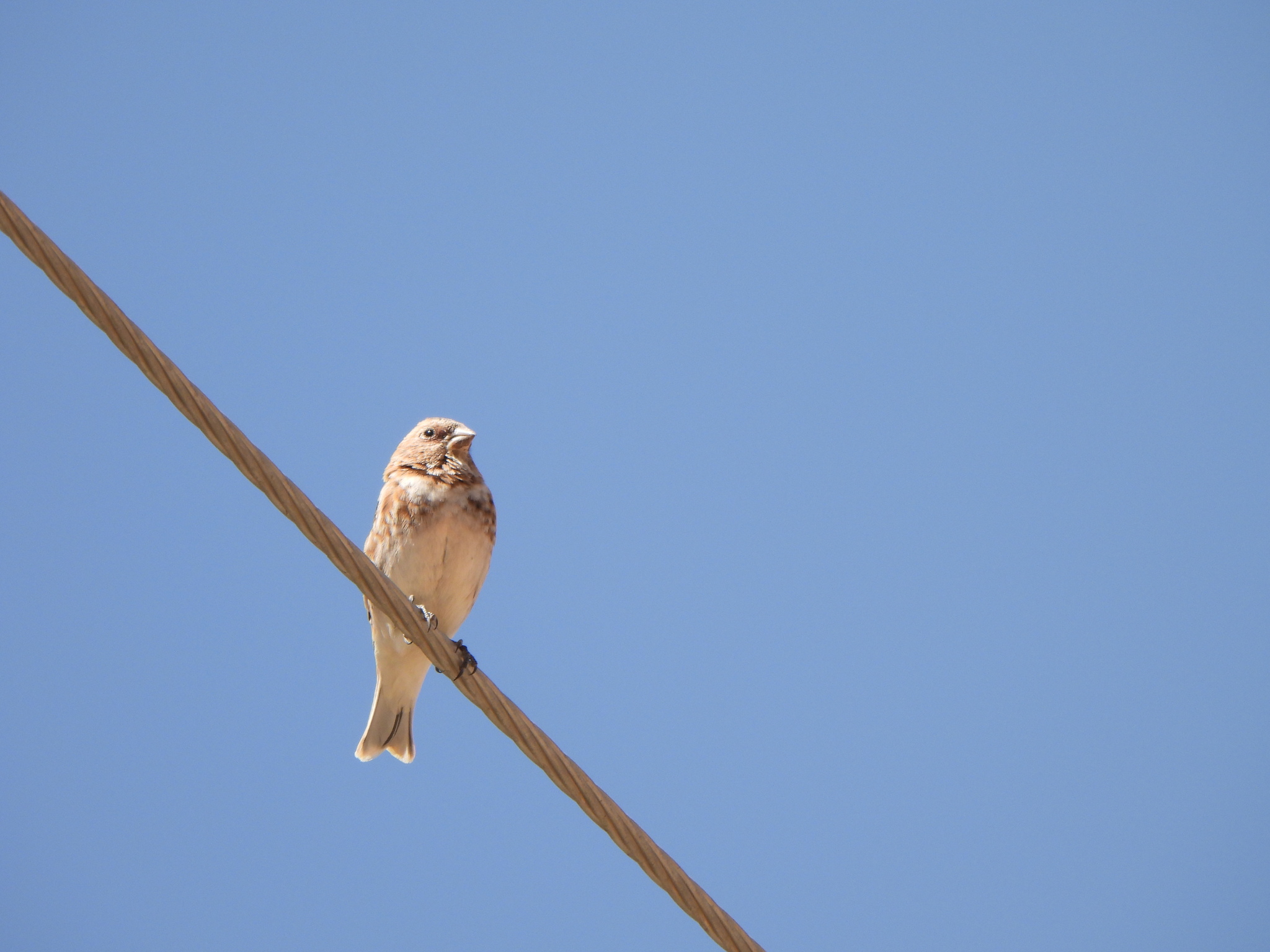
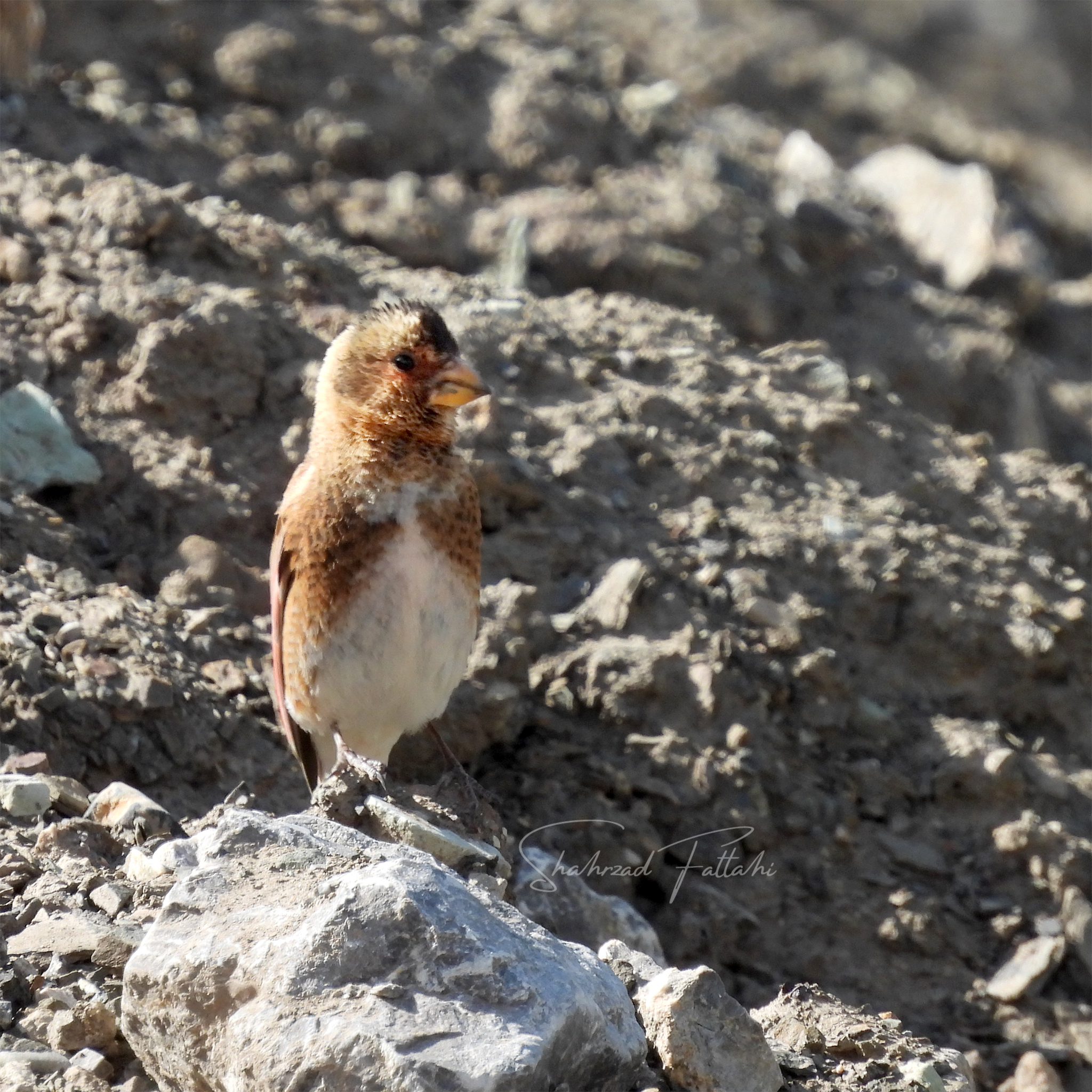
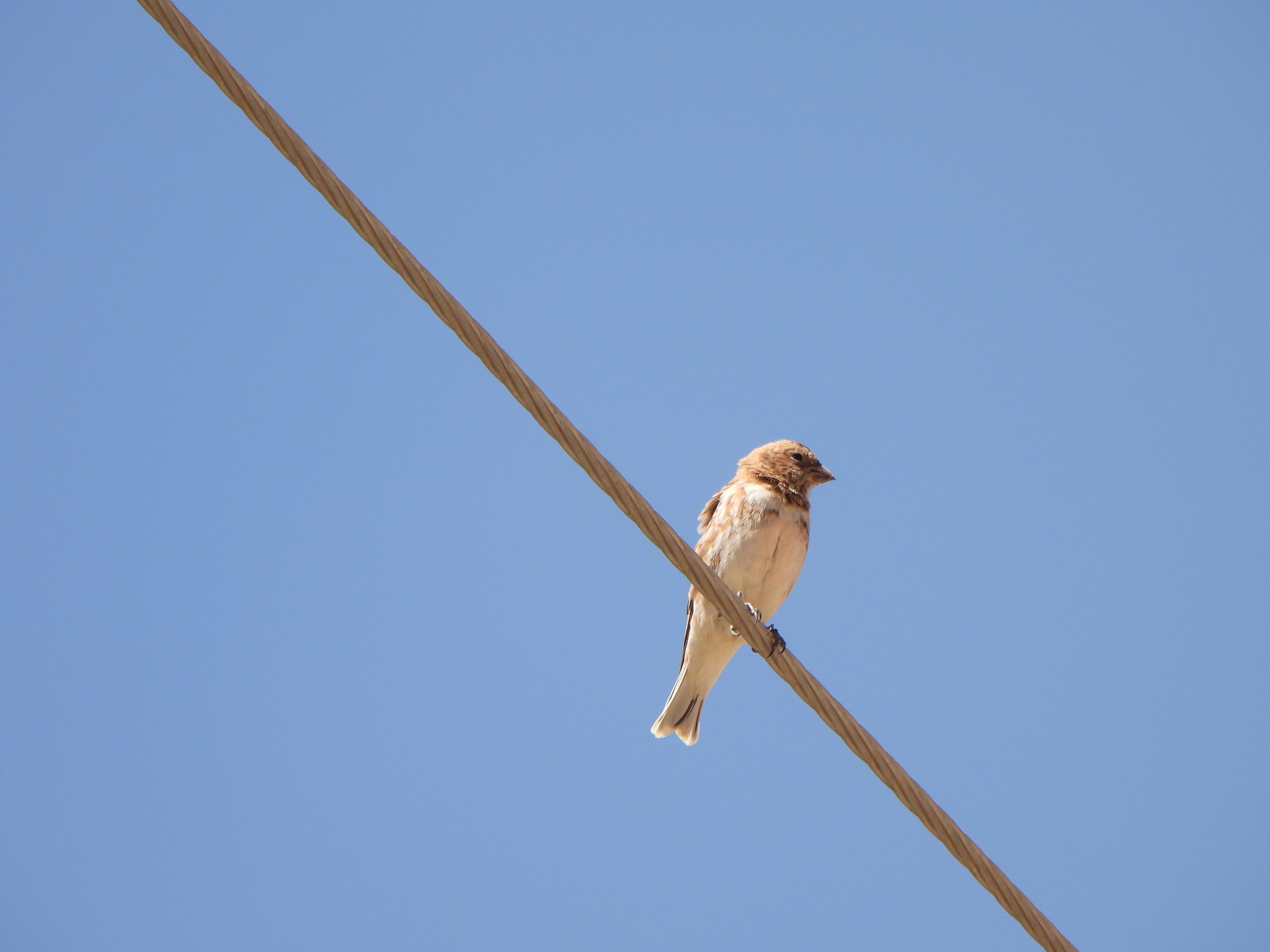
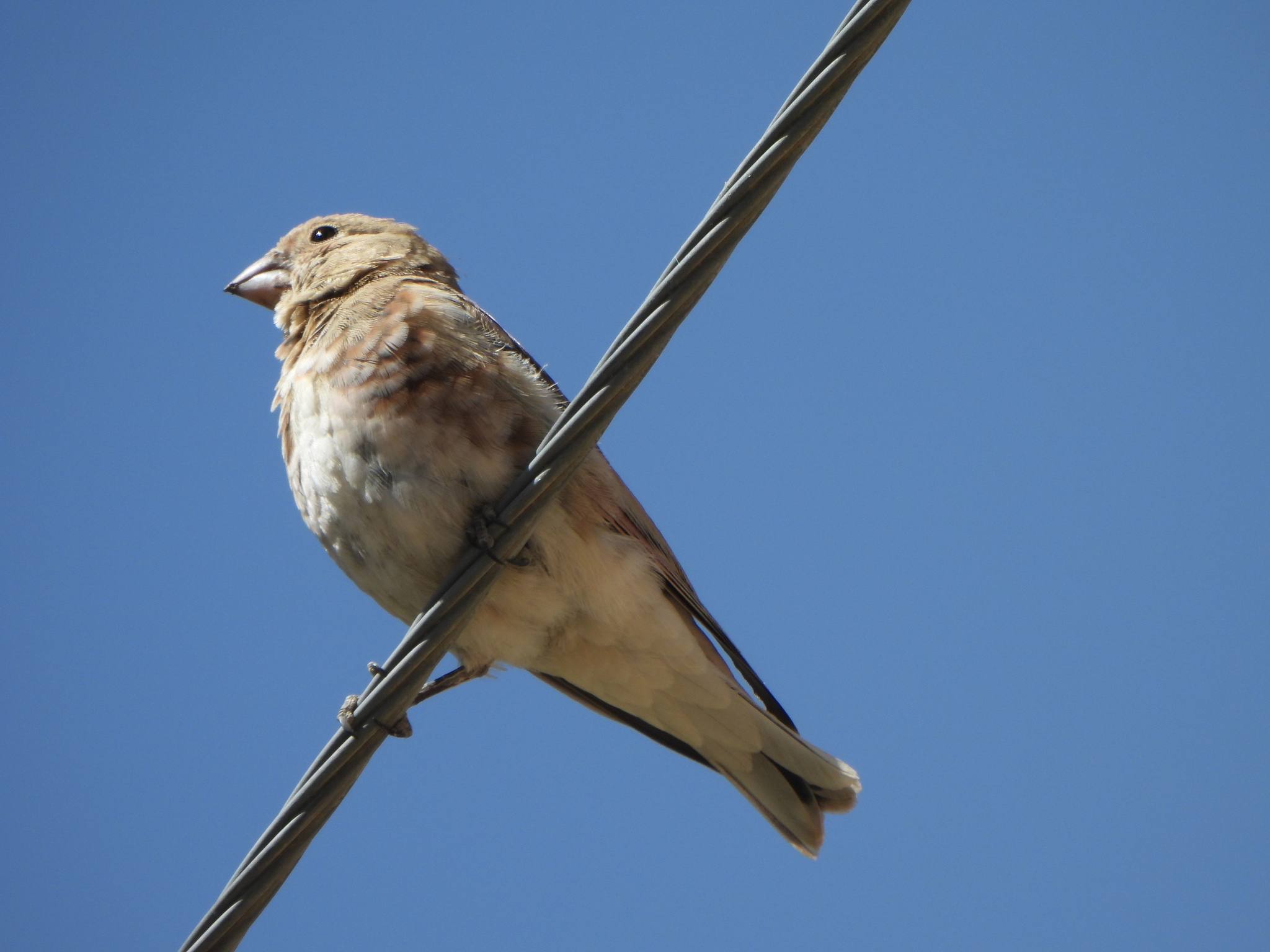
A pale-colored, thickset finch with a heavy, dull yellowish bill. The plumage varies between subspecies: African birds (R. s. alienus) have a rosy-tinged grey-white central chin and throat with a narrow brown breast-band, while Asian birds (R. s. sanguineus) show solidly tawny-brown coloring across the chin, throat, and breast. Asian birds also display more extensive brown breast and flank markings and have less black restricted to the forecrown compared to Asian birds. Males of both subspecies show additional distinguishing features in wing and face patterning.
Identification
Distinguished from other finches by its heavy yellowish bill, pale overall coloration, and distinctive wing pattern. Key identification features include the extent of red in the face (more extensive in Asian birds, often reaching the fore-supercilium), presence or absence of pink in the uppertail-coverts (extensive in Asian birds, absent in African), and breast spotting (present in Asian males, absent in African). The brown breast and flank markings are more extensive in Asian birds, while African birds have less black on the crown.
Distribution & Habitat
Ranges across two disjunct populations: the African subspecies (R. s. alienus) occurs in Morocco and Algeria in North Africa, while the Asian subspecies (R. s. sanguineus) extends from Turkey through Tajikistan and Afghanistan to west China and northeast Pakistan. The species inhabits rocky mountainsides at high elevations, typically in barren landscapes with sparse vegetation. Winter movements involve descent to lower elevations and agricultural fields in flocks.
Behavior & Ecology
Feeds primarily on seeds. During winter months, descends in flocks to agricultural fields to forage. Nests in rock crevices. The breeding season involves the female laying and incubating a clutch of 4 or 5 blue, lightly speckled eggs. Shows strong seasonal altitudinal movements, with flocks forming during winter dispersal.
Conservation
Classified as Least Concern on the IUCN Red List. The species has a vast range and large population size, exceeding thresholds for threatened categories. While population trends are unknown, the decline is not considered rapid enough to approach vulnerability. The European population is estimated at 107,000-411,000 mature individuals, representing approximately 20% of the global range, suggesting a preliminary global population of 535,000-2,060,000 mature individuals.
Culture
This species serves as a national symbol for Lebanon.
Source: Wikipedia · CC BY-SA 3.0
Taxonomy
- Order
- Passeriformes
- Family
- Fringillidae
- Genus
- Rhodopechys
- eBird Code
- crwfin2
Subspecies (2)
-
Rhodopechys sanguineus alienus
mountains of Morocco and Algeria
-
Rhodopechys sanguineus sanguineus
mountains of Türkiye to Caucasus, Iran, northern Afghanistan, and northwestern India
Data Sources
Species description from Wikipedia, licensed under CC BY-SA 3.0.
Bird images and sounds sourced from GBIF, contributed by citizen scientists worldwide under Creative Commons licenses.
Taxonomy data from AviList 2025.