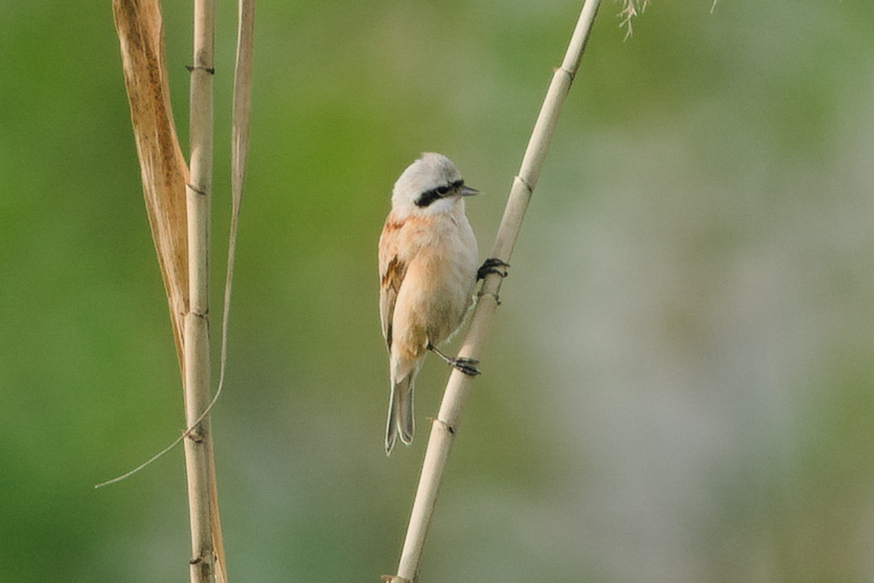
Chinese Penduline Tit
Remiz consobrinus
中华攀雀
Introduction
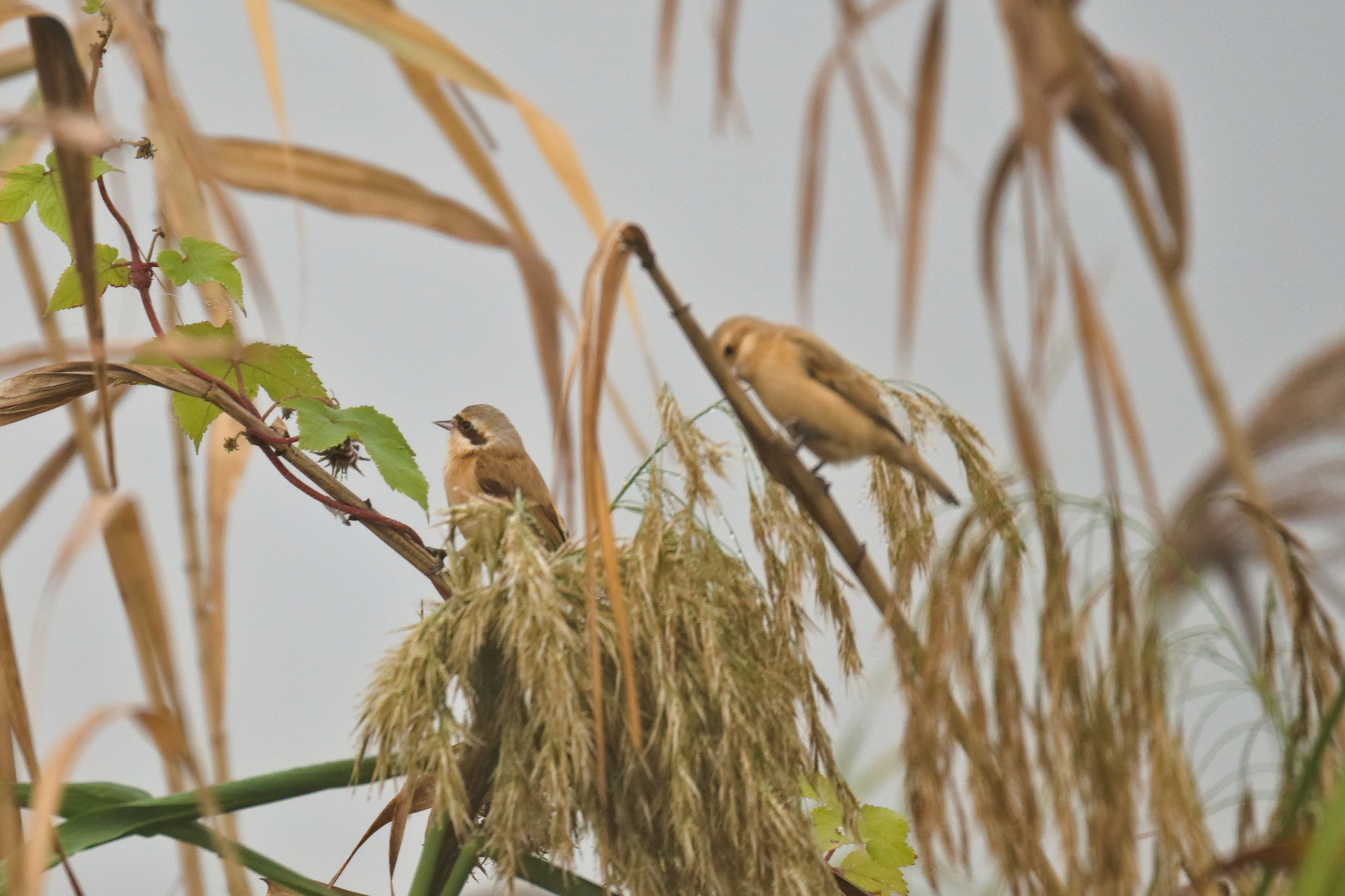
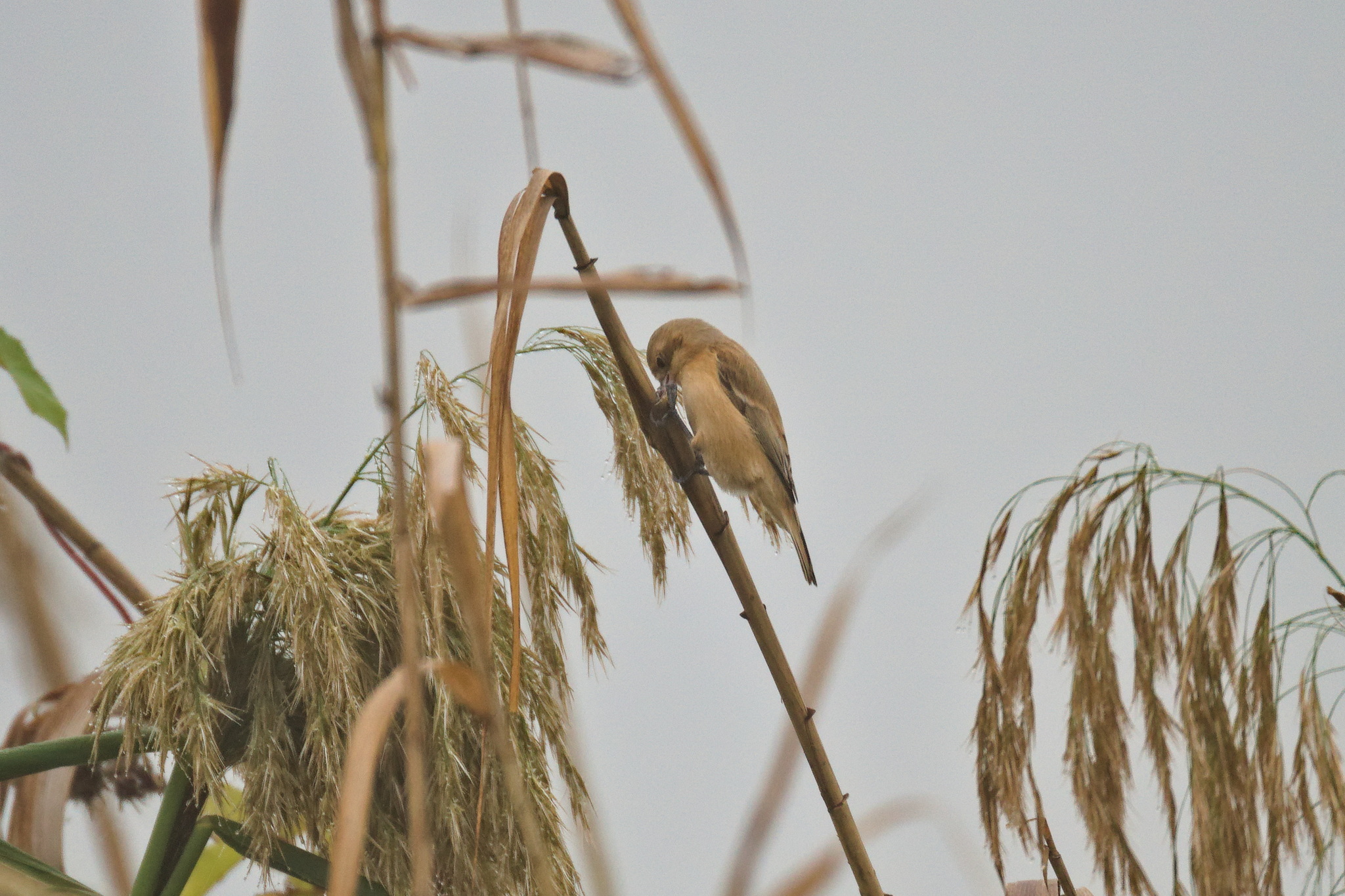
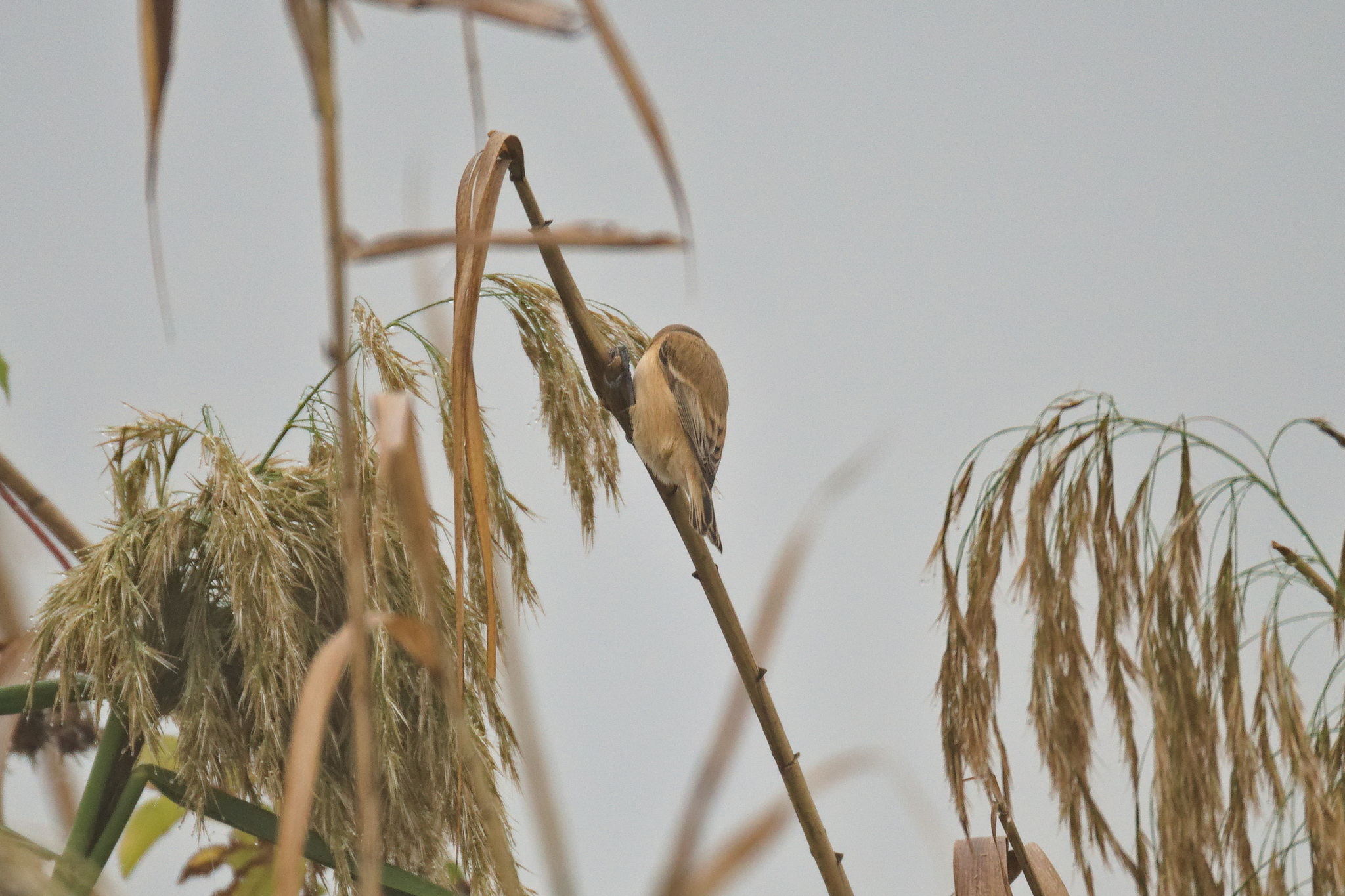
This species inhabits wetlands and reed beds across eastern Asia. It travels in small flocks of 10 to 20 individuals, moving through marsh vegetation while emitting soft calls. The species exhibits acrobatic foraging behavior, often hanging upside-down by one leg while searching for prey. It builds an intricate pendulum-style nest suspended from tree branches.
Description
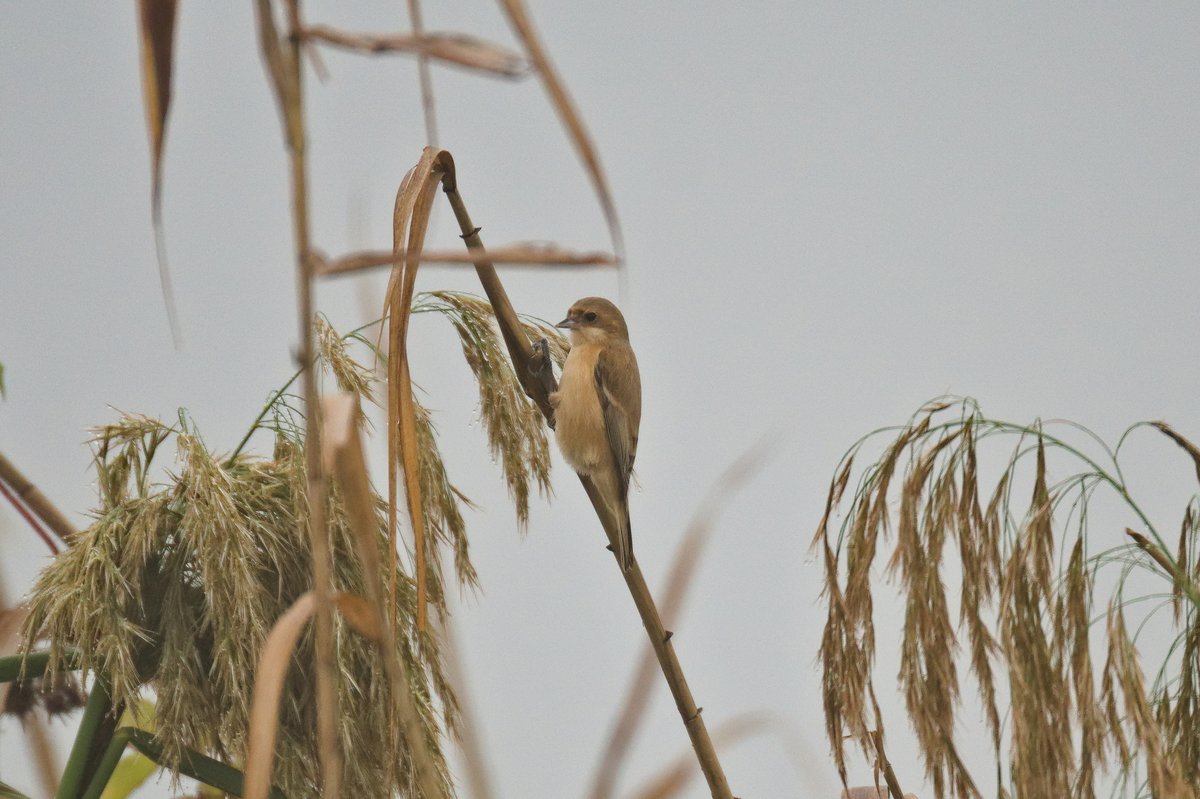
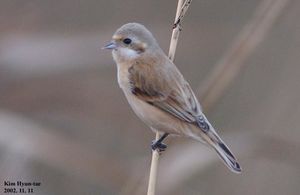
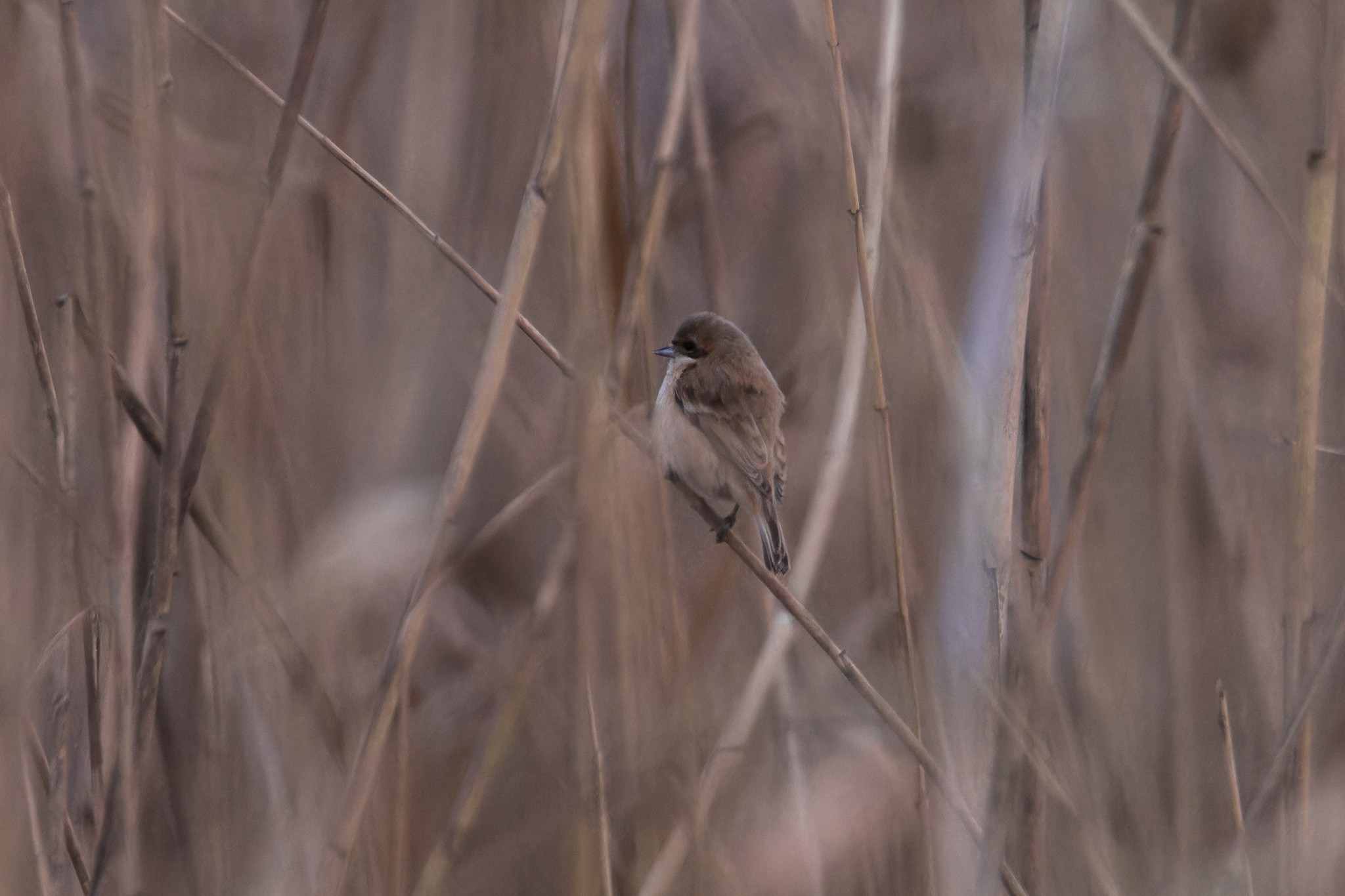
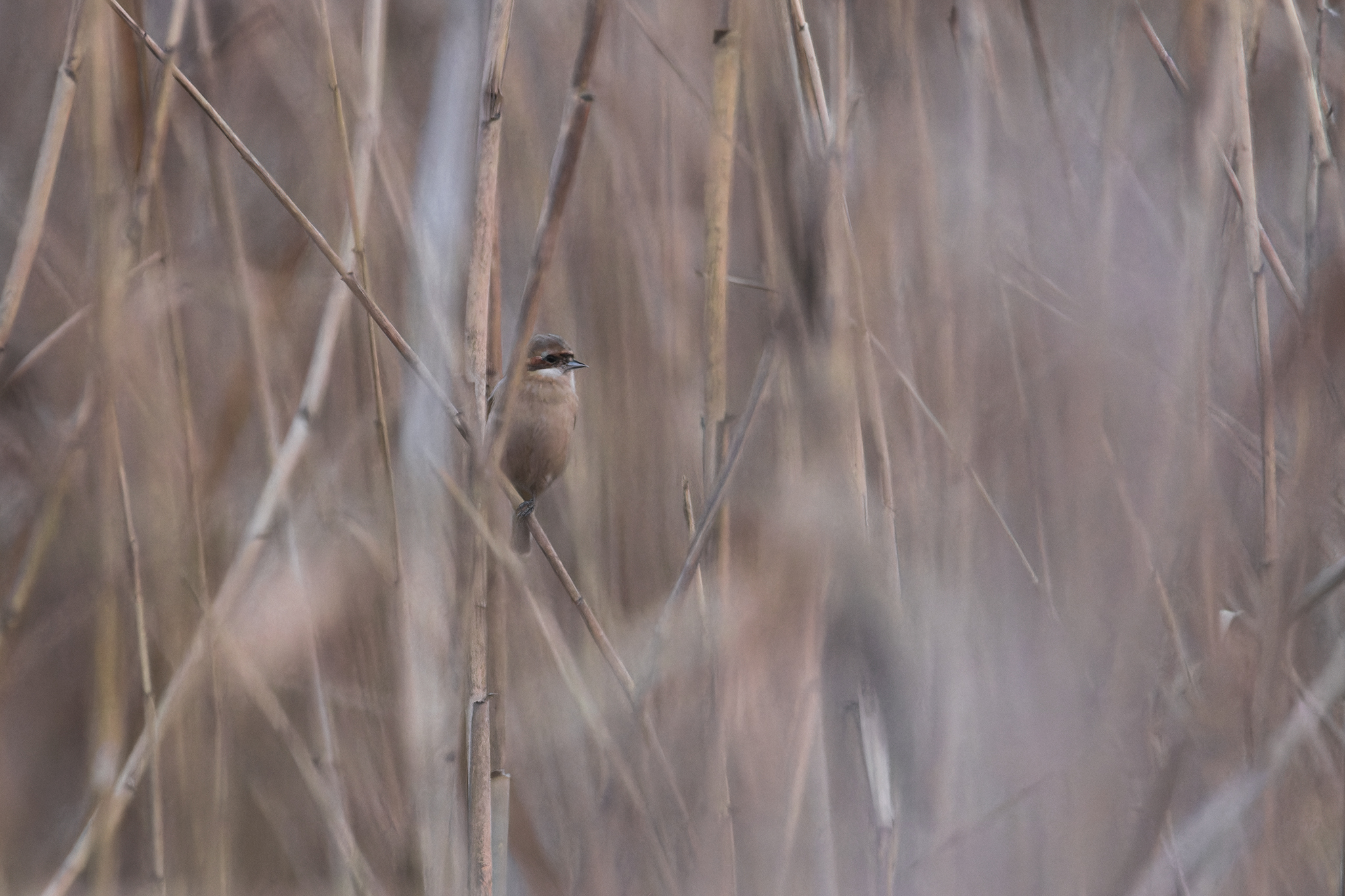
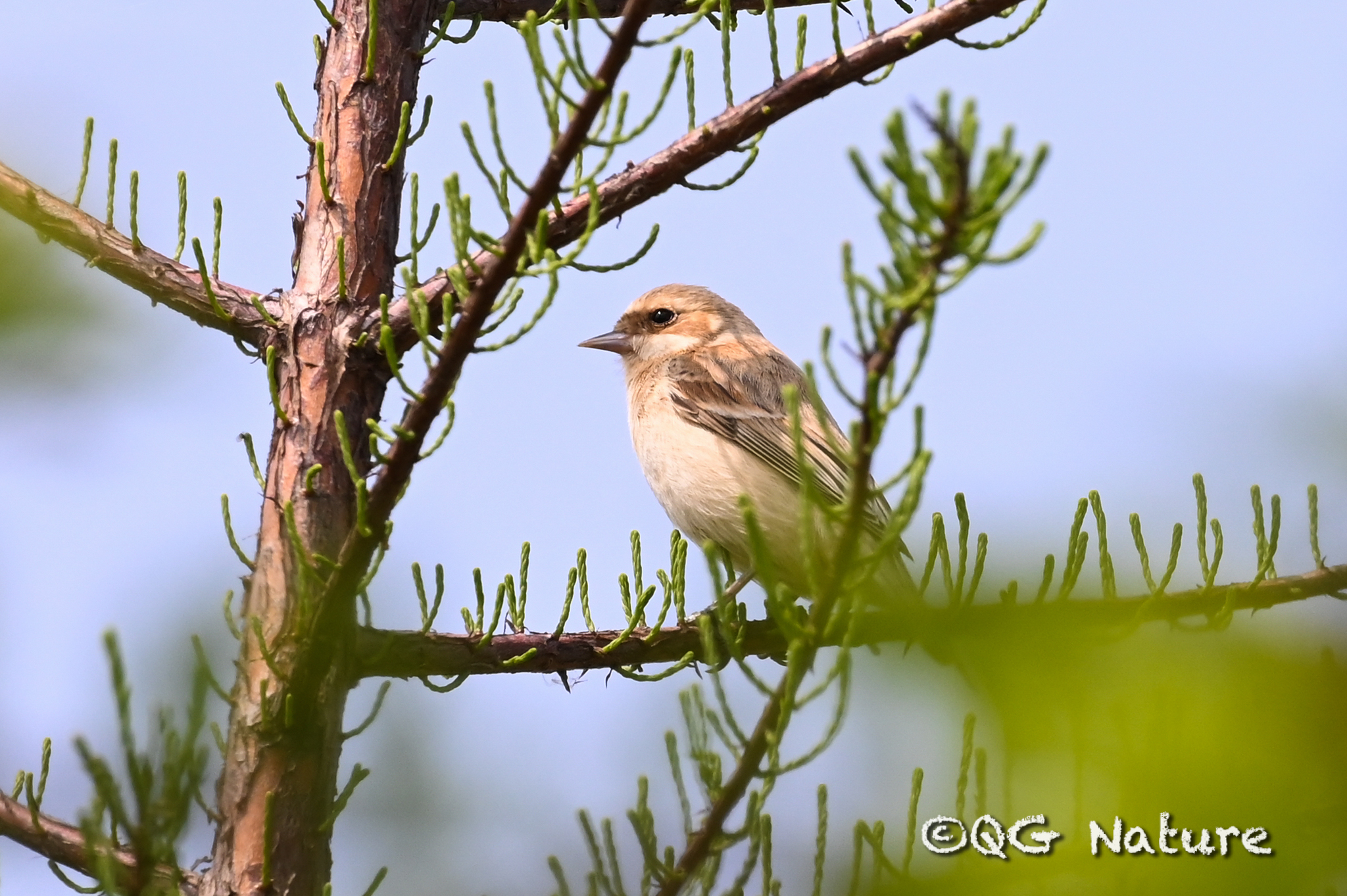
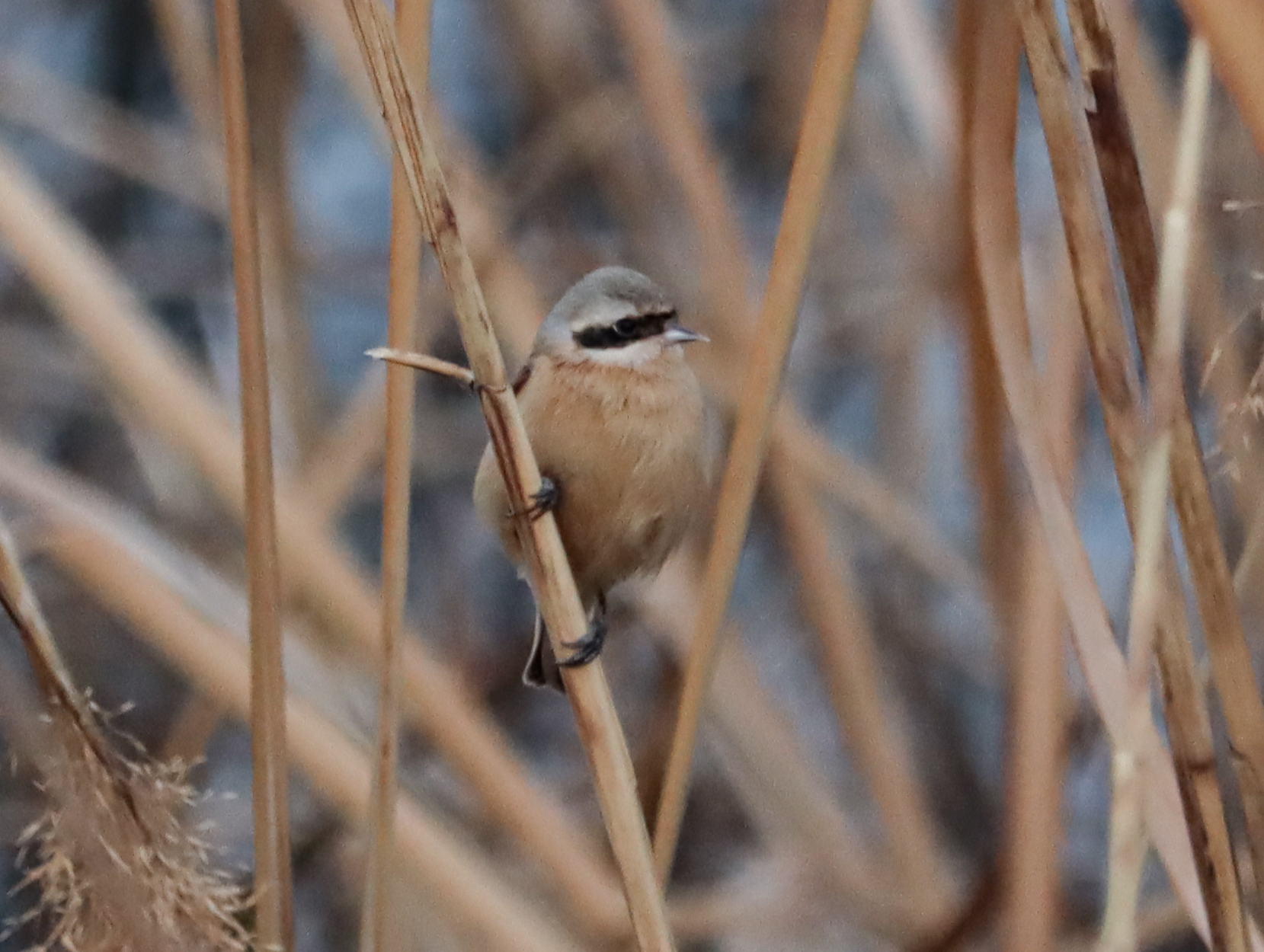
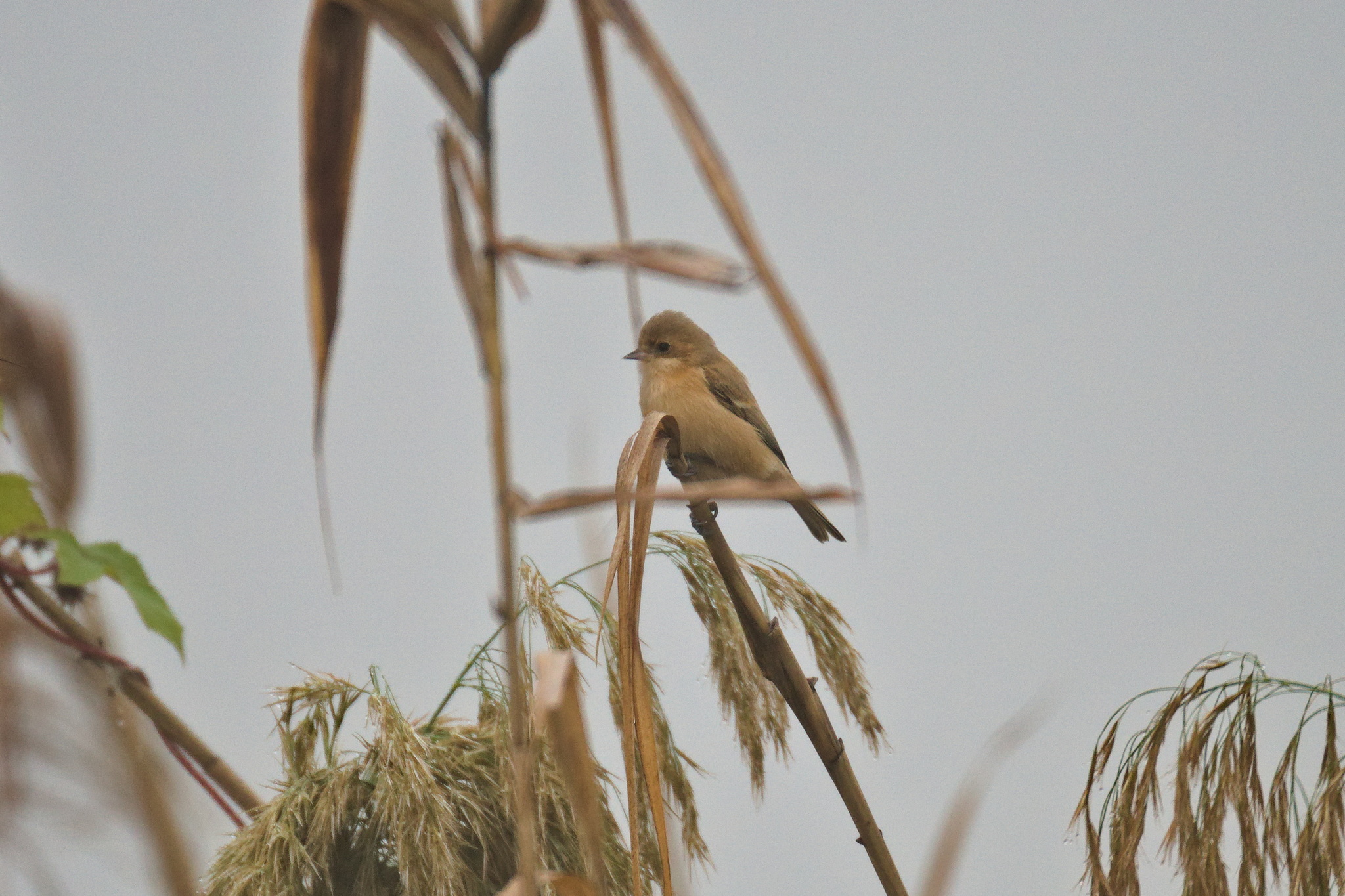
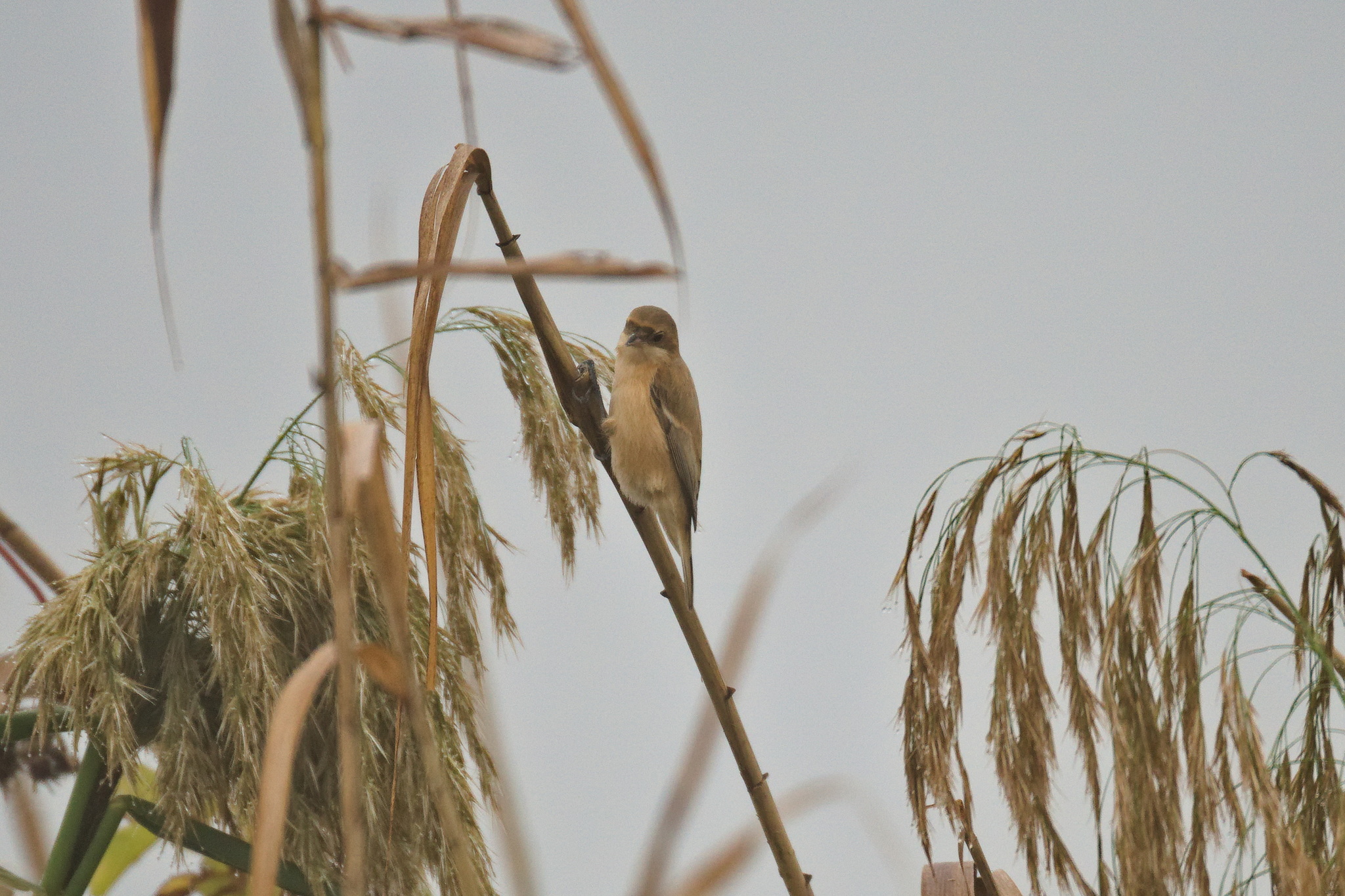
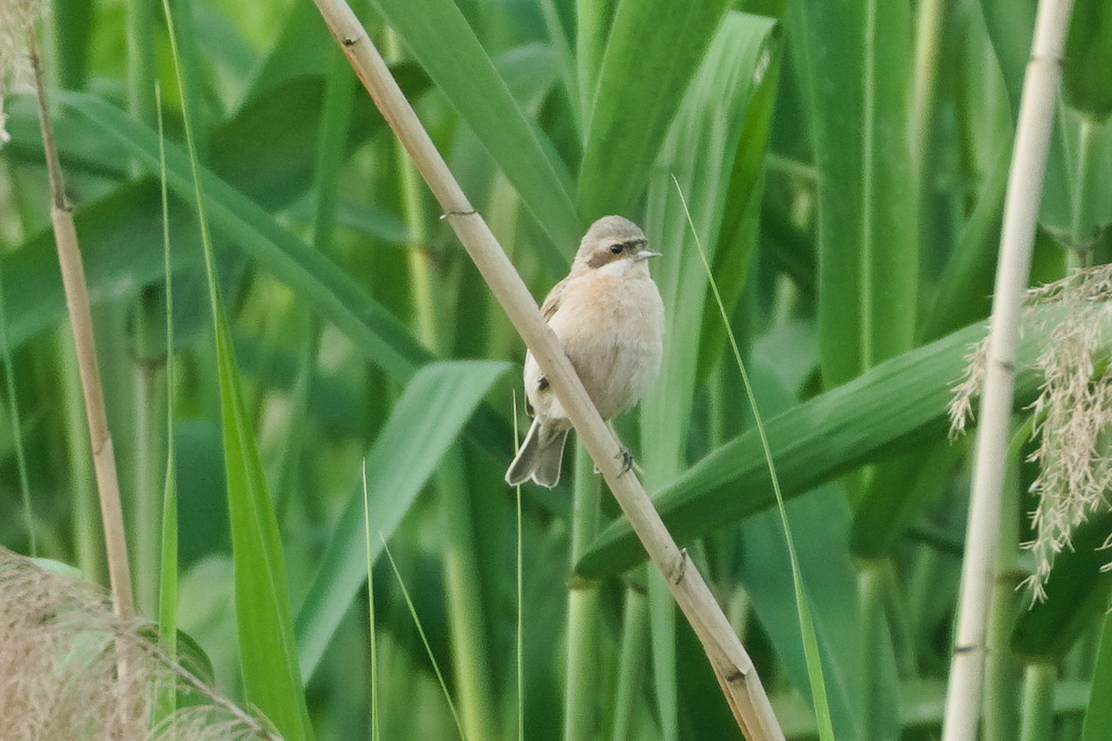
A tiny passerine measuring 11 centimeters in length, this species is among the smallest birds inhabiting reedbeds and marshlands. Its most distinctive feature is a fine, needle-pointed bill adapted for extracting small prey from vegetation. The plumage is overall pale and subtle, providing excellent camouflage among the dried reeds and grasses of its habitat. Males display a greyish crown and nape, a bold black mask edged in white across the forehead, and warm chestnut coloring on the mantle, half-collar, and wing-coverts. The dark wings and black tail become conspicuous in flight. Females are similar but possess a brown mask and browner upperparts lacking the male's chestnut tones. Both sexes appear pale below, with buff markings on whitish underparts.
Identification
In the field, the combination of small size, pale coloration, fine pointed bill, and preference for reedbed habitats serves as the primary identification criteria. The black mask of the male is diagnostic, but in poor lighting or distant views, the species may be confused with other small passerines sharing similar wetland habitats. The pendulum nest, when visible, provides a definitive clue, though most detections rely on voice and behavior. The thin, drawn-out 'tseeoo' or 'sseeoo' calls, delivered at low volume, help distinguish this species from more vocal reed-dwellers. When observed foraging, the distinctive hanging posture—one leg suspended while reaching for prey—sets it apart from most other small birds.
Distribution & Habitat
This species breeds primarily in the wetlands of Manchuria, where it favors extensive reedbeds and marsh environments. During the winter months, it disperses more widely across eastern Asia, following the Yangtze river valley and extending into southern China. Its habitat preferences remain consistent year-round, encompassing agricultural pastures adjacent to water, wetlands characterized by marshes or brackish ponds, and traditional reedbed ecosystems. The species demonstrates some tolerance for human-modified landscapes, though it remains strongly associated with water-covered or water-adjacent environments throughout its range.
Behavior & Ecology
Diet consists primarily of insects, larvae, spiders, and caterpillars, with small seeds supplementing nutrition during winter months. The species demonstrates remarkable agility in its foraging behavior, capable of climbing and hanging acrobatically among reed stems, often remaining suspended by a single leg while extracting prey with the other. The breeding season brings impressive architectural achievements: males select nest sites on trees 3 to 15 meters above ground, constructing elaborate pear-shaped nests featuring a tubular extension and lateral entrance. Females complete interior arrangements before laying 5 to 10 eggs, which they incubate alone for 12 to 15 days. The nest partially disintegrates after young fledge, yet serves as communal roosting sites for an additional 15 to 20 days. Vocalizations are thin, drawn-out notes described as 'tseeoo' or 'sseeoo.'
Conservation
The population demonstrates a positive trend, with numbers increasing across its range. This favorable status has resulted in classification as 'Least Concern' by the IUCN, reflecting the species' relatively stable population and extensive distribution. While specific threat assessments are not detailed in available sources, wetland-dependent species generally face pressures from habitat degradation and loss across eastern Asia. The species' tolerance for agricultural pastures adjacent to wetlands may provide some resilience against more intensive habitat changes affecting pristine wetland systems.
Culture
No specific cultural significance, folklore, or mythological associations are documented for this species in available sources.
Source: Wikipedia · CC BY-SA 3.0
Taxonomy
- Order
- Passeriformes
- Family
- Remizidae
- Genus
- Remiz
- eBird Code
- chptit1
Distribution
breeds reedbeds and marshes of northern China; winters to southern China
Data Sources
Species description from Wikipedia, licensed under CC BY-SA 3.0.
Bird images and sounds sourced from GBIF, contributed by citizen scientists worldwide under Creative Commons licenses.
Taxonomy data from AviList 2025.