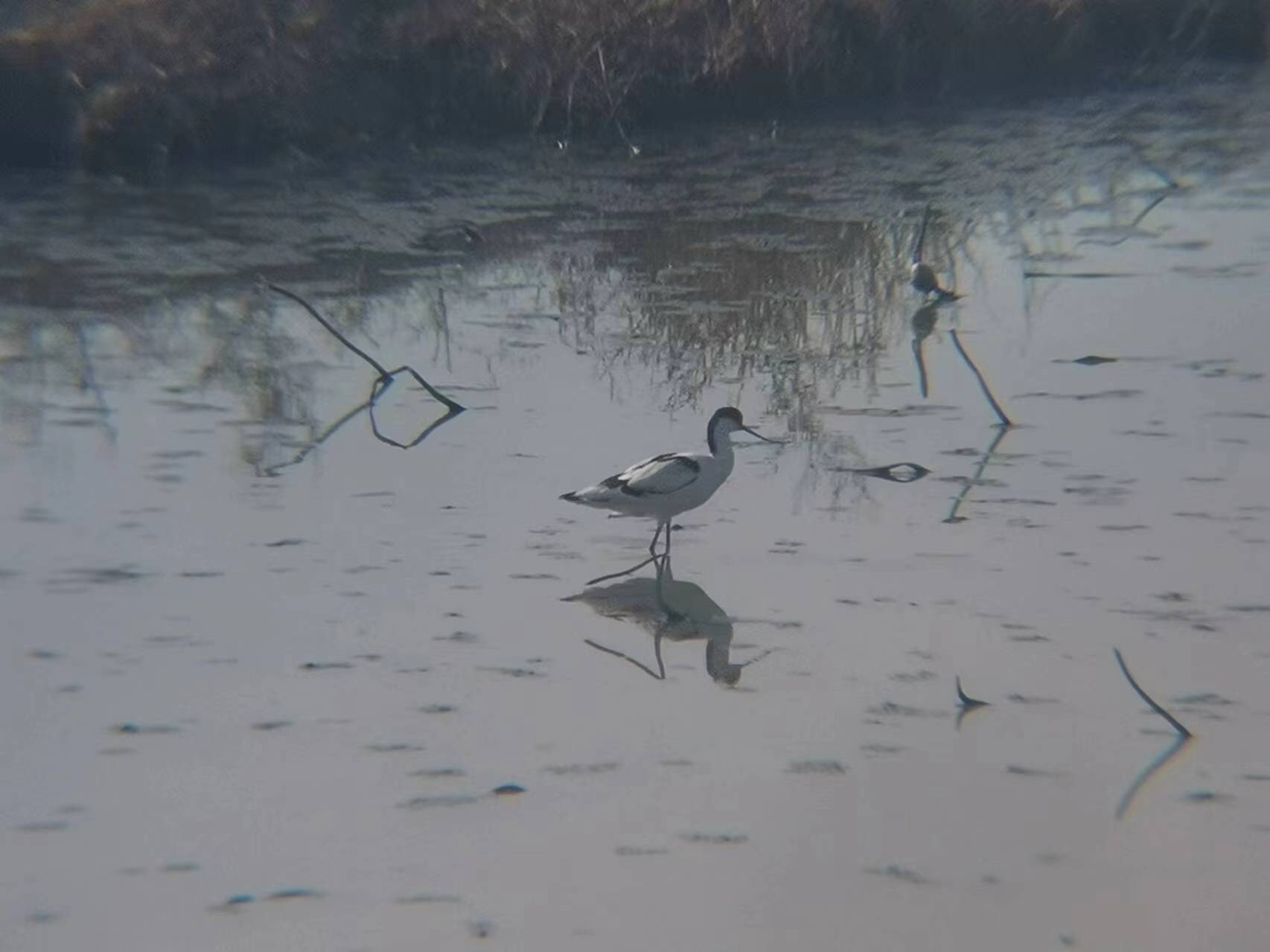
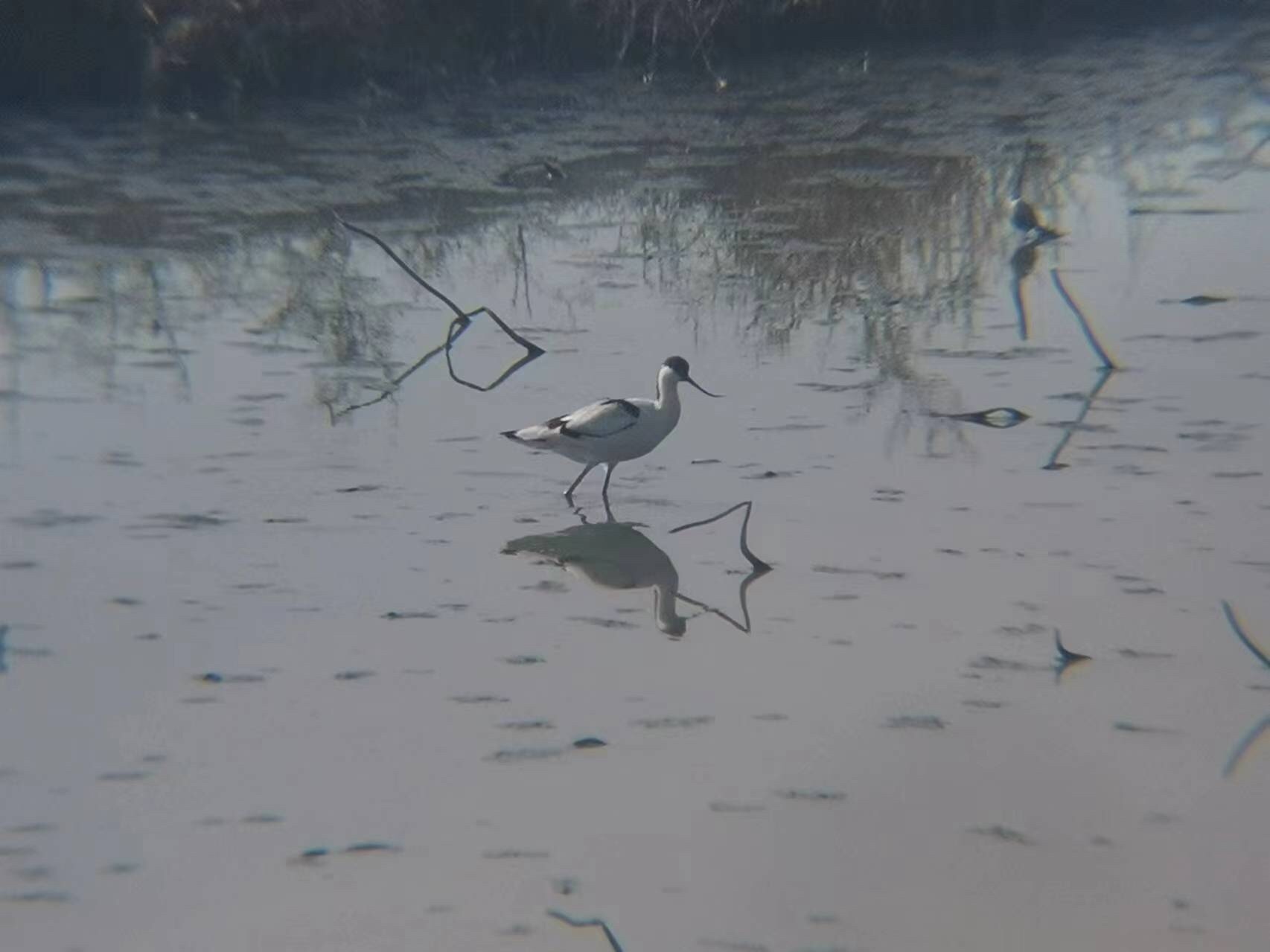

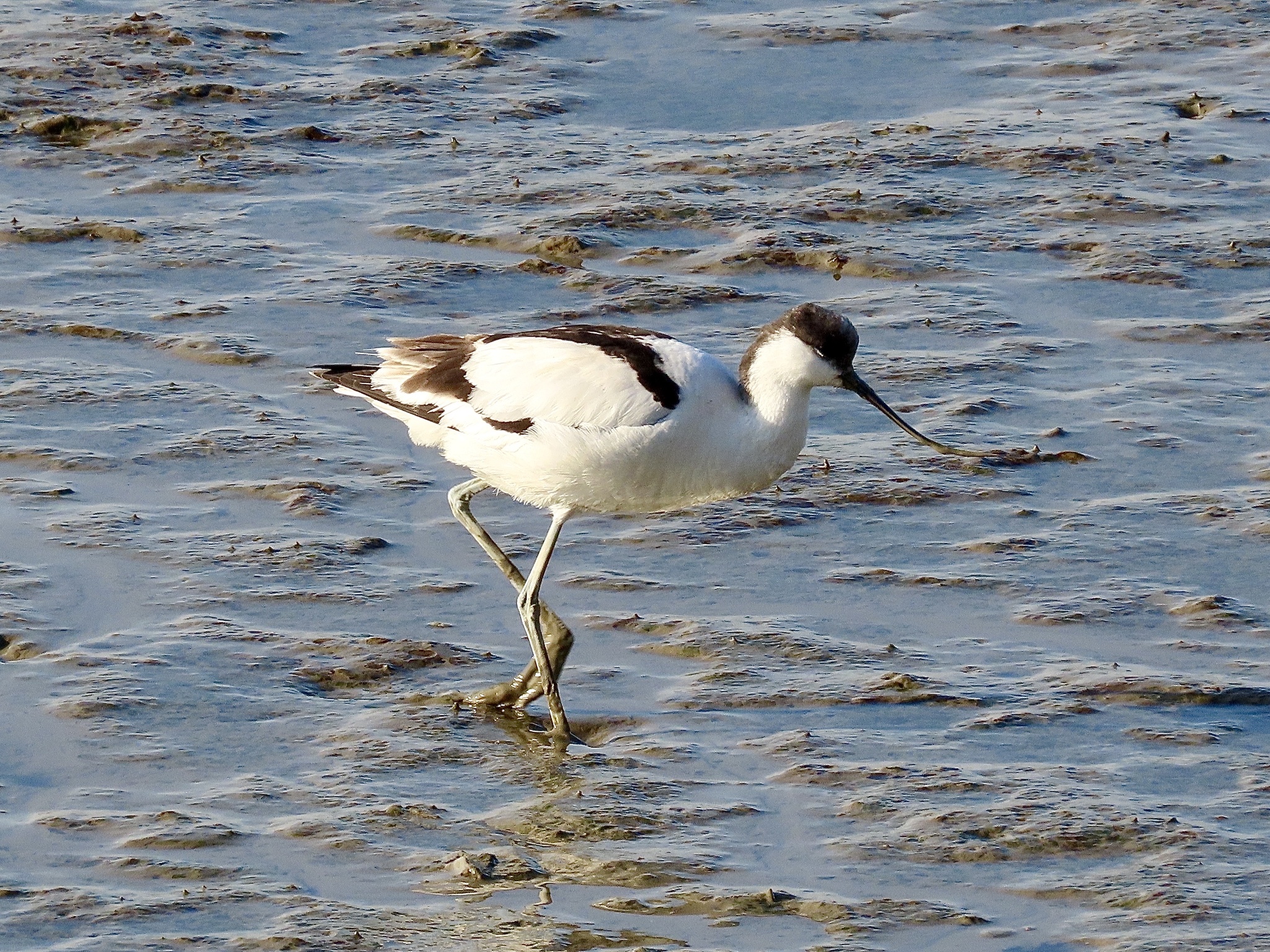
Pied Avocet
Recurvirostra avosetta
反嘴鹬
Introduction
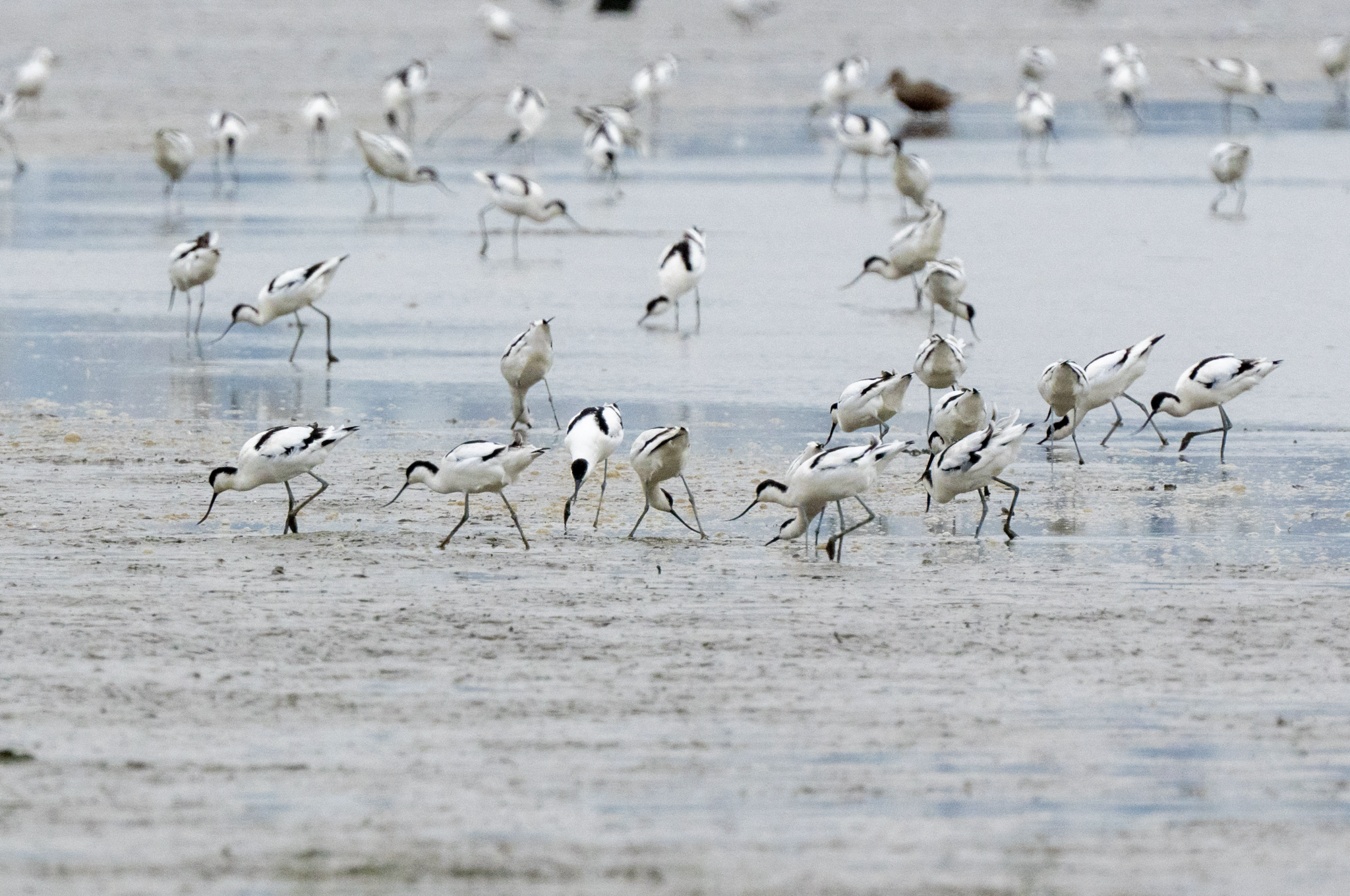
Inhabits coastal lagoons, marshes, and mudflats across Europe, Asia, and Africa. Reaches approximately 40 centimeters in length with a 70-centimeter wingspan. Forages by sweeping its upturned bill side-to-side through shallow water. Breeds in loose colonies of 10 to 70 pairs, nesting on sandy islets or dikes near water, with both parents sharing incubation. Adults defend chicks against predators including raptors, gulls, and foxes. Some populations are resident; others migrate south to wintering grounds in Africa or southern Europe, returning annually to traditional breeding sites. Lifespan typically around 20 years, with records of individuals reaching 27 years. Range has expanded westward in Europe in recent decades.
Description
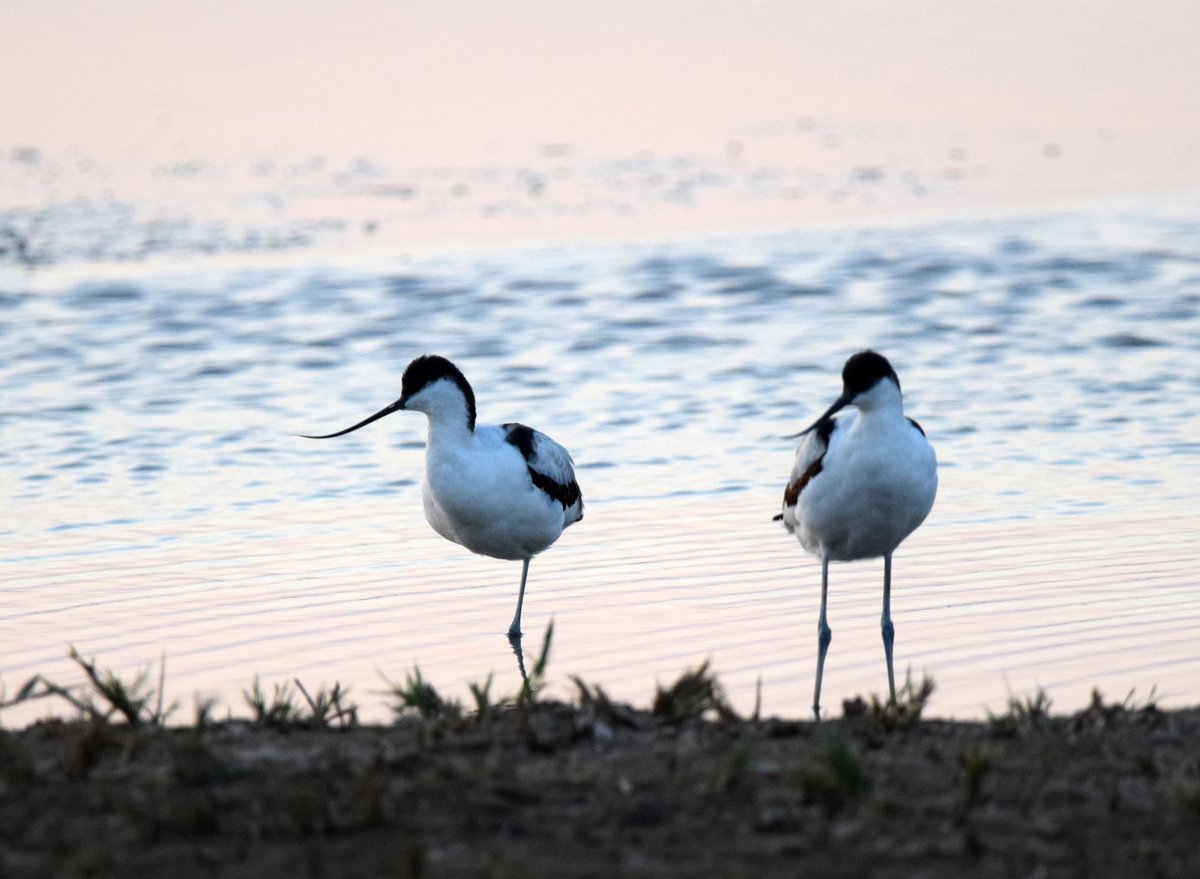
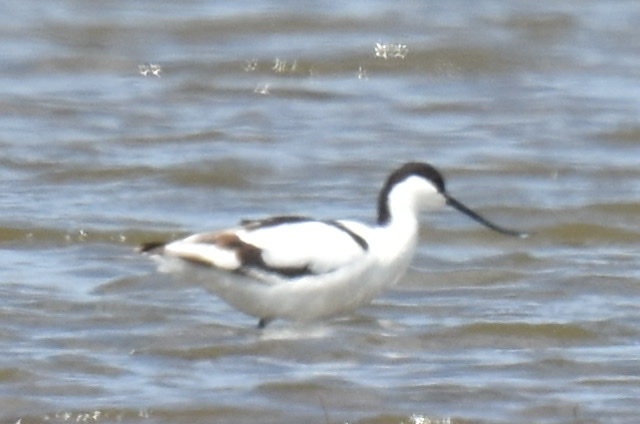
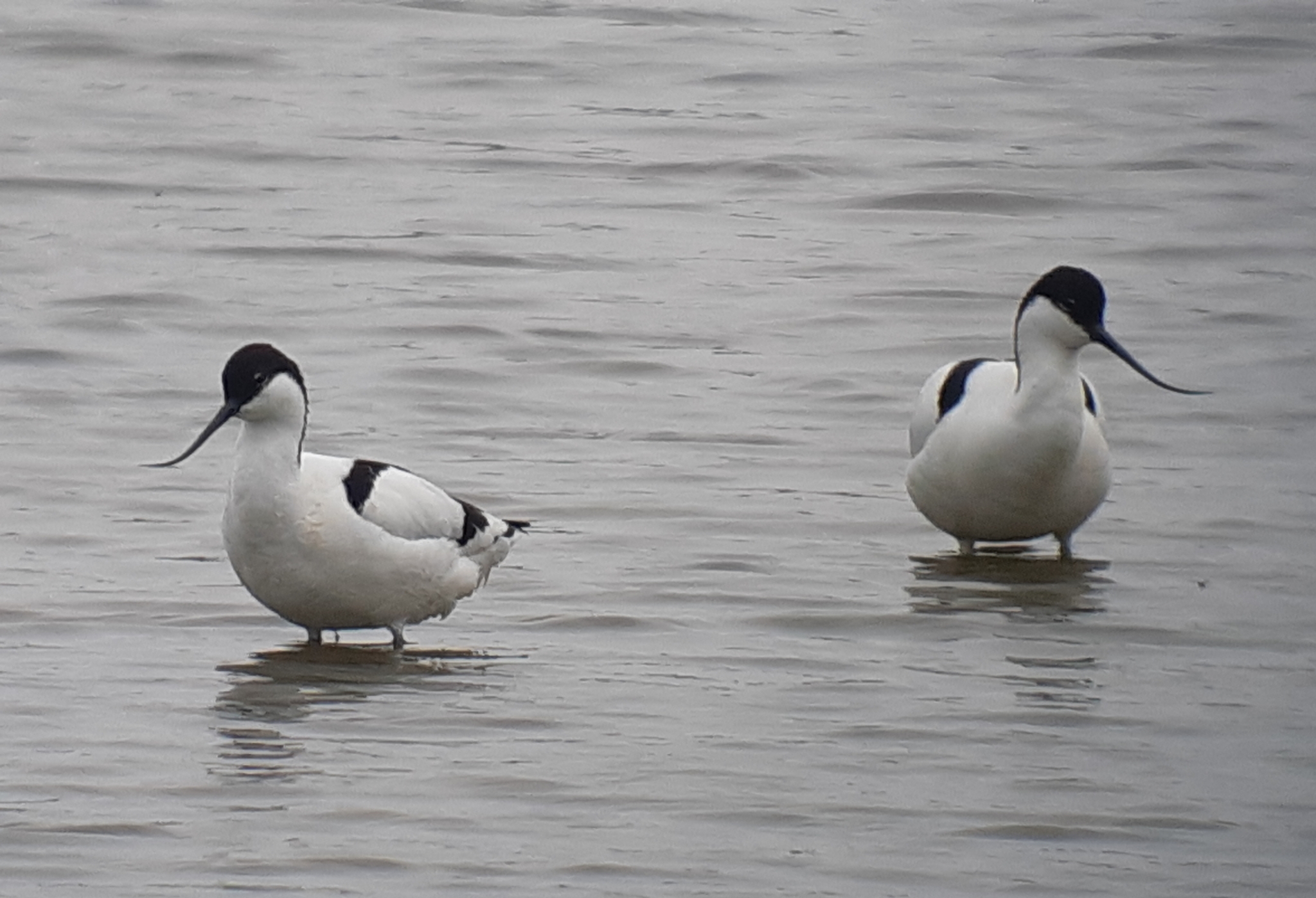
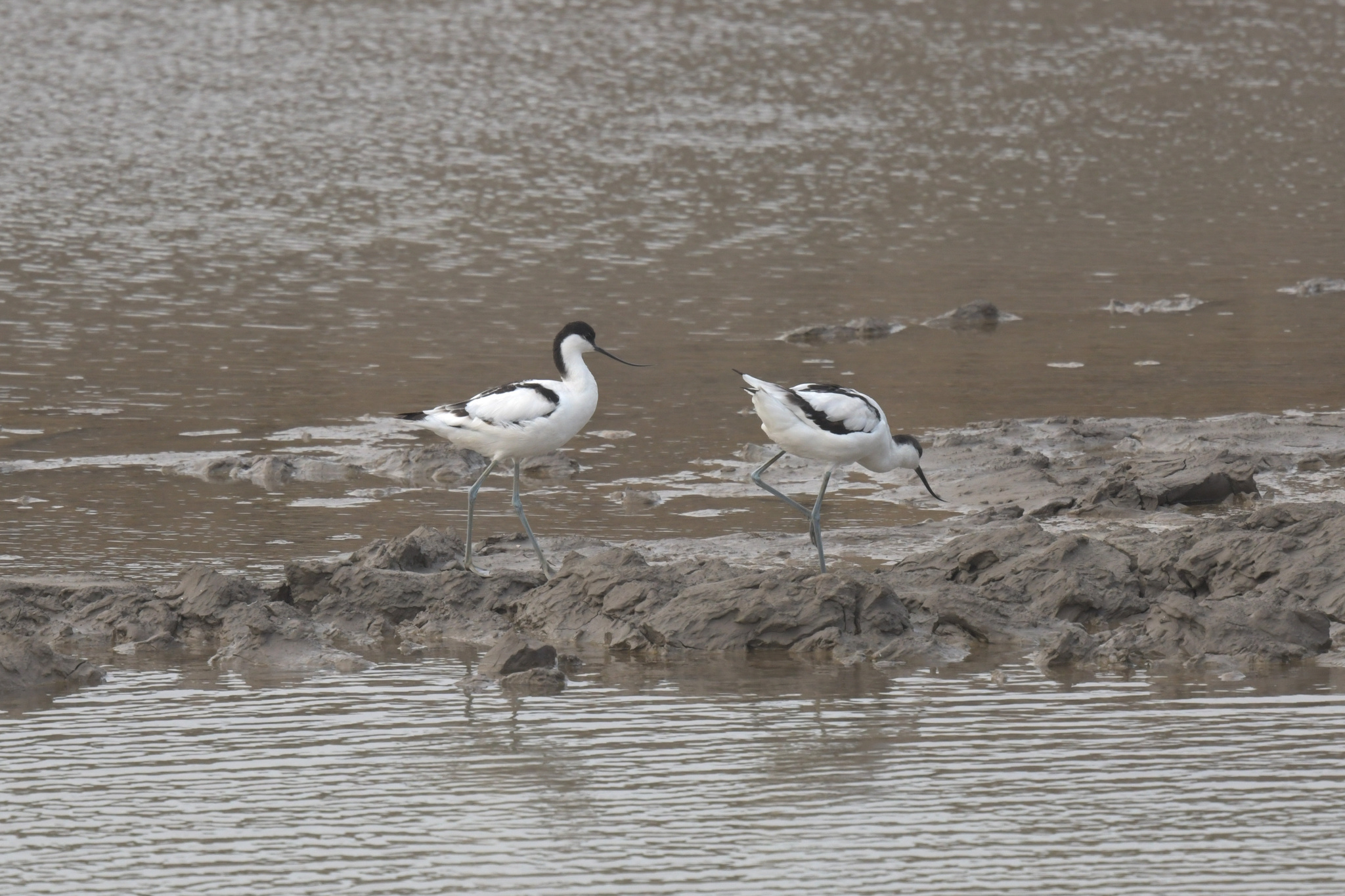
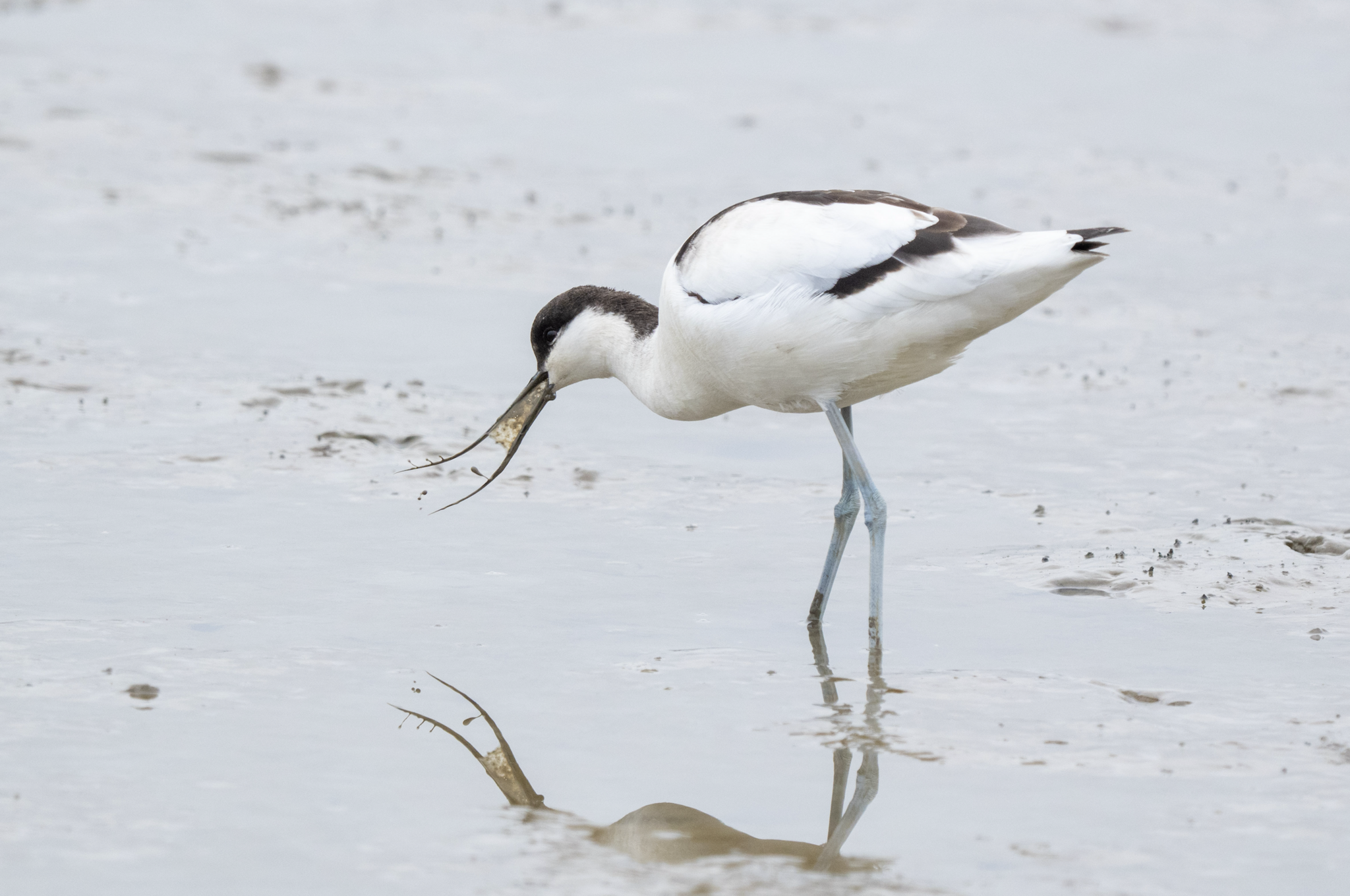
The adult displays bold black-and-white plumage with a black cap extending to the back of the neck. Primaries are black with white bases on the inner feathers, while secondary coverts appear dark grey. The tail is white with pale grey-brown central feathers. Legs are distinctly bluish, and the long, slender bill is black and curves upward at the tip. Sexual differences are subtle: males have longer, less curved bills and reddish-brown irises, while females possess shorter, more curved bills and hazel-brown irises. Juveniles have dingy grey wing coverts and reddish-brown vermiculated feathering on the back and scapulars. Measurements range from 42-46 cm in length with a 67-77 cm wingspan. Bill length is 8.2-9.1 cm in males and 7.2-8.5 cm in females. Weight varies from 267 to 382 grams.
Identification
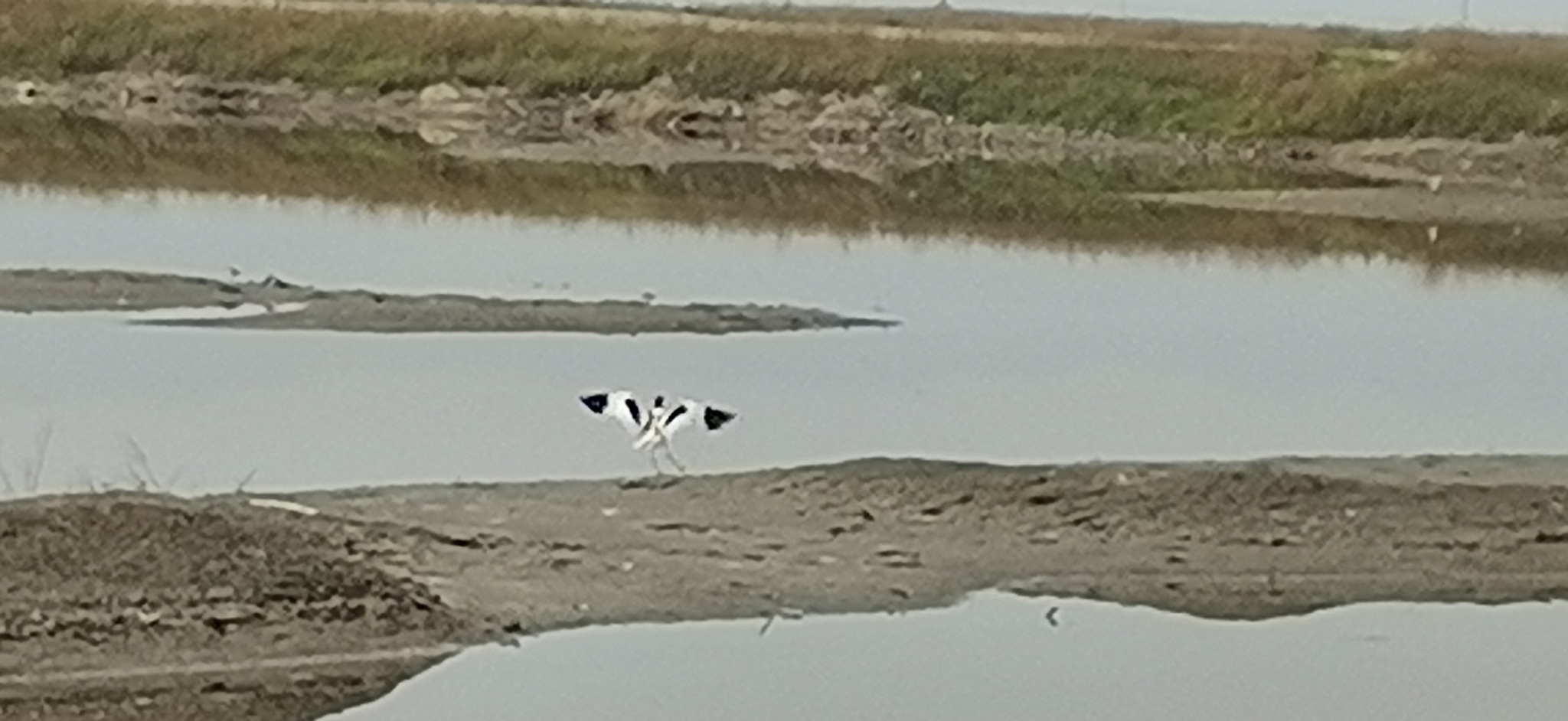
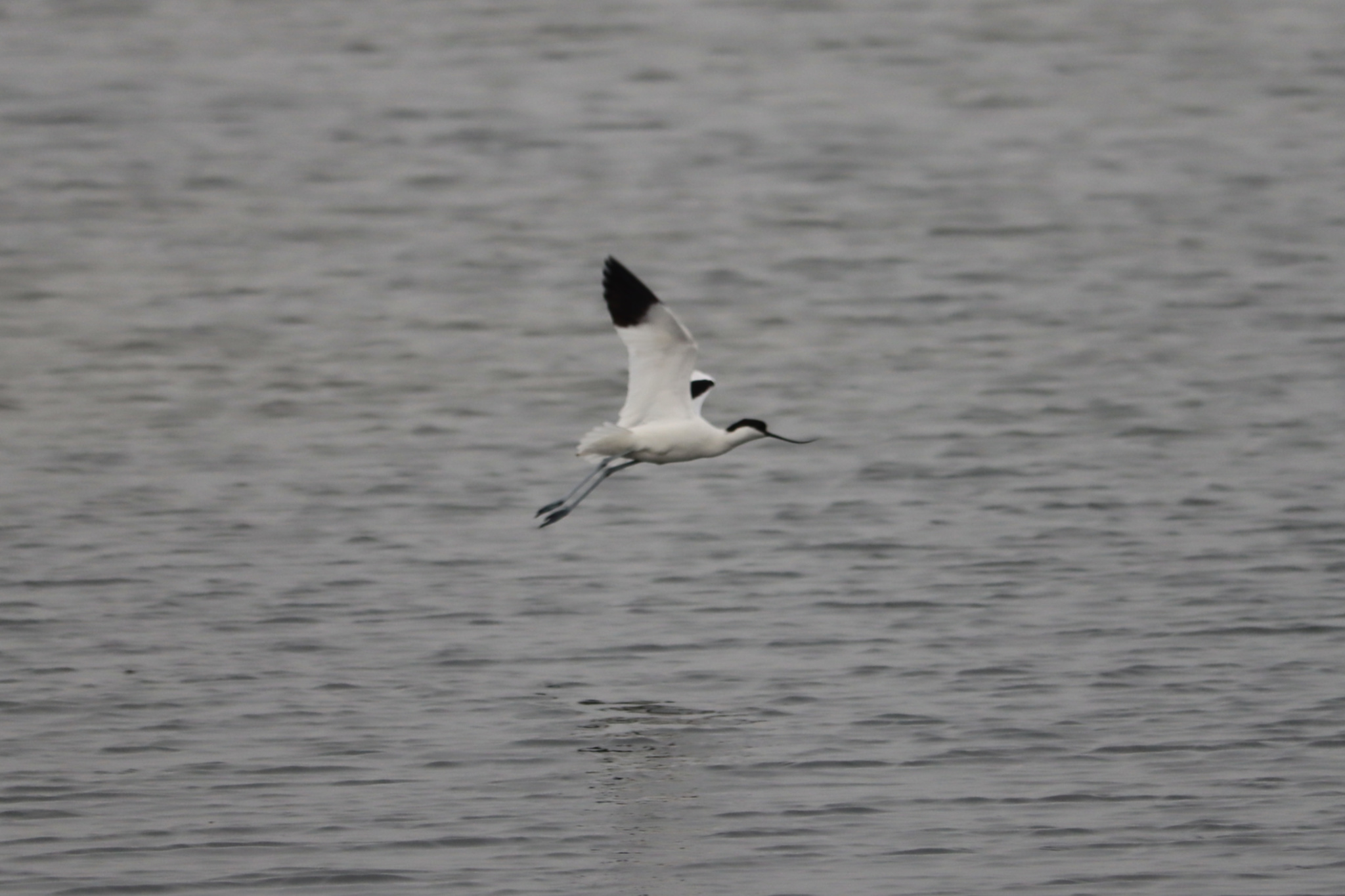
The upturned bill is diagnostic among European waders and immediately distinguishes this species from all others. Its black-and-white plumage pattern is unique among European shorebirds, with no similar species displaying this combination. The bold black cap, white body, and bluish legs flying beyond the tail in flight create a distinctive silhouette. In flight, black wingtips and shoulders contrast with the white body and extended legs. The side-to-side head movement while foraging is characteristic. Compared to similar-sized waders, its extremely long, upward-curving bill and notably long blue legs are the key identification features.
Distribution & Habitat
This Palearctic species ranges across western Europe, central Asia, the Indian subcontinent, and Africa. European populations span from southern Scandinavia and the Baltic states to the Iberian Peninsula, Mediterranean, Black Sea, and eastern European plains. Major populations occur in the Netherlands, Germany, Denmark, Spain, Italy, France, and Russia. Asian range extends from Turkey through Kazakhstan to northern Mongolia and China. African populations occur along the Mediterranean coast, Red Sea, and Atlantic coast to Senegal. Northern European and eastern Asian populations are migratory, wintering in West Africa, the Mediterranean, and the Indian subcontinent. Mediterranean, some African, and Gulf populations are resident. During migration, birds move in groups of 5-30 individuals from August to October, returning March to May.
Behavior & Ecology
Foraging occurs in shallow brackish water or mudflats using a distinctive side-to-side scything motion with the bill. Diet consists primarily of small benthic invertebrates including crustaceans, annelid worms, and insects, with a daily intake averaging 150 grams. Breeding habitat includes shallow lakes with brackish water and exposed mud, with nests placed in shallow scrapes near water. The species is semi-colonial, nesting in groups of 10-70 pairs, sometimes up to 200, or as isolated pairs. Courtship rituals include debris-tossing, drinking displays, and bowing. Vocalizations include fluty contact and alarm calls resembling 'plut-plut-plutt' or 'klup-klup-klup', with excited birds producing 'kvit-kvit-kvit'. Both parents incubate the 3-5 eggs for 23 days on average and raise the nidifugous chicks together. Chicks fledge at 35-42 days.
Conservation
Classified as Least Concern by the IUCN due to its extensive range and large population, estimated globally at 280,000-470,000 individuals. European breeding population is 117,000-149,000 adults. While overall numbers have increased since the 1970s, regional trends vary dramatically: Atlantic wintering populations grew 107% since 1980, yet English Channel numbers declined 80% due to habitat loss. Threats include coastal urbanization, wetland destruction, oil spills, pollution from PCBs and heavy metals, climate change impacts, agricultural drying of marshes, and disease susceptibility. Conservation measures include legal protection under the EU Birds Directive and Bern Convention, establishment of protected areas and nature reserves, artificial nesting site creation, and color-banding programs to monitor populations.
Culture
The species holds special significance in British conservation history. Extirpated as a breeding species in Great Britain by 1840, it successfully recolonized at Minsmere, Suffolk in 1947. This remarkable recovery led to its adoption as the logo of the Royal Society for the Protection of Birds, making it an iconic symbol of successful wildlife conservation. Since its return, the species has expanded inland and westward in Britain, breeding in Wales and Scotland for the first time in 2018. The RSPB's use of the avocet as its emblem has made it one of the most recognizable waders among British birdwatchers and the general public alike.
Source: Wikipedia · CC BY-SA 3.0
Taxonomy
- Order
- Charadriiformes
- Family
- Recurvirostridae
- Genus
- Recurvirostra
- eBird Code
- pieavo1
Distribution
breeds locally southern and central Europe eastward to northeastern Russia and China southward through Middle East to northwestern India; also eastern and southern Africa; winters to coastal northern Africa, inland western Africa, Indian Peninsula including Sri Lanka, and to eastern China
Vocalizations
Data Sources
Species description from Wikipedia, licensed under CC BY-SA 3.0.
Bird images and sounds sourced from GBIF, contributed by citizen scientists worldwide under Creative Commons licenses.
Taxonomy data from AviList 2025.