Water Rail
Rallus aquaticus
西秧鸡
Introduction
A rail (family Rallidae) inhabiting well-vegetated wetlands across Europe, Asia and North Africa. A pig-like squeal carries through reed beds where it spends most of its time hidden among dense vegetation. Its laterally compressed body allows it to slip through tight stands of reeds and other marsh vegetation. Northern and eastern populations migrate south for winter; western and southern populations remain year-round. In winter, freezing conditions may force individuals into gardens or near human habitation.
Description
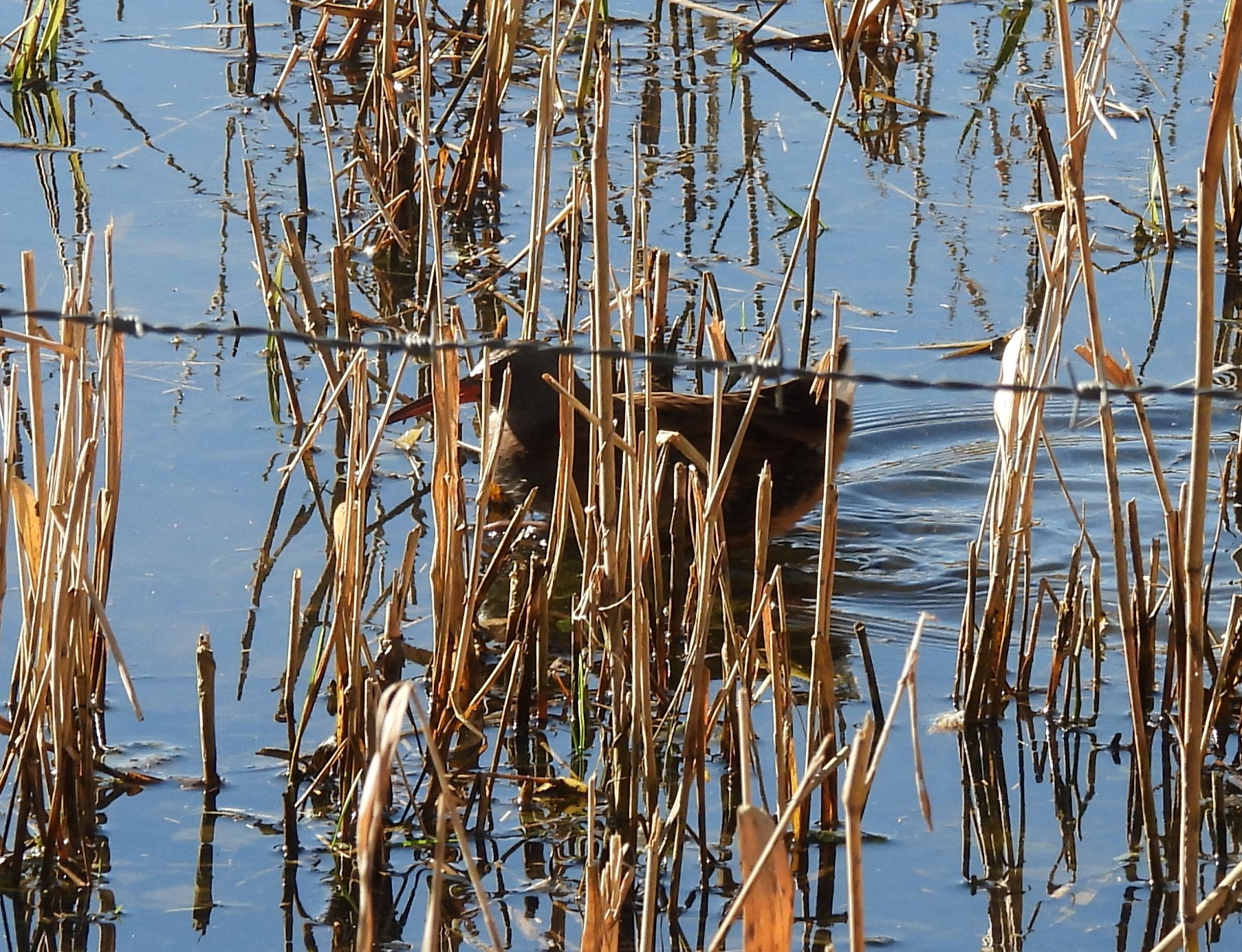
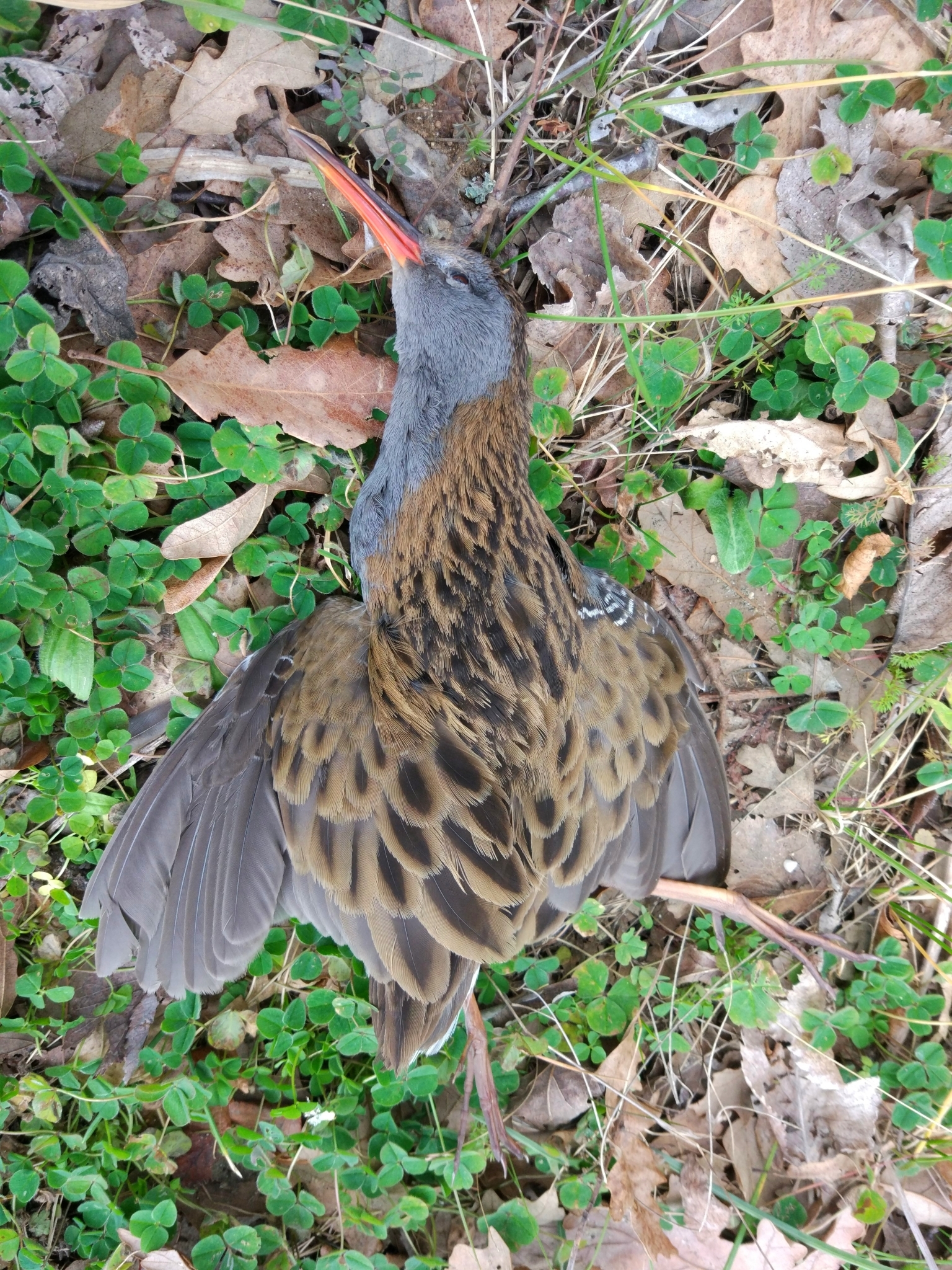
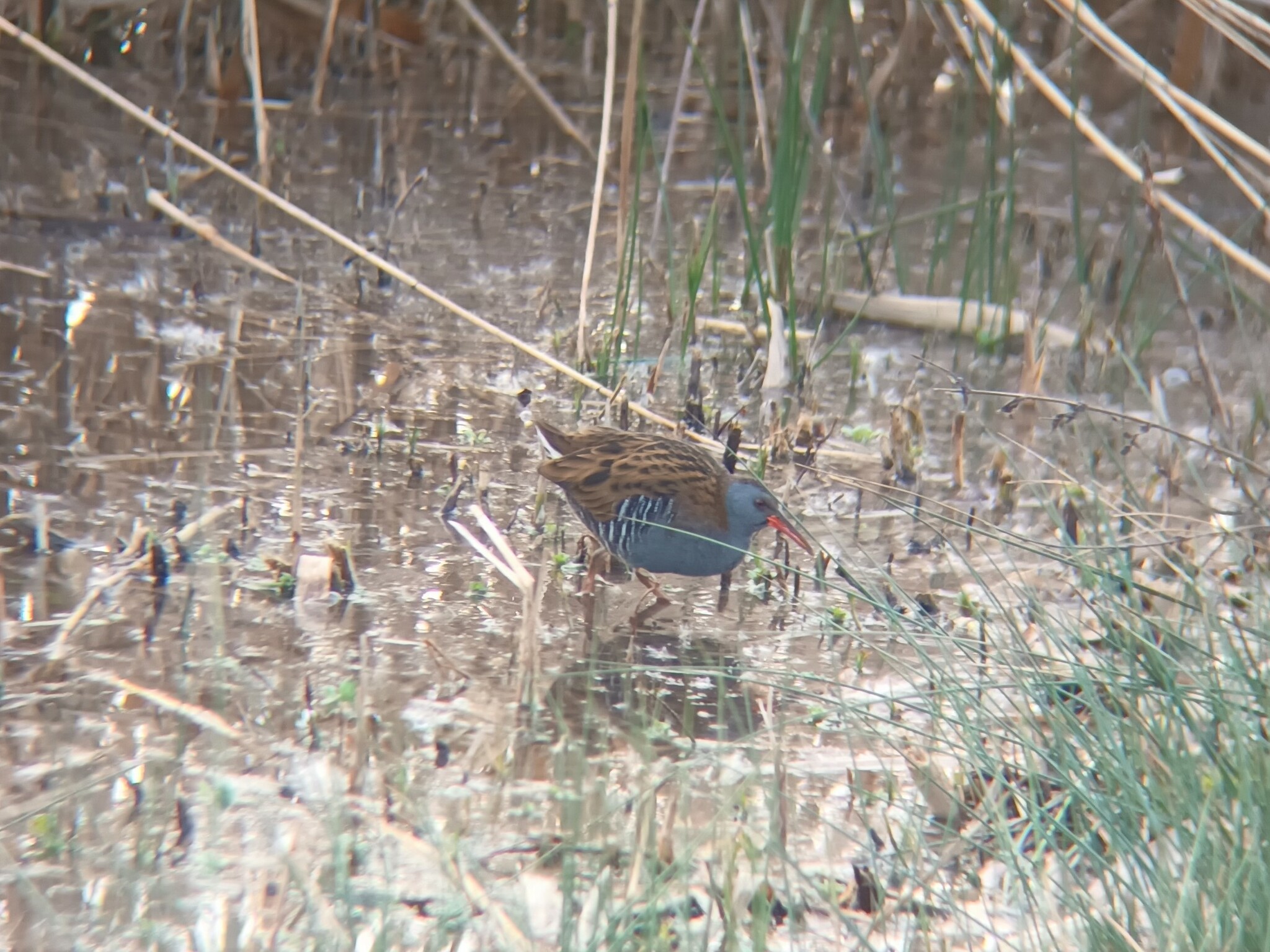
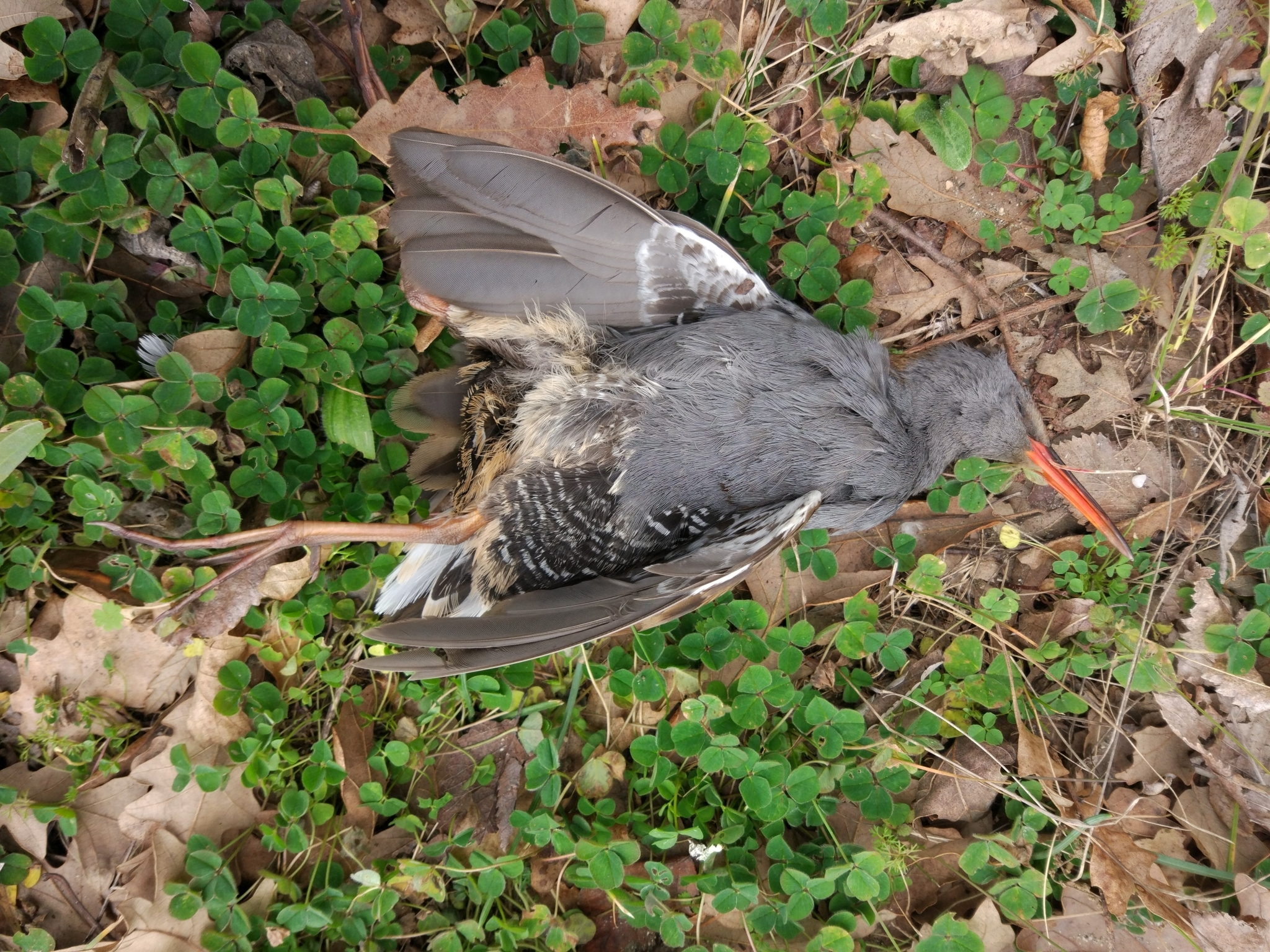
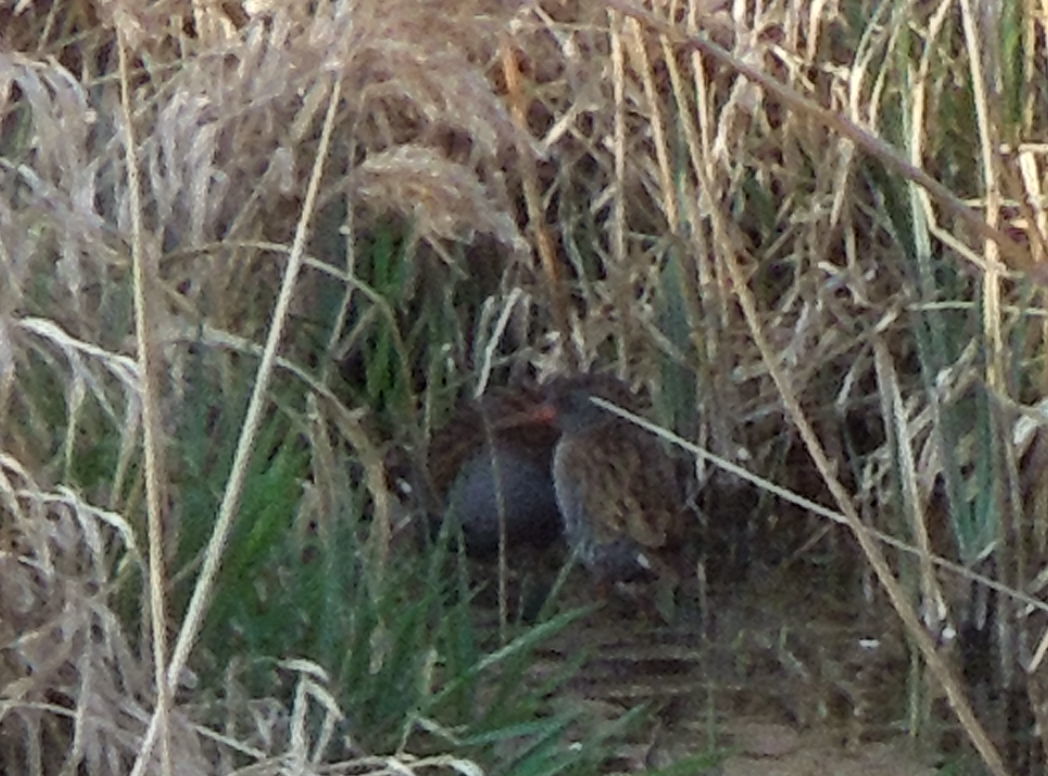
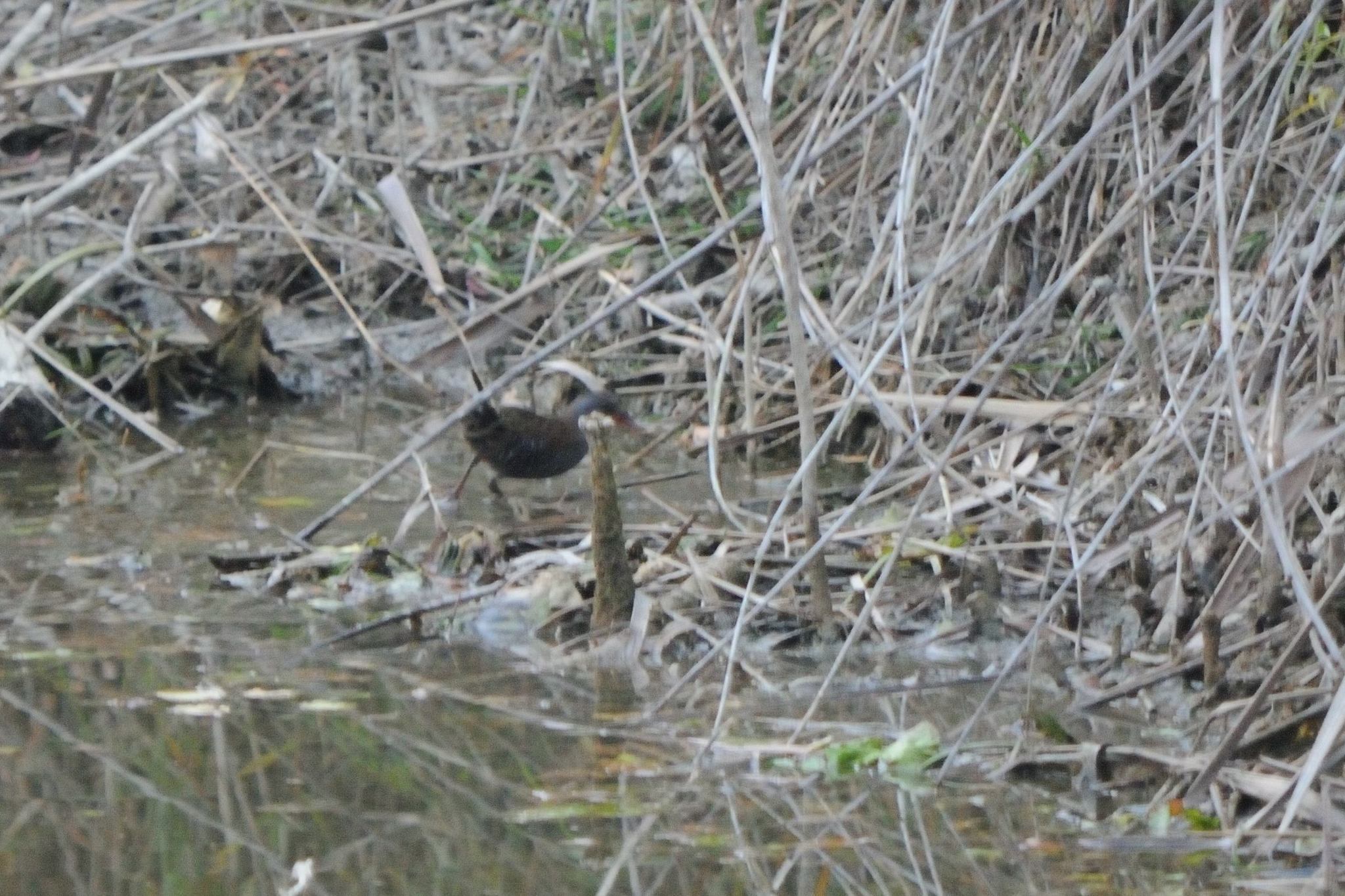
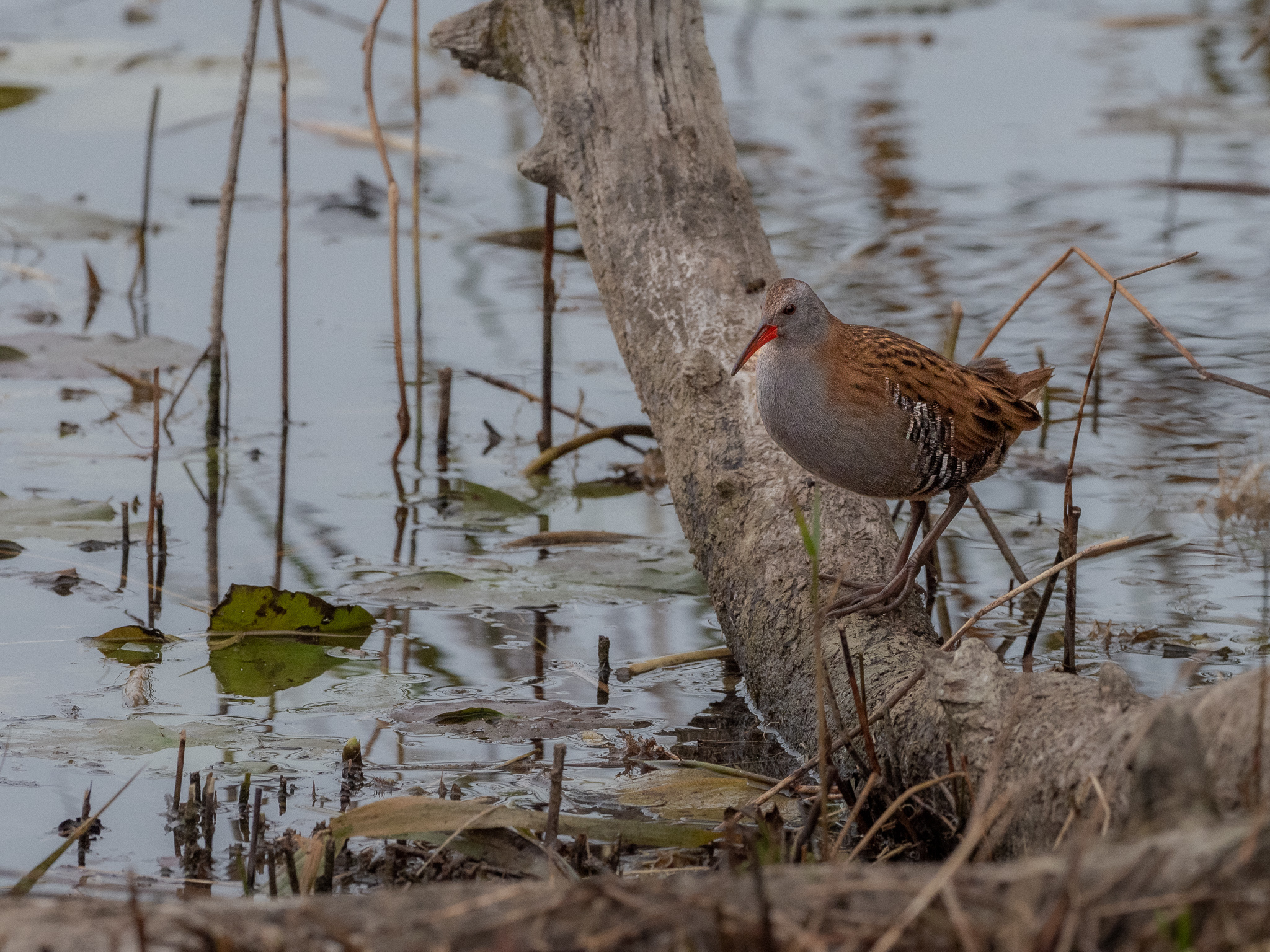
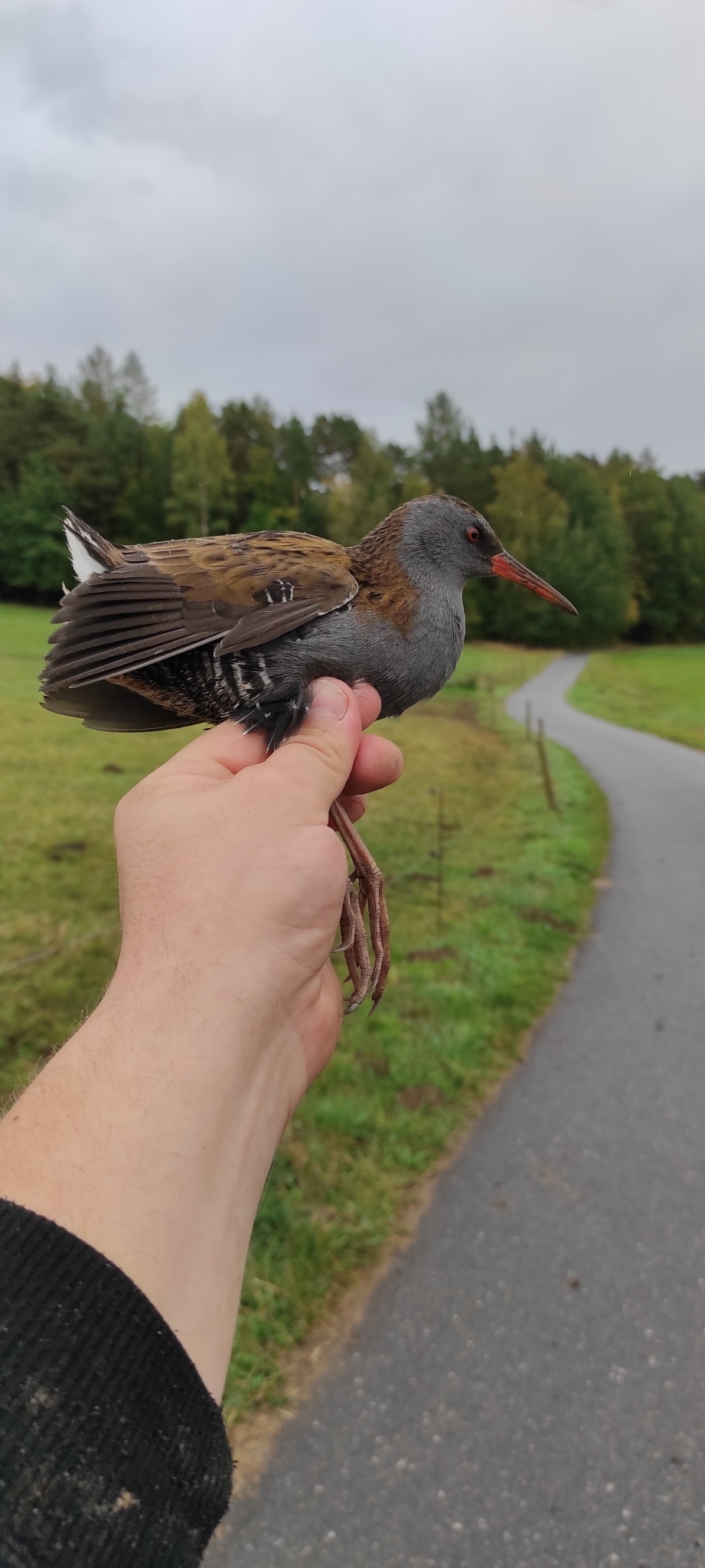
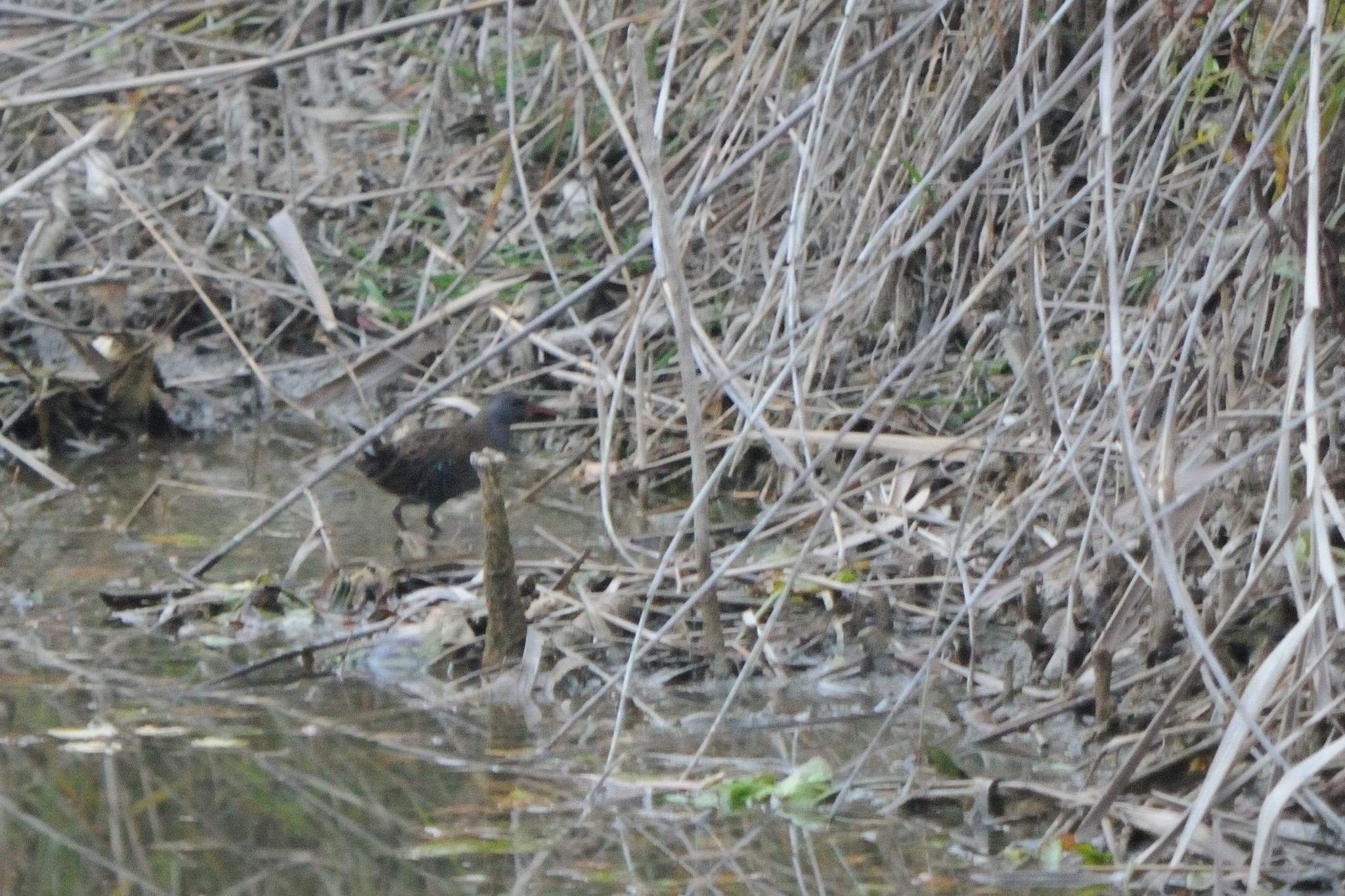
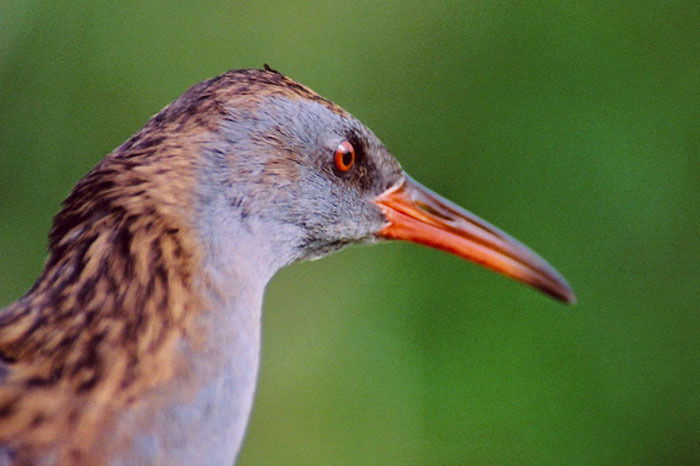
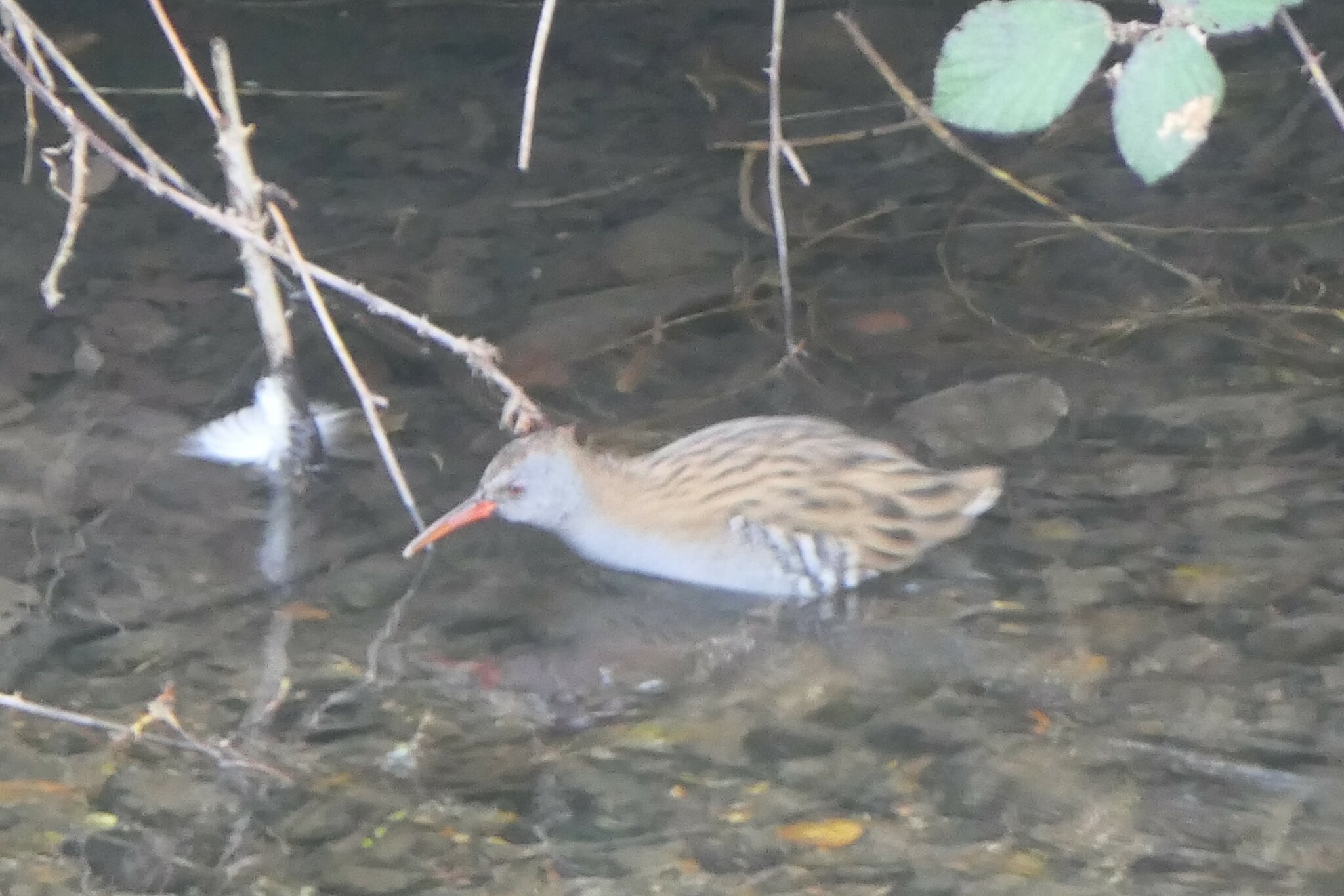
A medium-sized rail measuring 23–28 cm in length with a 38–45 cm wingspan. Males typically weigh 114–164 g, while females are slightly lighter at 92–107 g. The upperparts are olive-brown with black streaks, particularly on the shoulders. The face, head and underparts down to the upper belly are dark slate-blue, with a blackish area between the bill and eye. The flanks display distinctive black and white barring, and the undertail is white with darker streaks. The long bill and iris are red, while the legs are flesh-brown. The sexes are similar in appearance, though females average slightly smaller. Immature birds have buff replacing the blue-grey plumage, with a blackish crown, white chin and throat, and buff undertail. The downy chicks are all black apart from a mainly white bill.
Identification
This species is distinguished from most other reed bed rails by its white undertail combined with the long reddish bill. The bill is notably long, comprising 55–58% of the head length and slightly down-curved. The slaty-breasted rail of tropical Asia has a stouter bill, chestnut crown and white-spotted upperparts. Freshly moulted or juvenile birds may show a buff undertail similar to the spotted crake, but that species has white-spotted plumage and a much shorter, mainly yellowish bill. The water rail's range does not normally overlap with other Rallus species, though vagrants could be distinguished from American relatives by the lack of rufous or chestnut on the closed wing. The larger African rail has unstreaked darker brown upperparts and brighter red legs and feet.
Distribution & Habitat
Breeds across temperate Eurasia from Iceland and Ireland discontinuously to North Africa, Saudi Arabia and western China. The Icelandic population became extinct around 1965. The nominate subspecies is resident in milder southern and western areas but migrates south from regions with harsh winters, wintering in North Africa, the Middle East and the Caspian region. Peak migration occurs September to October, with return from March to mid-April. The preferred breeding habitat is permanent wetland with still or slow-moving fresh or brackish water and dense tall vegetation such as common reed, reedmace, irises or sedges. It uses natural marshes as well as gravel pits, clay excavations, peat workings and rice paddies. In winter, a wider range of wet habitats may be used, including flooded thickets.
Behavior & Ecology
This rail is a skulking species, difficult to observe in its wetland habitat. It walks with a high-stepping gait, swims with jerky motions when necessary, and flies short distances low over reeds with dangling legs, though capable of sustained nocturnal migration. It is monogamous and highly territorial when breeding, with territories of about 300 square meters. The nest is built mainly by the male from available wetland vegetation, raised 15 cm or more above water level. Clutches of 6–11 eggs are incubated mainly by the female for 19–22 days. Two broods are typical per season. The main call is a series of grunts followed by a piglet-like squeal, used for territory announcement, alarm and contact. Both parents raise the precocial young, which leave the nest within two days but remain dependent for 20–30 days. Diet is omnivorous, mainly invertebrates in summer, with berries and plant material in winter.
Conservation
Classified as Least Concern on the IUCN Red List due to its huge breeding range of approximately 15,600,000 km² and large population of 100,000–1,000,000 adults. Numbers are declining in most European countries due to habitat loss, though populations are stable or increasing in Morocco. The Icelandic race became extinct around 1965 from wetland drainage and predation by introduced American mink. Introduced mink have also caused declines in Hebridean populations. Habitat threats include wetland drainage, canalisation, urban encroachment and pollution. Conservation efforts focusing on mink eradication have allowed the species to return to several Scottish islands. The species remains widespread and common across much of its extensive range.
Culture
This rail has been consumed by humans for thousands of years. The Romans ate water rails, and they were depicted in wall paintings at Pompeii. Consumption continued through the Middle Ages into modern times. Otherwise, this species holds relatively little cultural significance compared to some other wetland birds, though its distinctive squealing call has made it a memorable presence in the marshes and reed beds where it occurs throughout its range.
Source: Wikipedia · CC BY-SA 3.0
Taxonomy
- Order
- Gruiformes
- Family
- Rallidae
- Genus
- Rallus
- eBird Code
- watrai1
Subspecies (3)
-
Rallus aquaticus aquaticus
breeds Europe, northern Africa, and western Asia eastward to upper basin of River Ob; winters southward to northern Africa and eastward to the Caspian Sea
-
Rallus aquaticus hibernans
Iceland; possibly extinct
-
Rallus aquaticus korejewi
breeds Aral Sea and Lake Balkhash southward to Iran, Kashmir, and west-central China; winters patchily from Iraq to central China
Data Sources
Species description from Wikipedia, licensed under CC BY-SA 3.0.
Bird images and sounds sourced from GBIF, contributed by citizen scientists worldwide under Creative Commons licenses.
Taxonomy data from AviList 2025.