Slaty-legged Crake
Rallina eurizonoides
白喉斑秧鸡
Introduction
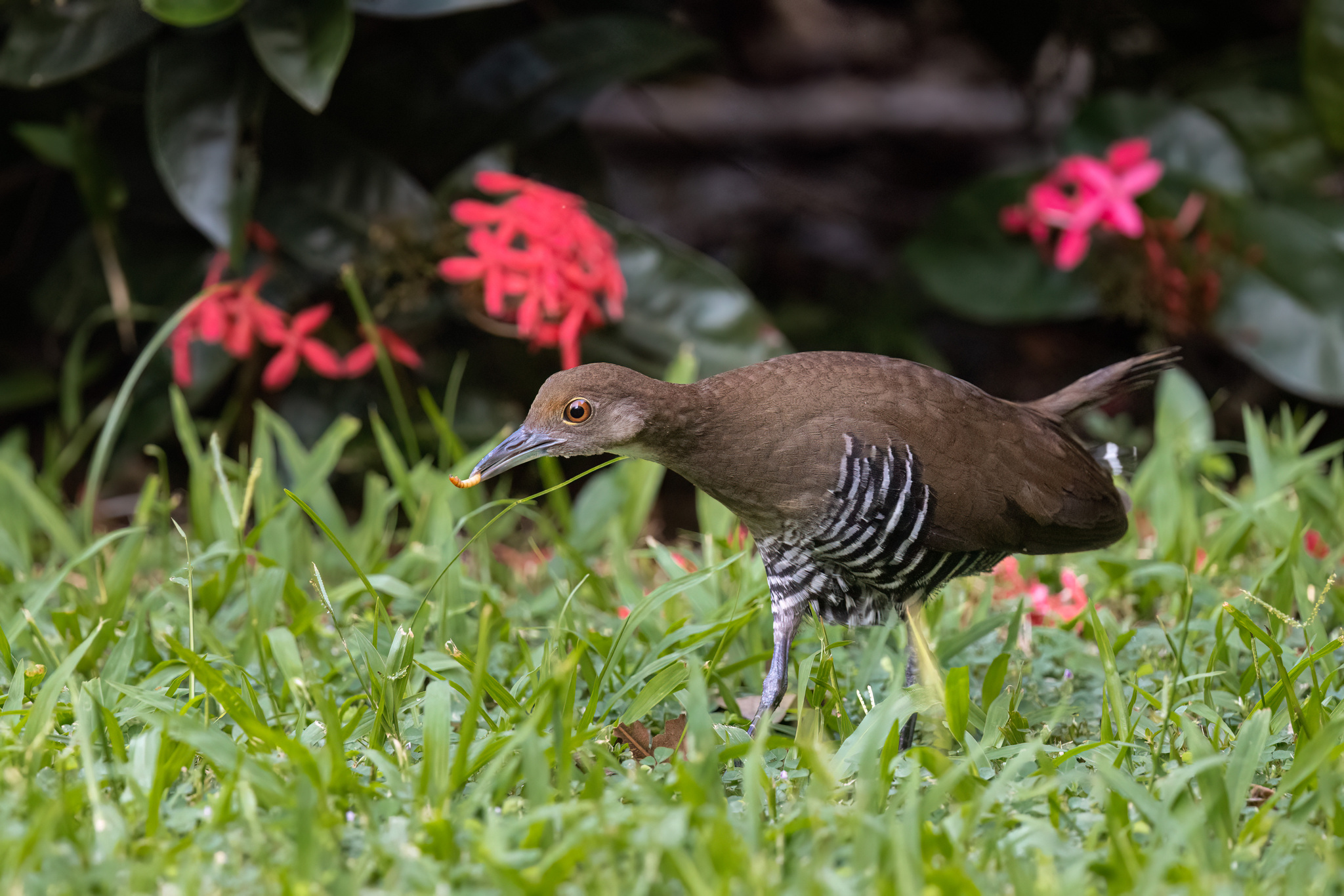
A waterbird in the rail and crake family, Rallidae. Inhabits swamps and similar wet areas in well-wooded country across south Asia east from India, Pakistan, and Sri Lanka to the Philippines and Indonesia. Mainly permanent residents throughout their range, though some northern populations migrate further south in winter. Territorial and secretive, hiding in bushes when disturbed.
Description
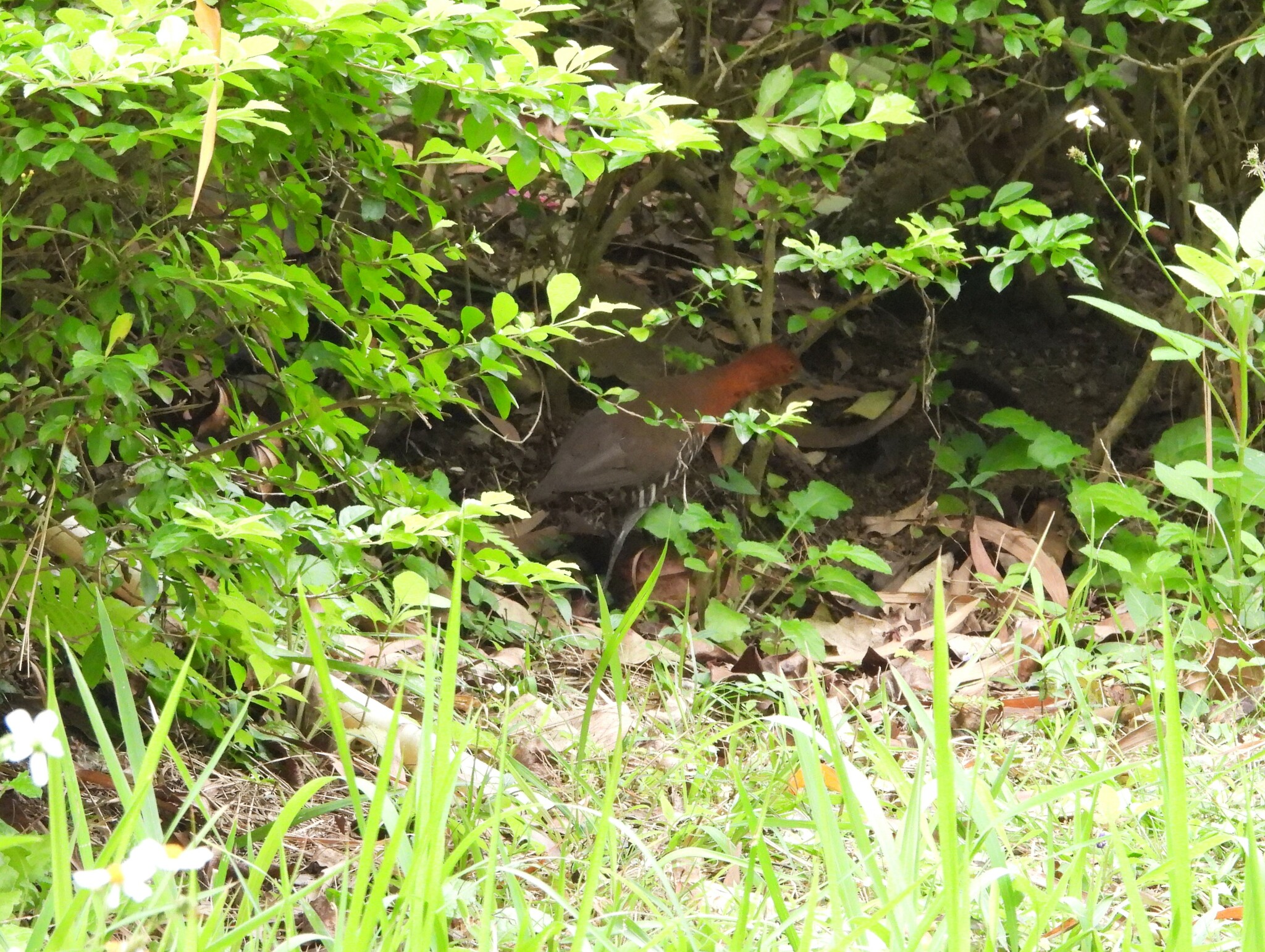
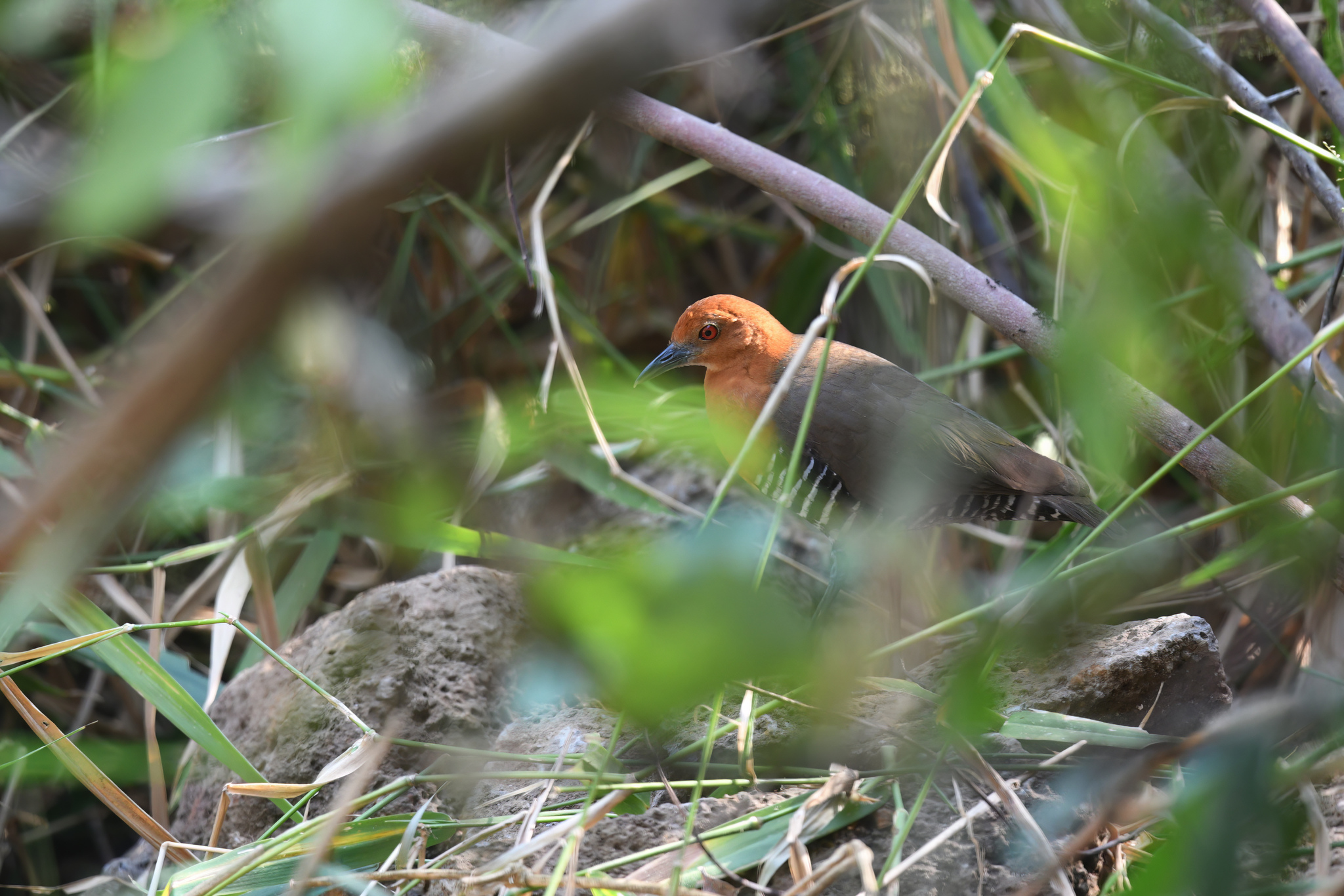
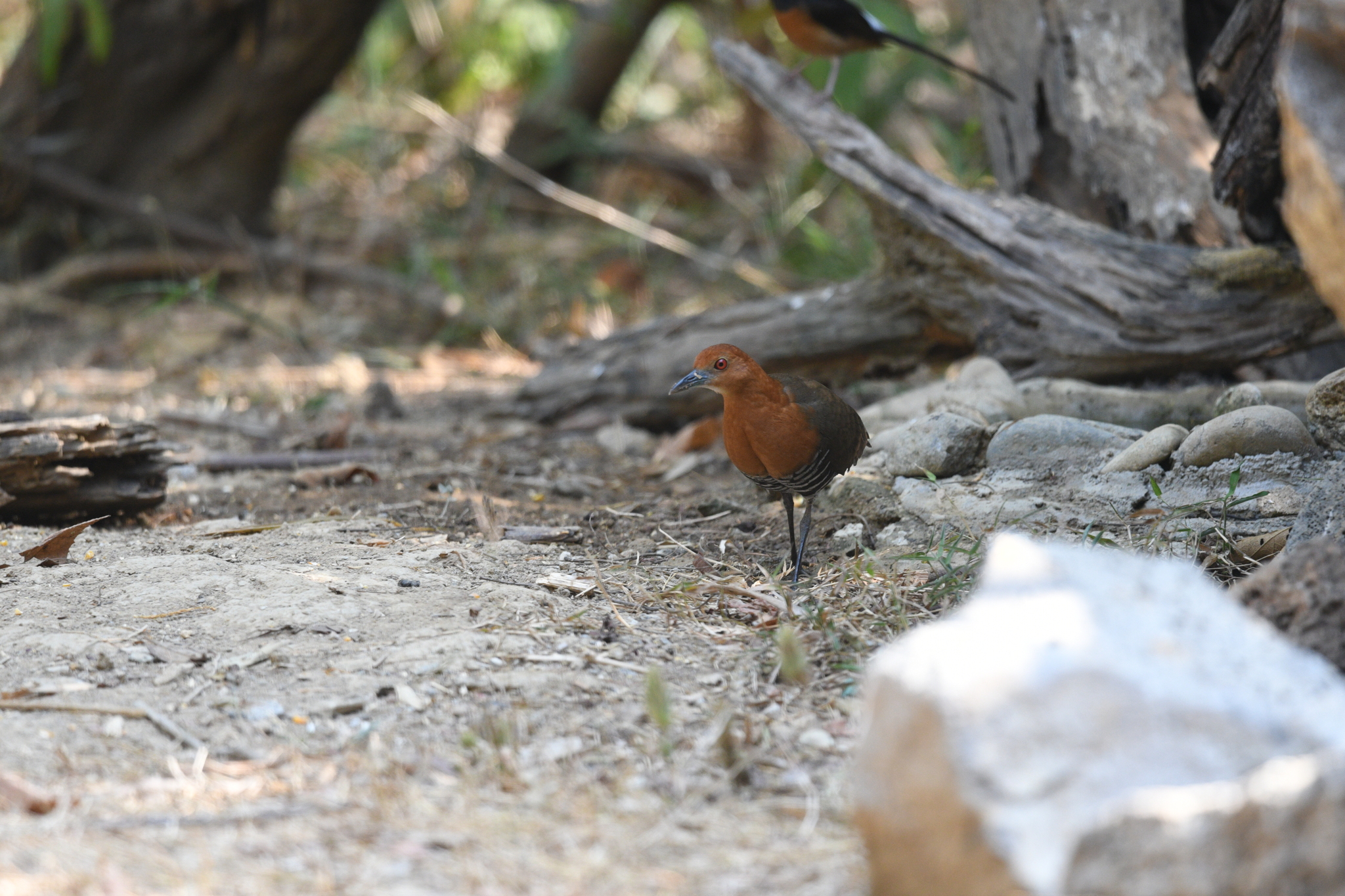
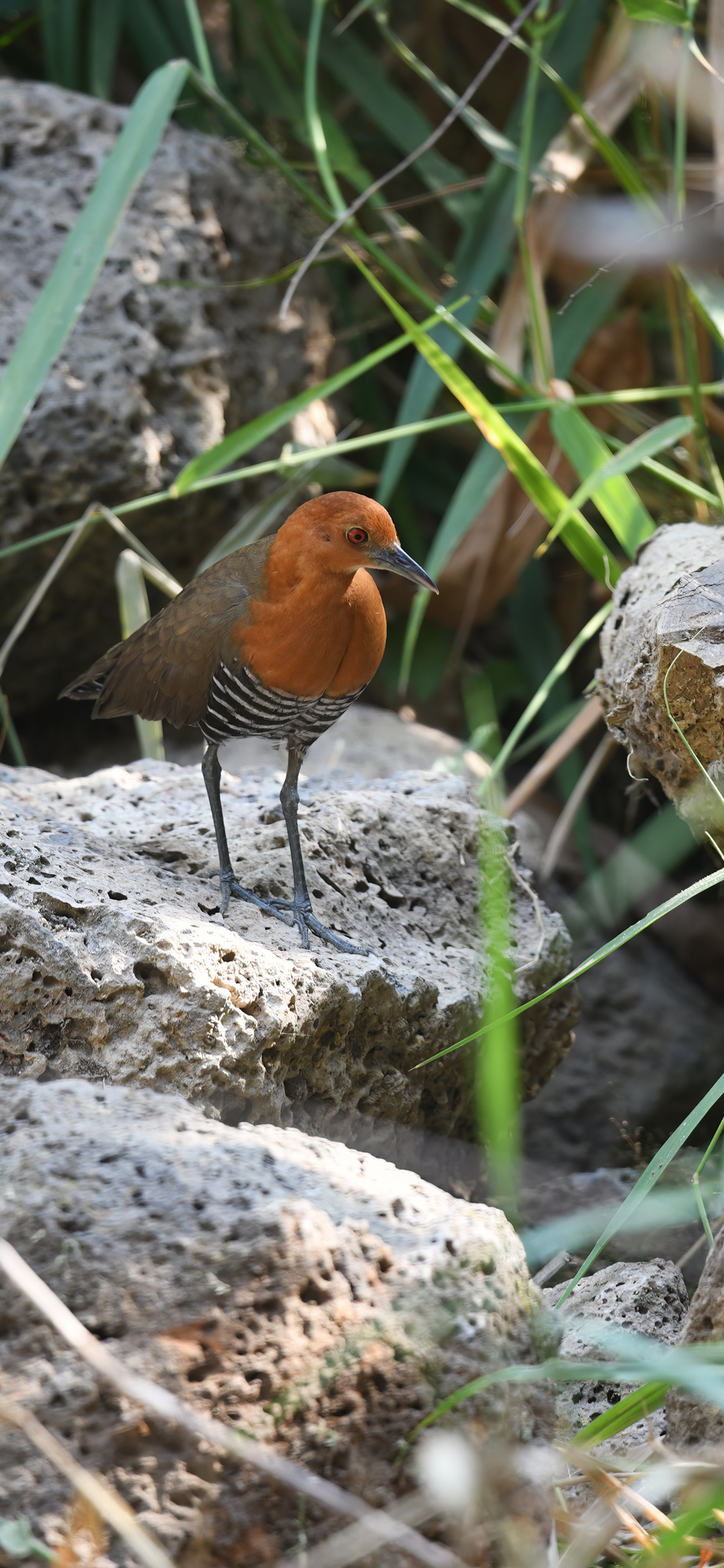
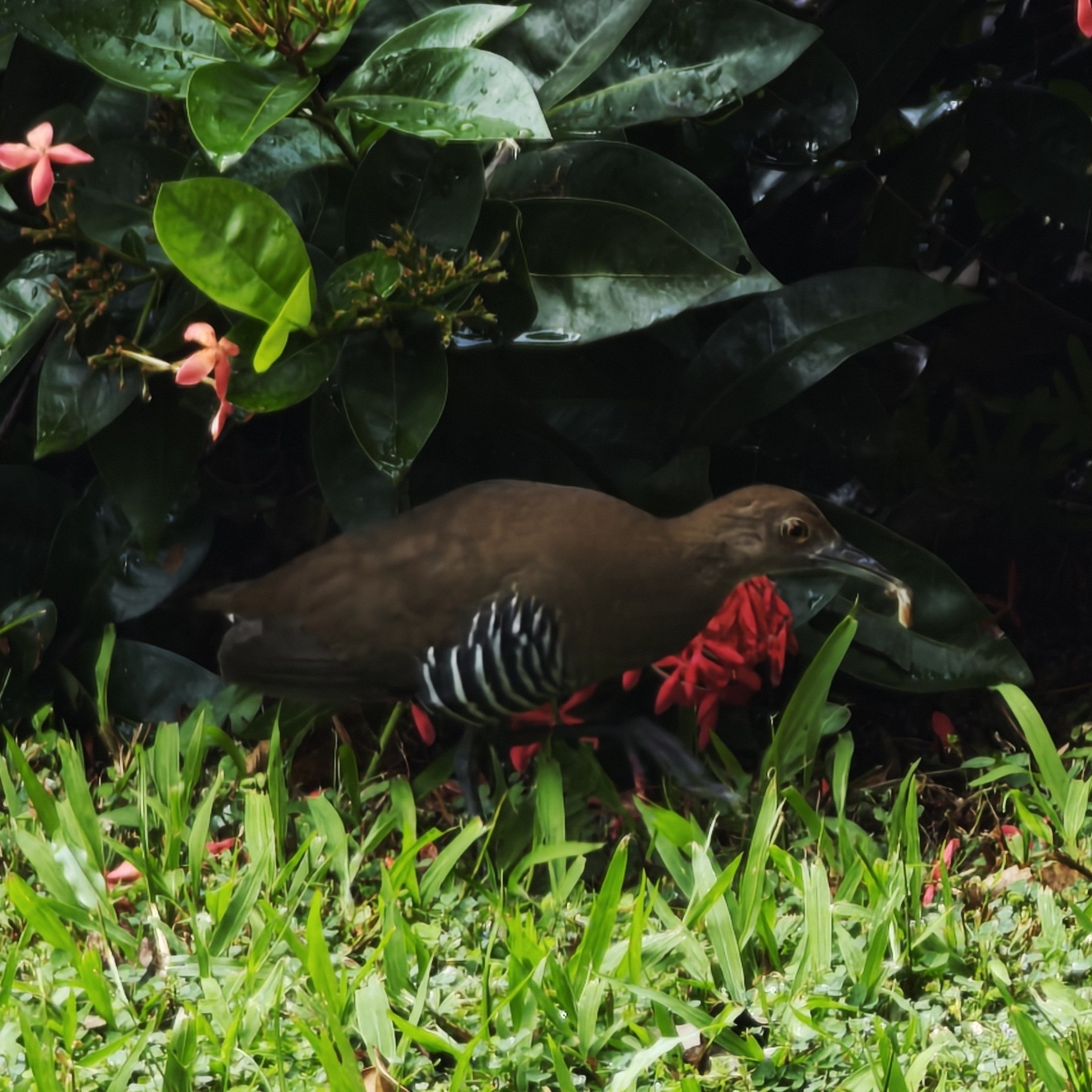
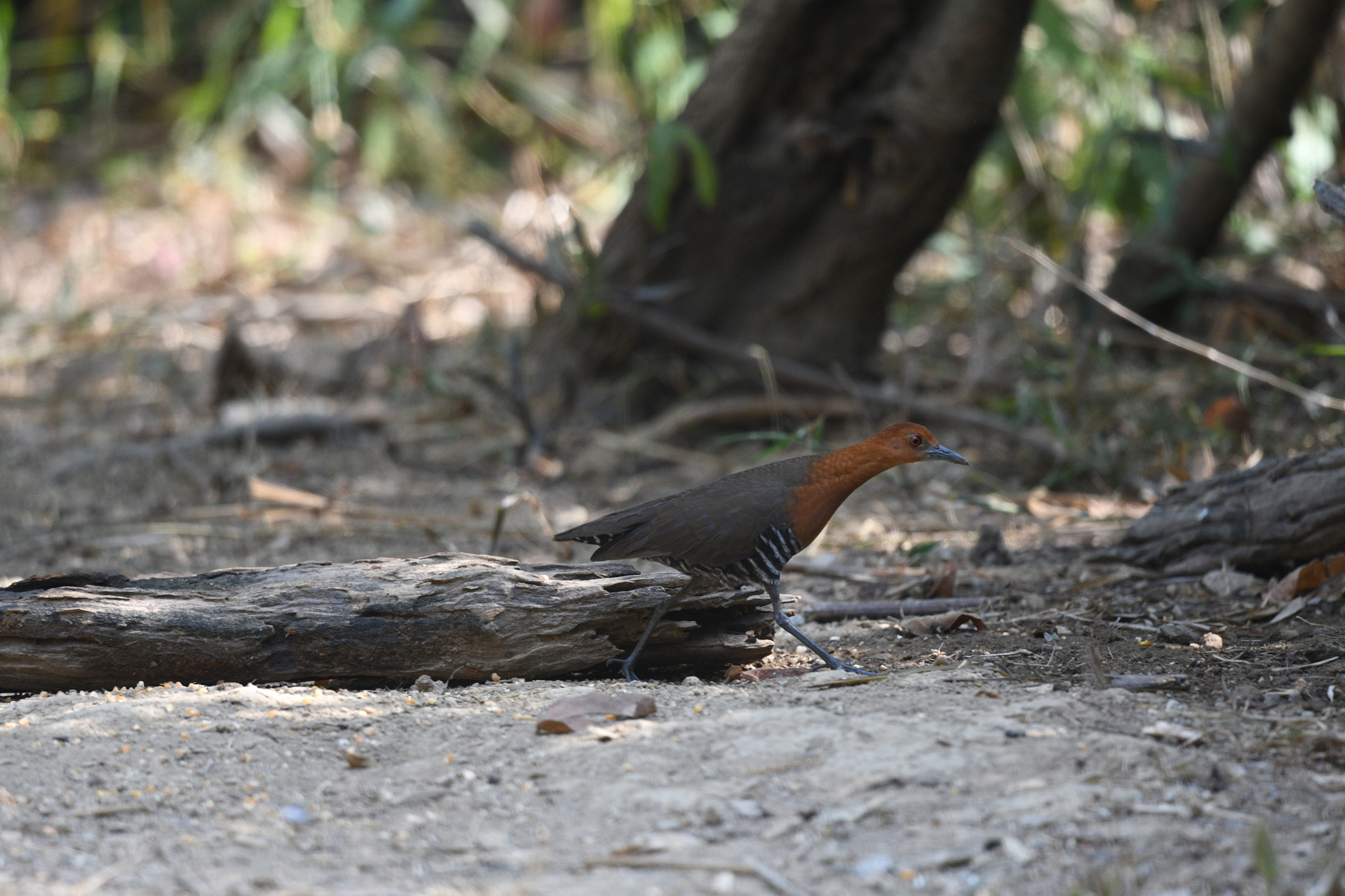
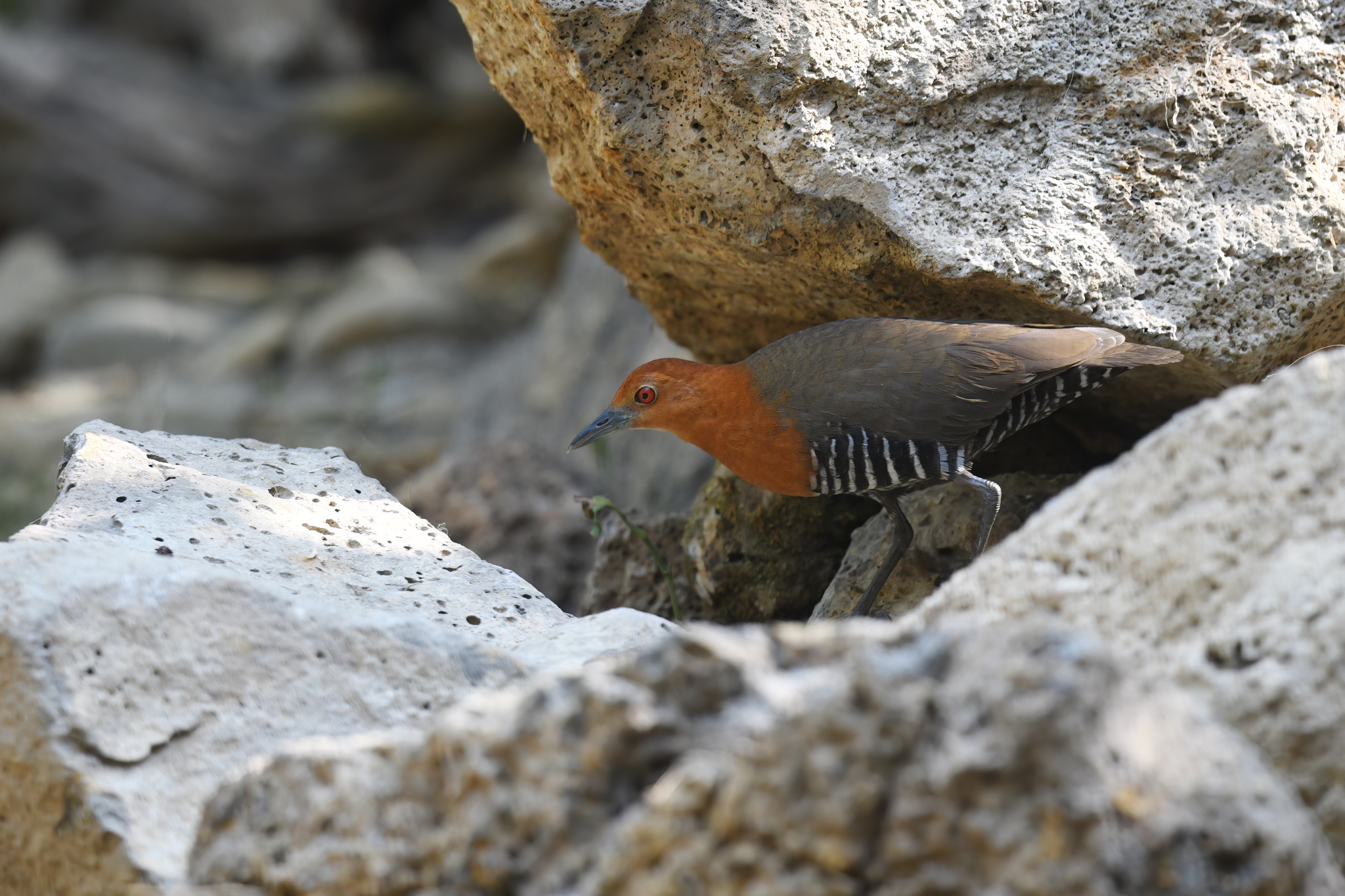
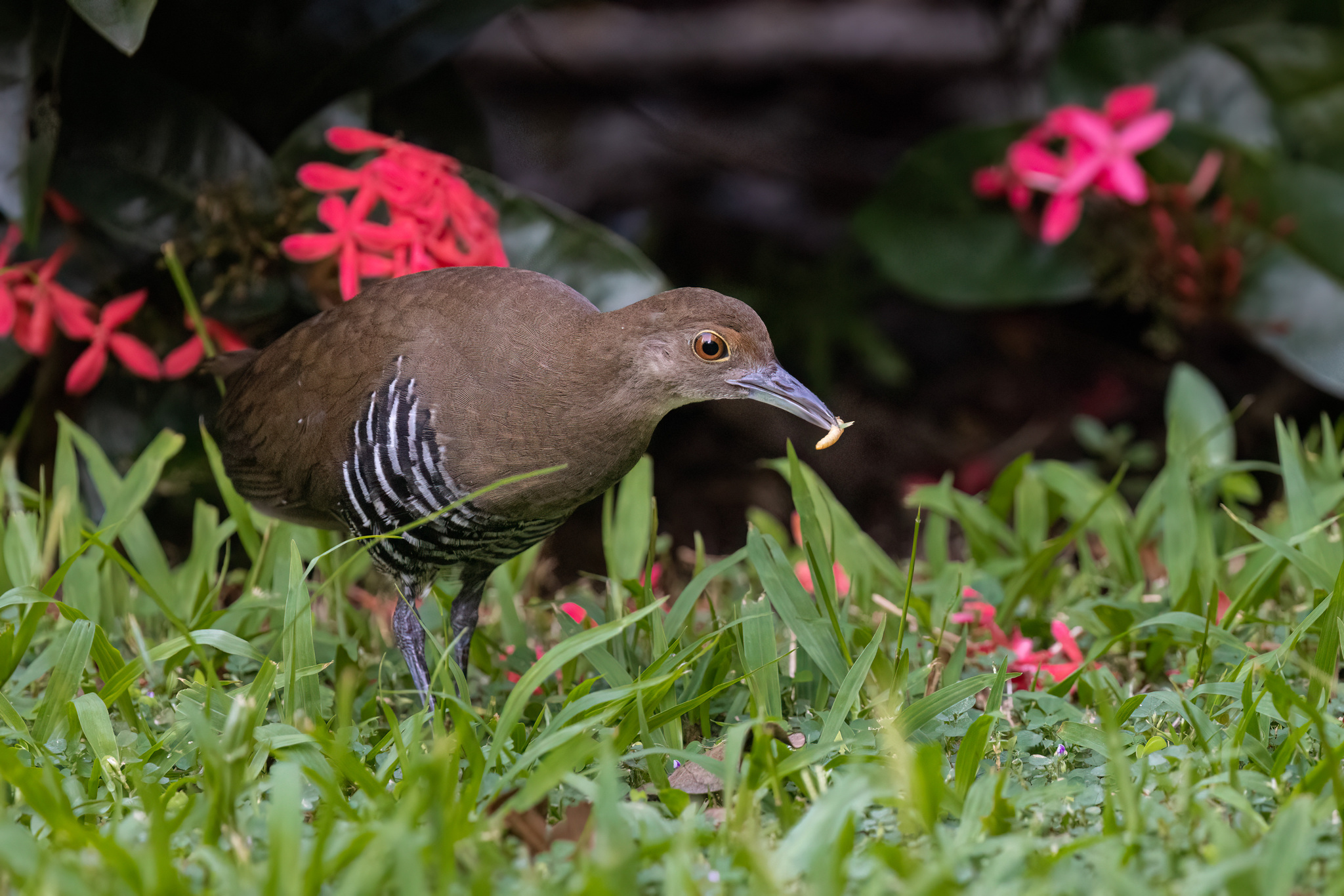
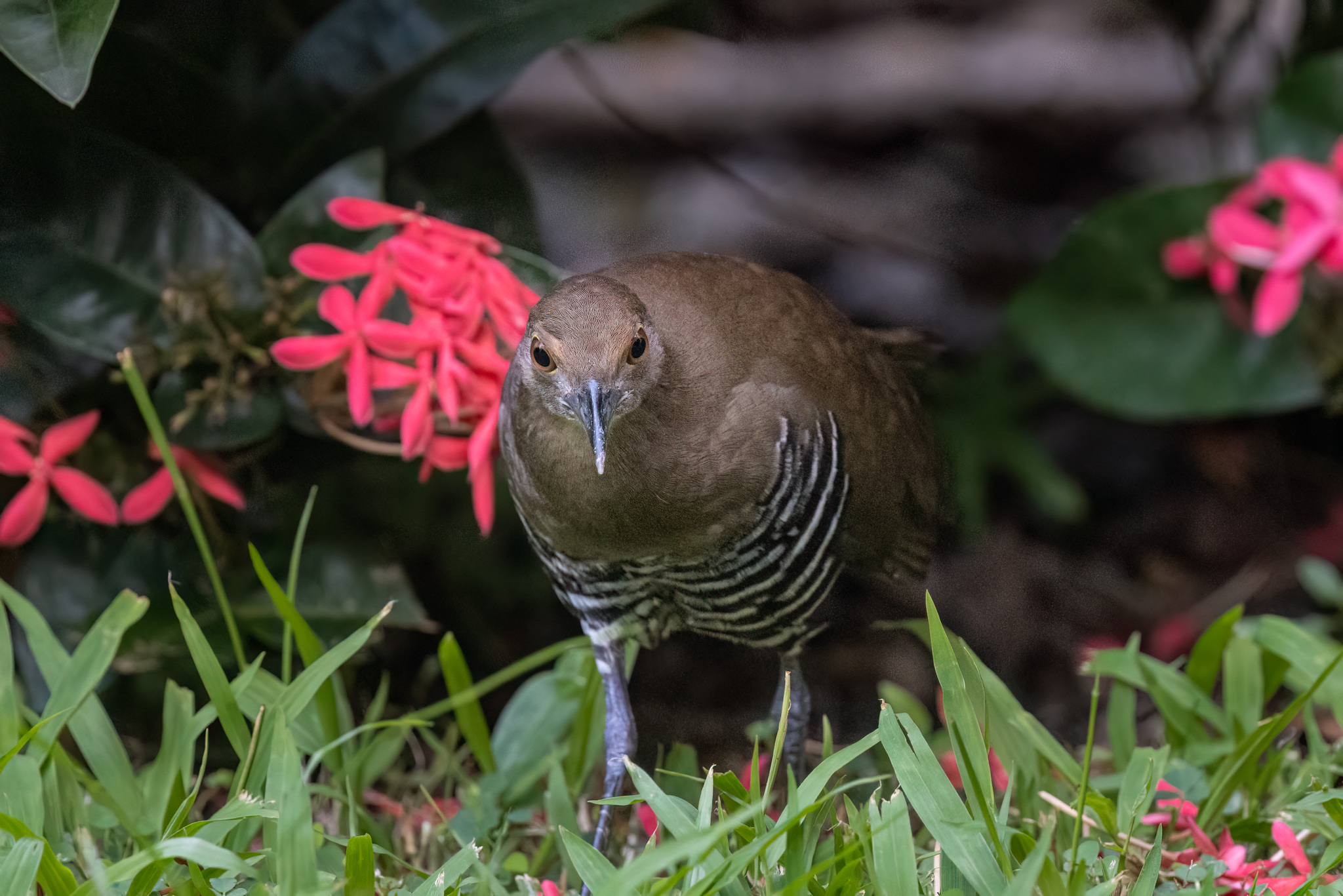
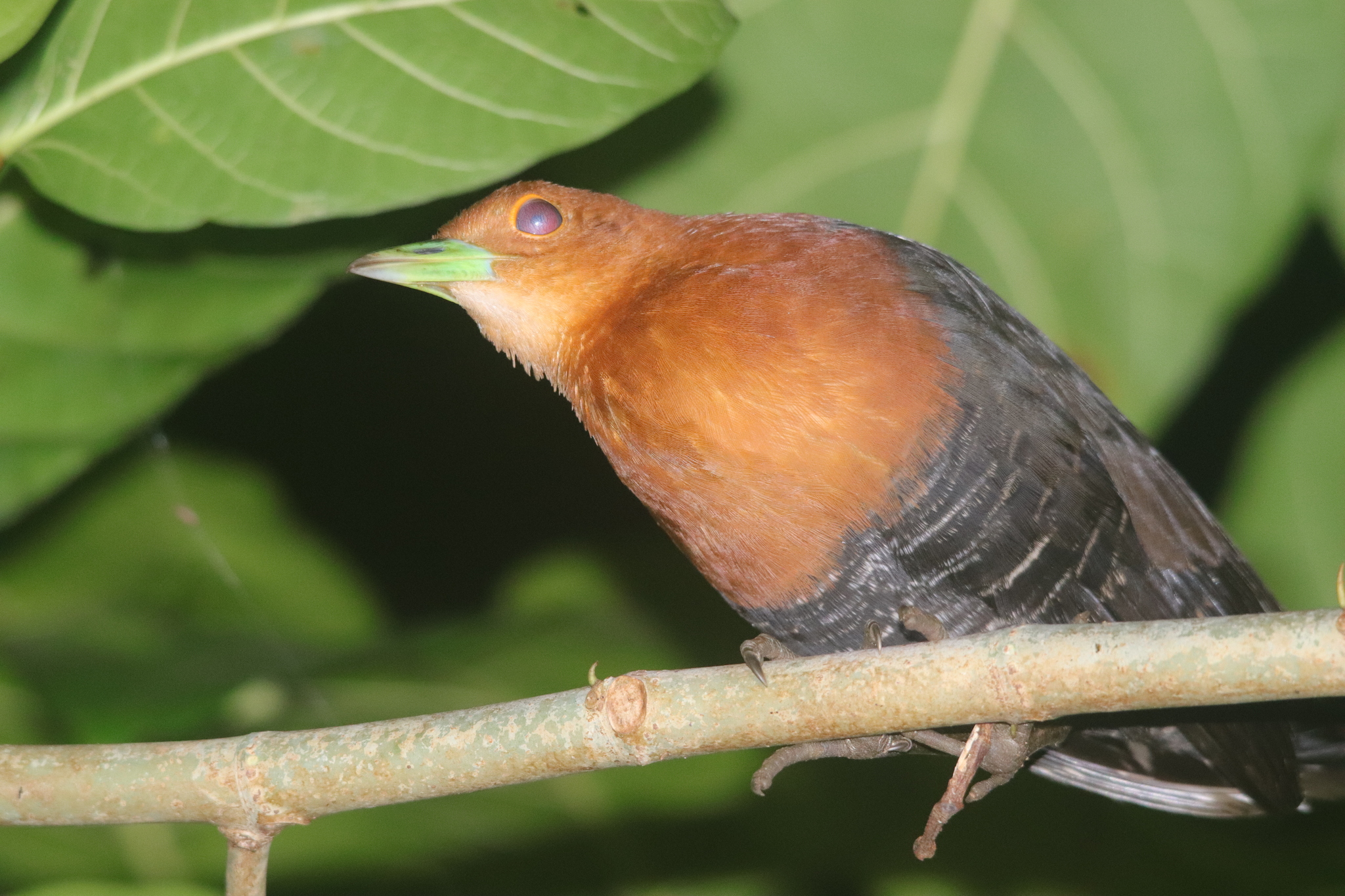
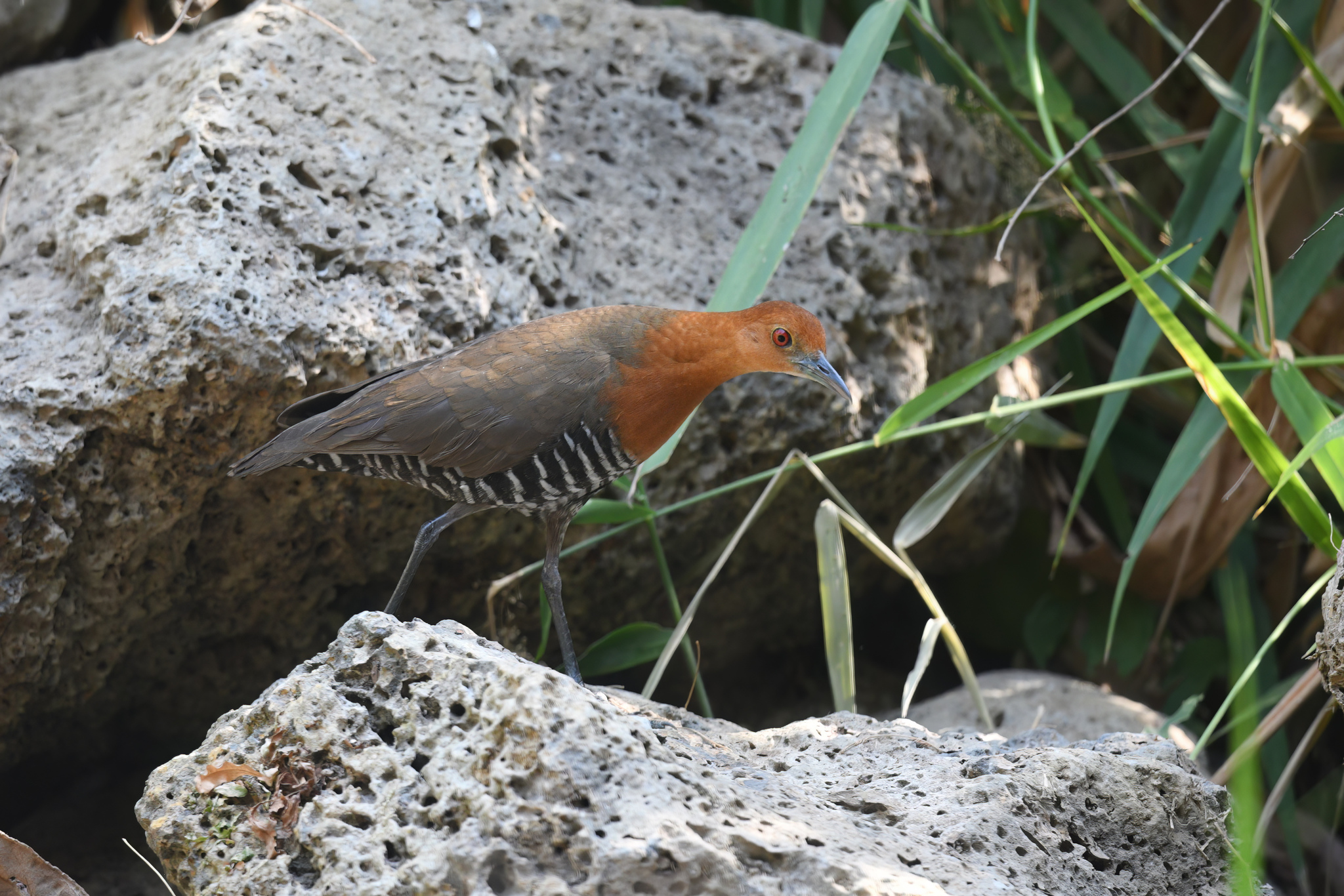
Approximately 25 cm in length. Body is flattened laterally to allow easier passage through undergrowth, with long toes and a short tail. Upperparts brown, head and breast chestnut, with strong black-and-white barring on the flanks, belly, and undertail. Throat is white, bill yellowish, and legs green. Sexes are similar. Juveniles are dark brown above and below but retain the belly barring and white throat.
Identification
Key field marks include the chestnut head and breast, black-and-white barring on the underparts, white throat, green legs, and yellowish bill. The flattened body shape and long toes are adaptations for moving through dense vegetation.
Distribution & Habitat
Breeds across south Asia from India, Pakistan, and Sri Lanka east through Indonesia to the Philippines. Inhabits swamps and well-wooded wetland areas. Northern populations are migratory, moving further south in winter, while southern populations are resident year-round.
Behavior & Ecology
Territorial but secretive, hiding in bushes when disturbed. Forages by probing in mud or shallow water and picking up food by sight, also consuming berries and insects on the ground or while clambering through undergrowth. Nests in dry locations on the ground or in low bushes near forest paths and streams. Lays 4-8 eggs. Incubation period is approximately 20 days, based on a study conducted in Nilambur, Kerala.
Conservation
IUCN conservation status not assessed in the available information.
Culture
No cultural significance or folklore documented.
Source: Wikipedia · CC BY-SA 3.0
Taxonomy
- Order
- Gruiformes
- Family
- Rallidae
- Genus
- Rallina
- eBird Code
- sllcra1
Vocalizations
Subspecies (7)
-
Rallina eurizonoides alvarezi
Batan Islands (northern Philippines)
-
Rallina eurizonoides amauroptera
breeds Pakistan and India to Assam; winters to Sri Lanka
-
Rallina eurizonoides eurizonoides
Philippines
-
Rallina eurizonoides formosana
Taiwan including Lan-yü Island
-
Rallina eurizonoides minahasa
Sulawesi and Sula Islands
-
Rallina eurizonoides sepiaria
Ryukyu Islands (southern Japan)
-
Rallina eurizonoides telmatophila
Myanmar to northern Thailand, Sumatra, and Java
Data Sources
Species description from Wikipedia, licensed under CC BY-SA 3.0.
Bird images and sounds sourced from GBIF, contributed by citizen scientists worldwide under Creative Commons licenses.
Taxonomy data from AviList 2025.