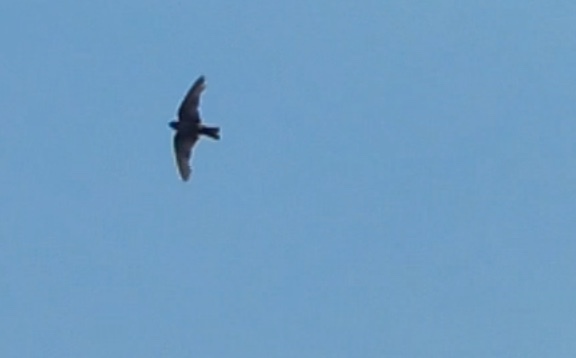
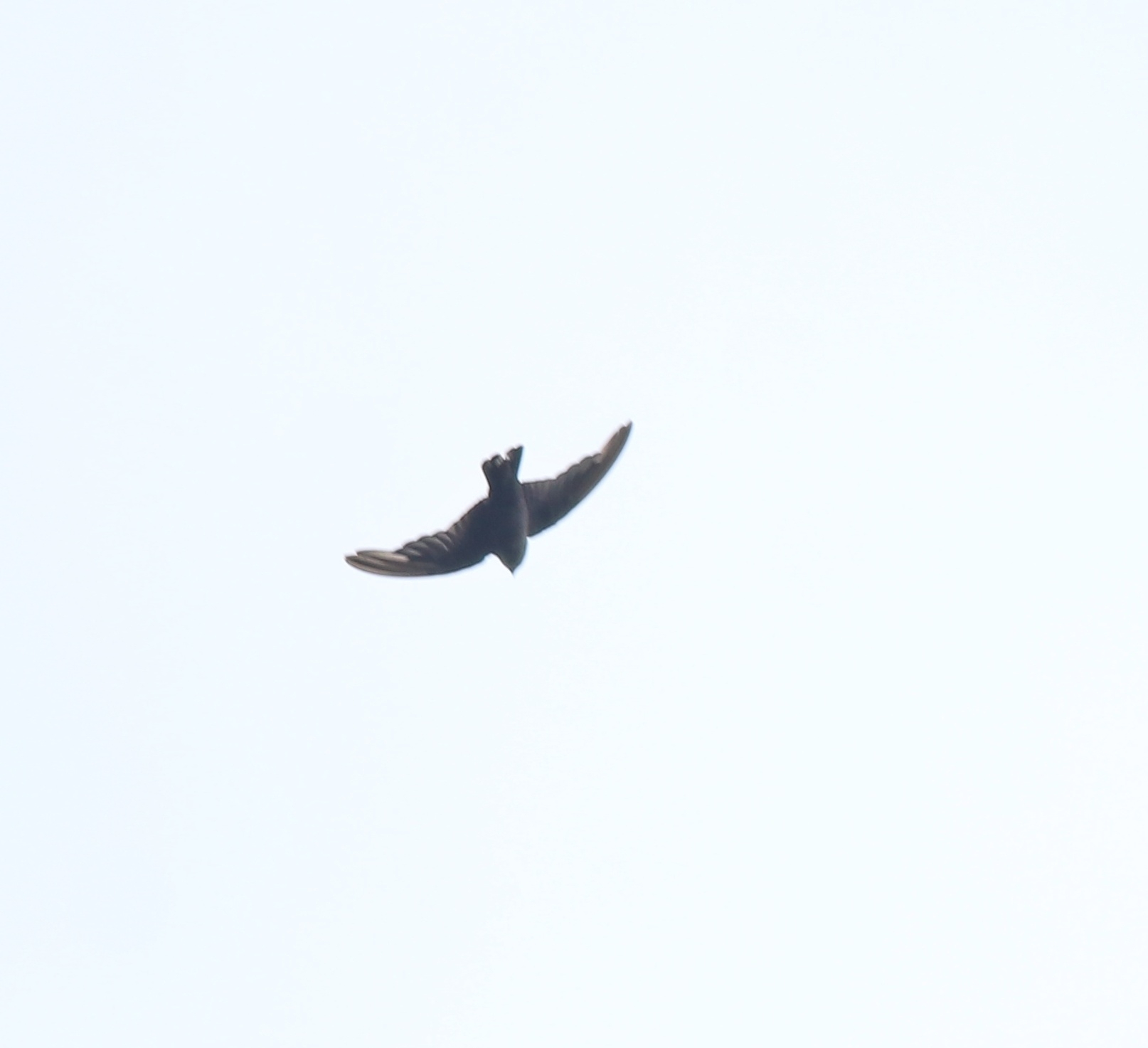
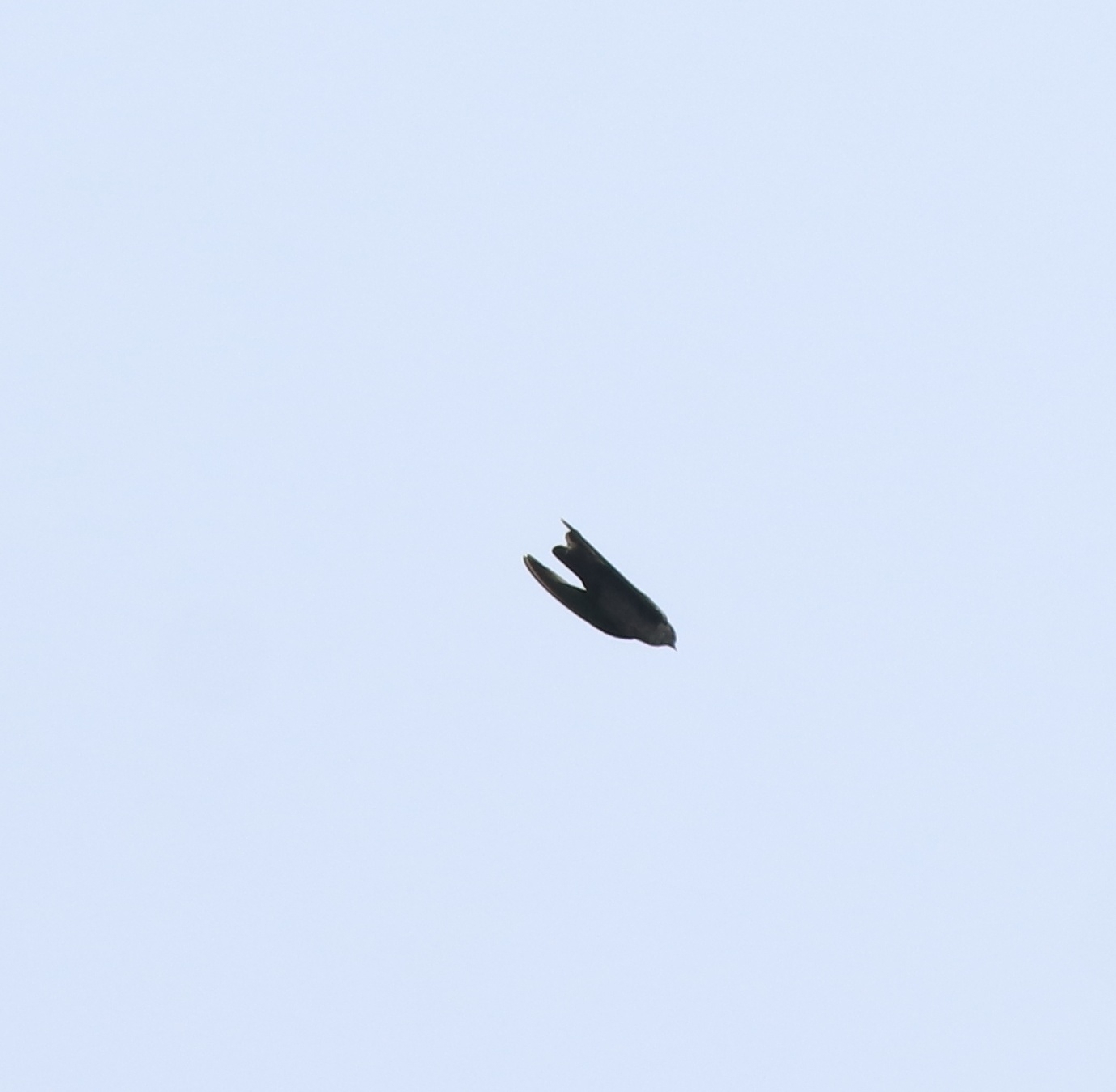
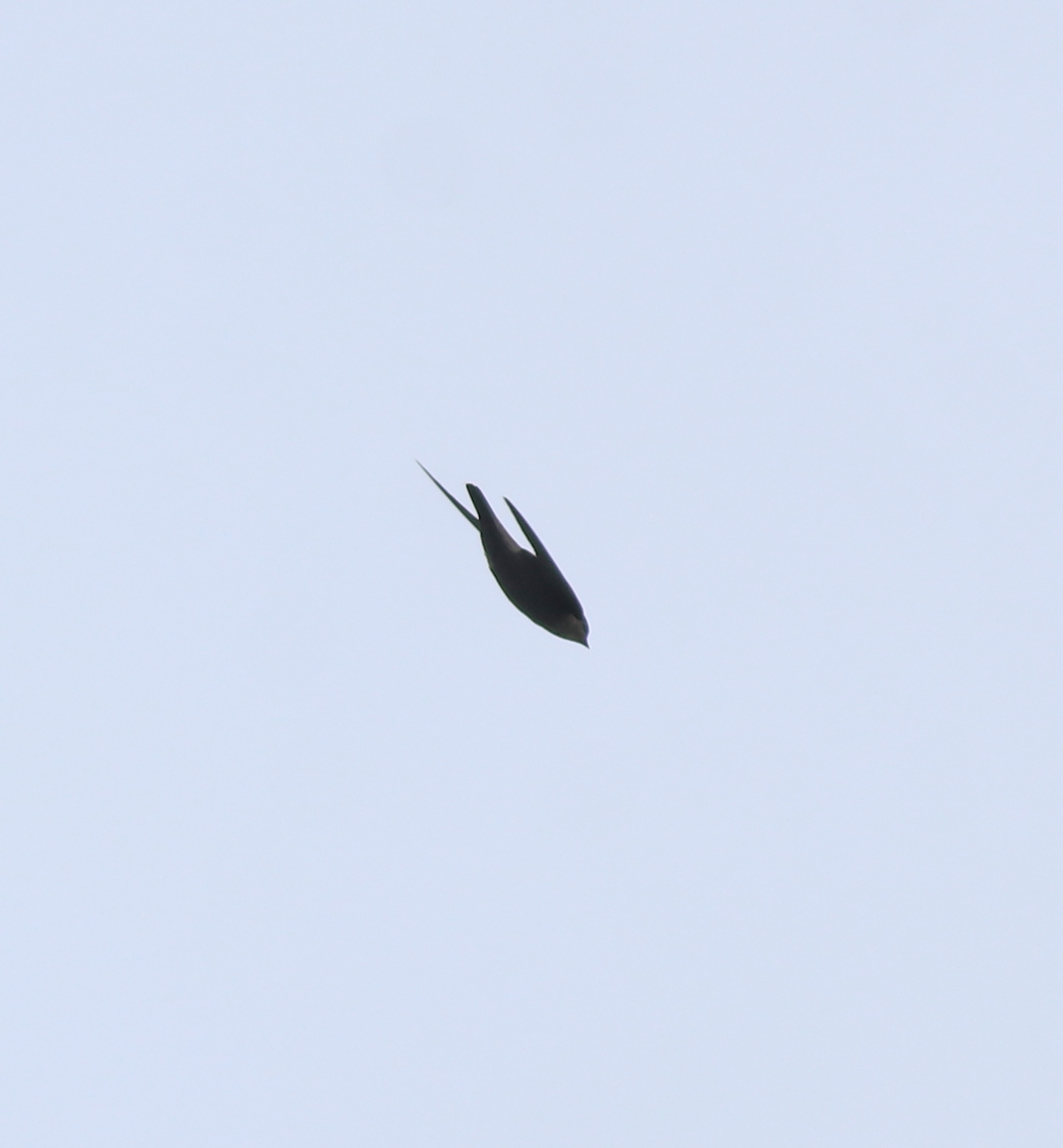
Dusky Crag Martin
Ptyonoprogne concolor
纯色岩燕
Introduction
Small passerine bird in the swallow family. Resident breeding species across South Asia from the Indian subcontinent to southwestern China and northern Thailand, Vietnam, and Laos. Inhabits hilly and mountainous terrain with cliffs, gorges, and caves, breeding up to approximately 1,800 meters altitude. Also uses man-made structures including stone buildings, bridges, and urban structures as substitute cliff habitat. Builds neat half-cup mud nests under overhangs or in crevices. Feeds on a wide variety of insects caught in flight near vertical cliff faces. Classified as Least Concern on the IUCN Red List due to its extensive and expanding range and large population.
Description
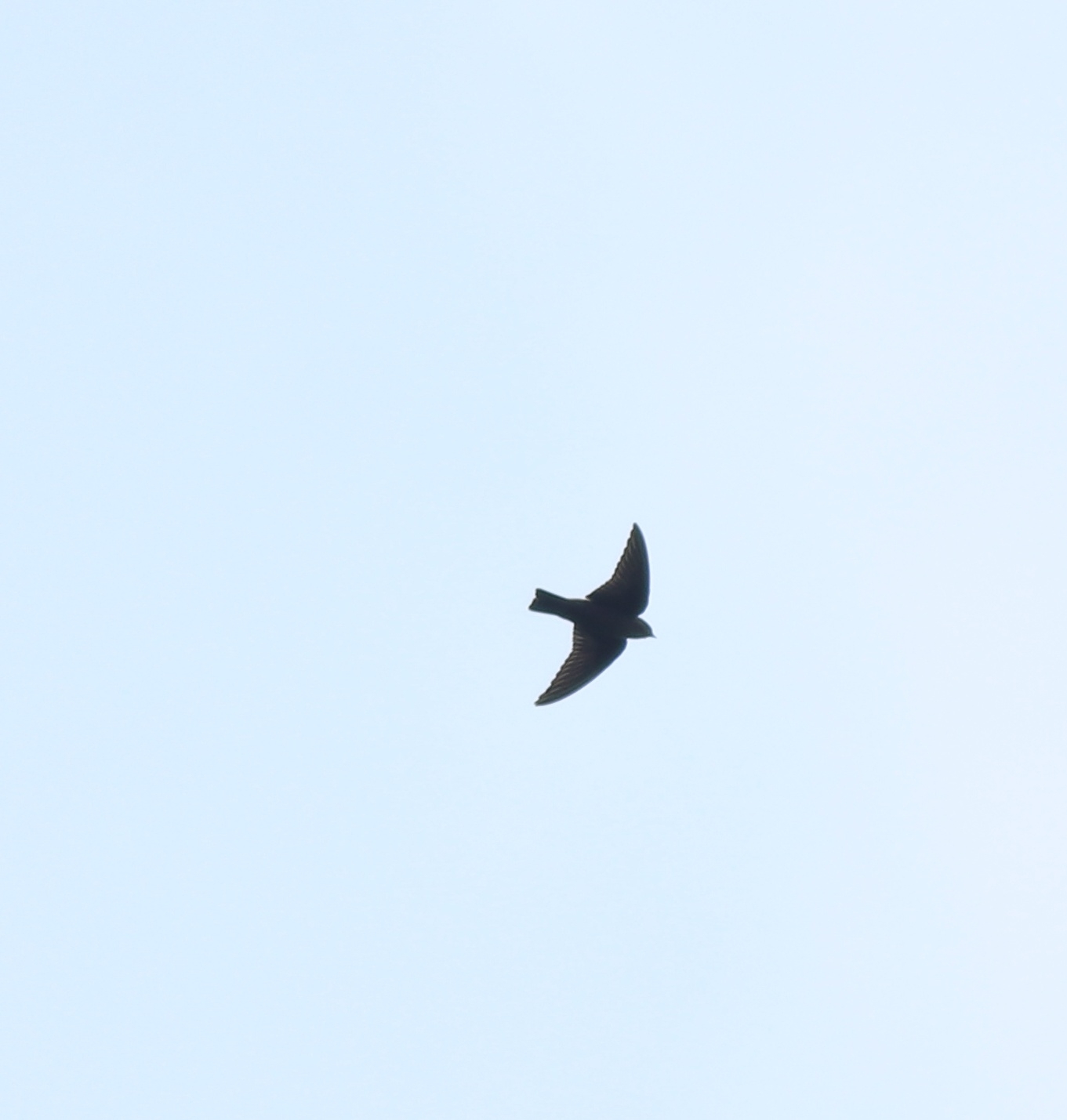
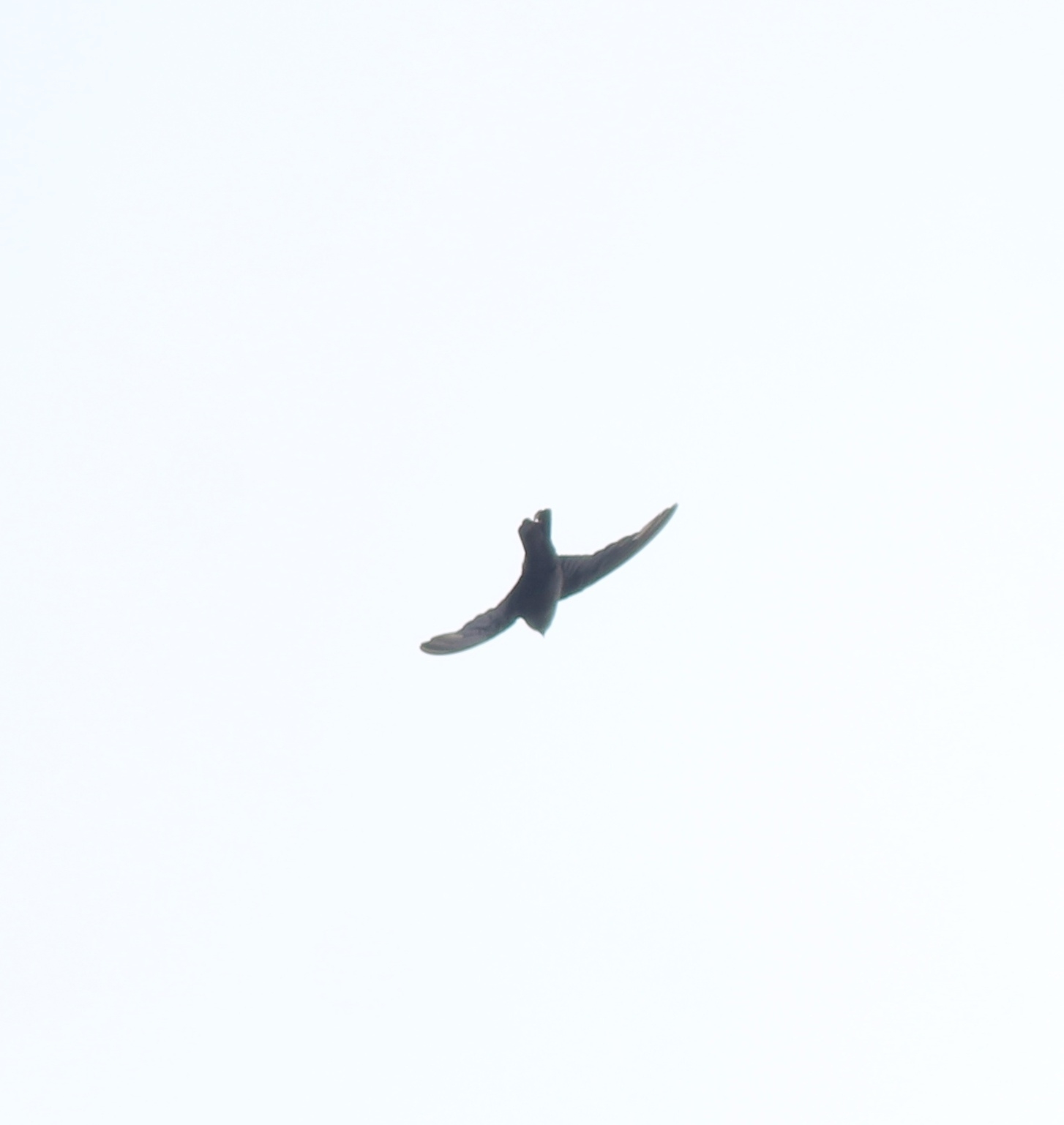
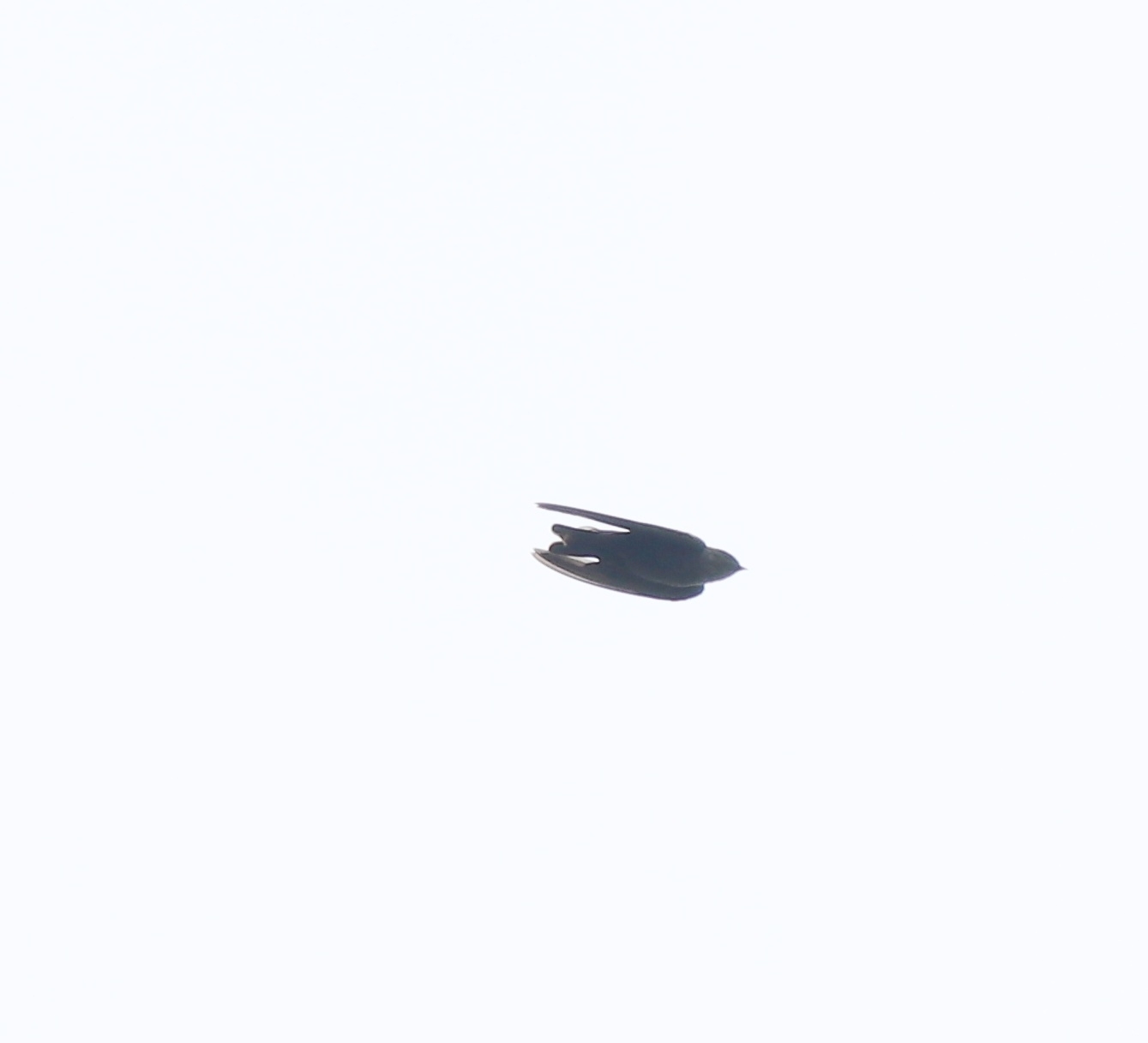
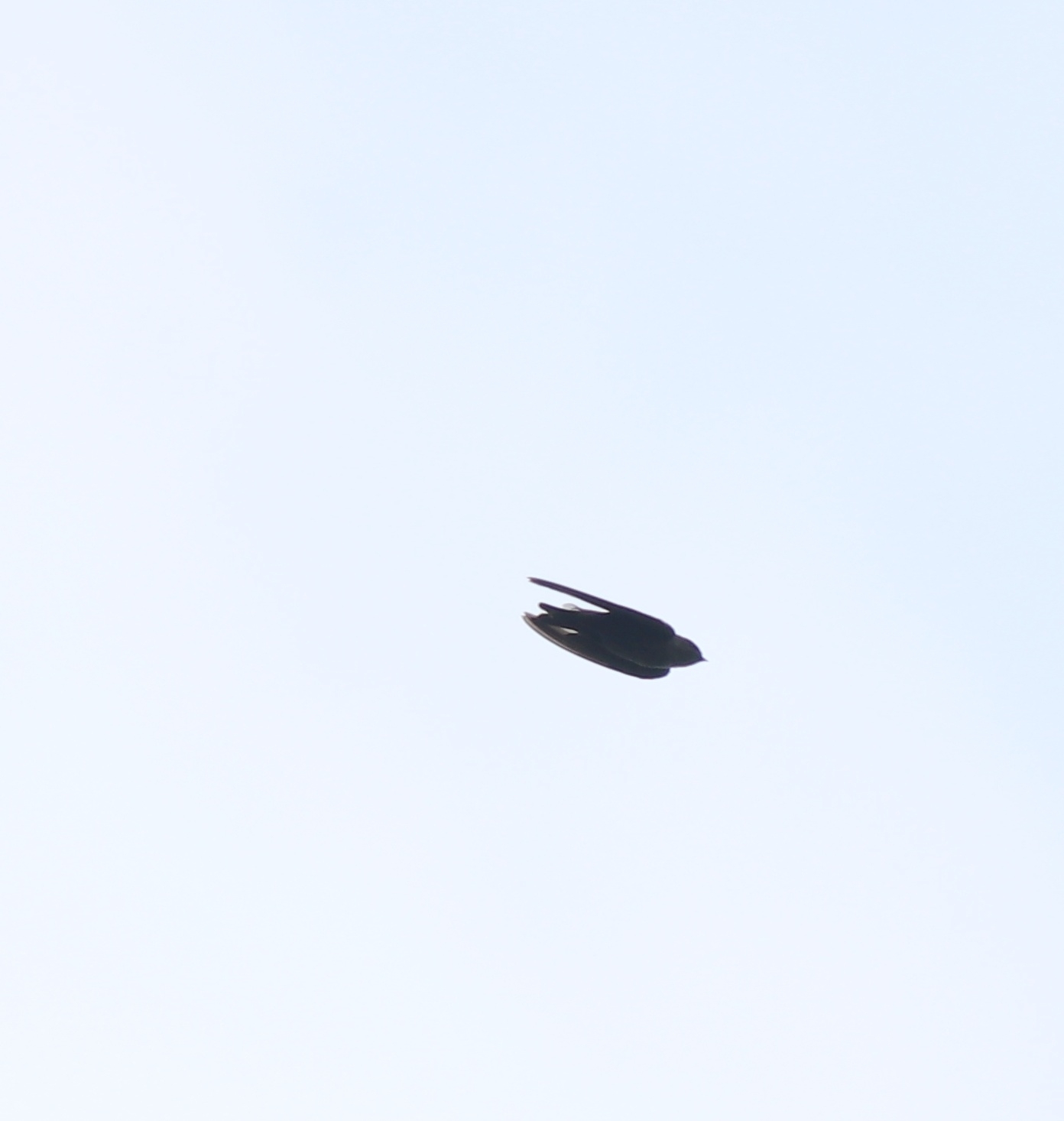
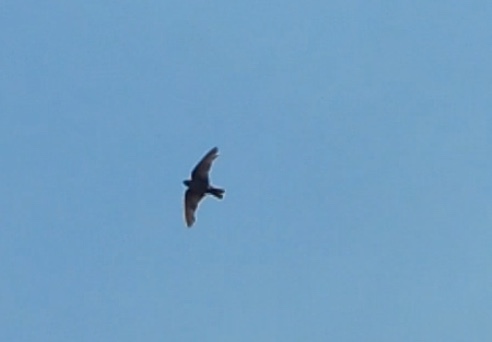
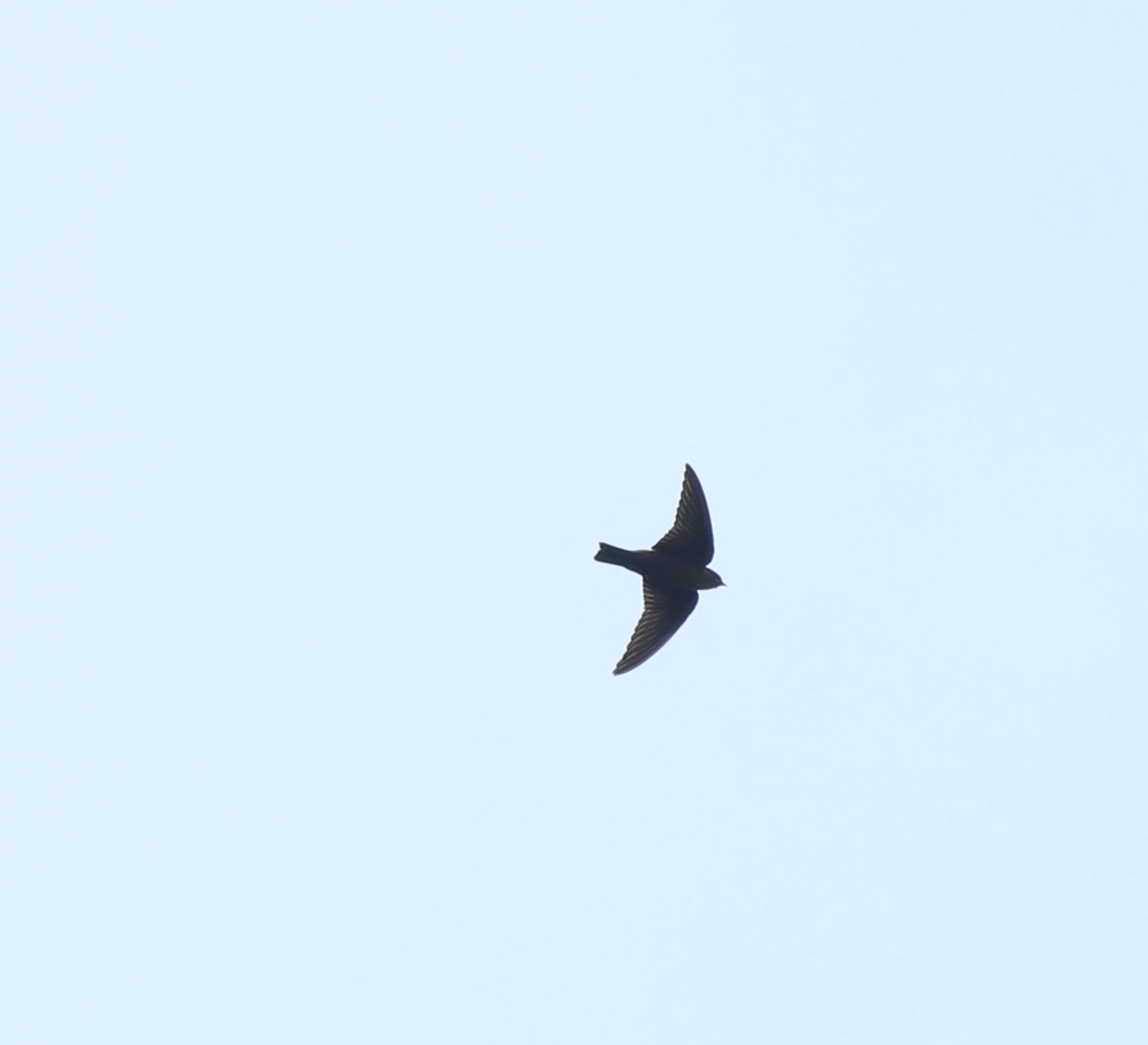
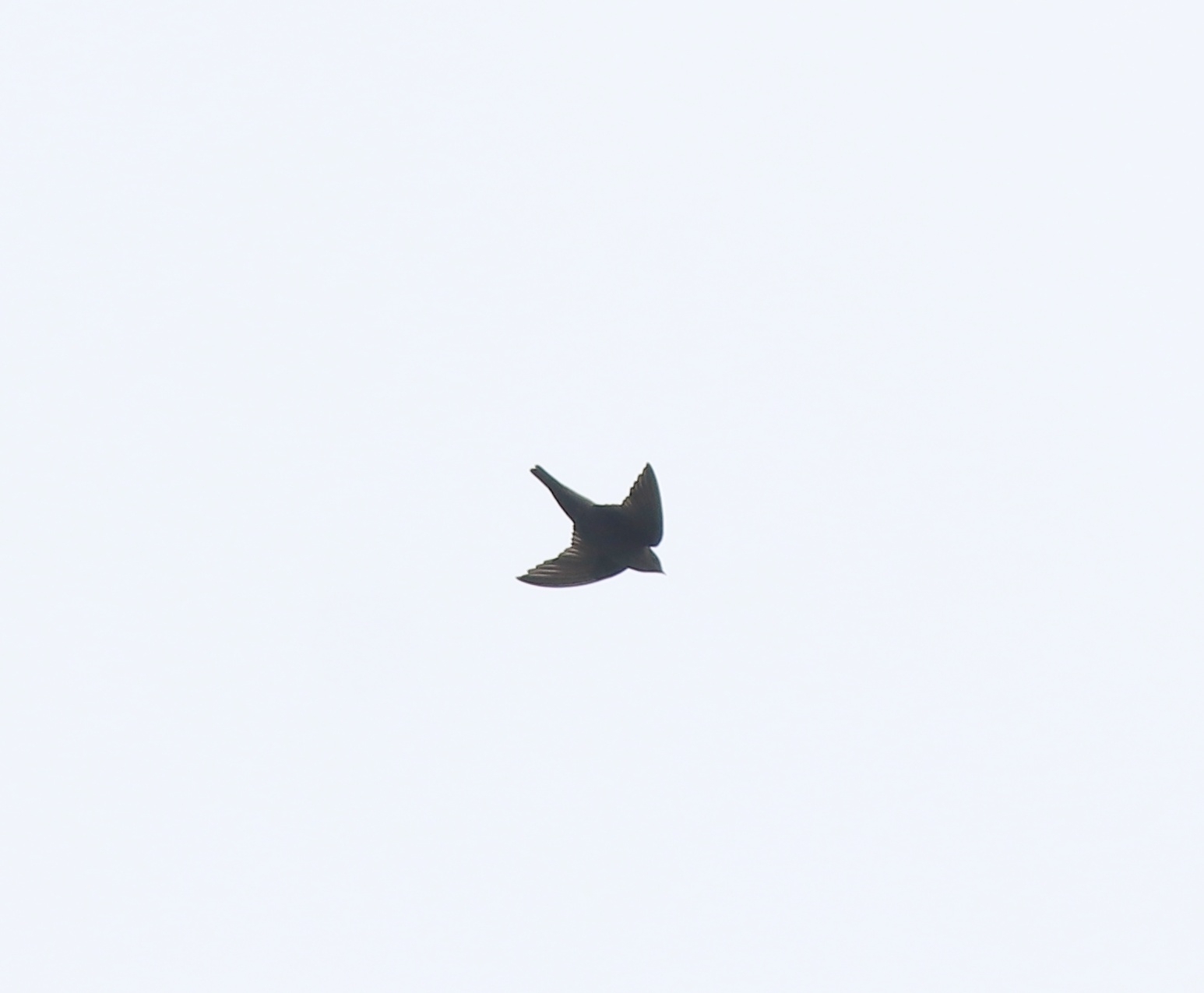
Length 13 cm (5 in) with a broad body, broad wings, and a short square tail. Plumage is sooty-brown on the upperparts and slightly paler below, with a streaked pale dull rufous chin, throat, and foreneck. The tail has small white patches near the tips of all but the central and outermost feather pairs. Underwing coverts are dark brown, eyes brown, small bill mainly black, and legs brownish-pink. Sexes are identical. Juveniles differ by having rufous grey tips to the upperpart and wing plumage.
Identification
Distinguished from the Eurasian crag martin and rock martin by notably darker underparts. White tail spots are significantly smaller than those of the Eurasian crag martin. The under-tail coverts match the shade of the abdominal underside, whereas they are darker in the Eurasian crag martin. Flight is typically slow and leisurely but capable of considerable speed when required. Calls resemble those of the Eurasian crag martin, including a soft chi chi contact call.
Distribution & Habitat
Breeds across the Indian subcontinent from the Himalayan base south to the Nilgiri mountains and east to West Bengal. The subspecies P. c. sintaungensis occurs in southwestern China and the northern parts of Thailand, Vietnam, and Laos. The species is largely resident apart from local post-breeding movements. Has bred in Malaysia at least once and occurred as a vagrant to Sri Lanka and probably Borneo. Natural habitat consists of cliffs, gorges, and caves, with breeding typically up to 1,800 m (5,900 ft), though up to 2,000 m (6,600 ft) in Thailand. Man-made structures in urban areas are readily used as substitute habitat.
Behavior & Ecology
Feeds mainly on insects caught in flight, hunting back and forth near rock faces or buildings. More gregarious outside the breeding season, forming small flocks where food is abundant. Exploits standing waves in airflow near vertical cliff surfaces that concentrate insects. Breeds solitarily or in loose associations, though several pairs may nest close together in suitable locations. Natural nesting occurs under ledges on cliff faces or river banks; man-made sites include bridges, archways, and buildings. Breeding reported in all months but mainly February-March and July-August after rains; usually two broods raised. Nest is an open half-cup of mud lined with feathers or dry grass, re-used for second broods and subsequent years. Clutch is two to four eggs, white with reddish brown blotches, averaging 17.7 mm × 13.0 mm. Both adults incubate and feed chicks. Vocalizations include a soft chi chi contact call and a twittering song.
Conservation
Classified as Least Concern on the IUCN Red List. Total population has not been quantified but is suspected to be increasing owing to the availability of artificial nest sites. Locally common in India, Thailand, and southern China. Range appears to be expanding northeast into Guangxi, southwards into lowland Laos, and westwards to the hills and plains of Sindh. Threats include predation by birds of prey such as the peregrine falcon and the greater false vampire bat.
Source: Wikipedia · CC BY-SA 3.0
Taxonomy
- Order
- Passeriformes
- Family
- Hirundinidae
- Genus
- Ptyonoprogne
- eBird Code
- duscrm1
Subspecies (2)
-
Ptyonoprogne concolor concolor
Himalayan foothills (northwestern India to West Bengal)
-
Ptyonoprogne concolor sintaungensis
southwestern China (southern Yunnan) to eastern Myanmar, northern Thailand, and Indochina
Data Sources
Species description from Wikipedia, licensed under CC BY-SA 3.0.
Bird images and sounds sourced from GBIF, contributed by citizen scientists worldwide under Creative Commons licenses.
Taxonomy data from AviList 2025.