Rufous-necked Laughingthrush
Pterorhinus ruficollis
栗颈噪鹛
Introduction
A bird species in the laughingthrush family Leiothrichidae. Found across Bangladesh, Bhutan, China, India, Myanmar, and Nepal. Inhabits subtropical or tropical moist lowland and montane forests. The species is abundant throughout its range and considered of Least Concern by the IUCN, though it has received little conservation study due to its common status. As a non-migratory resident, it molts slowly and maintains juvenile-like plumage throughout adulthood.
Description
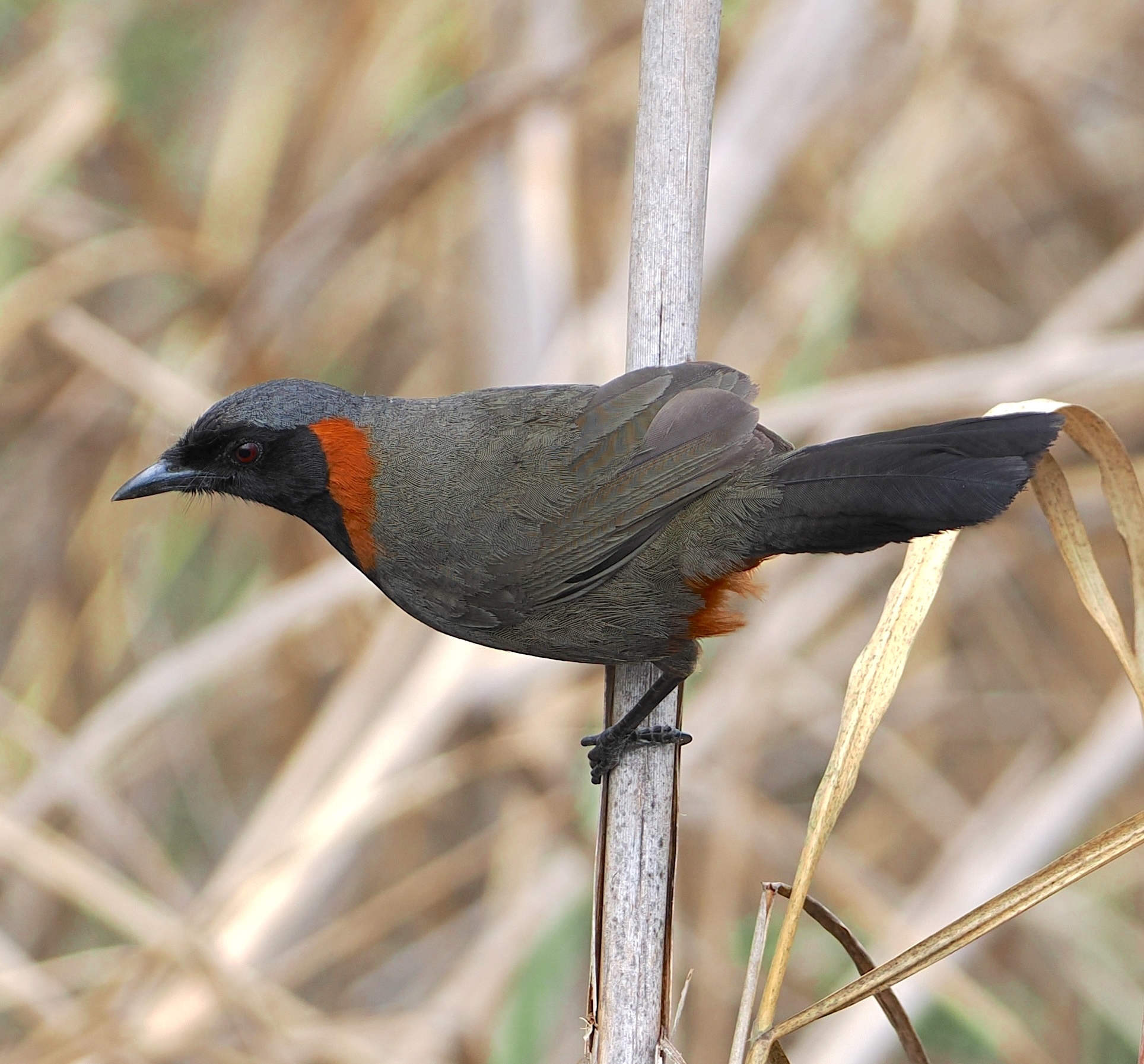
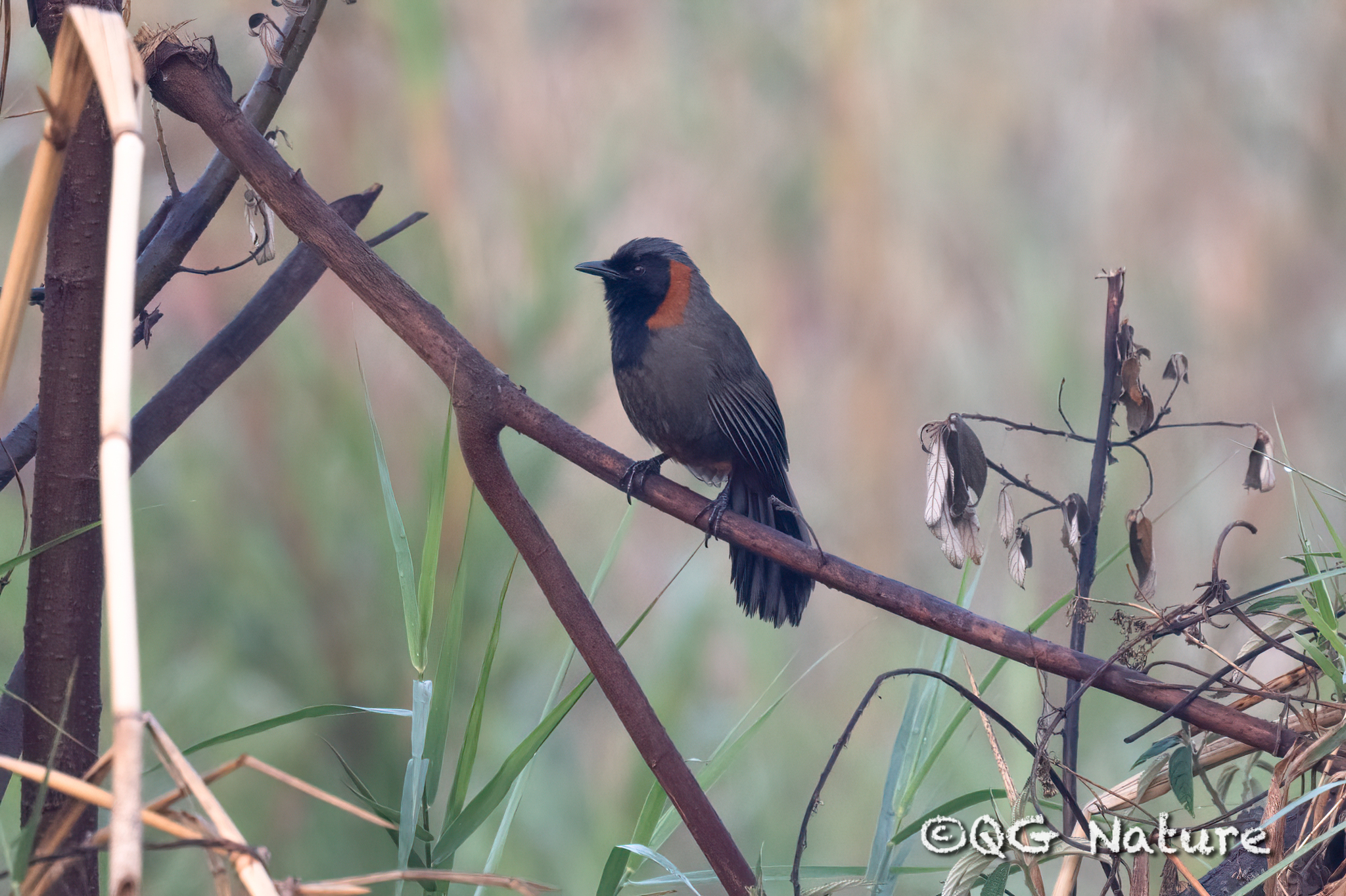
A babbler species approximately 22-27 cm in length and weighing 51-73 grams. The plumage is overall grey with a distinctive rufous-colored neck and black face. The species was historically classified in different genera (Dryonastes, then Garrulax) before molecular phylogenetic research moved it to Pterorhinus in 2018.
Identification
Very similar in appearance to the rufous-cheeked laughingthrush but the two species' ranges do not overlap, providing the primary means of distinction. The combination of grey body, black face, and rufous collar is characteristic.
Distribution & Habitat
Range extends from Nepal through Bhutan and China into Myanmar, Bangladesh, and India. Inhabits subtropical and tropical moist forests at both lowland and montane elevations. This is a non-migratory resident species that remains in the same habitat year-round. Some populations in Nepal are isolated, likely resulting from historical mountain-building processes.
Behavior & Ecology
Vocalizations consist of series of small chirps with rambling, out-of-order notes that resemble mockingbird calls, contributing to the 'laughing' description. Quick whip calls are distinctive and recognizable, especially in feeding flocks. Diet is generalist including insects, seeds, molluscs, and berries. Breeding occurs from March to August. Nests are small, compact cups constructed from leaves and grasses. Shows strong egg recognition to counter brood parasitism and exhibits sexual size dimorphism.
Conservation
IUCN Red List status is Least Concern. The species is considered common throughout its range and has received minimal conservation attention due to its abundance. Population trends are not well-studied.
Source: Wikipedia · CC BY-SA 3.0
Taxonomy
- Order
- Passeriformes
- Family
- Leiothrichidae
- Genus
- Pterorhinus
- eBird Code
- runlau1
Distribution
mixed forest of eastern Nepal to southwestern China, northeastern India, and Myanmar
Data Sources
Species description from Wikipedia, licensed under CC BY-SA 3.0.
Bird images and sounds sourced from GBIF, contributed by citizen scientists worldwide under Creative Commons licenses.
Taxonomy data from AviList 2025.