Blossom-headed Parakeet
Psittacula roseata
花头鹦鹉
Introduction
A parrot species in the family Psittaculidae. It is found throughout Southeast Asia, ranging from eastern Bangladesh, Bhutan, northeast India, and Nepal, eastward through Cambodia, Laos, Myanmar, Thailand, and Vietnam to China. The species inhabits lowland and foothill open forests at altitudes around 1500 meters, including savannas, secondary growth forests, forest edges, clearings, and cultivated areas. This non-migratory species moves locally in small flocks or family groups, often associating with moustached parakeets. It was classified as Near Threatened by the IUCN Red List in 2013 due to moderately rapid population decline from trapping and habitat loss.
Description
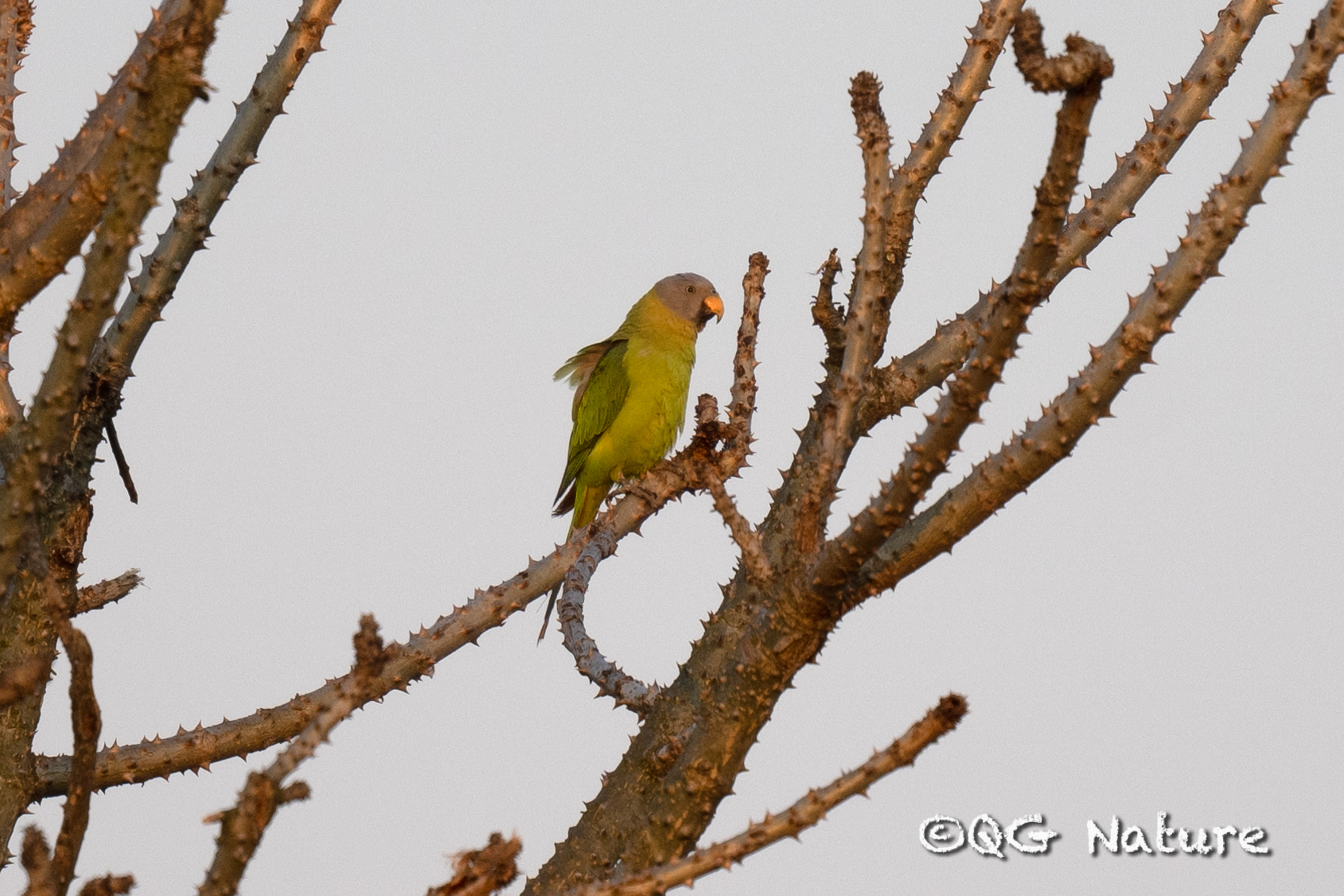
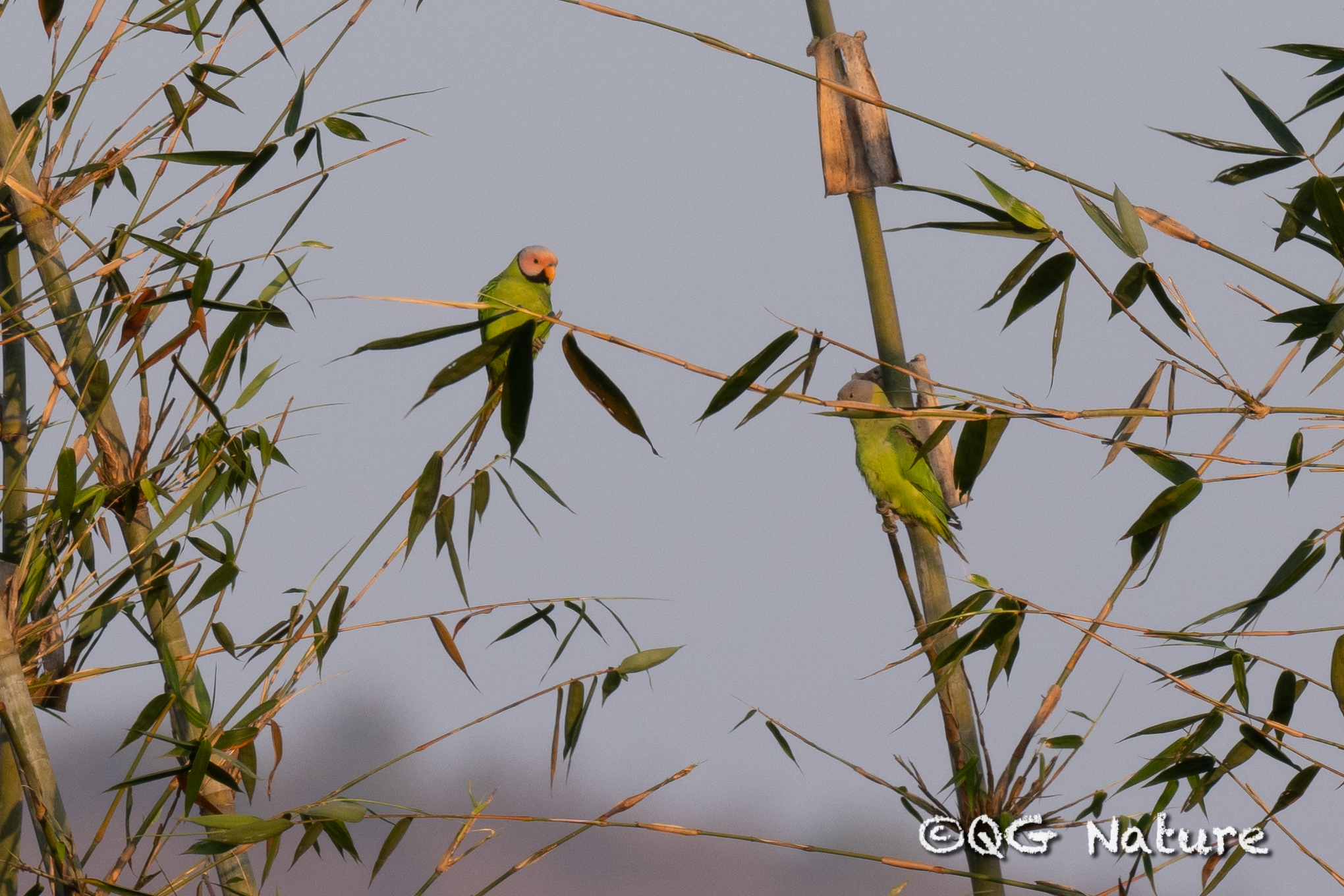
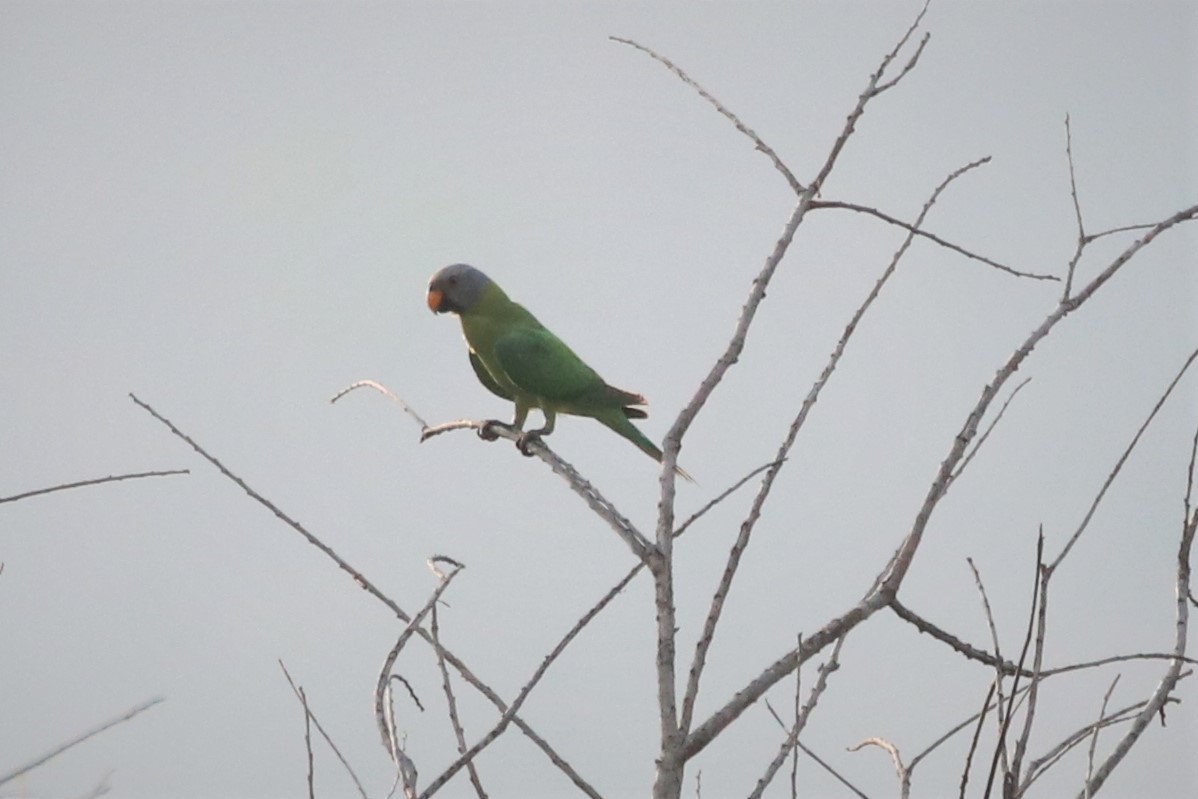
A small parrot with a lime-green body, measuring 30 cm (12 in) in length with a tail up to 18 cm (7.1 in). Average weight is 85-90 g. Males have pink head, cheeks, and ears becoming pale blue toward the back of the crown and nape, a narrow black neck collar, and black chin stripe. A reddish-brown shoulder patch adorns the inner middle wing coverts. Central tail feathers are blue tipped with pale yellow; side tail feathers are yellow-green tipped with pale yellow. The upper mandible is orange-yellow, lower mandible dark grey. Eyes are pale yellow. Females have a pale blue-grey head and yellow-green collar instead of black, with a smaller red shoulder patch and yellow upper mandible.
Identification
The pink or bluish-grey head coloration combined with yellow-tipped tail feathers distinguishes this species from similar parakeets. The closely related plum-headed parakeet (Psittacula cyanophala) lacks the yellow tail tips and has a different head color pattern. Sexual dimorphism is pronounced: males show pink and blue head coloration while females display pale blue-grey with a yellow-green collar. Juveniles have green heads and grey chins, lacking the red shoulder patch.
Distribution & Habitat
Resident breeder across Southeast Asia from eastern Bangladesh, Bhutan, northeast India, and Nepal, through Cambodia, Laos, Myanmar, Thailand, and Vietnam to China. Non-migratory, remaining year-round in the same range. Inhabits lowland and foothill open forests up to 1500 meters elevation, including savannas, secondary growth forests, forest edges, clearings, and cultivated areas. In Thailand, common in cultivated land and forest outskirts.
Behavior & Ecology
Feeds primarily on fruits and blossoms, undertaking local movements based on food availability. Nests in tree cavities, laying 4-5 white eggs. Normally found in small flocks or family groups, often associating with moustached parakeets. Vocalizations range from raucous calls to soft and melodic sounds similar to the plum-headed parakeet. Gregarious and noisy when in groups.
Conservation
Classified as Near Threatened by the IUCN Red List (2013) due to moderately rapid population decline from trapping and habitat loss. Populations in India and Thailand are stable or declining slowly, while Laos and Vietnam have experienced very rapid declines over three decades. Threats include agricultural land conversion, hunting, climate change, and intensive poaching for the cage-bird trade. The species is vulnerable to habitat loss in degraded lowland deciduous dipterocarp forests. Commonly damages agricultural crops, particularly marigolds in India.
Culture
Has been kept in captivity in aviculture, with the first successful breeding recorded by Dr. Karl Russ in 1879. Although uncommon in overseas aviculture, the species has been historically imported to Europe. It is illegally traded as a cage bird at markets such as Chatuchak Weekend Market in Bangkok, Thailand. Generally non-aggressive toward other captive birds.
Source: Wikipedia · CC BY-SA 3.0
Taxonomy
- Order
- Psittaciformes
- Family
- Psittaculidae
- Genus
- Psittacula
- eBird Code
- blhpar3
Subspecies (2)
-
Psittacula roseata juneae
southern Myanmar and Thailand to Laos, Cambodia, and Vietnam
-
Psittacula roseata roseata
northern India (West Bengal) to Bhutan, Bangladesh, and northern Myanmar
Data Sources
Species description from Wikipedia, licensed under CC BY-SA 3.0.
Bird images and sounds sourced from GBIF, contributed by citizen scientists worldwide under Creative Commons licenses.
Taxonomy data from AviList 2025.