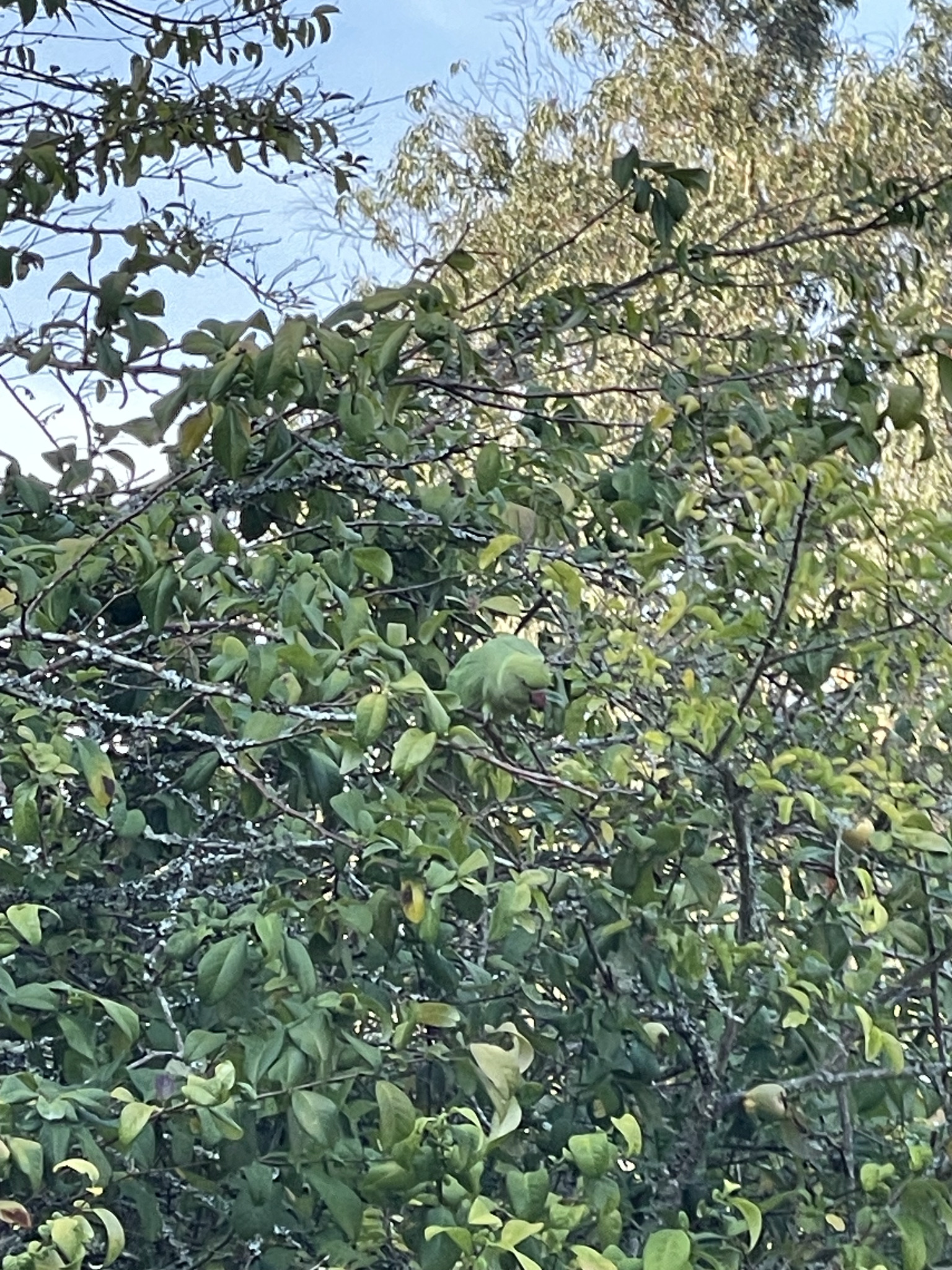

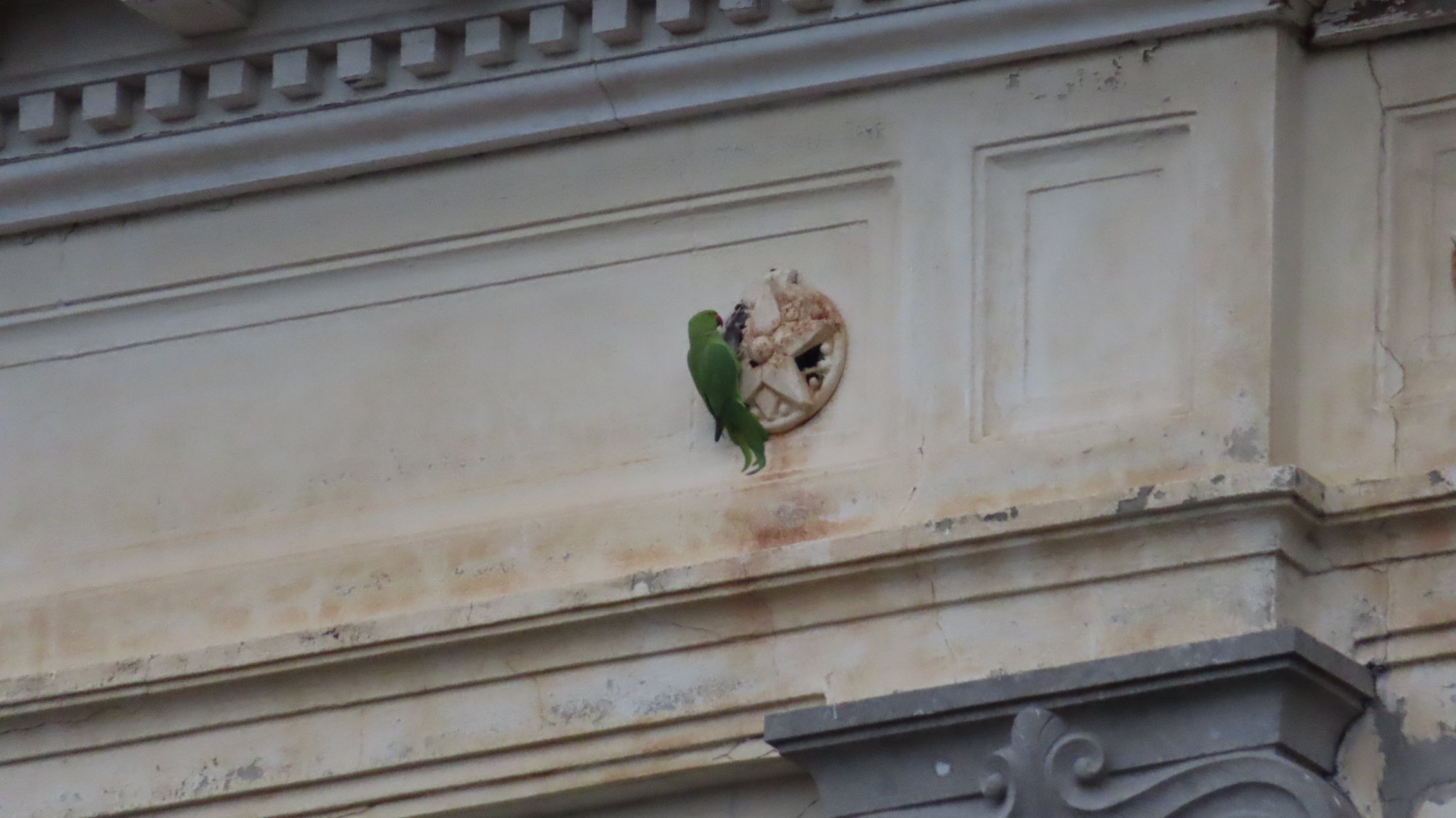
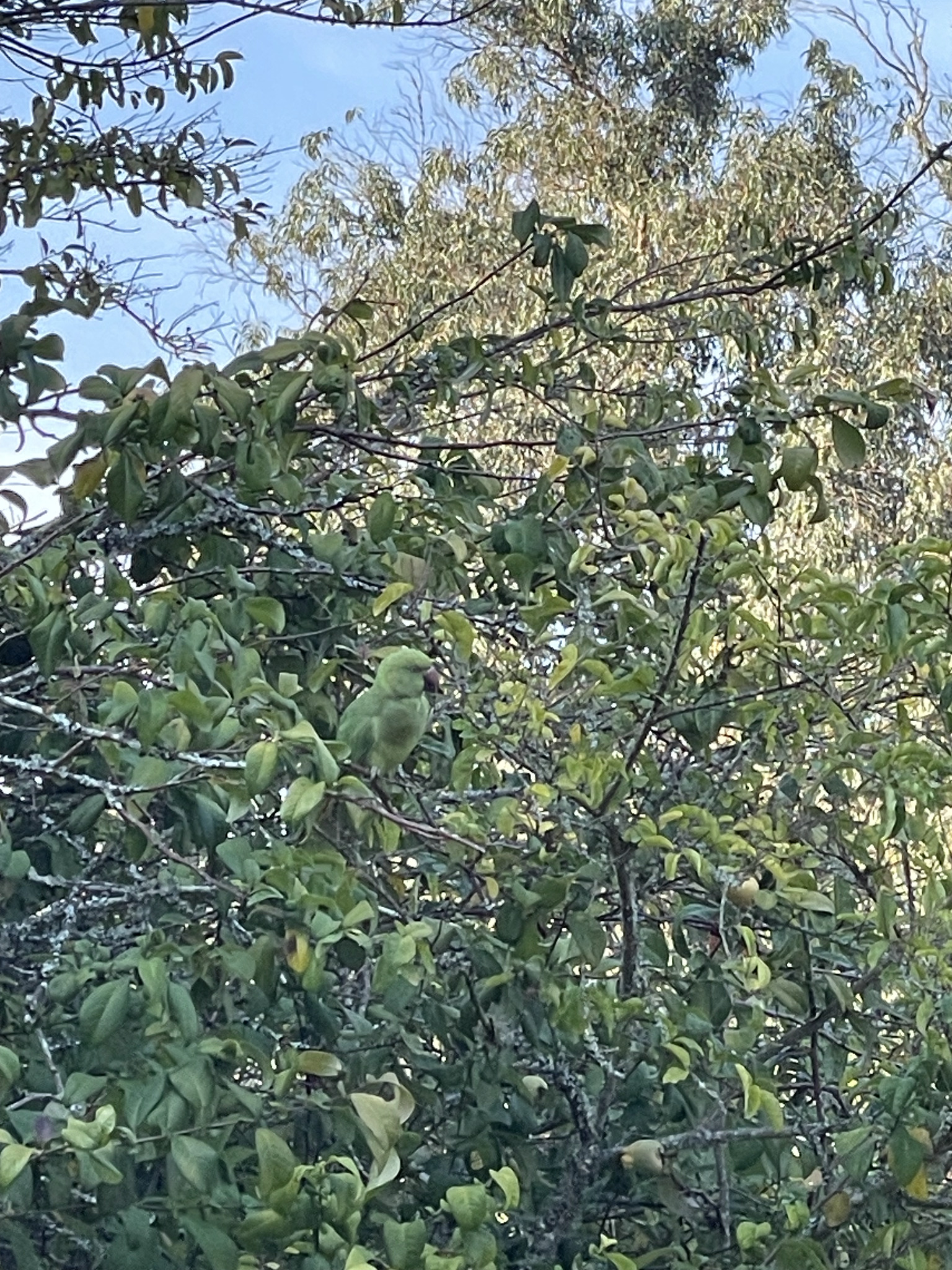

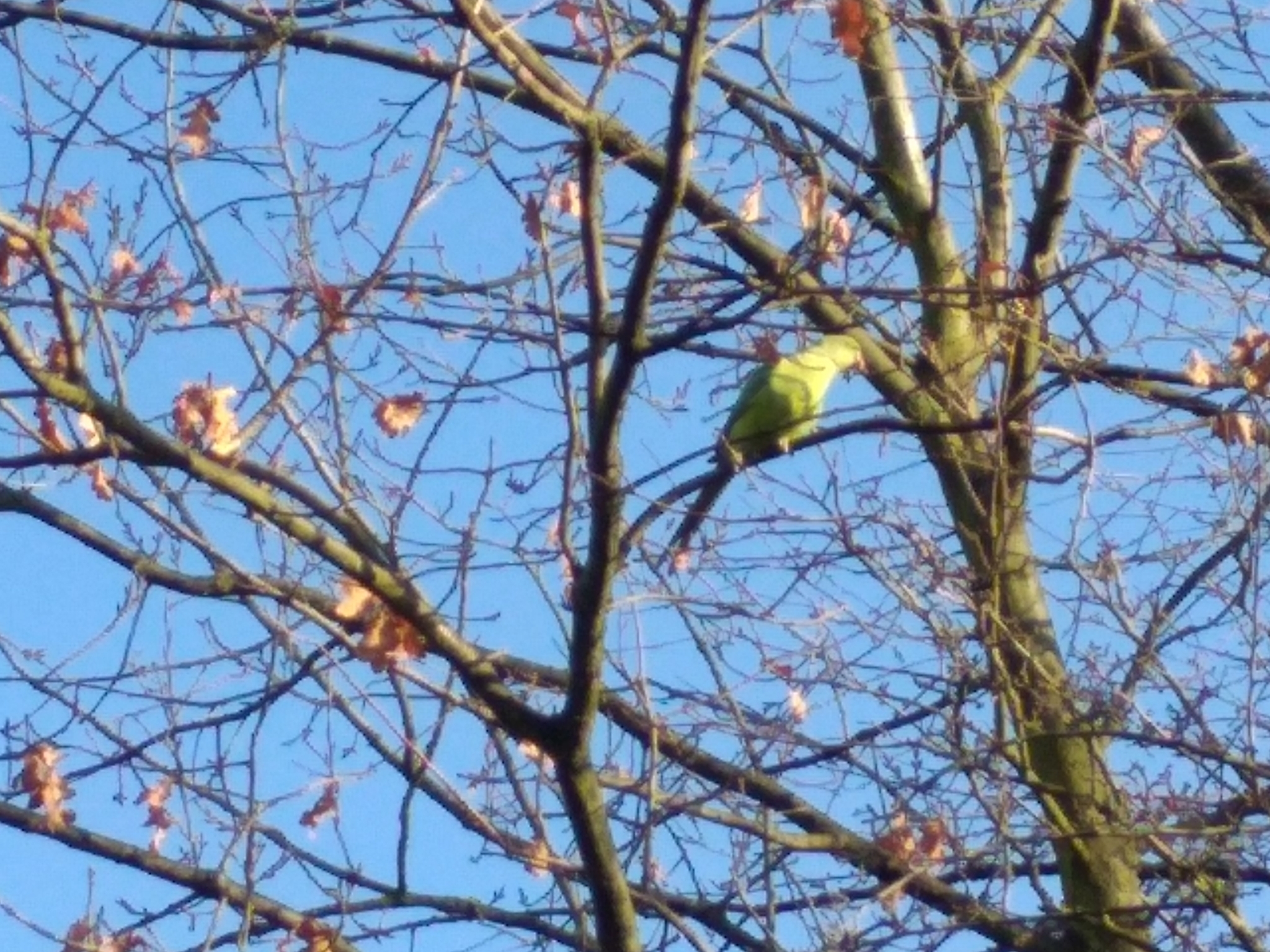
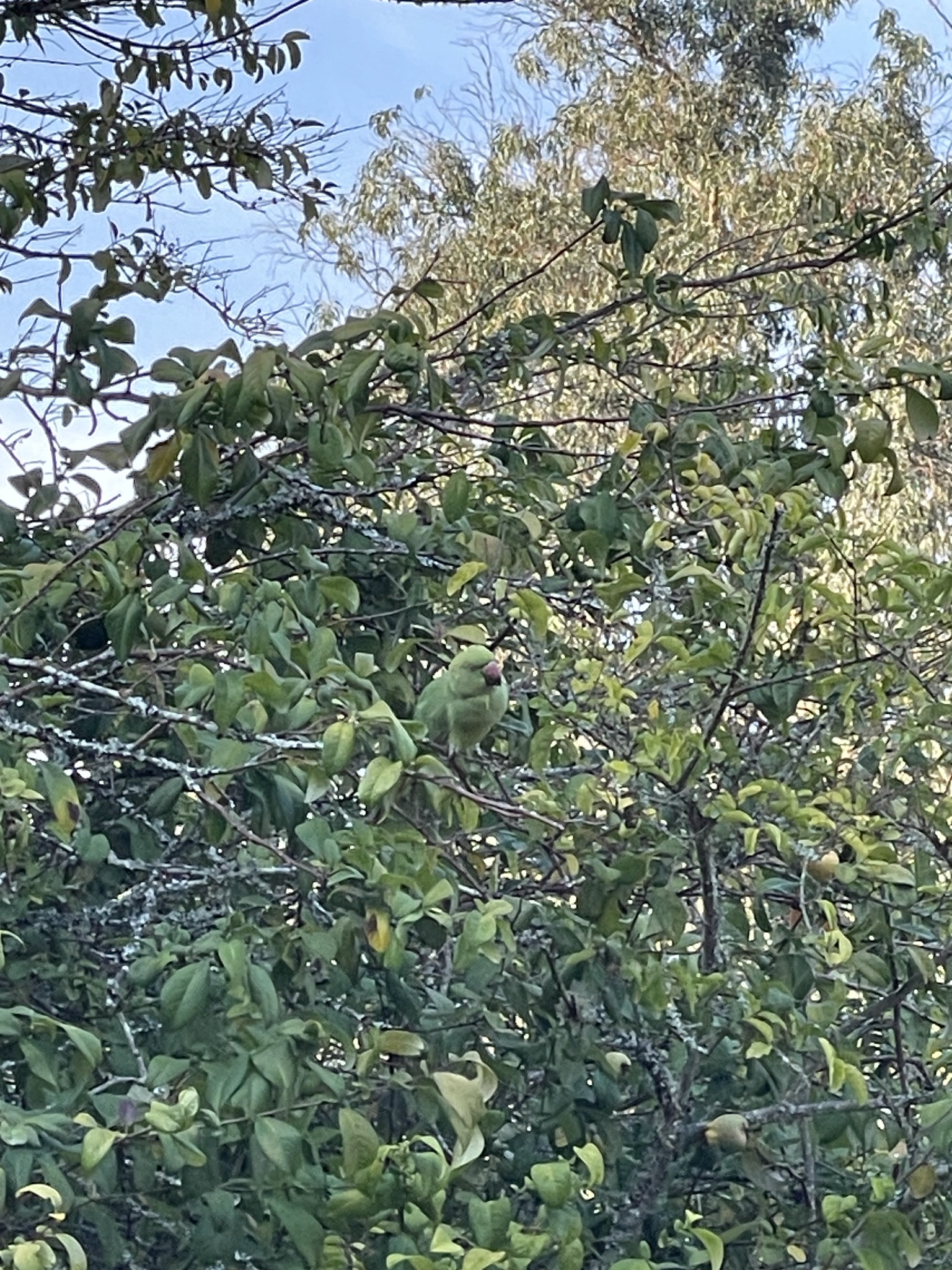
Rose-ringed Parakeet
Psittacula krameri
红领绿鹦鹉
Introduction
Medium-sized parrot in genus Psittacula, family Psittaculidae. Native range is disjunct across tropical northern Africa and the Indian subcontinent. Successfully adapted to disturbed habitats, withstanding urbanization and deforestation. Popular as exotic pet; escaped birds have colonized many cities worldwide. Feral populations established in northern and western Europe, surviving low winter temperatures. Listed as Least Concern by IUCN due to increasing population, though pet trade popularity and farmer conflict have reduced numbers in parts of native range.
Description
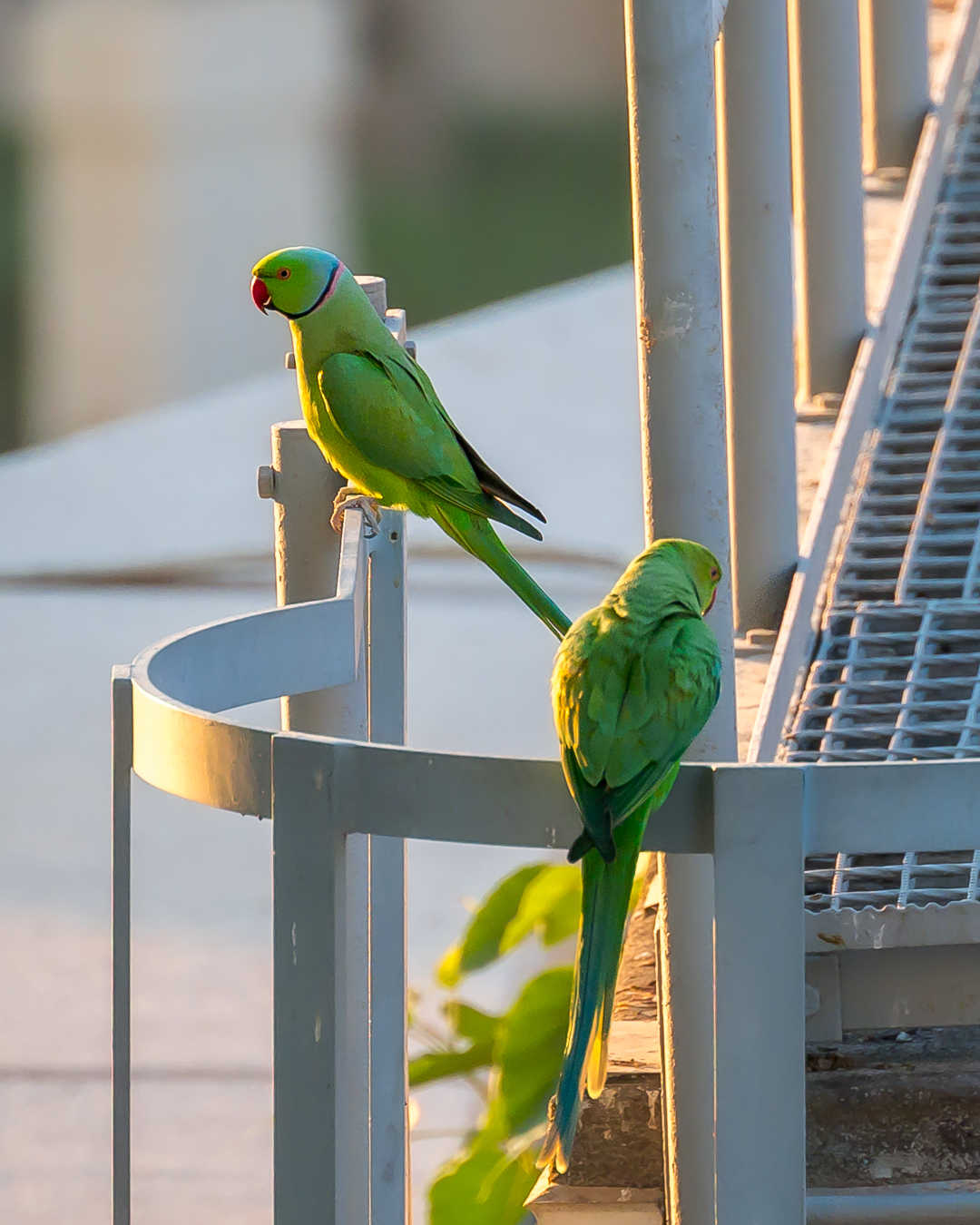
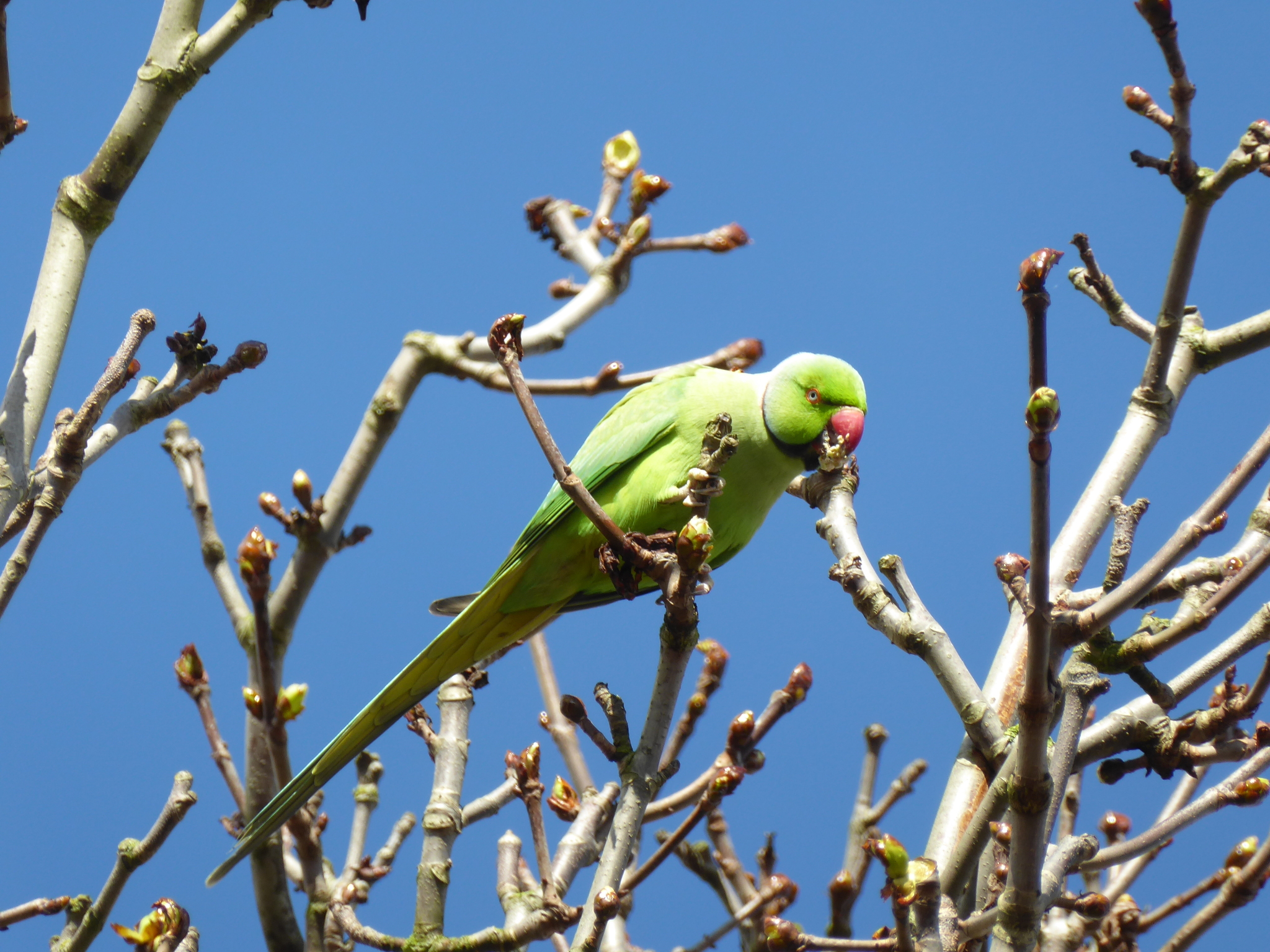
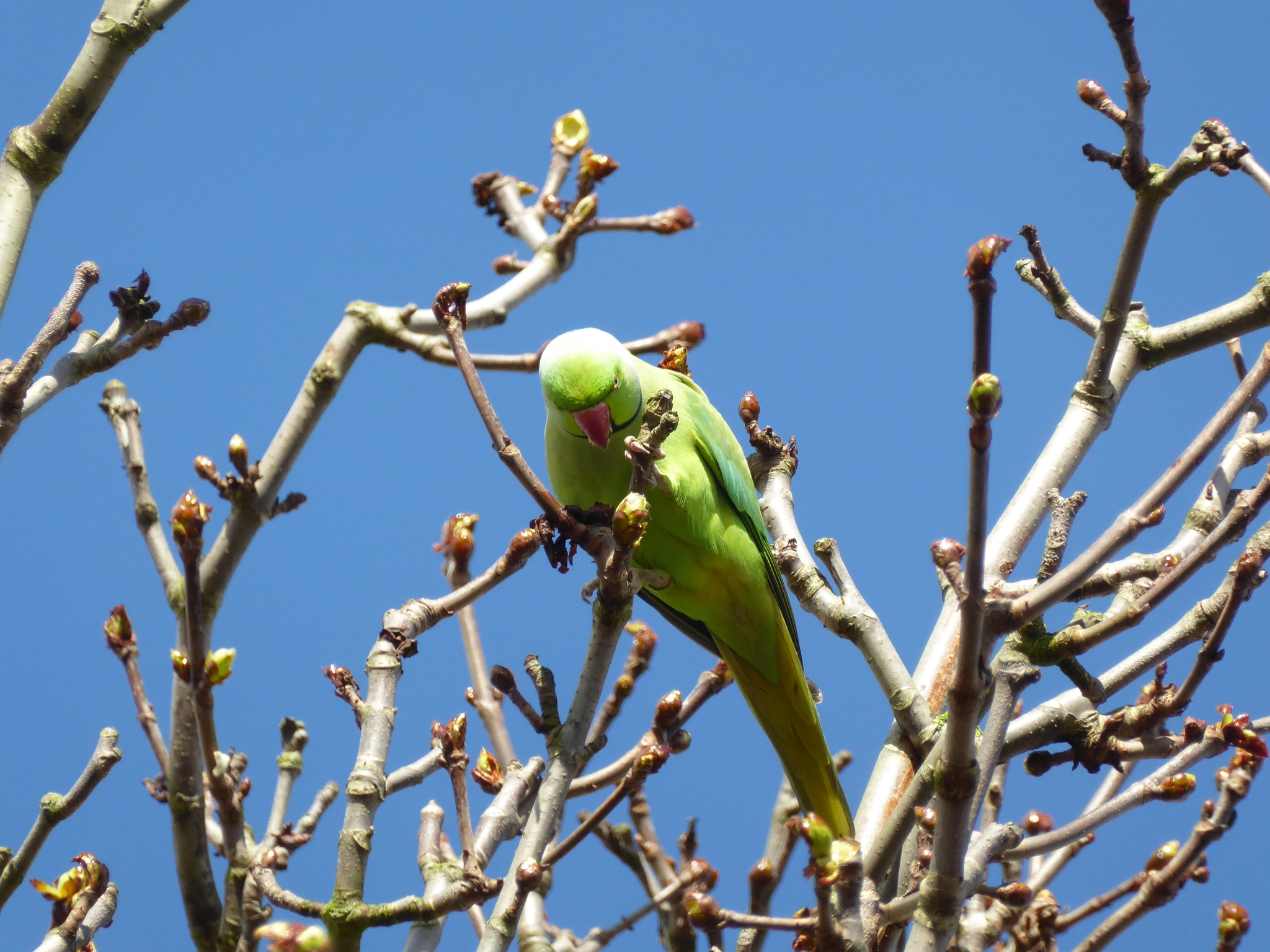
Length 37-43 cm including tail, with folded wing measuring 14-16 cm in African populations and 15-19 cm in Asian. Tail length 17-27 cm (African) and 16-29 cm (Asian). Weight ranges 51-93 g in African birds and 104-143 g in Asian birds. Sexually dimorphic: adult males display distinctive pink and black neck ring; females and immatures show either no ring or faint grey shadow ring. Both sexes exhibit green plumage with red beak and blue tail. Noisy species with characteristic squawking call. Herbivorous and non-migratory.
Identification
Males immediately recognizable by pink and black neck ring; females lack ring or show only grey shadow marking. Red beak and blue tail are distinctive field marks. Asian subspecies larger and larger-billed than African. Bill pattern and color intensity of red and black helps differentiate subspecies. Compare with Alexandrine parakeet (Psittacula eupatria), which is larger with different head and beak marking pattern. Echo parakeet is smaller with more uniform green coloration.
Distribution & Habitat
Native African range: narrow belt across continent from 4° to 17° N latitude, coinciding with Sudanian savannas. Native Asian range: Indian subcontinent and Sri Lanka from 6° to 35° N, Himalayan foothills, from Indus River east to Irrawaddy River. Since late 20th century, established feral populations across Germany, France, Belgium, Netherlands, Italy, UK, and further north than any other parrot species. Also established in US, South Africa, Middle East, Japan, Australia. Thrives in urban areas with few predators and available food from gardens and bird feeders.
Behavior & Ecology
Diet includes buds, nectar, fruit, vegetables, nuts, berries, seeds, grains, and insects. Wild flocks travel miles to forage in farmlands, causing crop damage. Forms large, noisy flocks. In northwestern India, pairs form September to December; breeding occurs April to June. Non-monogamous, often changing partners between seasons. Nest defense occurs during cold season to avoid competition. Both sexes capable of mimicking human speech with clear articulation. Considered one of the best talking parrots.
Conservation
IUCN assessment: Least Concern. Global population appears increasing. However, popularity as pet and conflict with farmers have reduced numbers in parts of native range. In introduced ranges, may affect native biodiversity through competition for nesting sites and aggressive behavior toward other species. Documented attacks on greater noctule bats in Europe, causing population decline. Potential competition with native bird species in areas like New Zealand.
Culture
Kept as pets since ancient times; Greek and Roman civilizations maintained populations. Ancient Greeks kept Indian subspecies P. k. manillensis; Romans kept African subspecies P. k. krameri. Popular in aviculture with multiple color mutations available including turquoise, cinnamon, olive, white, blue, violet, grey, and yellow. Valued for talking ability and clear speech. Blue color mutation commonly kept in captivity.
Source: Wikipedia · CC BY-SA 3.0
Taxonomy
- Order
- Psittaciformes
- Family
- Psittaculidae
- Genus
- Psittacula
- eBird Code
- rorpar
Vocalizations
Subspecies (4)
-
Psittacula krameri borealis
northwestern Pakistan to northern India, Nepal, southeastern China, and central Myanmar
-
Psittacula krameri krameri
southern Mauritania southward to Guinea, eastward to southern Sudan, South Sudan, and far northern Uganda; widely introduced around the world, although the subspecific identify of these populations is poorly known; now feral across Europe and the Middle East and locally in north and south Africa, Mauritius, the Seychelles, locally in southeast Asia, Japan, Australia, New Zealand, the Hawaiian Islands, locally in North America (California, Florida and northern Baja California), locally in the Greater and Lesser Antilles, and in Venezuela
-
Psittacula krameri manillensis
southern peninsular India and Sri Lanka
-
Psittacula krameri parvirostris
eastern Sudan, Eritrea, northwestern Ethiopia, and Djibouti
Data Sources
Species description from Wikipedia, licensed under CC BY-SA 3.0.
Bird images and sounds sourced from GBIF, contributed by citizen scientists worldwide under Creative Commons licenses.
Taxonomy data from AviList 2025.