Slaty-headed Parakeet
Psittacula himalayana
青头鹦鹉
Introduction
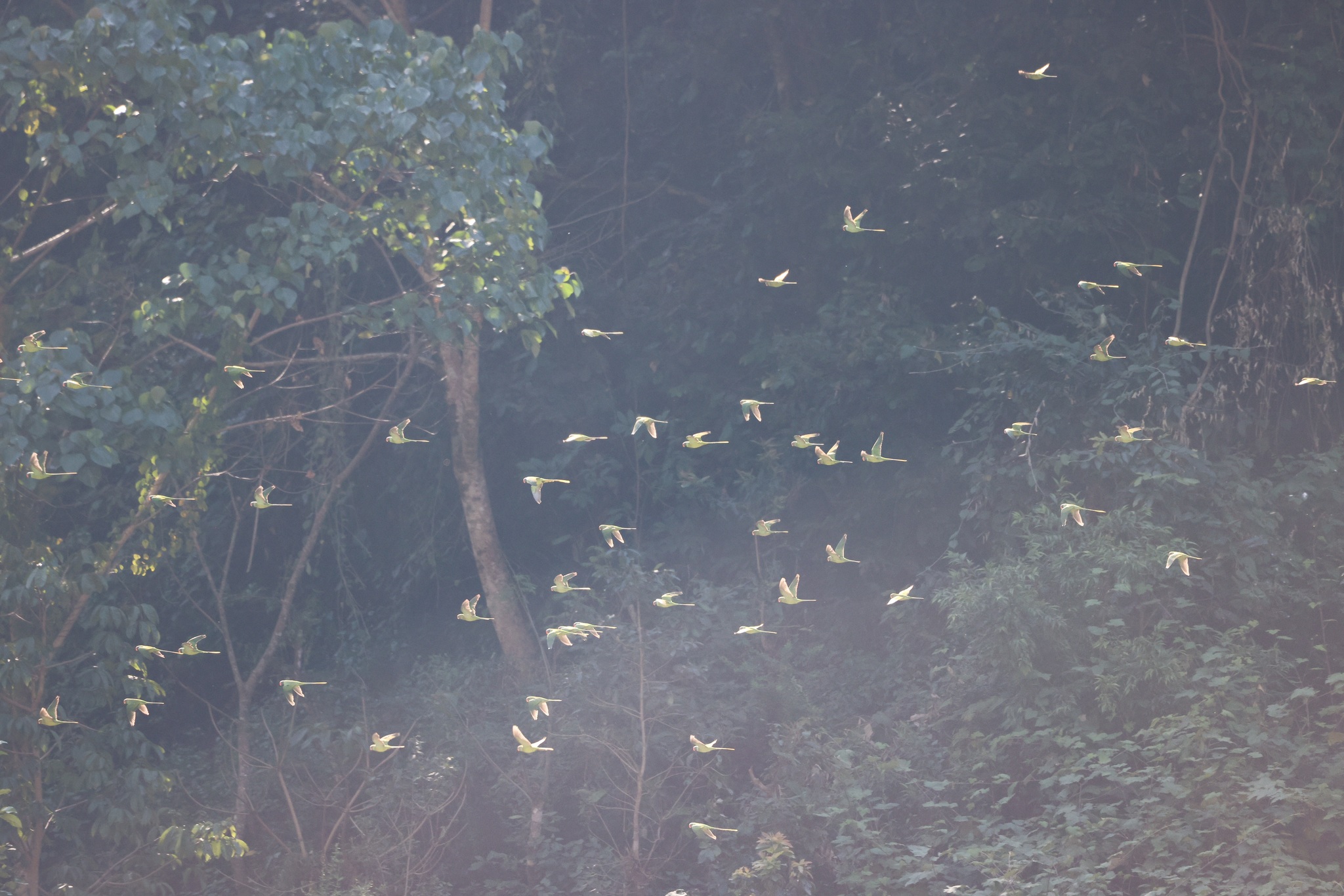
Psittacula himalayana is the only psittacid species to exhibit altitudinal migration. Its range extends from Pakistan through the Western Himalayas in India, Nepal, and Bhutan, to the Eastern Himalayas in Arunachal Pradesh, India. The species inhabits highland hillside forests and valley woodlands at elevations of 460–2400 meters. In winter, flocks descend to valleys, typically arriving around the last week of October.
Description
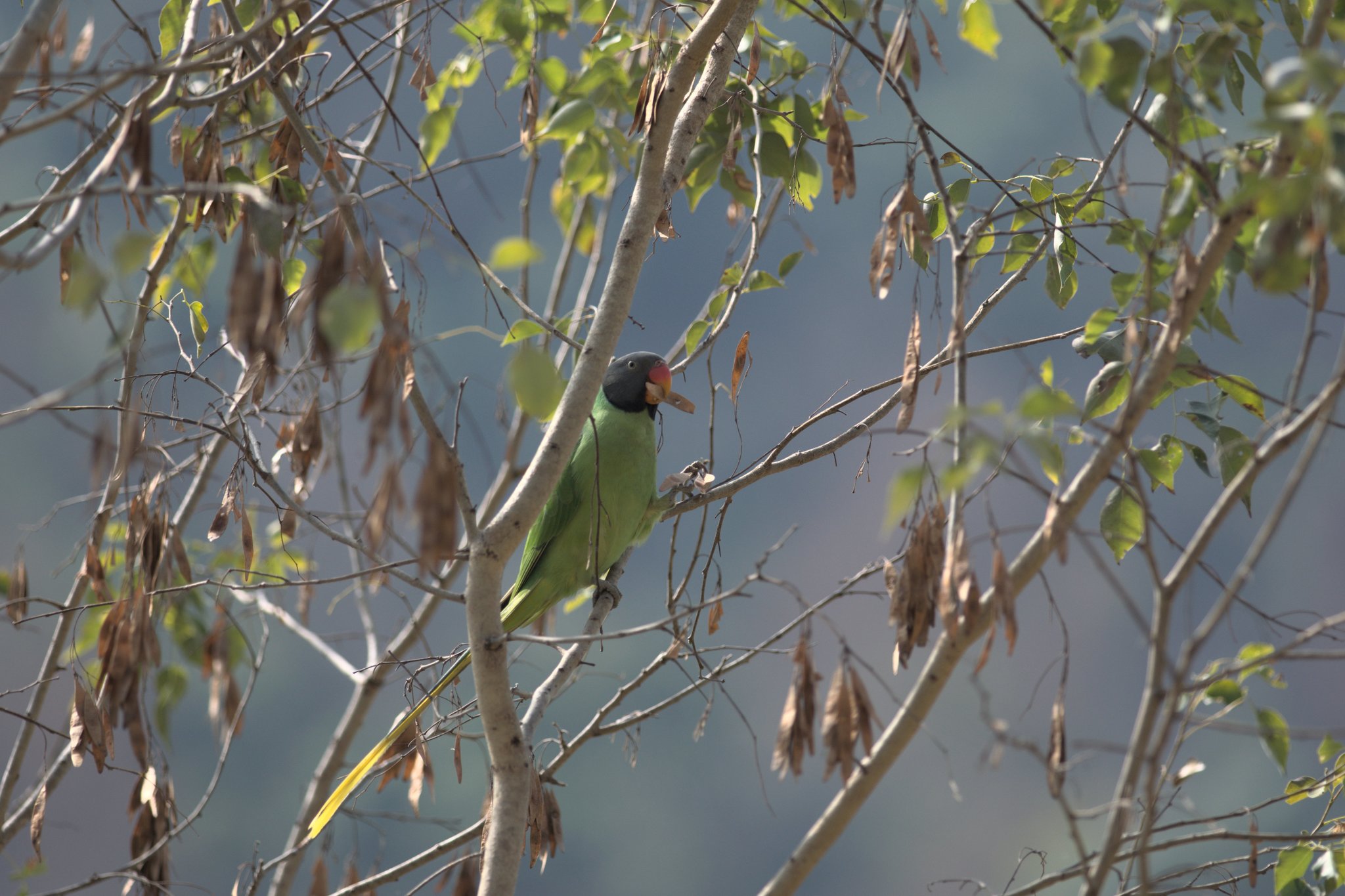
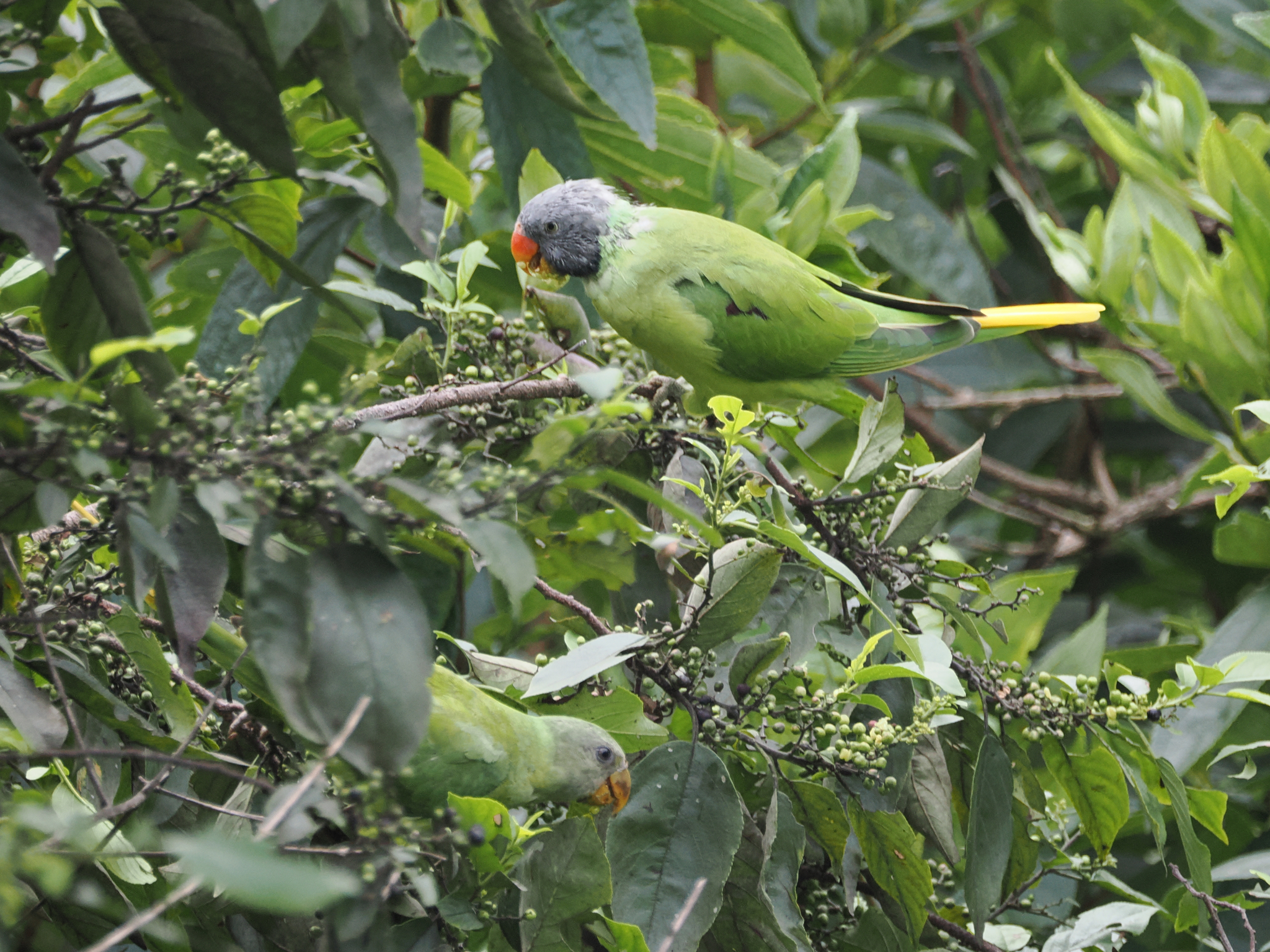
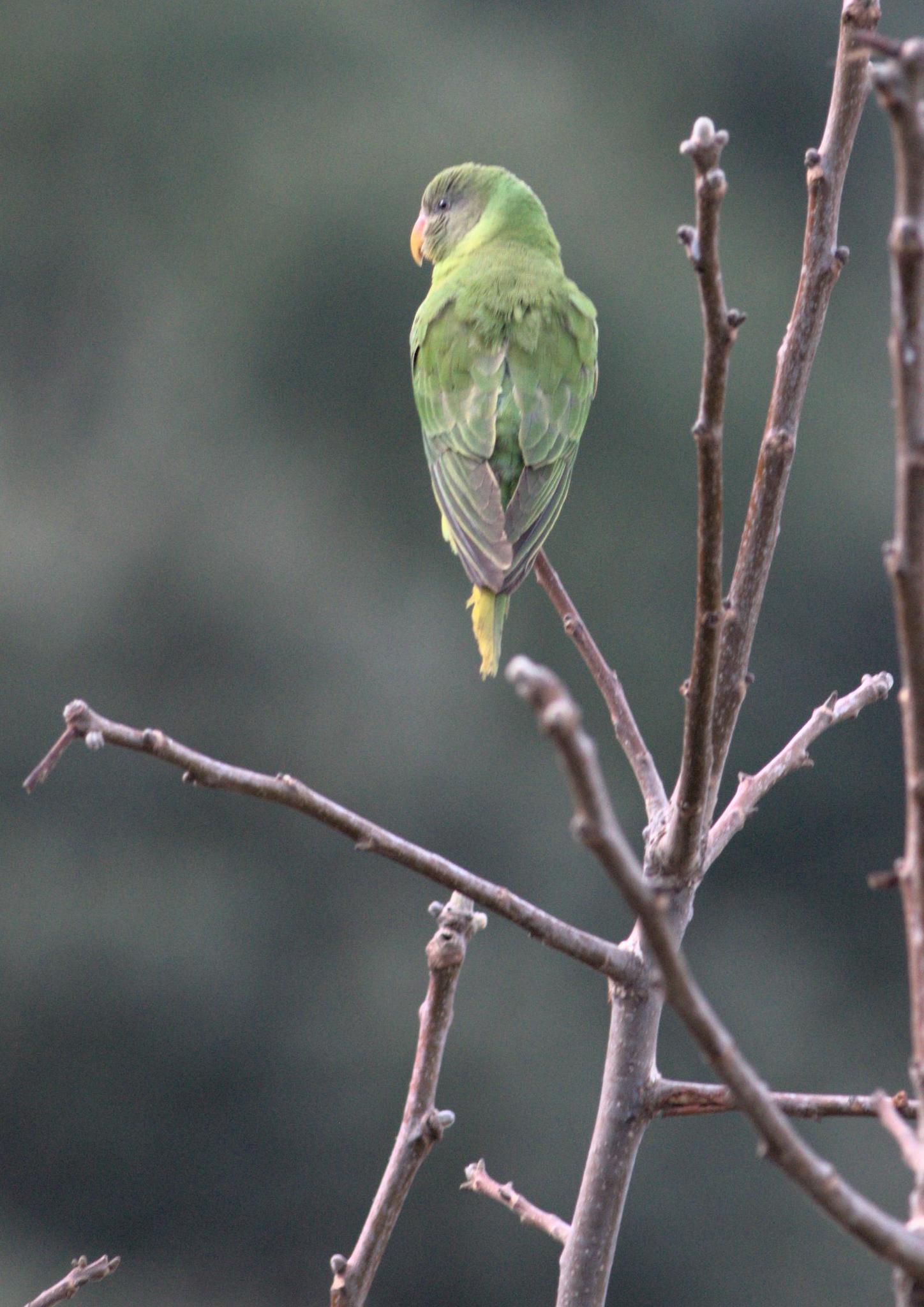
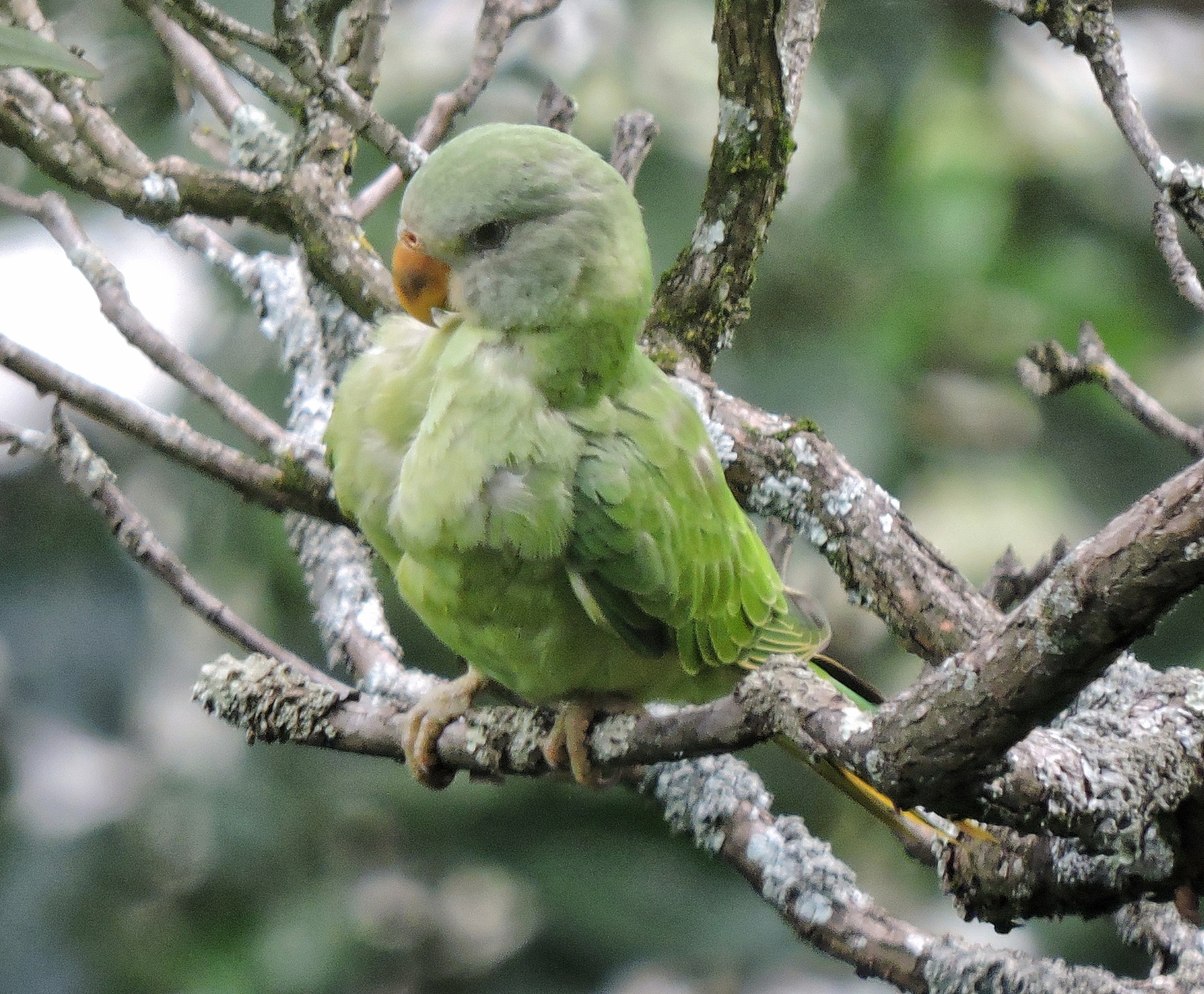
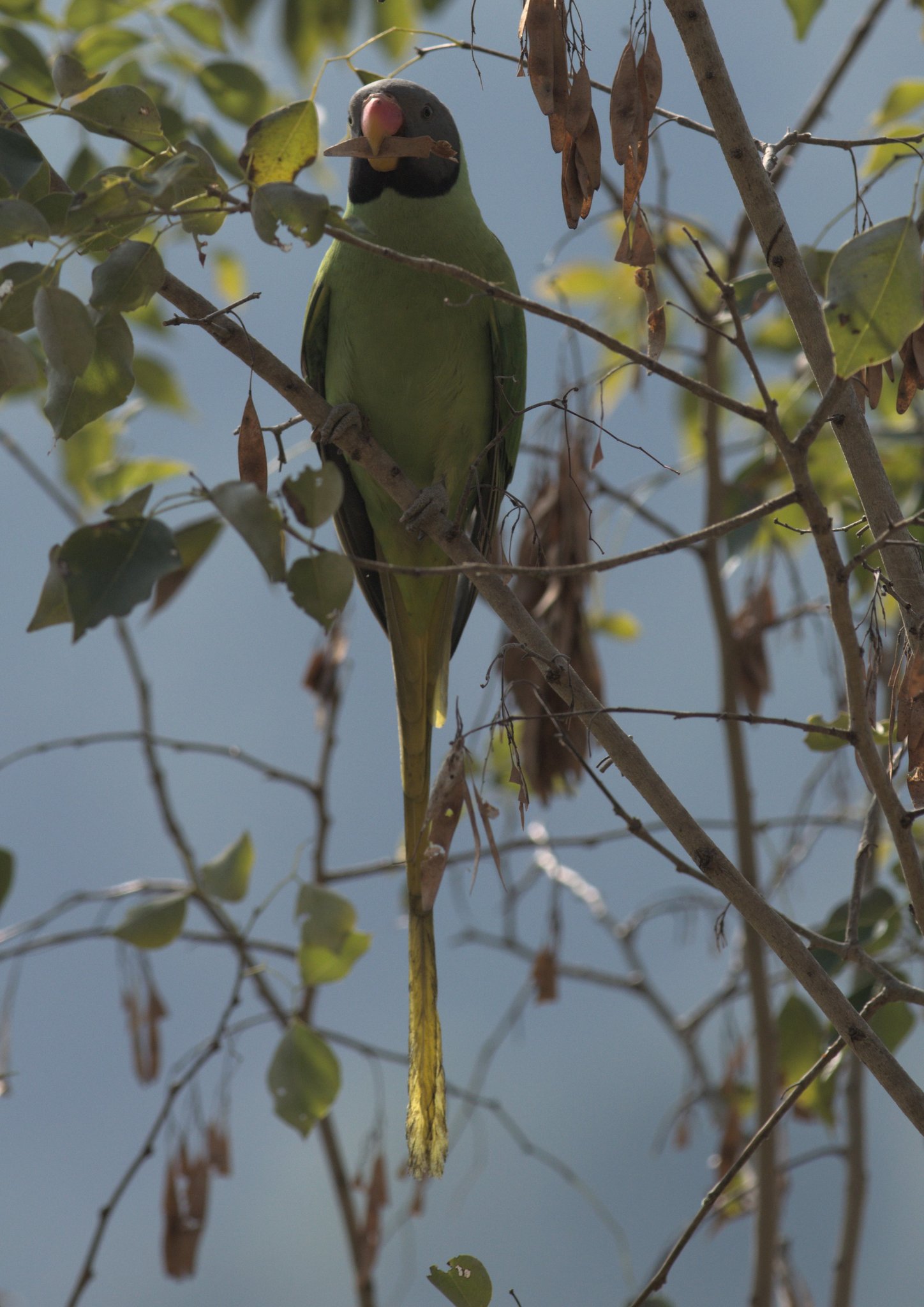
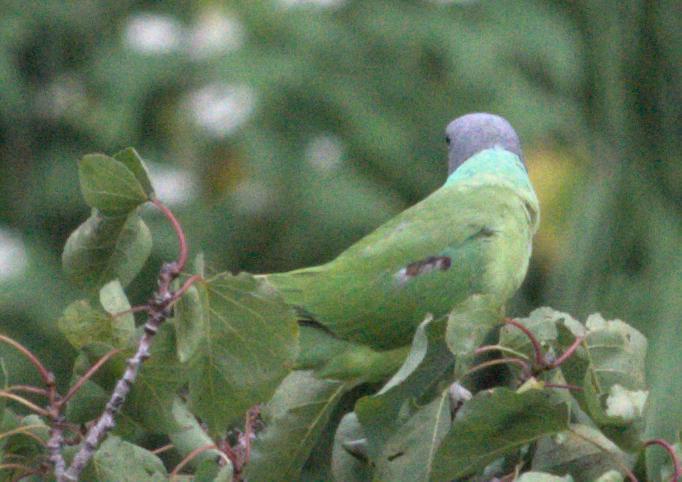
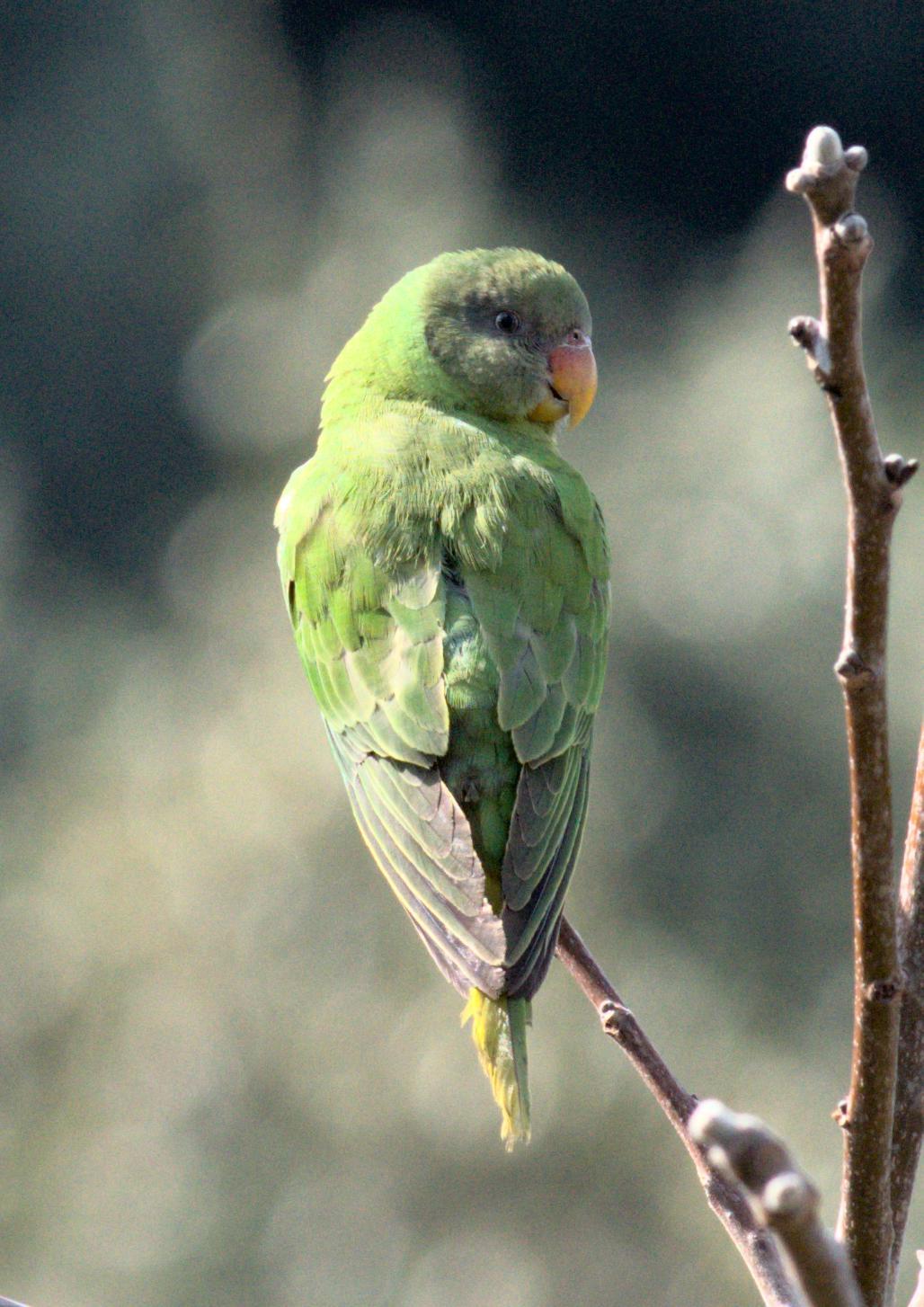
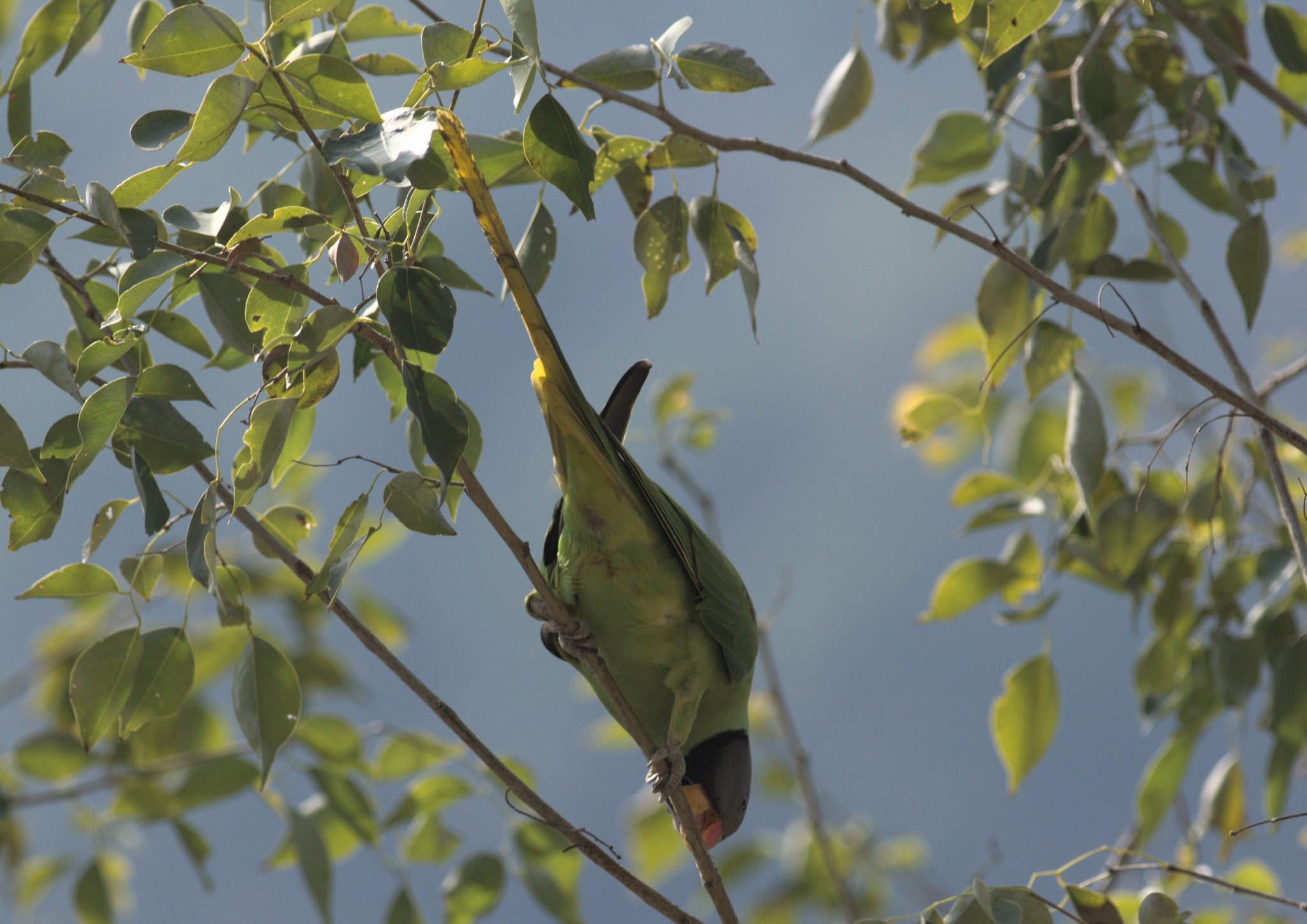
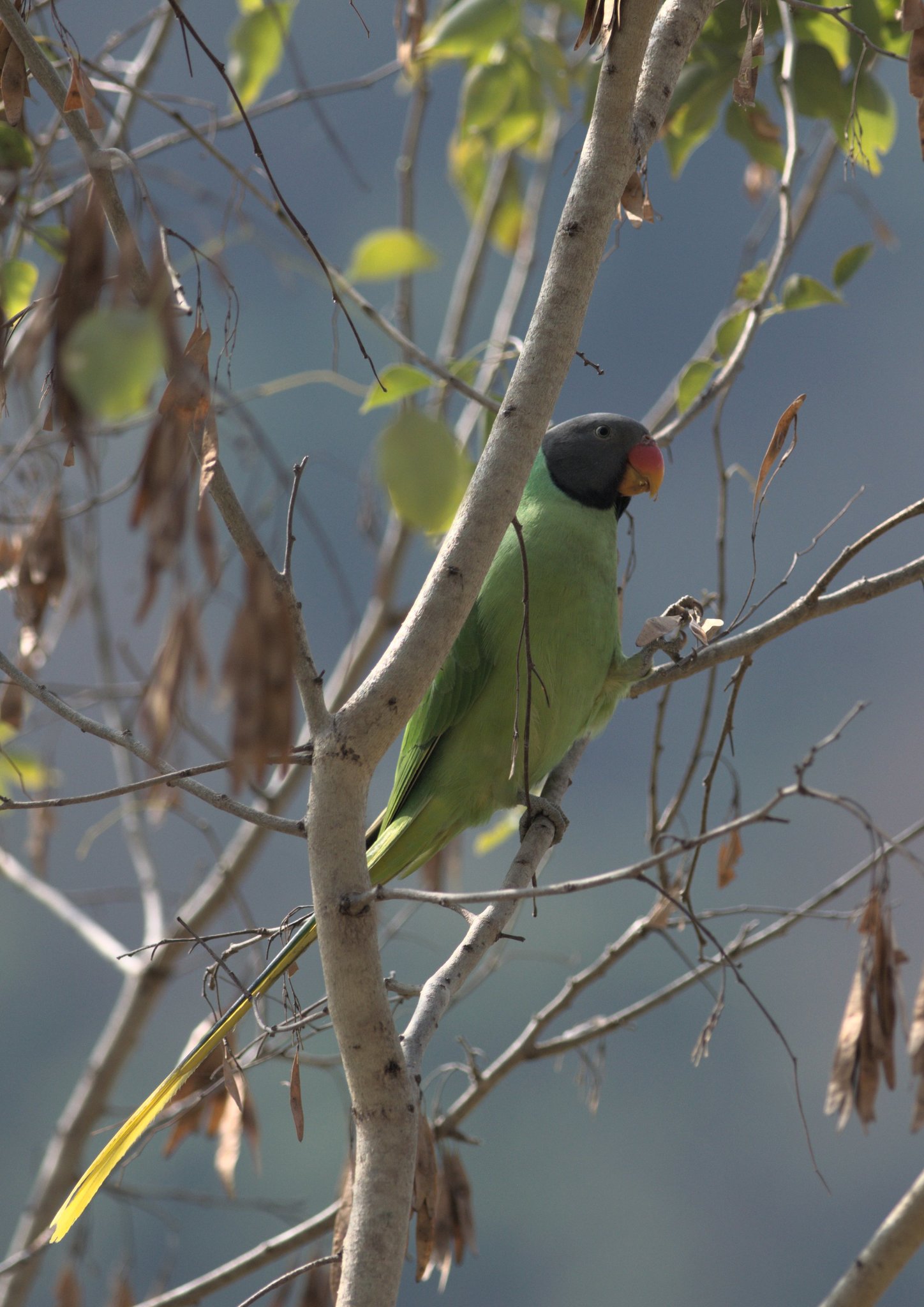
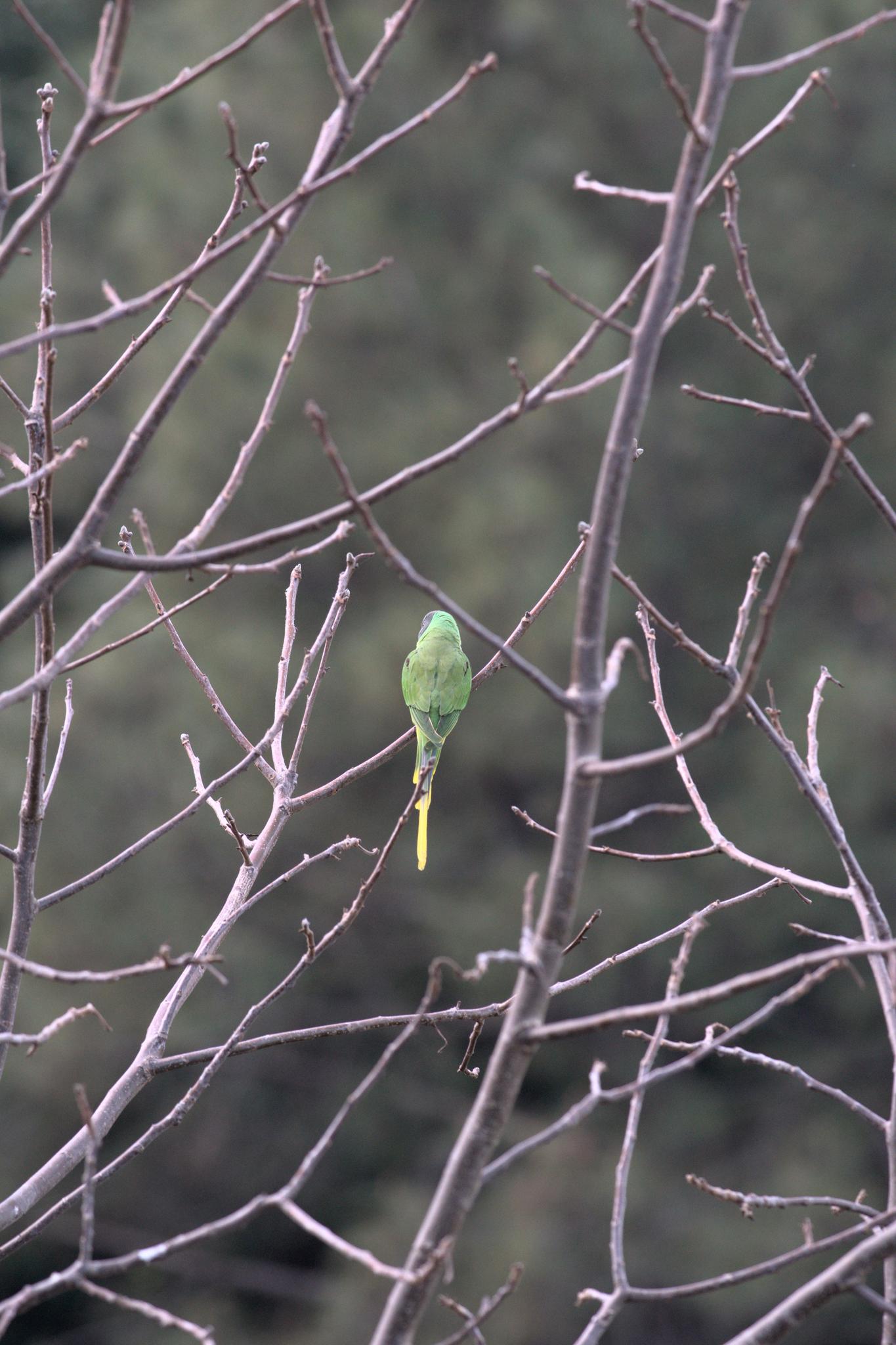
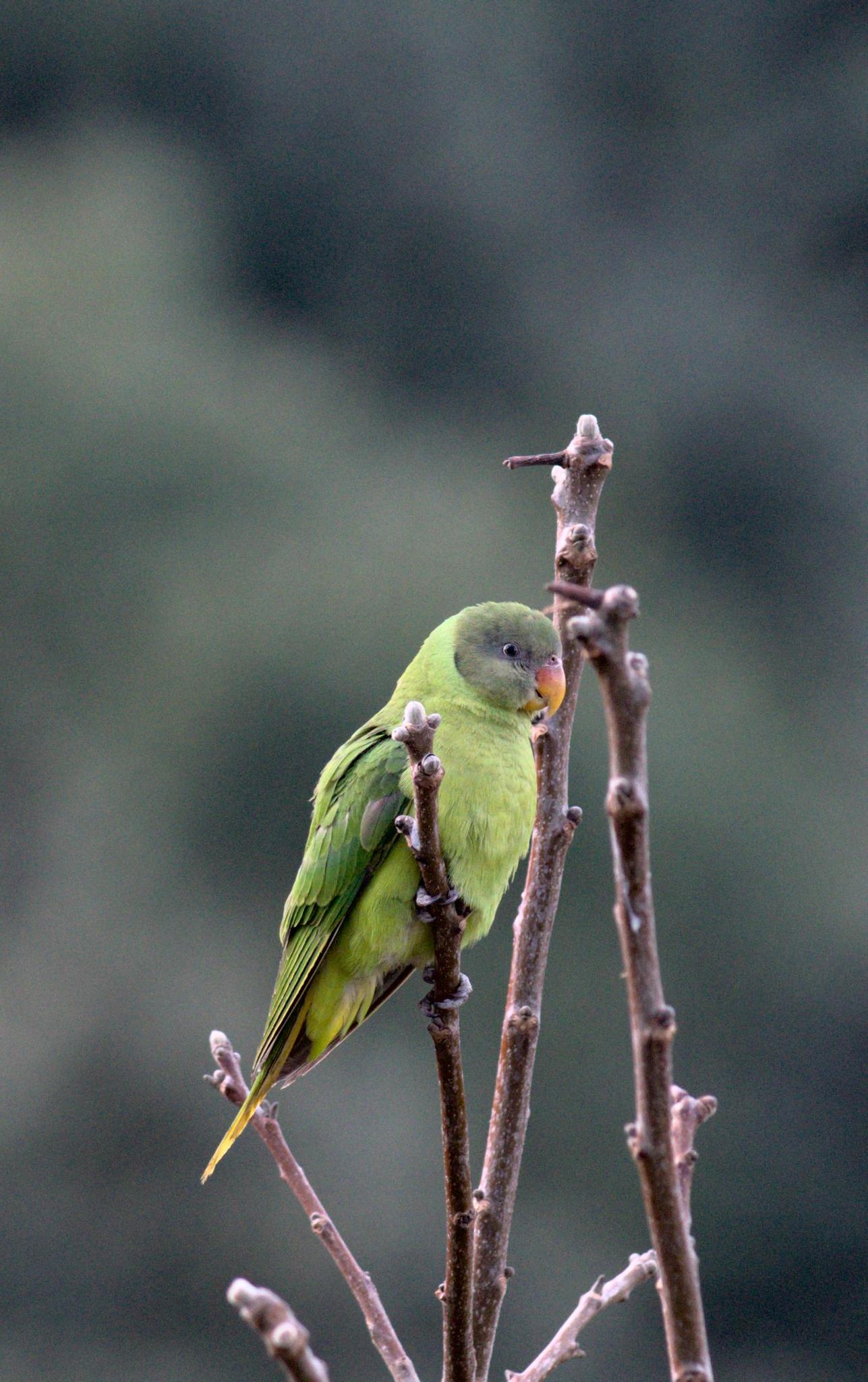
Adults of both sexes have green plumage tinted with blue across most of the body. The head is dark grey (slate-colored) with a light blue tint where the head meets the neck. Males display dark maroon patches on inner wing coverts and have longer central tail feathers; females lack these patches and have shorter tails. The tail is green at the base, transitioning to deep blue with wide bright yellow tips. The upper mandible is bright red-orange, the lower mandible is pale yellow, and the eyes are pale yellow.
Distribution & Habitat
The species occurs throughout the Himalayas and surrounding areas. It is found in western Bhutan, most of Nepal, and the Indian states of Sikkim, Uttarakhand, Himachal Pradesh, and southern Jammu and Kashmir. In Pakistan, it occurs north of Islamabad and in southern areas of the Federally Administered Tribal Areas. Small populations exist in Afghanistan's mountainous provinces of Kabul, Logar, Nangarhar, and Paktia.
Behavior & Ecology
The species inhabits highland hillside forests and valley woodlands at elevations of 460–2400 meters. It forages in small flocks or family groups, consuming various fruits, nuts, pine nuts, seeds, nectar, and acorns. Larger flocks form near the end of the wet season for winter descent to valleys. It often mingles with rose-ringed, plum-headed, and blossom-headed parakeets. Breeding occurs from March to May; females lay 4-5 eggs measuring approximately 28.5 x 22 mm, incubating for 23–24 days. In Afghanistan, it nests in abandoned scaly-bellied woodpecker cavities, sometimes nesting in proximity to woodpeckers for predator protection. Lifespan is 15–17 years.
Conservation
No specific conservation assessment or population data provided in source.
Culture
No cultural significance or folklore information provided in source.
Source: Wikipedia · CC BY-SA 3.0
Taxonomy
- Order
- Psittaciformes
- Family
- Psittaculidae
- Genus
- Psittacula
- eBird Code
- slhpar1
Distribution
Himalayas (Afghanistan to northern India, Nepal, and western Assam)
Data Sources
Species description from Wikipedia, licensed under CC BY-SA 3.0.
Bird images and sounds sourced from GBIF, contributed by citizen scientists worldwide under Creative Commons licenses.
Taxonomy data from AviList 2025.