Grey-headed Parakeet
Psittacula finschii
灰头鹦鹉
Introduction
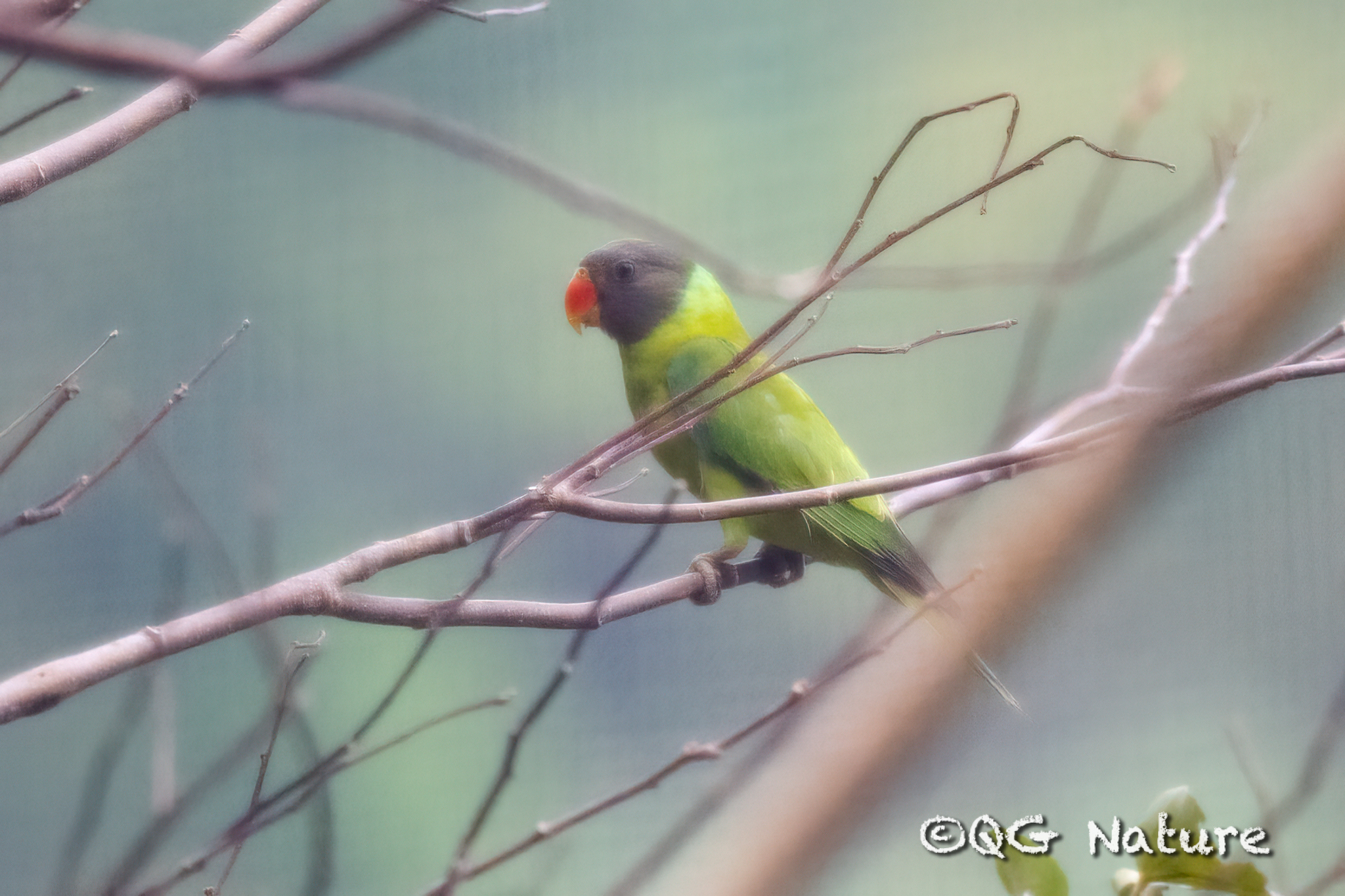
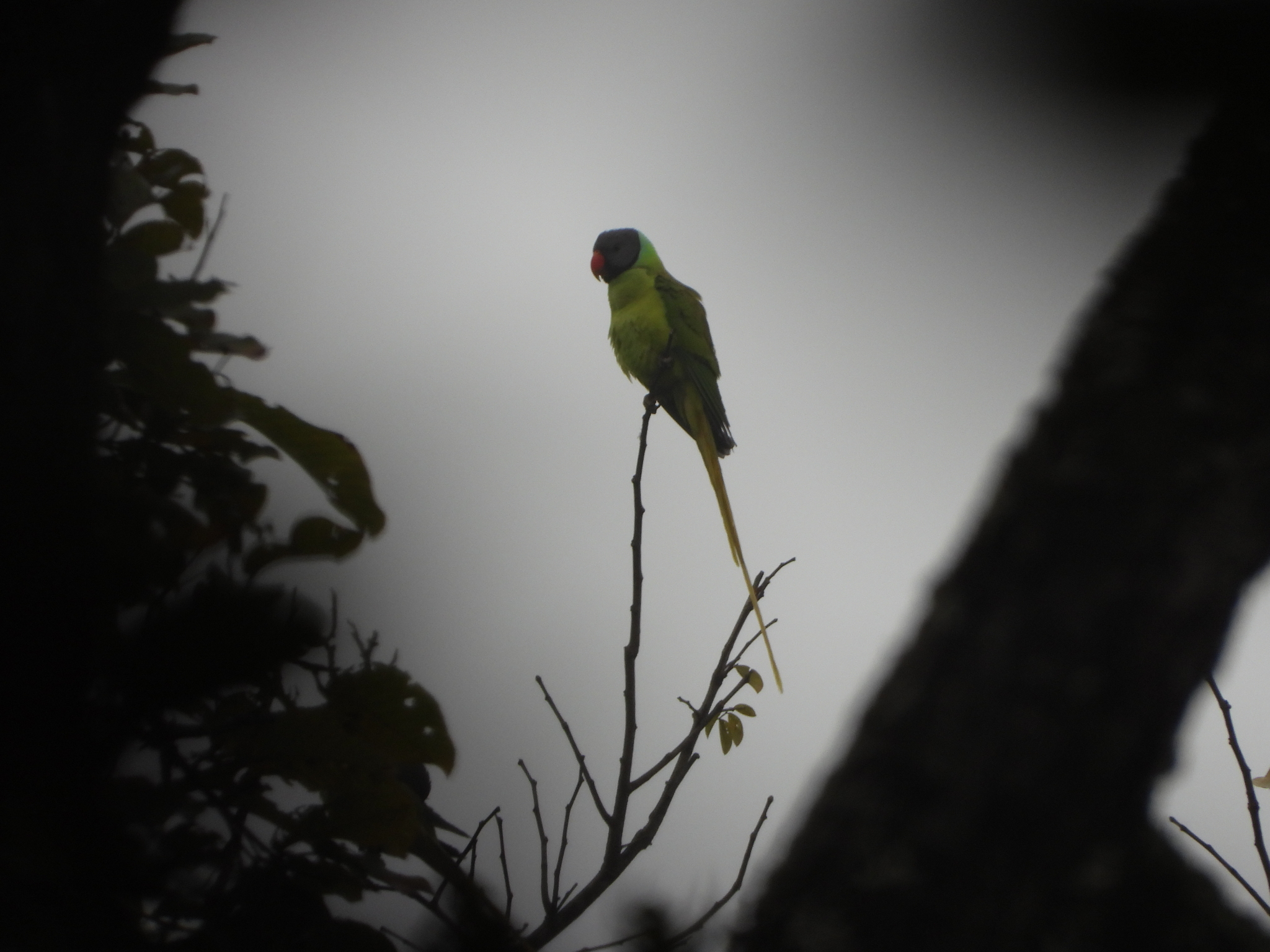
A psittaculine parrot species closely related to the slaty-headed parakeet, with which it forms a super-species. Native to Southeast Asia with a range extending from northeastern India through Myanmar, Laos, Cambodia, Thailand, Vietnam, southern China (Yunnan), northeast India, Bhutan, and extremely rare in far eastern Bangladesh. Inhabits montane forests up to 2,700 metres elevation containing oak, teak, and pine, as well as deciduous hillside forests and farmland with scattered trees. Distinctive features include a grey-green face and very long tail. The global population size has not been determined, though it is reported as uncommon in China with varying statuses across its range.
Description
The face is grey-green in colouration. The remainder of the head is dull green with a faint pale green band extending from below the cheeks to the hindcrown. The wings lack any distinctive patch. The species possesses a notably long tail. No body measurements are provided in available sources.
Distribution & Habitat
Found throughout most of Vietnam, the entirety of Laos, most of eastern Cambodia, northern Thailand, and nearly all of Myanmar excluding the Tanintharyi Region. Also occurs in China's Yunnan province, nearly all of northeast India, the far southeast of Bhutan, and extremely rarely in far eastern Bangladesh. Inhabits montane forest up to 2,700 metres containing oak, teak, and pine, as well as deciduous hillside forests and farmland with scattered trees. In Cambodia, regularly occurs in areas with evergreen and semi-evergreen vegetation. Primarily resident with some seasonal altitudinal movements.
Behavior & Ecology
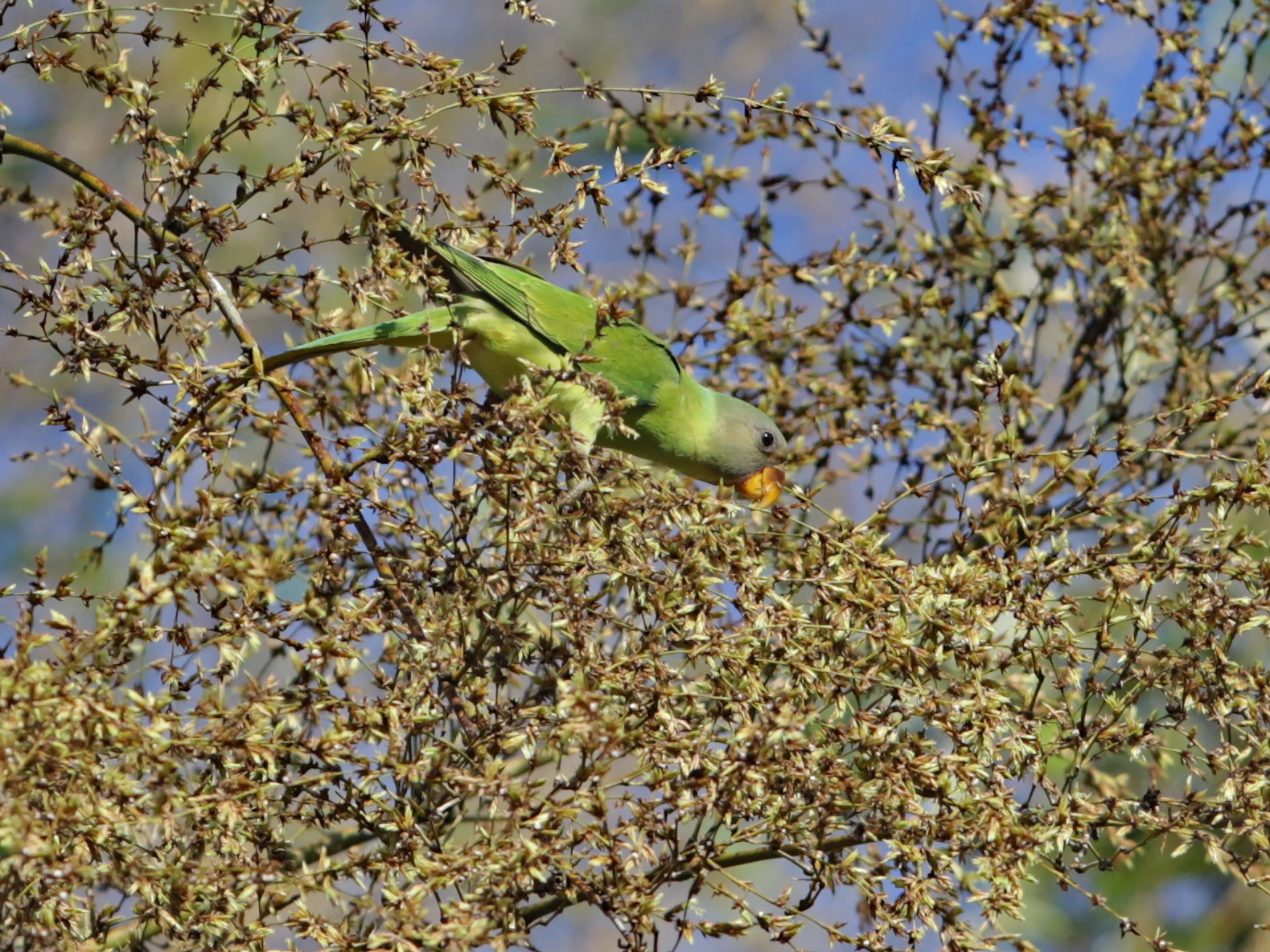
Feeds on a varied diet including leaf buds, seeds, fruit, berries, and flowers. Typically observed in flocks or family parties, with larger groups reported. Mainly resident but makes seasonal altitudinal movements in response to food availability. Frequently gathers in large flocks to roost at dusk. Breeding occurs from January to March, with females laying clutches of 4-5 eggs measuring approximately 28.5 x 22.0 millimetres.
Conservation
The species faces significant pressure from capture for the exotic pet trade, with many individuals locally kept as pets, particularly in small villages in southern China and surrounding areas. Constant trapping is reported to be greatly affecting wild populations. Deforestation and logging of natural forest habitat also negatively impact the species. Population trend and global conservation status are not specified.
Culture
No cultural significance, folklore, or traditional associations are documented in available sources.
Source: Wikipedia · CC BY-SA 3.0
Taxonomy
- Order
- Psittaciformes
- Family
- Psittaculidae
- Genus
- Psittacula
- eBird Code
- gyhpar2
Distribution
northern India (West Bengal) to southern China, Myanmar, and Indochina
Data Sources
Species description from Wikipedia, licensed under CC BY-SA 3.0.
Bird images and sounds sourced from GBIF, contributed by citizen scientists worldwide under Creative Commons licenses.
Taxonomy data from AviList 2025.