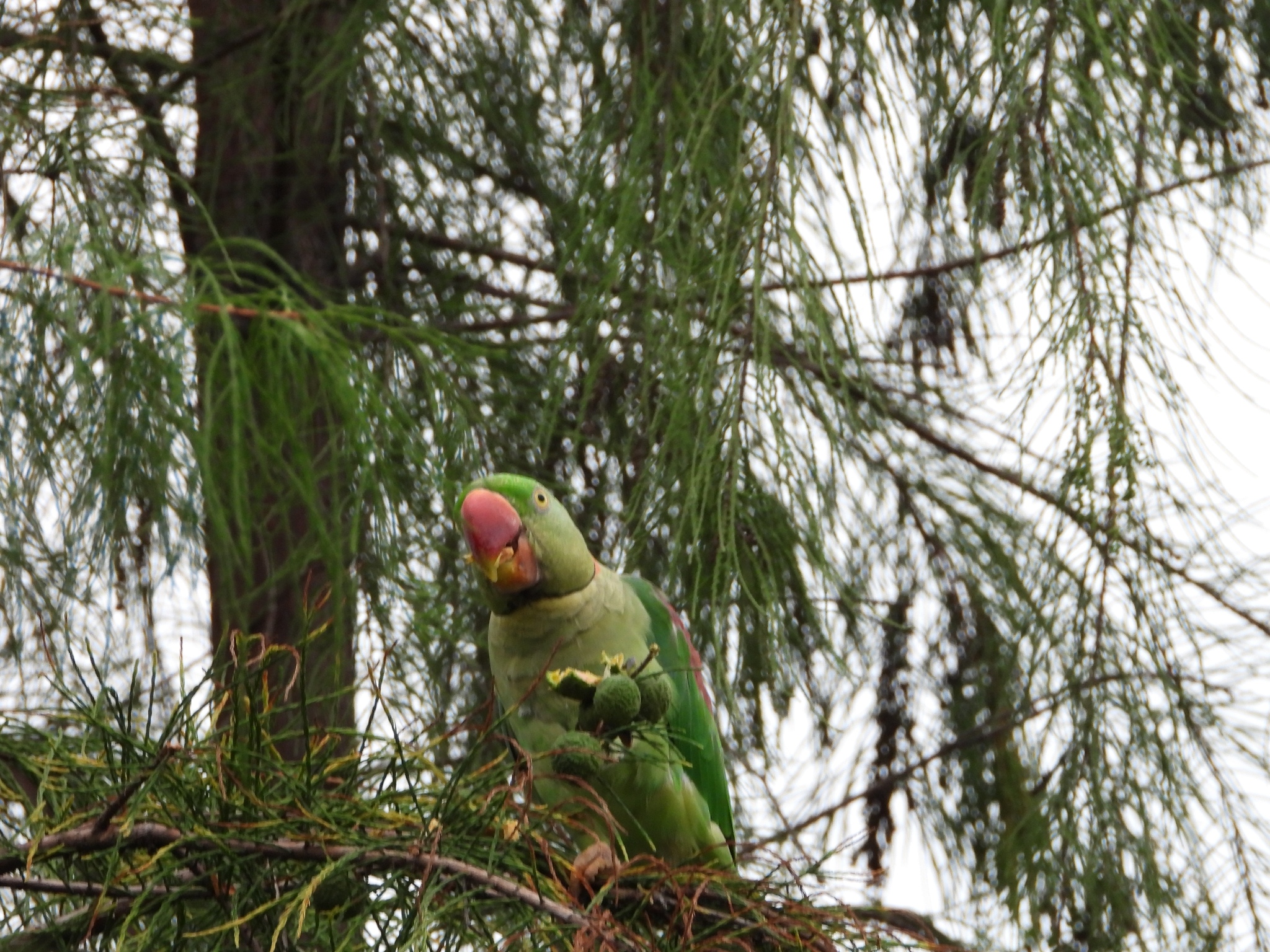
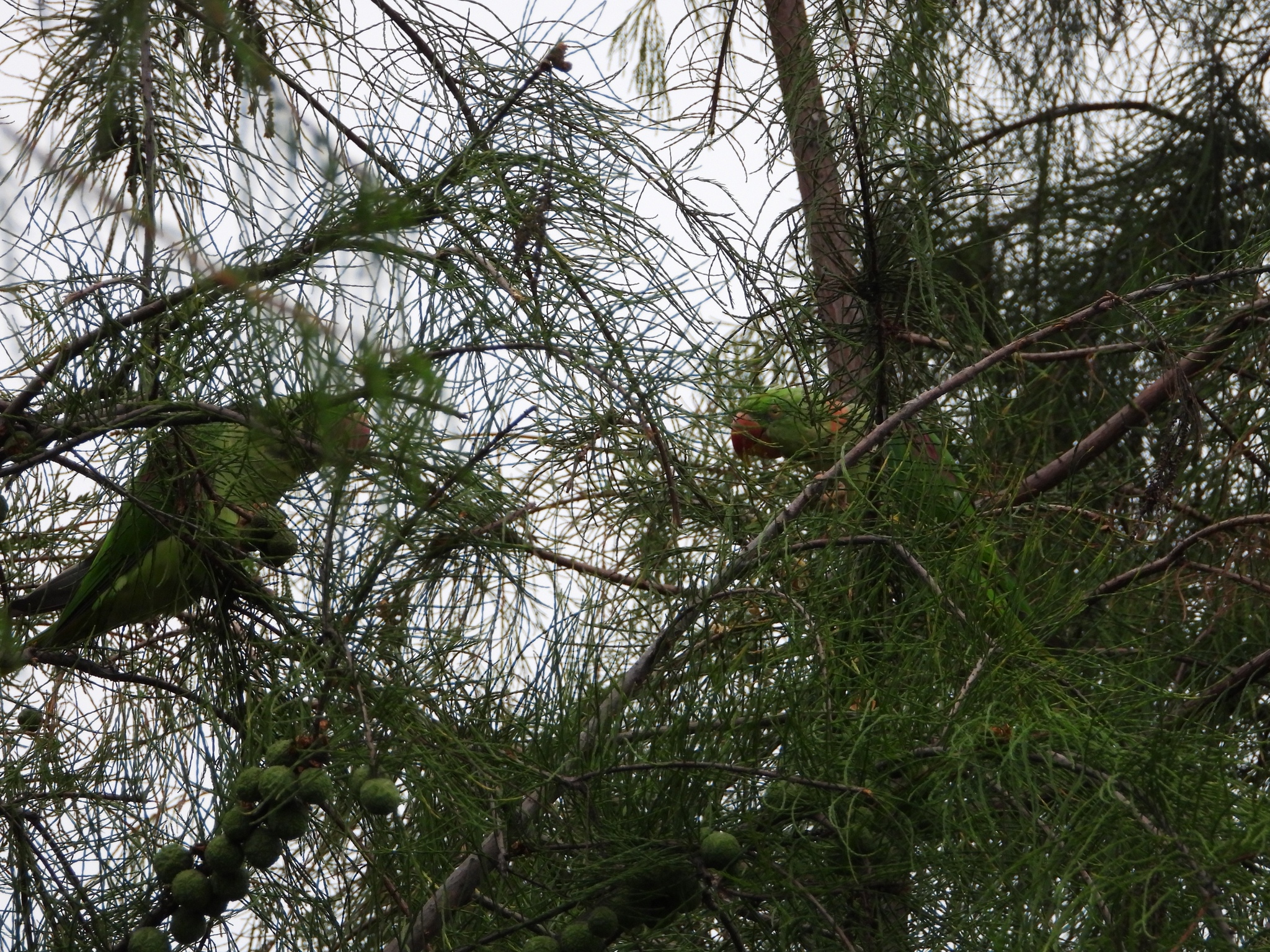
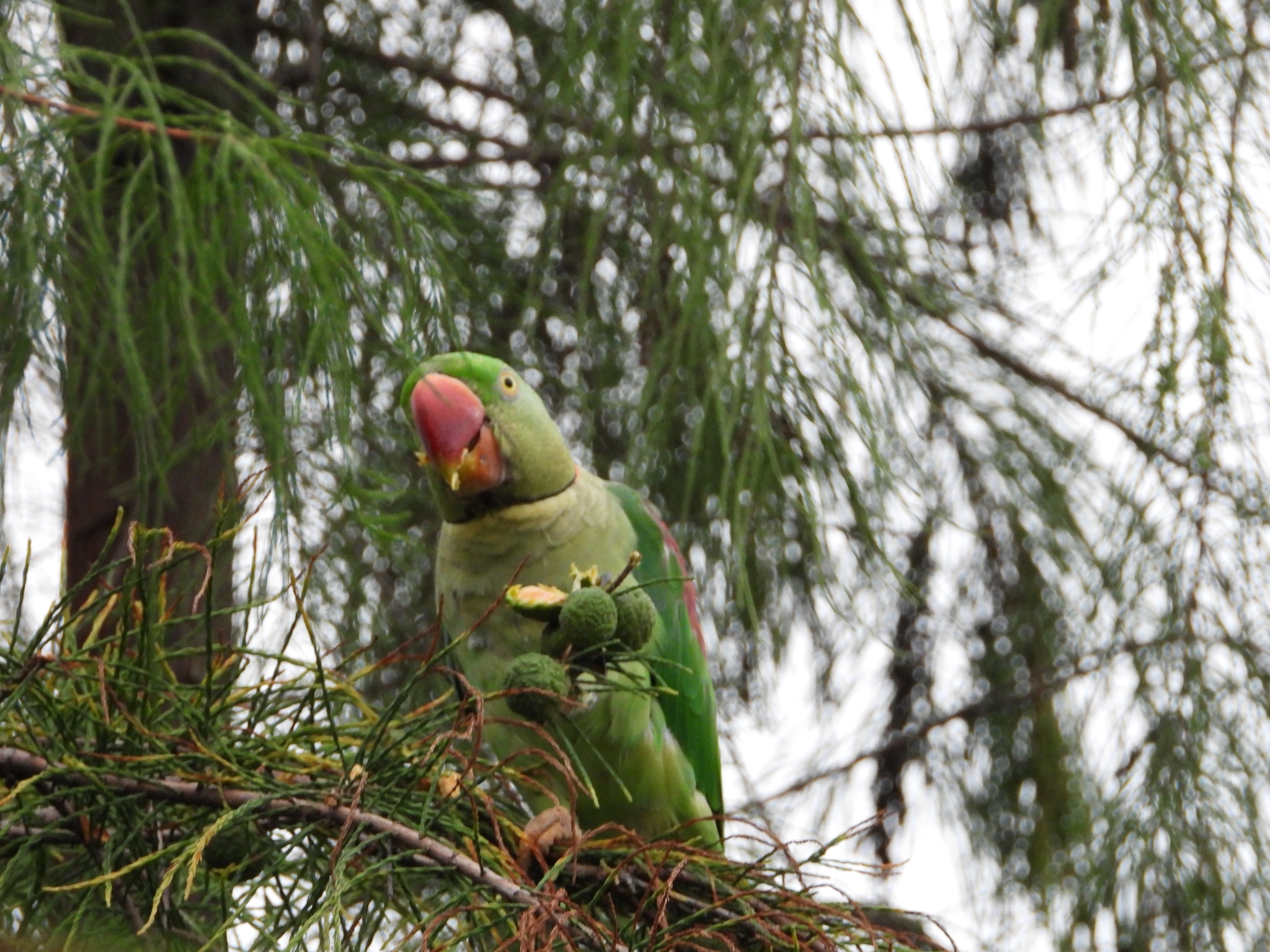
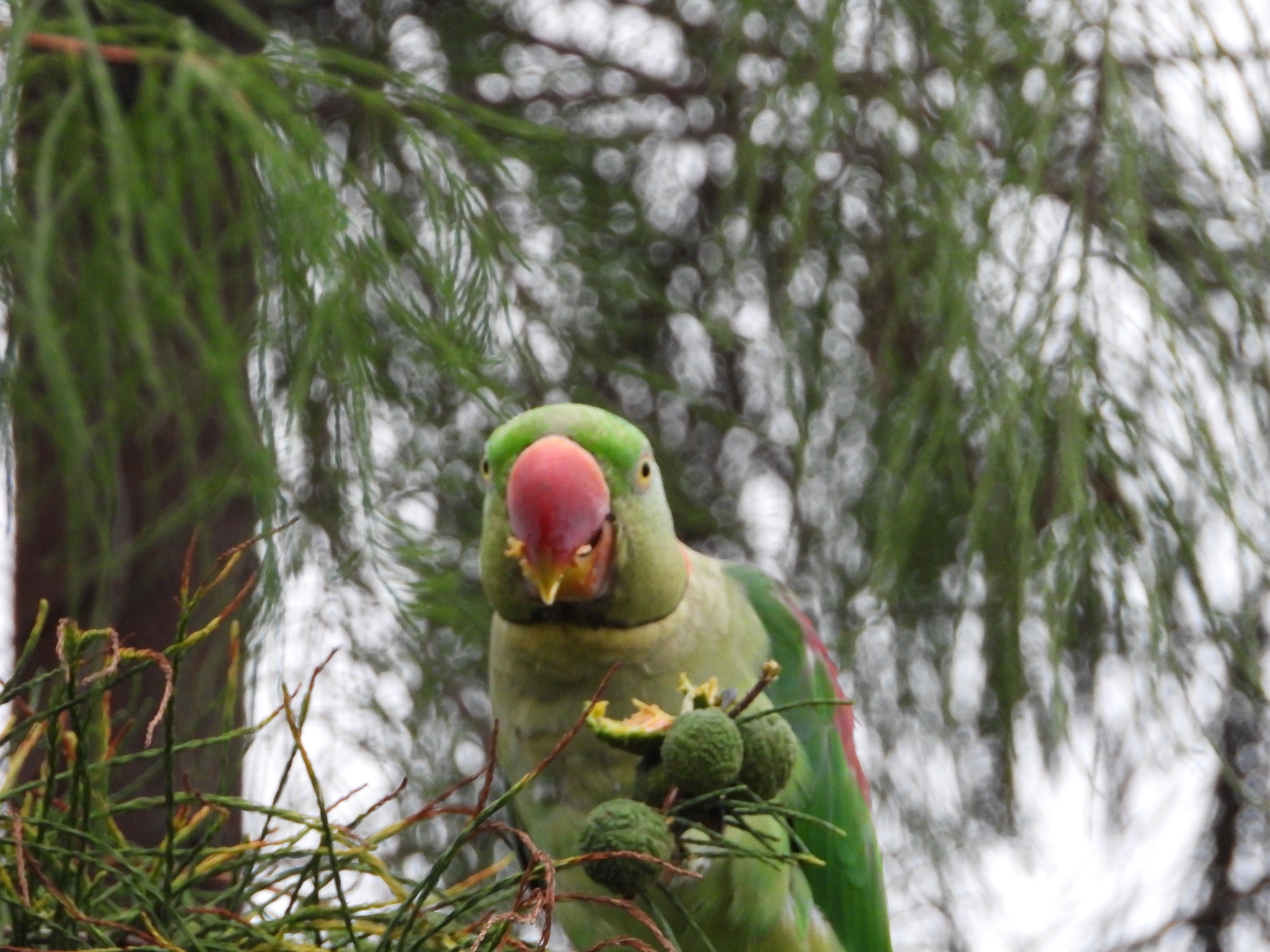
Alexandrine Parakeet
Psittacula eupatria
亚历山大鹦鹉
Introduction
A medium-sized parrot in the genus Psittacula of the family Psittaculidae. Native to South Asia and Southeast Asia. Inhabits forests, woodlands, agricultural lands, and mangrove forests at elevations up to 900 m. Characterized by its large size among parakeets, massive red beak with yellow tips, and deep, harsh, resonant calls. Established feral populations exist in Turkey, Iraq, Kuwait, Saudi Arabia, Bahrain, Qatar, United Arab Emirates, Iran, and Pakistan, often alongside rose-ringed parakeets. Listed as Near Threatened by the IUCN due to steep population declines from habitat loss, persecution, and capture for the illegal wildlife trade.
Description
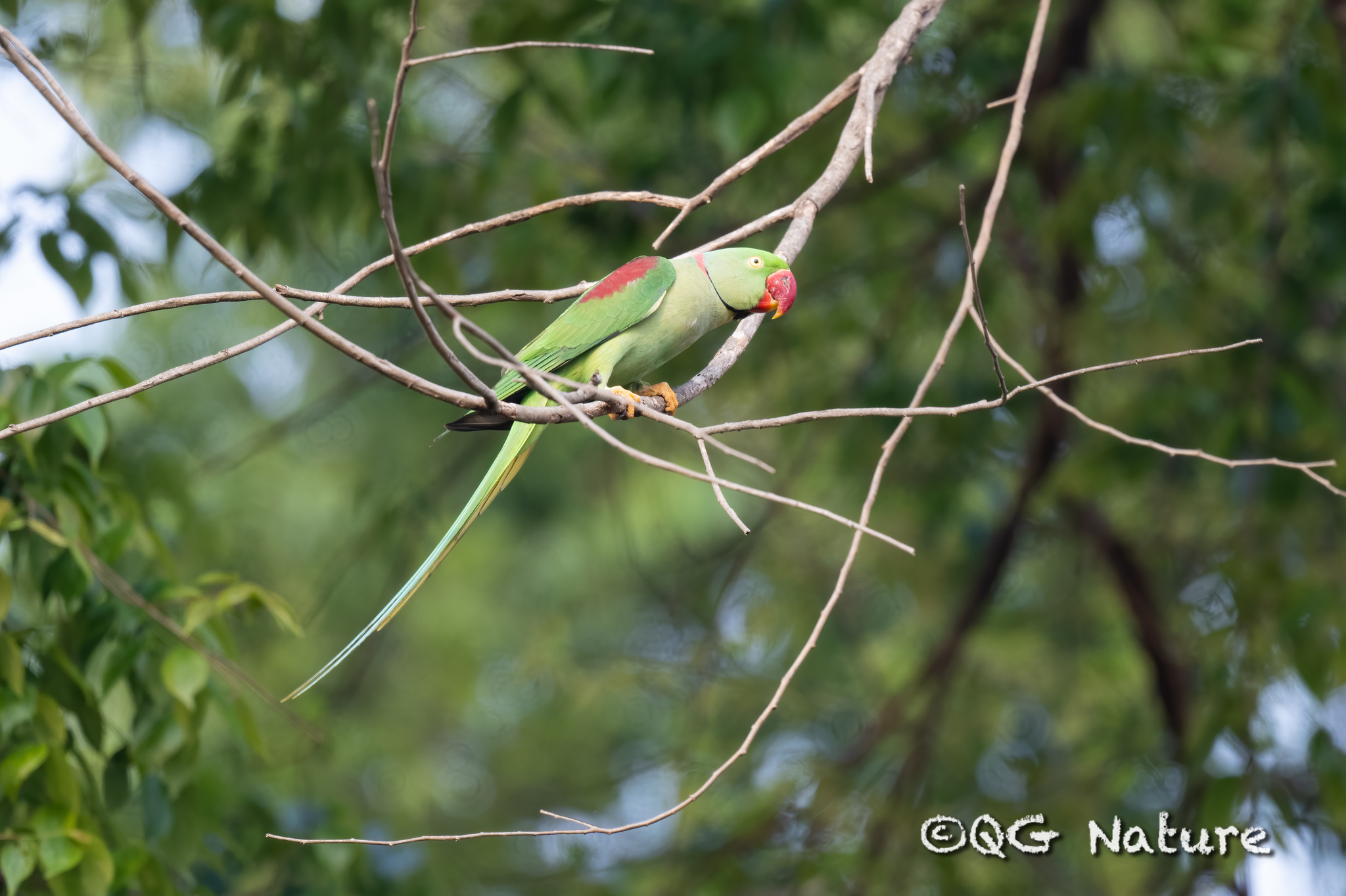
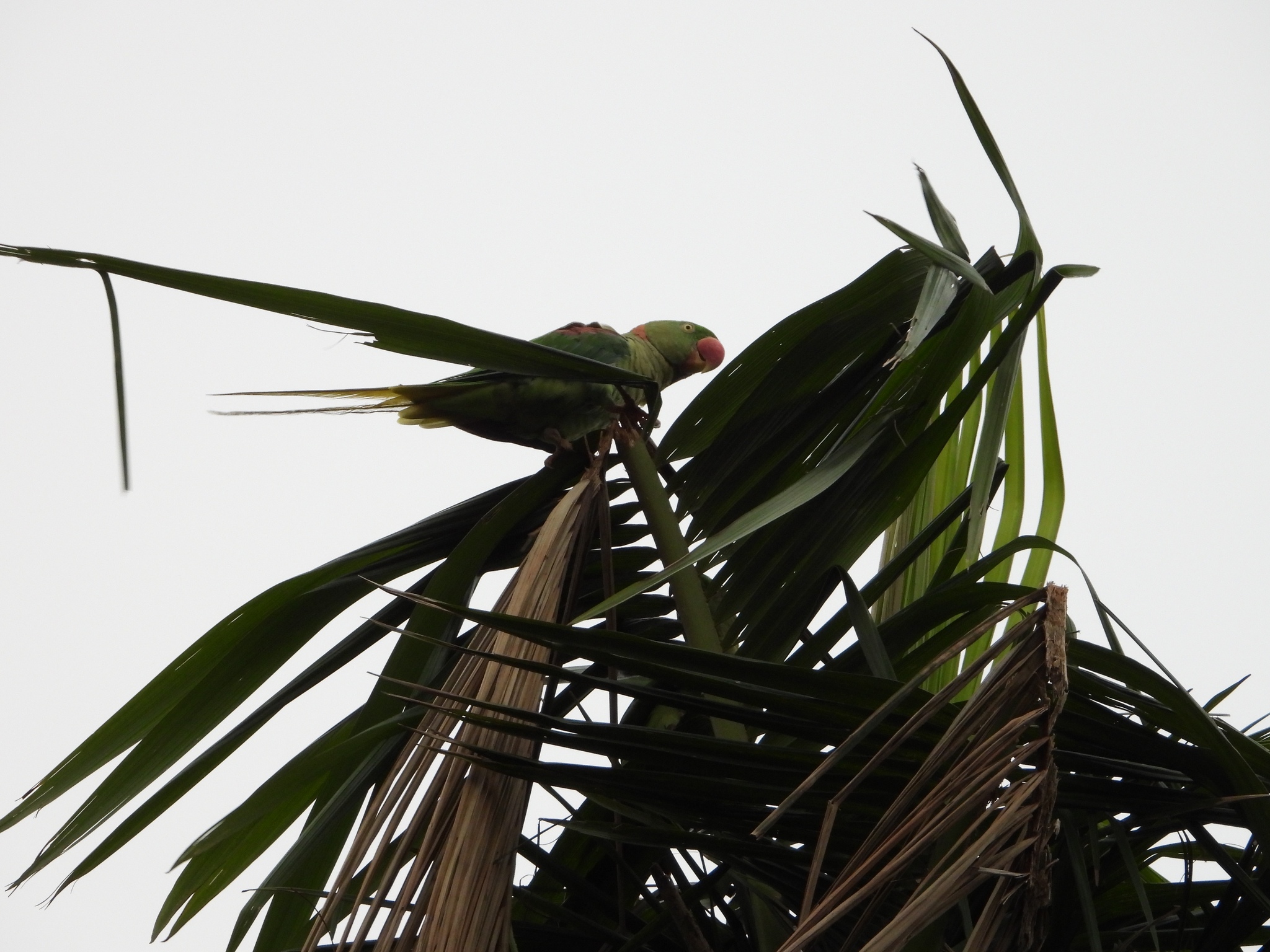
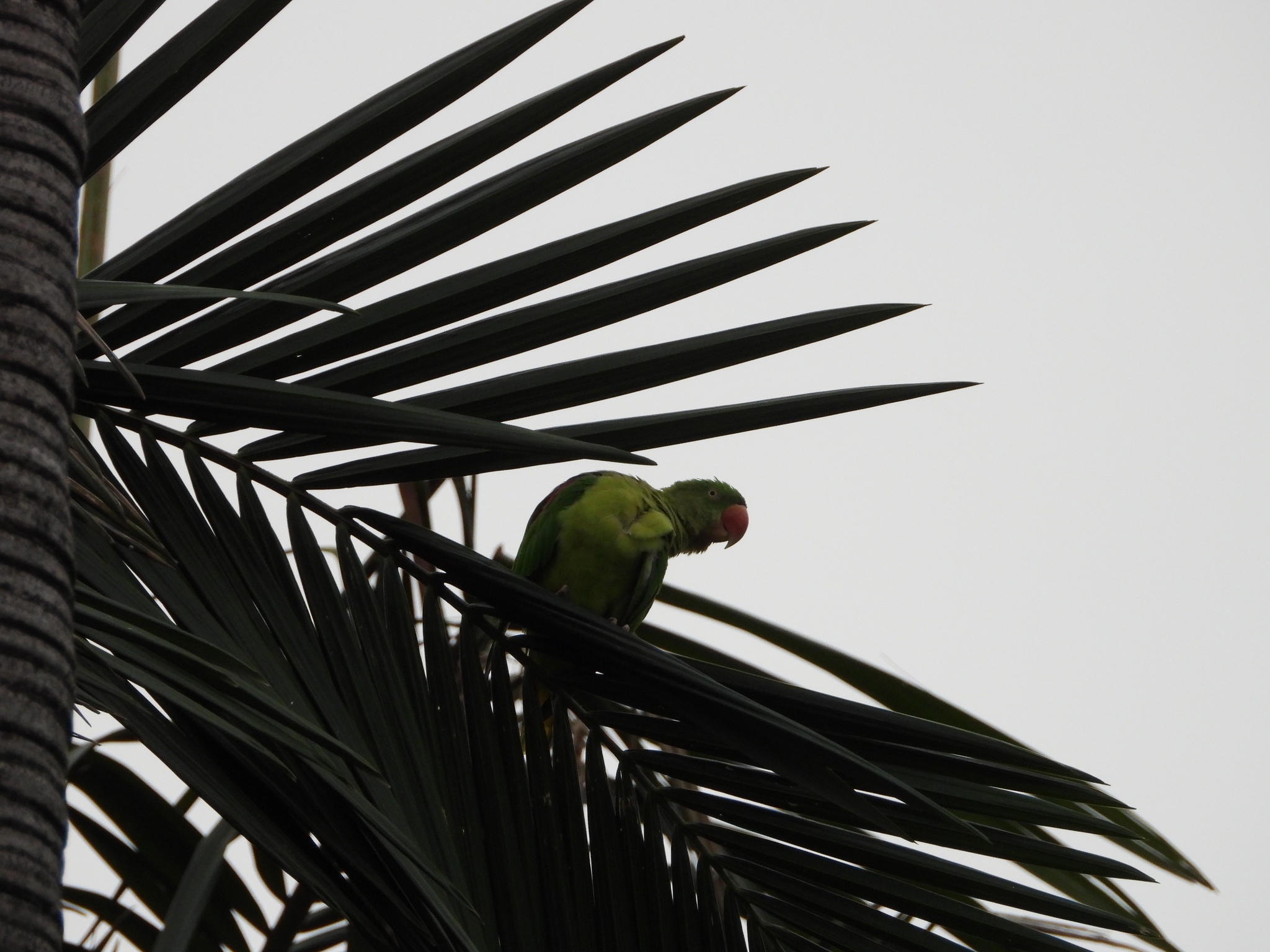
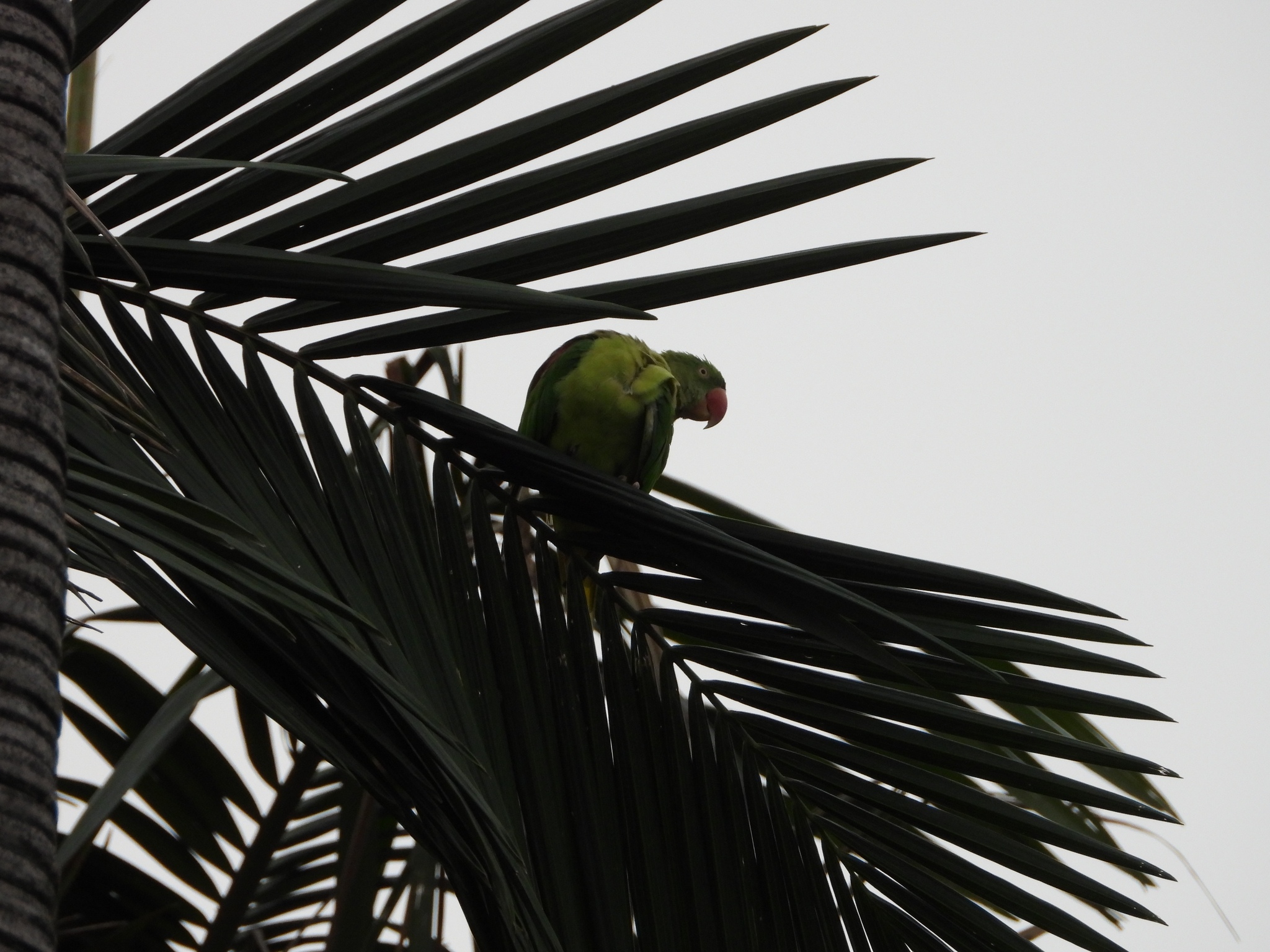
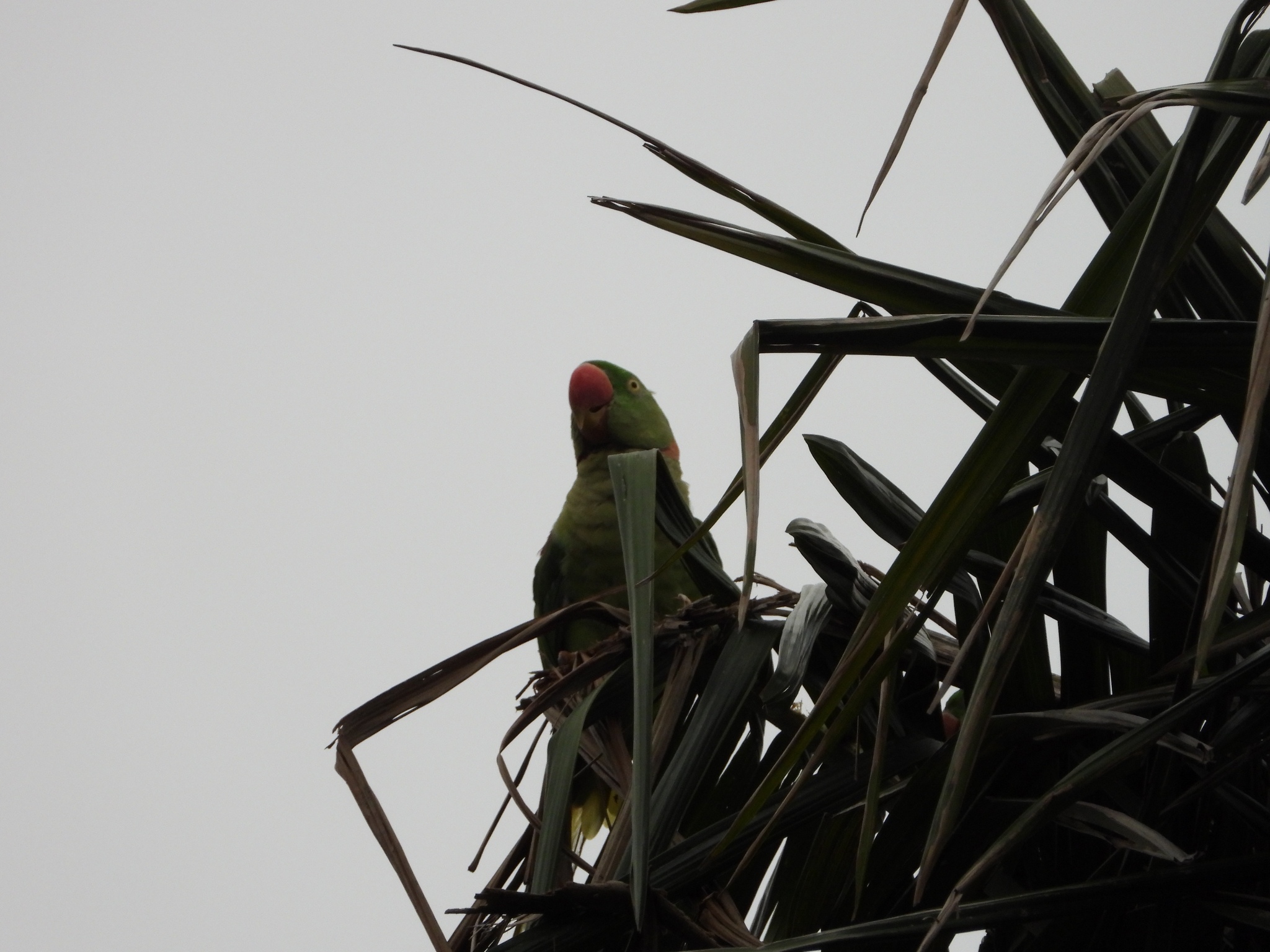
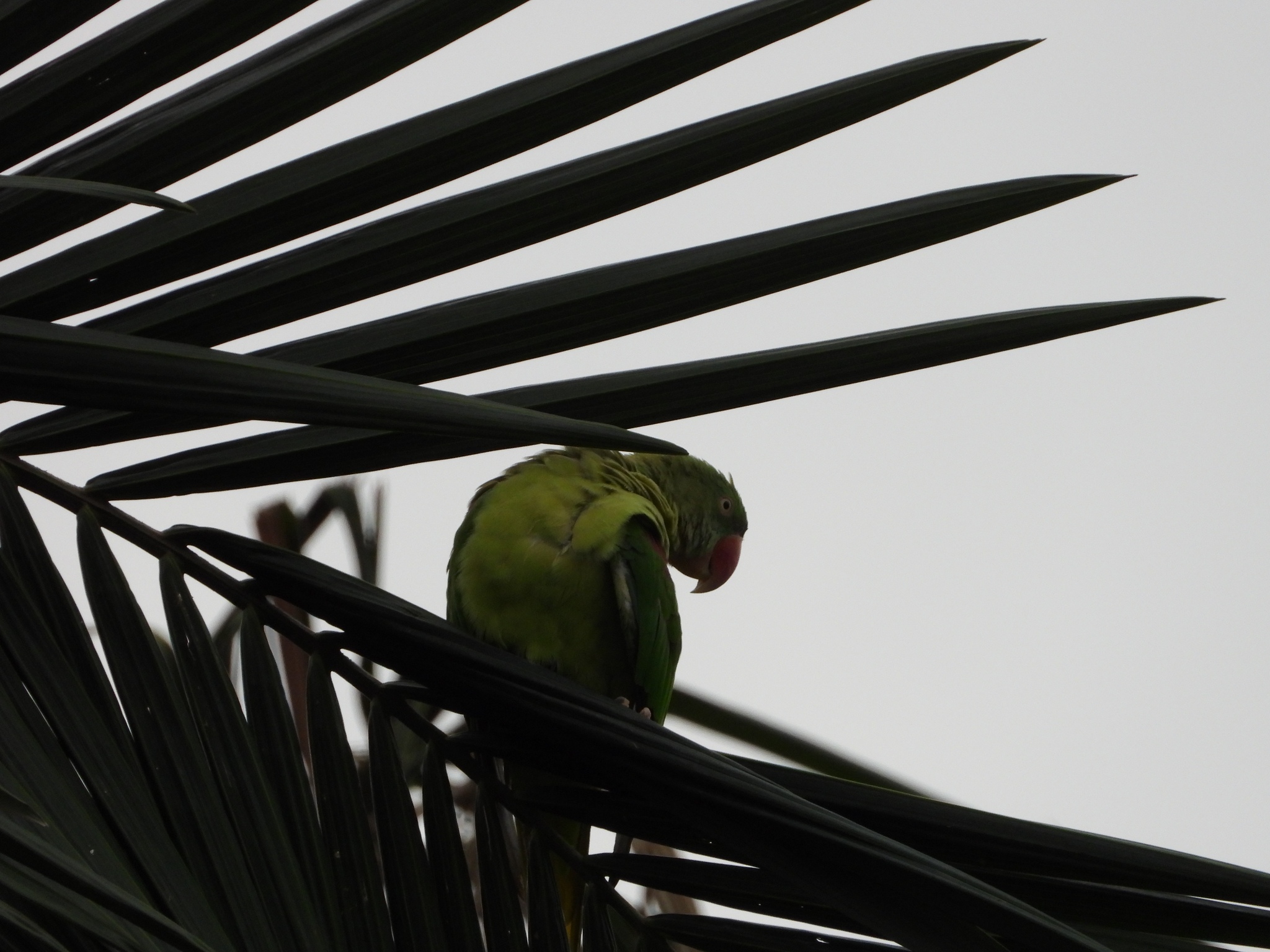
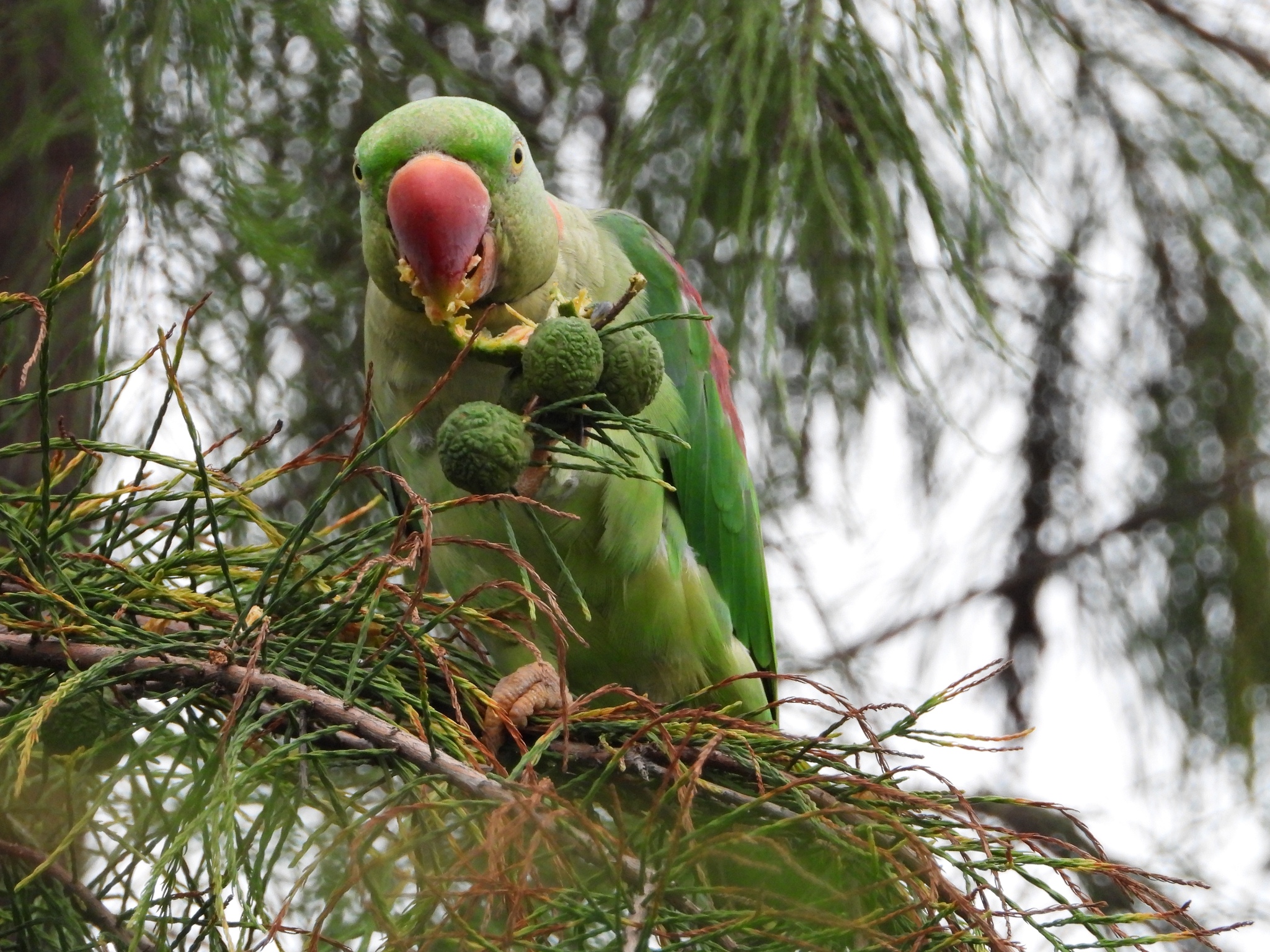
One of the largest parakeets, measuring 56-62 cm from head to tail tip and weighing 200-300 g. The tail alone measures 28-35 cm. Predominantly green plumage with a light blue-grey sheen on the cheeks and nape, yellow-green abdomen, and a distinctive red patch on the shoulders. Features a massive red beak with yellow tips. Upper tail is green transitioning to blue then yellow at the tip; underside is yellow. Sexually dimorphic: adult males display a black stripe across the lower cheeks and a pink band on the nape, while adult females lack both markings. Juveniles resemble adult females but have shorter tails.
Identification
Distinguished from similar species, particularly the rose-ringed parakeet, by its larger size and deeper, harsher, more resonant calls. The massive red beak with yellow tips and the combination of cheek and nape coloration patterns in adult males are key identification features. The red shoulder patch and blue-grey cheek and nape sheen distinguish it from other green parakeets in its range.
Distribution & Habitat
Native range encompasses South Asia and Southeast Asia. Feral populations have become established across the Middle East including Turkey, Iraq, Kuwait, Saudi Arabia, Bahrain, Qatar, United Arab Emirates, and Iran, as well as Pakistan. Inhabits various woodland and forest habitats including forests, woodlands, agricultural lands, and mangrove forests up to 900 m elevation. Shows some adaptability to human-modified landscapes.
Behavior & Ecology
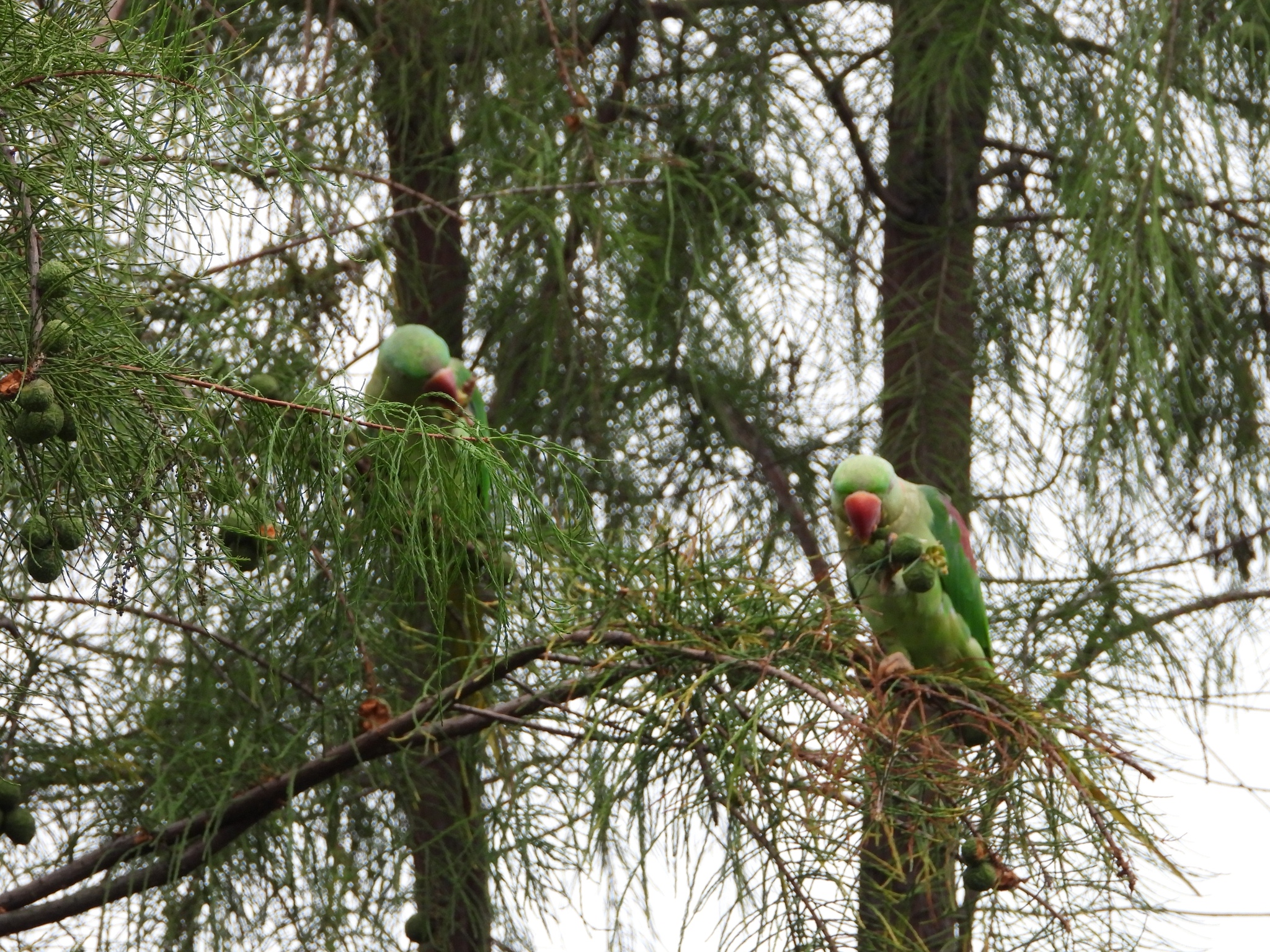
Feeds on a variety of wild and cultivated seeds, buds, fruits, and nuts; flocks can cause significant damage to ripening fruits and grain crops such as maize and jowar. Typically lives in small flocks but forms larger aggregations where food is abundant or at communal roosts. Vocalizations include a ringing trrrieuw, loud kree-aar or keeak, deep klak-klak-klak-klak, and resonant gr-aak; calls are notably deeper and harsher than those of the rose-ringed parakeet. Known to imitate human speech in captivity. Breeding occurs from November to April in the native range, with nests in tree hollows or building cracks. Clutch size is 2-4 white eggs measuring 27-34 mm; incubation period averages 24 days. Chicks fledge at about 7 weeks and remain dependent until 3-4 months of age.
Conservation
Classified as Near Threatened by the IUCN due to steep population declines throughout its native range. Primary threats include habitat loss, persecution, and excessive capture for the illegal wildlife trade. Population decreases are most severe in Sindh and Punjab provinces of Pakistan, Laos, northwestern and southwestern Cambodia, and Thailand. Considered sporadic in South India, uncommon in Bangladesh, and declining in North Bengal and parts of Sri Lanka. While sale is banned in India, enforcement is inadequate; illegal trade continues openly in urban bird markets. Trade remains legal in Pakistan, with birds openly sold in Lahore and Rawalpindi markets.
Culture
Featured on postage stamps issued by Sri Lanka, Vietnam, Thailand, Mongolia, and Iran. The species name honors Alexander the Great, who reportedly transported numerous birds from Punjab to European and Mediterranean regions where they were prized by royalty, nobility, and warlords. Historical accounts suggest Alexander himself kept one as a pet. The species remains one of the most sought-after cage birds in the Indian market.
Source: Wikipedia · CC BY-SA 3.0
Taxonomy
- Order
- Psittaciformes
- Family
- Psittaculidae
- Genus
- Psittacula
- eBird Code
- alepar2
Vocalizations
Subspecies (5)
-
Psittacula eupatria avensis
northern Myanmar and adjacent northeastern India
-
Psittacula eupatria eupatria
southern India and Sri Lanka
-
Psittacula eupatria magnirostris
Andaman Islands
-
Psittacula eupatria nipalensis
eastern Afghanistan to Pakistan, northern India, and Bangladesh
-
Psittacula eupatria siamensis
Thailand to Laos, Cambodia, and Vietnam
Data Sources
Species description from Wikipedia, licensed under CC BY-SA 3.0.
Bird images and sounds sourced from GBIF, contributed by citizen scientists worldwide under Creative Commons licenses.
Taxonomy data from AviList 2025.