Lord Derby's Parakeet
Psittacula derbiana
大紫胸鹦鹉
Introduction
Psittacula derbiana is a parrot species endemic to the mountainous evergreen forests of the eastern Himalayas and adjacent regions. The species inhabits a restricted range spanning Arunachal Pradesh and Assam in India, with populations extending into Tibet, Sichuan, and Yunnan in China. Notably sexually dimorphic, males and females differ markedly in beak coloration and show subtle plumage differences. The species was reclassified from least concern to near threatened on the IUCN Red List in 2011 due to declining population trends.
Description
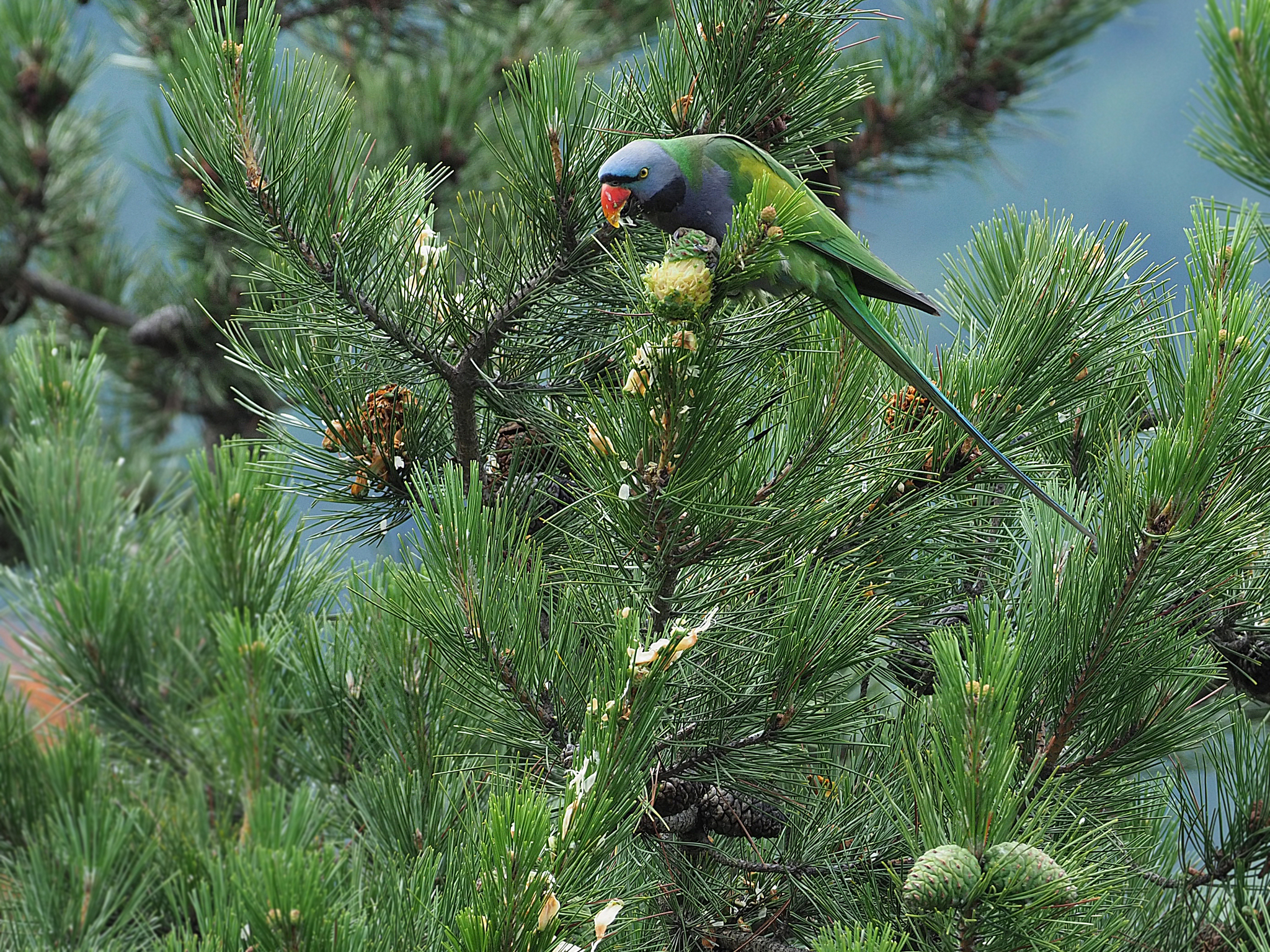
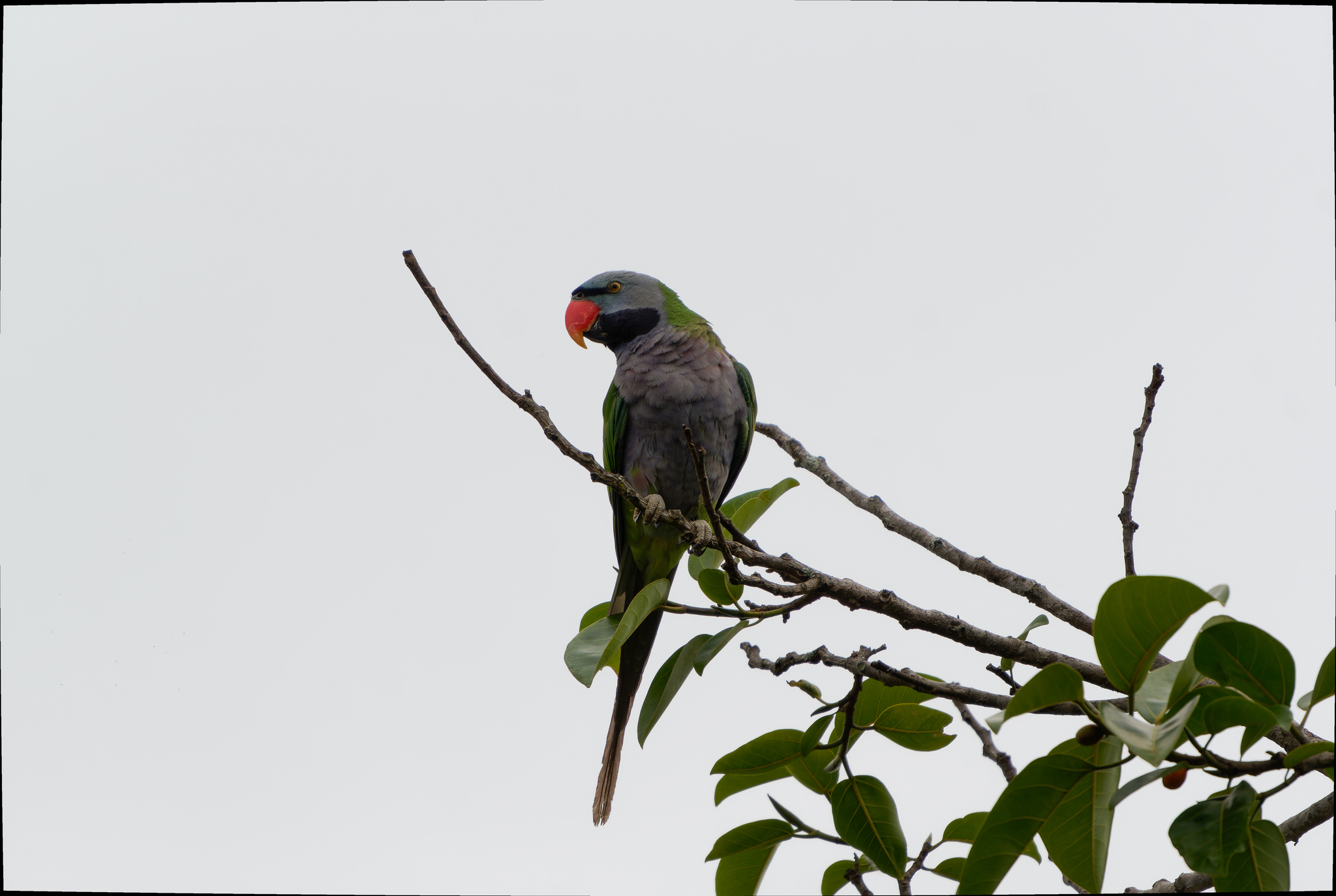
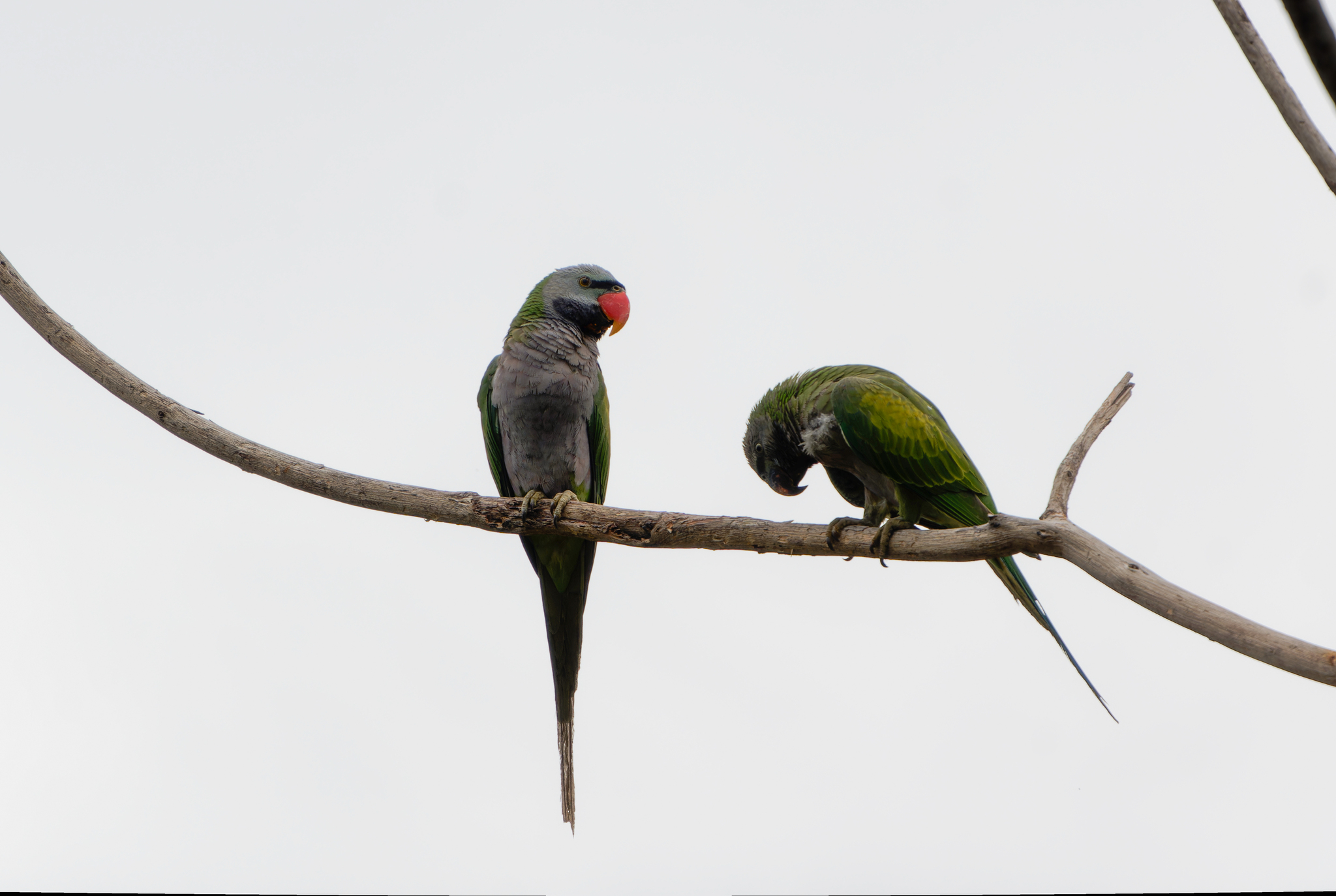
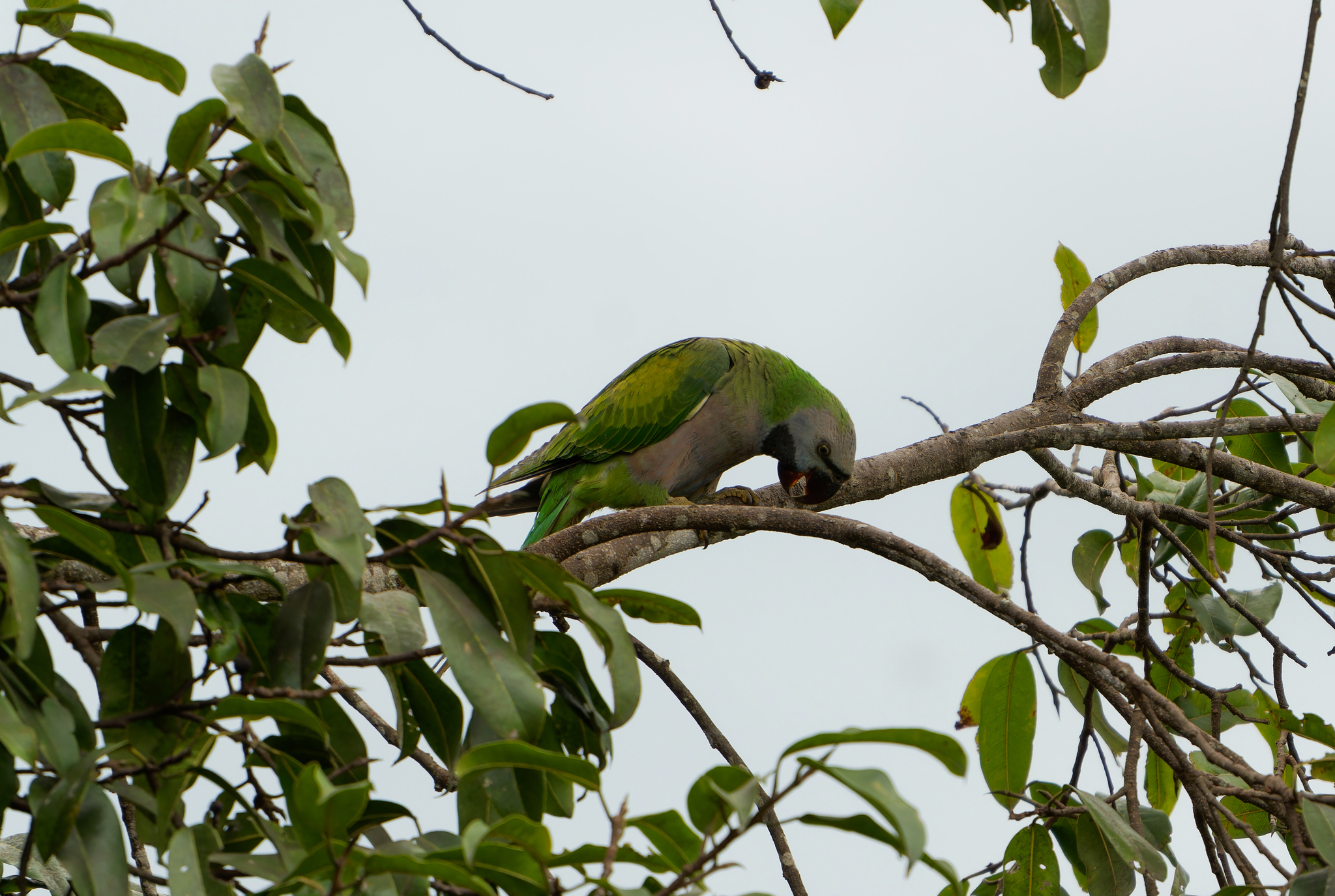
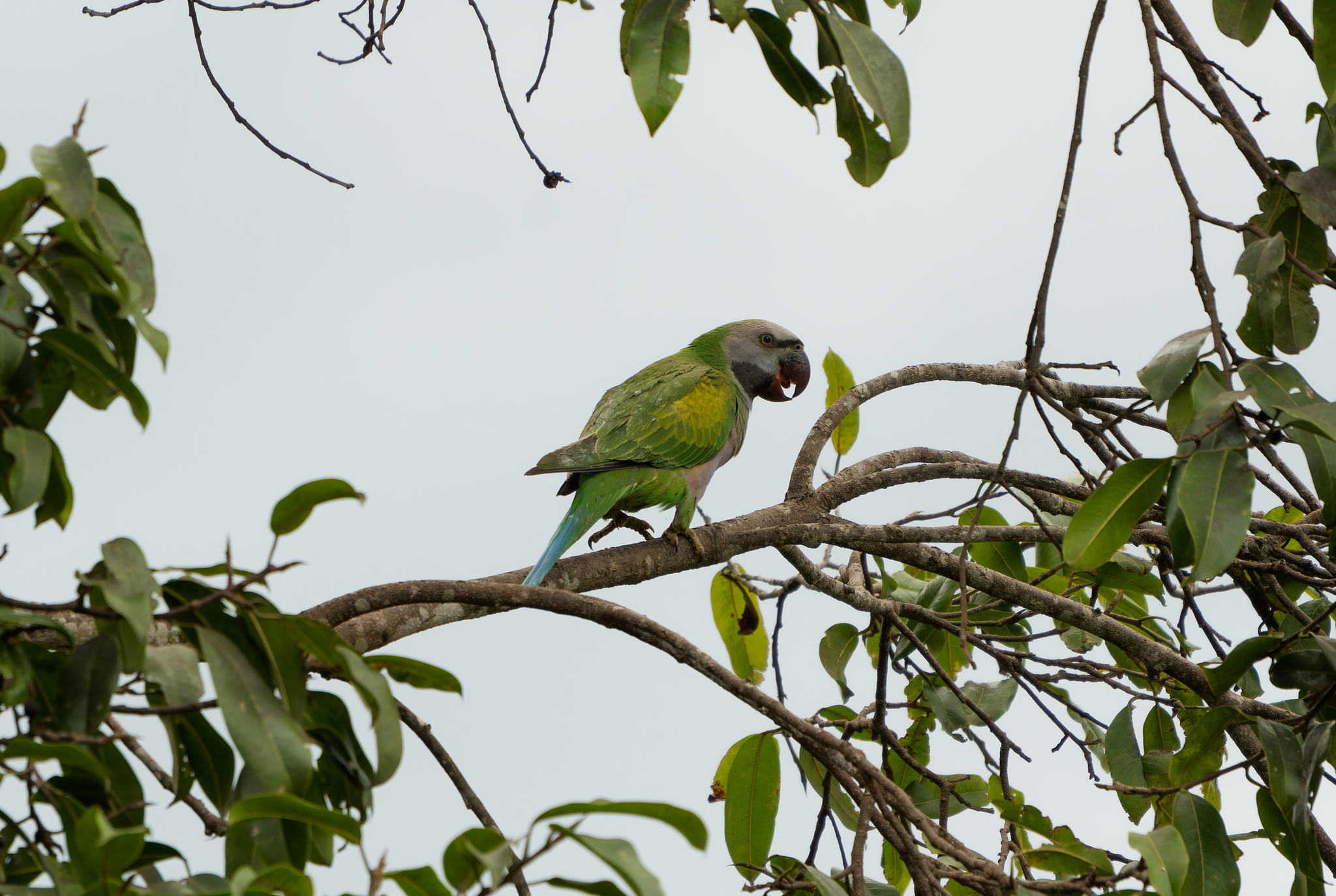
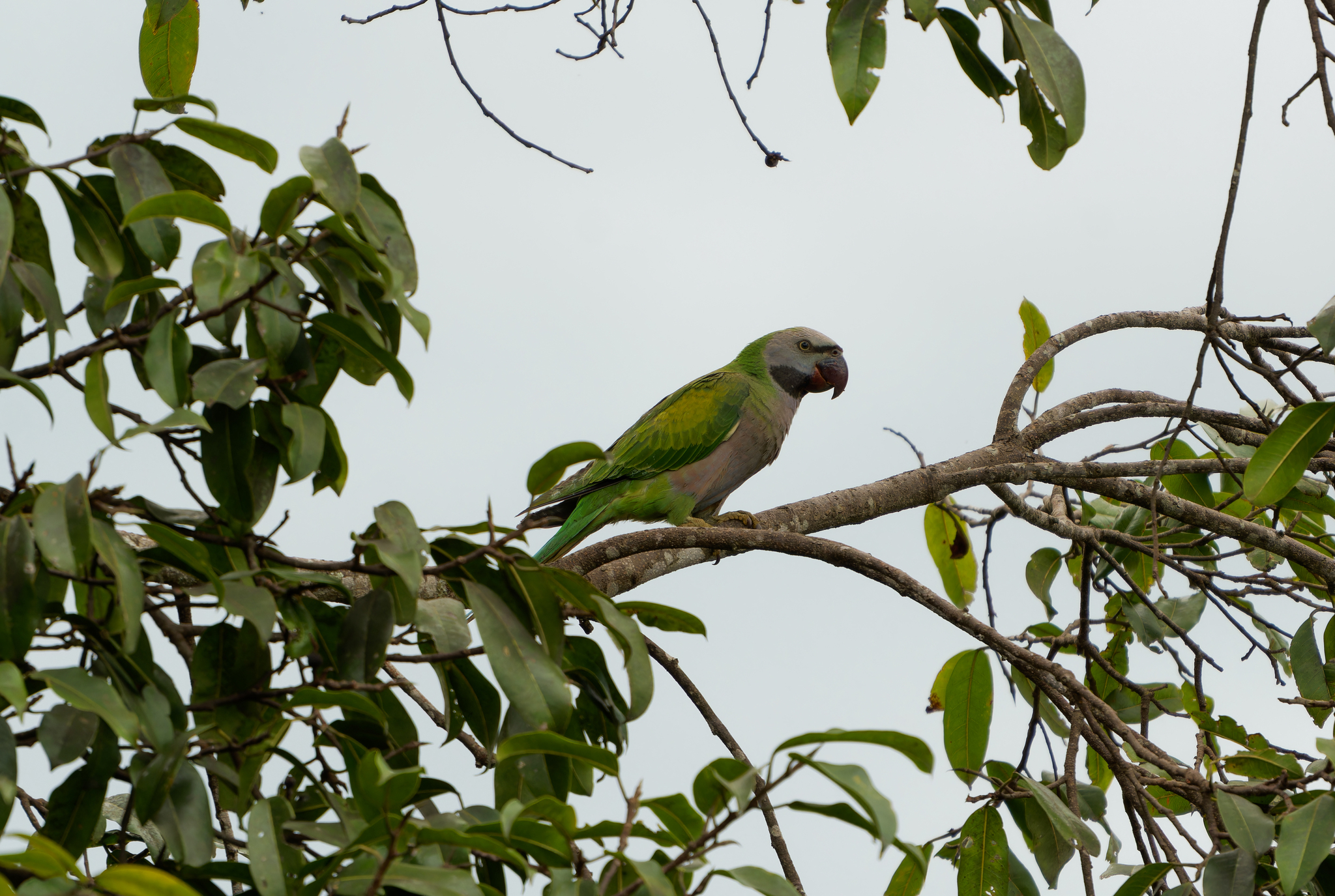
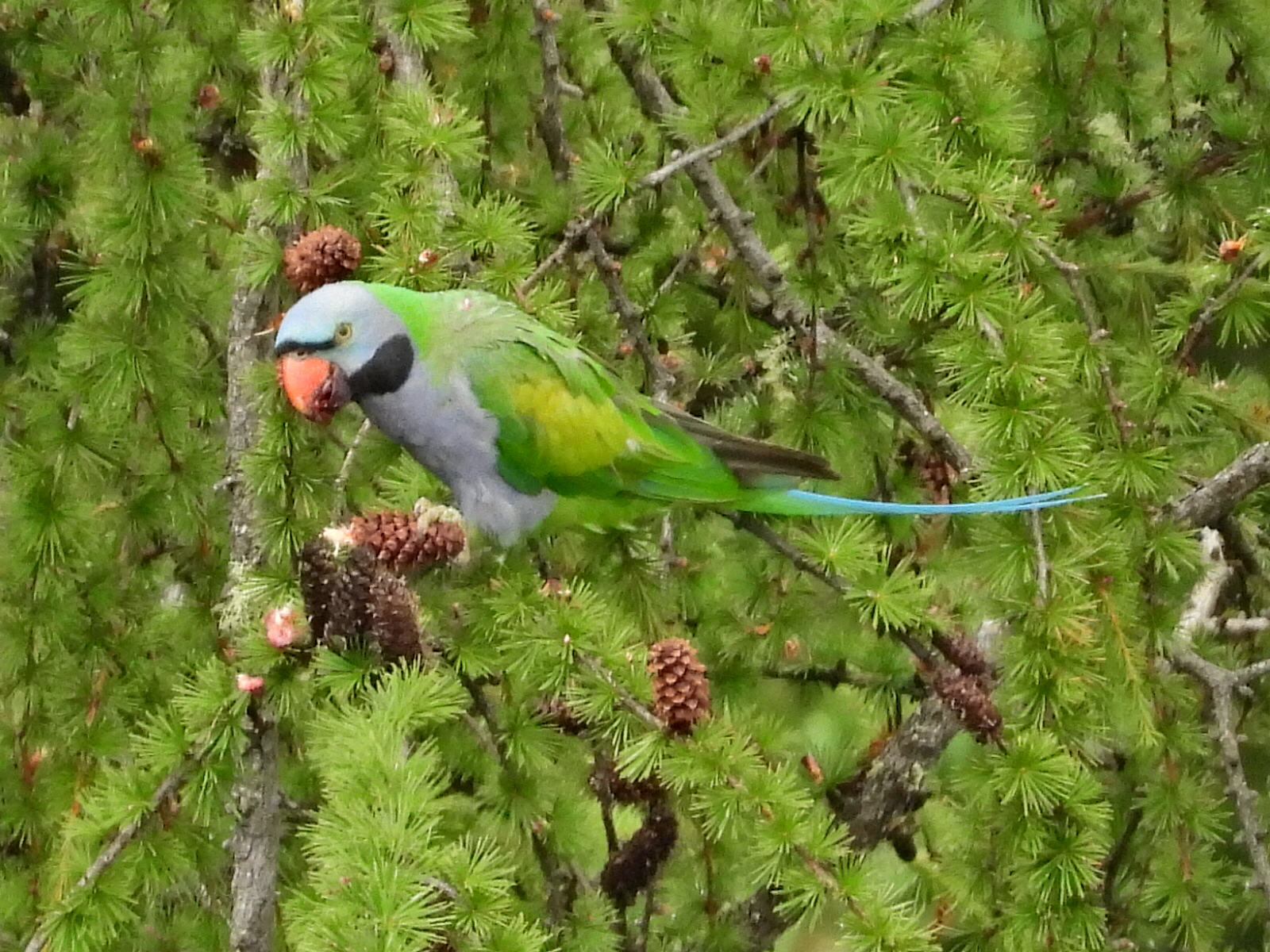
This medium-sized parakeet measures 45-50 cm (18-20 in) in length and exhibits strong sexual dimorphism. The upperparts are predominantly green with black lores and lower cheeks. The crown displays a bluish-purple coloration, contrasting with pale yellow irises. The throat, breast, abdomen, and under-wing coverts are greyish blue to lavender. The thighs and vent area appear yellowish green with blue feather edging. Tail feathers are green with blue margins. Males possess a red upper mandible with a yellow tip and black lower mandible; females have an entirely black beak. Immatures are duller overall with green crowns, orange-red beaks, and dark irises that lighten upon reaching maturity at 2-3 years.
Identification
The species' most reliable field mark is beak coloration: adult males show a red upper mandible with yellow tip and black lower mandible, while adult females have an all-black beak. The bluish-purple crown combined with black facial markings helps distinguish this species from other Psittacula parakeets in its range. Juveniles are identified by their duller green plumage and orange-red beaks.
Distribution & Habitat
The species has a highly restricted range limited to moist evergreen forest habitats in the hills and mountains of Arunachal Pradesh and Assam in northeastern India, with additional populations in adjoining areas of Tibet and the Chinese provinces of Sichuan and Yunnan. This localized distribution makes the species vulnerable to habitat fragmentation and collection pressure.
Behavior & Ecology
Diet consists of fruits, berries, seeds, and leaf buds. Birds occasionally forage in cultivated gardens and agricultural fields near forest edges. The breeding season occurs between April and June. Females lay clutches of 2-4 eggs measuring 36.1 mm × 27.7 mm in tree cavity nests. Incubation lasts approximately 23 days, with fledging occurring at 8-9 weeks. Divergence from other Psittacula species occurred between 0.2 and 0.5 million years ago.
Conservation
The species is classified as near threatened on the IUCN Red List, having been uplisted from least concern in 2011. Primary threats include the cutting of old-growth trees, which destroys critical nesting sites, and poaching for the illegal wildlife trade. The restricted and fragmented population is monitored through conservation programs focused on habitat protection and anti-poaching measures.
Culture
The specific epithet commemorates Edward Stanley, 13th Earl of Derby (1775-1851), a British nobleman and naturalist who served as president of the Linnean Society. The naming reflects the 19th-century practice of honoring prominent scientific patrons and naturalists through species designations.
Source: Wikipedia · CC BY-SA 3.0
Taxonomy
- Order
- Psittaciformes
- Family
- Psittaculidae
- Genus
- Psittacula
- eBird Code
- derpar1
Distribution
far southwestern China to southeastern Tibet and northeastern Assam
Data Sources
CBR Notes: IUCN红色名录等级由NT降为LC
Species description from Wikipedia, licensed under CC BY-SA 3.0.
Bird images and sounds sourced from GBIF, contributed by citizen scientists worldwide under Creative Commons licenses.
Taxonomy data from AviList 2025.