
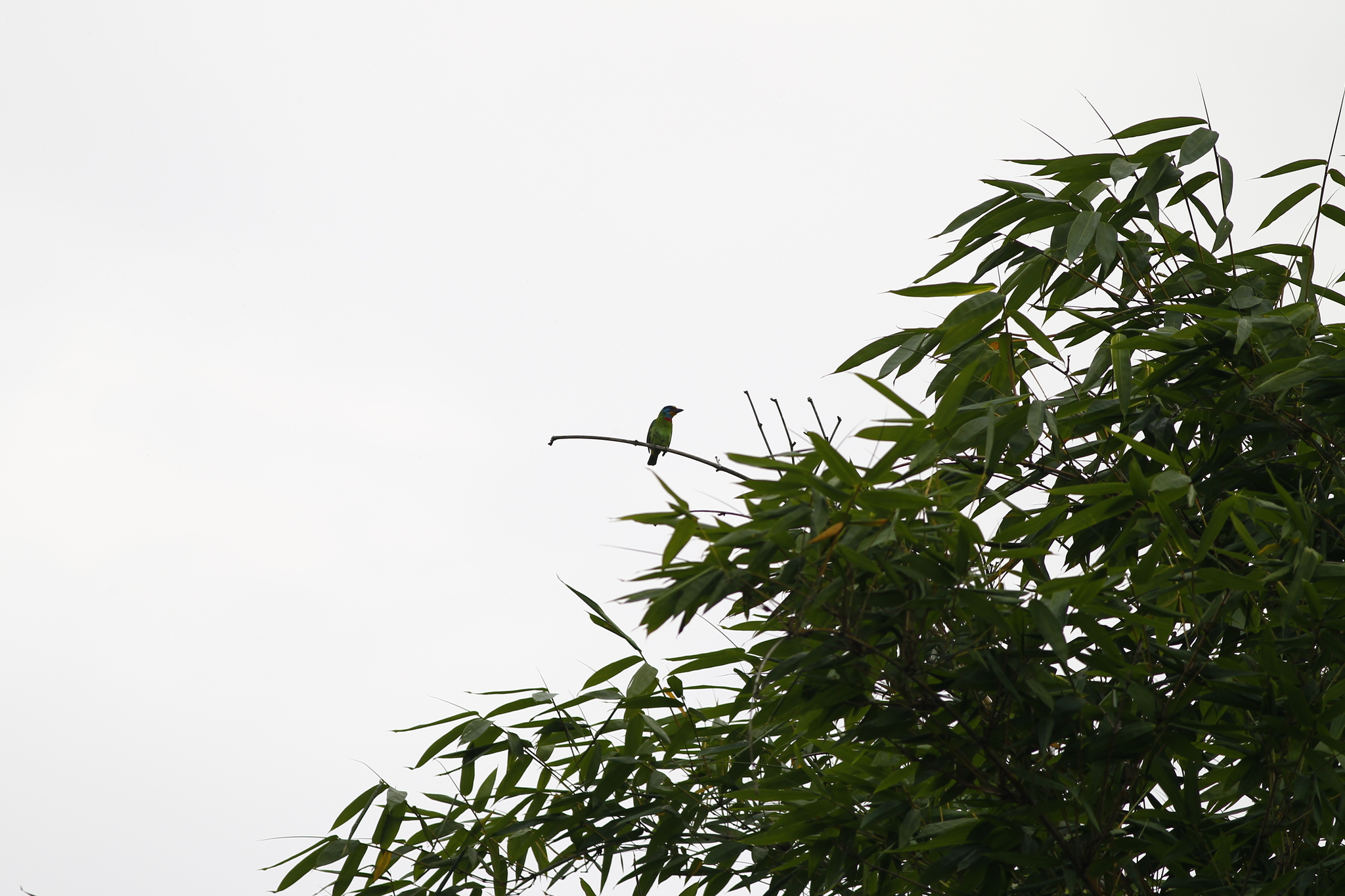
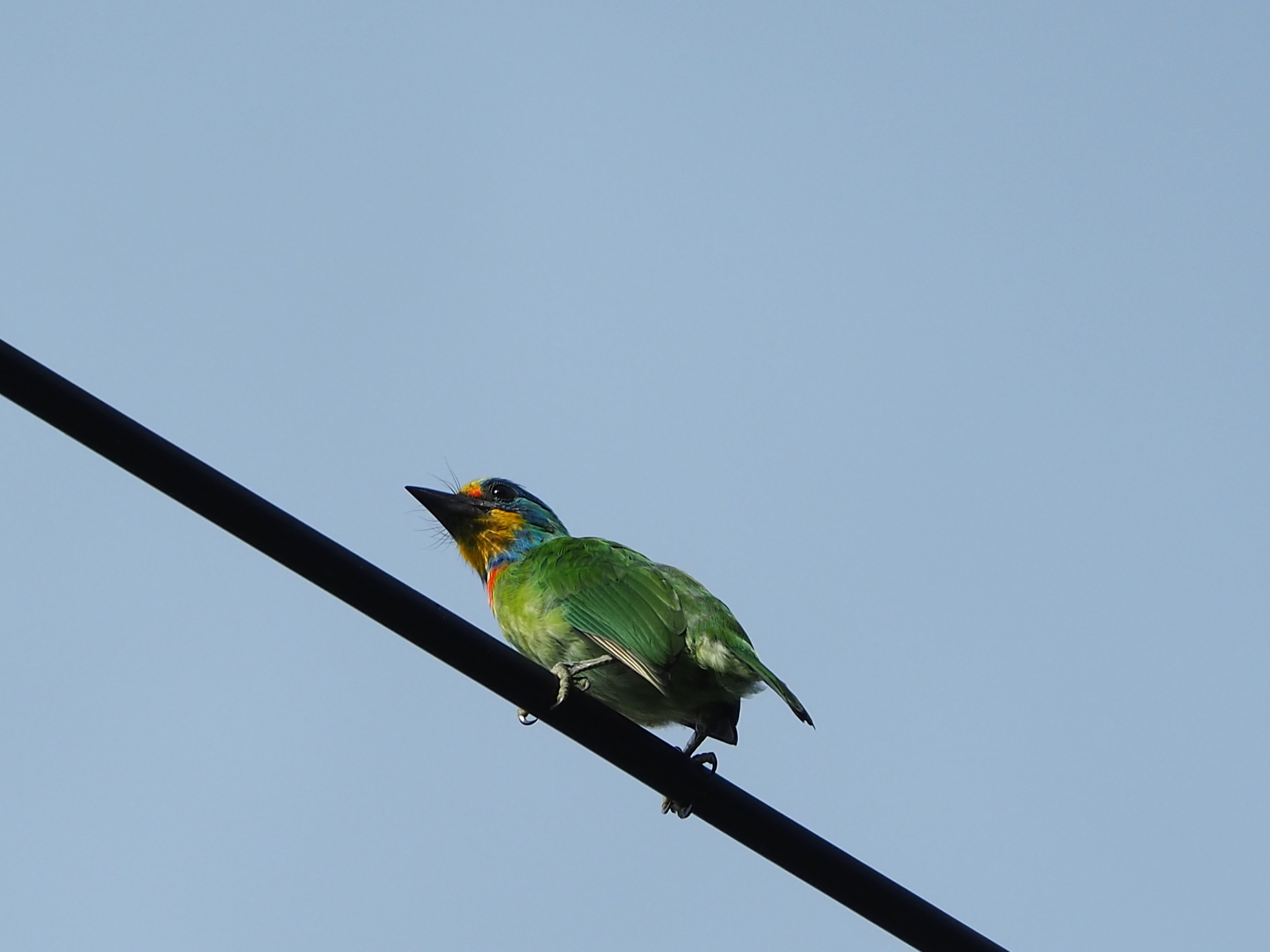
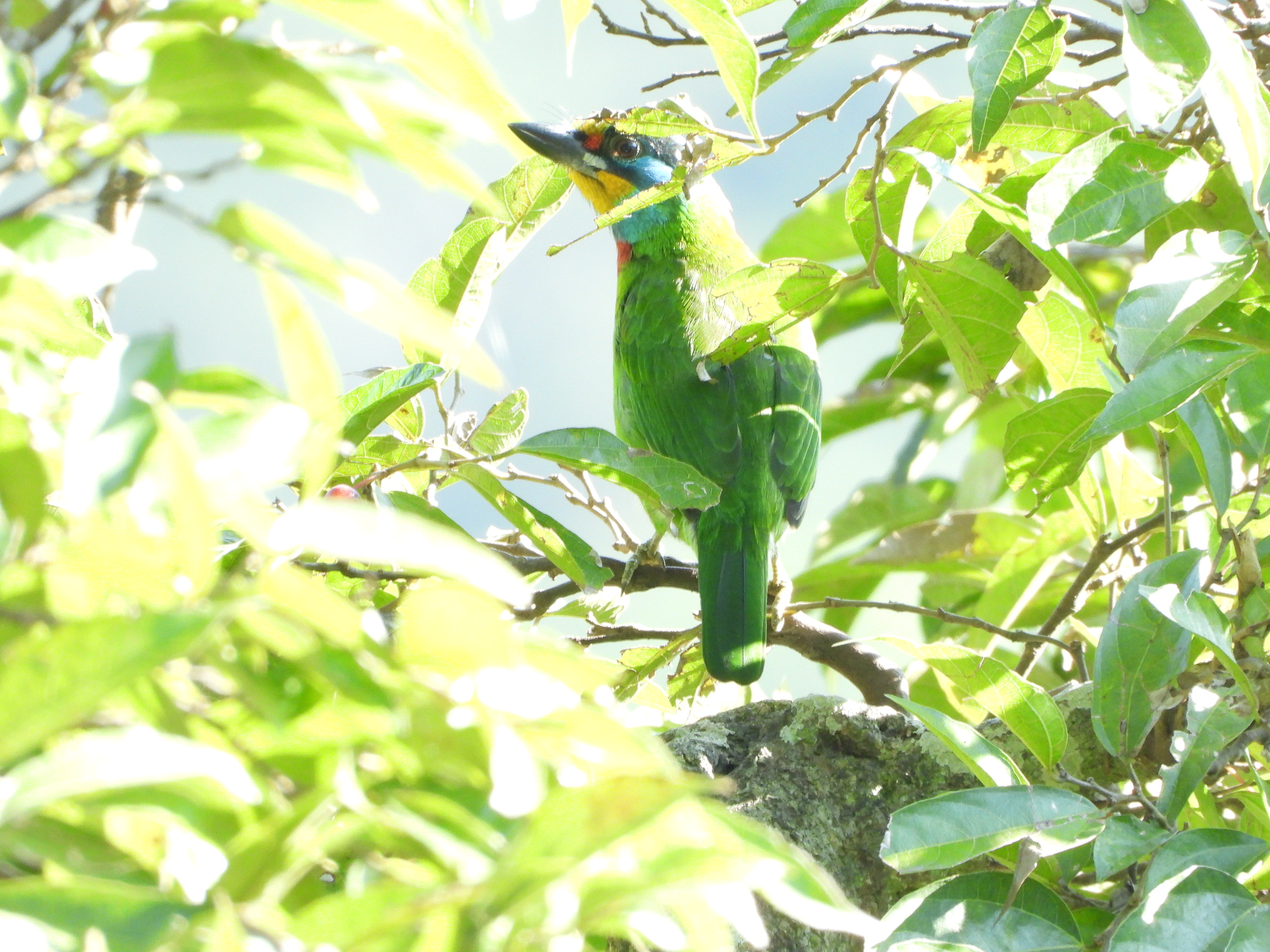
Taiwan Barbet
Psilopogon nuchalis
台湾拟啄木鸟
Introduction
A bird species in the family Megalaimidae endemic to Taiwan. Formerly classified as a subspecies of the black-browed barbet (Psilopogon oorti) in the genus Megalaima, it was reclassified into the genus Psilopogon. Inhabits forests at elevations up to 2,800 meters. Notable for its extremely colorful plumage featuring five distinct colors and its distinctive vocalization that resembles a wooden fish percussion instrument. Diet consists of fruits and insects. Breeding occurs from March to August in tree cavities.
Description
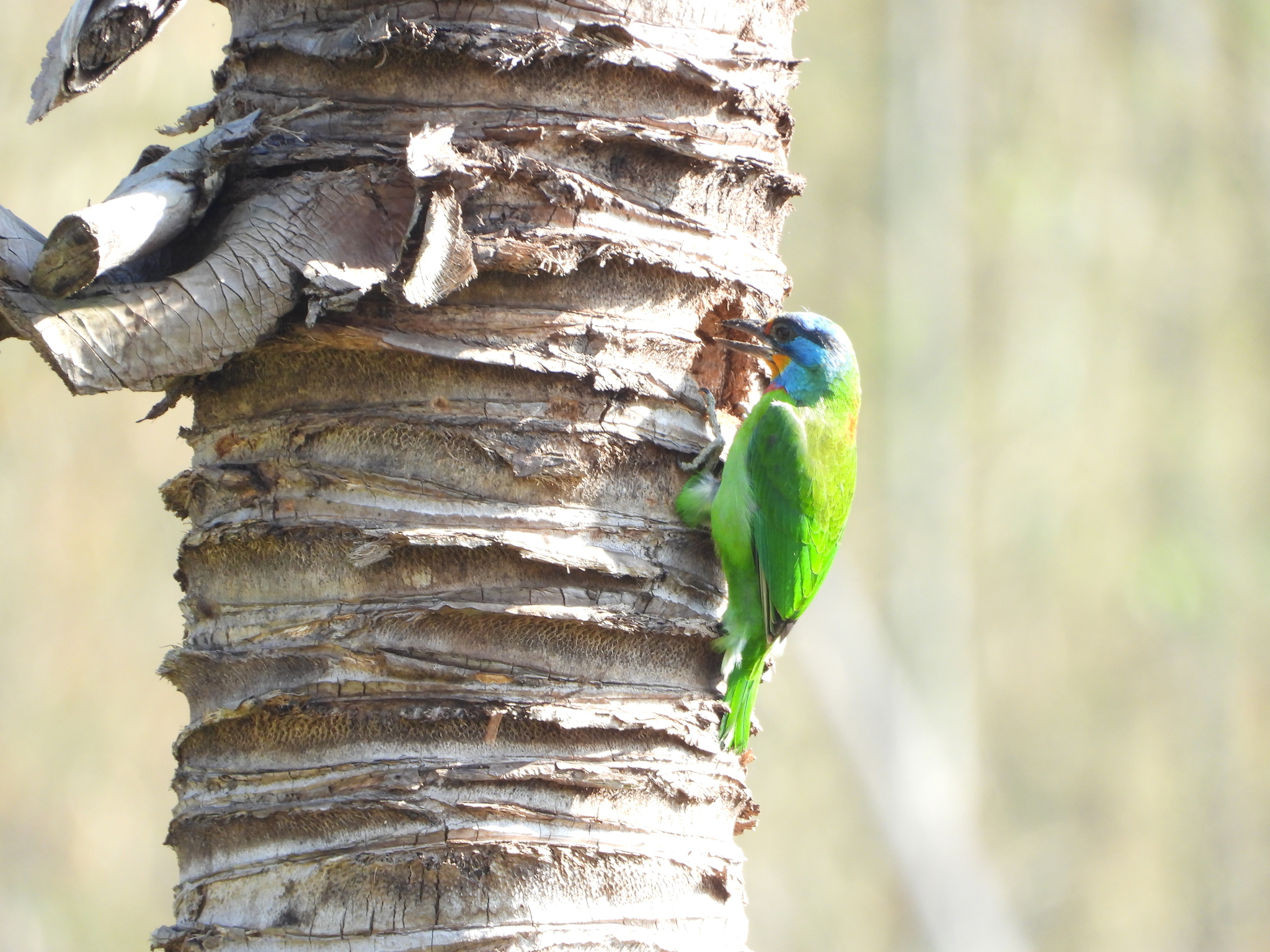
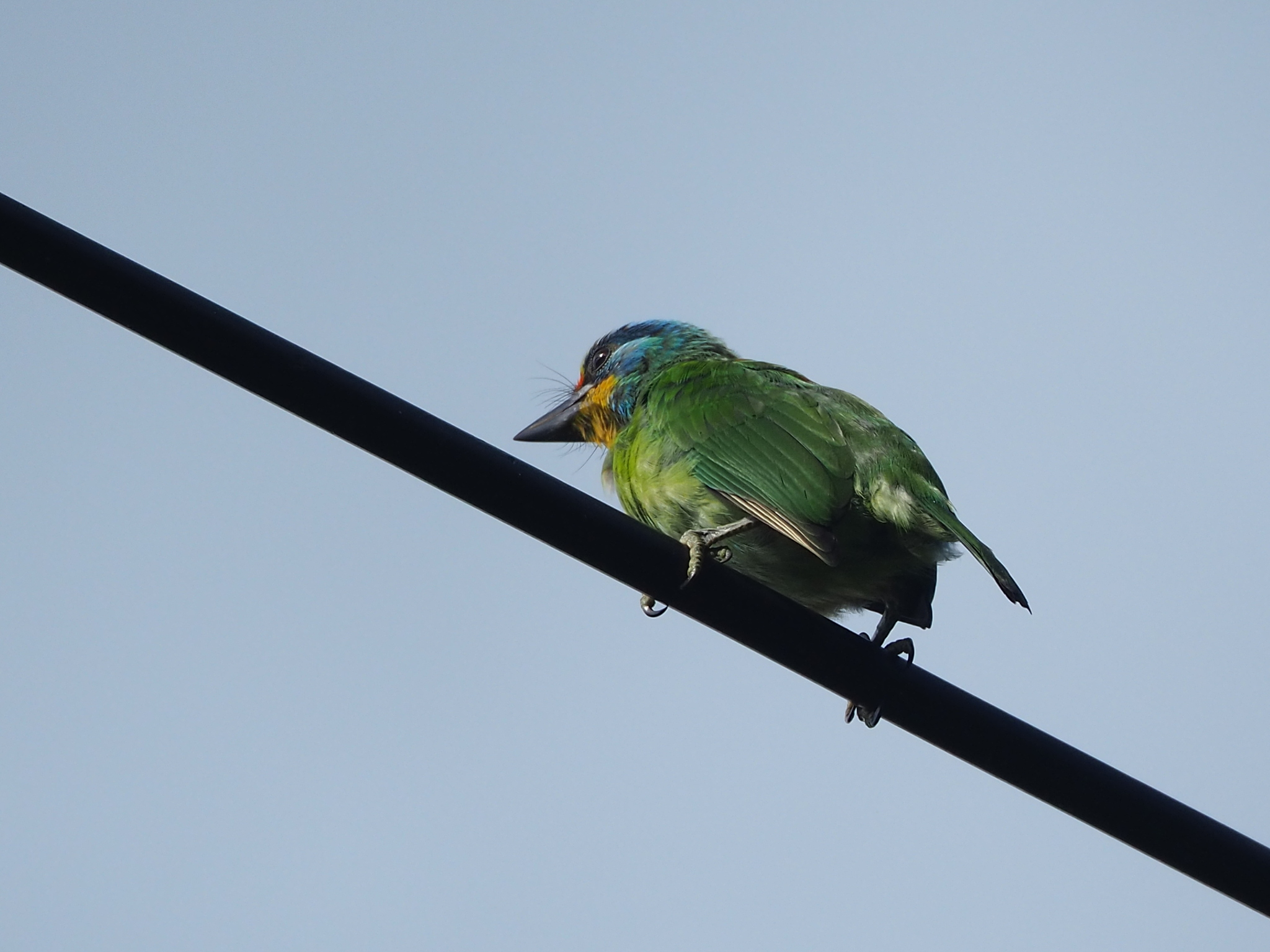
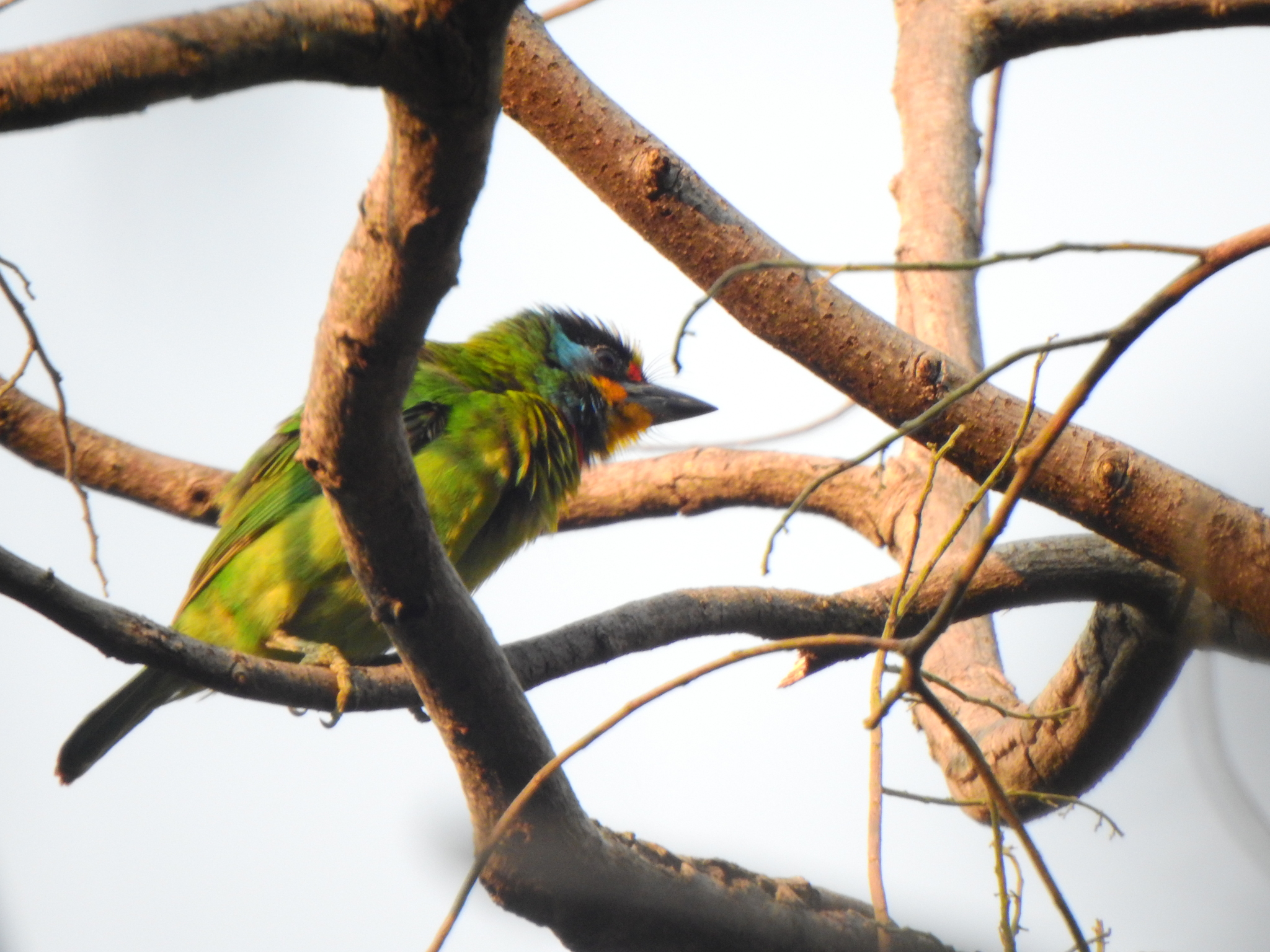
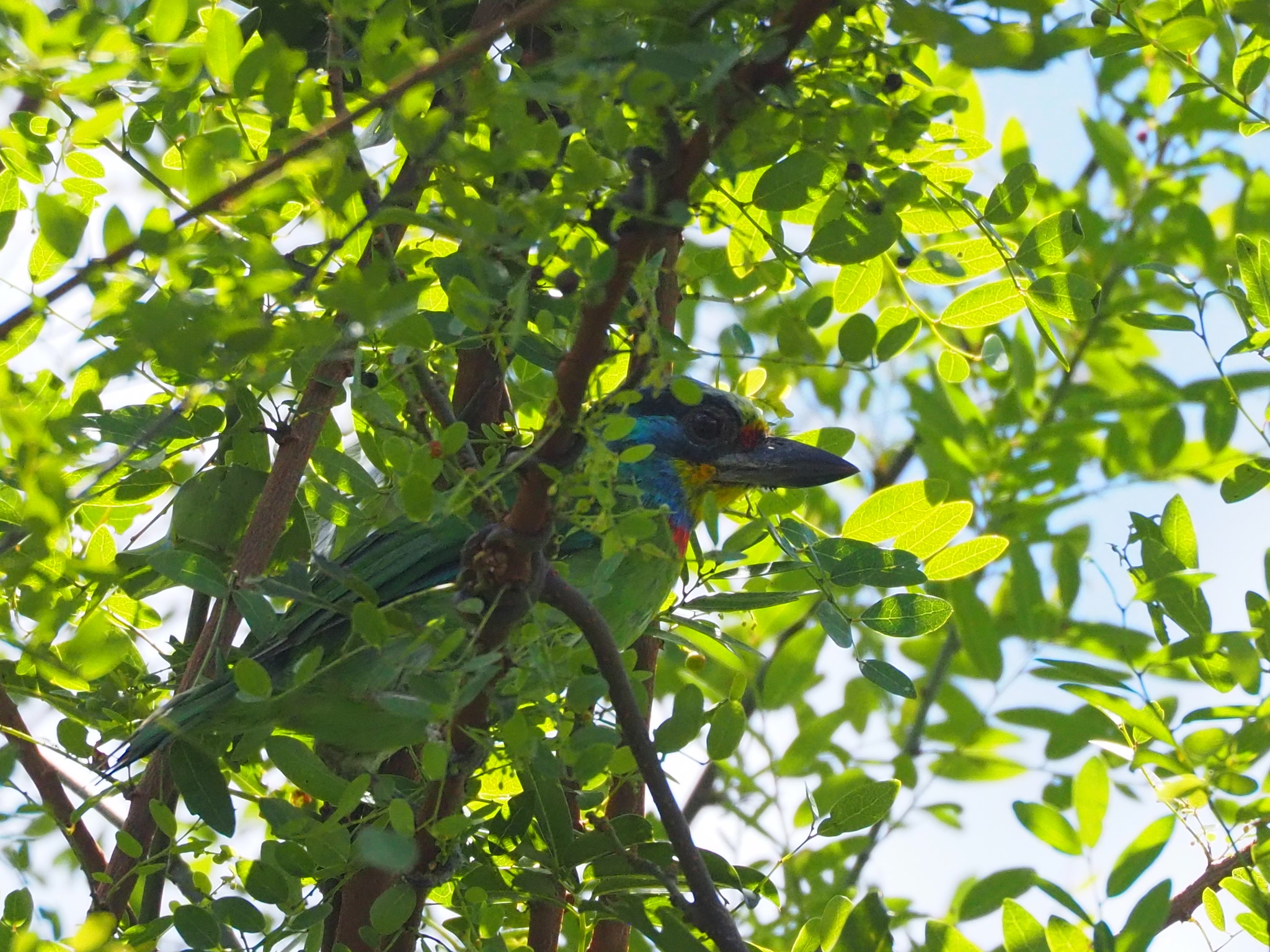
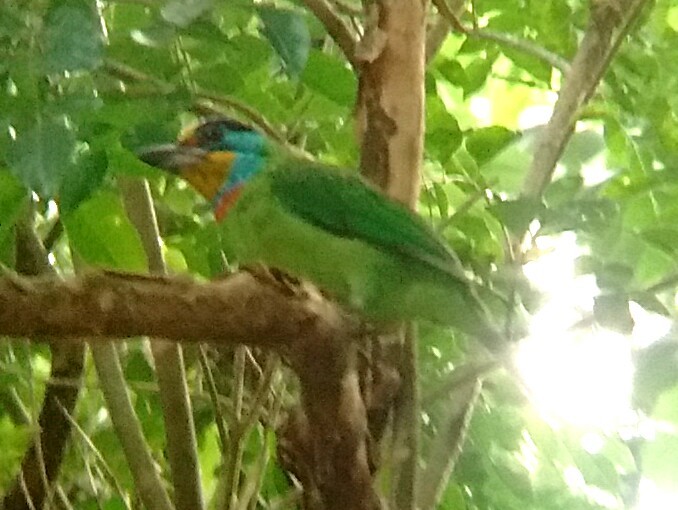
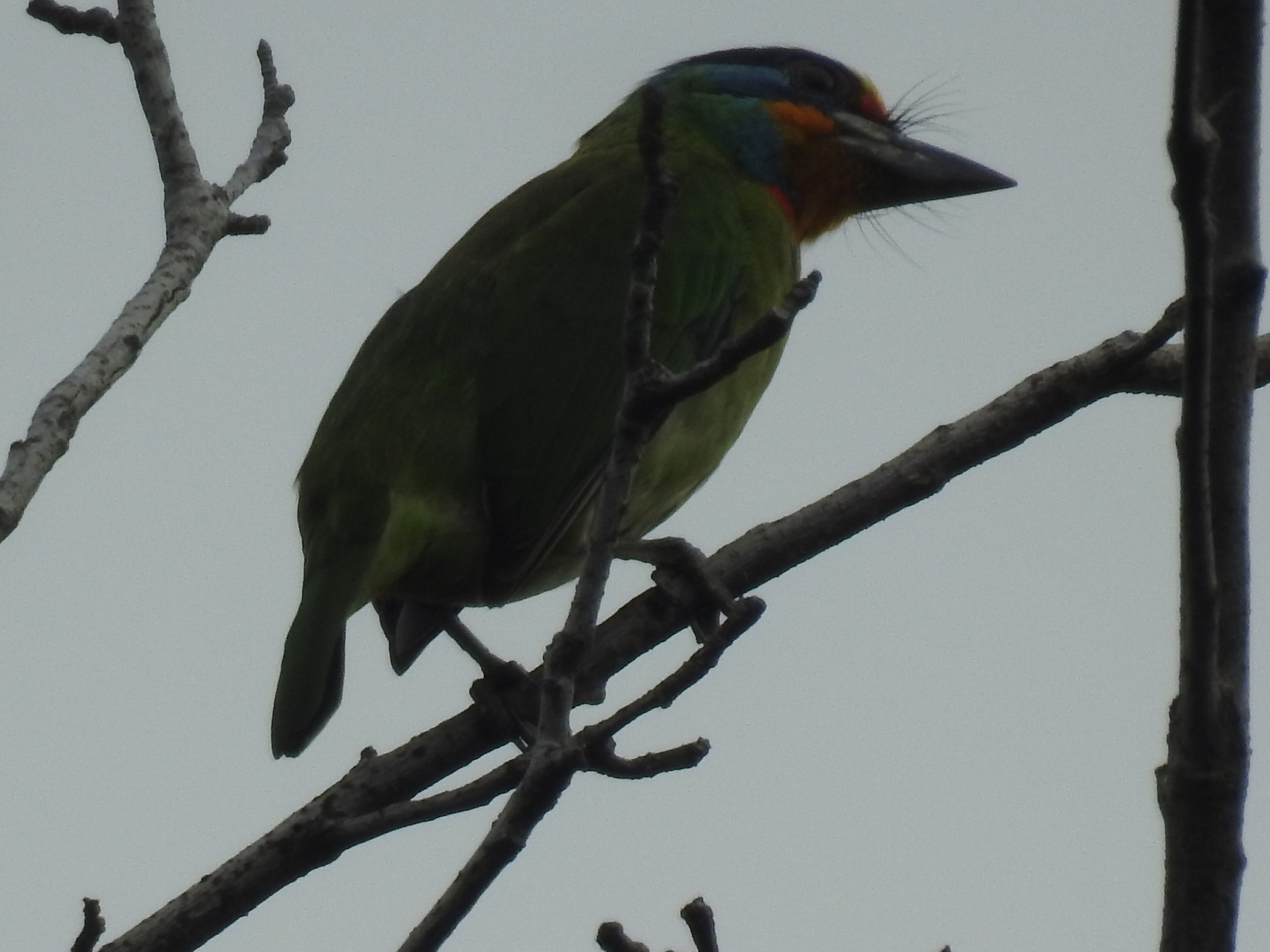
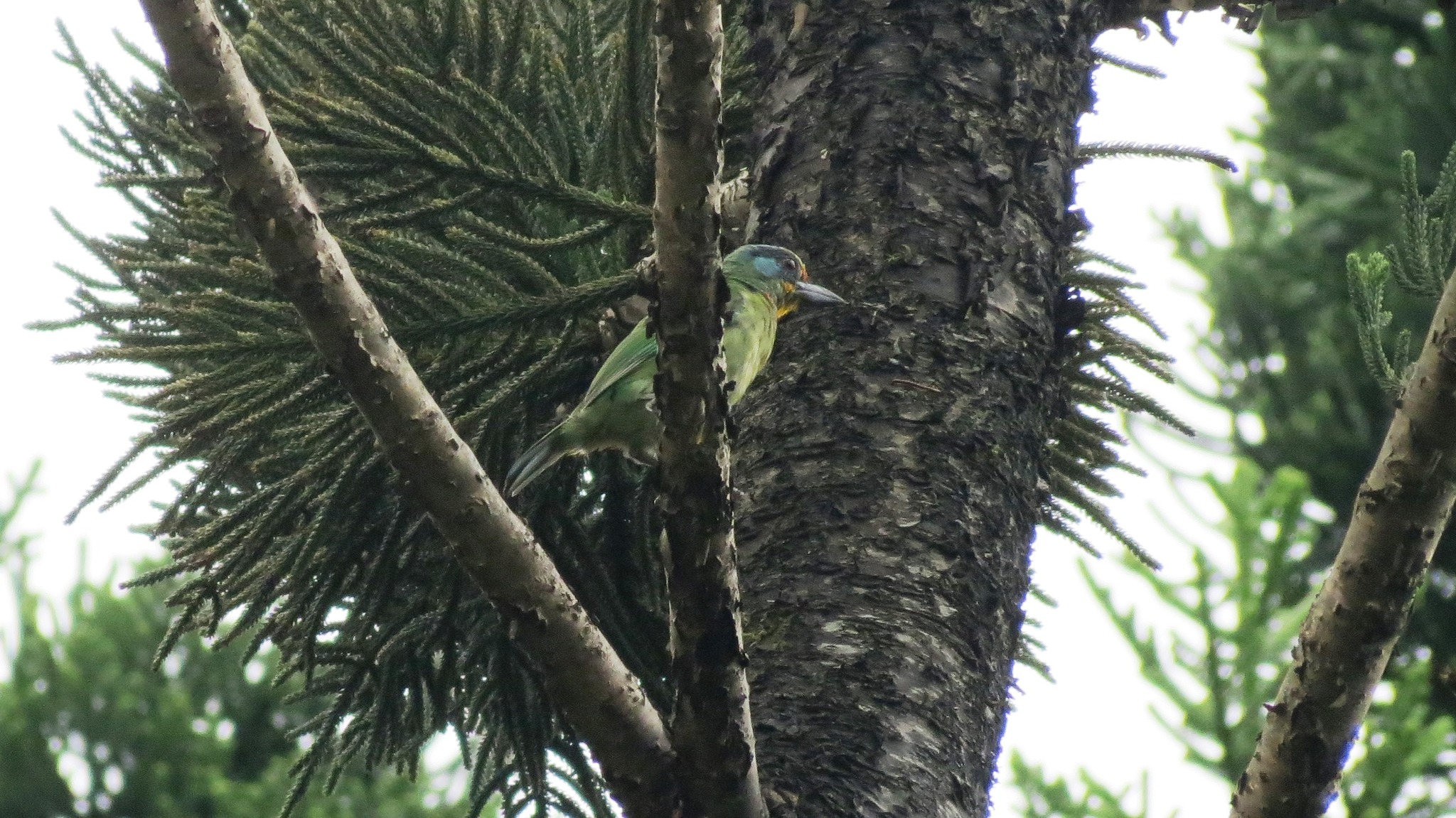
A compact barbet measuring approximately 20 cm in length. The plumage is predominantly green. The face shows distinctive coloration: the lore bears a red spot, the ear-coverts and lower malar region are blue, and the forehead is yellow. A black stripe runs above the eye. The throat is mustard yellow. The breast is marked with both a blue band and a red band. The belly appears yellowish-green. The bill is black and notably thick. The feet are greyish. The sexes are similar in appearance.
Identification
This species can be identified by its unique combination of five colors: green body, yellow forehead and throat, red lore spot and breast band, blue face markings, and black eye stripe and bill. The multi-colored face pattern and breast bands distinguish it from other barbets in the region. The thick black bill and small size around 20 cm are also characteristic field marks.
Distribution & Habitat
Endemic to the island of Taiwan. Inhabits forested areas across the island, ranging from lowlands to high elevations of up to 2,800 meters. No migratory behavior documented; present year-round throughout its range.
Behavior & Ecology
Feeds primarily on fruits and insects. The breeding season spans from March to August. Nests in tree cavities, either utilizing existing cavities or excavating new ones. Produces a distinctive call that resembles the sound of a wooden fish, a traditional Buddhist percussion instrument, which contributes to its local nickname. Generally solitary or found in pairs outside breeding season.
Conservation
Not assessed by the IUCN Red List as of current data. Abundant and commonly encountered throughout its range in Taiwan. No specific population threats identified in available sources.
Culture
Known locally in Taiwan as the 'five-colored bird' (五色鳥, Wǔsèniǎo), a name referencing the five colors of its plumage. Also called the 'colorful monk' (花和尚, Huā Héshàng) or hue-á huê-siūnn in Taiwanese Hokkien, alluding to its colorful appearance and percussion-like vocalizations. These names reflect its prominent status in local culture and birdwatching communities.
Source: Wikipedia · CC BY-SA 3.0
Taxonomy
- Order
- Piciformes
- Family
- Megalaimidae
- Genus
- Psilopogon
- eBird Code
- taibar2
Distribution
Taiwan
Vocalizations
Data Sources
Species description from Wikipedia, licensed under CC BY-SA 3.0.
Bird images and sounds sourced from GBIF, contributed by citizen scientists worldwide under Creative Commons licenses.
Taxonomy data from AviList 2025.