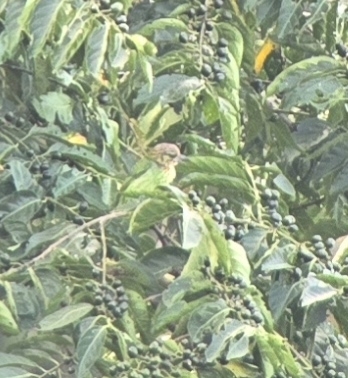
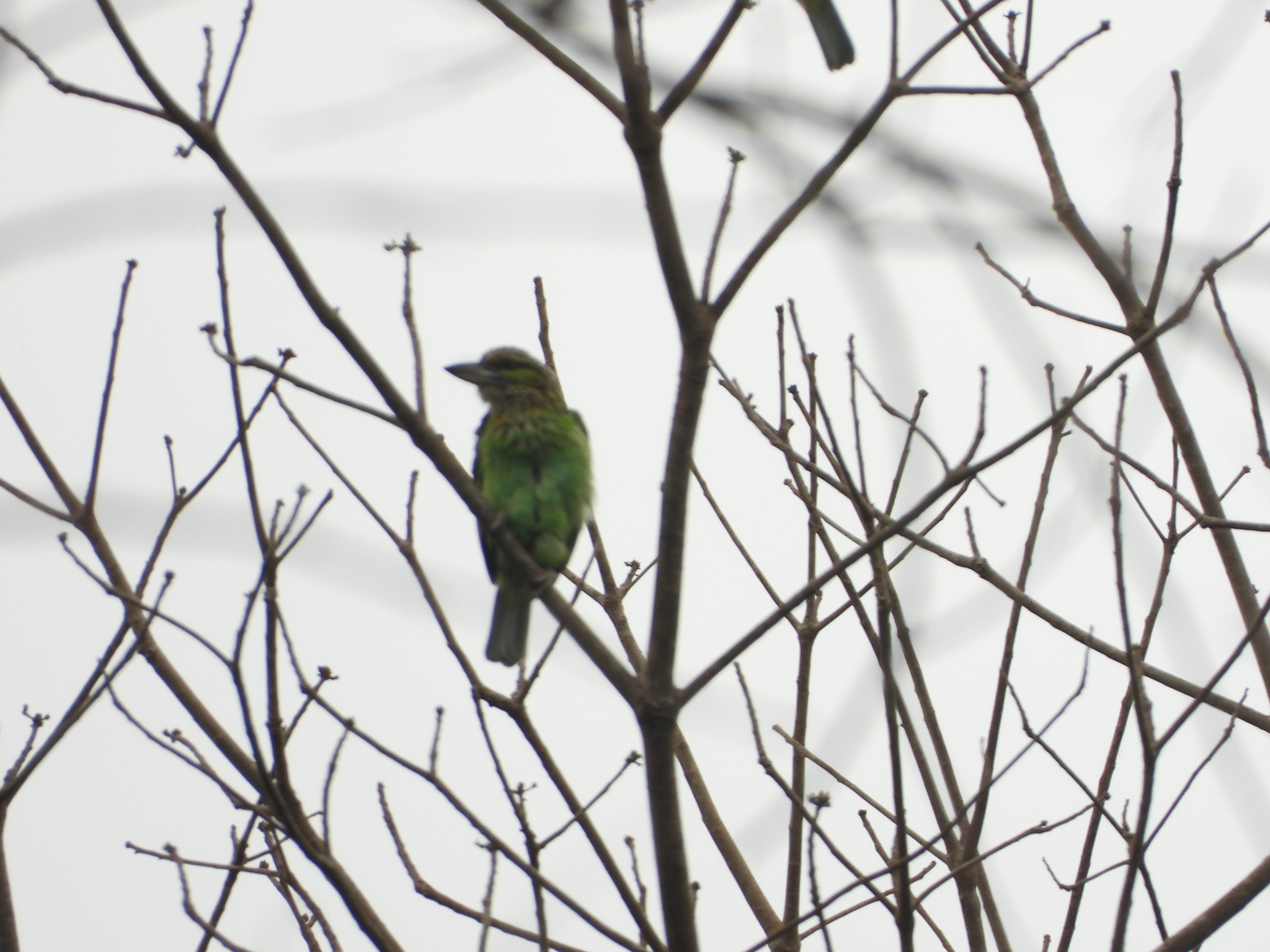
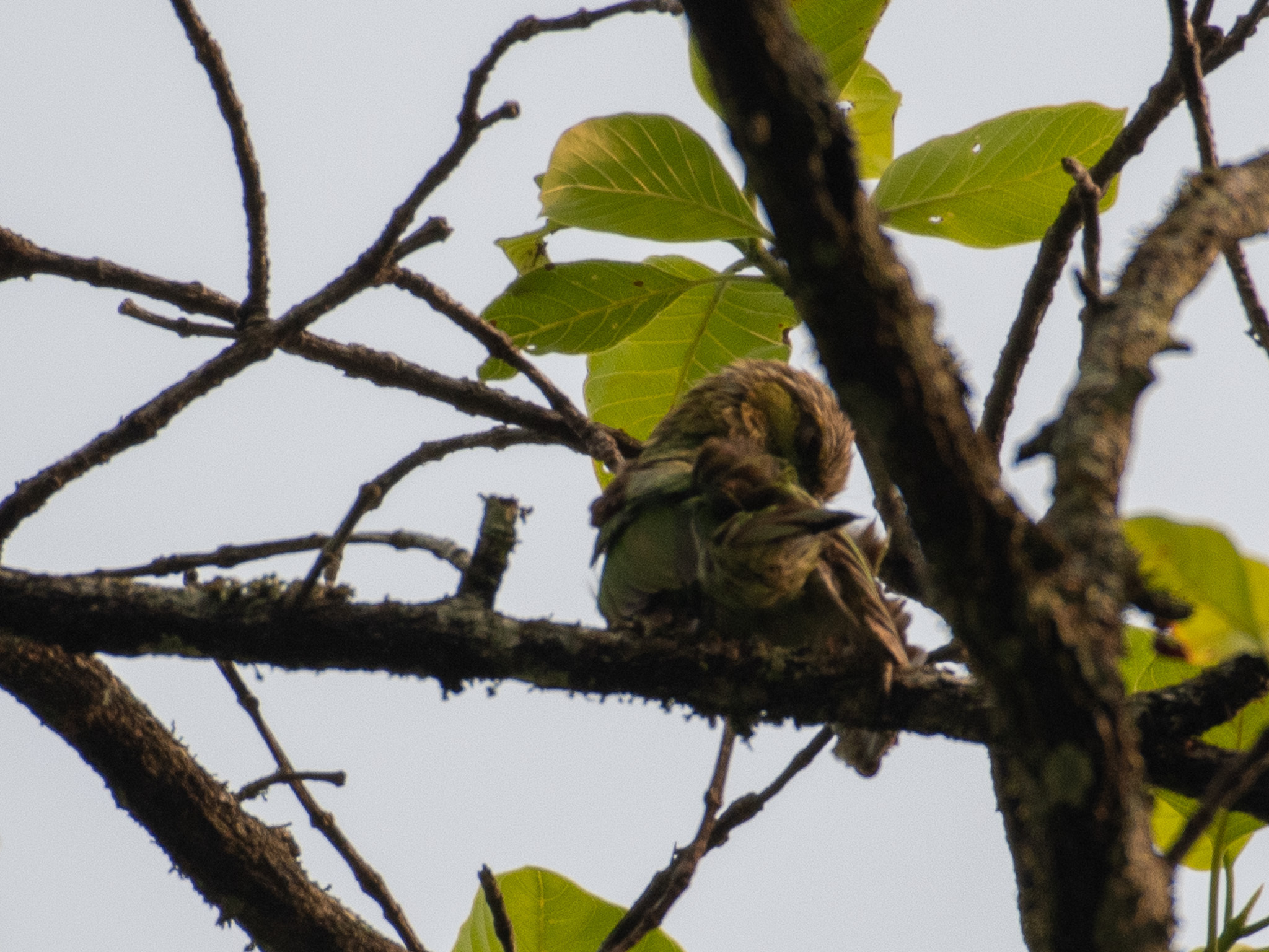
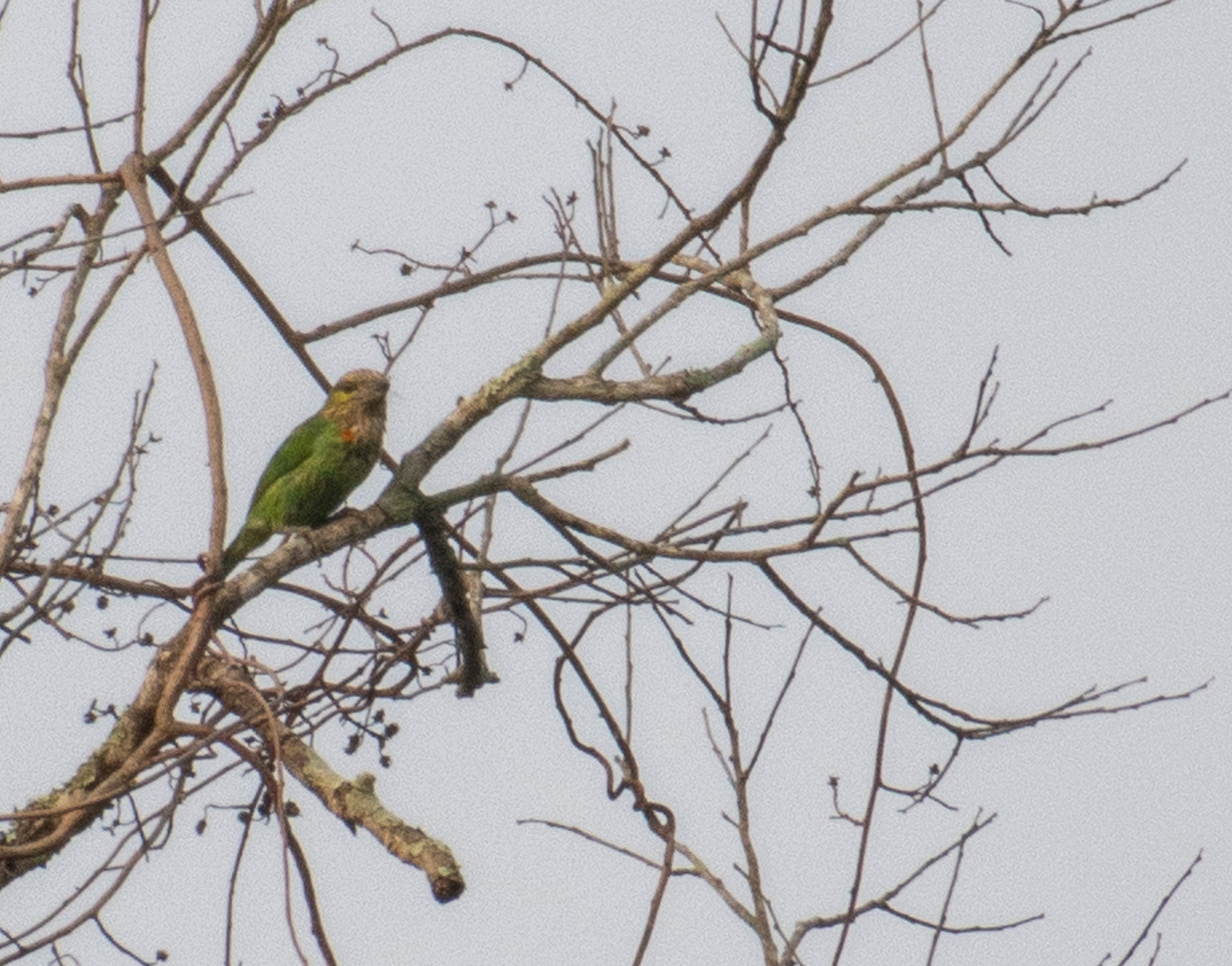
Green-eared Barbet
Psilopogon faiostrictus
黄纹拟啄木鸟
Introduction
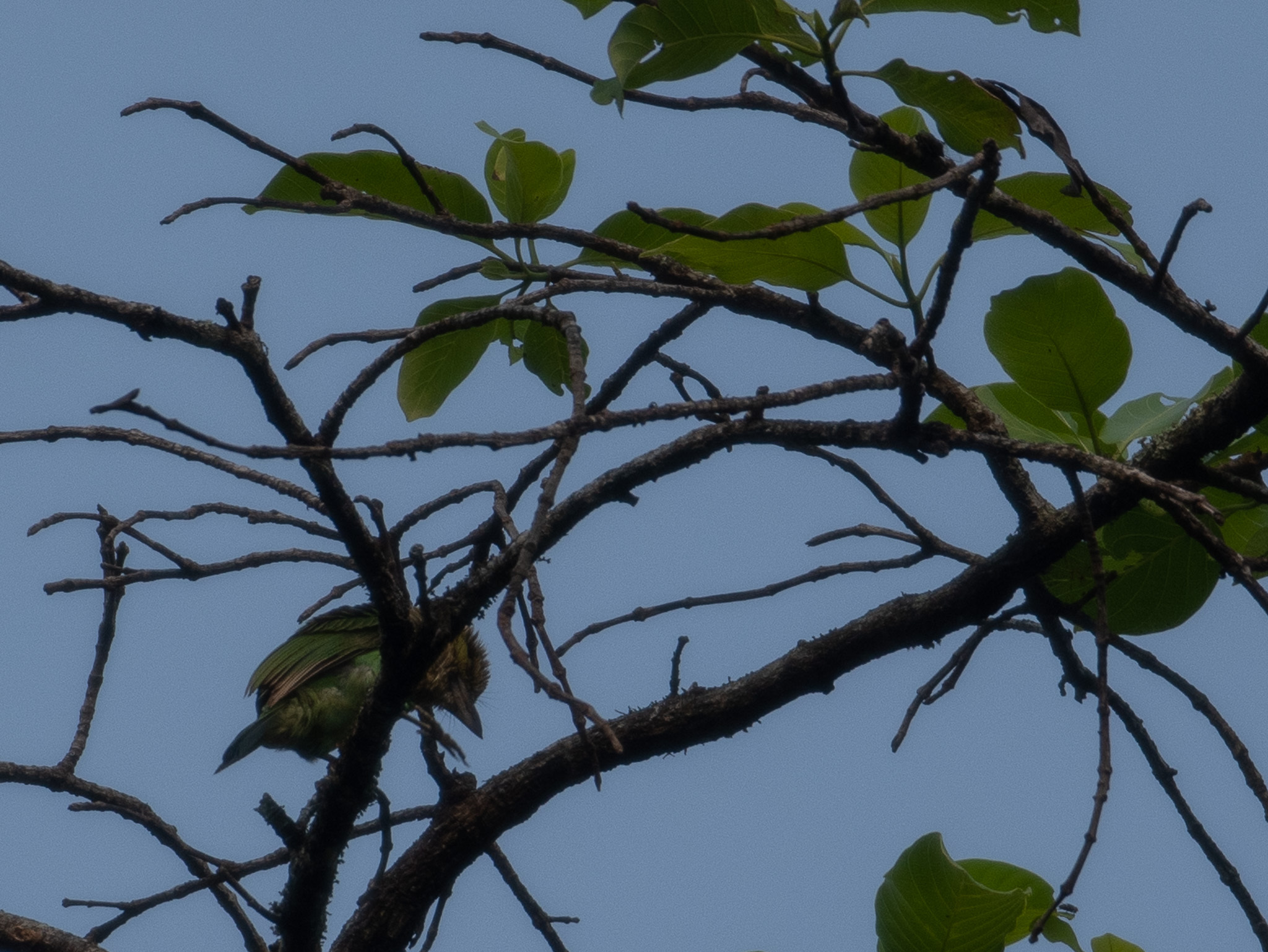
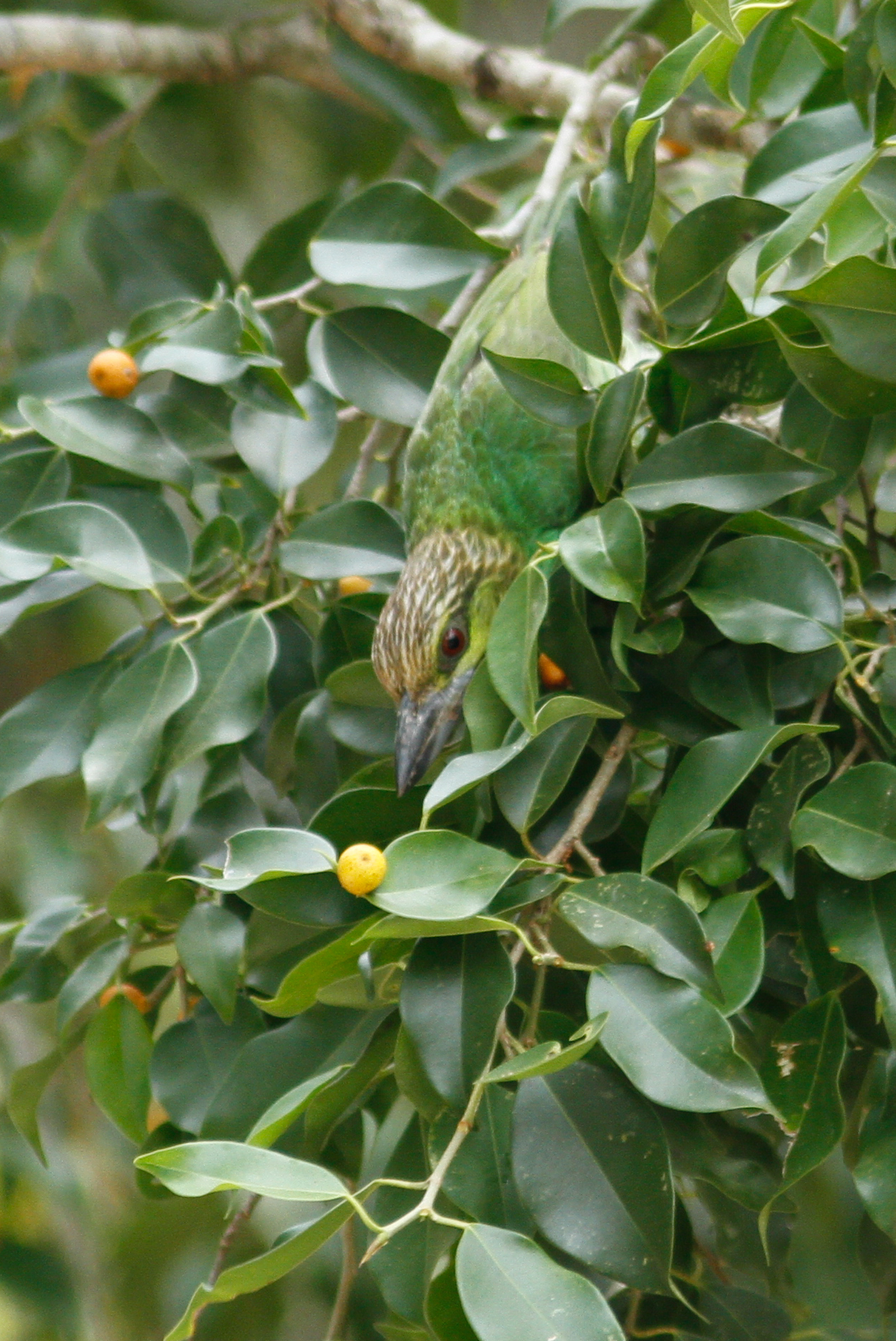
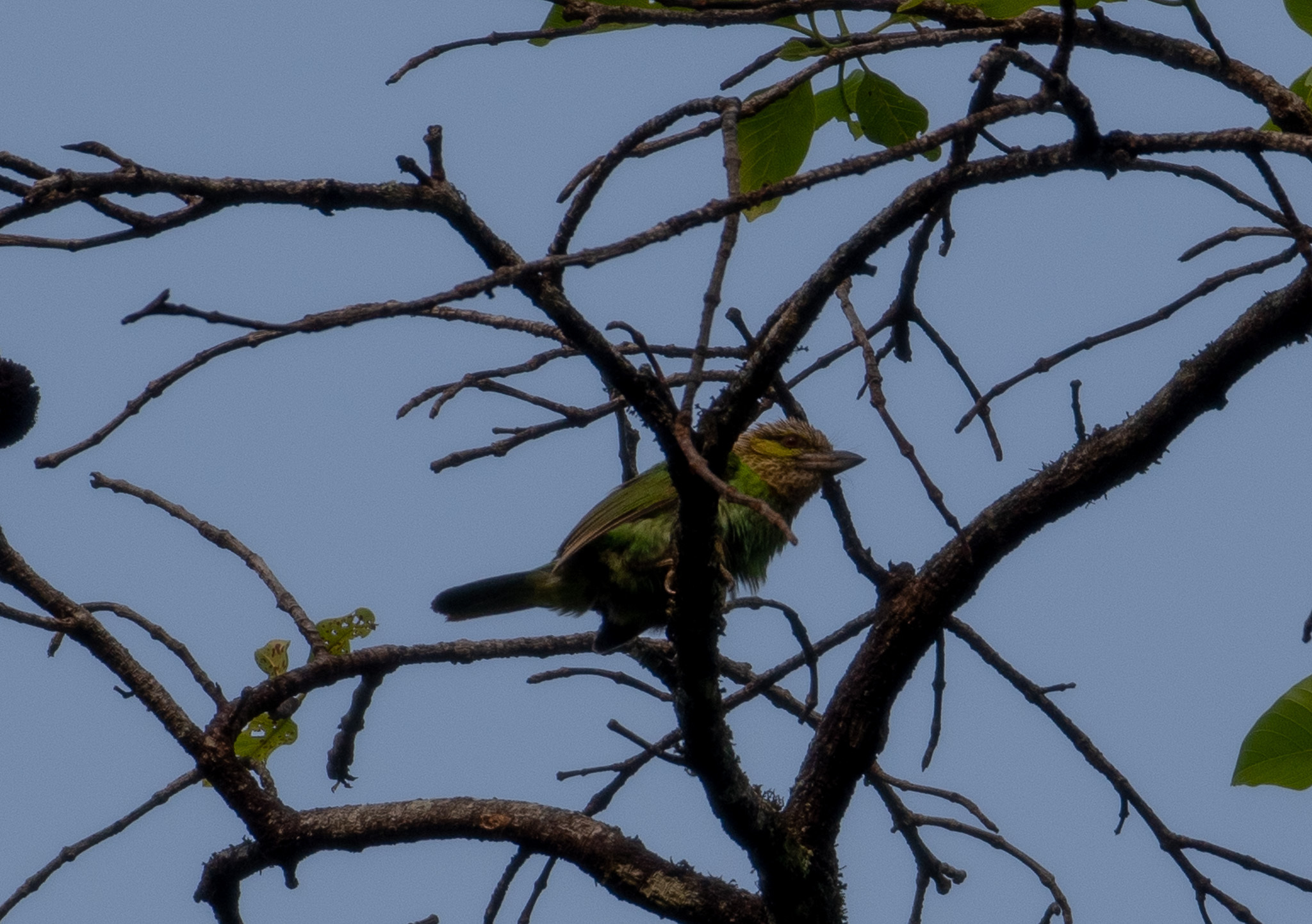
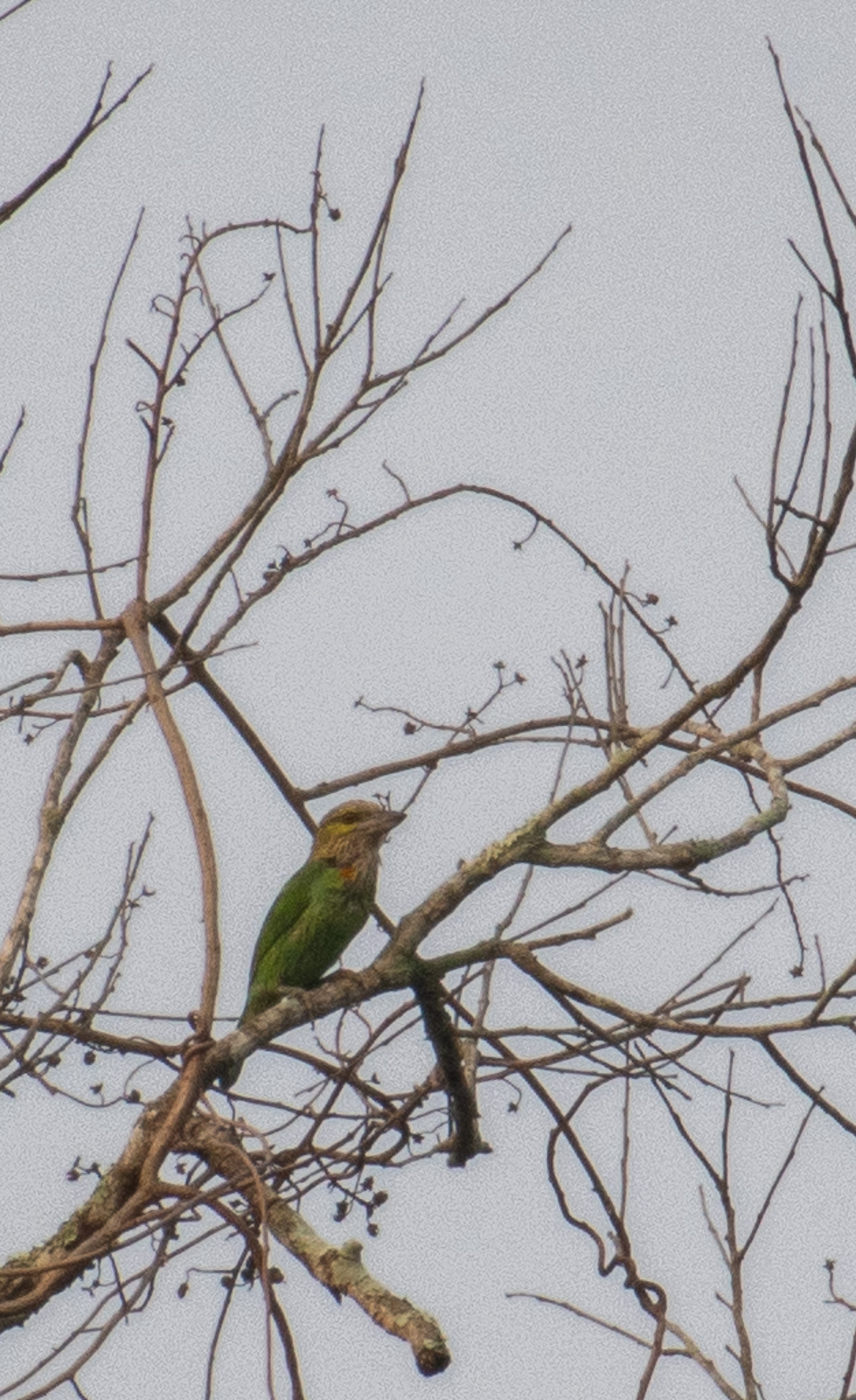
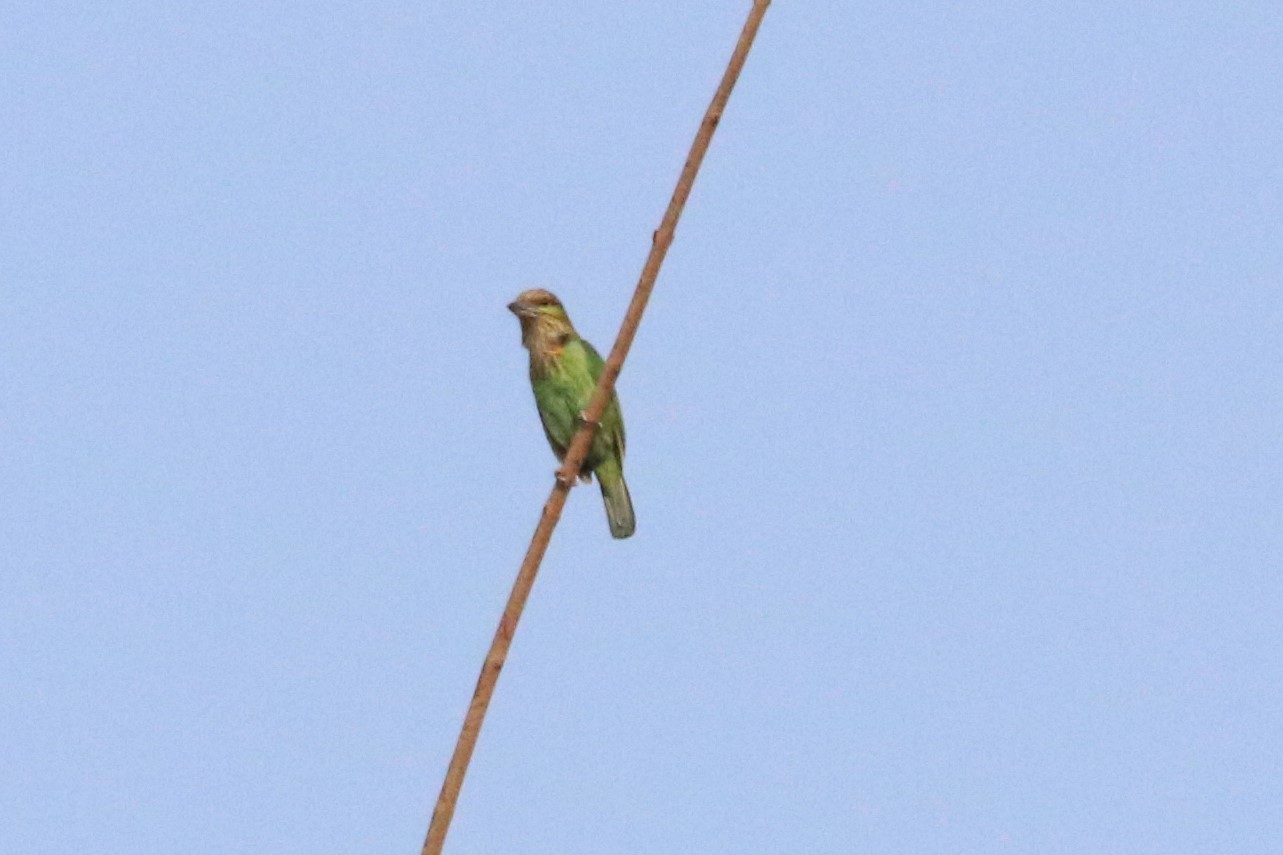
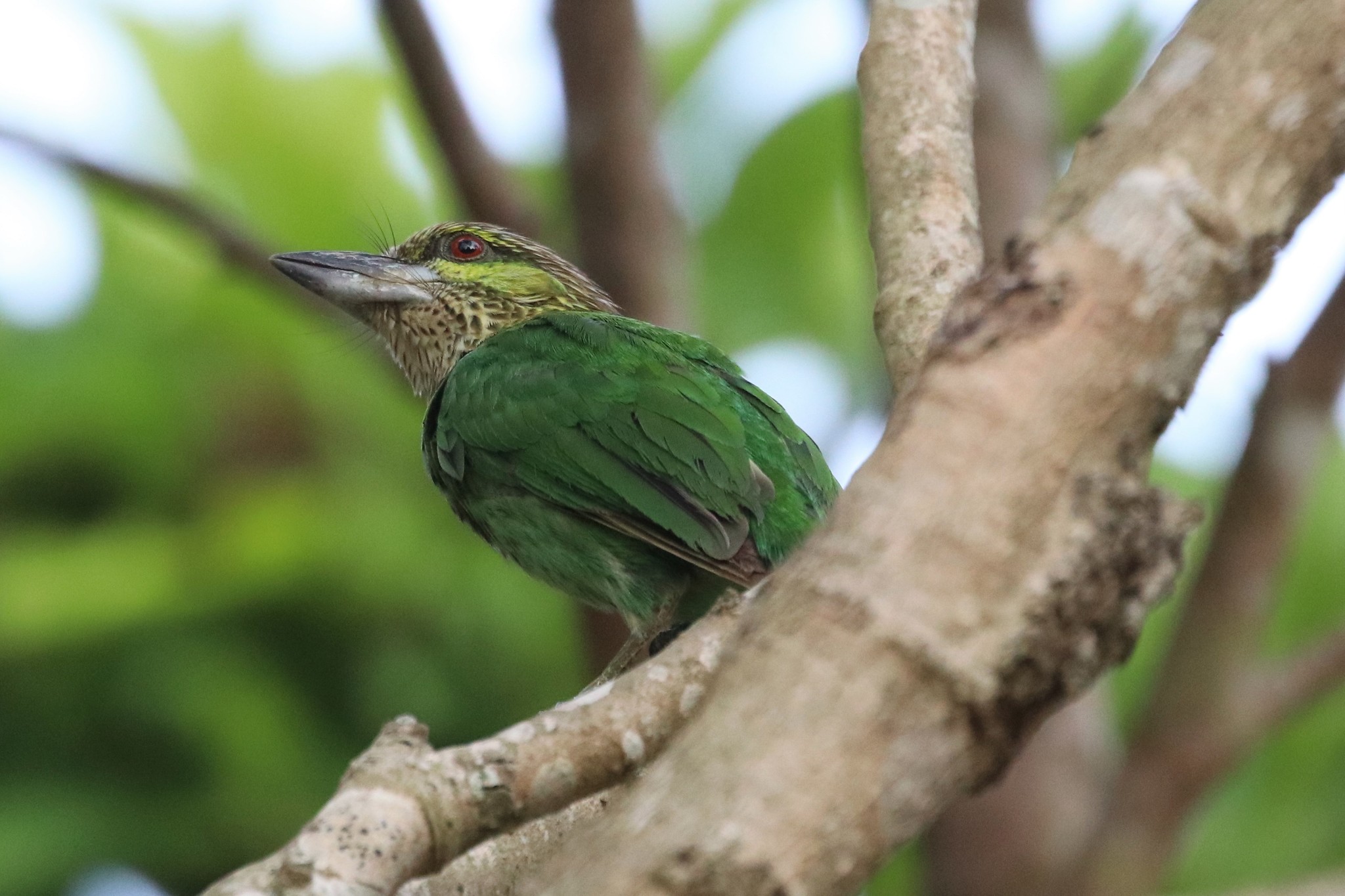
The green-eared barbet (Psilopogon faiostrictus) is an Asian barbet. It is a resident breeder across southern China, Cambodia, Laos, Thailand, and Vietnam. This species inhabits broadleaf evergreen and mixed or open woodlands up to 900 m elevation. The bird is characterized by its distinctive green ear coverts, white-streaked brown head and breast, and green-streaked yellow belly. Measuring 24.5-27 cm in length, it is a plump species with a large head and short tail.
Description
A plump barbet measuring 24.5-27 cm in length with a short neck, large head, and short tail. The adult has a white-streaked brown head and breast, prominent green ear coverts, a mainly dark bill, and a green-streaked yellow belly. The remaining plumage is green. Both sexes and immature birds are similar in appearance.
Identification
Resembles the lineated barbet but is notably smaller in size. Key distinguishing features include the distinctive green ear patch, a darker bill, and a dark eye-ring rather than the yellow eye-ring seen in similar species.
Distribution & Habitat
Resident breeder across southern China, Cambodia, Laos, Thailand, and Vietnam. Inhabits broadleaf evergreen and mixed or open woodland habitats from lowlands to elevations of 900 m (3,000 ft).
Behavior & Ecology
Nests in tree holes. The diet is not documented in available sources. Other behavioral details including vocalizations and social structure are not described in the source material.
Conservation
No conservation assessment or population data provided in source materials.
Culture
No cultural significance or folklore documented in available sources.
Source: Wikipedia · CC BY-SA 3.0
Taxonomy
- Order
- Piciformes
- Family
- Megalaimidae
- Genus
- Psilopogon
- eBird Code
- grebar3
Vocalizations
Subspecies (2)
-
Psilopogon faiostrictus faiostrictus
central and southern Thailand, Cambodia, and southern Vietnam
-
Psilopogon faiostrictus praetermissus
northern Thailand, Laos, northern Vietnam, and southern China
Data Sources
Species description from Wikipedia, licensed under CC BY-SA 3.0.
Bird images and sounds sourced from GBIF, contributed by citizen scientists worldwide under Creative Commons licenses.
Taxonomy data from AviList 2025.