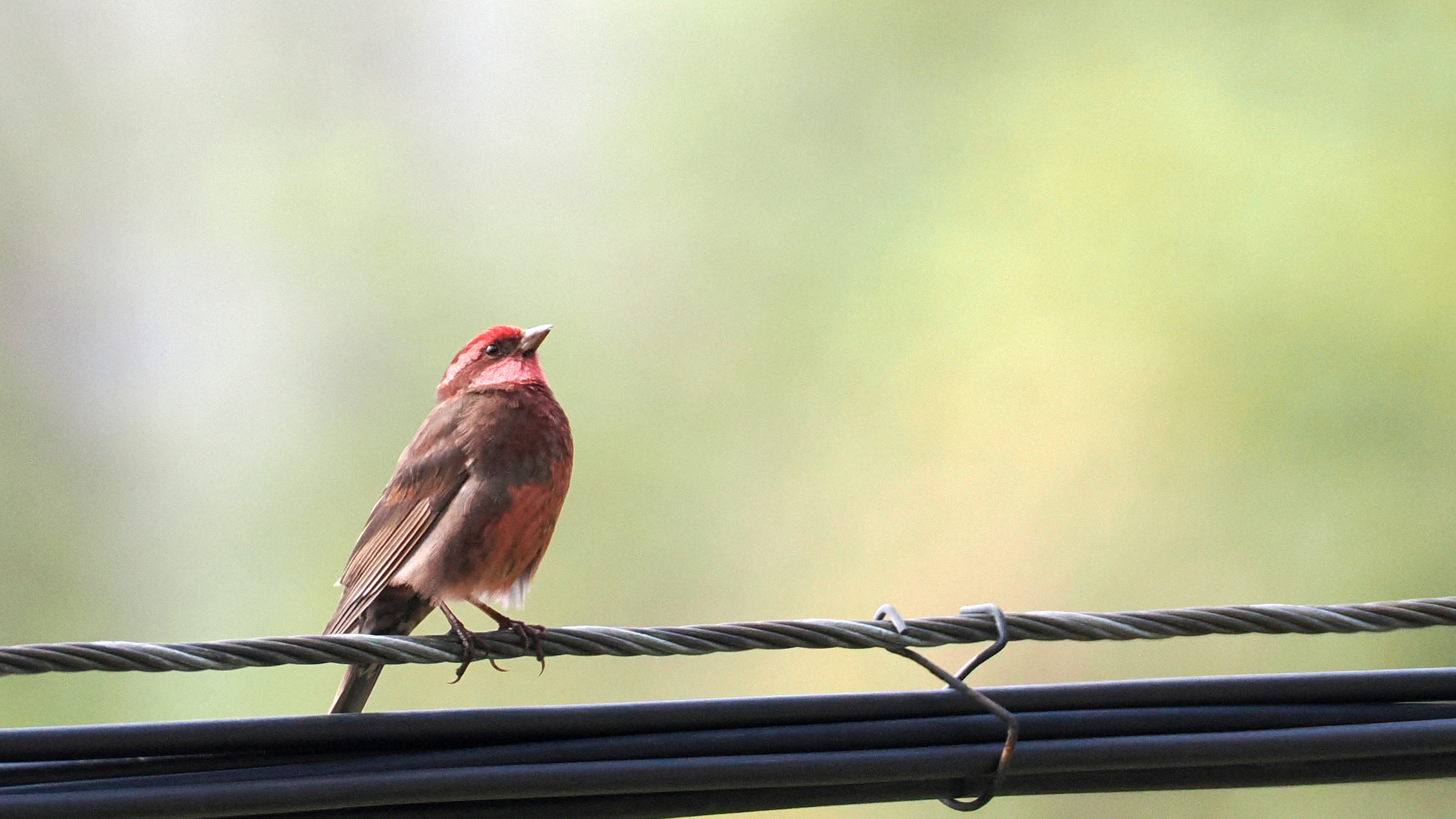
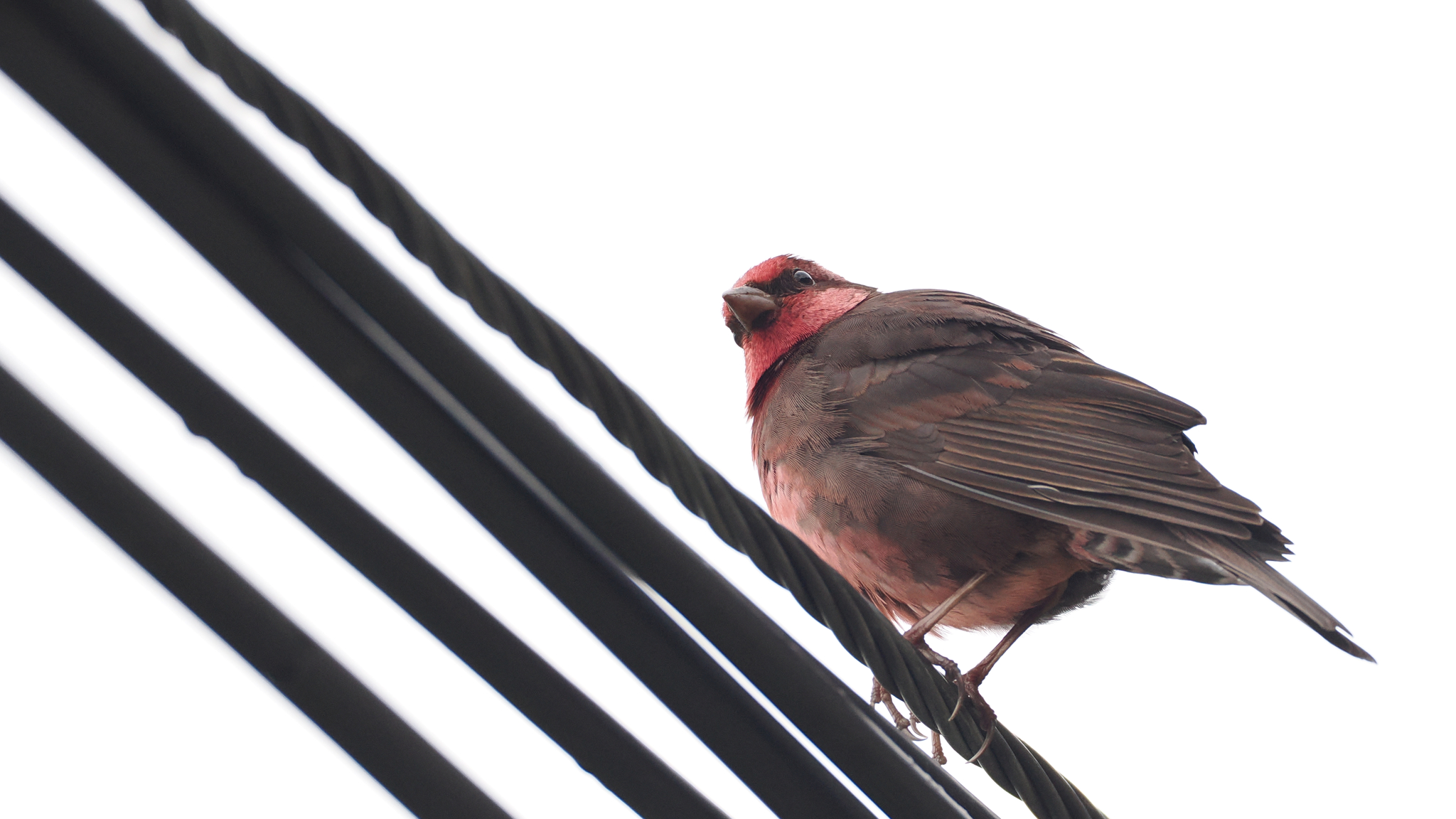
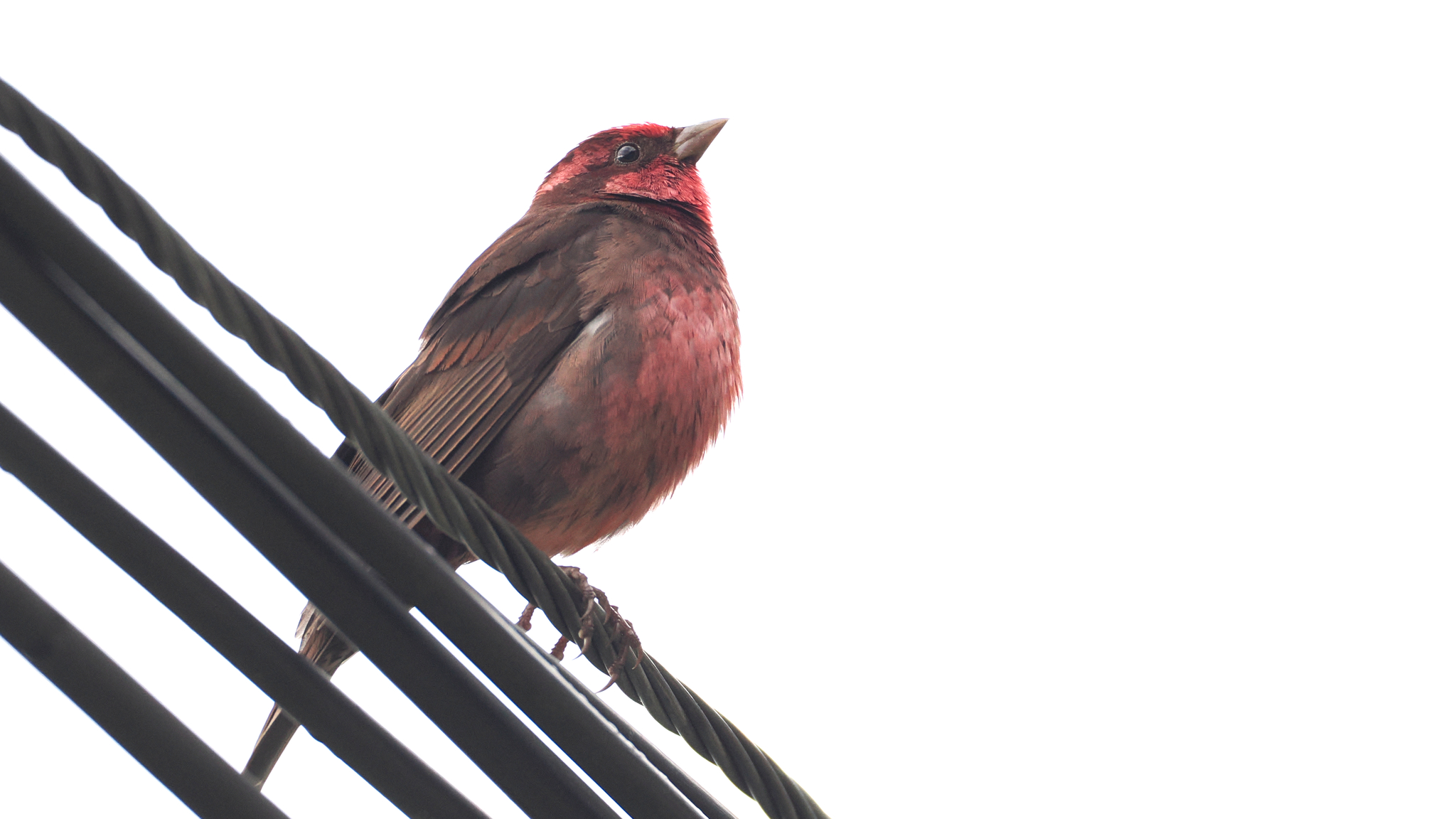
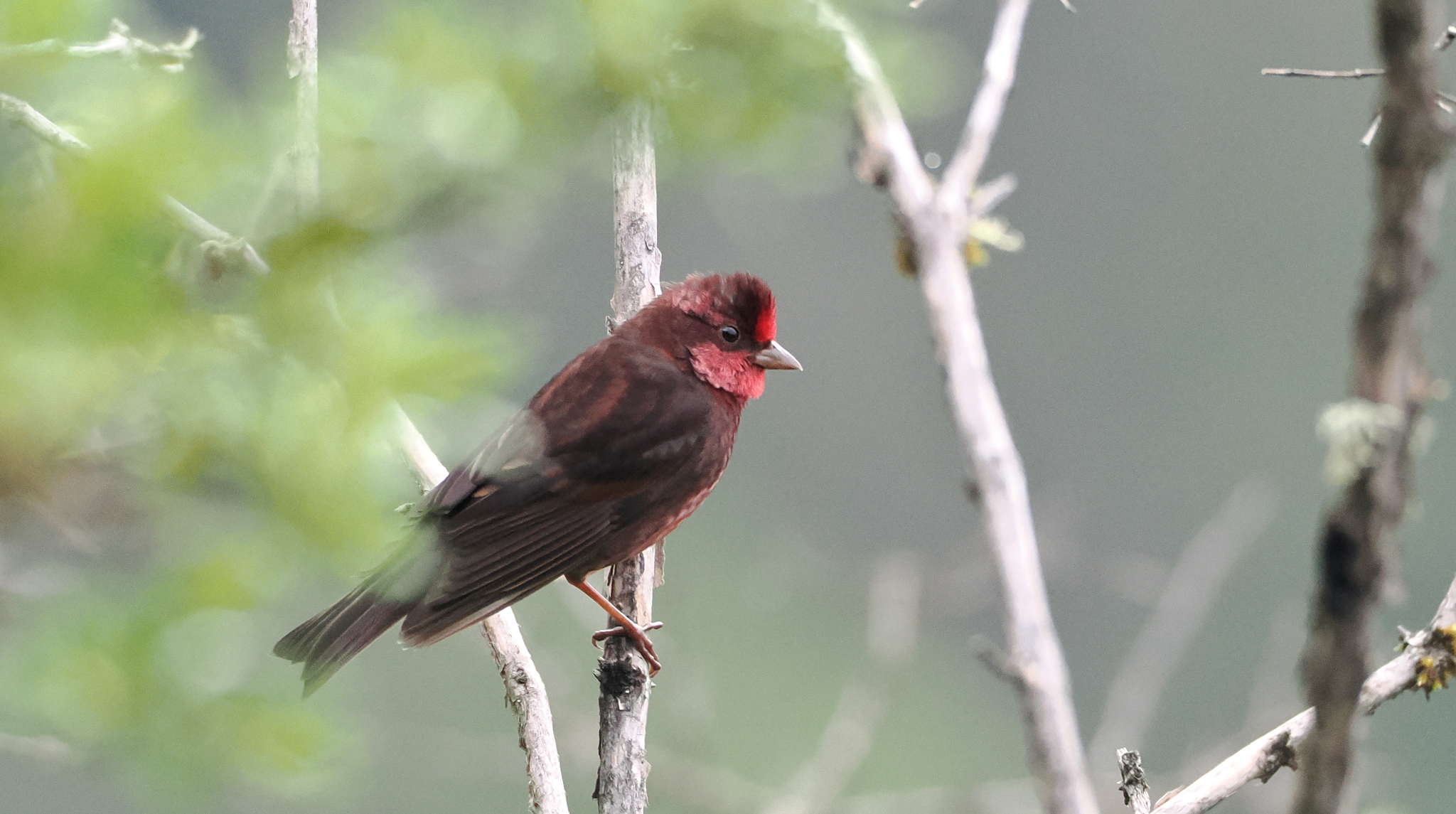
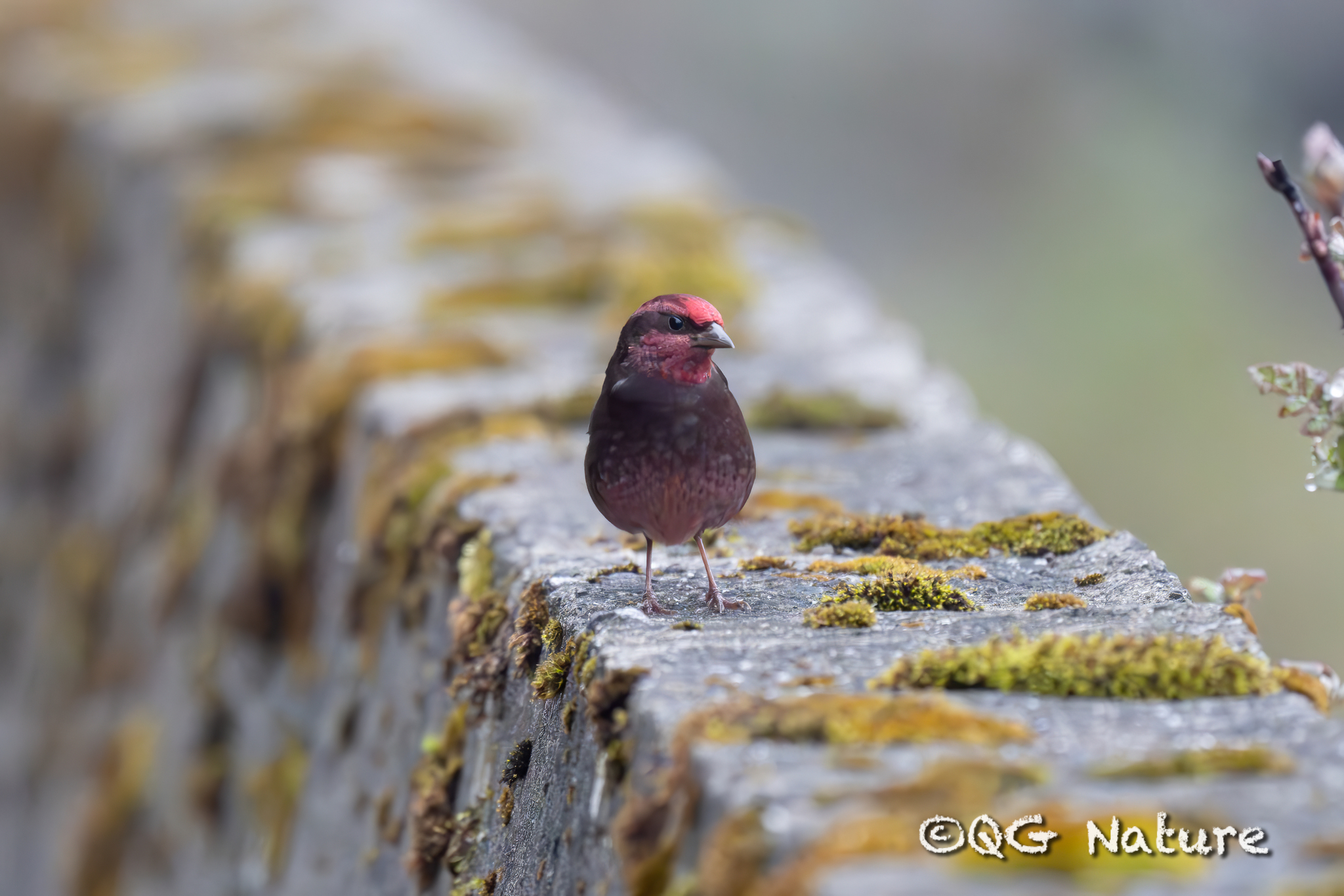
Dark-breasted Rosefinch
Procarduelis nipalensis
暗胸朱雀
Introduction
A species of true finch (Fringillidae) in the monotypic genus Procarduelis. Formerly classified in the genus Carpodacus but phylogenetic analyses of mitochondrial and nuclear DNA sequences prompted reclassification. Found across Bhutan, China, India, Laos, Myanmar, Nepal, Pakistan, Thailand, and Vietnam. Inhabits boreal forests and subtropical or tropical high-altitude shrubland. The species is described as rather shy and reclusive. It forages on the ground in pairs or small groups, feeding on seeds and berries.
Description
A medium-sized finch with pronounced sexual dimorphism. Males display vibrant dark pink plumage with a contrasting lighter throat and eyebrow stripe. Females exhibit subdued dark brown coloration with conspicuous light-colored wingbars. The species is superficially similar to the Vinaceous Rosefinch but distinguished by the male's unique head pattern and the female's unmarked underparts.
Identification
Males distinguished from similar rosefinch species by their unique head pattern. Females lack the streaking on underparts typical of related species, instead showing prominent wingbars. Vocalizations consist of a characteristic wheezy sparrow-like 'wheer' call.
Distribution & Habitat
Ranges across the Himalayas from Kashmir through Garhwal, Kumaon, Nepal, Sikkim, and Bhutan, extending into southeastern Tibet, southwestern China, and northern Vietnam. Breeds in shrublands above the tree line and mixed forest containing rhododendron. In winter, found in forest clearings and agricultural areas. Subspecific variation is largely clinal, with plumage becoming darker from west to east. Three subspecies are recognized: P. n. nipalensis (nominate), P. n. intensicolor, and P. n. kangrae.
Behavior & Ecology
Shy and reclusive bird that breeds in high-altitude shrublands above the tree line and mixed forest with rhododendron elements. Forages on the ground in pairs or small groups, consuming seeds and berries. In winter months, moves to forest clearings and agricultural areas. Vocalizations include a distinctive wheezy sparrow-like 'wheer' call.
Conservation
IUCN Red List status: Least Concern. The species has a large range and a large population with stable development. It is not believed to face substantial threats. The global population has not been estimated but is described as common or fairly common throughout its range.
Source: Wikipedia · CC BY-SA 3.0
Taxonomy
- Order
- Passeriformes
- Family
- Fringillidae
- Genus
- Procarduelis
- eBird Code
- dabros1
Subspecies (2)
-
Procarduelis nipalensis kangrae
western Himalayas (Kashmir to Garhwal)
-
Procarduelis nipalensis nipalensis
central and eastern Himalayas eastward to central China and southward to northeastern Myanmar and northwestern Vietnam
Data Sources
Species description from Wikipedia, licensed under CC BY-SA 3.0.
Bird images and sounds sourced from GBIF, contributed by citizen scientists worldwide under Creative Commons licenses.
Taxonomy data from AviList 2025.