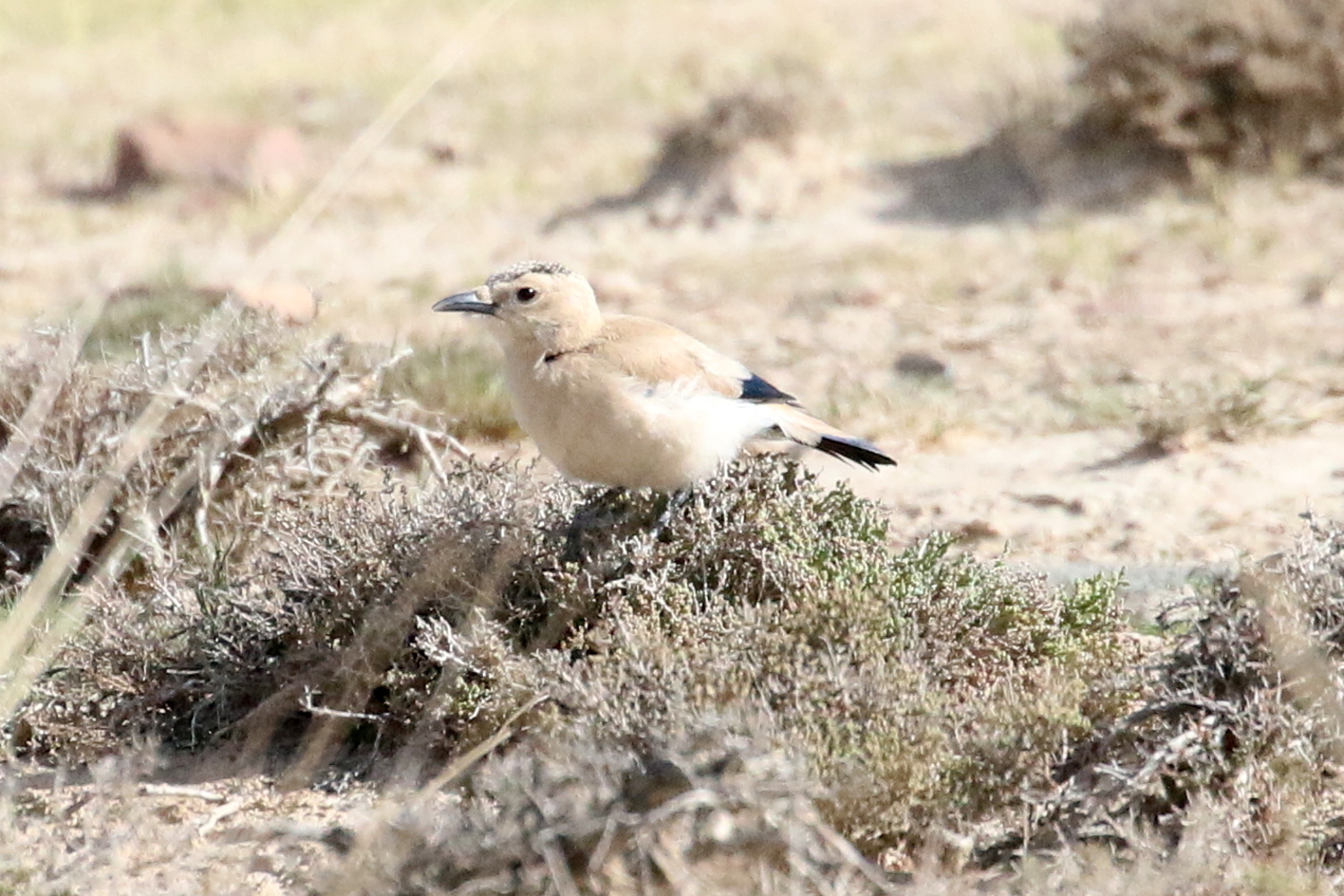
Mongolian Ground Jay
Podoces hendersoni
黑尾地鸦
Introduction
A member of the Corvidae family found across the arid regions of Central Asia, including Mongolia, northern China, and adjacent areas of Russia and Kazakhstan. This species inhabits gravel-strewn desert environments and is characterized by its long, decurved beak and distinctive black forehead stripe. It is currently threatened by ongoing habitat loss and fragmentation throughout its range.
Description
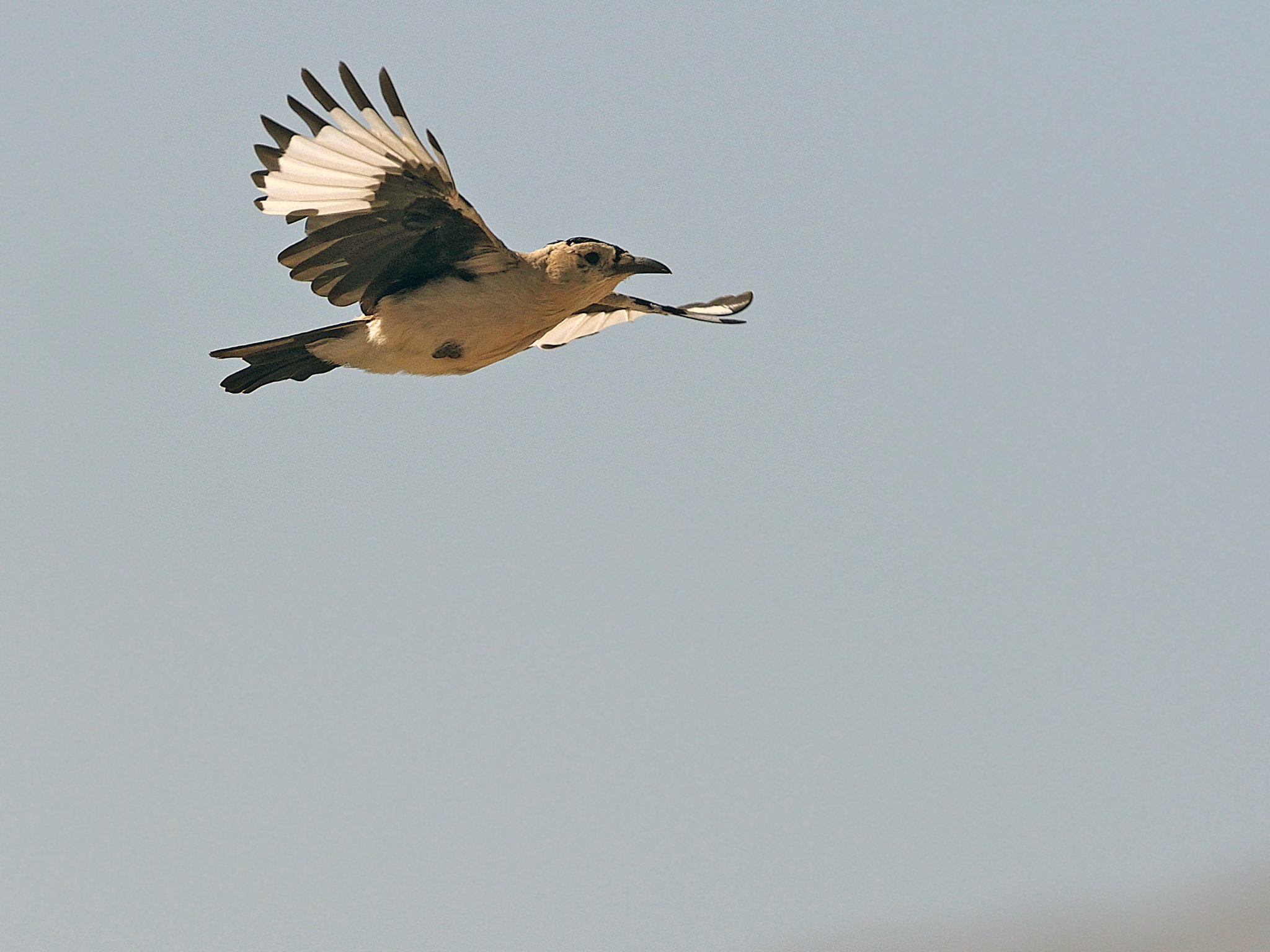
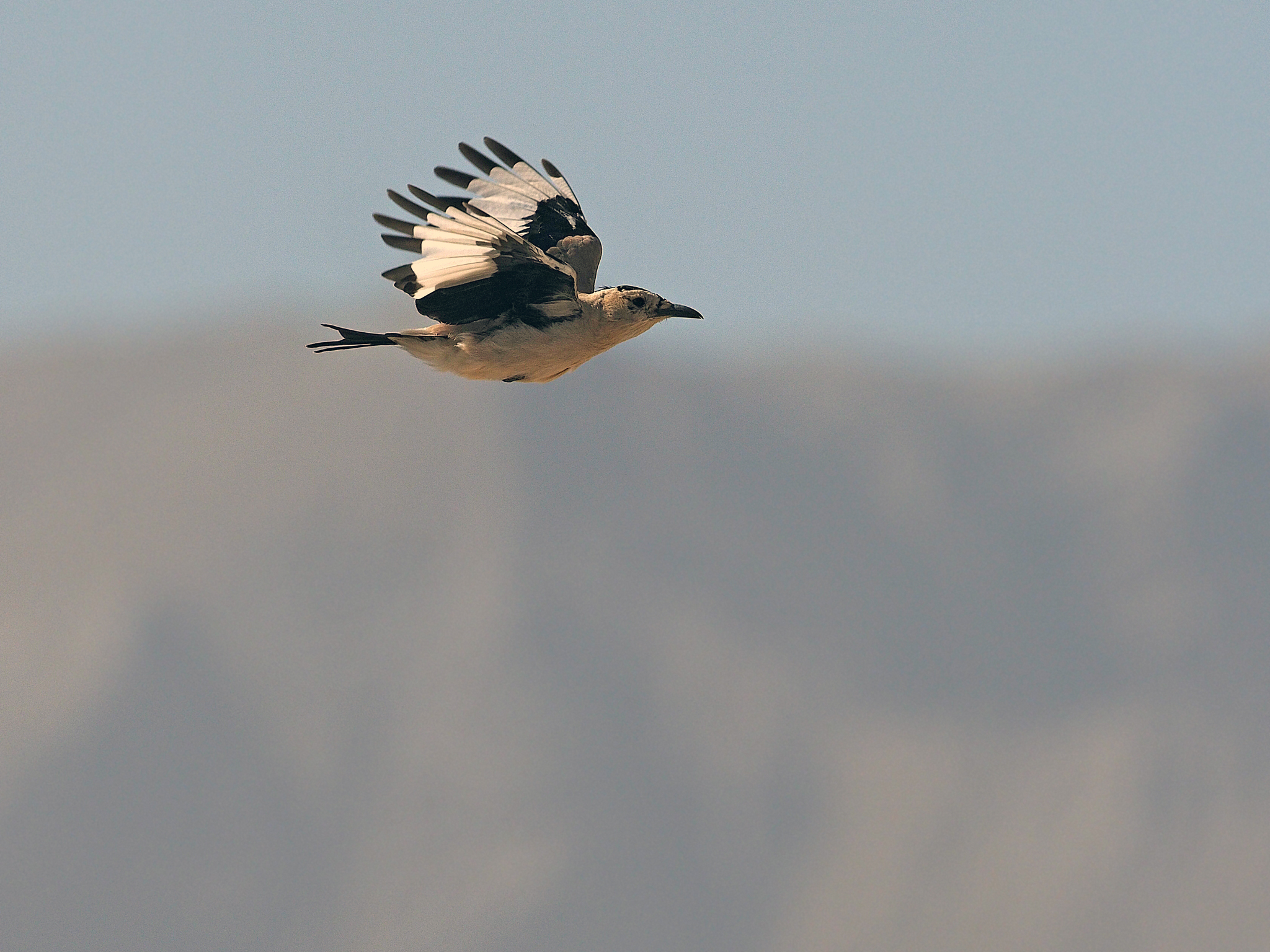
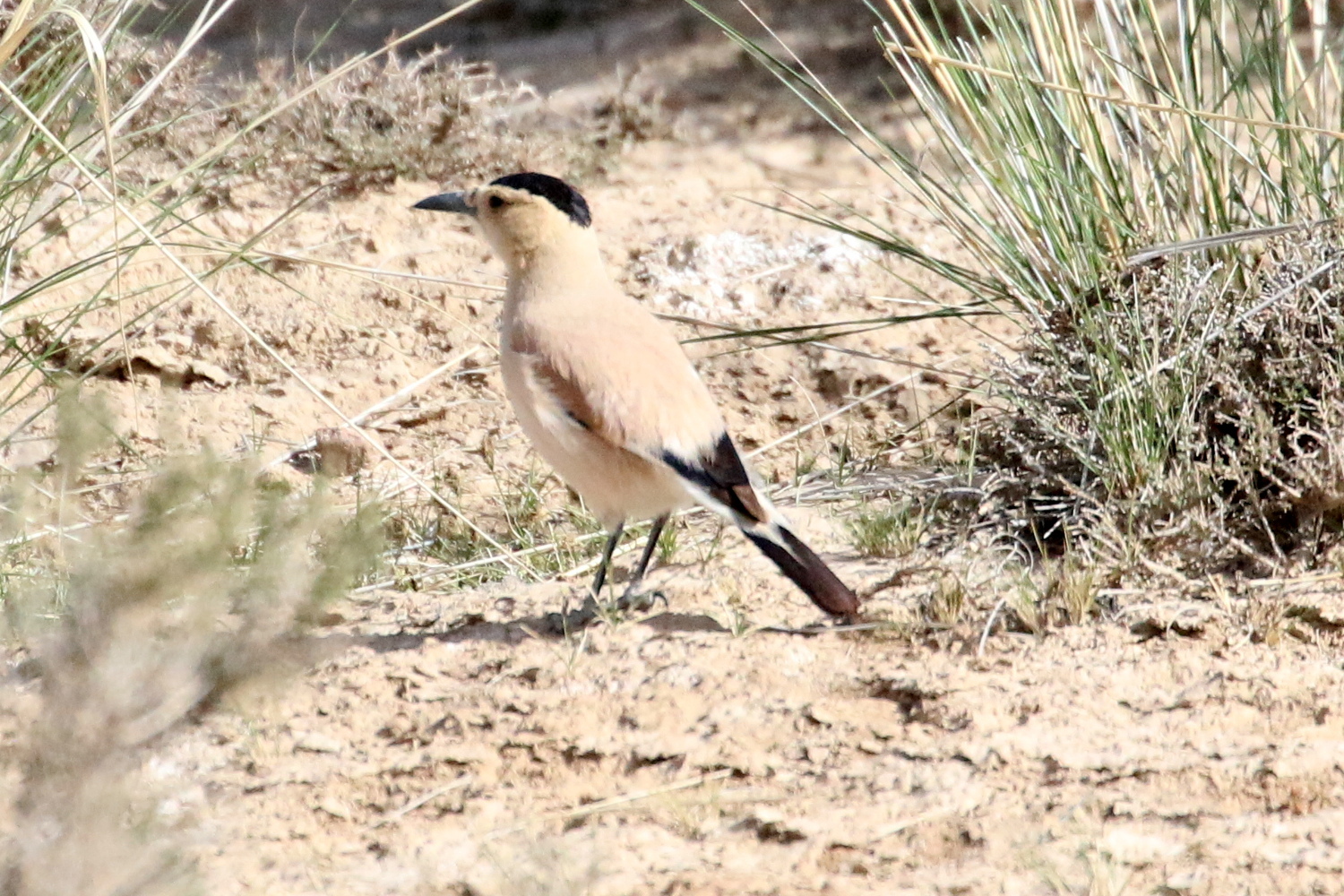
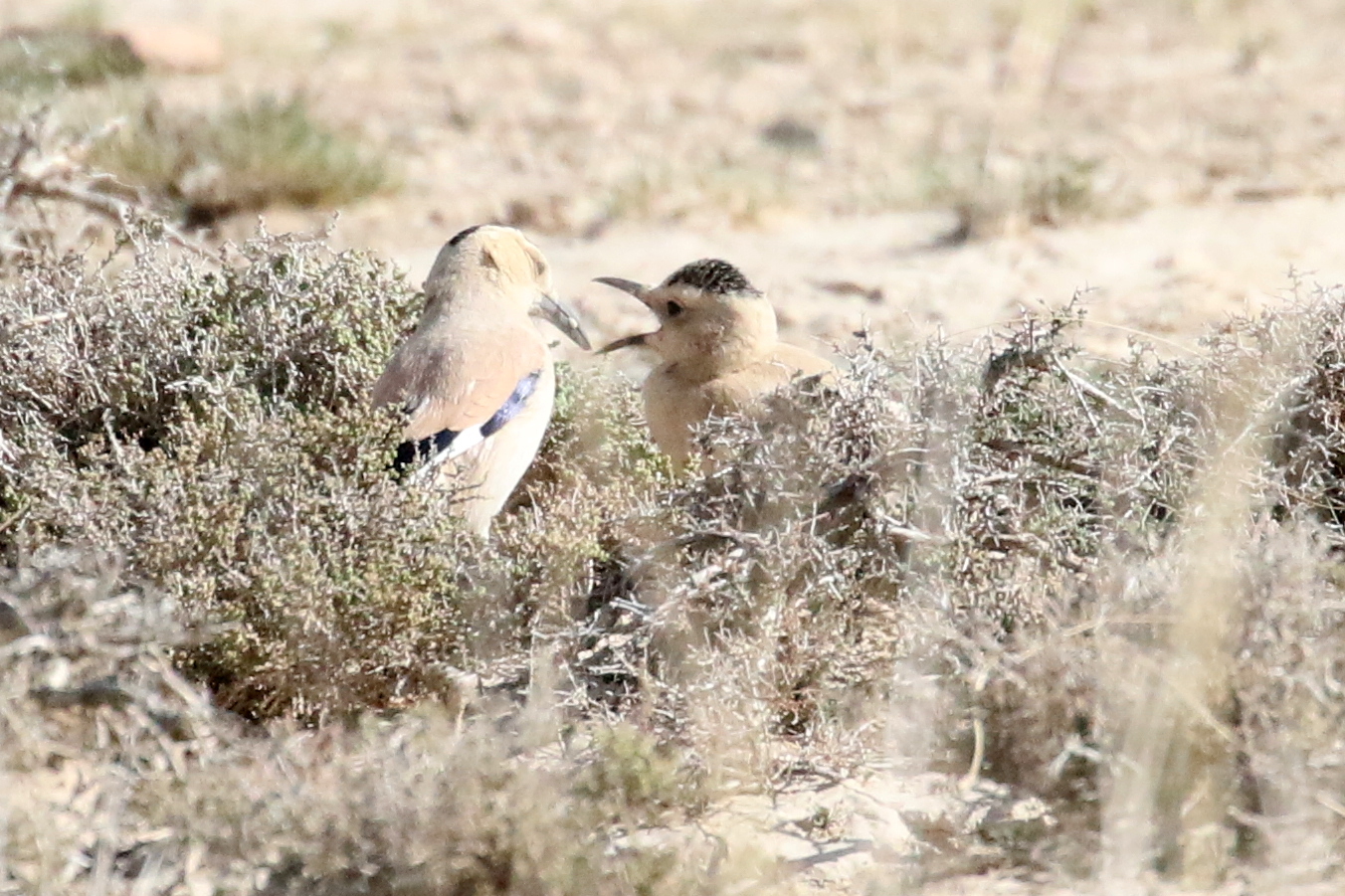
A compact corvid measuring 28 cm (11 in) in length. The upperparts display sandy-beige coloration, while the breast is off-white. The secondary feathers and primary feather tips show iridescent dark blue markings. The most distinctive feature is the long, decurved beak, complemented by a black stripe running across the forehead.
Identification
The long, decurved bill and black forehead stripe distinguish this species from other ground jays. The sandy-beige upperparts combined with iridescent blue on the wing feathers provide key visual identification features in its arid habitat.
Distribution & Habitat
Restricted to arid landscapes of Central Asia, spanning Mongolia, northern China, and into adjacent regions of Russia and Kazakhstan. This species shows a strong preference for areas characterized by gravel surfaces and minimal vegetation cover.
Behavior & Ecology
Breeding occurs from April to May, with nests constructed in Prunus pedunculata shrubs. Parental roles are sexually divided: females devote more time to foraging while males handle increased brooding duties during early nesting stages. The species is most active during morning hours. Vocalizations consist of a relatively short trill call compared to other ground jay species. Foraging activity increases at warmer temperatures.
Conservation
Classified as threatened due to habitat loss and fragmentation. The species faces ongoing decline as desert habitats are degraded or converted for human use across its Central Asian range.
Source: Wikipedia · CC BY-SA 3.0
Taxonomy
- Order
- Passeriformes
- Family
- Corvidae
- Genus
- Podoces
- eBird Code
- mogjay1
Distribution
desert of central Asia (Kazakhstan to Outer and Inner Mongolia)
Data Sources
Species description from Wikipedia, licensed under CC BY-SA 3.0.
Bird images and sounds sourced from GBIF, contributed by citizen scientists worldwide under Creative Commons licenses.
Taxonomy data from AviList 2025.