Red-necked Grebe
Podiceps grisegena
赤颈䴙䴘
Introduction
Medium-large grebe in the genus Podiceps, with two subspecies: P. g. grisegena (Europe and western Asia) and P. g. holbollii (North America and eastern Siberia). Found in temperate regions across the northern hemisphere. Breeds on shallow freshwater lakes, marshes, and fish-ponds with emergent vegetation; winters on calm coastal waters including estuaries, bays, and offshore areas near shallow banks. Migratory species that dives rather than flies when threatened. Notable for elaborate courtship displays and variety of loud mating calls during breeding season. Global population estimated at 150,000–370,000 individuals, assessed as Least Concern, with stable or increasing trends.
Description
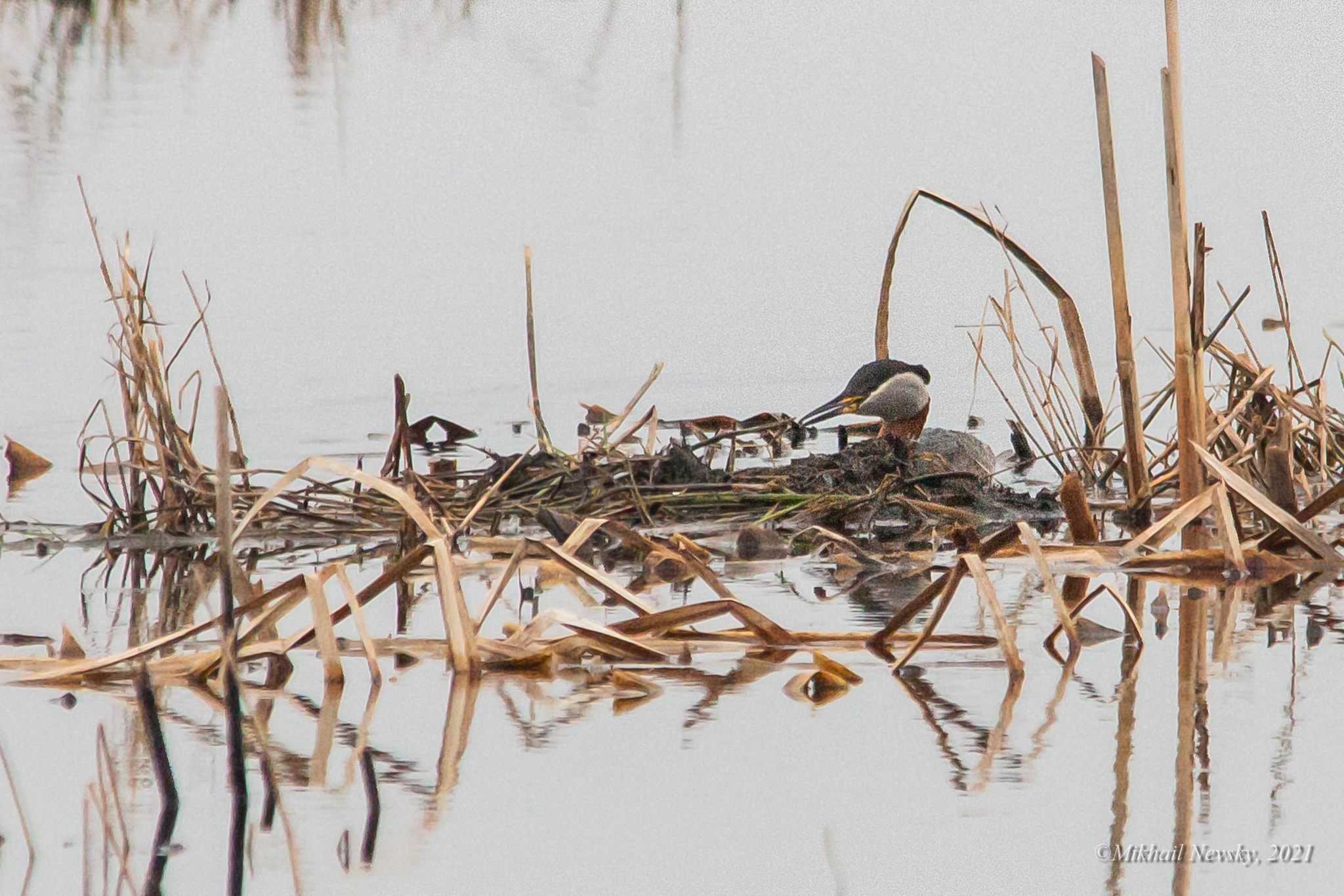
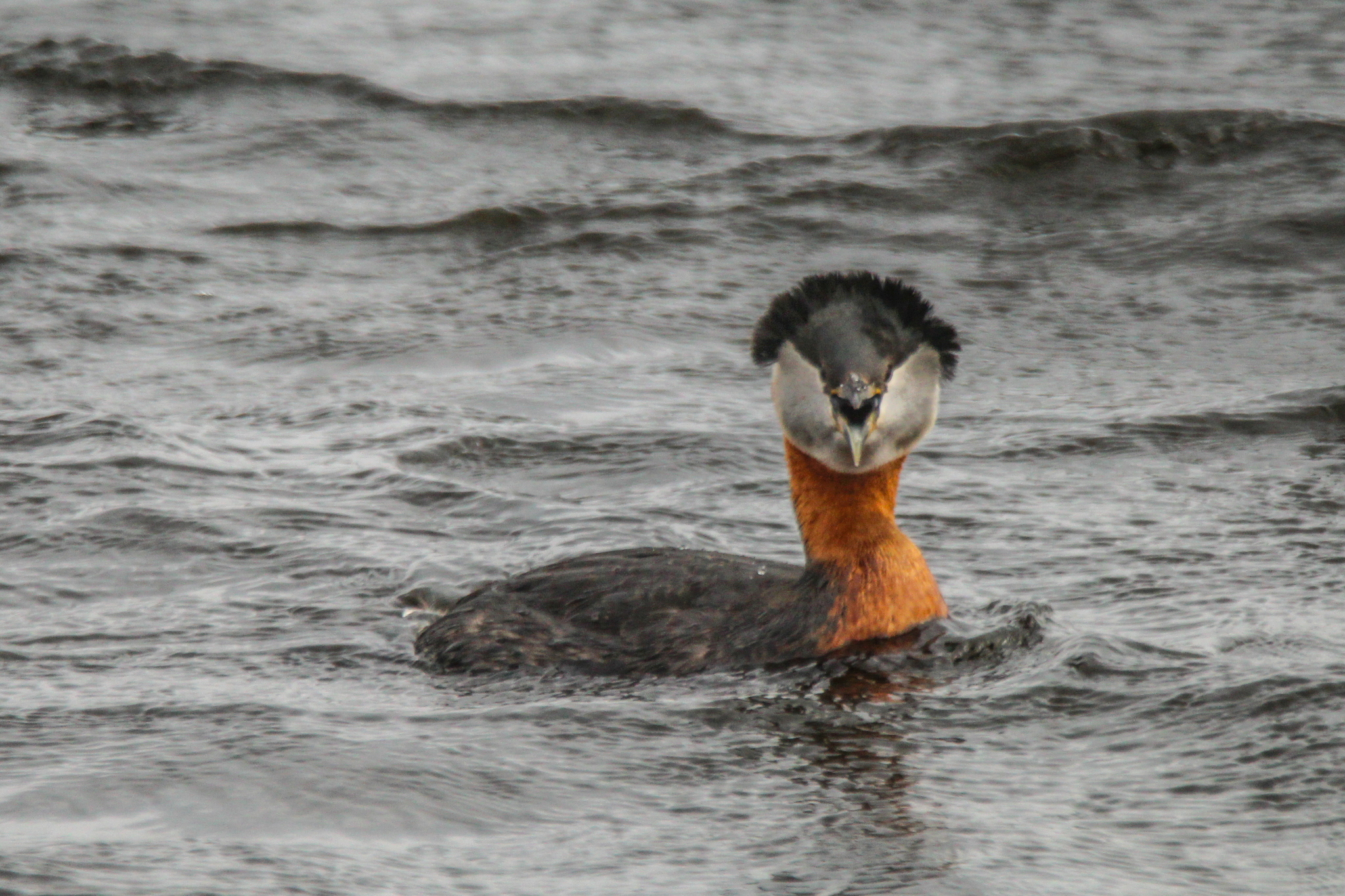
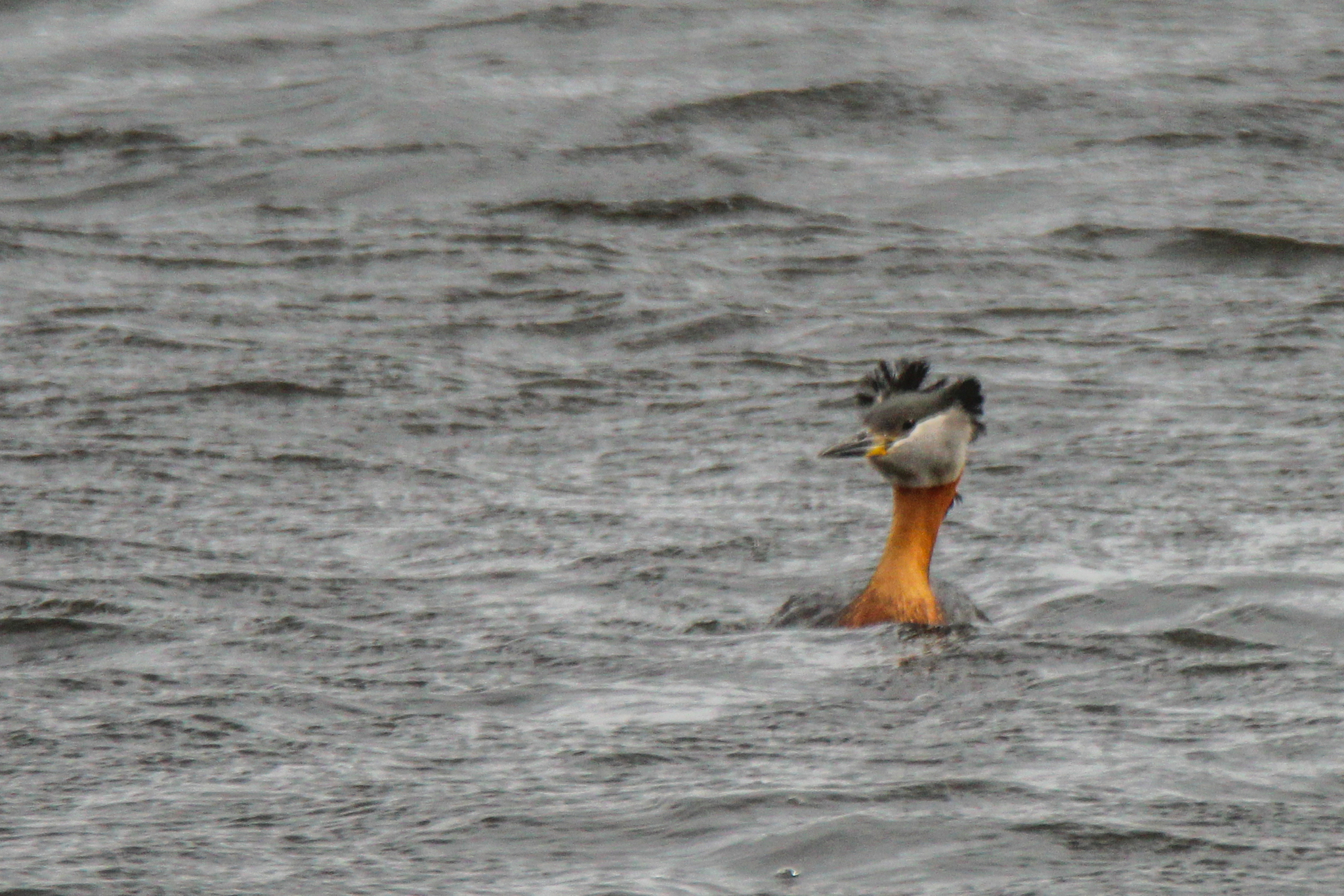
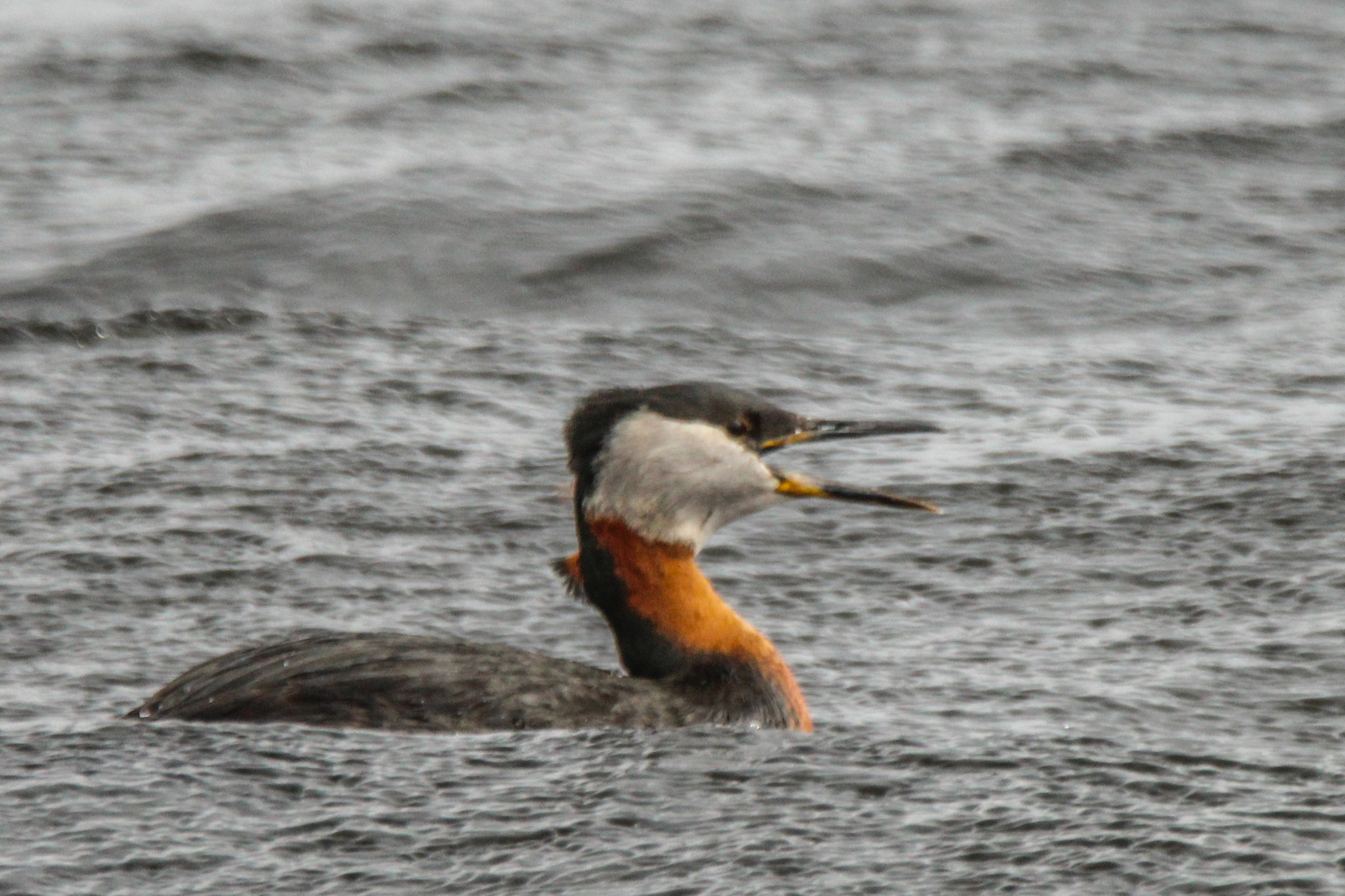
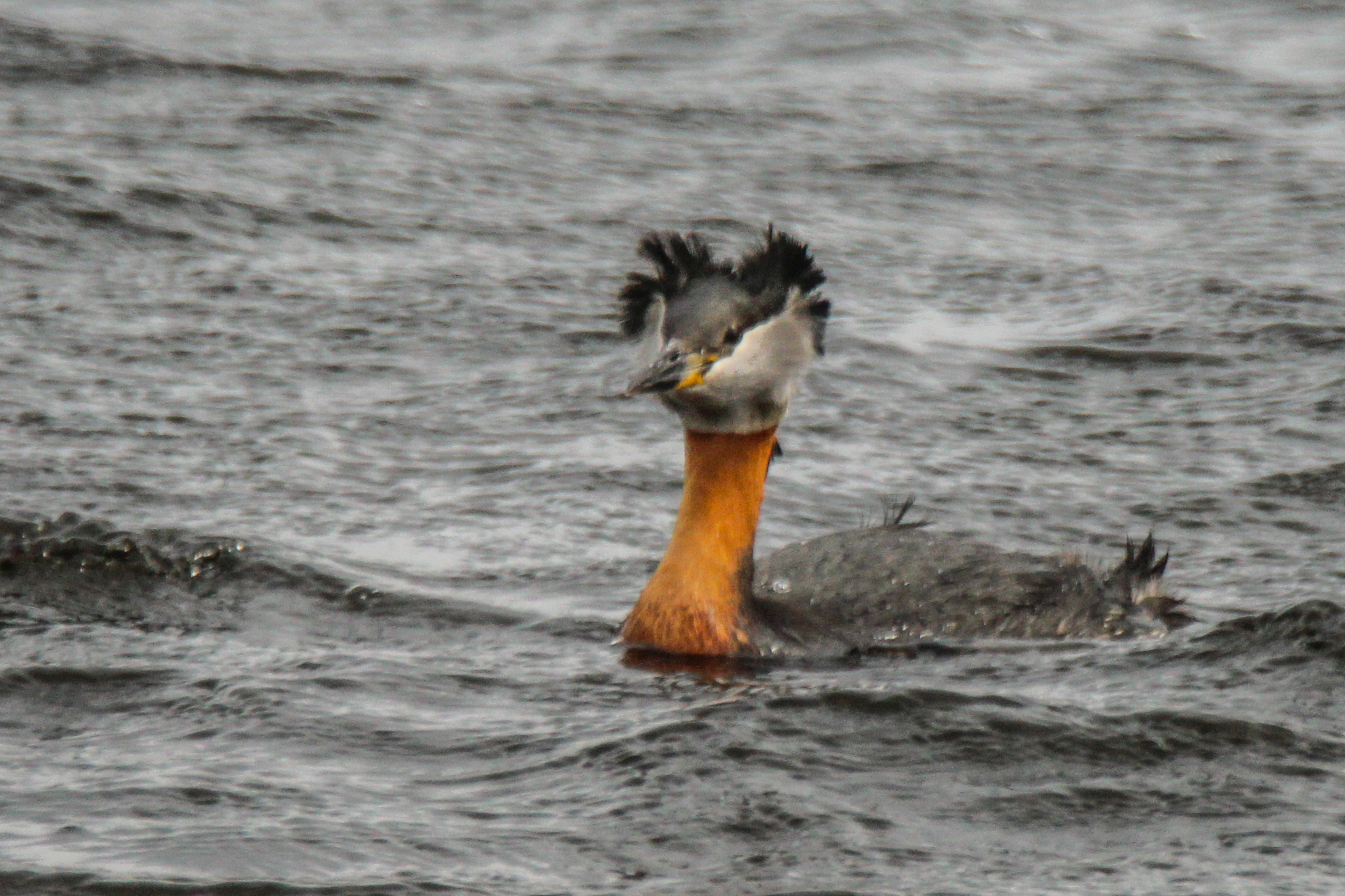
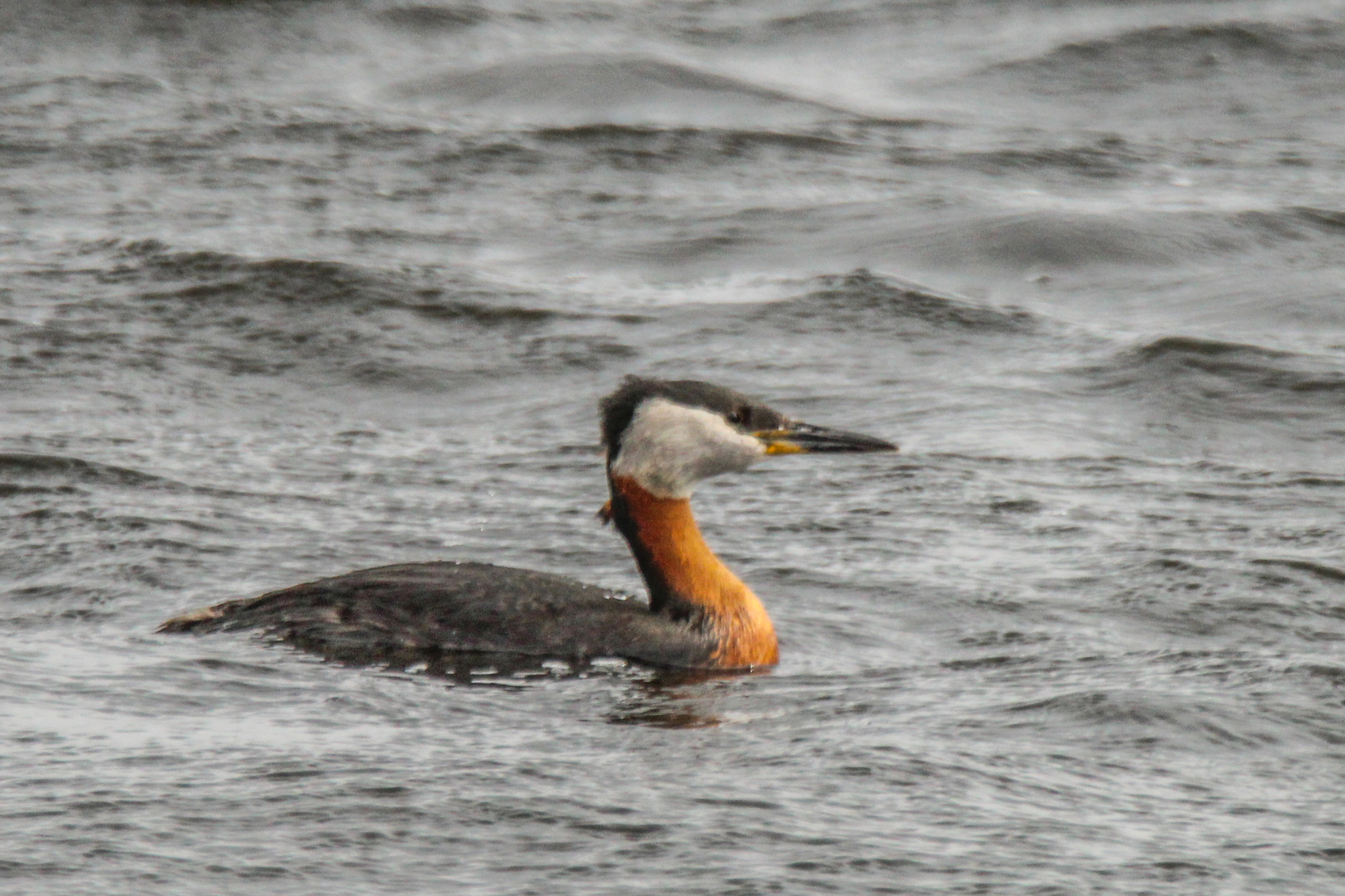
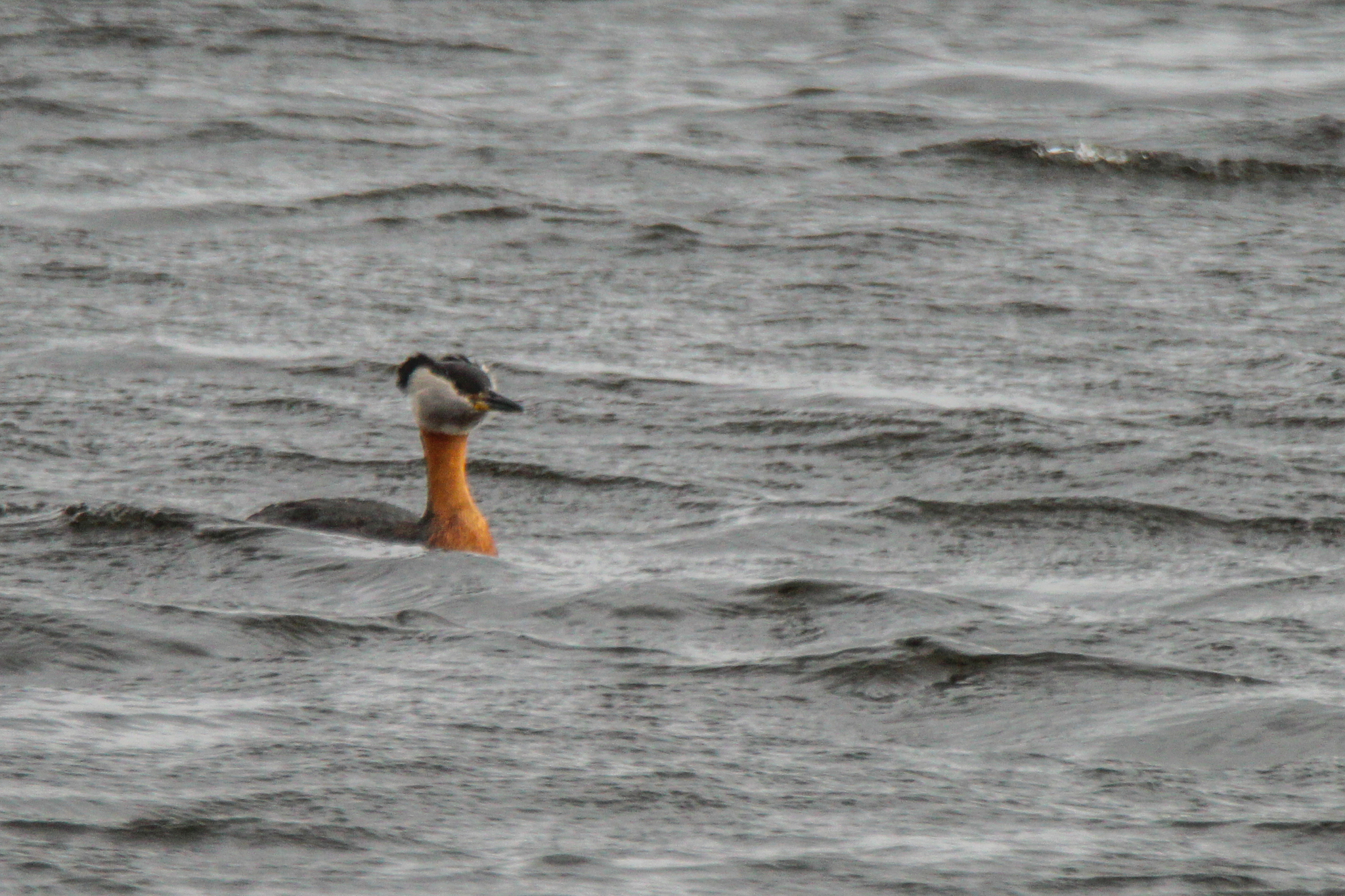
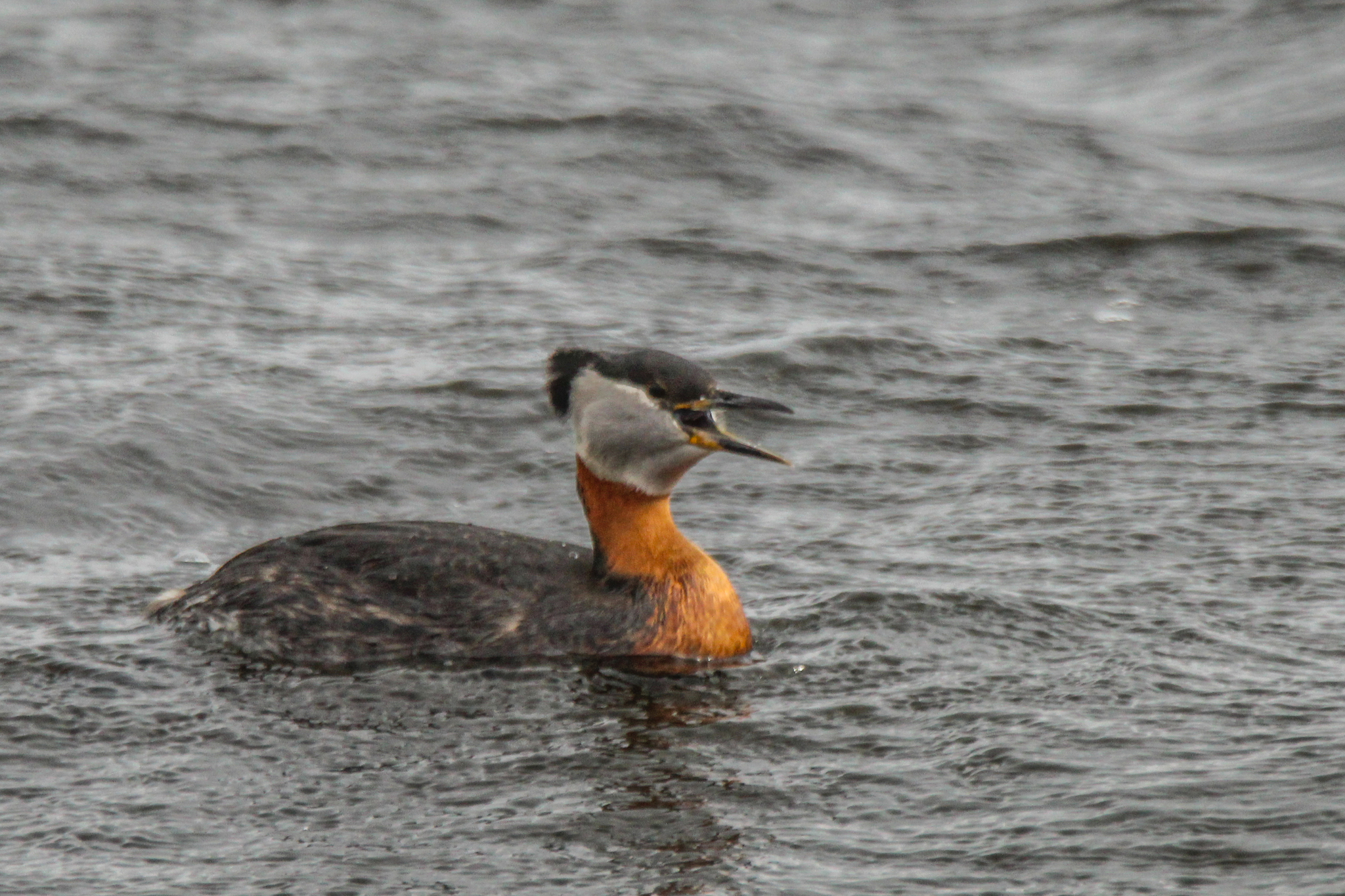
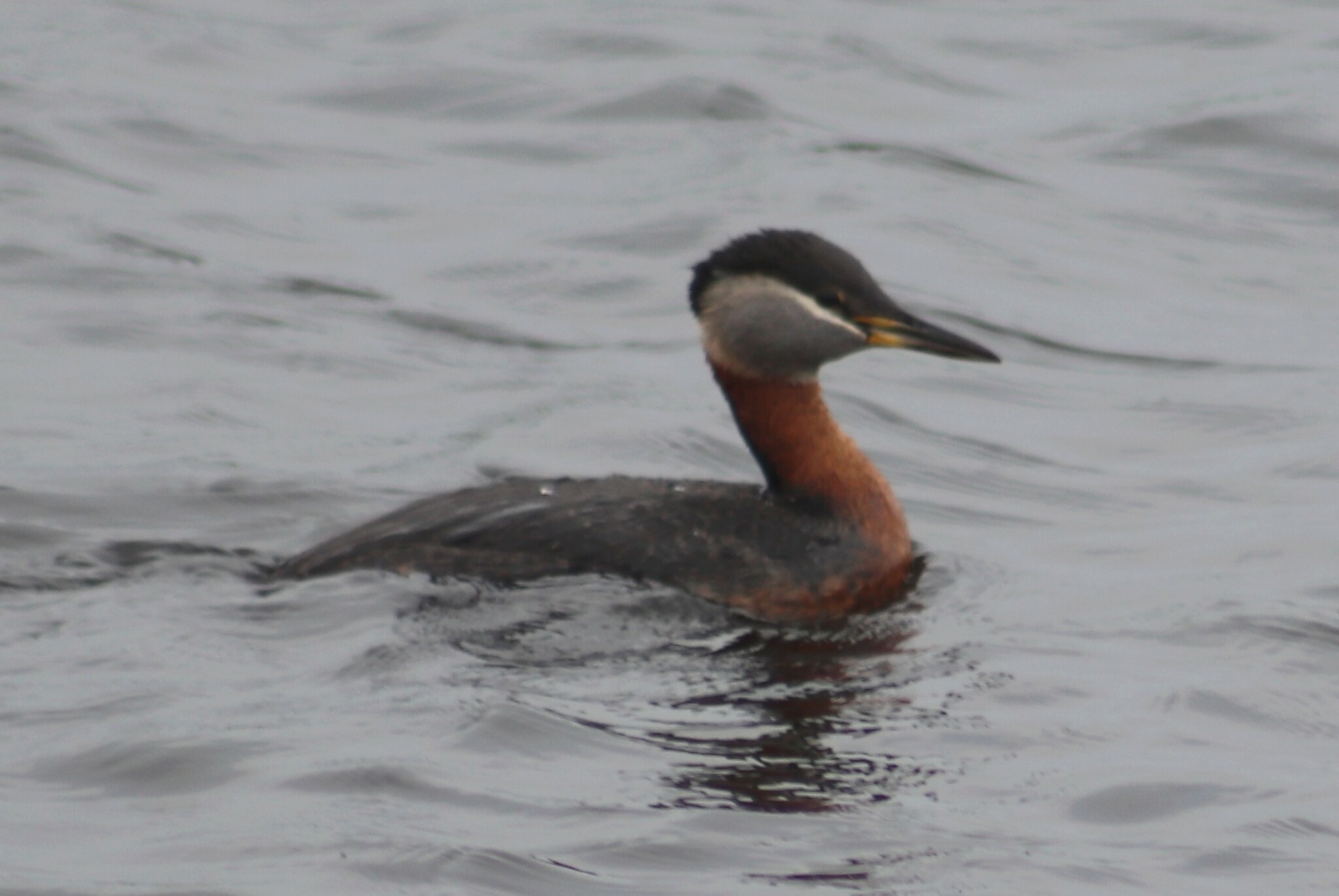
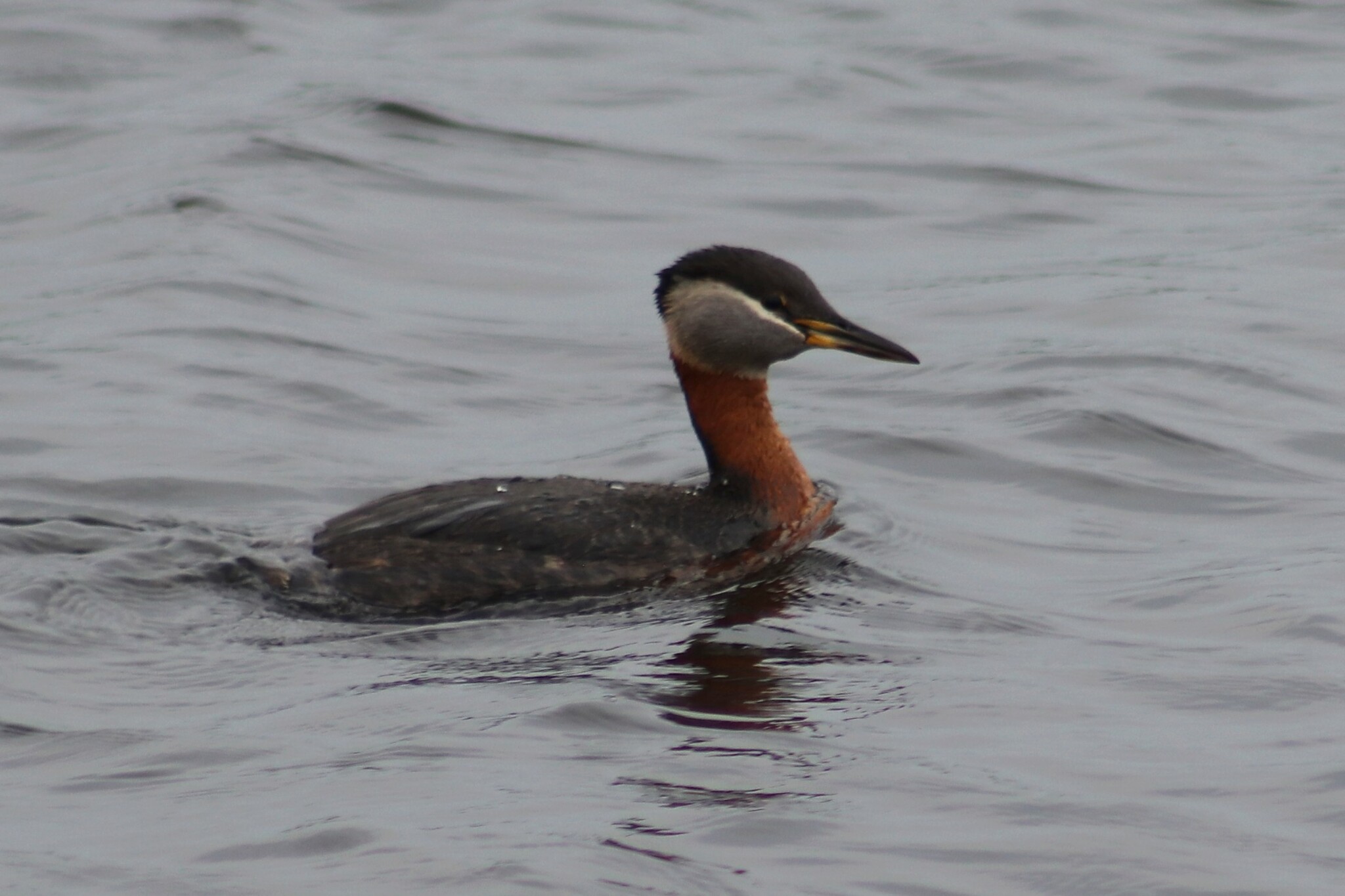
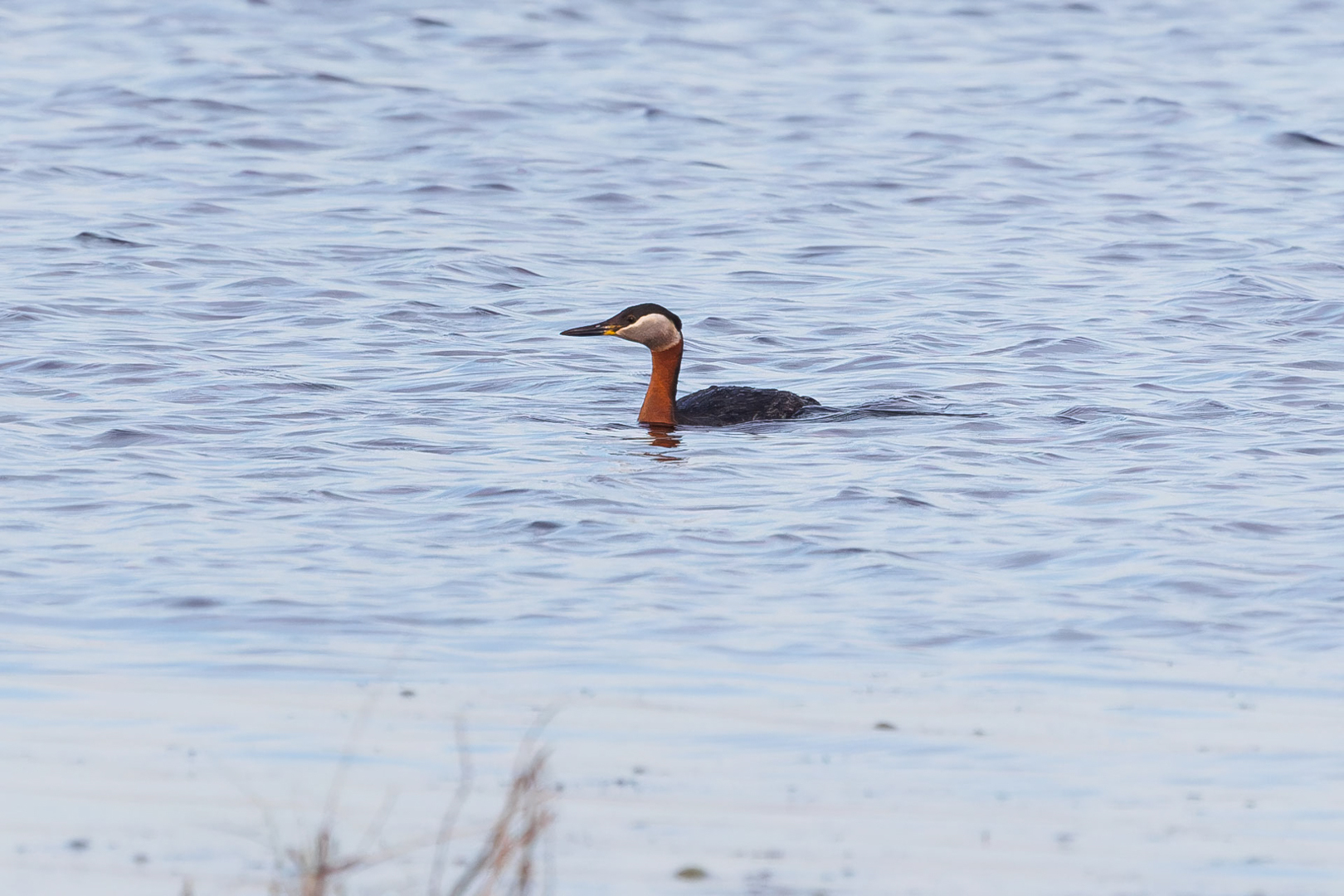
Medium-large grebe, noticeably larger than other northern grebe species but smaller than great crested grebe. Breeding plumage features black cap extending below eye, very pale grey cheeks and throat, rusty red neck, dark grey back and flanks, and white underparts. Bill is long, pointed, and black with yellow base; eyes are dark brown. Winter plumage is duskier with less defined grey cap merging into grey face, pale crescent curving around rear of head, whitish front neck and darker grey hind neck; yellow on bill less obvious. Sexes similar in appearance, though males average heavier. Juveniles have striped face, diffuse blackish cap, pale red neck, and extensive yellow on bill. Flight shows extended neck and trailing feet; wings are grey with white secondaries and beat rapidly.
Identification
Breeding plumage is unmistakable with characteristic red neck, black cap, and pale grey face. In winter, confusion possible with similar species. Larger than Slavonian grebe with relatively larger bill and grey face (not white). Closer in size to great crested grebe but shorter-necked with less contrasting head pattern and no white above eye. Winter birds show less defined cap than other grebes, with dark grey plumage overall and pale crescent contrasting with rest of head.
Distribution & Habitat
Breeds across temperate northern hemisphere in shallow freshwater lakes, bays of larger lakes, marshes, and other inland waters, often less than 3 ha and less than 2 m deep. Prefers waters in forested areas or shrub tundra with abundant emergent vegetation. All populations are migratory, wintering mainly at sea in estuaries and bays in water less than 15 m deep with sand or gravel bottoms. N nominate subspecies breeds from southern Sweden and Denmark through central and eastern Europe to western Siberia, winters in North and Baltic Seas, Adriatic, Black Sea, Caspian Sea, and Mediterranean. P. g. holbollii breeds in North America from Alaska through western and central Canada to northern US, and in eastern Siberia from Kamchatka to Hokkaido; winters from Japan to East China Sea, and along Pacific and Atlantic coasts of North America.
Behavior & Ecology
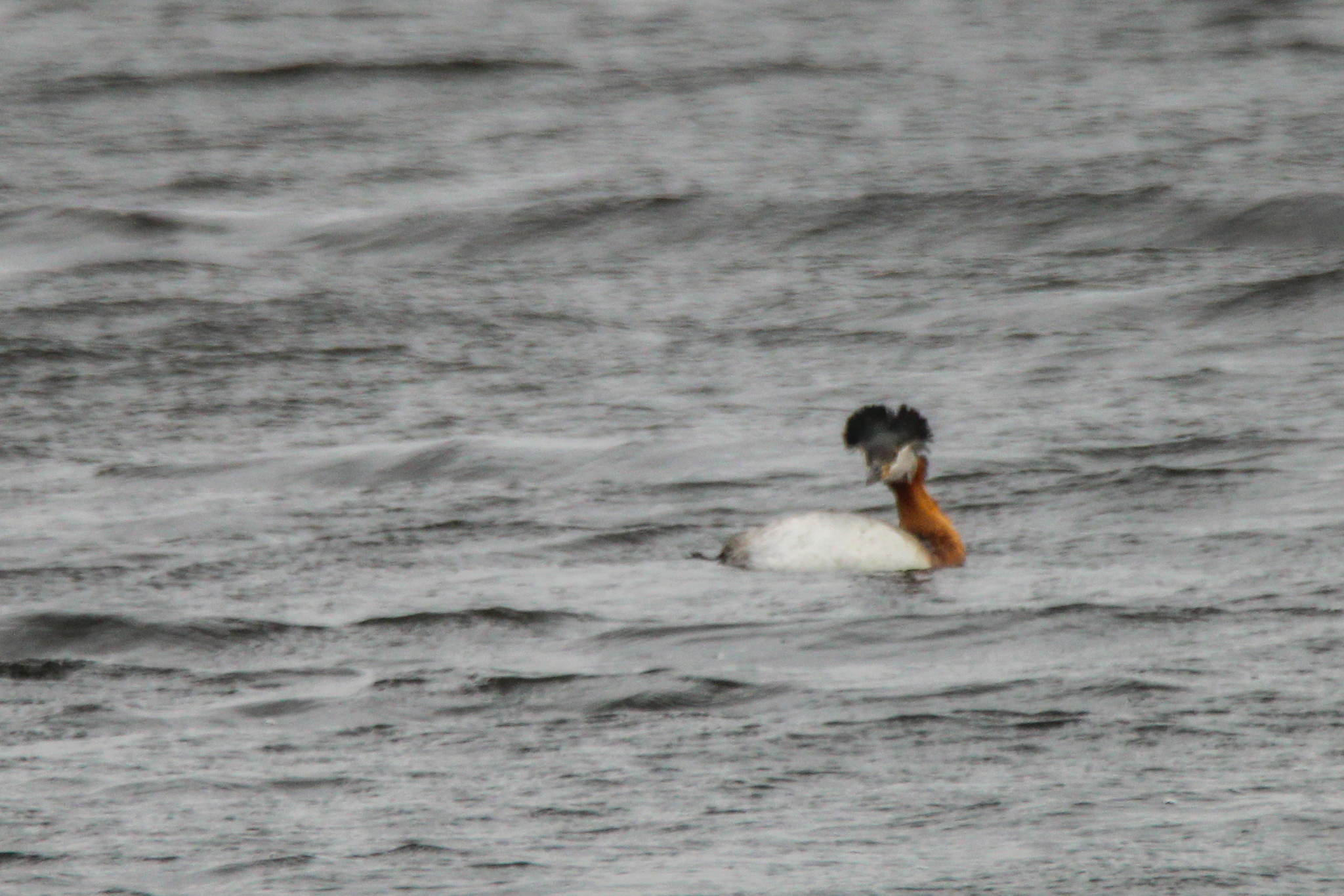
Diet consists mainly of invertebrates (aquatic insects, crayfish, molluscs) and fish; fish may be important locally or seasonally, especially for American subspecies, with crustaceans comprising up to 20% of diet. Aquatic prey obtained by diving or surface swimming with head submerged. Feeds alone in winter but may form large concentrations of over 2000 on migration. Monogamous pairs form on migration or at breeding sites. Elaborate courtship includes head-shaking, cat display, parallel rushes, weed presentations, and penguin dance. Nests as isolated pairs or semi-colonially with up to 20 pairs; floating platform anchored to vegetation in 0.5–0.75 m deep water. Lays 4-5 dull white or pale blue eggs (average 5.1 cm × 3.4 cm, 30.5 g). Both parents incubate 21–33 days and share chick care; chicks ride on parents' backs until 10–17 days old and can fly at 50–70 days. Vocal with loud wailing or howling display calls, plus quacking, clucking, hissing, rattling, and purring calls. Swallows own feathers, often fed to young.
Conservation
IUCN Least Concern. Global population 150,000–370,000 individuals (P. g. holbollii about twice as numerous as nominate). Population trend not quantified but not believed to meet decline thresholds. Covered by Agreement on the Conservation of African-Eurasian Migratory Waterbirds (AEWA). Historical hunting documented in Mesolithic and Paleolithic northern Europe, but no significant current hunting. Potential threats include pollutants (PCBs, DDT) causing reduced reproductive success in North America, and habitat modification/degradation of lakes plus human disturbance from recreational activities. Most North American population breeds in Canada where stable or increasing.
Culture
Hunted by humans in northern Europe during Mesolithic and Paleolithic periods; archaeological evidence exists. No significant cultural or folklore traditions documented beyond this historical hunting.
Source: Wikipedia · CC BY-SA 3.0
Taxonomy
- Order
- Podicipediformes
- Family
- Podicipedidae
- Genus
- Podiceps
- eBird Code
- rengre
Subspecies (2)
-
Podiceps grisegena grisegena
locally in Palearctic, breeding from central Scandinavia eastward through northeastern Russia including Kamchatka, southward to southeastern Europe, Türkiye, Kazakhstan, and northeastern China; winters mainly coastally to central Europe and northern Japan and the Korean Peninsula
-
Podiceps grisegena holbollii
breeds subarctic southern and central Alaska mainland, western and central Canada and northern tier of western and central USA states; winters mainly coastally, Aleutian Islands to northern Baja California, and southeastern Canada and northern US states along Atlantic coast
Data Sources
Species description from Wikipedia, licensed under CC BY-SA 3.0.
Bird images and sounds sourced from GBIF, contributed by citizen scientists worldwide under Creative Commons licenses.
Taxonomy data from AviList 2025.