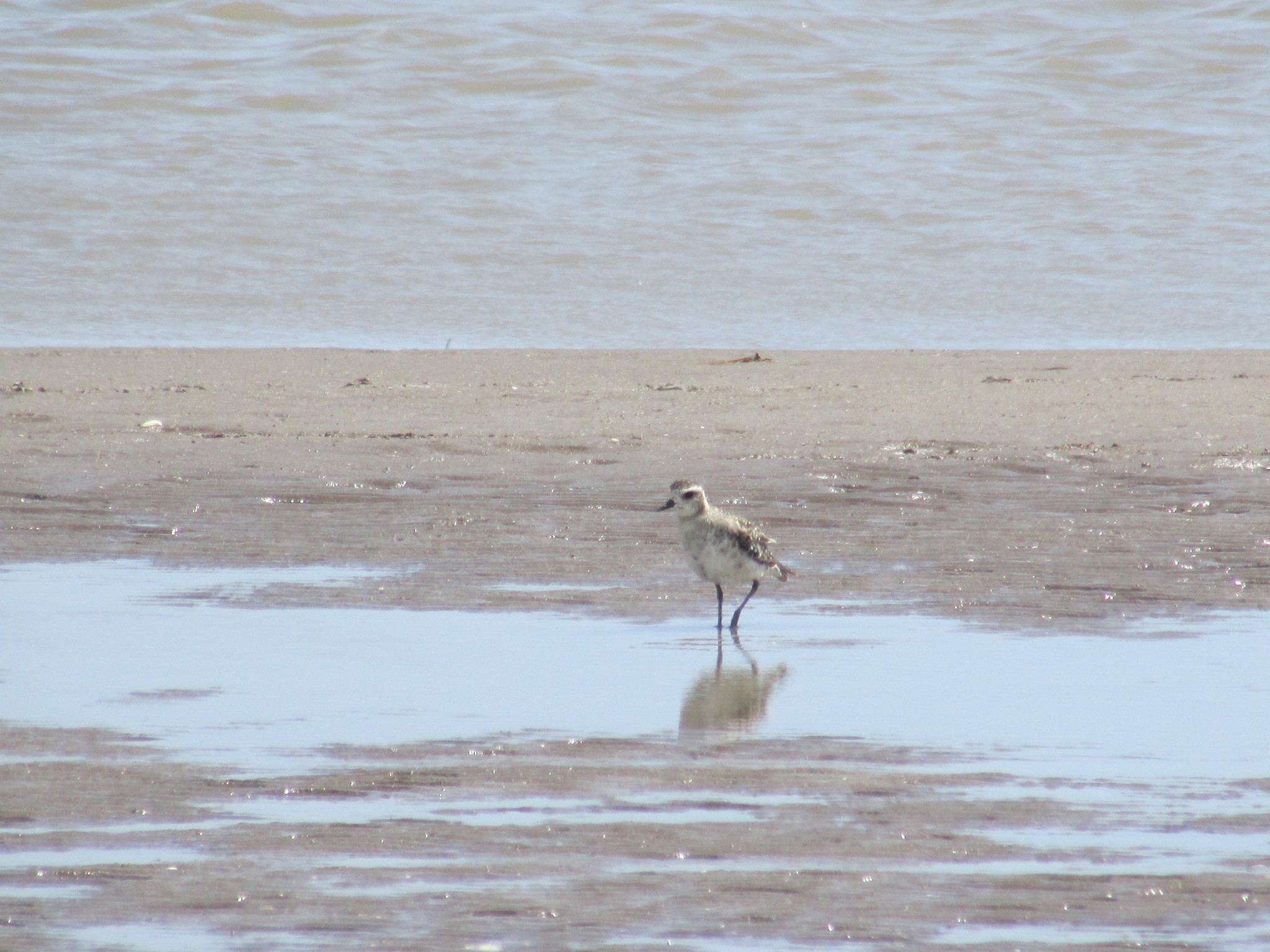
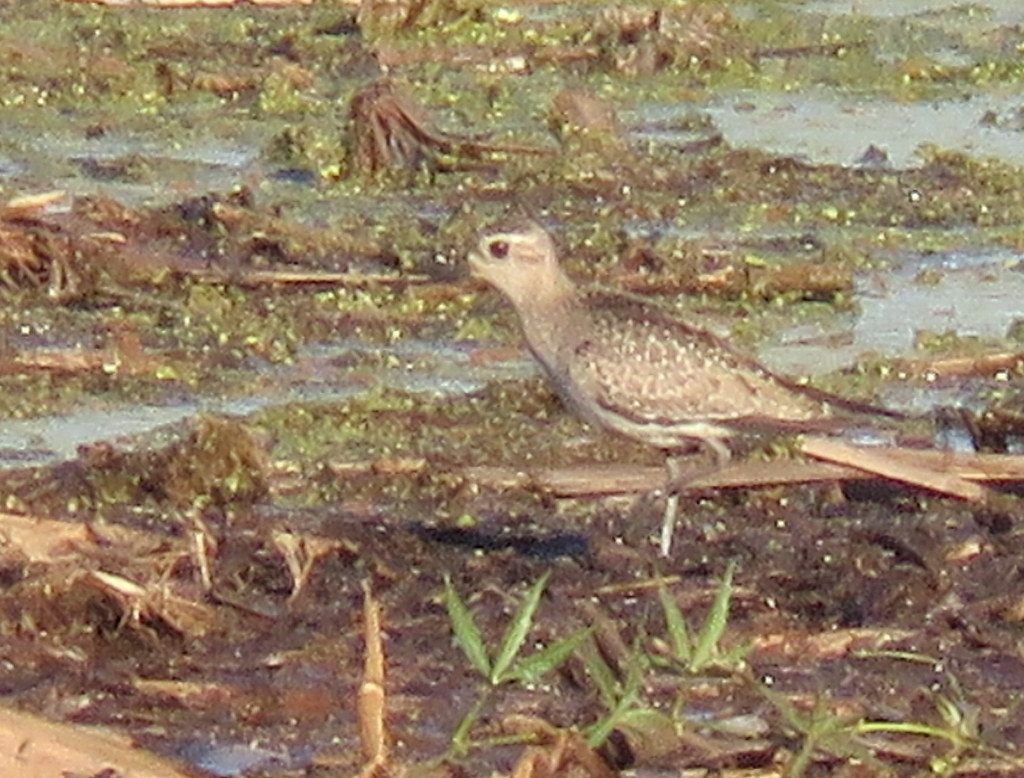
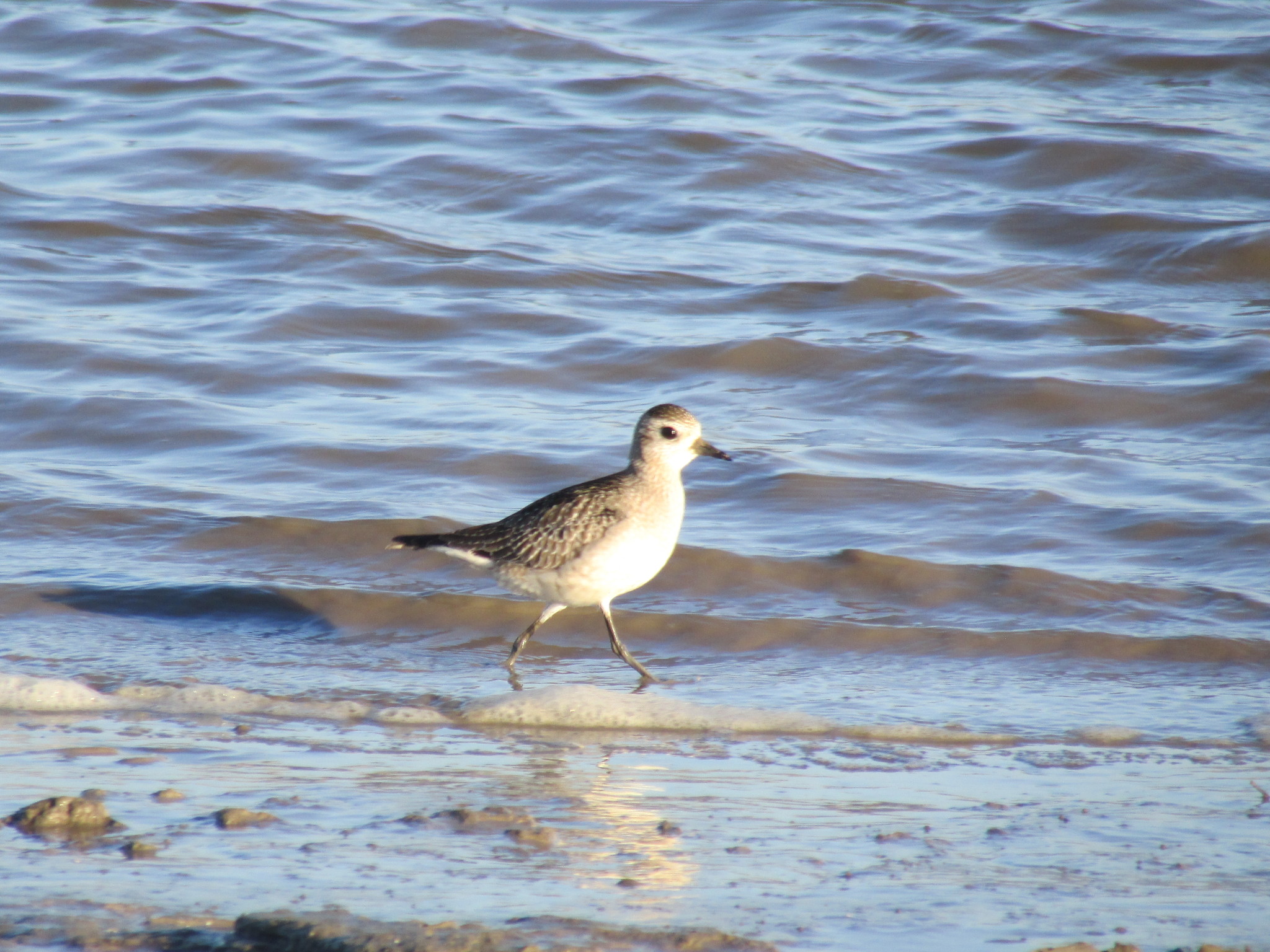
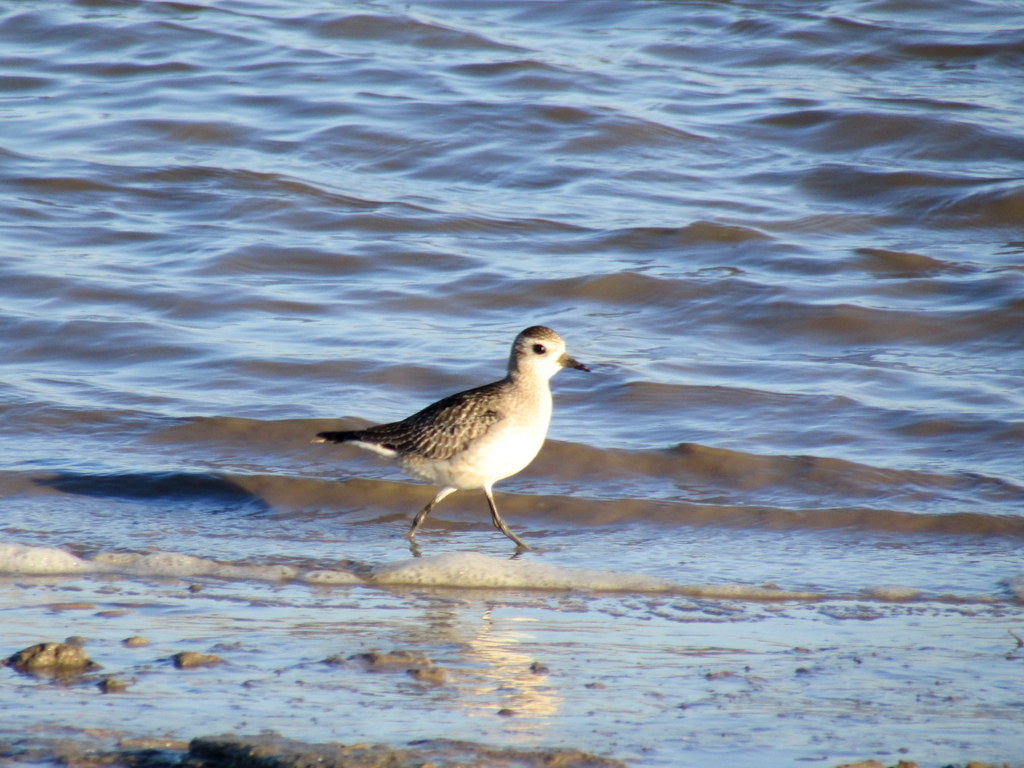
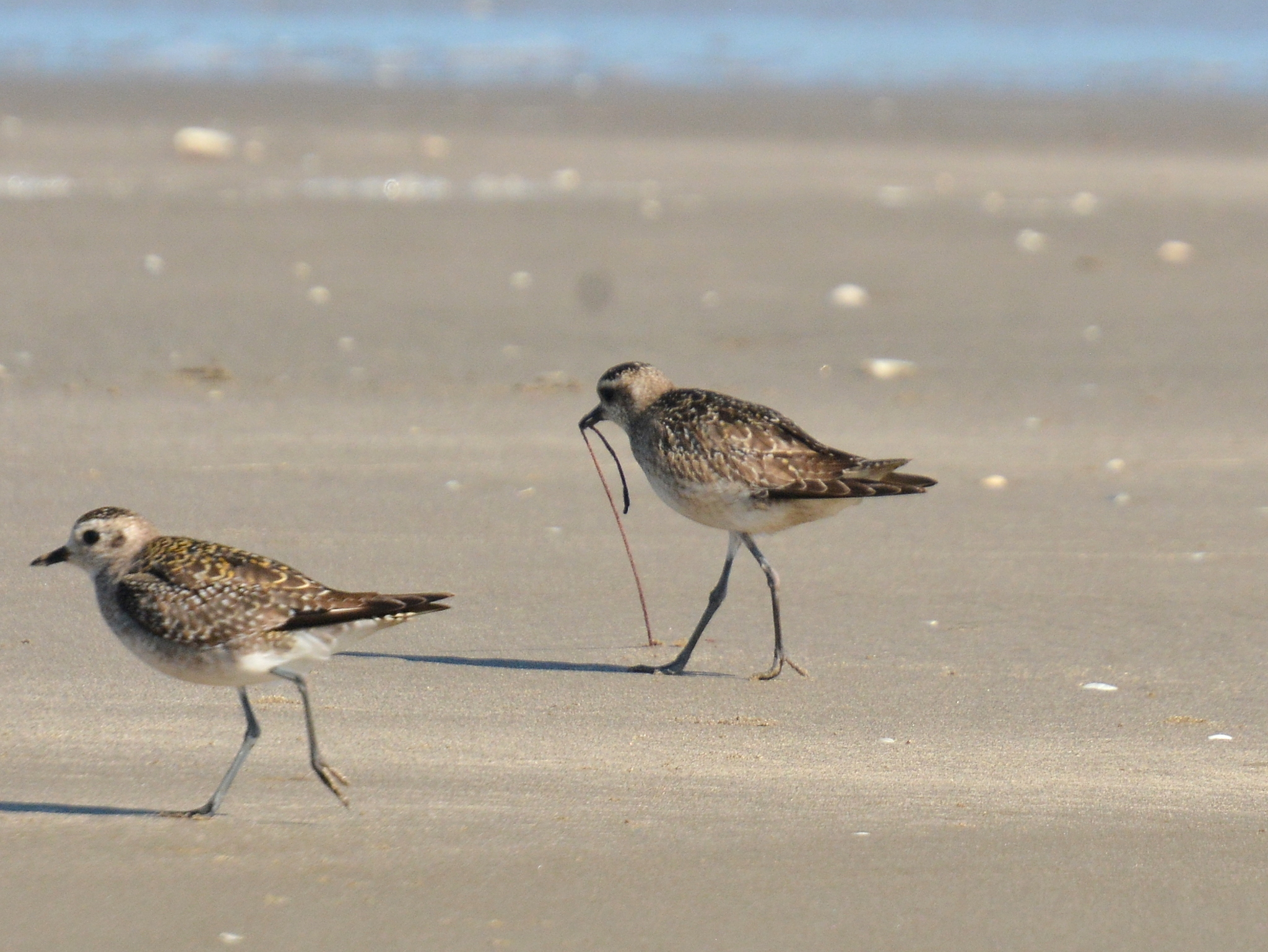
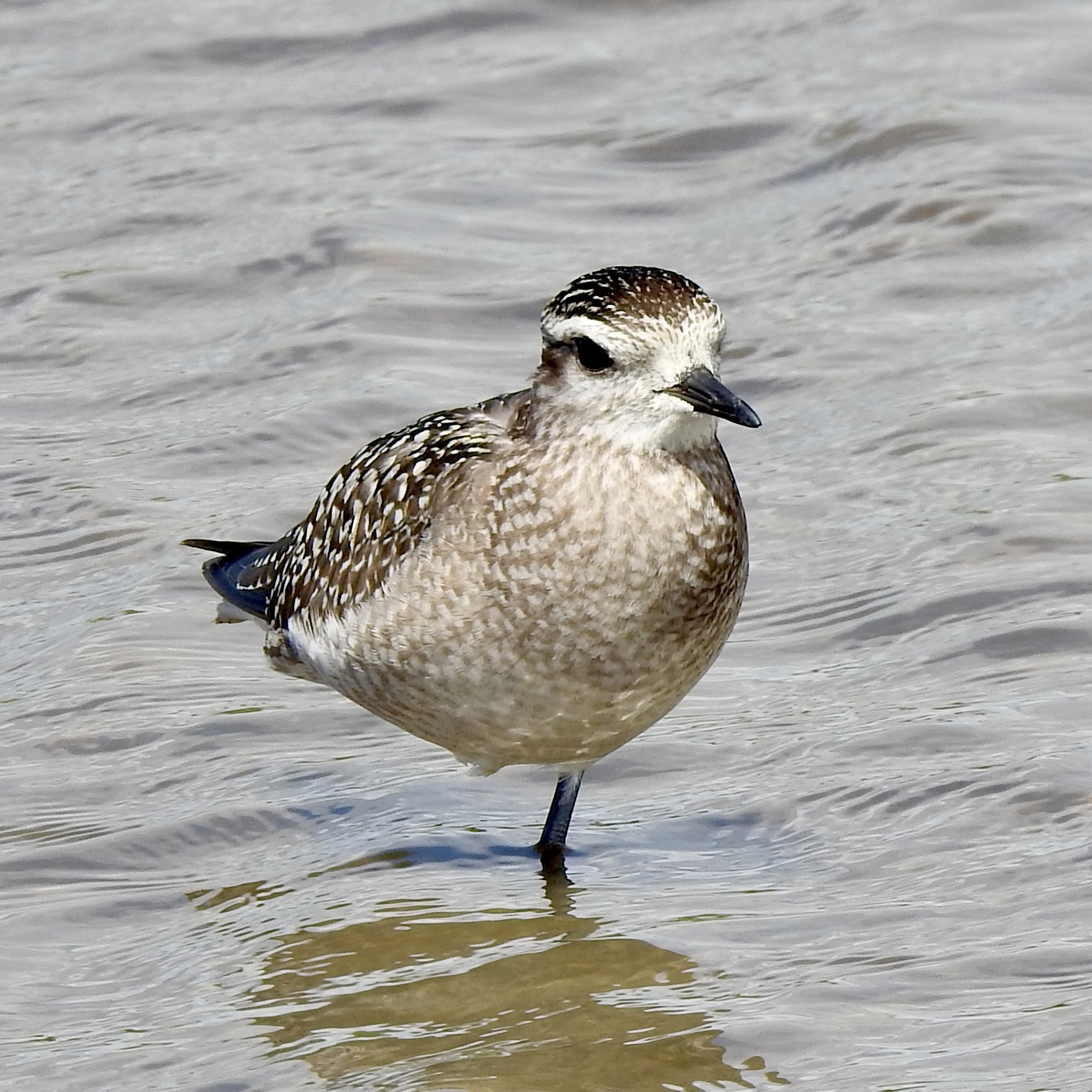
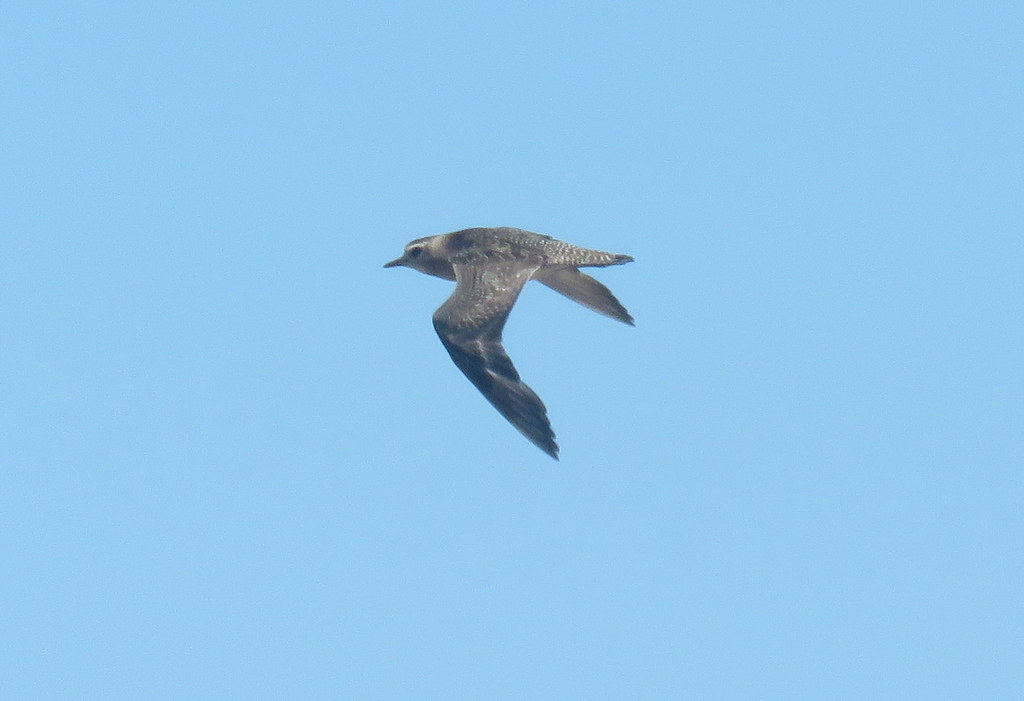
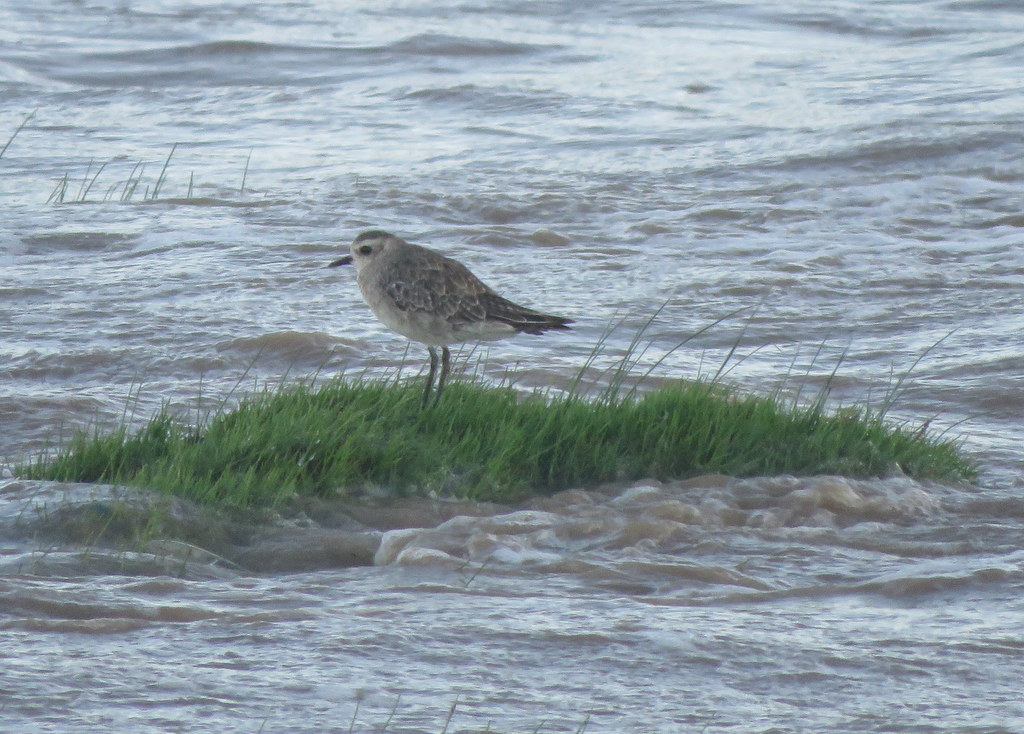
American Golden Plover
Pluvialis dominica
美洲金鸻
Introduction
A medium-sized plover (Pluvialis dominica) in the family Charadriidae. Breeds on Arctic tundra across northern Canada (Baffin Island west to Yukon and northern British Columbia) and Alaska. Winters in southern South America, primarily Patagonia. Notable for one of the longest known migratory routes of over 40,000 km, including a 3,900 km nonstop transoceanic flight over the Atlantic. The species follows an elliptical migration path, with northbound birds passing through Central America and staging in areas like Illinois, while fall migration occurs further east over the western Atlantic and Caribbean. The population never fully recovered from extensive hunting in the late 19th century.
Description
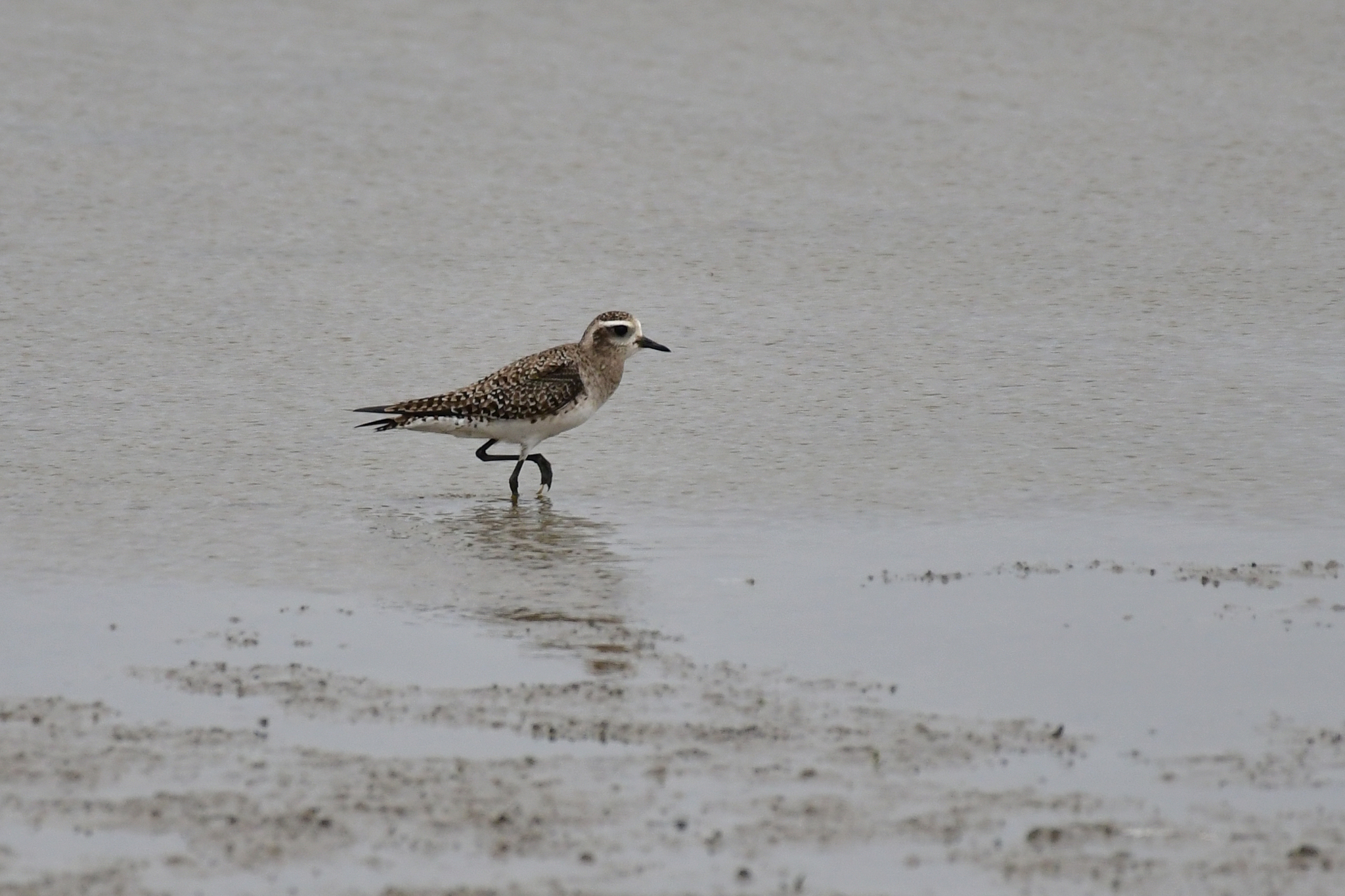
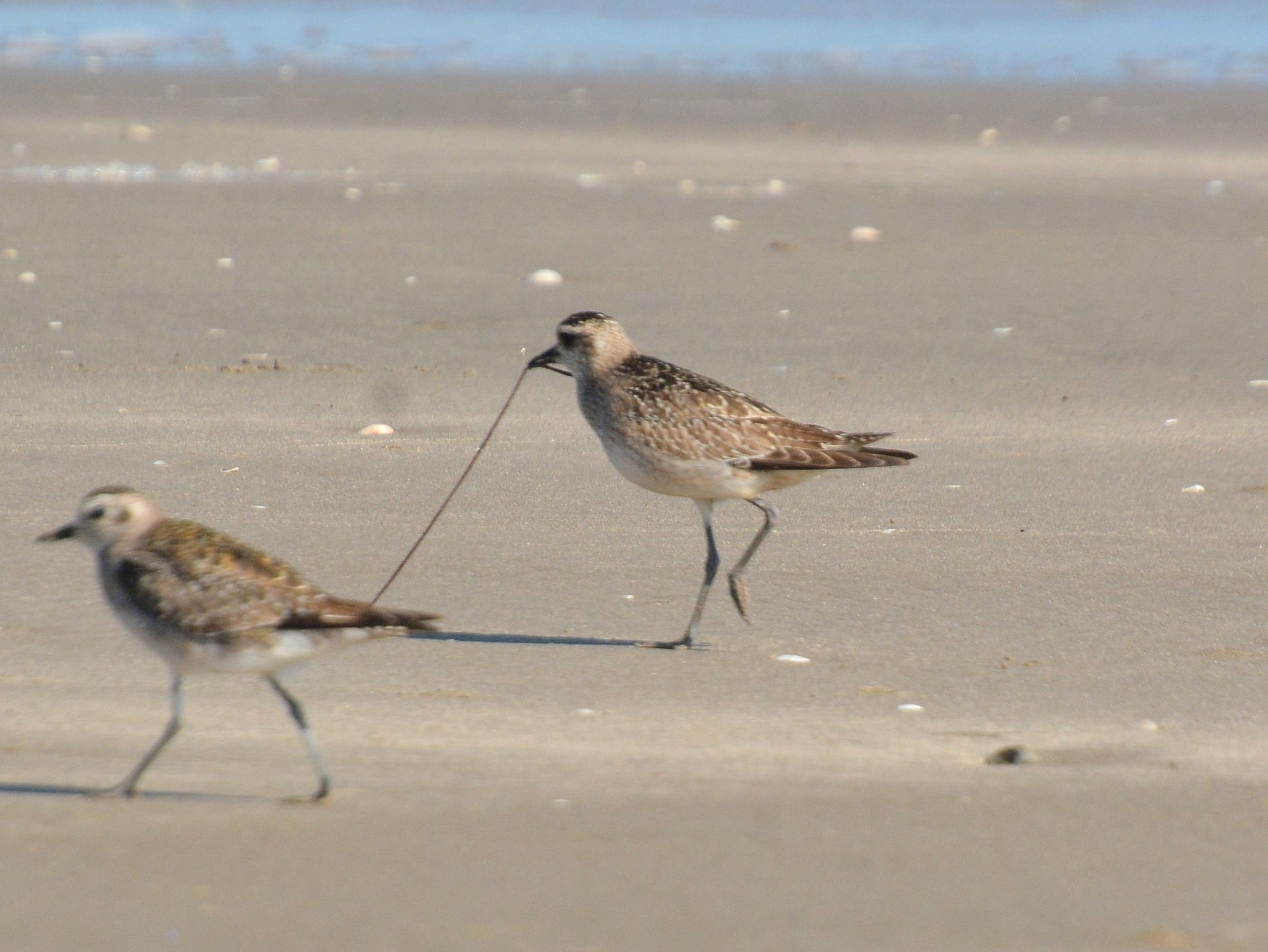
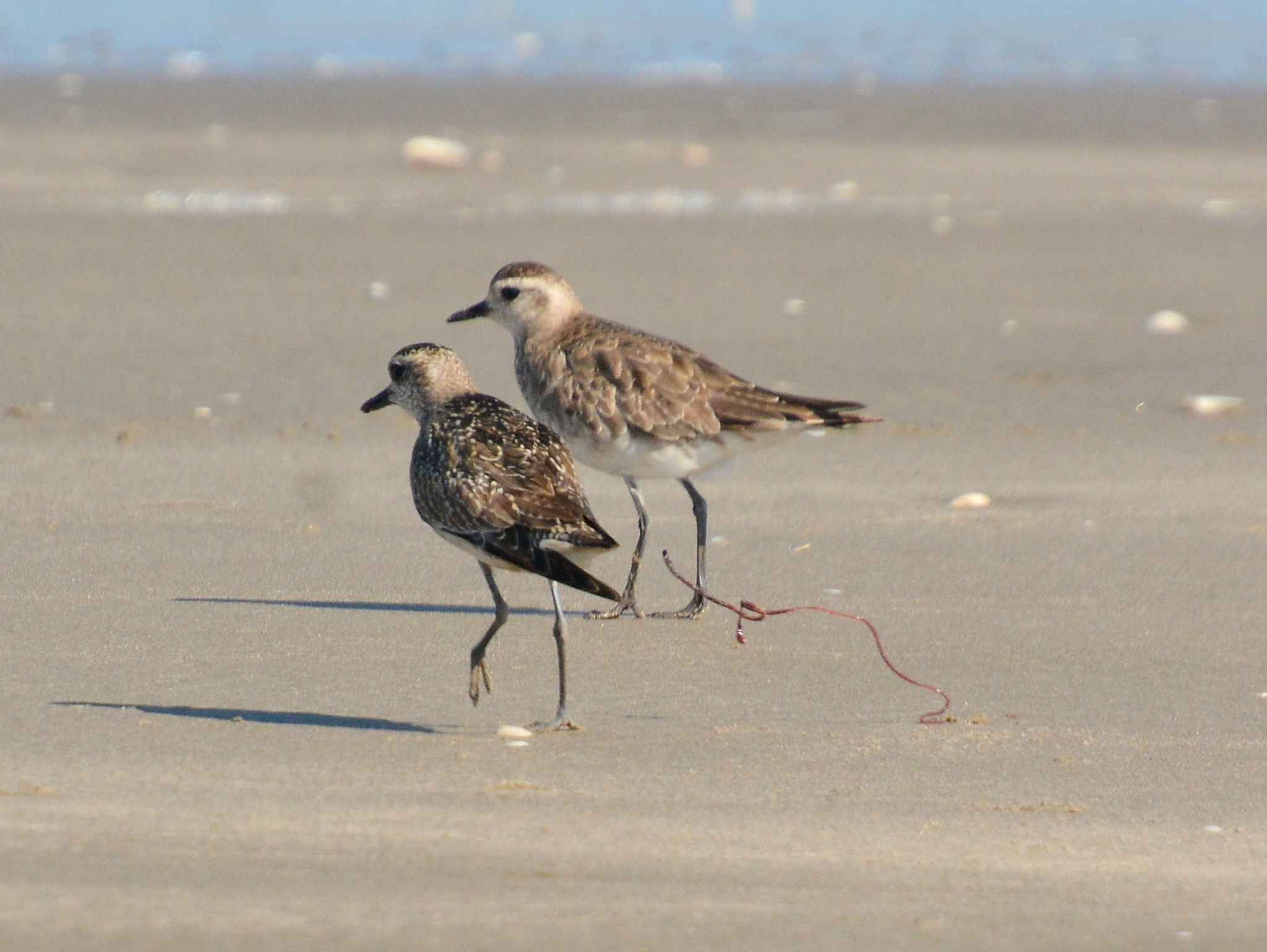
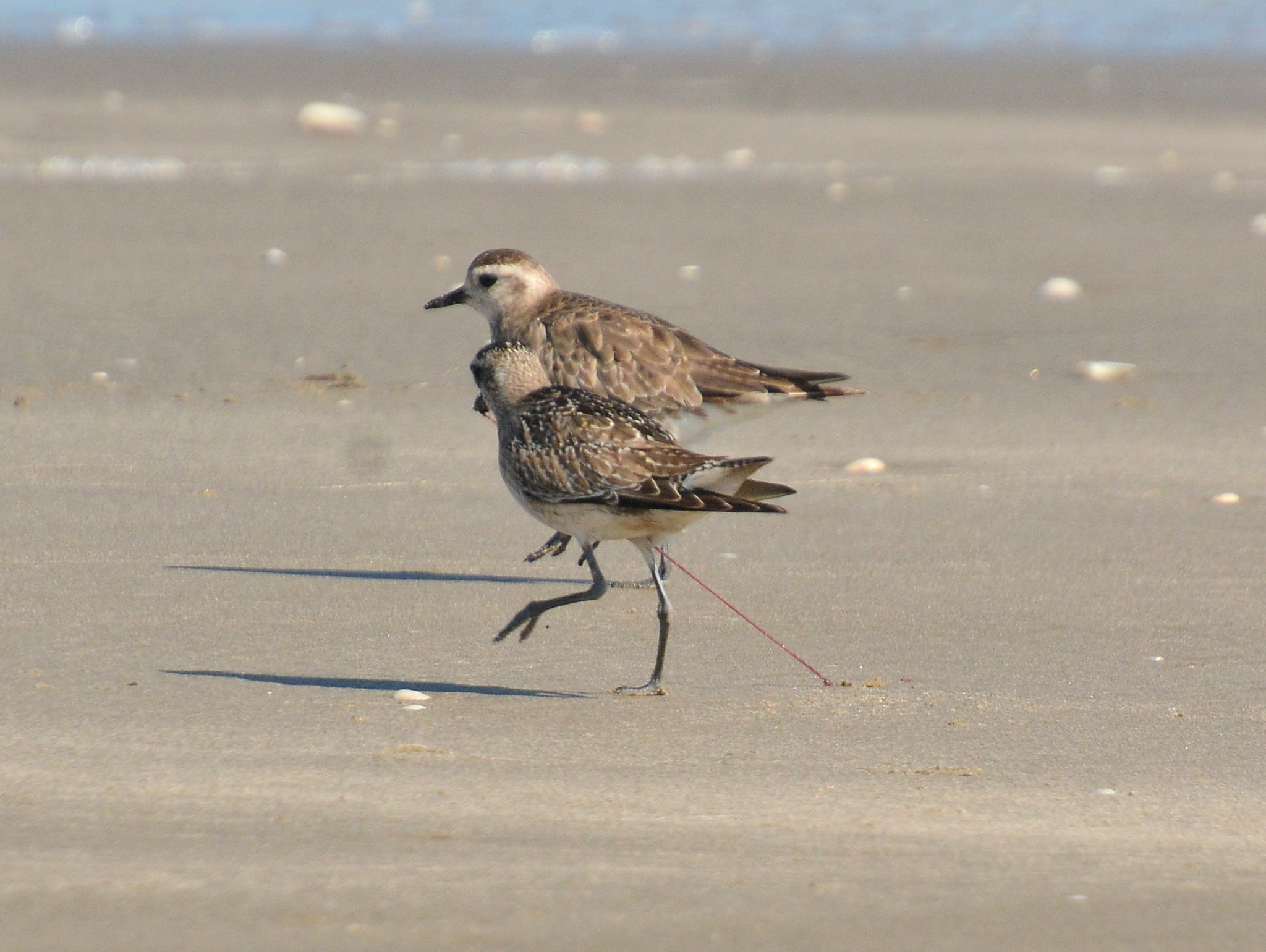
Length 24-28 cm, wingspan 65-67 cm, weight 122-194 g. Breeding adults have black face, neck, breast, and belly with white crown and nape extending to the side of the breast. The back is mottled black and white with pale gold spots. Females are similar but show less black. Non-breeding plumage features grey-brown upperparts, pale grey-brown underparts, and a whitish eyebrow. The head and bill are small. Distinguished from similar species by solid black lower belly and undertail in breeding plumage.
Identification
Similar to European and Pacific golden plovers. Smaller, slimmer, and longer-legged than European golden plover, which has white axillary feathers. More closely resembles Pacific golden plover (shares grey axillary feathers), but the Pacific is slimmer with shorter primary projection, longer legs, and yellower back. In breeding plumage, American golden plover has solid black lower belly and undertail, while Pacific and European have white on the flanks and undertail. Fall molt occurs later (September-October) compared to Pacific (August). First-summer immatures can be confusing due to partial summer plumage.
Distribution & Habitat
Breeds on Arctic tundra in northern Canada (Baffin Island to Yukon and northern British Columbia) and Alaska. Migrates to wintering grounds in southern South America (Patagonia). Northbound migration passes through Central America January to April, with staging in locations like Illinois. Fall migration follows a more easterly route over the western Atlantic and Caribbean. One of the longest migratory routes of any bird at over 40,000 km, including 3,900 km of nonstop ocean crossing. Regular but scarce fall migrant in western Europe, typically 20-25 sightings annually in Great Britain.
Behavior & Ecology
Forages on tundra, fields, beaches, and tidal flats by sight, eating earthworms, snails, insects, larvae, crustaceans, fish, berries, and seeds. Uses scrape nests lined with lichens, grass, and leaves in dry open areas. Very territorial at breeding grounds, with some individuals also territorial on wintering grounds. Lays clutch of four white to buff eggs heavily blotched with black and brown, measuring approximately 48 by 33 mm. Incubation period 26-27 days, with male incubating during day and female at night. Chicks are precocial, leaving nest within hours and feeding themselves within a day.
Conservation
The IUCN Red List assessment and current population status are not provided in the source article. However, the article notes that large numbers were shot in the late 19th century and the population has never fully recovered.
Culture
Comparison of dates and migratory patterns suggests this species, along with Eskimo curlews, were the most likely shorebirds that attracted Christopher Columbus's attention to the nearby Americas in early October 1492, after 65 days at sea out of sight of land.
Source: Wikipedia · CC BY-SA 3.0
Taxonomy
- Order
- Charadriiformes
- Family
- Charadriidae
- Genus
- Pluvialis
- eBird Code
- amgplo
Distribution
breeds high Arctic to subarctic from northern Alaska eastward to northeastern Canada, and southward to north-central British Colombia; winters coastal southeastern Brazil and Argentina, and inland grassland, Paraguay to east-central Argentina
Data Sources
Species description from Wikipedia, licensed under CC BY-SA 3.0.
Bird images and sounds sourced from GBIF, contributed by citizen scientists worldwide under Creative Commons licenses.
Taxonomy data from AviList 2025.