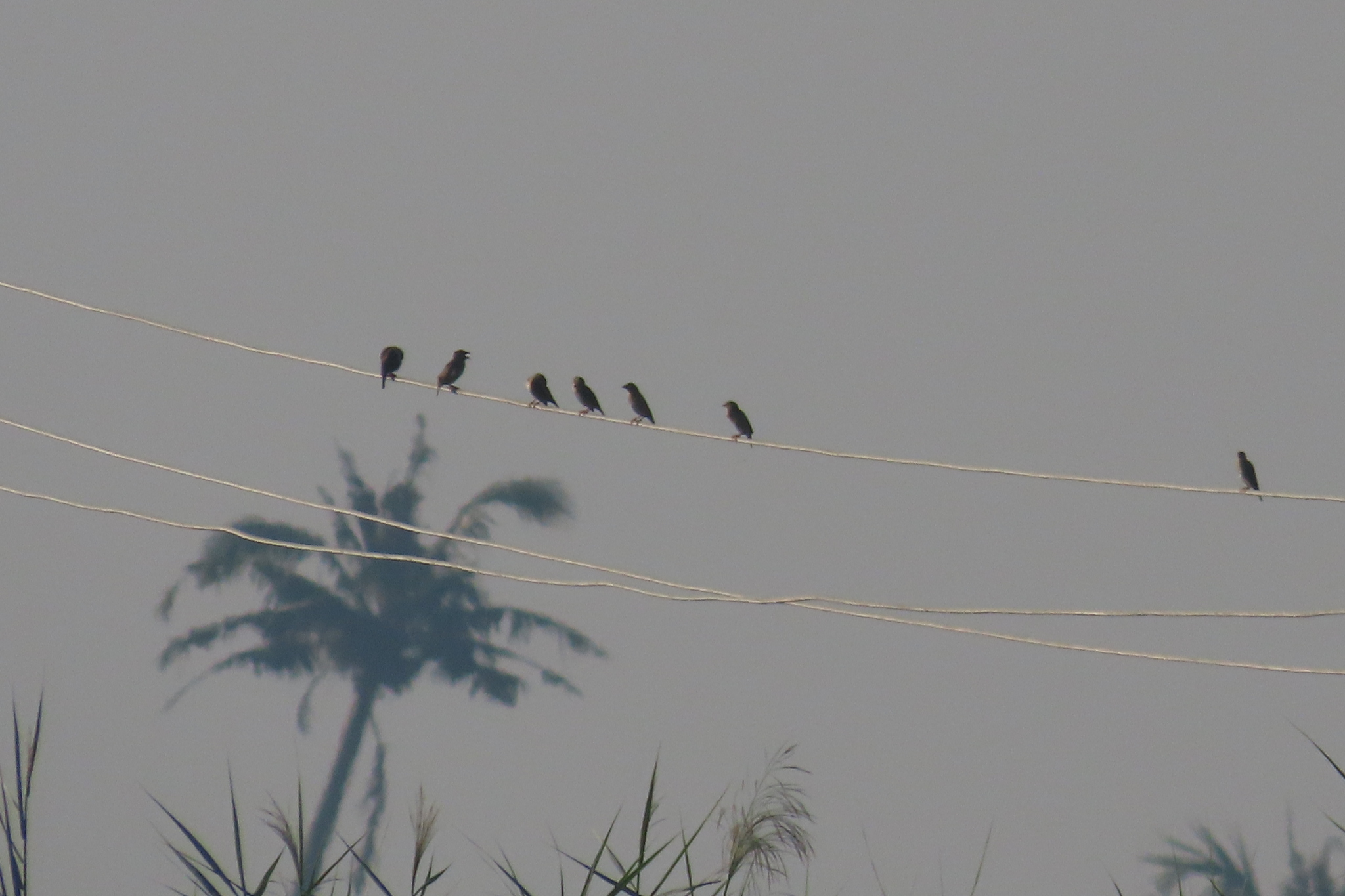
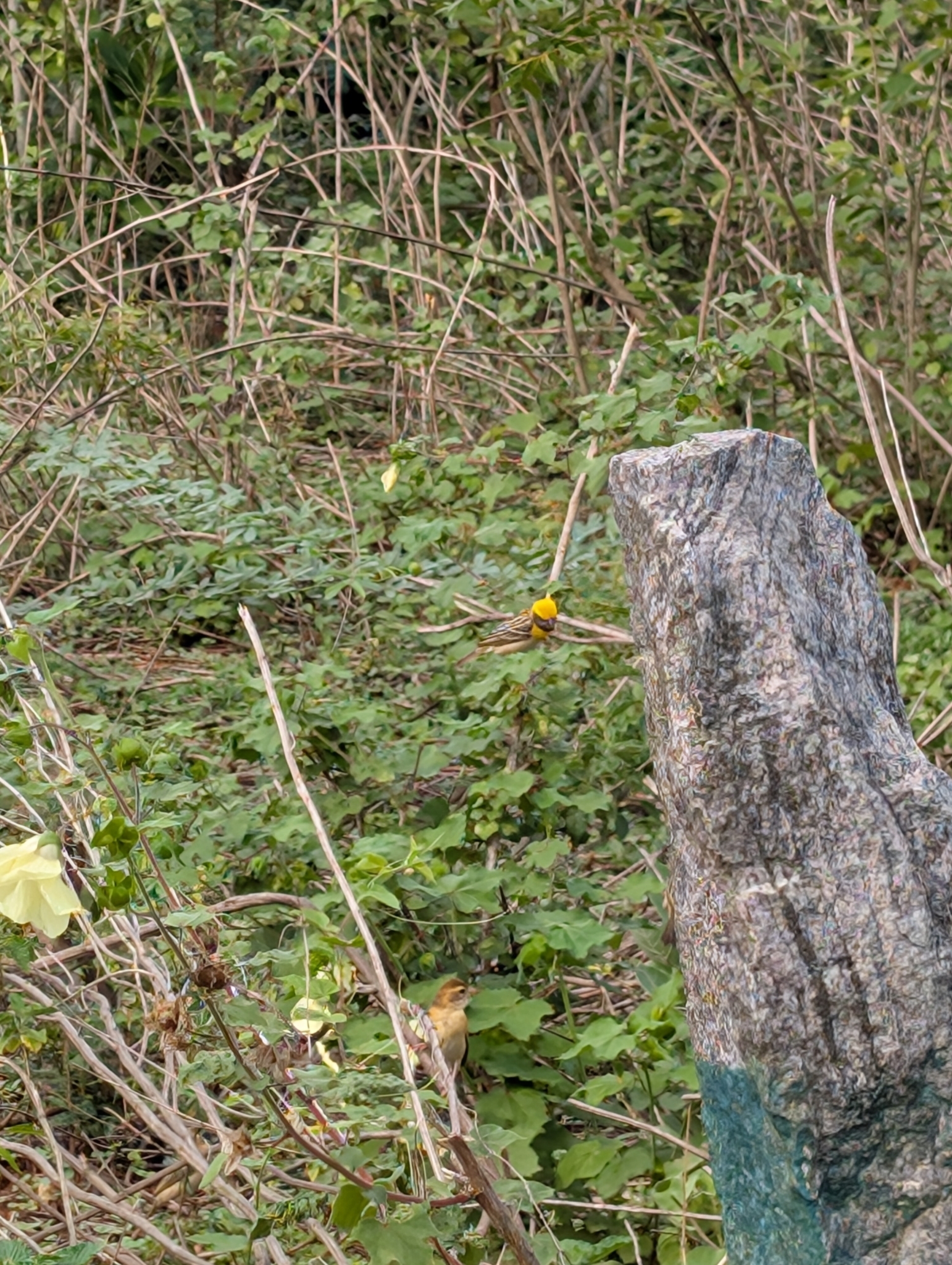
Baya Weaver
Ploceus philippinus
黄胸织雀
Introduction
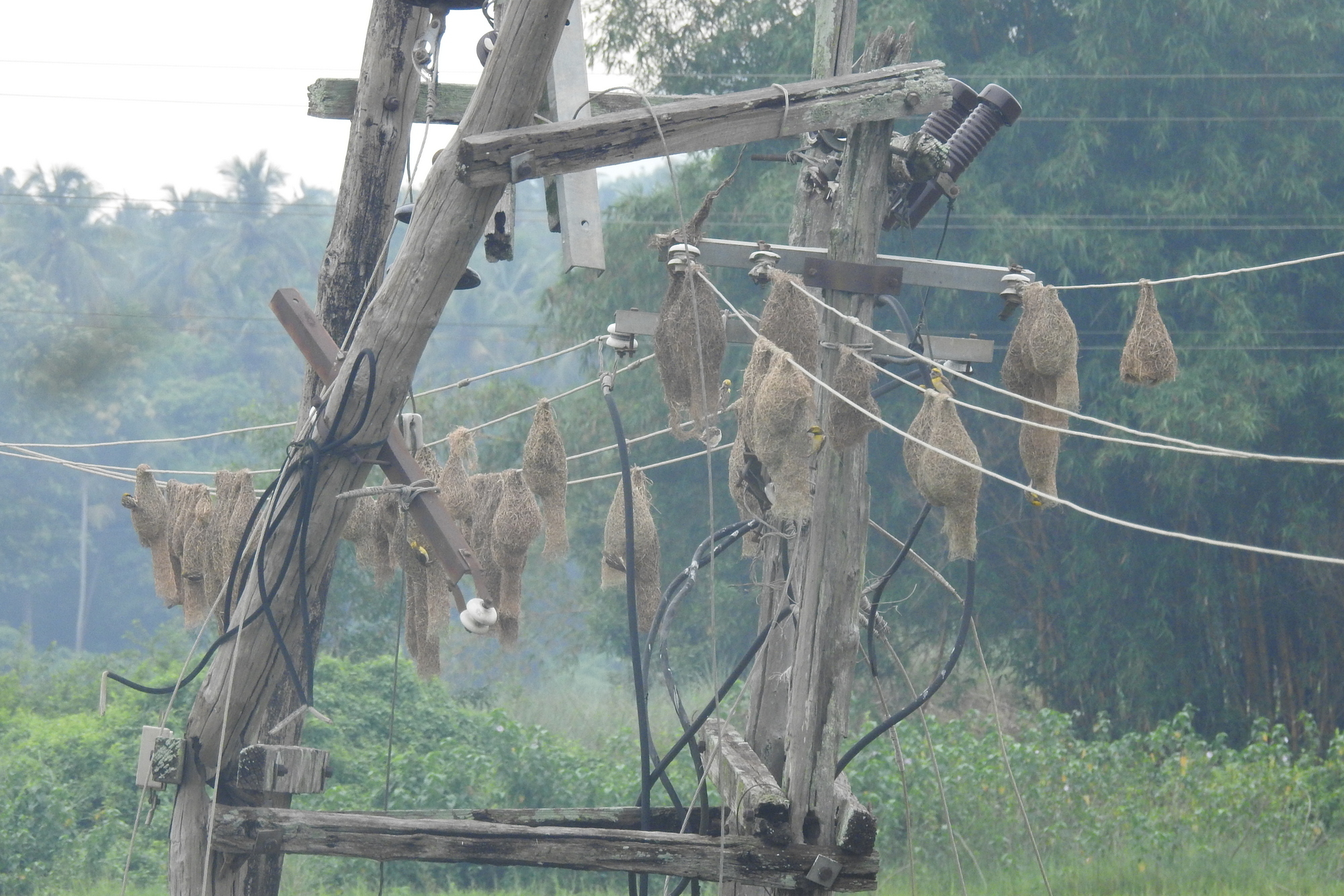
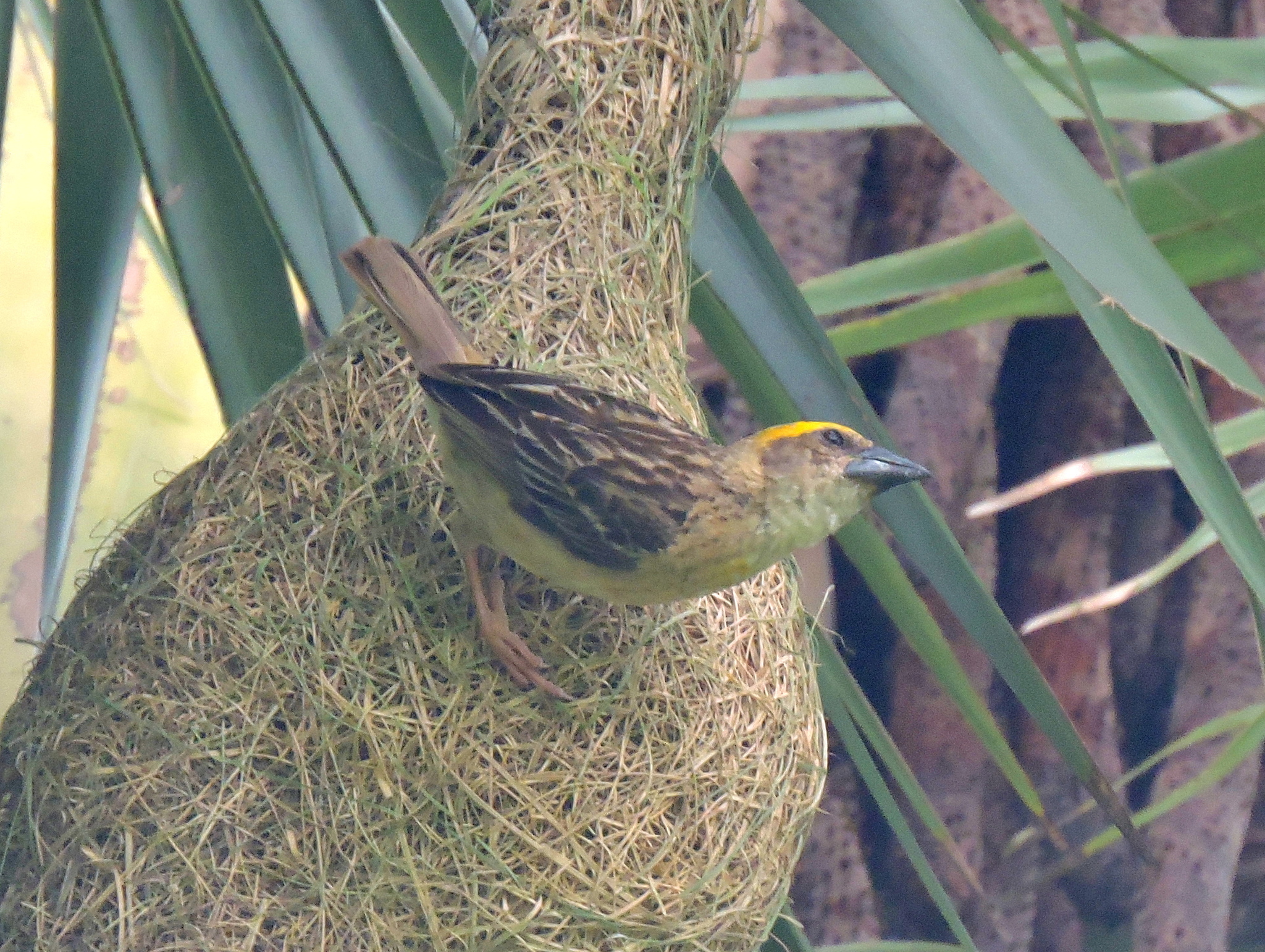
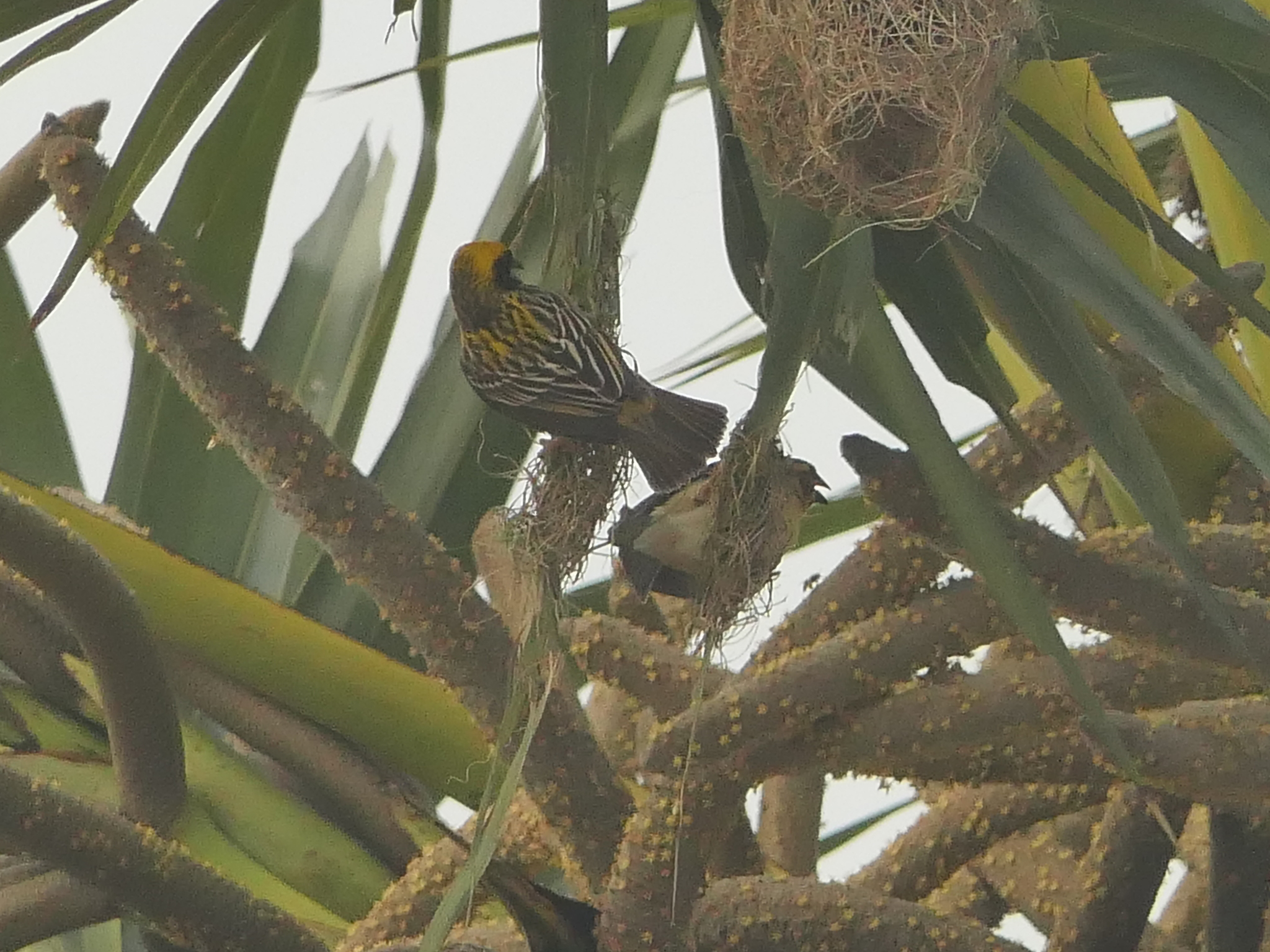
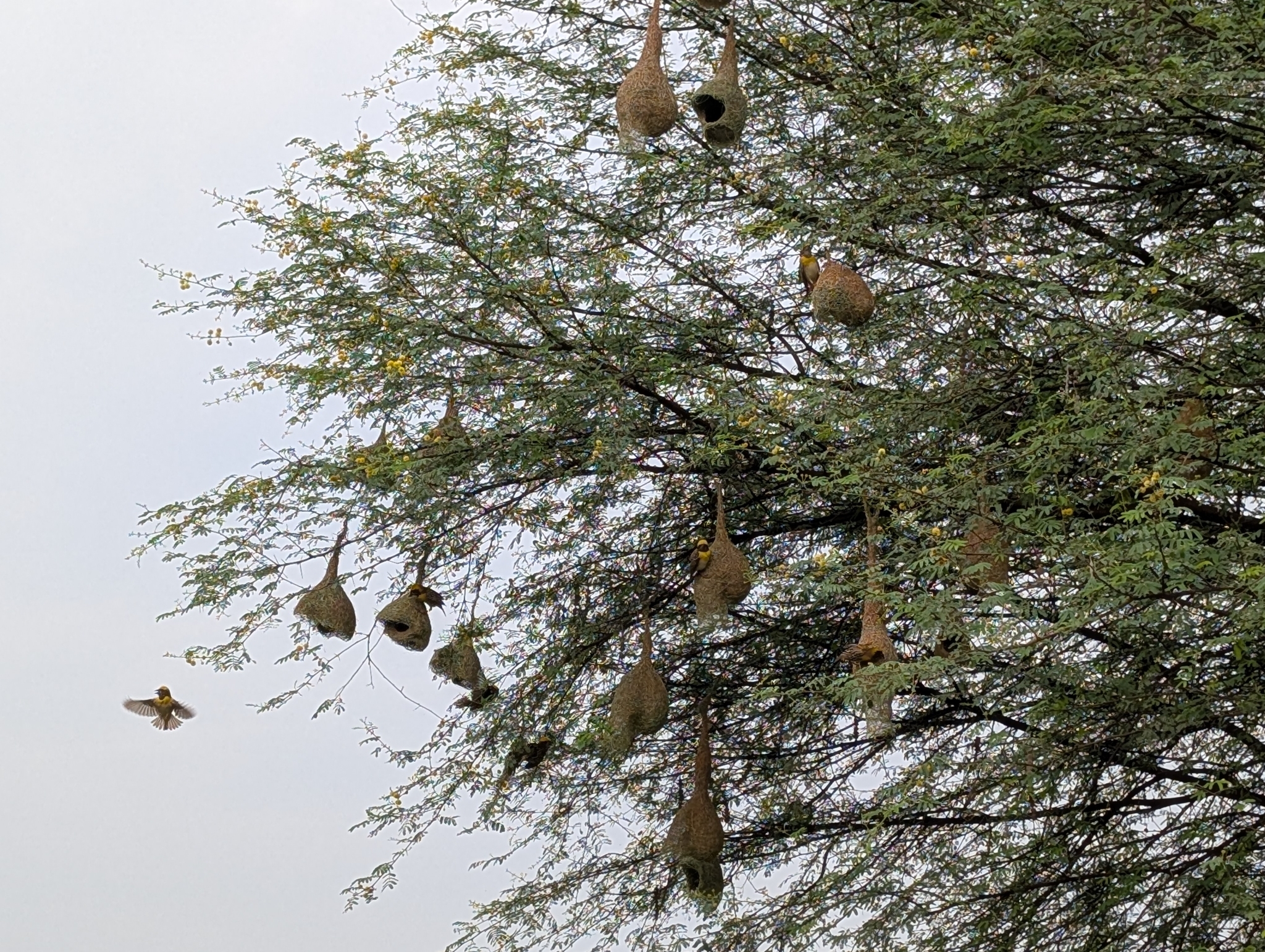
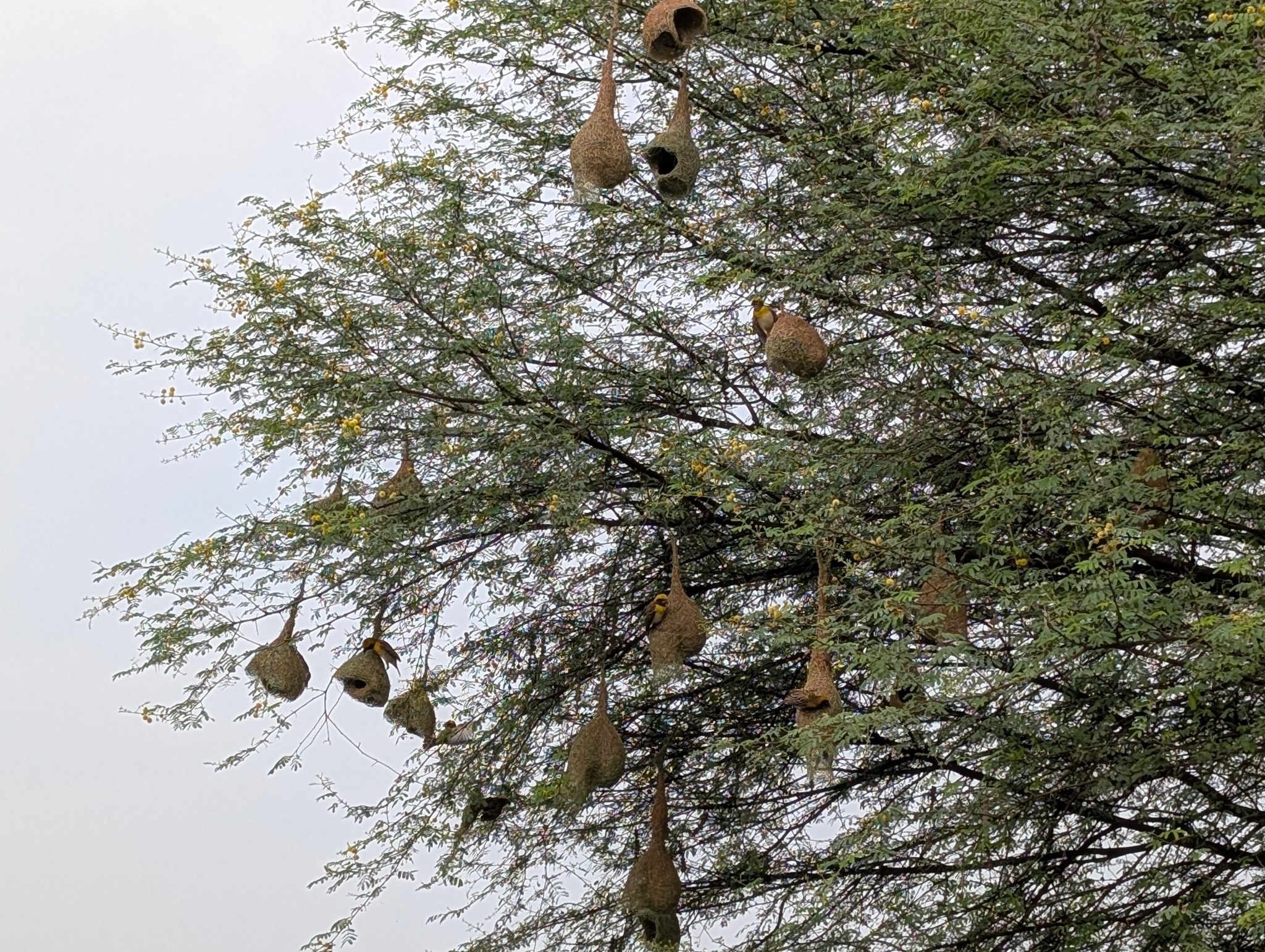
A weaverbird (family Ploceidae) native to the Indian subcontinent and Southeast Asia. Inhabits grasslands, cultivated areas, scrub, and secondary growth. Social and gregarious, foraging in flocks and roosting in reed-beds bordering waterbodies. Best known for elaborately woven hanging retort-shaped nests constructed by males using strips of paddy leaves and grasses. Nests are typically built on thorny trees or palm fronds, often over water where predators cannot reach. Undergoes local seasonal movements in response to rain and food availability. Five subspecies are recognized across its range.
Description
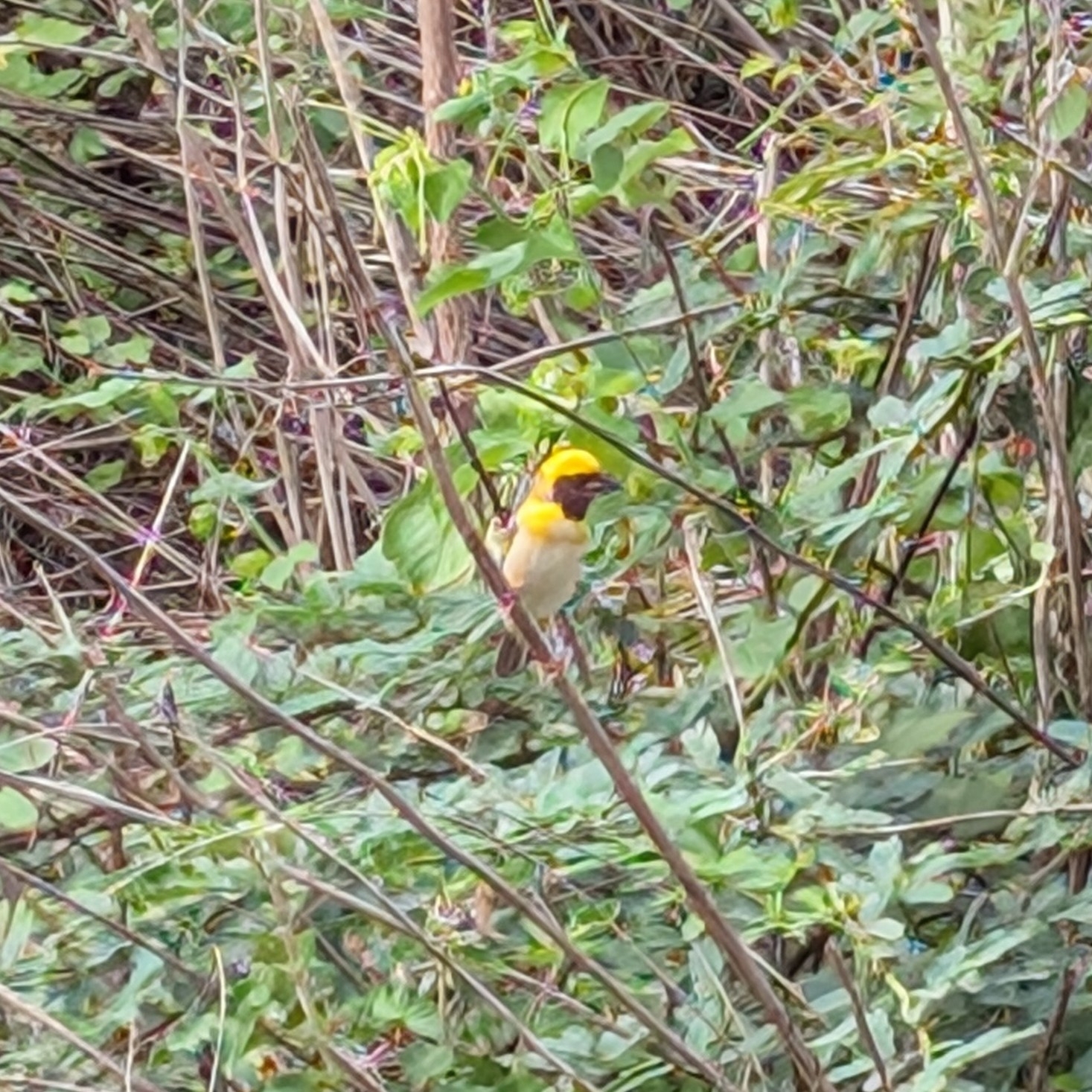
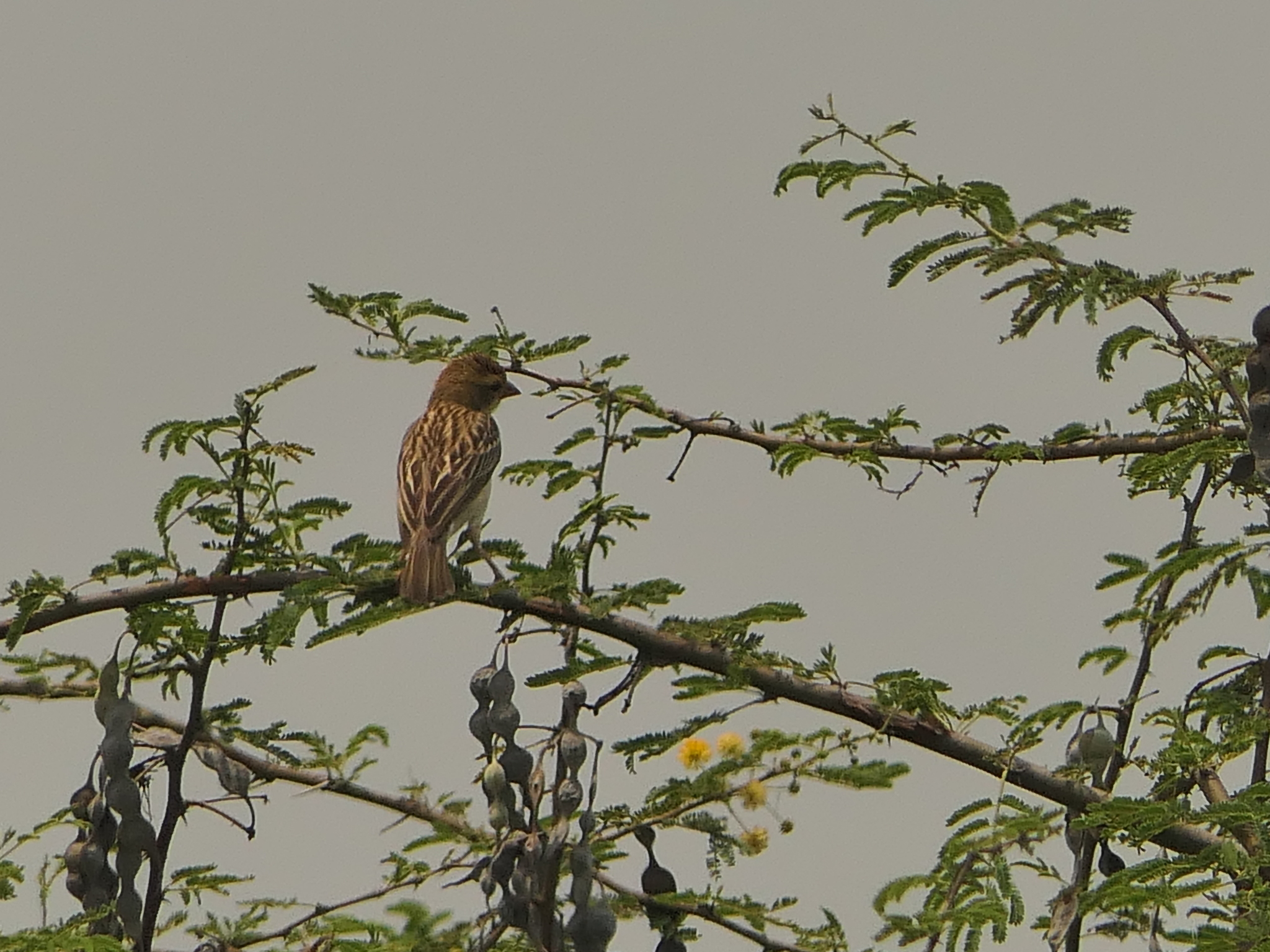
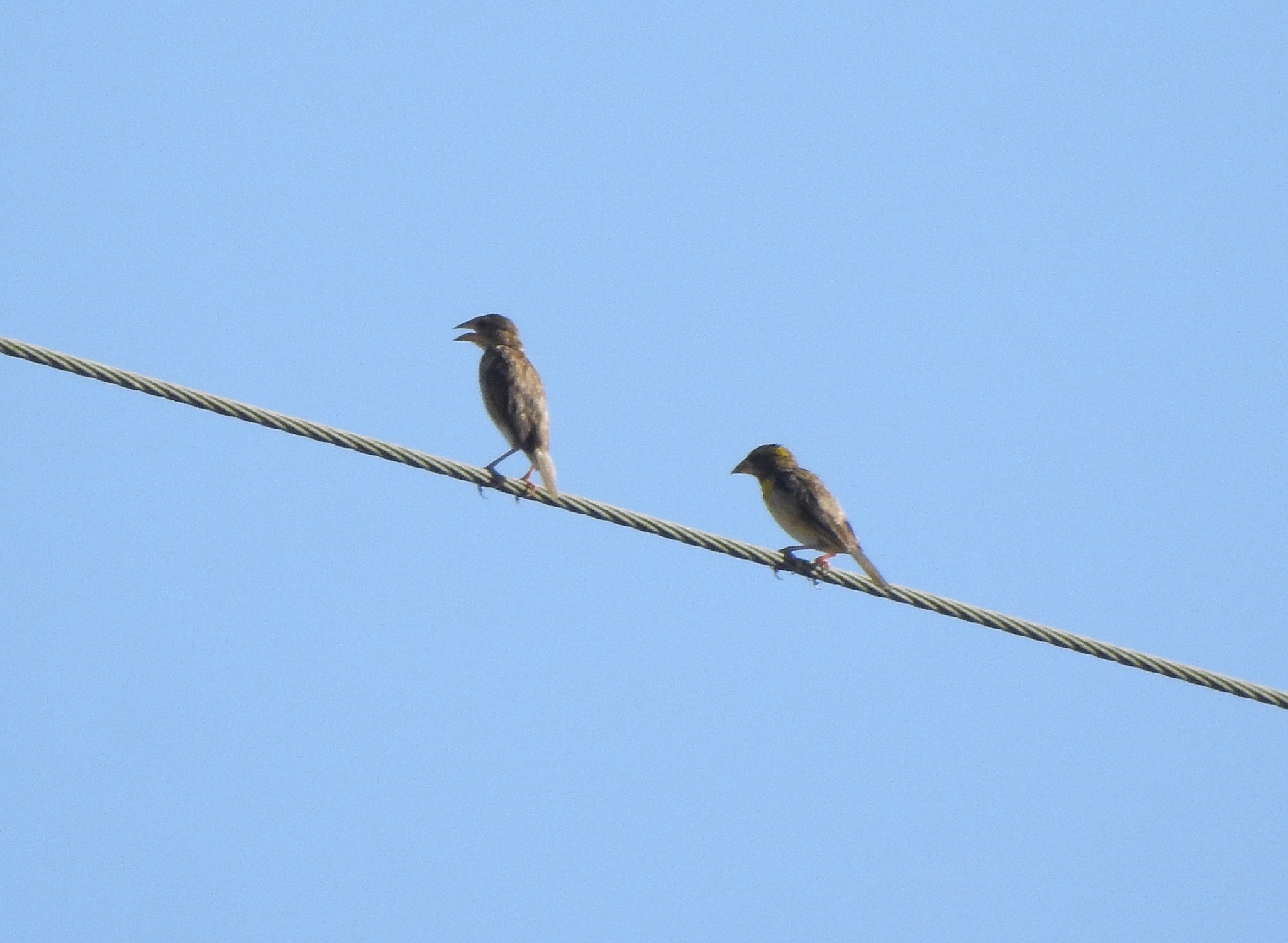
Sparrow-sized passerine, approximately 15 cm (5.9 in) in length with a stout conical bill and short square tail. Non-breeding males and females resemble female house sparrows with dark brown streaked fulvous buff upperparts, plain unstreated whitish fulvous underparts, long buff-colored eyebrow, and horn-colored bill lacking a mask. Breeding males develop a bright yellow crown, dark brown mask, and blackish brown bill. Upperparts are dark brown streaked with yellow, with yellow breast and cream-buff underparts. Both sexes show no sexual dimorphism in non-breeding plumage.
Identification
Non-breeding birds are nearly identical to female house sparrows but can be distinguished by the longer buff eyebrow and absence of the house sparrow's grey collar and black bib. The stout conical bill and short square tail are characteristic. In breeding plumage, males are unmistakable with bright yellow crown and dark brown mask. The distinctive retort-shaped hanging nests are a reliable identifier when present, though other weaver species construct similar structures.
Distribution & Habitat
Range extends across the Indian subcontinent including Pakistan, India, Sri Lanka, Nepal, Bangladesh, Bhutan, Myanmar, Thailand, Laos, Vietnam, Malaysia, and the Indonesian islands of Borneo, Sumatra, Java, and Bali. The nominate subspecies P. p. philippinus occurs through much of mainland India, Sri Lanka, and south Nepal. Subspecies burmanicus is found from northeast India and Bangladesh through Myanmar to southwest China. Populations in southwest India are assigned to P. p. travancoreensis, while P. p. angelorum occurs in Thailand and south Laos, and P. p. infortunatus occupies southern Vietnam, the Malay Peninsula, and the Greater and Lesser Sunda Islands.
Behavior & Ecology
Highly social forager that moves in flocks for seeds on plants and ground. Flies in close formations performing complex aerial maneuvers. Diet includes seeds from wild grasses and crops such as rice, plus insects and occasionally small frogs, geckos, and molluscs, especially when feeding young. Roosts in reed-beds near water. Breeding season coincides with monsoons. Males build elaborate retort-shaped nests taking approximately 18 days and up to 500 trips to complete. Nests consist of central chamber with vertical entrance tube woven from 20-60 cm strips of leaves and grasses. Colonies typically contain 20-30 nests built near food sources and water. Males display at partially constructed nests while females select mates based partly on nest location. Both sexes are polygamous. Clutch size is 2-4 white eggs incubated by female for 14-17 days. Chicks fledge after about 17 days. Vocalizations include continuous chit-chit calls and a wheezy cheee-eee-ee song produced by males in chorus during breeding.
Conservation
Not formally assessed. Described as widespread and common within its range. Local populations experience seasonal fluctuations in response to food availability and rainfall. Occasionally considered agricultural pests due to grain damage in ripening crops.
Culture
Folk belief in India holds that the bird uses fireflies with mud to illuminate nest interiors at night, though this is unsubstantiated. Clay and mud are actually added to nests, possibly for stabilization in winds. Historically trained by Indian street performers for entertainment, birds were taught to pick up objects, string beads, pick up coins, and even fire toy cannons. These trained birds would take sweets from a trainer and place them between ladies' lips, or twirl burning sticks over their heads. Such performances were noted from the time of Emperor Akbar (ca. 1590). The bird is described in historical accounts as extremely intelligent, obedient, and capable of responding to calls from long distances.
Source: Wikipedia · CC BY-SA 3.0
Taxonomy
- Order
- Passeriformes
- Family
- Ploceidae
- Genus
- Ploceus
- eBird Code
- baywea1
Vocalizations
Subspecies (5)
-
Ploceus philippinus angelorum
plains of central Thailand
-
Ploceus philippinus burmanicus
northeastern India (Bengal) to Bangladesh, Assam, and Myanmar
-
Ploceus philippinus infortunatus
Malay Peninsula to southern Vietnam, and Sumatra including Nias
-
Ploceus philippinus philippinus
Pakistan (mostly on Indus floodplain), most of India (except southwestern), southern Nepal, and Sri Lanka
-
Ploceus philippinus travancoreensis
southwestern India (from Goa southwards to Kerala)
Data Sources
Species description from Wikipedia, licensed under CC BY-SA 3.0.
Bird images and sounds sourced from GBIF, contributed by citizen scientists worldwide under Creative Commons licenses.
Taxonomy data from AviList 2025.