Fairy Pitta
Pitta nympha
仙八色鸫
Introduction
A passerine of the Pittidae family, this species inhabits dense forest habitats across Northeast Asia (breeding) and Southeast Asia (wintering). Body length measures 16-19.5 cm. During breeding season from May through July, individuals emit clear whistles from high perches while rhythmically bobbing their tails. Foraging occurs on the forest floor, targeting earthworms and insects. The species has experienced significant population declines due to habitat loss, trapping for the cage-bird trade, and human disturbance, resulting in a Vulnerable classification on the IUCN Red List.
Description
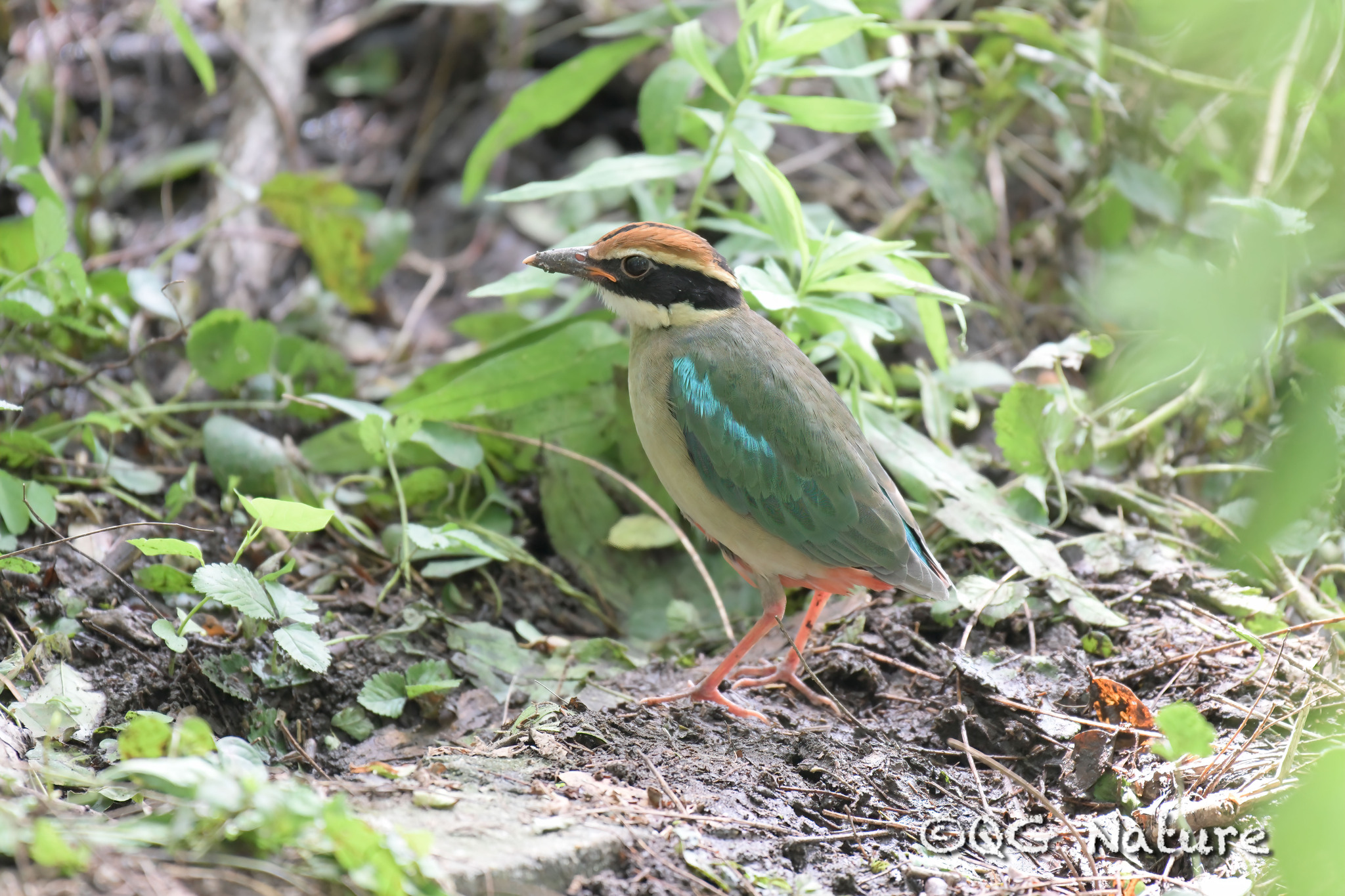
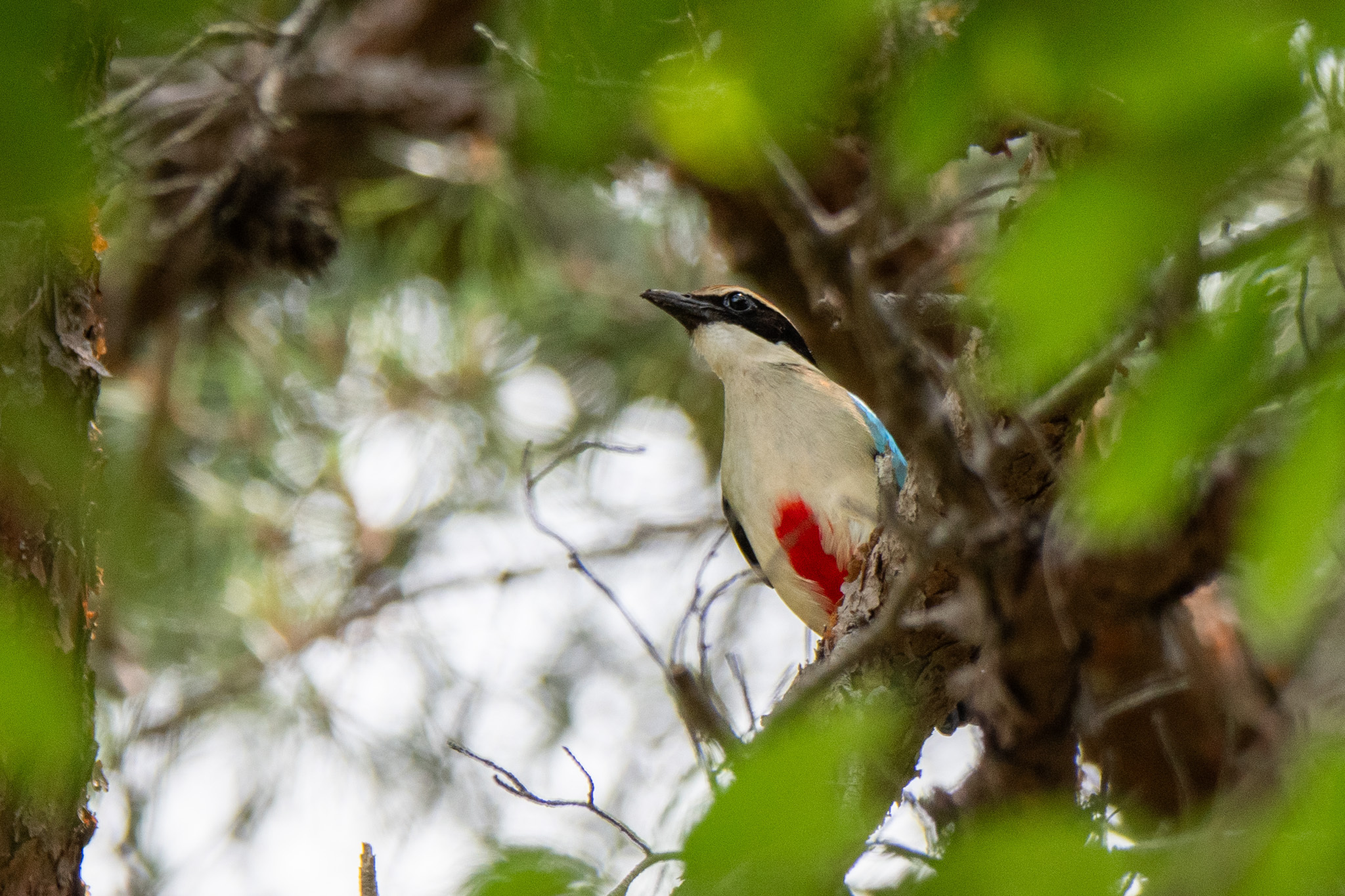
This small passerine measures 16-19.5 cm in length and displays perhaps the most colorful plumage of any Asian bird. Seven distinct colors create its rainbow-like appearance: green back and wing bows, green and cobalt scapulars, blue rump, dark green tail with cobalt tip, and yellowish-brown legs. Wing coverts show remarkable variation—dark blue primaries, greenish-blue secondaries, dark green greater and middle coverts, and cobalt or bright blue lesser coverts. A white patch contrasts boldly on brownish-black primaries in flight. The underparts are cream-colored except for red lower belly and undertail coverts. The head features a chestnut crown, brown plumage from forehead to nape, black median stripe from lores to nape, off-white supercilia extending across the nape, white throat, and a black beak.
Identification
The seven-colored plumage is diagnostic and unlike any other Asian bird. It most closely resembles the blue-winged pitta but is noticeably smaller with a chestnut crown and supercilia (not buff as in the blue-winged). The blue-winged pitta also has brighter upper tail coverts, darker yellowish-brown belly, and more vivid blue on upper wing coverts. In flight, the white patch on dark primaries is conspicuous. The song is a clear, whistled 'kwah-he kwa-wu'—similar to the blue-winged pitta but longer and slower. When singing, the bird often bobs its tail up and down while perched in a kingfisher-like posture.
Distribution & Habitat
This migratory species breeds in Northeast Asia (China, Korea, Japan, Taiwan) from April to September and winters in Southeast Asia (Borneo, Indochina, Philippines, Thailand). It follows consistent spring and autumn migration routes, with peak passages in April and September-October. Stopovers occur in North Korea, Vietnam, Hong Kong, Philippines, and Thailand. Breeding habitat includes coastal deciduous forests, islands, and moist forest types—particularly camellia forest in Korea and broadleaf evergreen or deciduous forest in Japan. It shows strong site fidelity, returning to the same breeding and wintering locations annually. In Korea, Jeju Island hosts over 60 breeding pairs at Halla Mountain altitudes of 100-600 m.
Behavior & Ecology
Territorial males defend areas through vocalizations, singing from high branches while bobbing their tails. Foraging occurs solitarily on the ground, with diet dominated by earthworms (73-82% of nestling food), beetles, and other hard-shelled insects. Other prey includes larvae, spiders, snails, lizards, frogs, small snakes, and shrews. Breeding occurs May-mid-July, with 4-6 eggs laid in large nests 1-5 m high in rock crevices or foliage. Nests feature cattle dung linings and lichen. Both parents incubate and feed young; nestlings fledge within 14 days. Reproductive success averages 41.9%. Adults rarely venture beyond 100-400 m from nests. Main predators are snakes, mammals (macaques, cats, weasels), and jungle crows. Return rate from wintering grounds is 16-26%.
Conservation
Classified as Vulnerable on the IUCN Red List and listed on CITES Appendix II. Population estimates range from a few thousand to tens of thousands of individuals, with 100-10,000 breeding pairs across China, Korea, Japan, and Taiwan. The species faces severe threats from deforestation throughout its range, particularly in Borneo and Southeast China where lowland forest destruction continues even in protected areas. In Taiwan, the Hushan Dam project threatens the largest known breeding population. Cage-bird trapping historically impacted Taiwanese populations, while specimen collection persists in China. On Jeju Island, window strikes from expanding development have become a leading mortality factor. Protected under national laws across its range, including Natural Monument status in South Korea and Category I protection in North Korea. Conservation requires international cooperation due to migratory habits and coordinated habitat protection at both breeding and wintering sites.
Culture
With alternative names including 'little forest angel' and 'eight-coloured bird,' this species has captured local imagination across its range. In Korea, it holds Natural Monument status, recognizing its ecological and aesthetic value. Japanese red pine forests in Kōchi Prefecture traditionally supported significant breeding populations, making the bird a recognized part of regional natural heritage. The species' striking appearance has made it a sought-after subject for wildlife photographers and birdwatchers, contributing to ecotourism in areas like Jeju Island and central Taiwan. While not prominent in traditional folklore or mythology, its protected status in multiple countries reflects growing appreciation for biodiversity conservation in East Asian societies.
Source: Wikipedia · CC BY-SA 3.0
Taxonomy
- Order
- Passeriformes
- Family
- Pittidae
- Genus
- Pitta
- eBird Code
- faipit1
Distribution
breeds southern Japan to Korea and southeastern China; winters to southeastern Asia and Borneo
Vocalizations
Data Sources
Species description from Wikipedia, licensed under CC BY-SA 3.0.
Bird images and sounds sourced from GBIF, contributed by citizen scientists worldwide under Creative Commons licenses.
Taxonomy data from AviList 2025.