Lesser Yellownape
Picus chlorolophus
黄冠啄木鸟
Introduction
A woodpecker species (genus Picus) widespread across tropical and sub-tropical Asia. Range extends from the Indian subcontinent (India, Bhutan, Nepal, Bangladesh, Sri Lanka) eastwards through Southeast Asia to Thailand, Burma, Cambodia, Laos, Vietnam, Indonesia, and Malaysia. Inhabits jungle habitats where it nests in tree cavities, laying two to four white eggs. Possesses typical woodpecker adaptations including a straight pointed bill, stiff tail for trunk support, zygodactyl feet (two toes forward, two backward), and a long extensible tongue for capturing insects. Described as widespread and often common throughout its range.
Description
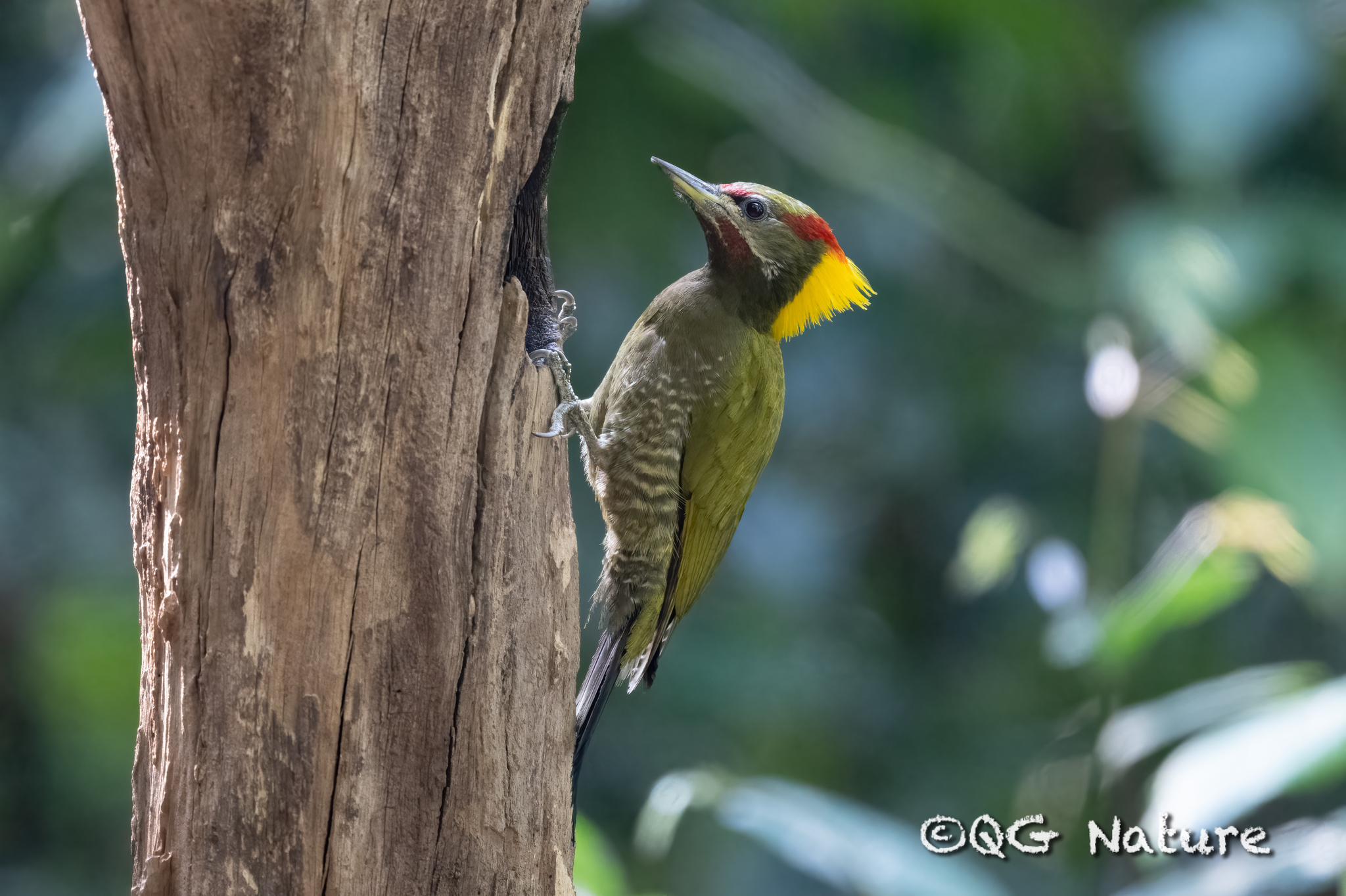
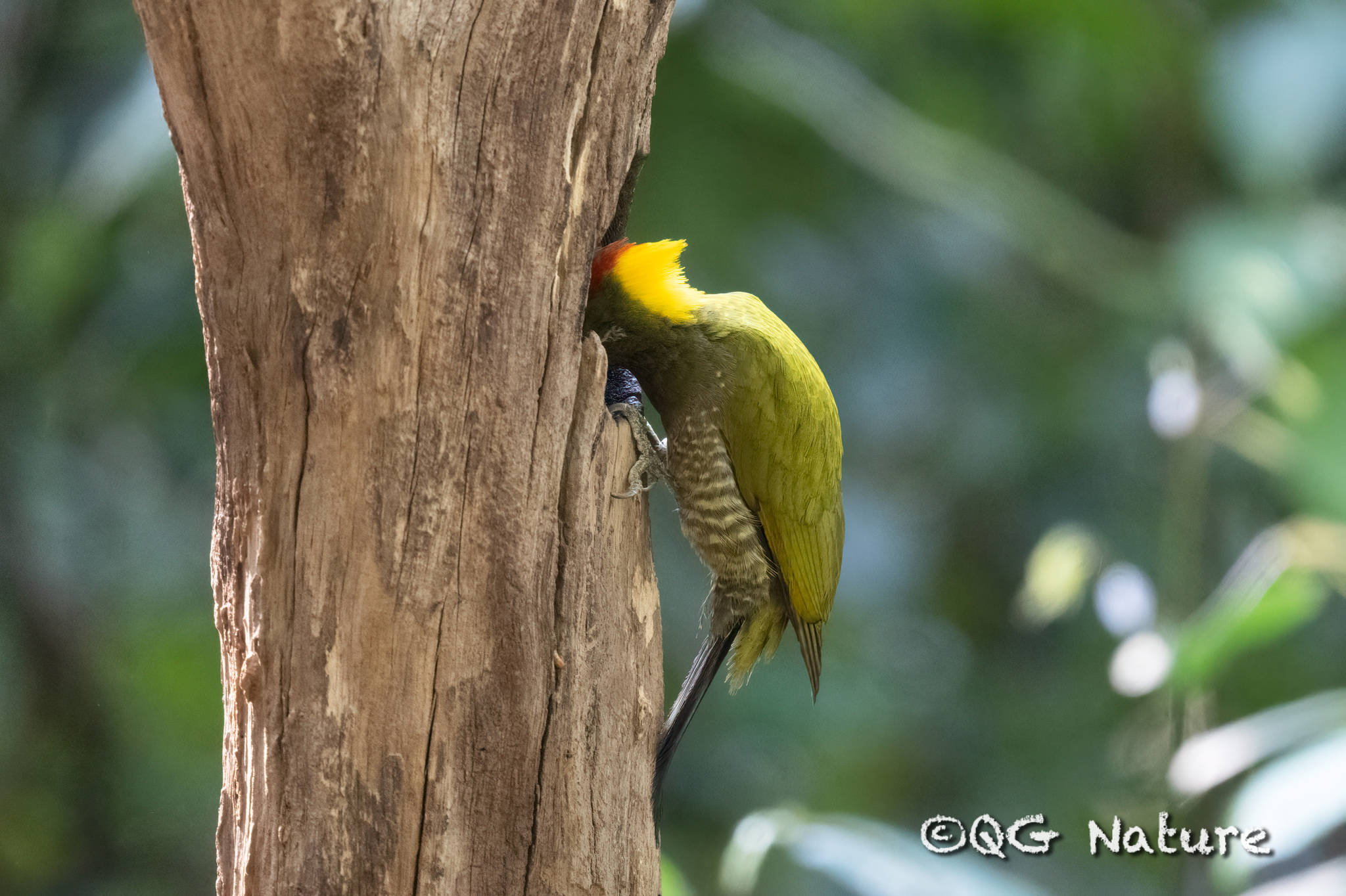
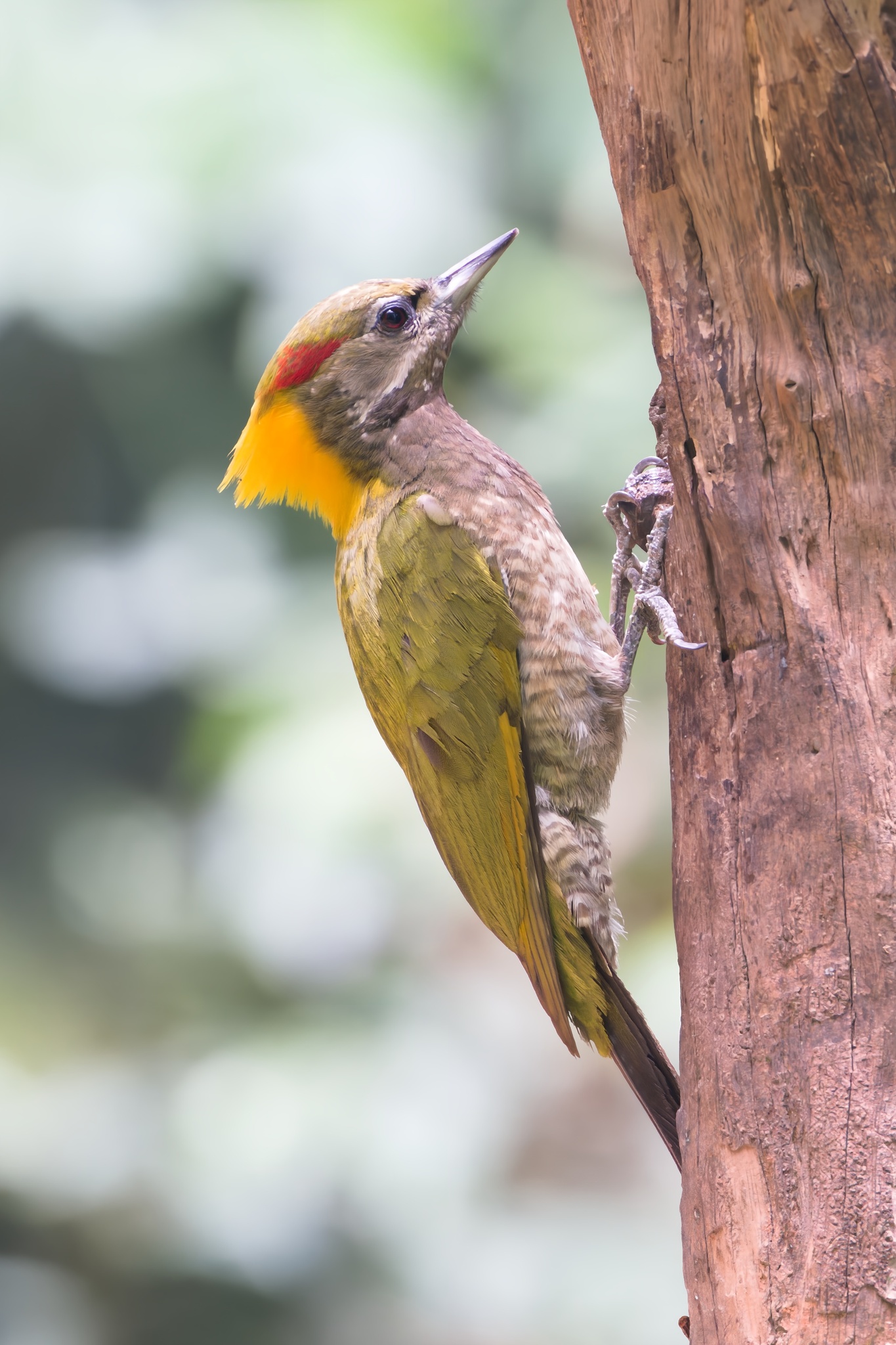
A relatively large woodpecker measuring 27 cm in length with typical woodpecker morphology. Upperparts are green with a distinctive bright yellow tufted nape patch. The neck and breast appear green, while the belly is whitish with fine green barring. The rump and tail are blackish. Adult males have a green head with white throat, red markings above the eye and nape, and red moustachial stripes. Females show only a red patch above the ear coverts. Juveniles resemble females but with duller plumage. The peninsular Indian subspecies exhibits a greyer head coloration.
Identification
The bright yellow nape patch is a key distinguishing feature. Adult males can be identified by the combination of green head, white throat, and red markings around the eye and moustachial area. Females show the yellow nape but lack the red facial markings except for a single patch above the ear coverts. Differs from similar species by the yellow nape tuft and the specific red facial pattern in males. The green upperparts and barred belly distinguish it from other regional woodpeckers.
Distribution & Habitat
Occurs across tropical and sub-tropical Asia from the Himalayan foothills through the Indian subcontinent and across Southeast Asia. Countries of occurrence include India, Bhutan, Nepal, Bangladesh, Sri Lanka, Thailand, Burma, Cambodia, Laos, Vietnam, Indonesia, and Malaysia. Inhabits forested jungle environments throughout this range.
Behavior & Ecology
Jungle-dwelling species that nests in tree cavities. Lays a clutch of two to four white eggs. Forages using typical woodpecker methods, using the straight pointed bill to probe bark and the long extensible tongue to capture insects. The stiff tail provides support when climbing tree trunks. Zygodactyl foot arrangement aids in gripping vertical surfaces. Vocalizations and specific foraging behavior follow typical woodpecker patterns.
Conservation
Described as widespread and often common throughout its extensive range. No specific population estimates or conservation status assessments are provided in available sources.
Source: Wikipedia · CC BY-SA 3.0
Taxonomy
- Order
- Piciformes
- Family
- Picidae
- Genus
- Picus
- eBird Code
- lesyel1
Vocalizations
Subspecies (9)
-
Picus chlorolophus annamensis
southeastern Thailand to southern Vietnam
-
Picus chlorolophus chlorigaster
peninsular India
-
Picus chlorolophus chlorolophus
eastern Nepal to Myanmar and northern Vietnam
-
Picus chlorolophus citrinocristatus
northern Vietnam (Tonkin) and southeastern China (Fujian)
-
Picus chlorolophus longipennis
Hainan (southern China)
-
Picus chlorolophus rodgeri
highlands of southern Thai-Malay Peninsula
-
Picus chlorolophus simlae
northern India (Himachal Pradesh) to western Nepal
-
Picus chlorolophus vanheysti
highlands of Sumatra
-
Picus chlorolophus wellsi
Sri Lanka
Data Sources
Species description from Wikipedia, licensed under CC BY-SA 3.0.
Bird images and sounds sourced from GBIF, contributed by citizen scientists worldwide under Creative Commons licenses.
Taxonomy data from AviList 2025.