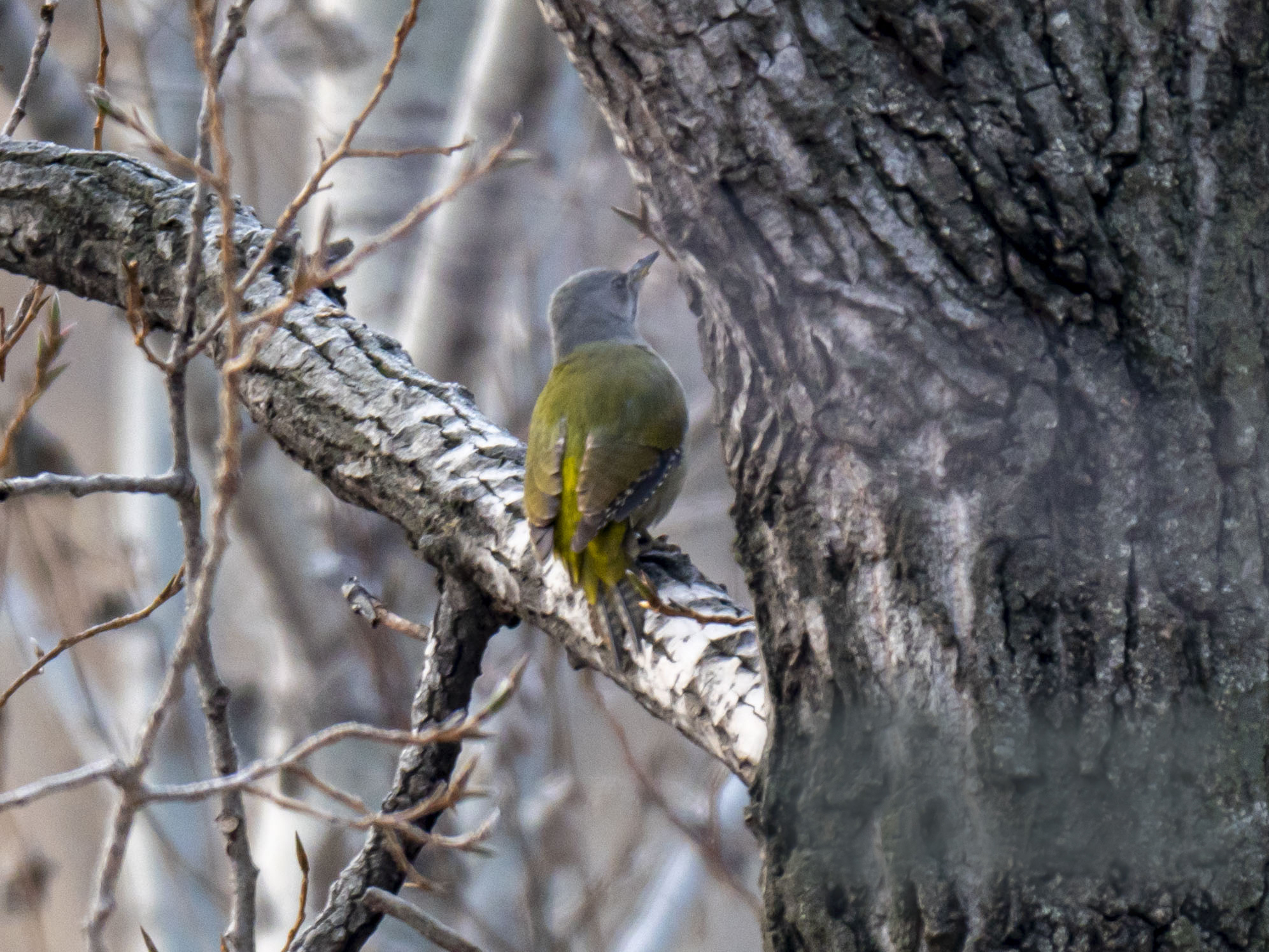
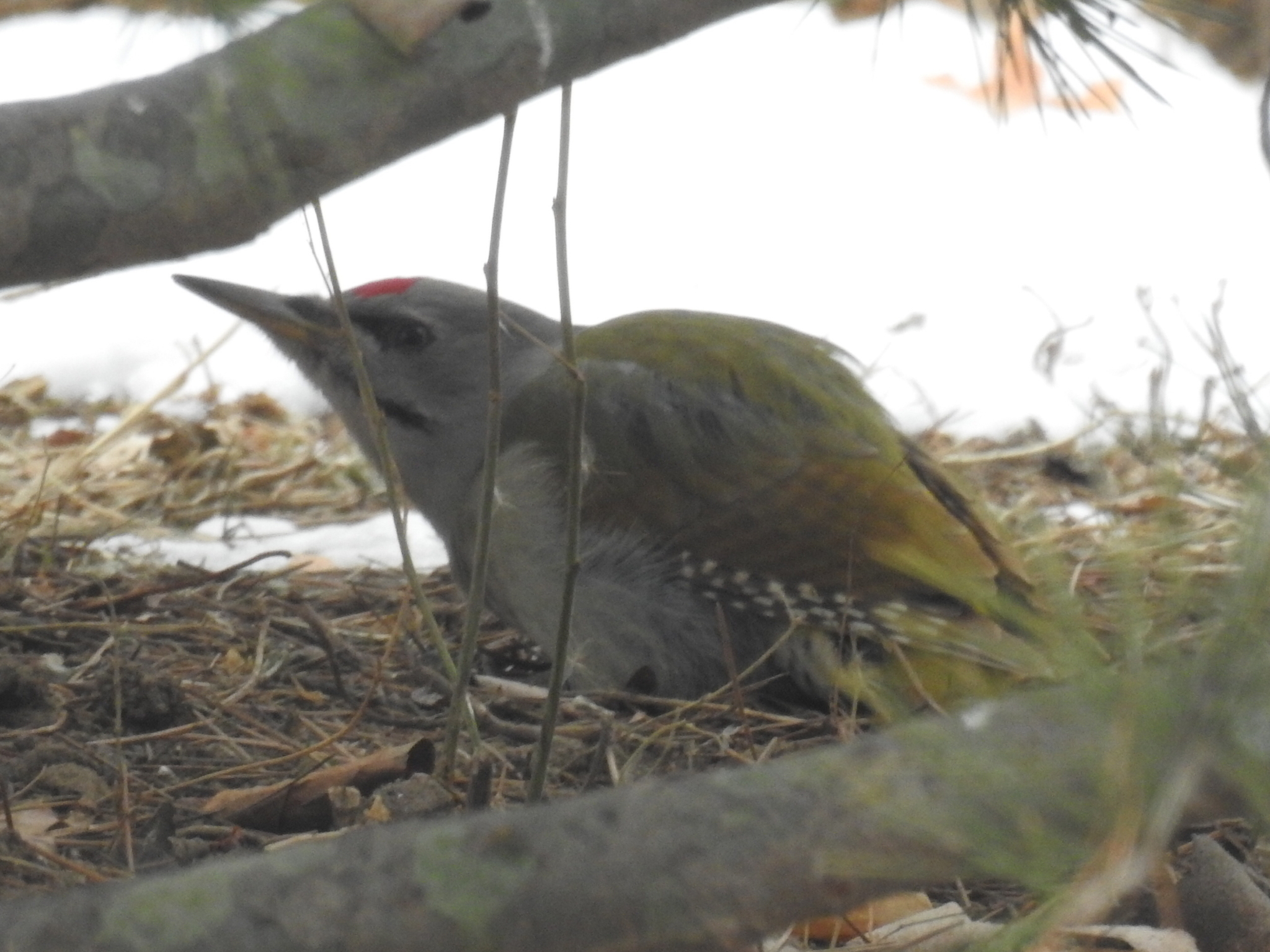
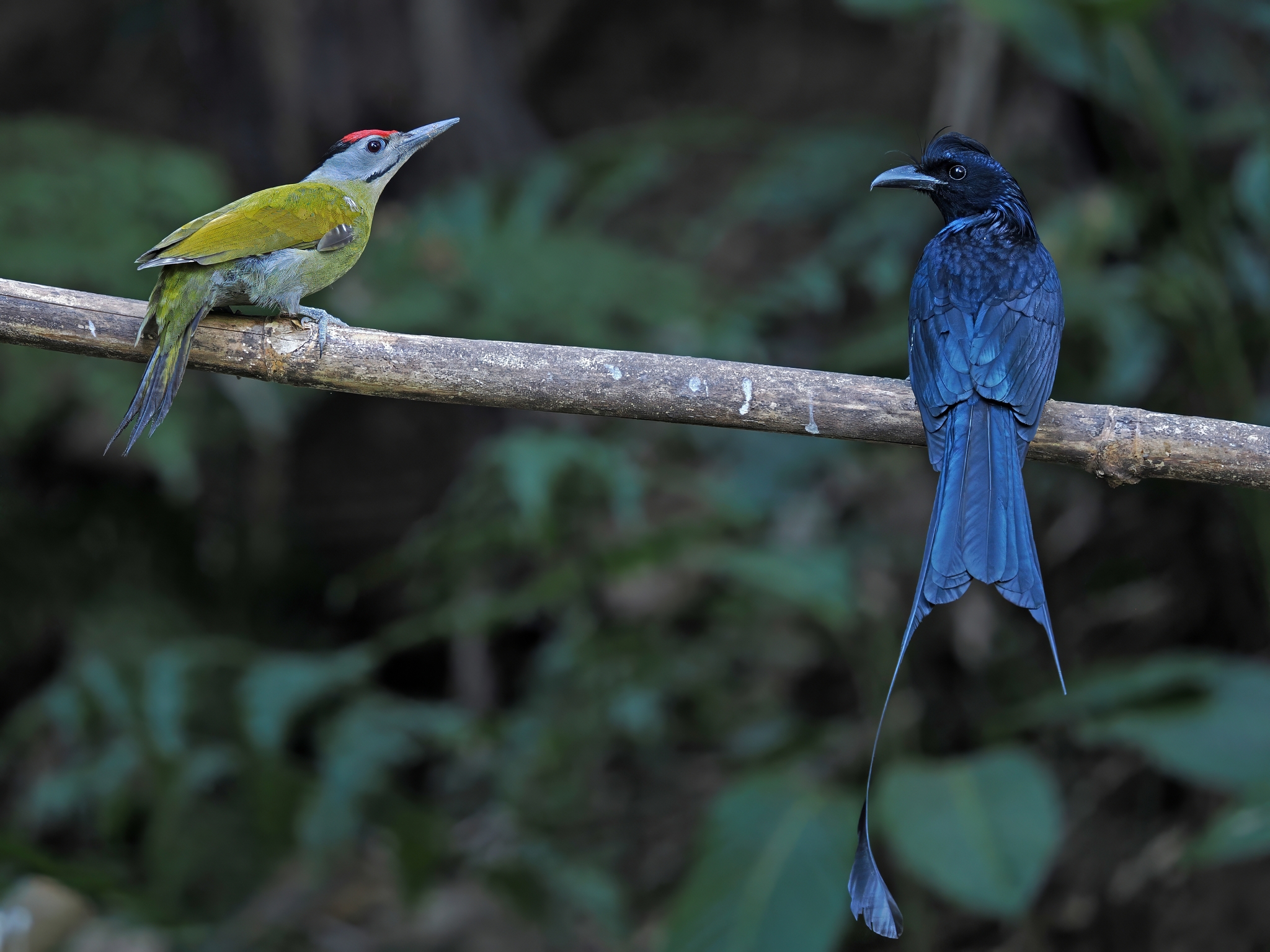
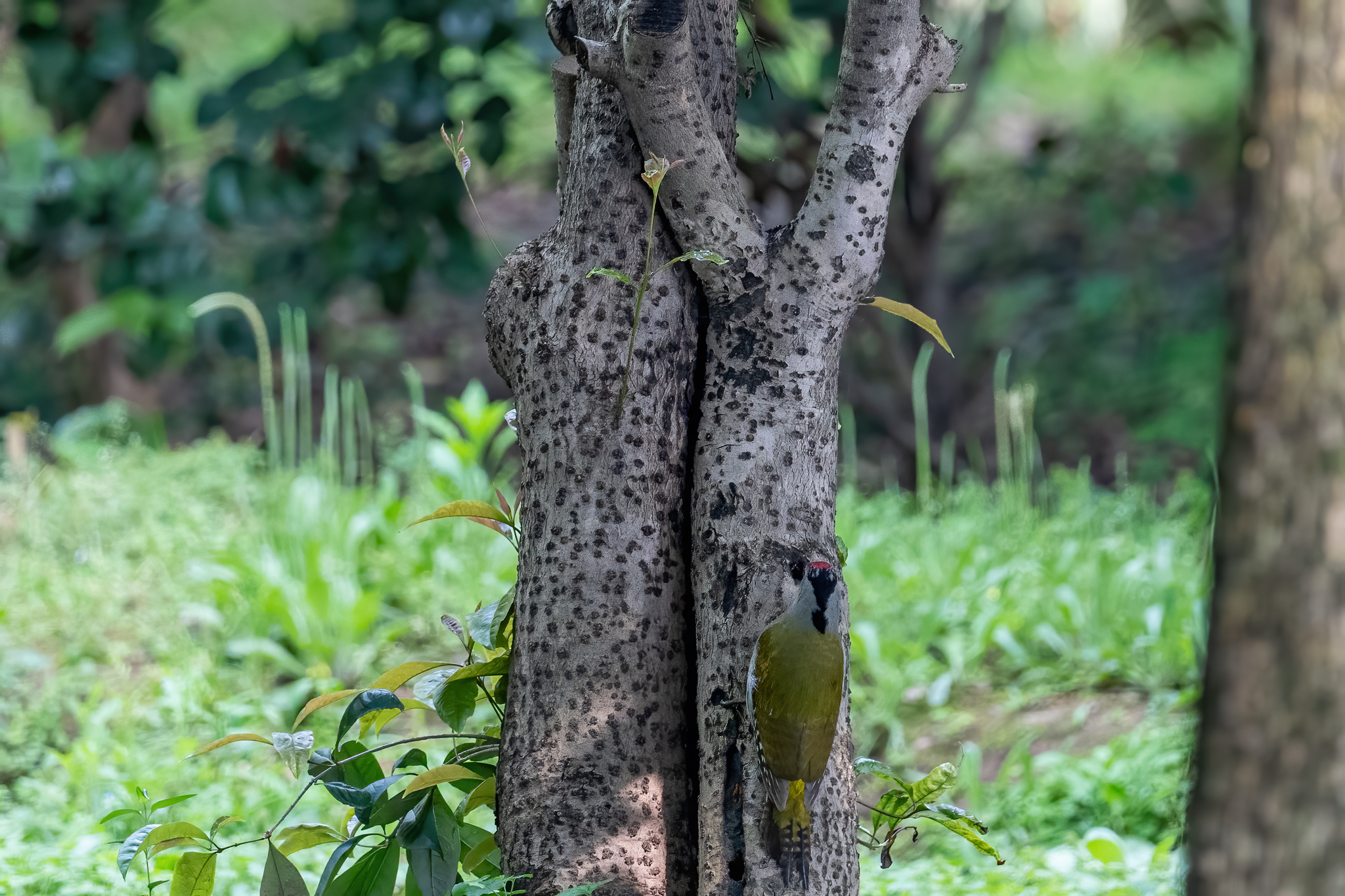
Grey-headed Woodpecker
Picus canus
灰头绿啄木鸟
Introduction
Woodpecker family Picidae. One of three closely related Picus species in Europe (along with European green woodpecker and Iberian green woodpecker). Range extends across central, northern and eastern Europe through central and Eastern Palaearctic to Pacific Ocean, Sakhalin and Hokkaido, south to Himalaya and Malay Peninsula. Prefers deciduous forest with high proportion of dead trees; less exclusively dependent on ants than green woodpecker. Nests excavated into dead or severely damaged trees. IUCN Least Concern but declining in most areas where population data available.
Description
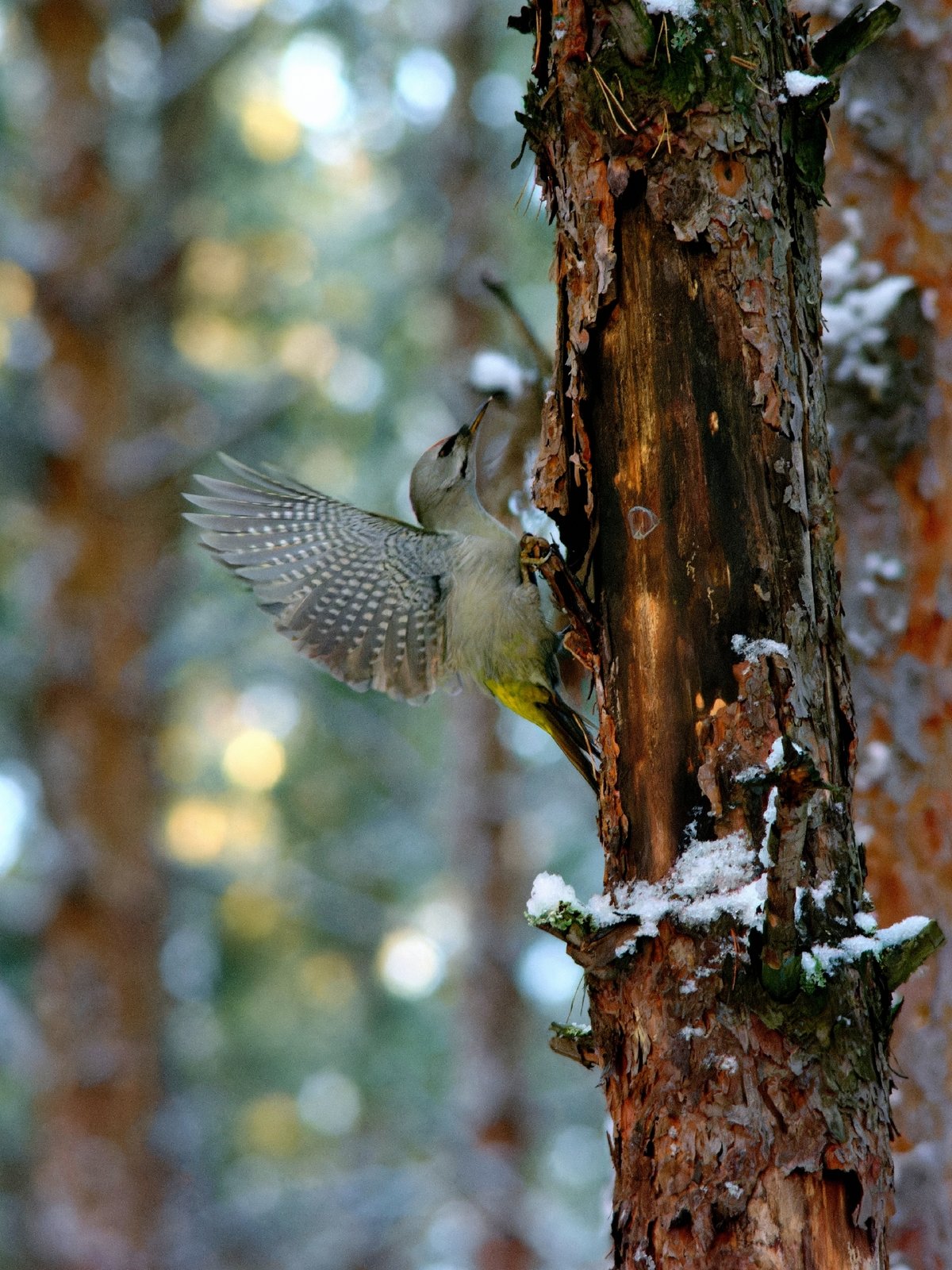
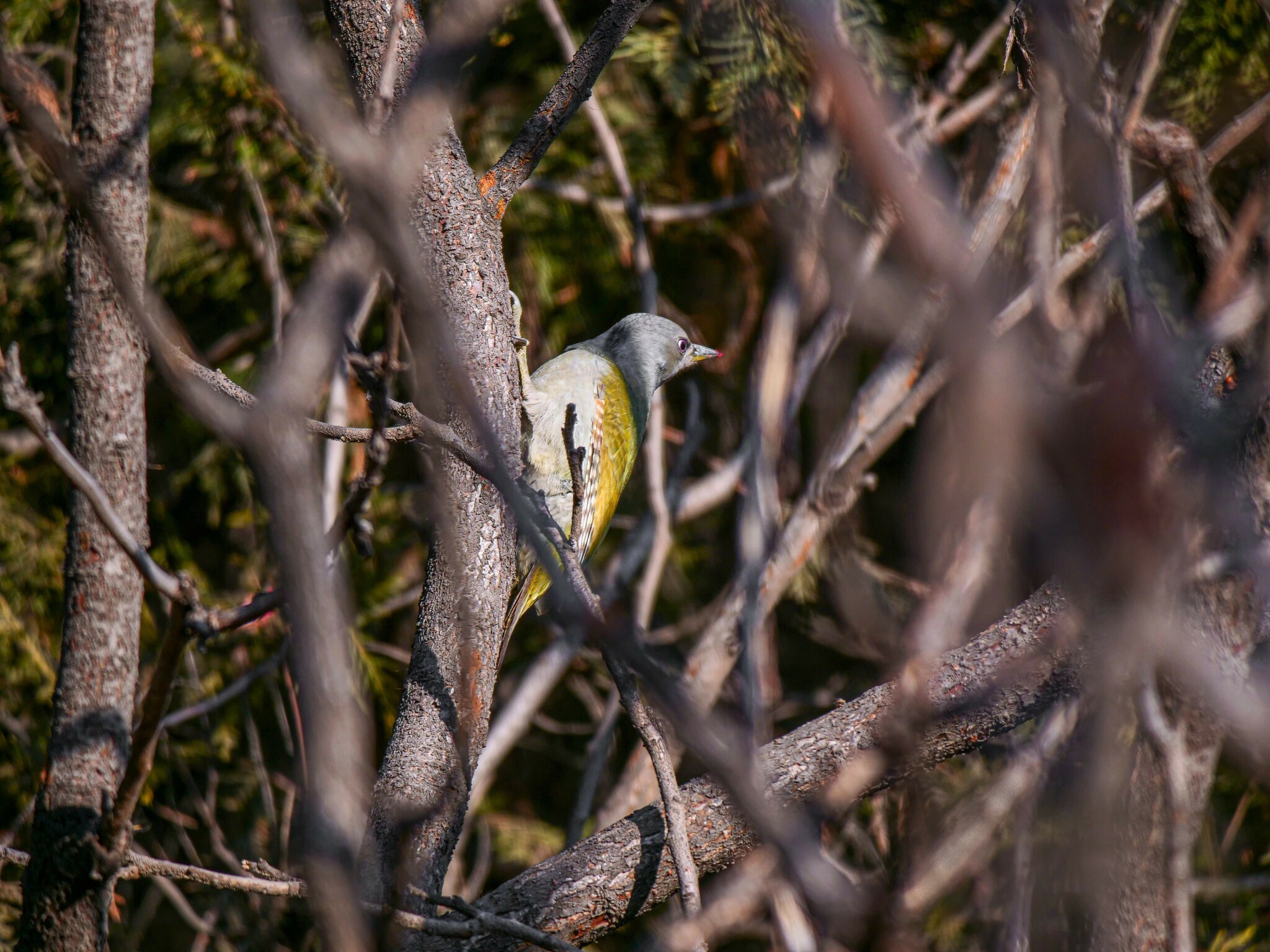
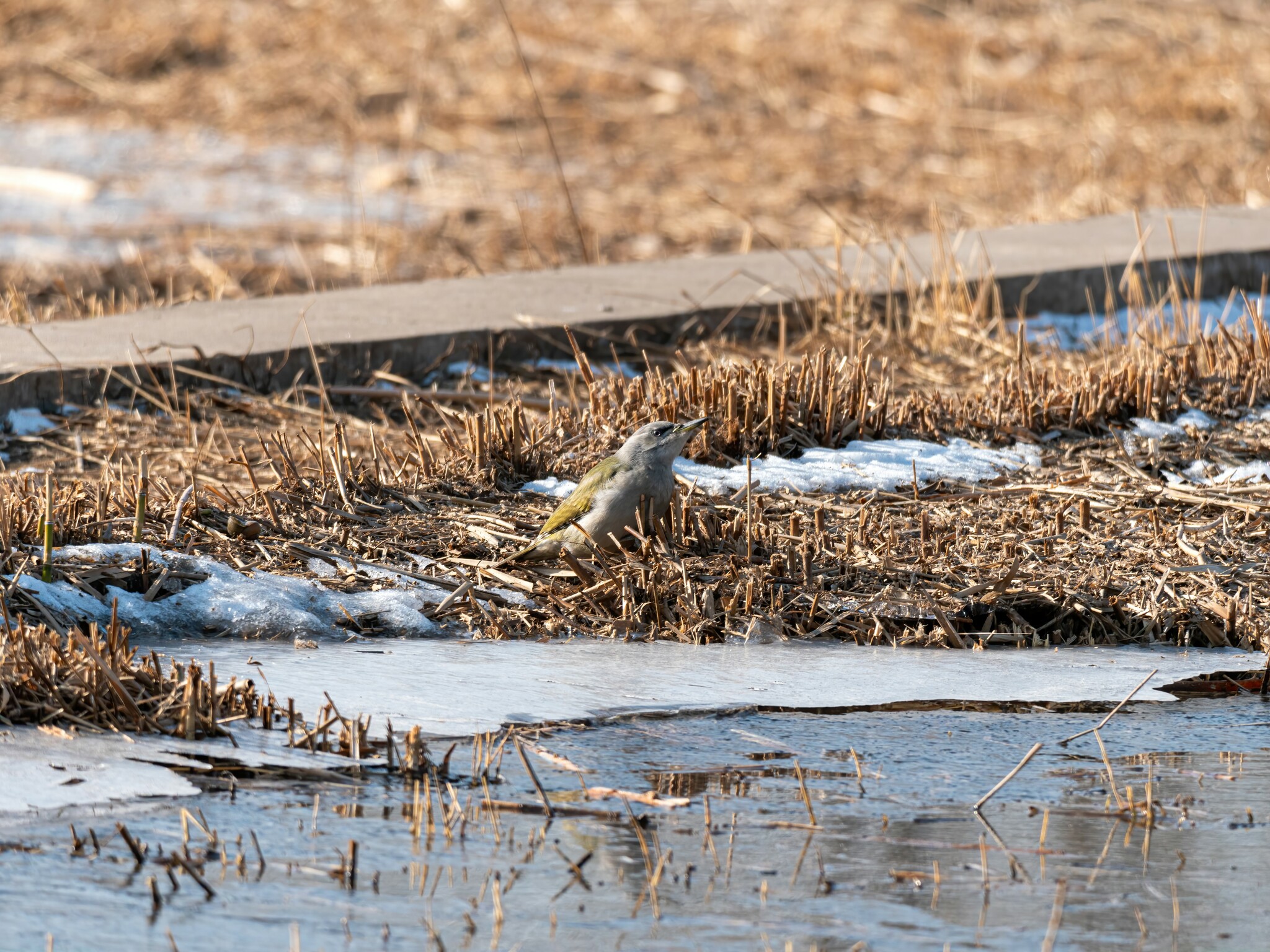
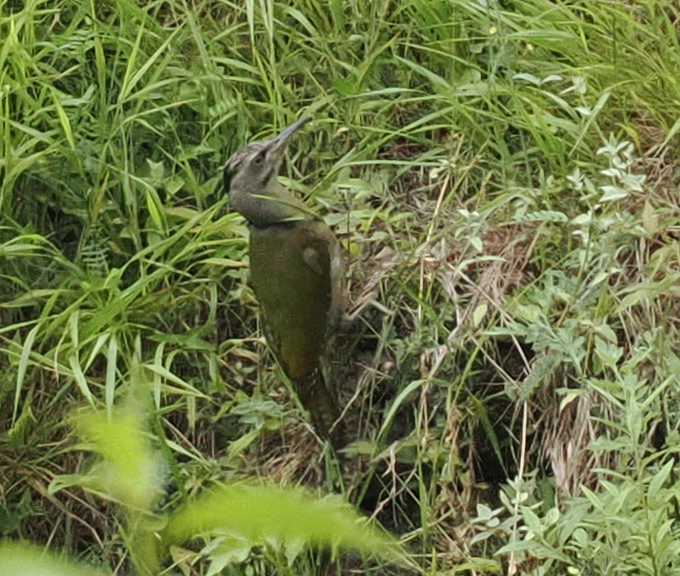
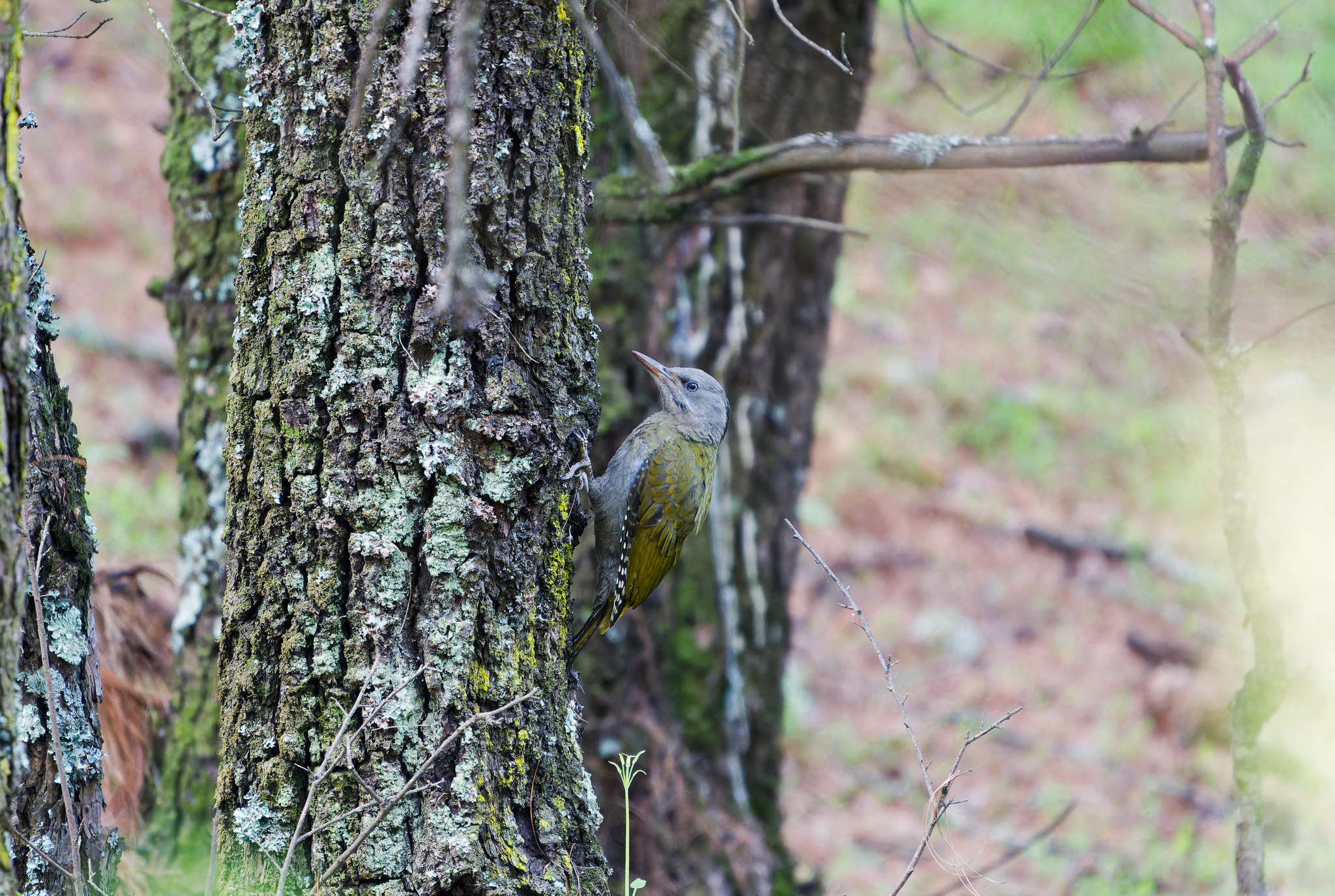
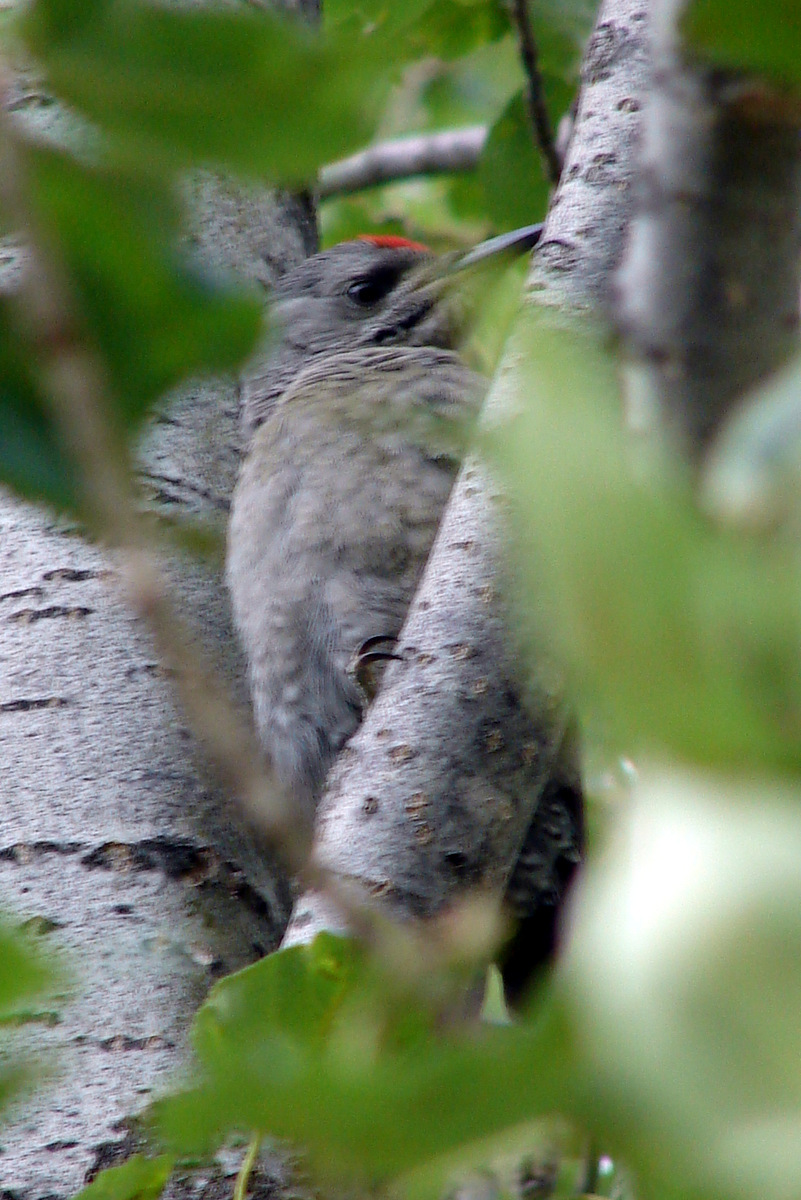
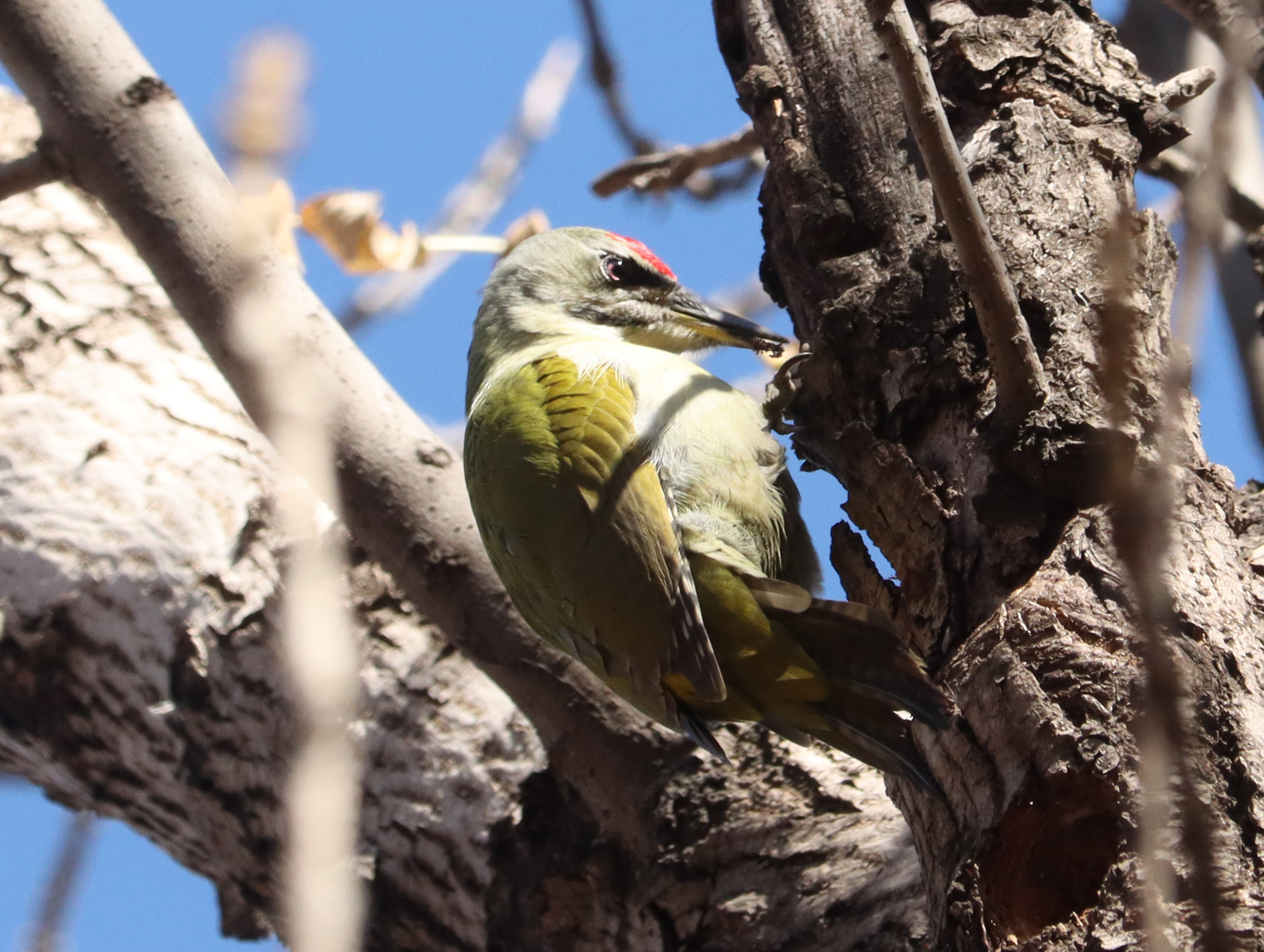
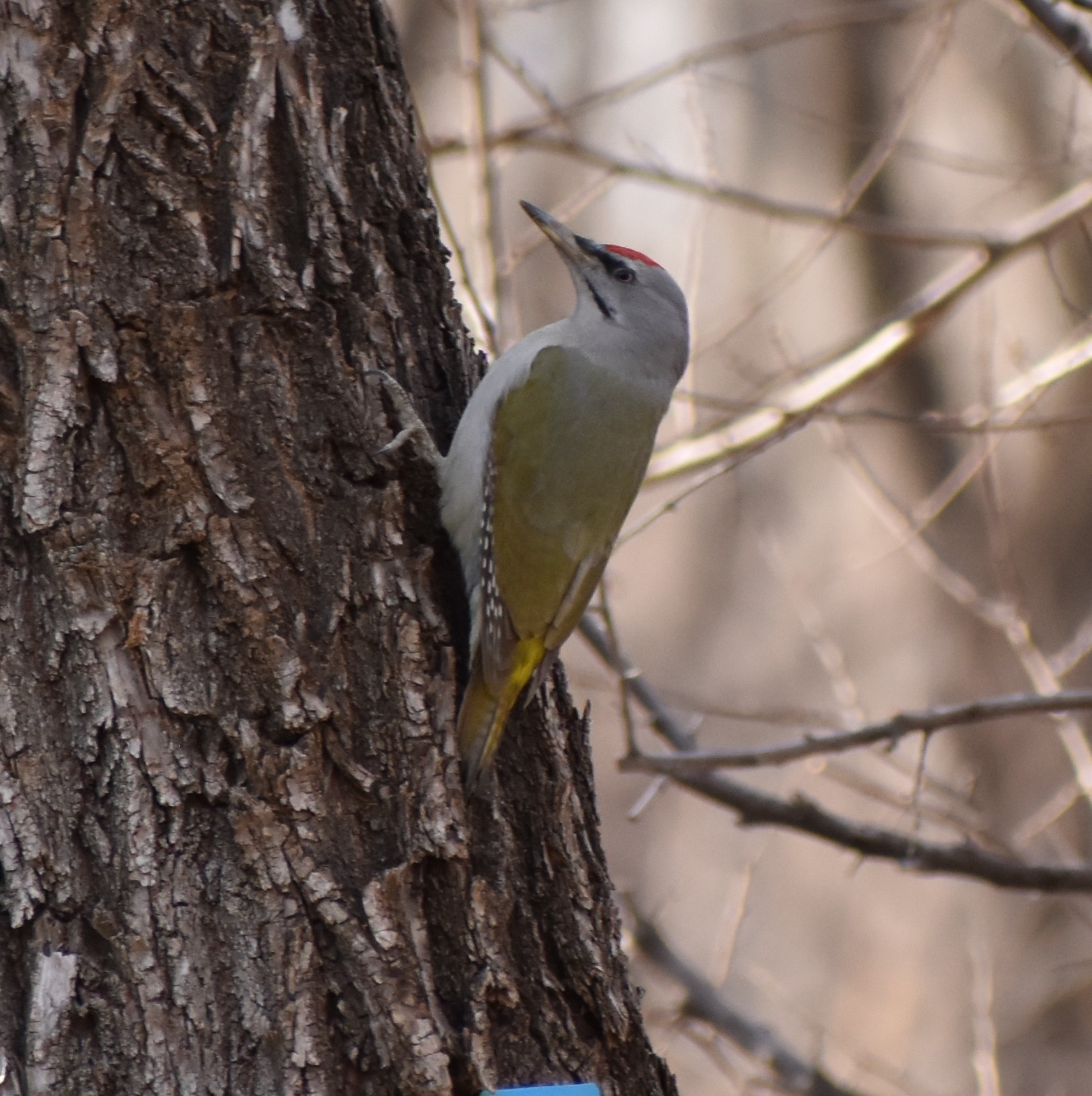
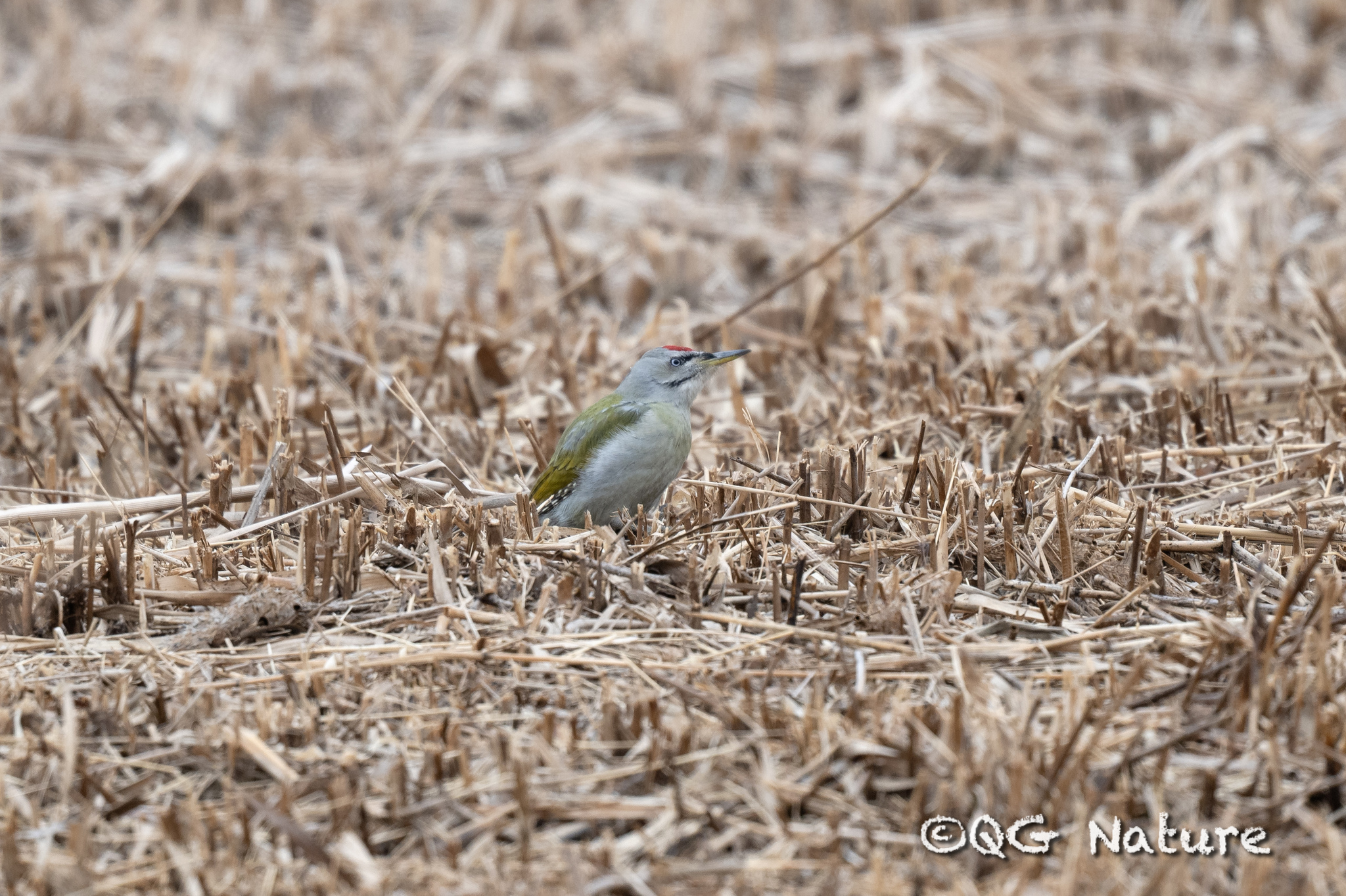
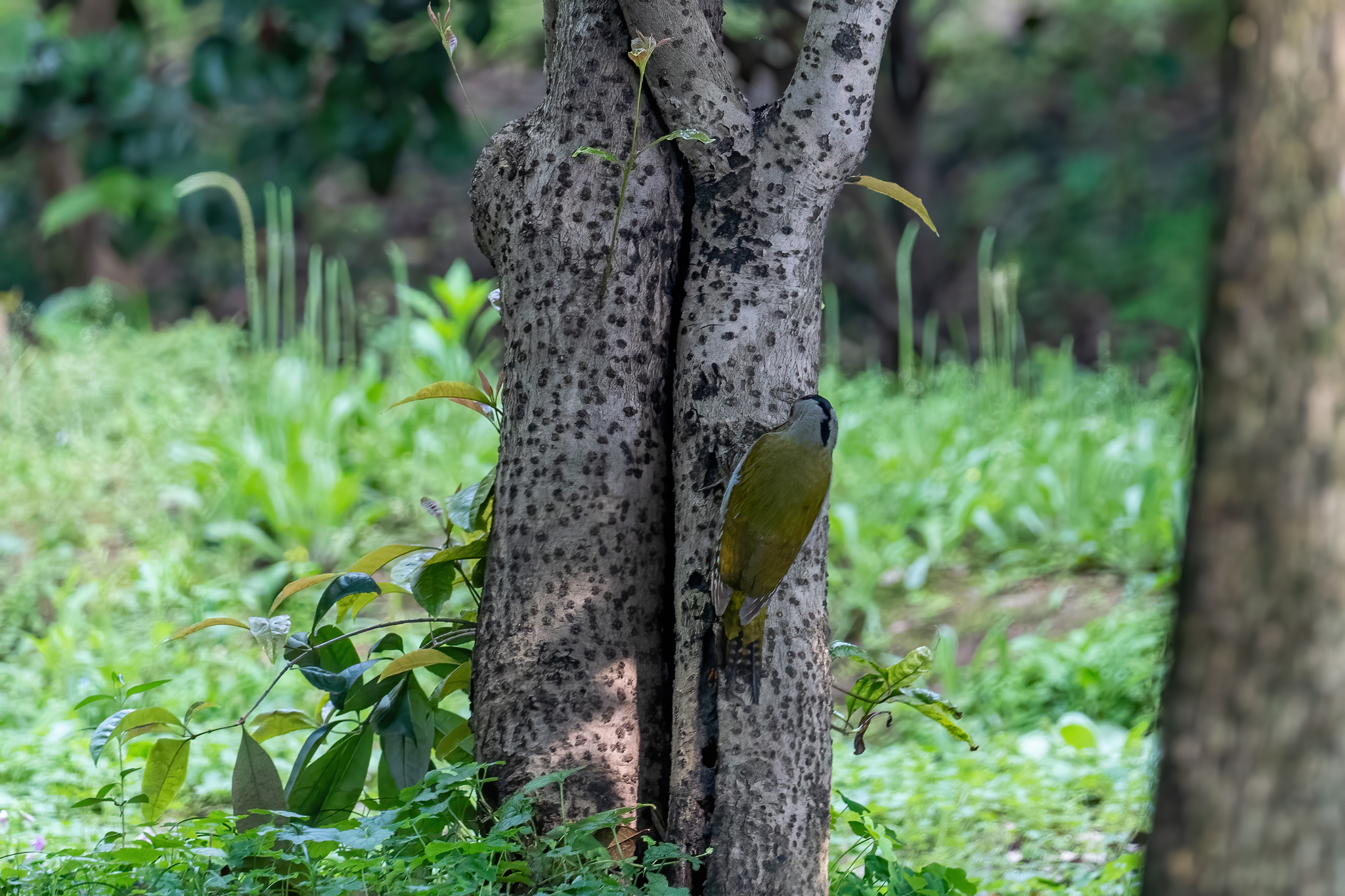
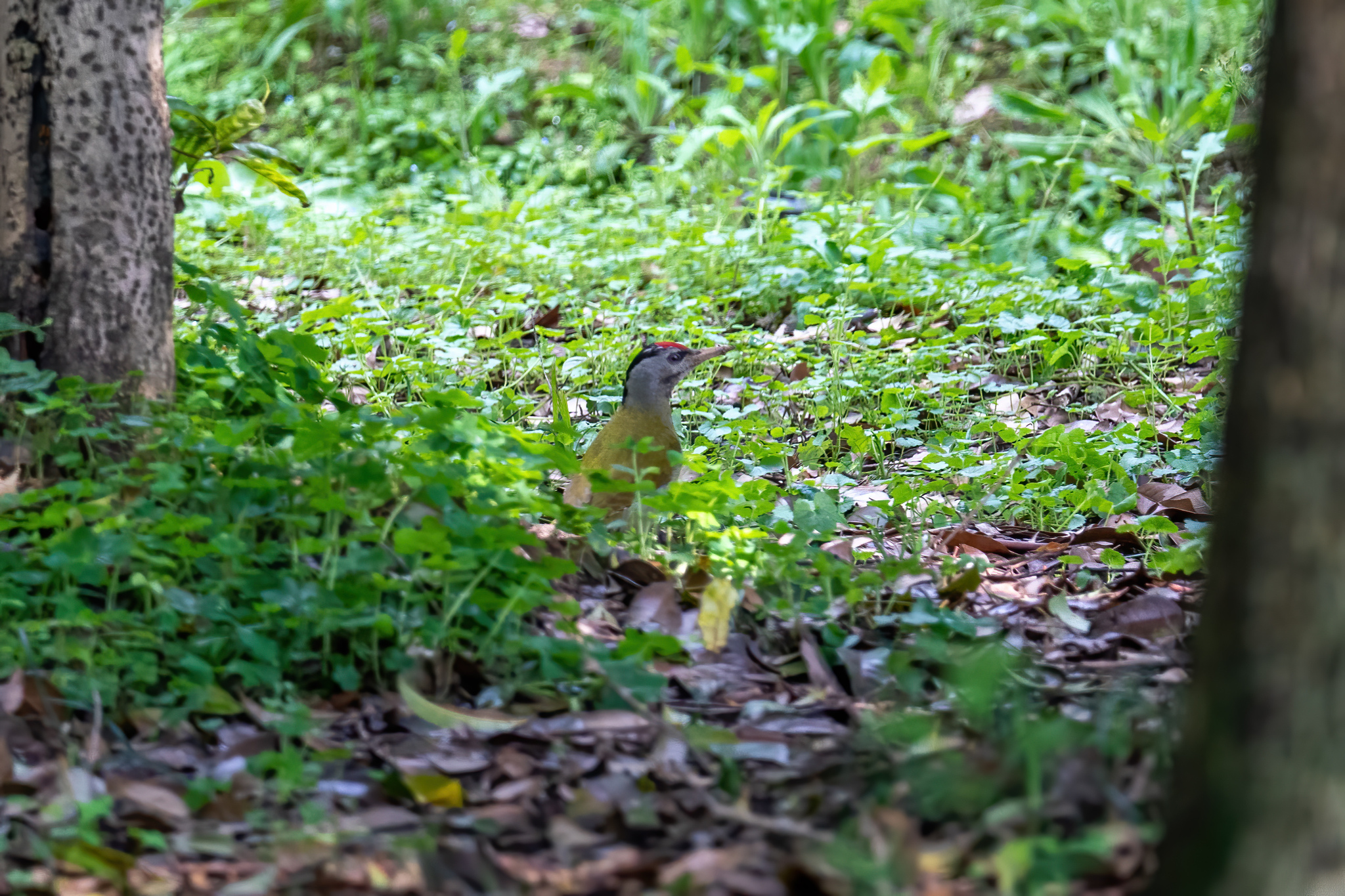
Small to medium-sized woodpecker, 25–26 cm length, 38–40 cm wingspan, weighing approximately 125 g. Male has grey head with red forecrown, black line across lores and narrow black moustache stripe. Back, scapulars and wing coverts green; breast and underbody pale grey. Folded primaries barred brown-black on grey-white. Female lacks red forecrown, instead showing fine black streaks on crown. Uniformly olive green upperparts transition through light grey on neck to grey head. Smaller and lighter than European green woodpecker with shorter neck, slimmer bill and rounder head.
Identification
Size approximately that of Eurasian collared dove. Grey head with black moustache distinguishes this species; male shows red crown. Compared to European green woodpecker, has shorter neck, slimmer bill and slightly rounder head. Drums more frequently than European green woodpecker, with calls more melodic and cleaner than the explosive 'laughter' of the green woodpecker. Territorial song consists of 10–15 utterances of declining pitch.
Distribution & Habitat
Wide distribution across central, northern and eastern Europe through Asia to Pacific coast, Sakhalin and Hokkaido. Northern limit at border between closed coniferous and mixed forest; southern limit where tree steppe transitions to treeless shrubby steppe. In Europe, breeds from western France to Urals, including central, eastern and southern Europe and Scandinavia's medium latitudes. Absent from North German Plain, British Isles, Iberian Peninsula and Mediterranean islands. Southern range includes Korean Peninsula, eastern China, Himalaya and mountain forests of Malay Peninsula.
Behavior & Ecology
Diet consists primarily of ants and their immatures (up to 90% of diet in spring/summer), especially Formica, Lasius and Myrmica genera, though less specialised than European green woodpecker. Also consumes caterpillars, crickets, beetle larvae, flies, spiders and lice; switches to berries and fruit in late autumn/winter. Breeds in May; both parents raise 5–10 eggs. Young hatch after 15–17 days and fledge in 24–25 days. Territorial song melodious with 10–15 declining pitch utterances; both sexes drum at 20 Hz with rolls up to 40 beats. Aggressive 'kuek' and 'kek' calls serve as predator warnings.
Conservation
IUCN Least Concern. Global population shows slight reduction, but not sufficient for elevated threat status. European population estimated at 180,000–320,000 breeding pairs, with key populations in European Russia and Romania. Germany ~15,000 pairs, Austria ~2,500, Switzerland ~1,500. Species is difficult to record as isolated pairs rarely call much, leading to population data gaps. European populations may be recovering since 1990s due to mild winters, though this may reflect increased survey effort. Primary threat is destruction of undisturbed ancient forests with natural cohort structure and riparian forests required for breeding.
Source: Wikipedia · CC BY-SA 3.0
Taxonomy
- Order
- Piciformes
- Family
- Picidae
- Genus
- Picus
- eBird Code
- gyfwoo1
Subspecies (11)
-
Picus canus canus
Europe (southern Scandinavia and France) to western Siberia
-
Picus canus dedemi
highlands of Sumatra
-
Picus canus guerini
north-central China (central Sichuan to Yangtze River basin)
-
Picus canus hessei
Nepal and northern India to Myanmar, southern China, Thailand, and Vietnam
-
Picus canus jessoensis
eastern Siberia to northeastern China, Korea, Sakhalin, and Hokkaido
-
Picus canus kogo
central China (Shaanxi to Qinghai and northern Sichuan)
-
Picus canus robinsoni
southern Thai-Malay Peninsula (Gunung Tahan and Cameron highlands)
-
Picus canus sanguiniceps
northeastern Pakistan to northern India and far western Nepal
-
Picus canus sobrinus
southeastern China (Guangxi to Fujian) and northeastern Vietnam
-
Picus canus sordidior
southeastern Tibet to southwestern China (Sichuan and Yunnan) and northeastern Myanmar
-
Picus canus tancolo
Hainan and Taiwan
Data Sources
Species description from Wikipedia, licensed under CC BY-SA 3.0.
Bird images and sounds sourced from GBIF, contributed by citizen scientists worldwide under Creative Commons licenses.
Taxonomy data from AviList 2025.