

Speckled Piculet
Picumnus innominatus
斑姬啄木鸟
Introduction
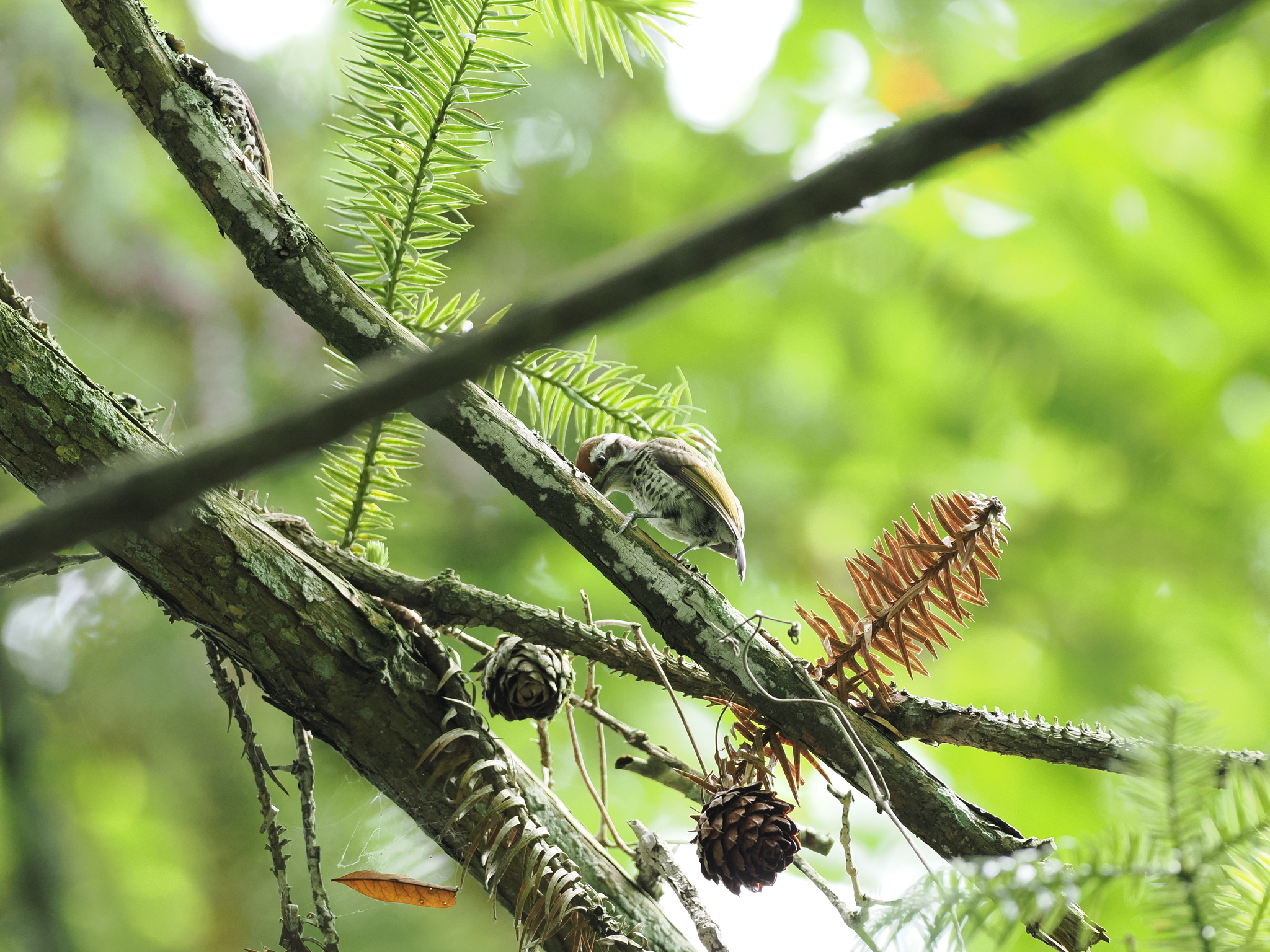
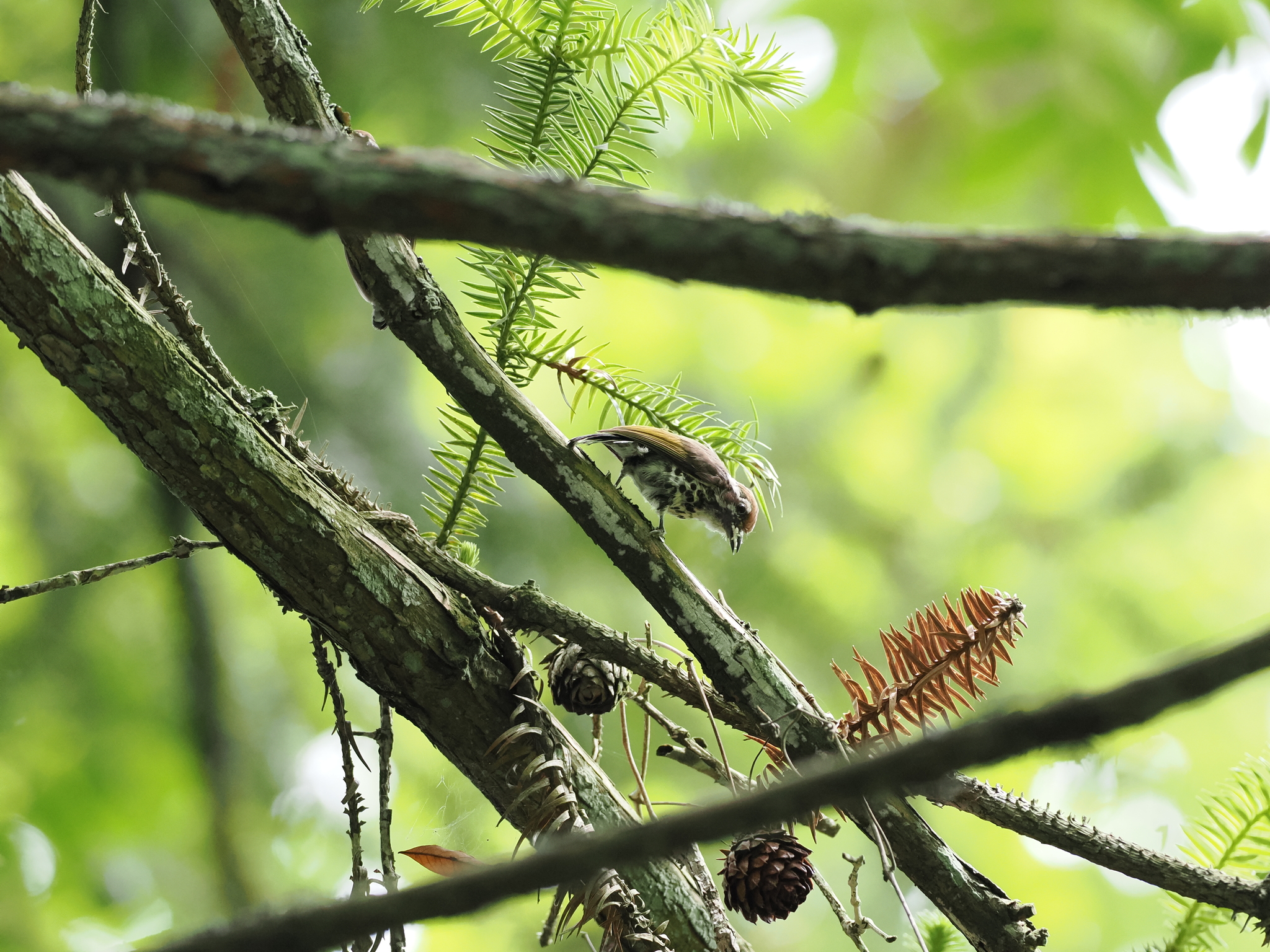
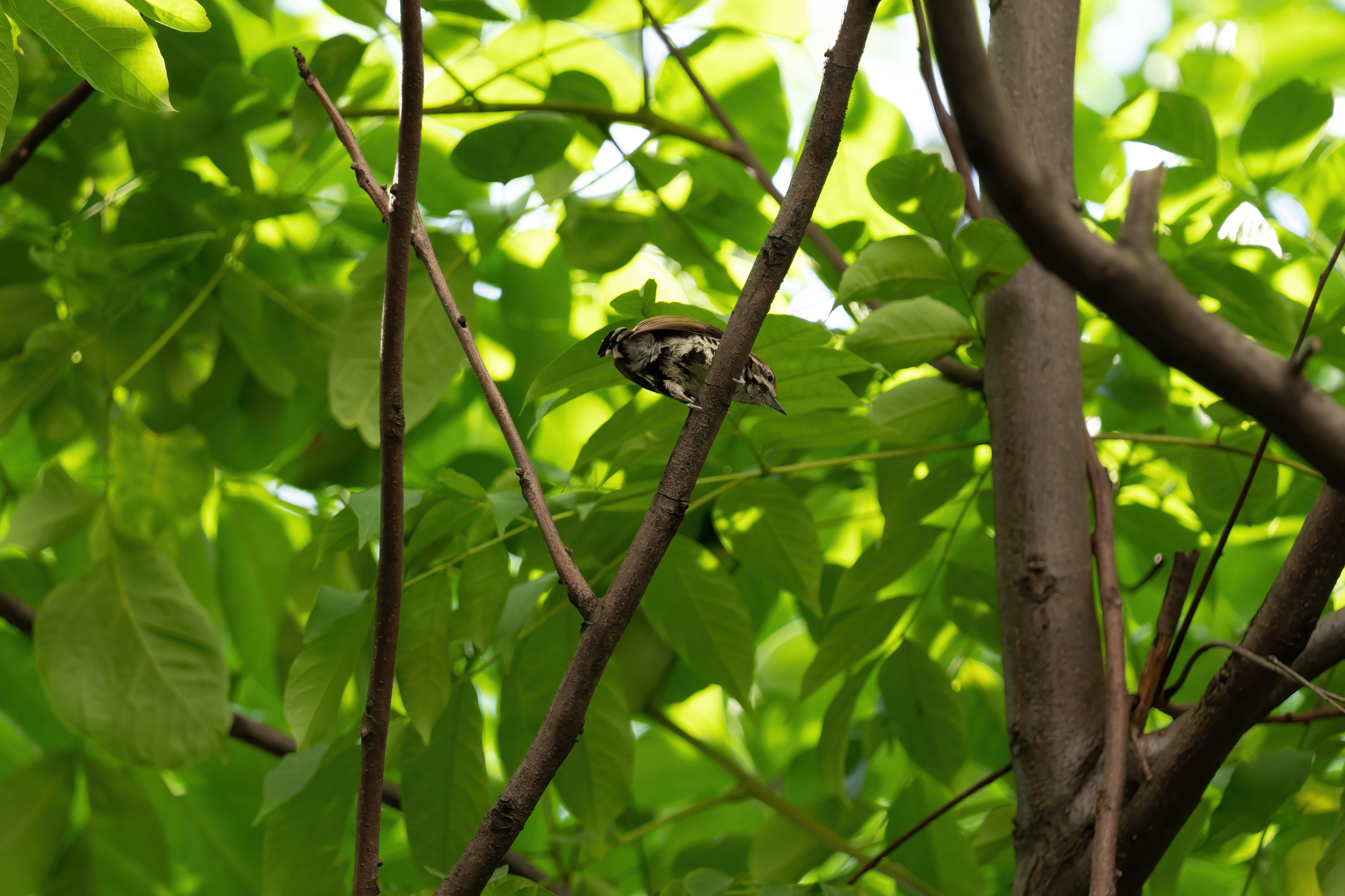
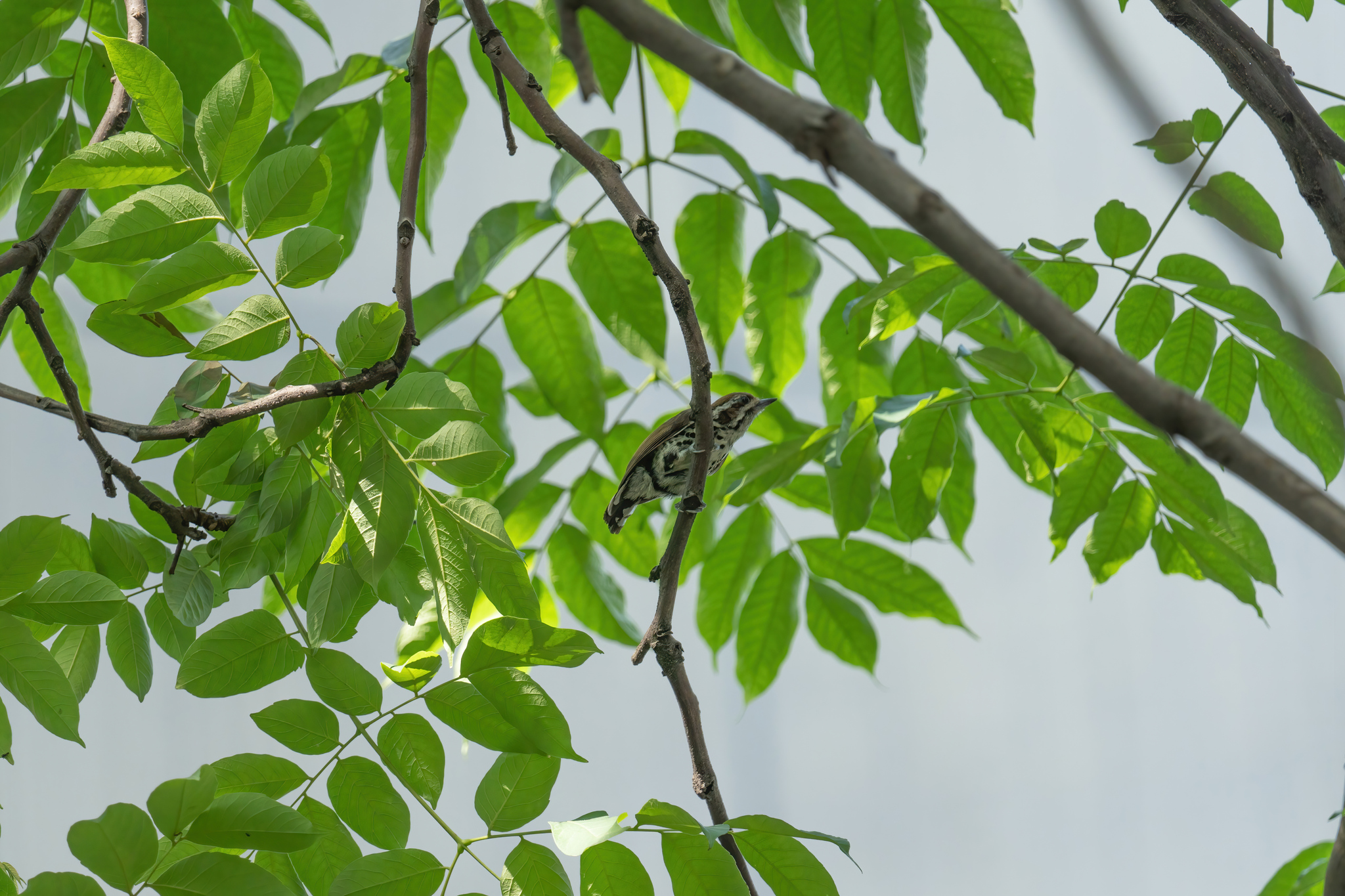
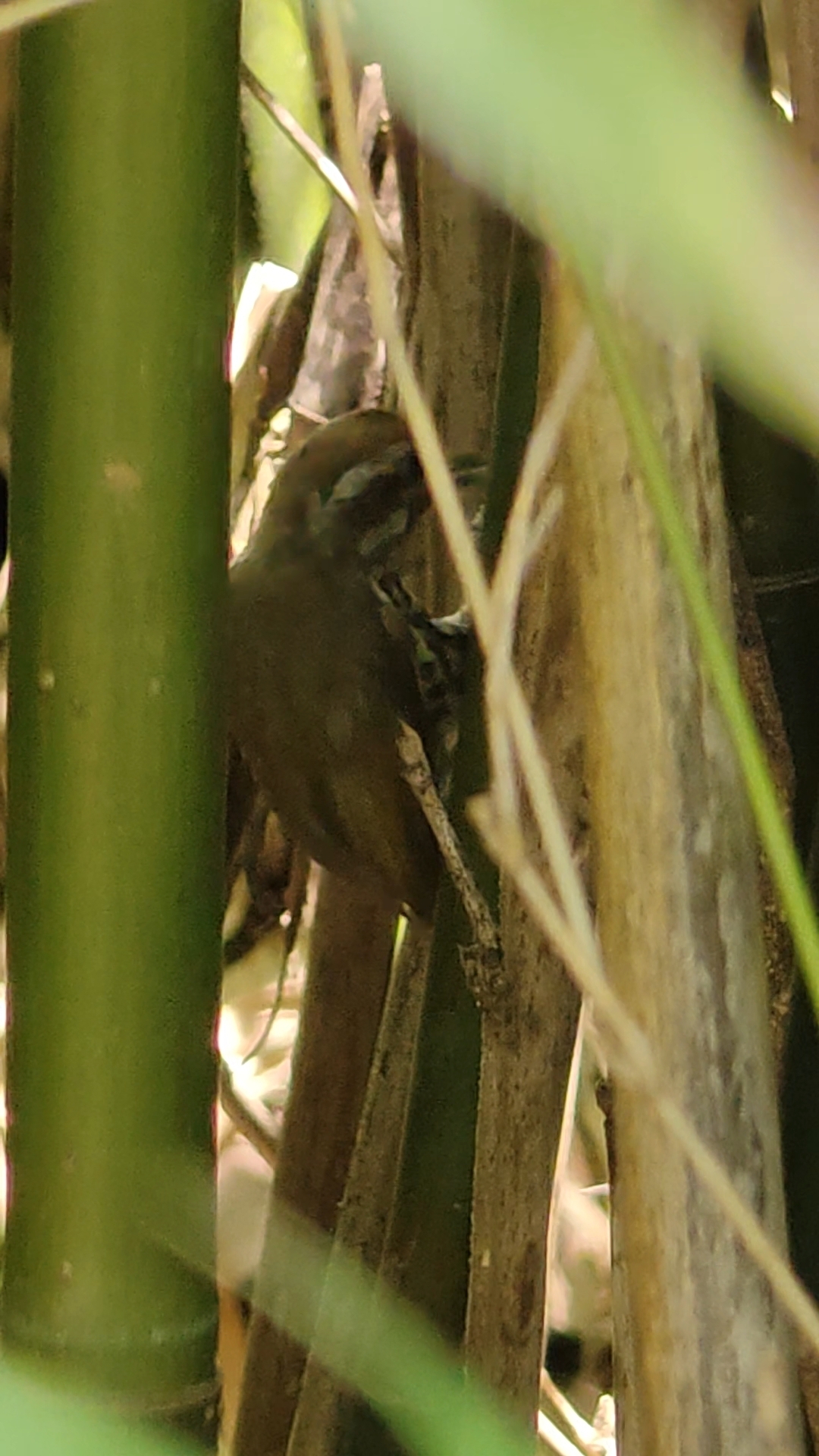
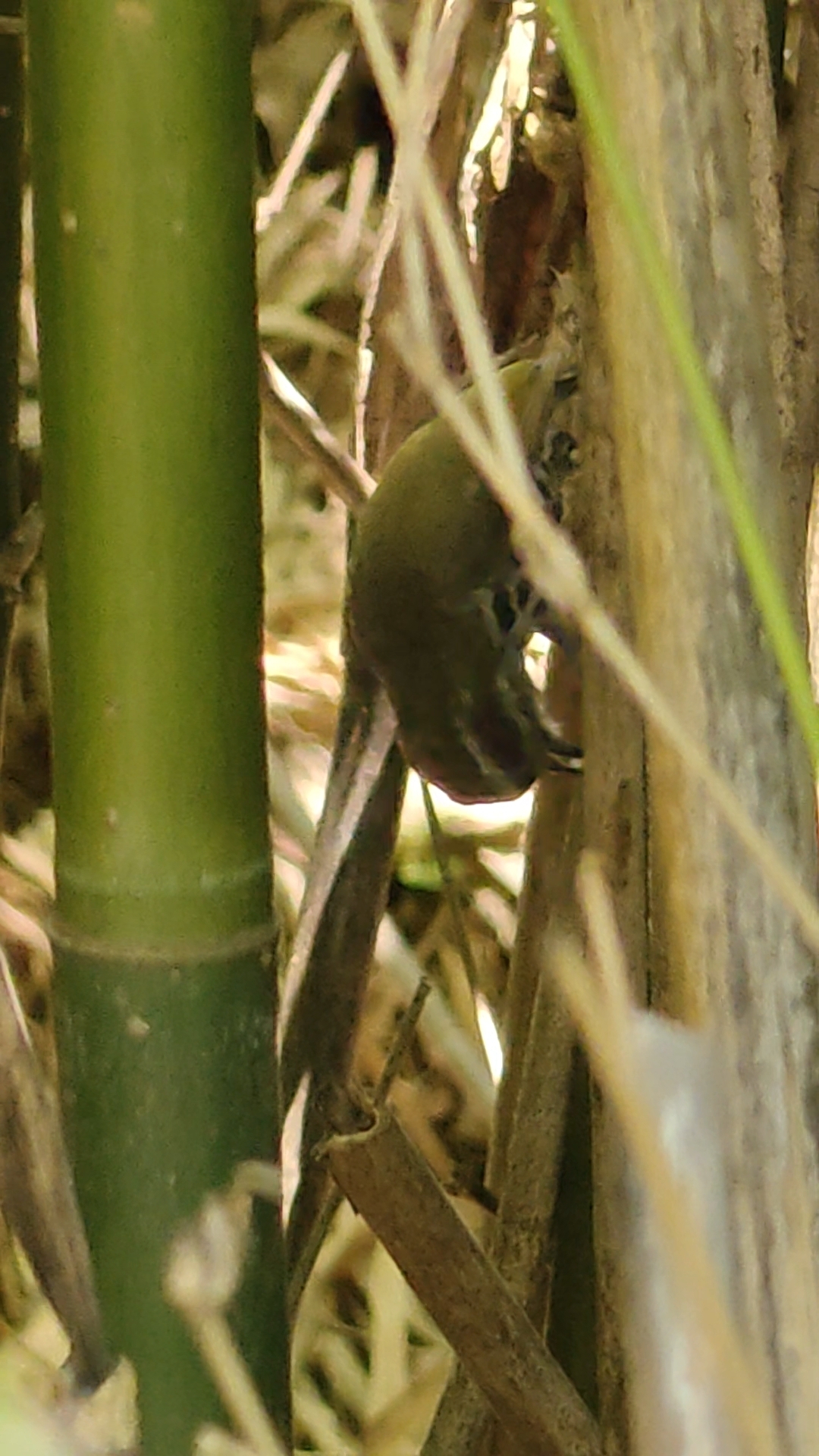
The speckled piculet is the smallest member of the Picidae family. It ranges from the Himalayan foothills through mainland Southeast Asia to the islands of Sumatra and Borneo. The species inhabits lowland tropical forests, montane forests up to approximately 2,500 meters elevation, bamboo jungles, and dense forest edges. It forages in the understory, typically in pairs, climbing along thin branches and sometimes hanging upside-down while searching for food. Unlike many woodpeckers, it moves horizontally along branches rather than spiraling up tree trunks.
Description
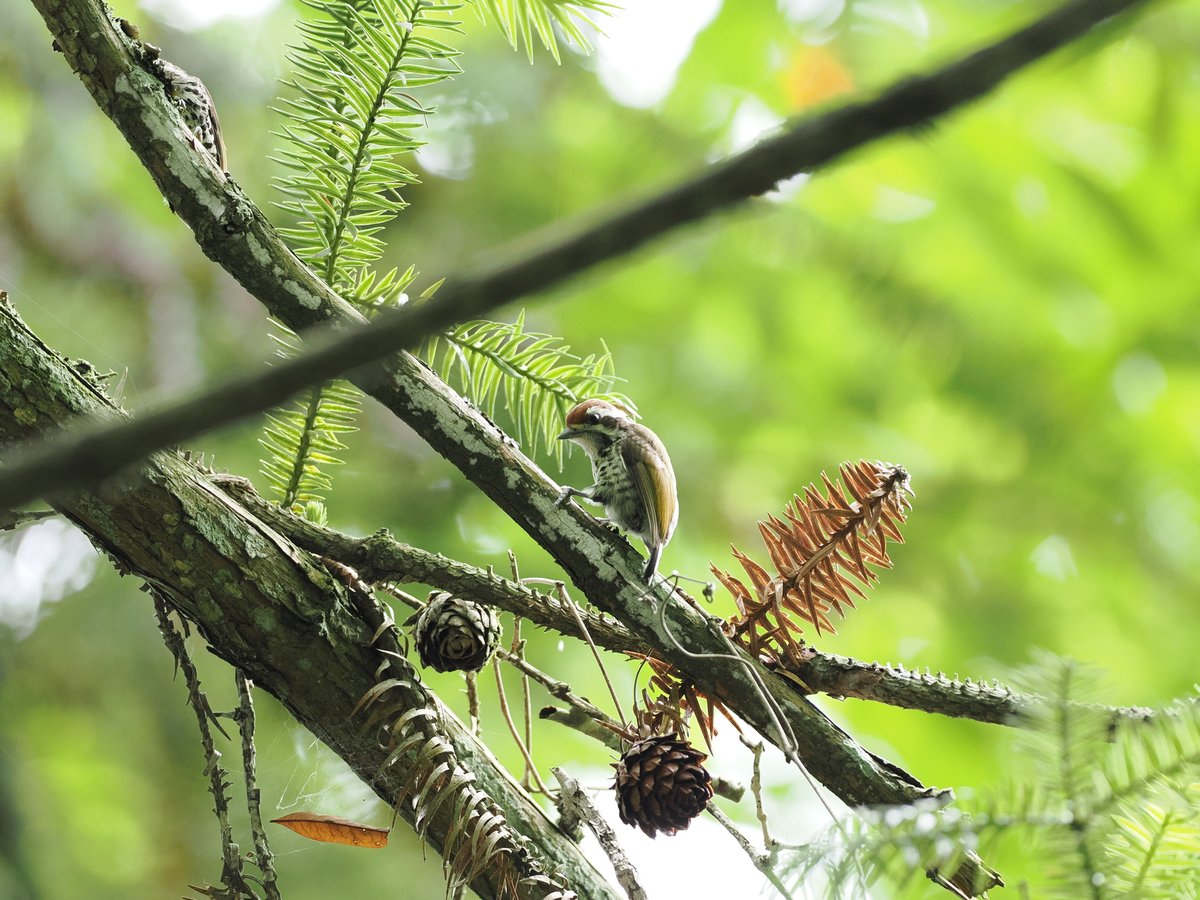
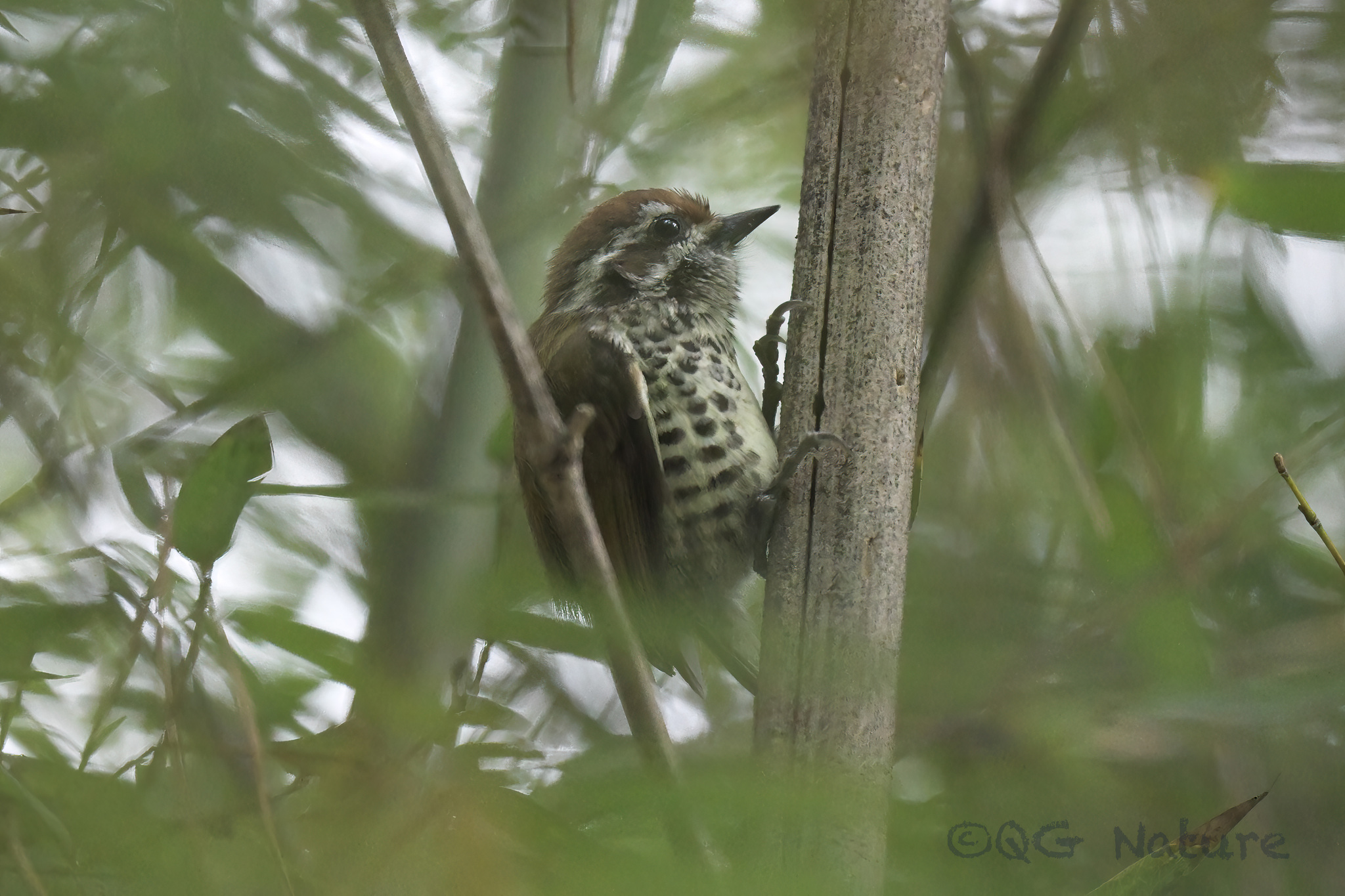
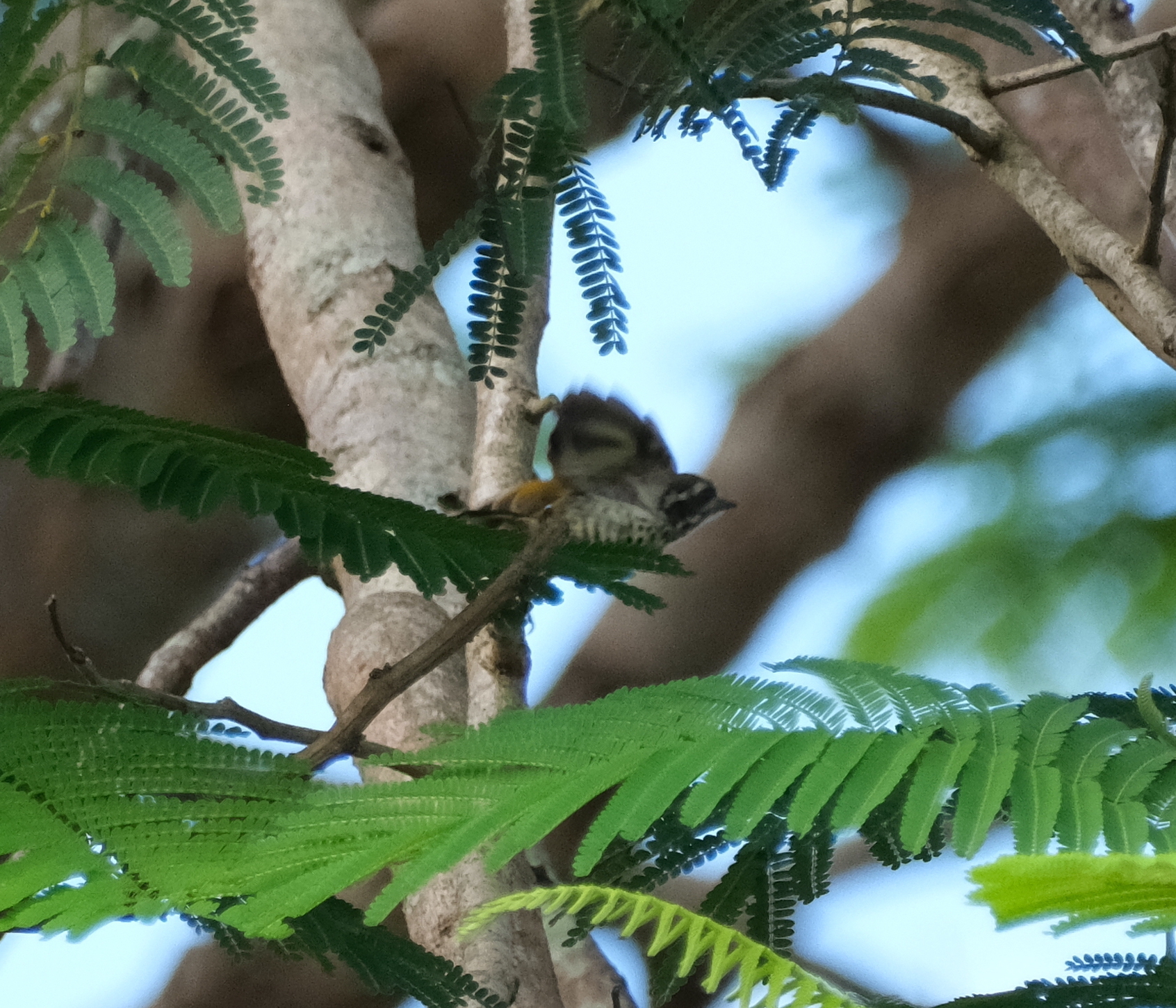
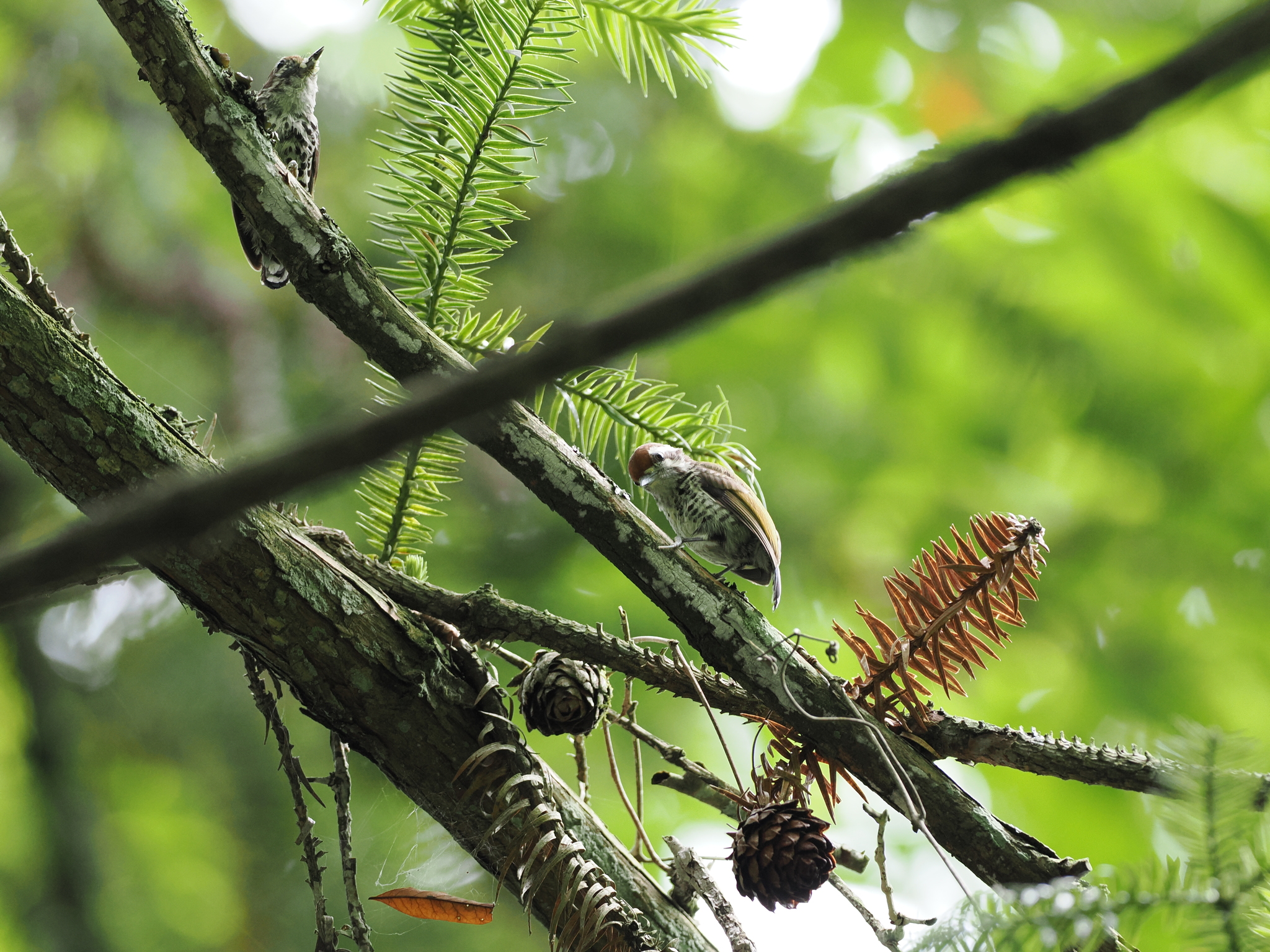
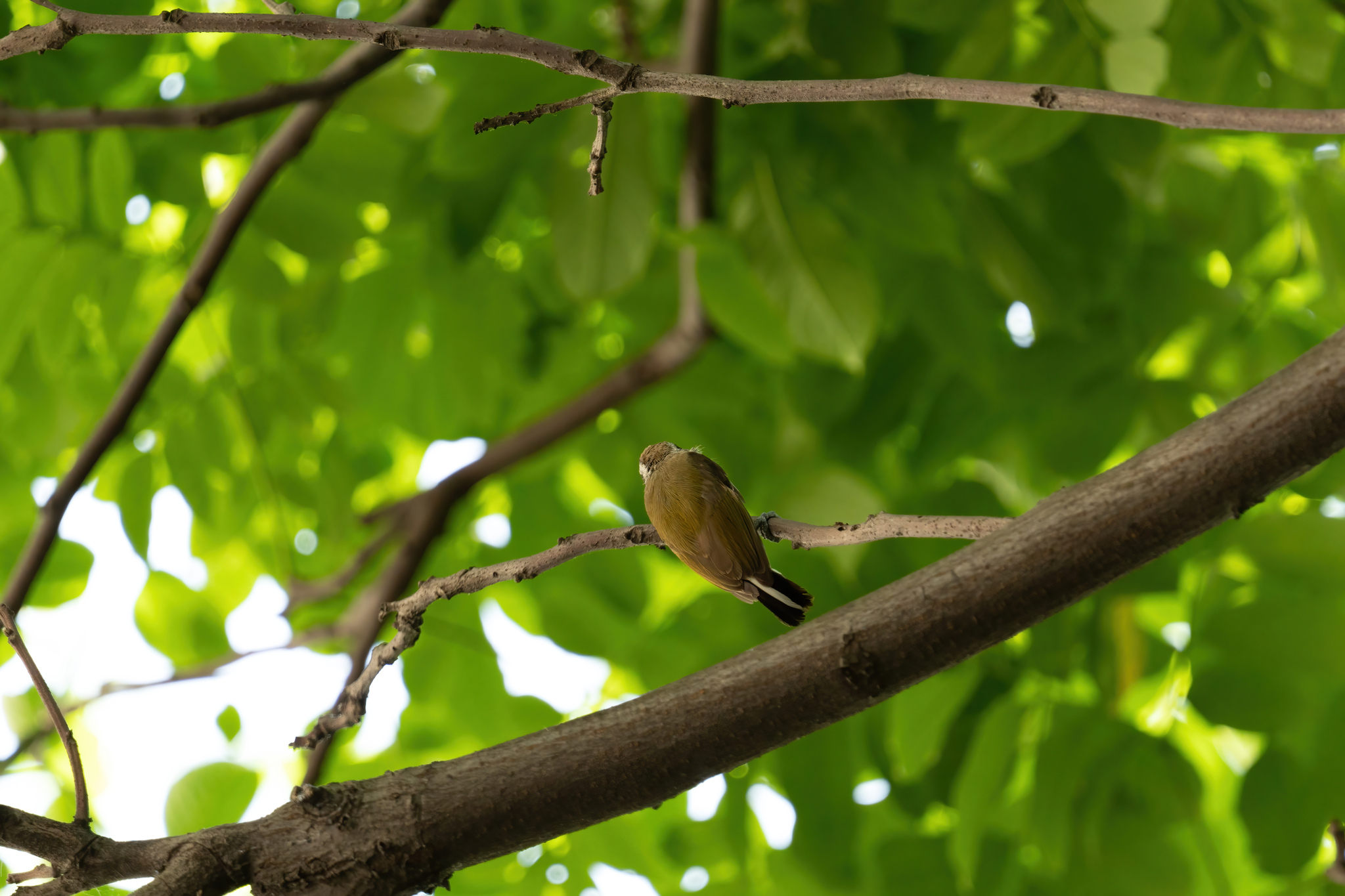
This tiny woodpecker-family bird measures approximately 10 centimeters in length, making it one of the smallest Asian woodpeckers. Both sexes share similar plumage with olive-green upperparts and creamy-white underparts covered in black spots. The head pattern is particularly distinctive, featuring two white stripes running along the sides of the head. Males can be distinguished by the orange and brown coloration on their forecrown. A dark green band runs through the eye area, providing excellent camouflage among leaves and bamboo. The overall impression is of a compact bird with strong, woodpecker-like feet adapted for climbing vertical surfaces.
Distribution & Habitat
The speckled piculet occupies an extensive range across the Indian subcontinent and Southeast Asia, with confirmed populations in Bangladesh, Bhutan, Cambodia, Hong Kong, India, Indonesia, Laos, Malaysia, Myanmar, Nepal, Pakistan, Thailand, Tibet, and Vietnam. Its habitat preferences are diverse, encompassing boreal forests, subtropical and tropical moist lowland forests, and subtropical or tropical moist montane forests. In the Indian subcontinent, specifically, it inhabits the Himalayan foothills up to approximately 2,500 meters elevation. Bamboo jungles constitute a particularly favored habitat type throughout its range. The species' preference for dense, forested environments with ample vegetation cover influences its distribution patterns and local abundance.
Behavior & Ecology
The speckled piculet exhibits social and foraging behaviors reminiscent of larger woodpeckers, typically moving about in pairs while exploring thin branches throughout the forest understory. Its feeding strategy involves methodically investigating bark crevices and leaf surfaces, demonstrating a versatile approach to locating prey. The species displays remarkable agility, frequently hanging upside-down from branches while searching for food. This acrobatic foraging behavior sets it apart from many other forest birds and allows access to prey items missed by less flexible species. Its dietary preferences center on ants and termites, reflecting its adaptation to forest environments where these insects are abundant.
Source: Wikipedia · CC BY-SA 3.0
Taxonomy
- Order
- Piciformes
- Family
- Picidae
- Genus
- Picumnus
- eBird Code
- spepic1
Vocalizations
Subspecies (3)
-
Picumnus innominatus chinensis
central, eastern, and southern China (from Sichuan to Jiangsu)
-
Picumnus innominatus innominatus
northeastern Afghanistan and northern Pakistan to northern India, Nepal, and southeastern Tibet
-
Picumnus innominatus malayorum
peninsular and northeastern India to southwestern China, Indochina, Sumatra, and northern Borneo
Data Sources
Species description from Wikipedia, licensed under CC BY-SA 3.0.
Bird images and sounds sourced from GBIF, contributed by citizen scientists worldwide under Creative Commons licenses.
Taxonomy data from AviList 2025.