



Black-rumped Magpie
Pica bottanensis
青藏喜鹊
Introduction
A monotypic species of magpie in the family Corvidae. Originally described in 1840 as a subspecies of the Eurasian magpie, it was reclassified as a distinct species in 2018 based on molecular phylogenetic analysis, which identified it as a sister taxon to the Asir magpie of southwestern Saudi Arabia. Inhabits west-central China and central Bhutan, typically found in low-altitude farmland, parks, and gardens. Distinguished by its namesake black rump, brighter plumage, stouter bill, and shorter tail compared to closely related magpie species. BirdLife International currently treats it as a subspecies of the Eurasian magpie, classifying it as Least Concern.
Description
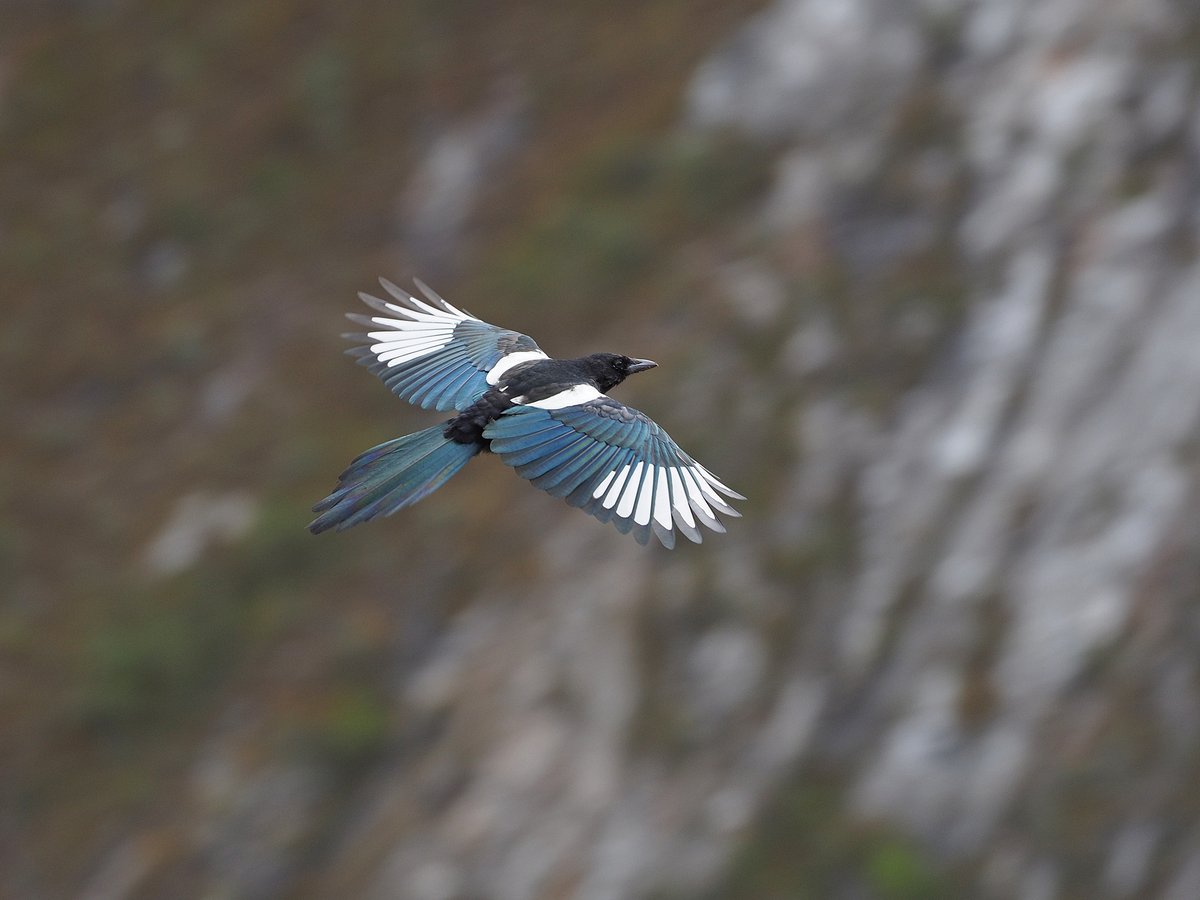
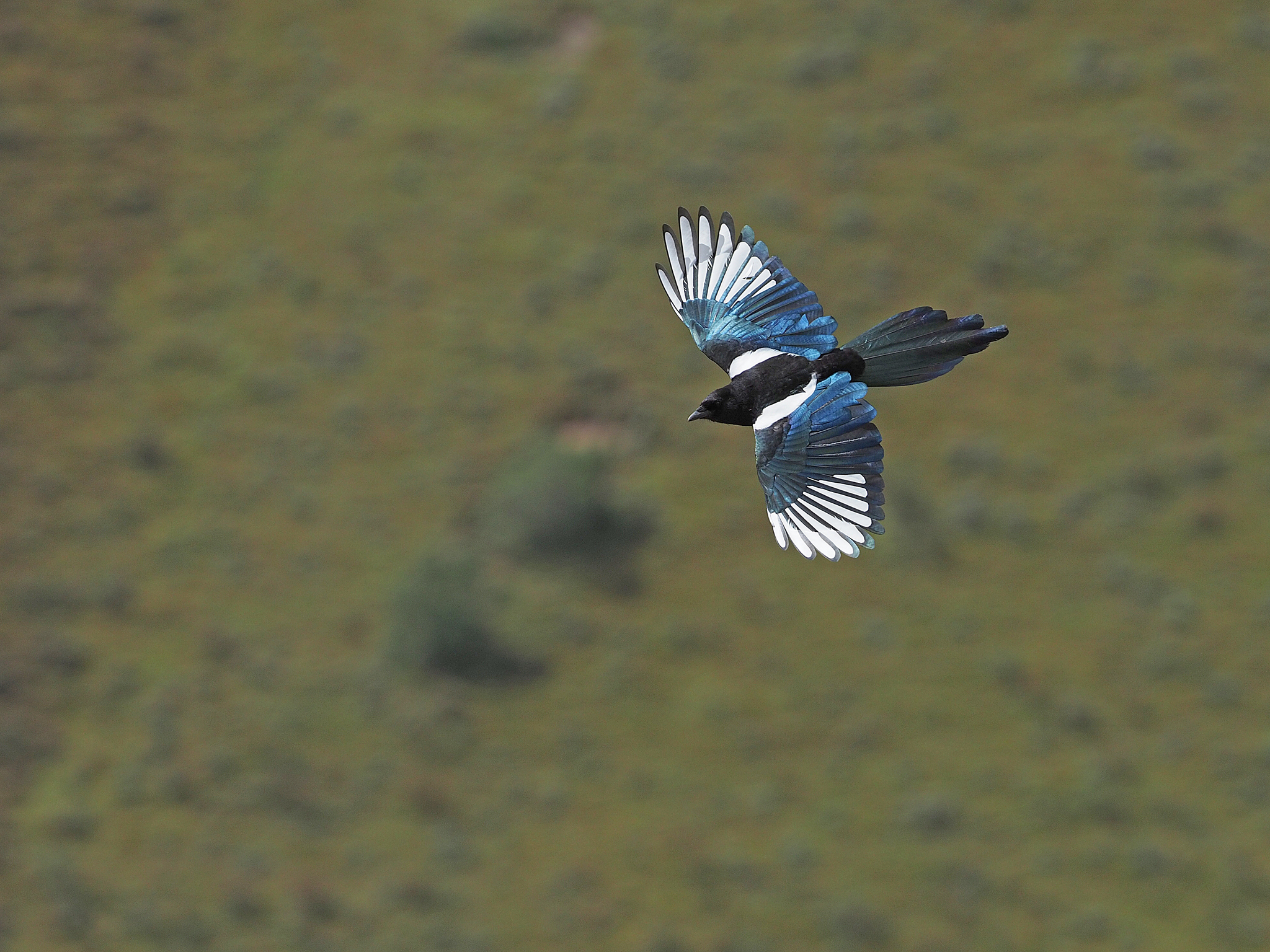
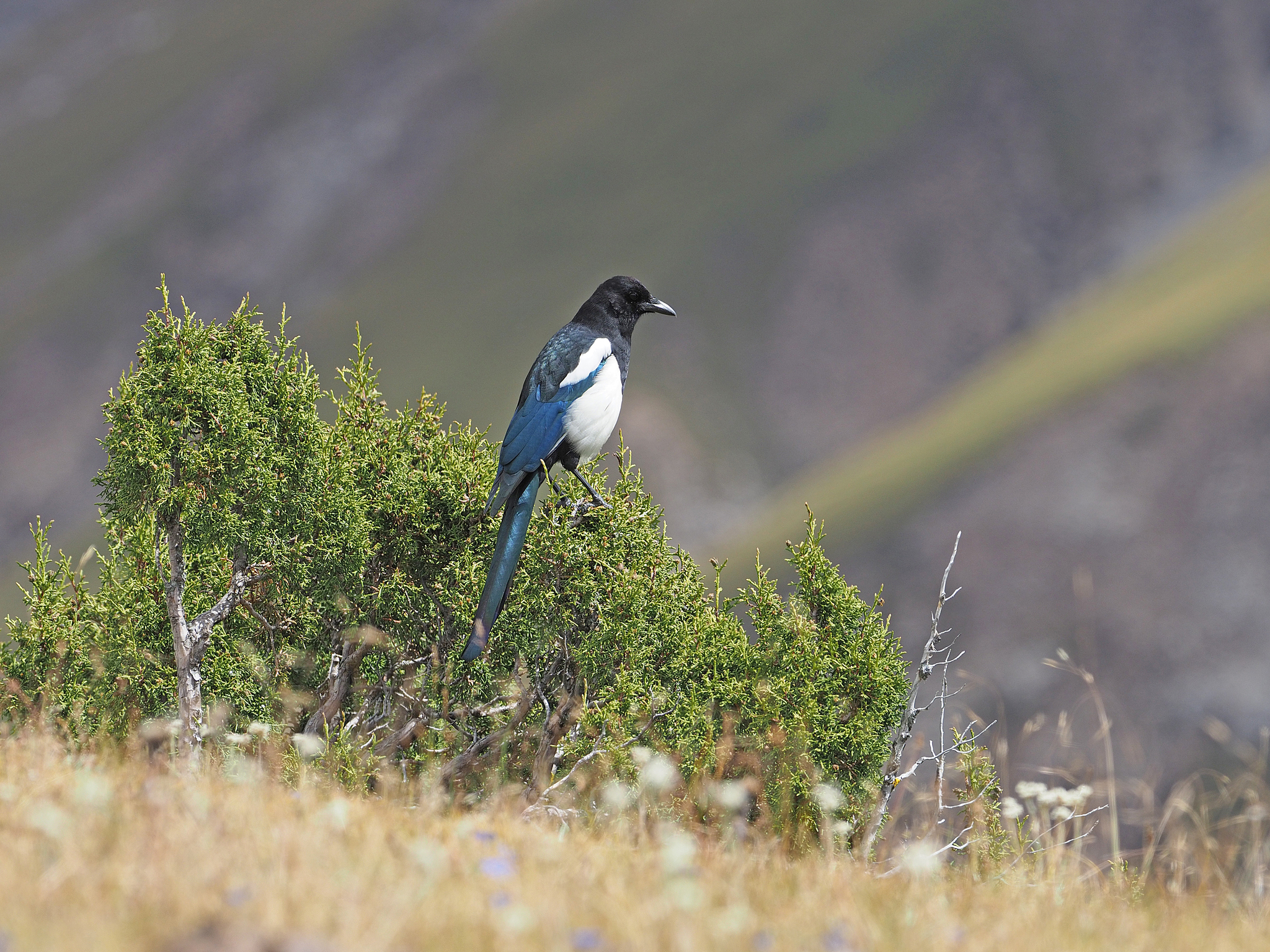
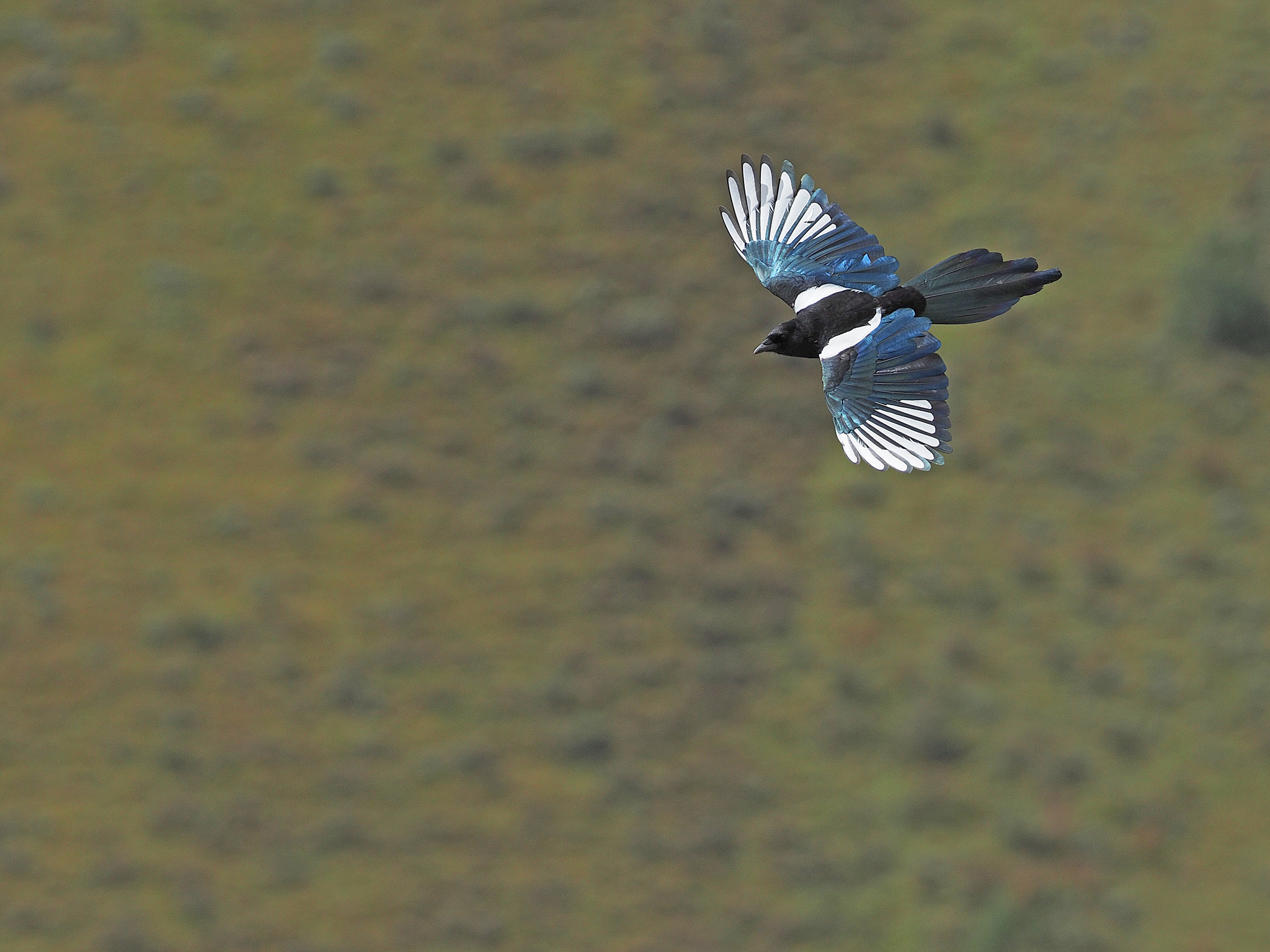
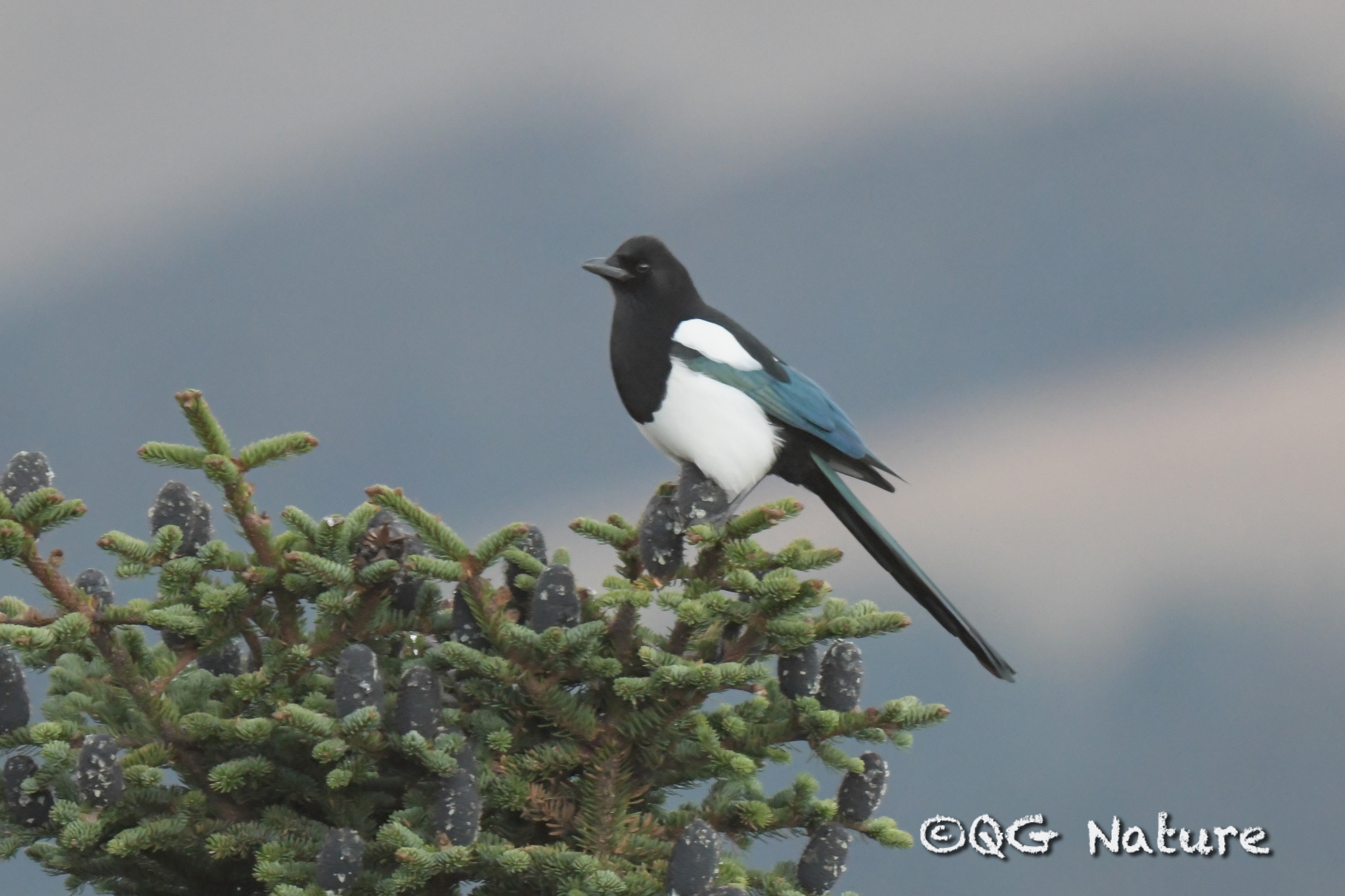
A black-and-white magpie with bluish-green iridescent highlights. The wings and tail are black, faintly glossy, and tinted greenish-blue, while the flanks and central underparts are white. The species is characterized by its namesake black rump, brighter overall plumage, relatively stout bill, and shorter tail compared to the Oriental and Eurasian magpies. Wing measurements range from 233-250 mm in females to 241-259 mm in males. The tail measures approximately 250 mm in length.
Identification
Best distinguished from similar Eurasian and Oriental magpies by its black rump (not white as in those species), brighter plumage, stouter bill, and proportionally shorter tail. These subtle differences can be challenging to observe in the field, particularly when birds are not directly compared side by side.
Distribution & Habitat
Restricted range extends from central Bhutan across west-central China, including Qinghai and western Sichuan, to eastern Tibet. Inhabits farmland and other semi-open landscapes including farming districts, parks, and gardens. Generally uncommon at high altitudes, though individuals have been recorded up to 4,800 m, with nests documented at 4,400 m elevation.
Behavior & Ecology
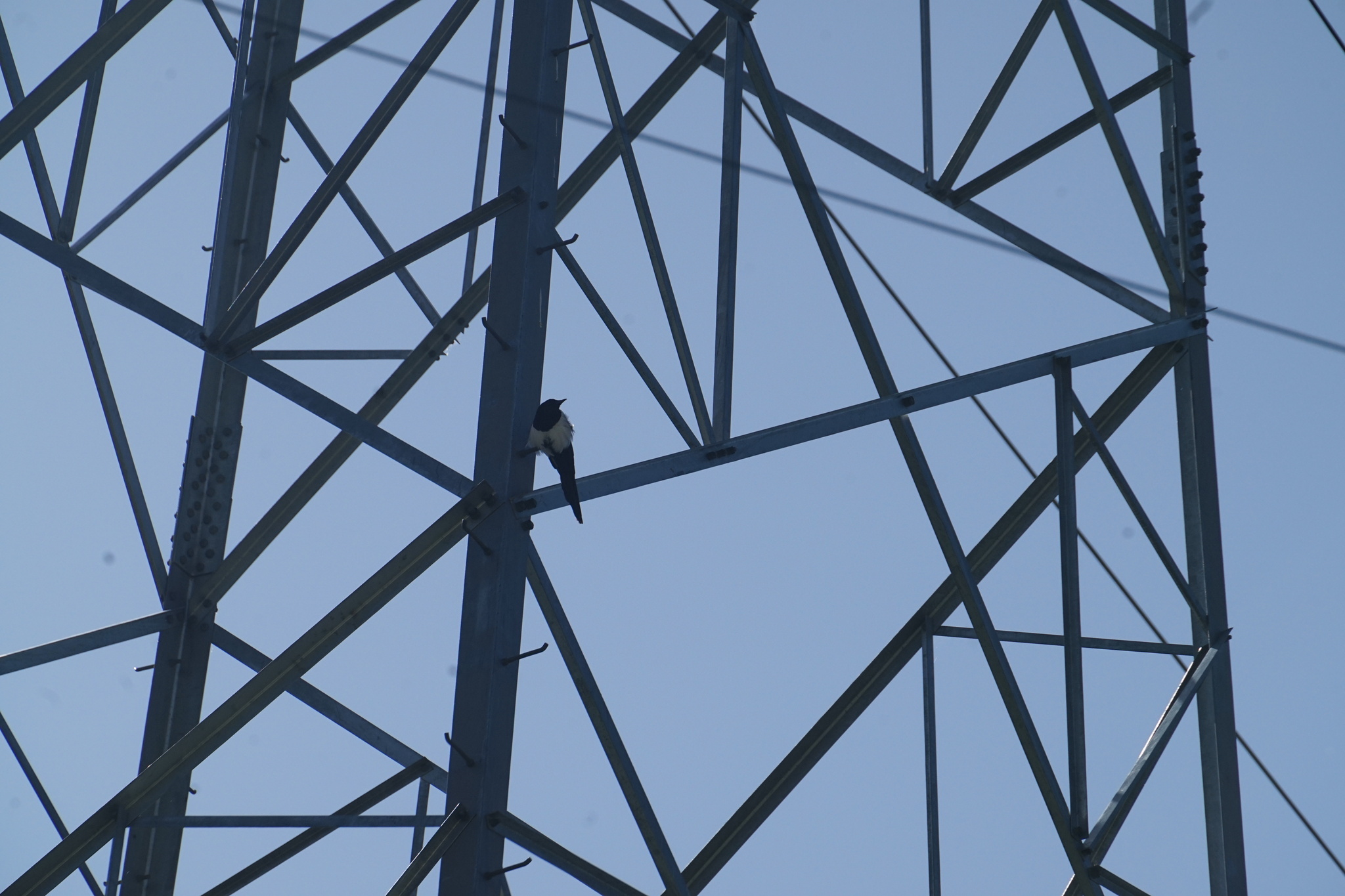
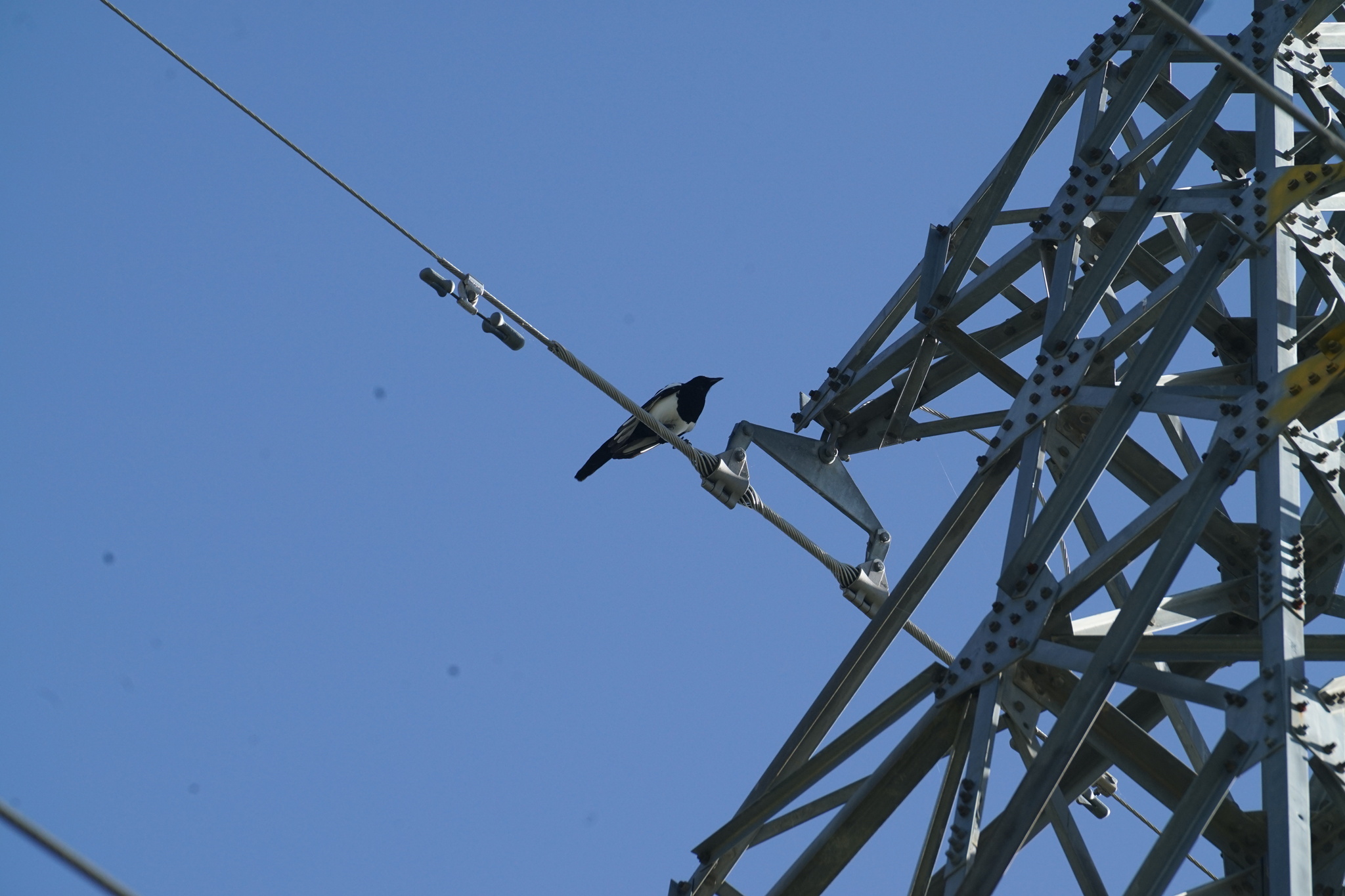
Exhibits monogamous behavior, forming long-term pairs that persist across nesting seasons and during flocking activities. Social birds typically encountered in pairs or family parties, with occasional communal roosts of up to 30 individuals. Both sexes participate in nest construction, which begins in late March. Nests are massive, domed structures made of twigs and plant fibers, sometimes built atop older nests. A single brood of 4-5 eggs is laid from April to June, with clutches ranging from 3-6 eggs. Diet is carnivorous, consisting primarily of invertebrates, lizards, small mammals, frogs, other birds, and carrion. Forages mainly on the ground using a side-hopping motion while hunting, maintaining an elevated tail posture. Occasionally perches on livestock to feed on ectoparasites. Vocalizations include a subdued, warbling song sung mainly by unpaired birds, audible only at close range and occasionally interrupted with high-pitched notes and rare mimicry. The typical call is a raucous, explosive rapid chatter.
Conservation
Currently considered a subspecies of the Eurasian magpie by BirdLife International, which classifies the combined taxon as Least Concern. No specific population data or threat assessments are available for this species as a separate entity.
Culture
No cultural or folklore information provided in the source material.
Source: Wikipedia · CC BY-SA 3.0
Taxonomy
- Order
- Passeriformes
- Family
- Corvidae
- Genus
- Pica
- eBird Code
- eurmag6
Distribution
eastern Himalayas to southeastern Tibet and western China (Qinghai and Xinjiang)
Data Sources
Species description from Wikipedia, licensed under CC BY-SA 3.0.
Bird images and sounds sourced from GBIF, contributed by citizen scientists worldwide under Creative Commons licenses.
Taxonomy data from AviList 2025.