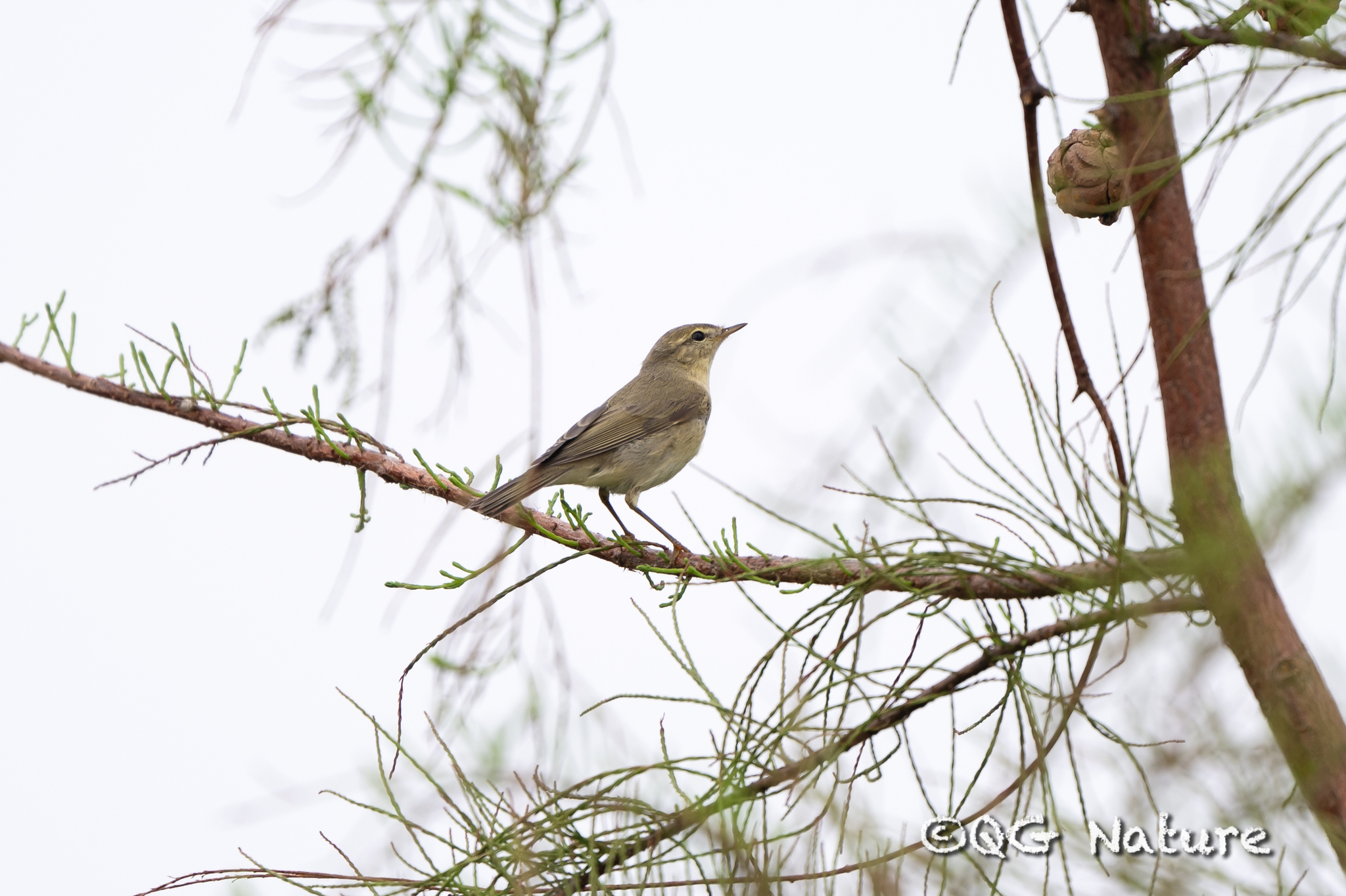
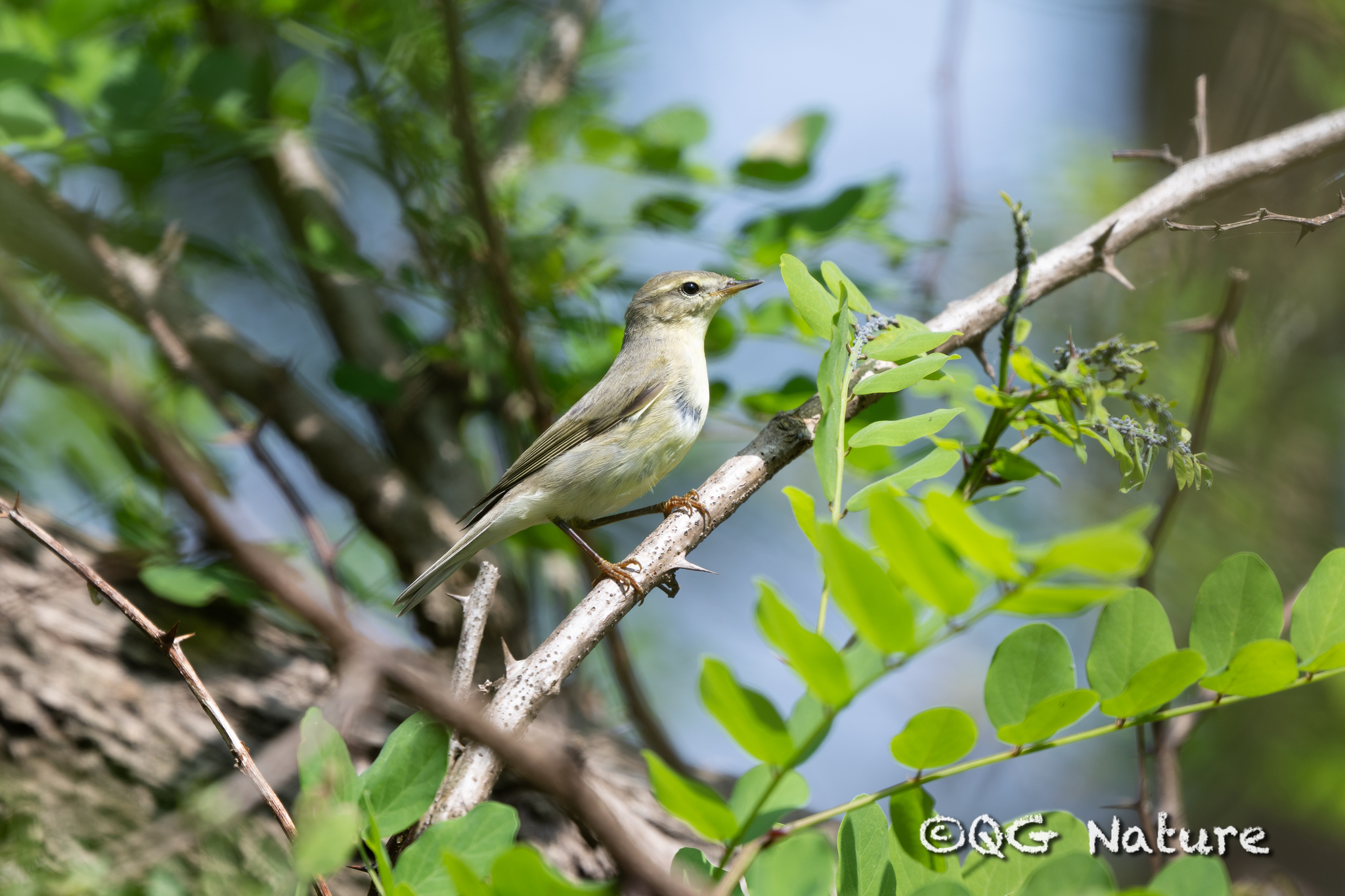
Willow Warbler
Phylloscopus trochilus
欧柳莺
Introduction
A species of leaf warbler in the family Phylloscopidae. It breeds throughout northern and temperate Europe and the Palearctic, from Ireland east to the Anadyr River basin in eastern Siberia. The species inhabits open woodlands with trees and ground cover, particularly birch, alder, and willow habitats. It is strongly migratory, with almost all populations wintering in sub-Saharan Africa. It is one of the first warblers to return in northern Europe in spring, though later than the chiffchaff. Despite its small size, it undertakes one of the longest migrations of any animal.
Description
A typical leaf warbler in appearance, measuring 11-12.5 cm in length and weighing 7-15 g. The upperparts are greenish brown, while the underparts range from off-white to yellowish. The wings are plain greenish-brown without wingbars. Juveniles are distinctly yellower below than adults. The legs are pinkish-yellow, the bill is long and pale, and the bird has a more elegant shape with a longer primary projection compared to similar species.
Identification
Very similar to the chiffchaff but distinguishable by several features: paler pinkish-yellow legs (versus dark brown to blackish in chiffchaff), a longer and paler bill, a more elegant shape, and a longer primary projection (wingtip). The song is a simple repetitive descending whistle, while the contact call is a disyllabic 'hoo-eet', distinctly different from the chiffchaff's more monosyllabic 'hweet'.
Distribution & Habitat
Breeds across northern and temperate Europe and the Palearctic, from Ireland east to the Anadyr River basin in Siberia. Winters in sub-Saharan Africa from October to March. Migrates to breeding grounds from mid-March to mid-May, returning to Africa from August to October. Breeding season runs from late April to August. It is a rare vagrant to Alaska, with sightings on St. Lawrence Island.
Behavior & Ecology
Insectivorous, feeding like most Old World warblers. All populations are highly migratory, with the subspecies P. t. yakutensis migrating up to 12,000 km from eastern Siberia to southern Africa along the Asian–East African Flyway—one of the longest migrations of any bird of its size. The nest is usually built in close contact with the ground, often in low vegetation. Breeding season typically produces one brood, rarely two.
Conservation
Prefers young, open, scrubby woodland with small trees up to 10-20 years old, including birch, alder, and willow habitats with good lichen cover and water features. Highest population densities occur in Scandinavia, with up to 1,100 pairs per square kilometre and a combined population in Sweden and Finland of 24 million pairs. Densities are much lower eastward (27 pairs per square kilometre in central Siberia) and at the southern range edge (9 pairs per square kilometre in Switzerland, just 100 pairs in northern Spain). England has experienced a 70% population decline over 25 years, with biggest declines in the southeast. Deer browsing degrades required low cover. Conservation schemes include England's Woodland Improvement Grant and Environmental Stewardship Scheme.
Culture
Before the English name was standardized to willow warbler by William Yarrell in 1843, this species was merged with the chiffchaff and wood warbler under the collective name 'willow wren'. The redirect 'Willow wren' still refers to this species in some contexts.
Source: Wikipedia · CC BY-SA 3.0
Taxonomy
- Order
- Passeriformes
- Family
- Phylloscopidae
- Genus
- Phylloscopus
- eBird Code
- wlwwar
Subspecies (3)
-
Phylloscopus trochilus acredula
breeds Scandinavia to Siberia (Yenisey River); winters to western Africa
-
Phylloscopus trochilus trochilus
breeds western Europe to southern Poland and Romania; winters to western Africa
-
Phylloscopus trochilus yakutensis
breeds eastern Siberia (Taymyr Peninsula to Anadyr River); winters to southern Africa
Data Sources
Species description from Wikipedia, licensed under CC BY-SA 3.0.
Bird images and sounds sourced from GBIF, contributed by citizen scientists worldwide under Creative Commons licenses.
Taxonomy data from AviList 2025.