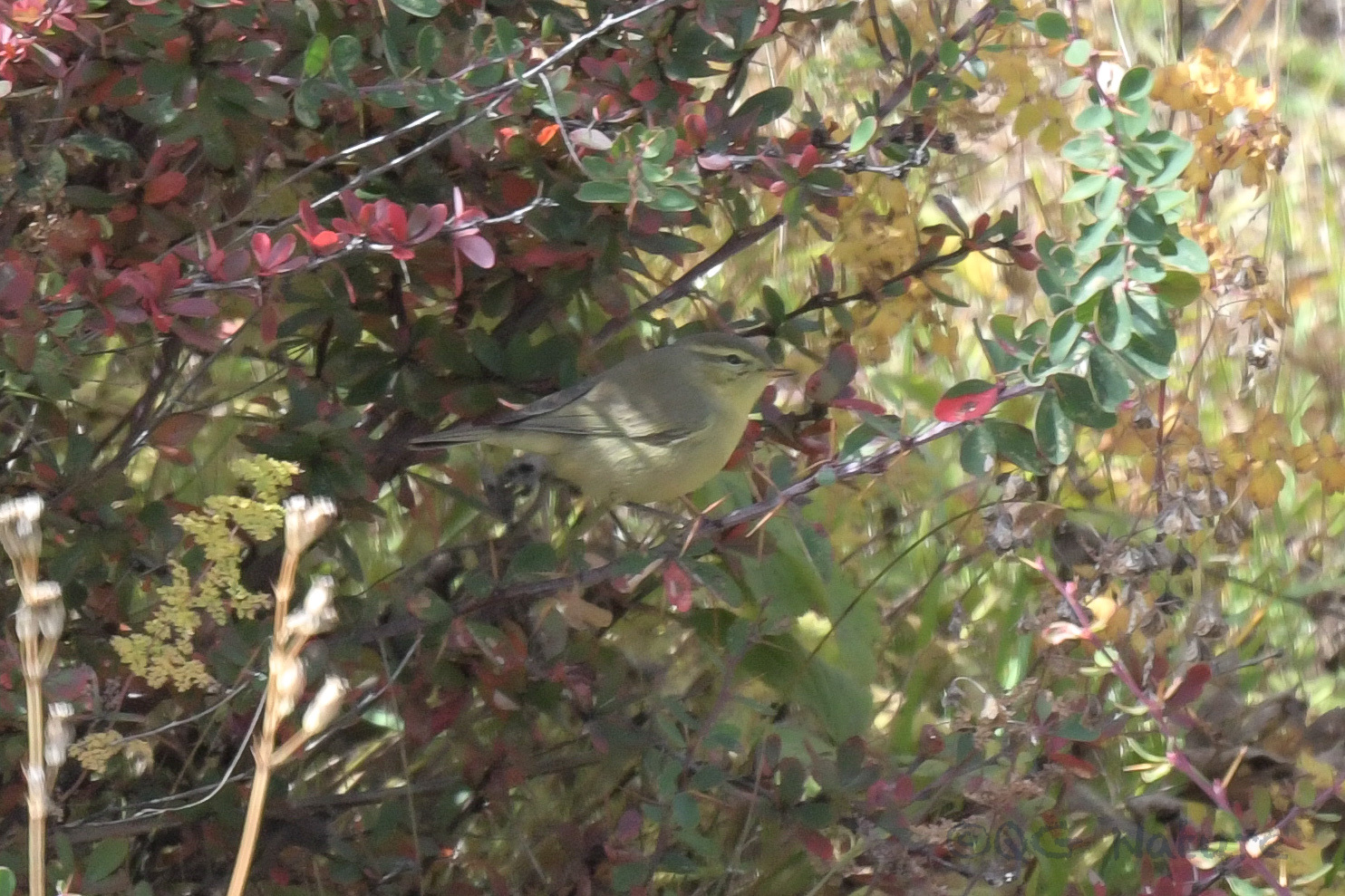
Radde's Warbler
Phylloscopus schwarzi
巨嘴柳莺
Introduction
Breeds in Siberia and migrates to Southeast Asia annually. Vagrancy to Western Europe occurs, particularly in October. In wintering grounds, inhabits forest edges and dense scrub. The first Northern Irish record was documented in 2008 at Copeland Bird Observatory.
Description
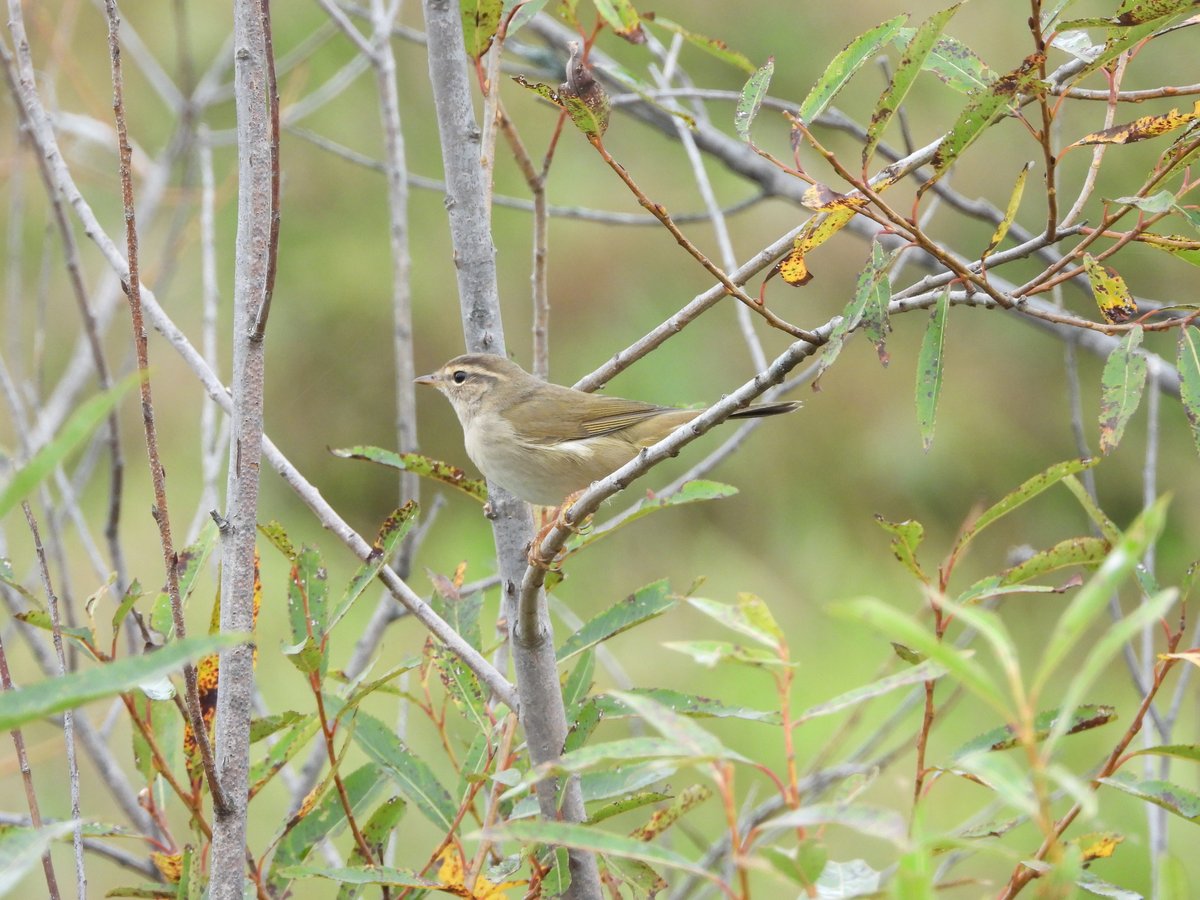
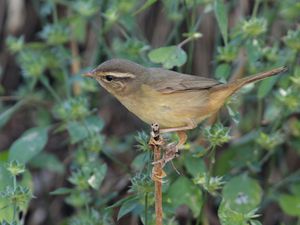
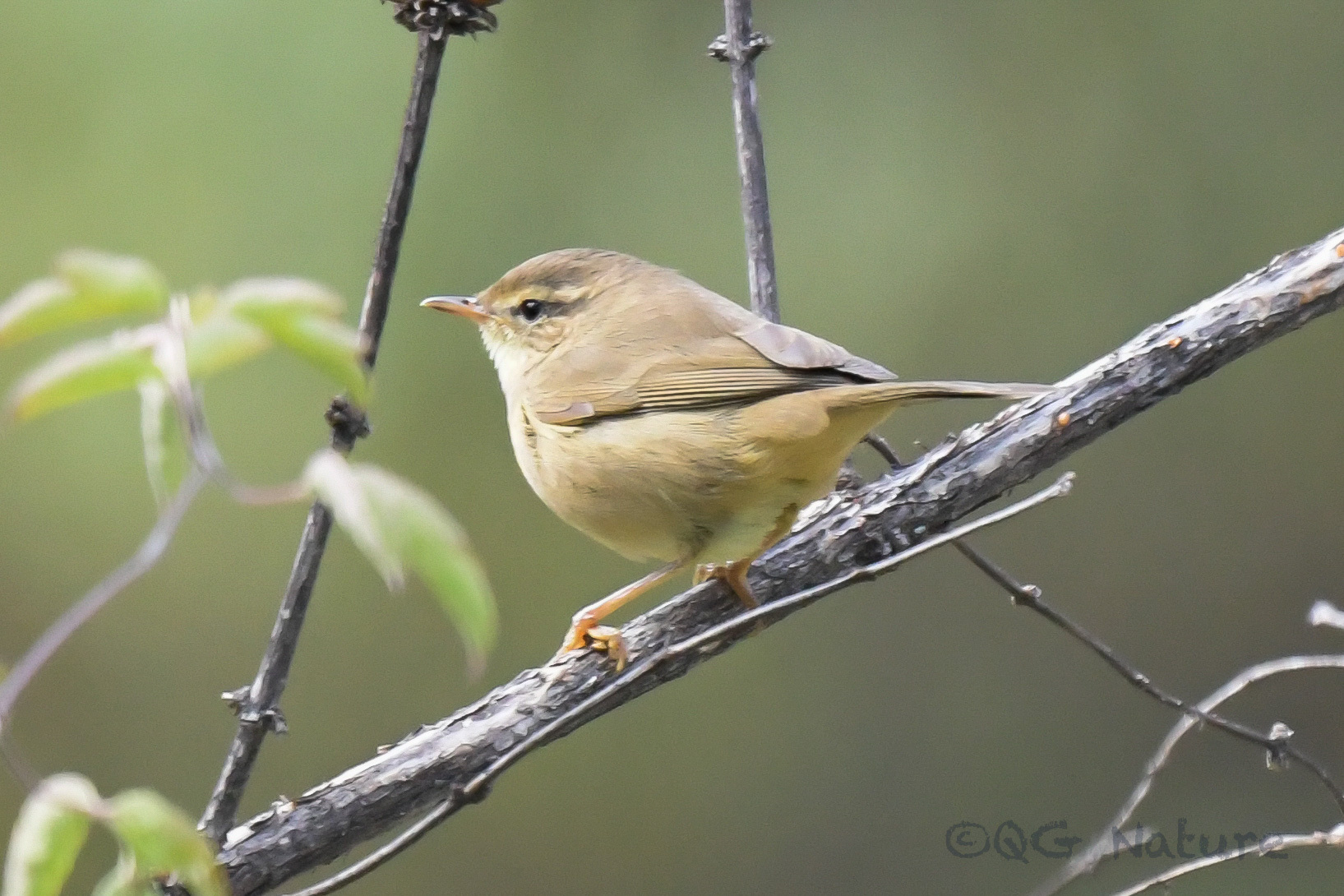
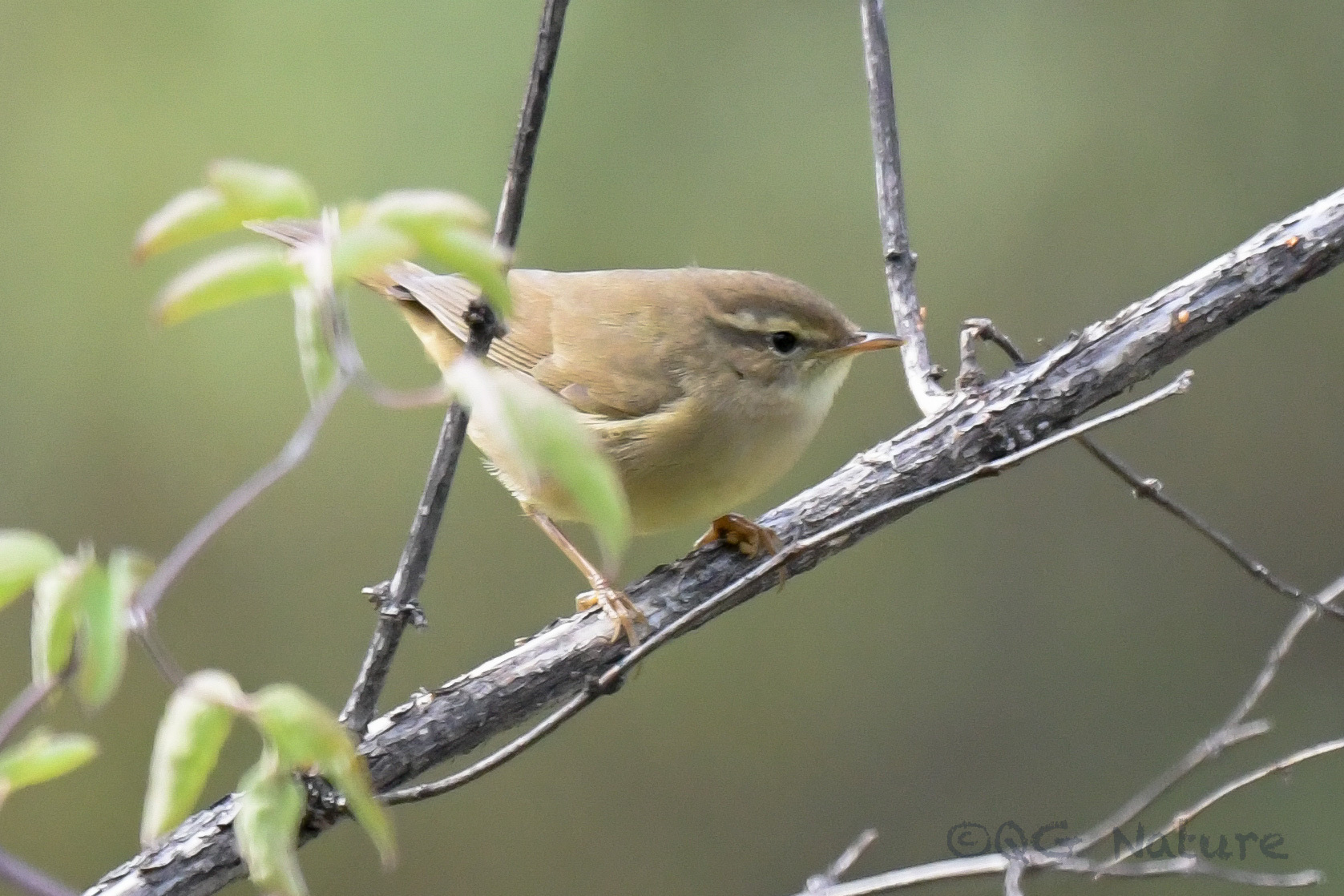
This small warbler reaches approximately the same dimensions as a willow warbler, making it a relatively compact leaf warbler. The upperparts are uniformly brown without streaking, while the underparts display warm buff tones. Its most striking feature is an exceptionally long and conspicuous whitish supercilium that extends well beyond the eye. The pointed bill is notably sturdy and deeper-based compared to similar species, and the pale legs contrast with the darker feet of its lookalikes. The feet appear disproportionately large, reflecting this species' more ground-dwelling habits. Juveniles differ from adults by showing more yellow on the underparts.
Identification
The combination of unstreaked brown upperparts and buff underparts with that distinctive long white supercilium is key to identification. It most closely resembles the dusky warbler but can be distinguished by its thicker-based bill, paler legs, and larger feet. Unlike the willow warbler, it shows stronger supercilium development and warmer underpart coloration. The species' relatively terrestrial behavior, often seen hopping along the ground rather than actively flycatching, also helps separate it from similar Phylloscopus warblers in the field.
Distribution & Habitat
The breeding range spans southern Central and Eastern Siberia, extending eastward through Korea and Manchuria. This long-distance migrant spends the boreal winter in Bangladesh, Cambodia, Laos, Myanmar, and Thailand. During the breeding season it favors open deciduous woodland with understory growth and bushy margins, frequently selecting habitats near watercourses. In its winter quarters it prefers forest fringes, dense thickets, and scrubby areas adjacent to woodland. The species has been recorded as a rare vagrant in Western Europe, with records from Heligoland and Northern Ireland.
Behavior & Ecology
Like its relatives, this warbler is entirely insectivorous, foraging methodically through foliage and on the ground. The breeding season sees the construction of a cup-shaped nest positioned low within a dense bush, where the female lays approximately five eggs. The eggs measure about 17 by 13 millimetres and feature a greyish base color extensively mottled and streaked with brownish-olive markings that nearly obscure the underlying color. The species produces a soft, distinctive 'chick' call note. During migration and winter, individuals typically remain solitary or occur in pairs, though they may join mixed-species feeding flocks.
Conservation
The IUCN Red List currently categorizes this species as Least Concern. Population trends are not well documented due to the remote nature of its breeding range, but no significant declines have been reported. The species' extensive range across Siberia and multiple wintering countries suggests a reasonably stable global population, though localized threats could exist within specific habitat areas.
Culture
The specific epithet 'schwarzi' honors German astronomer Ludwig Schwarz (1822-1894), though no other significant cultural or folklore associations exist for this species. It holds little prominence in cultural traditions beyond its scientific interest to ornithologists and birdwatchers.
Source: Wikipedia · CC BY-SA 3.0
Taxonomy
- Order
- Passeriformes
- Family
- Phylloscopidae
- Genus
- Phylloscopus
- eBird Code
- radwar1
Distribution
breeds northeastern Asia; winters in southeastern Asia
Vocalizations
Data Sources
Species description from Wikipedia, licensed under CC BY-SA 3.0.
Bird images and sounds sourced from GBIF, contributed by citizen scientists worldwide under Creative Commons licenses.
Taxonomy data from AviList 2025.