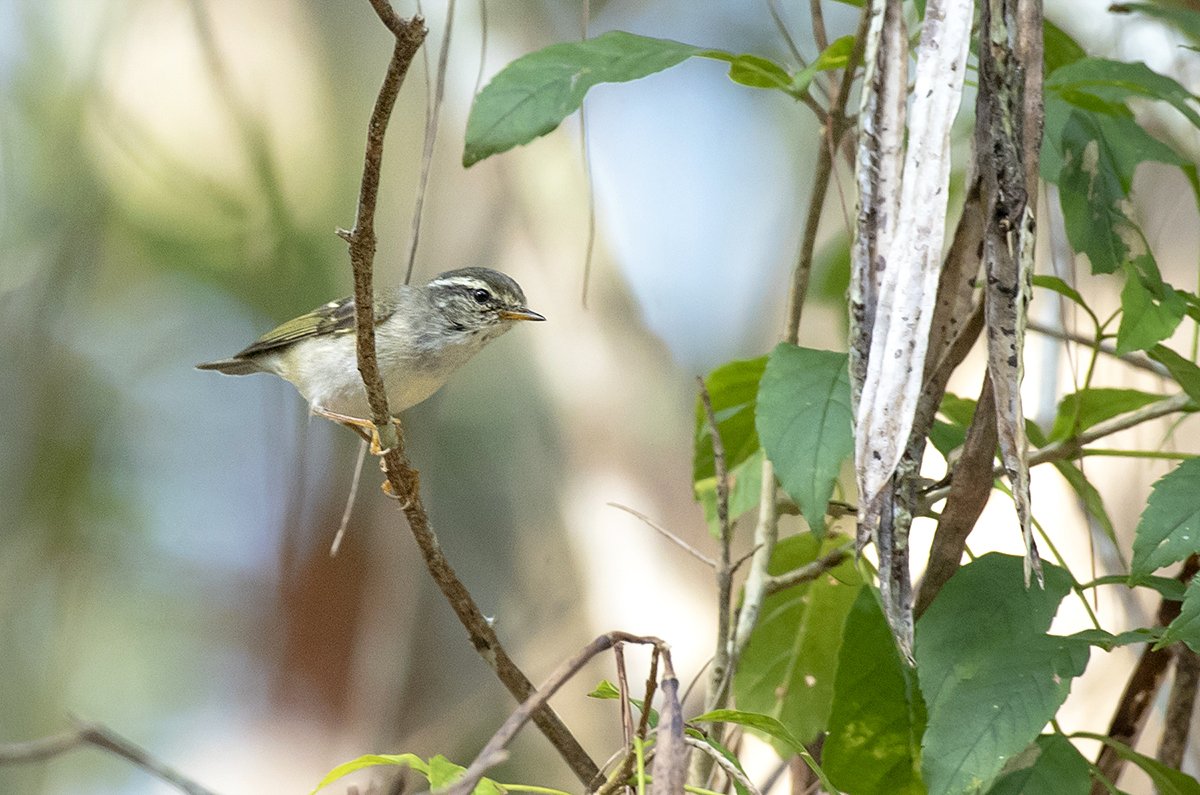
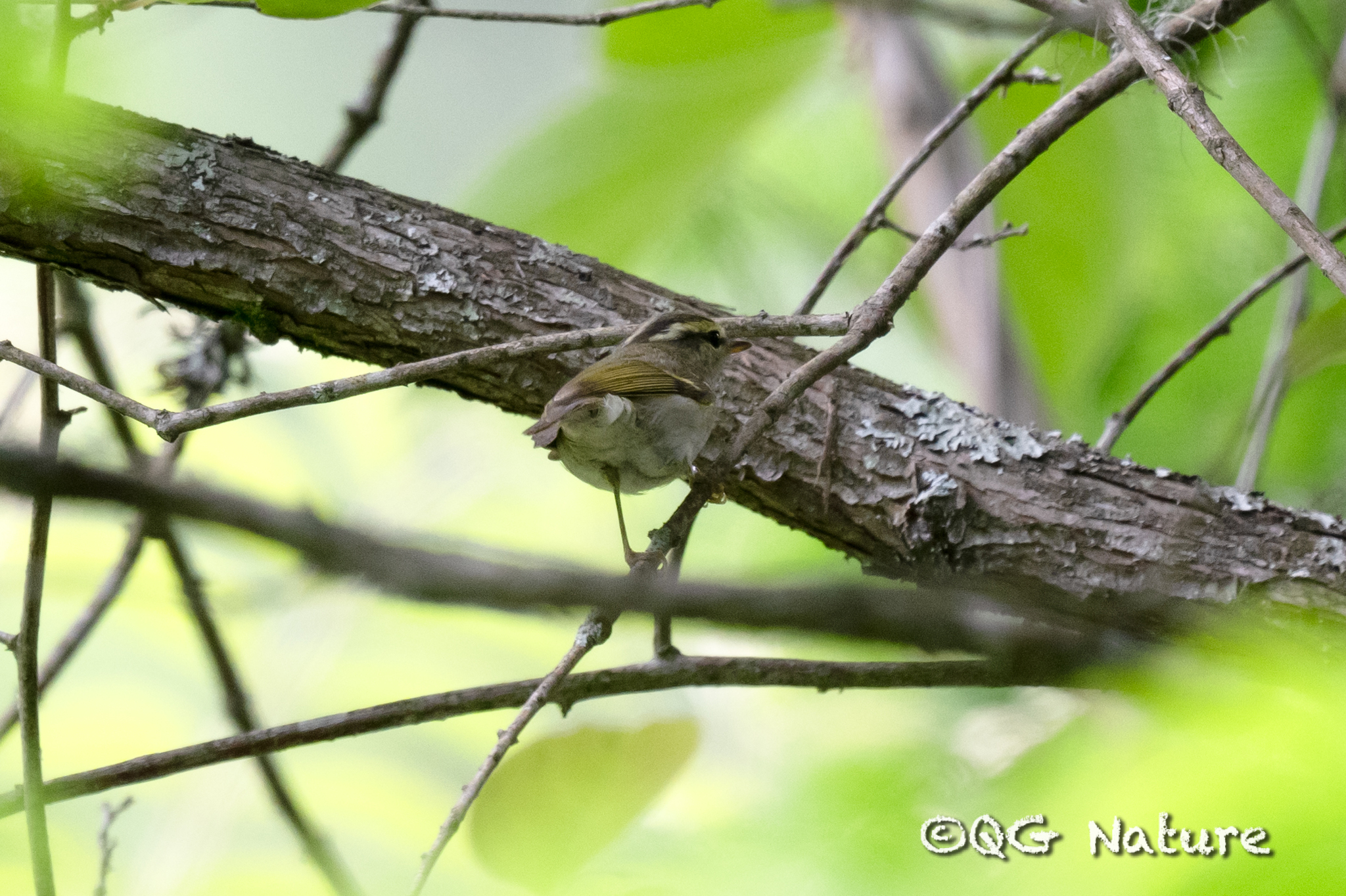
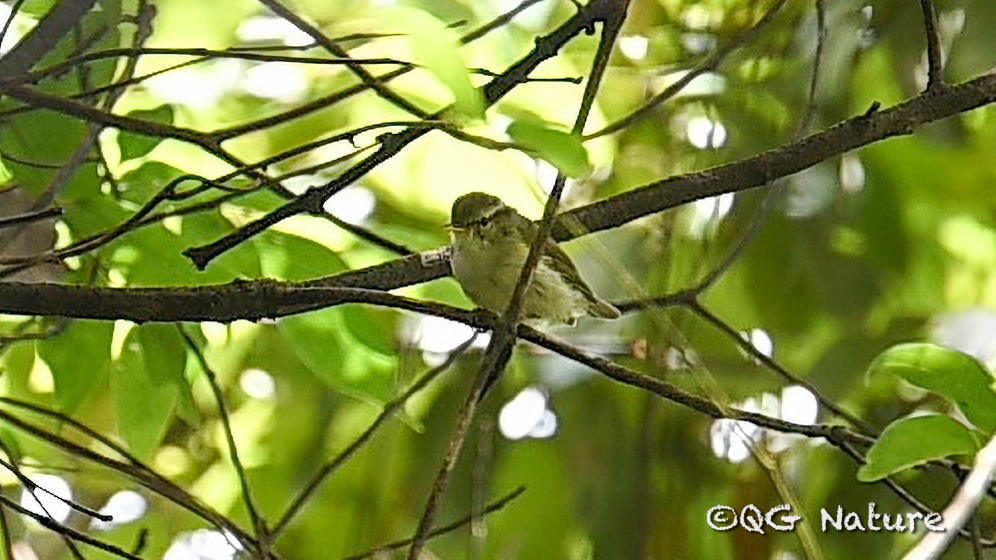
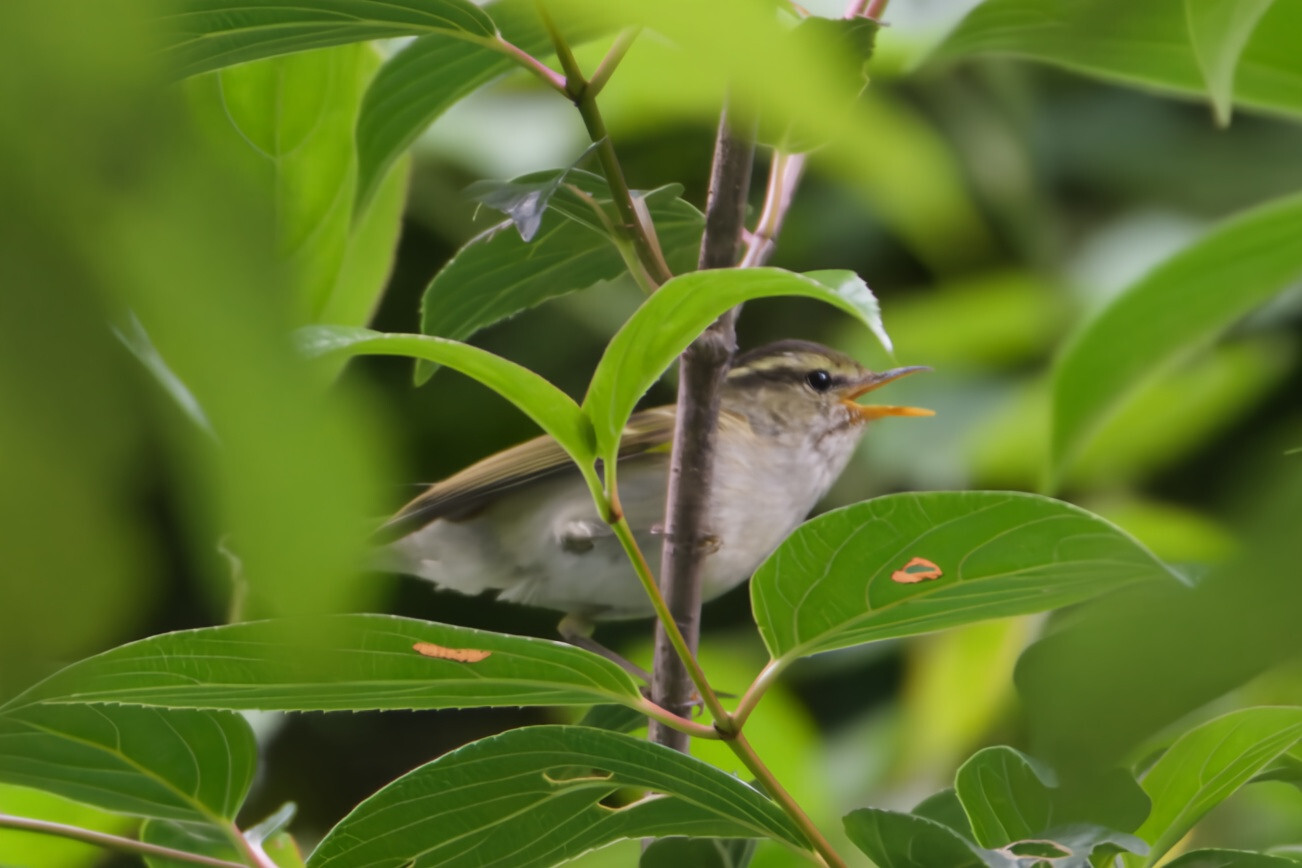
Blyth's Leaf Warbler
Phylloscopus reguloides
西南冠纹柳莺
Introduction
A small passerine bird in the family Phylloscopidae. Formerly classified within the Old World warbler assemblage, this species occupies a range extending through Southeast Asia, southern China, and along the Himalayan foothills to northern Pakistan. Its preferred habitat consists of subtropical and tropical moist montane forests. The species demonstrates complex birdsong patterns characterized by increased variation between distinct song types, contributing to overall song complexity measured by the number of distinct notes.
Distribution & Habitat
The species' range encompasses Southeast Asia, southern China, and extends along the Himalayan region to northern Pakistan. It inhabits subtropical and tropical moist montane forests throughout this geographic area. No specific migration patterns are described in available sources.
Behavior & Ecology
The species is noted for its complex vocalizations, with song complexity measured by the number of distinct notes. The complexity results from increased variation between different song types rather than simple note count. No specific information on diet, breeding behavior, or social structure is available.
Culture
The species was named in honor of Edward Blyth, an English zoologist who contributed significantly to ornithological taxonomy and study.
Source: Wikipedia · CC BY-SA 3.0
Taxonomy
- Order
- Passeriformes
- Family
- Phylloscopidae
- Genus
- Phylloscopus
- eBird Code
- blylew1
Subspecies (4)
-
Phylloscopus reguloides assamensis
northeastern India (Assam) to northern Myanmar and southwestern China (northwestern Yunnan)
-
Phylloscopus reguloides kashmiriensis
breeds northwestern Himalayas from northern Pakistan (Murree Hills) and Kashmir eastward to northern India (Simla eastward to Garhwal); winters in foothills
-
Phylloscopus reguloides reguloides
Himalayas of northern India to Nepal, southern Tibet, and southern China (southwestern Sichuan)
-
Phylloscopus reguloides ticehursti
southern Vietnam (Langbian Plateau)
Data Sources
Species description from Wikipedia, licensed under CC BY-SA 3.0.
Bird images and sounds sourced from GBIF, contributed by citizen scientists worldwide under Creative Commons licenses.
Taxonomy data from AviList 2025.