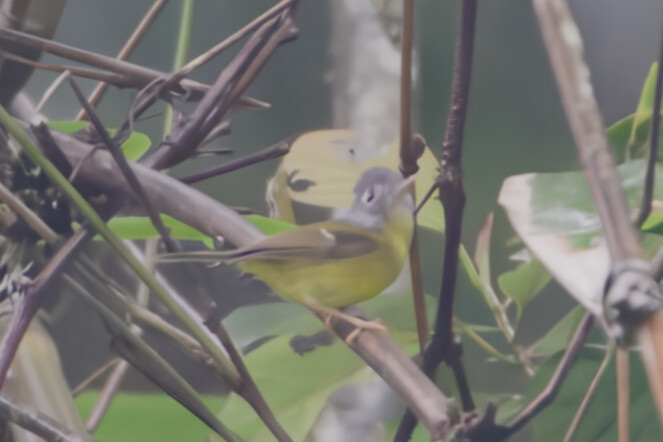
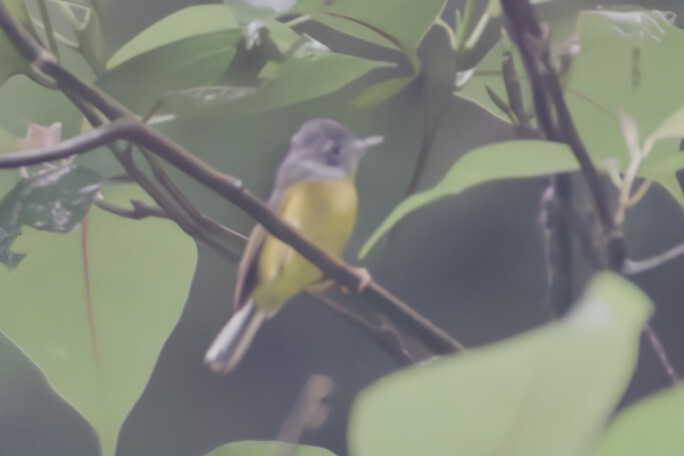

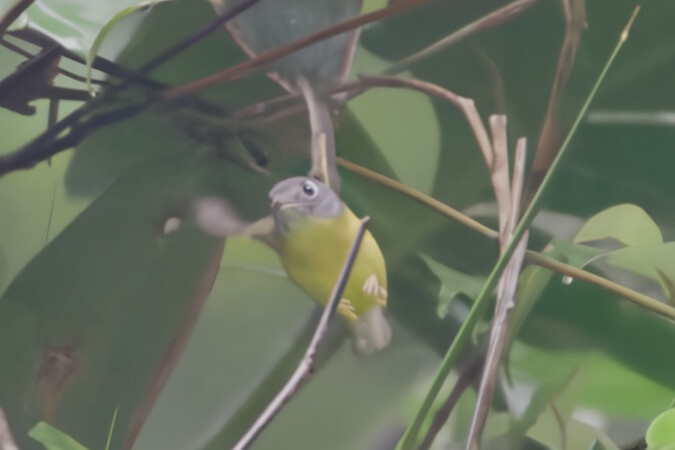
Grey-cheeked Warbler
Phylloscopus poliogenys
灰脸鹟莺
Introduction
A species of leaf warbler in the family Phylloscopidae. Formerly placed in the genus Seicercus, it was moved to Phylloscopus following a 2018 molecular phylogenetic study that found the latter genus had priority. The species occurs across Bangladesh, Bhutan, China, India, Laos, Myanmar, Nepal, Thailand, and Vietnam. Its natural habitats consist of subtropical or tropical moist lowland forests and subtropical or tropical moist montane forests. The population size is unknown, but due to its extensive range the species does not approach Vulnerable thresholds under range size criteria, and with a stable population trend it also does not meet Vulnerable criteria under population size guidelines.
Description
A small, active warbler typical of the Phylloscopus genus. The species gets its name from the greyish coloration on the face and cheeks. Otherwise displays the typical greenish-olive upperparts and yellowish underparts common to many leaf warblers, though specific plumage details are not provided in available sources.
Identification
Identification relies on the combination of grey-cheeked appearance, overall small size, and active foraging behavior typical of leaf warblers. The species can be distinguished from similar Phylloscopus warblers by the distinctive grey face and cheek coloration, which contrasts with the greener upperparts.
Distribution & Habitat
Occurs across the Himalayan region and Southeast Asia, including Bangladesh, Bhutan, Nepal, India, China, Myanmar, Laos, Thailand, and Vietnam. Inhabits subtropical and tropical moist forests, both in lowland areas and montane zones. Specific elevational range and migratory movements are not documented in available sources.
Behavior & Ecology
Forages actively through foliage in typical leaf warbler fashion, gleaning insects from leaves and small branches. Breeding behavior, social structure, and vocalizations are not documented in available sources.
Conservation
Assessed as not approaching Vulnerable thresholds under IUCN criteria. The species has an extensive geographic range across multiple countries, and while the total population size is unknown, the population trend appears stable. No specific threats are identified in available sources.
Culture
No cultural significance or folklore information is documented in available sources.
Source: Wikipedia · CC BY-SA 3.0
Taxonomy
- Order
- Passeriformes
- Family
- Phylloscopidae
- Genus
- Phylloscopus
- eBird Code
- gycwar2
Distribution
montane forest of northern India to southwestern China, Myanmar, and Indochina
Data Sources
Species description from Wikipedia, licensed under CC BY-SA 3.0.
Bird images and sounds sourced from GBIF, contributed by citizen scientists worldwide under Creative Commons licenses.
Taxonomy data from AviList 2025.