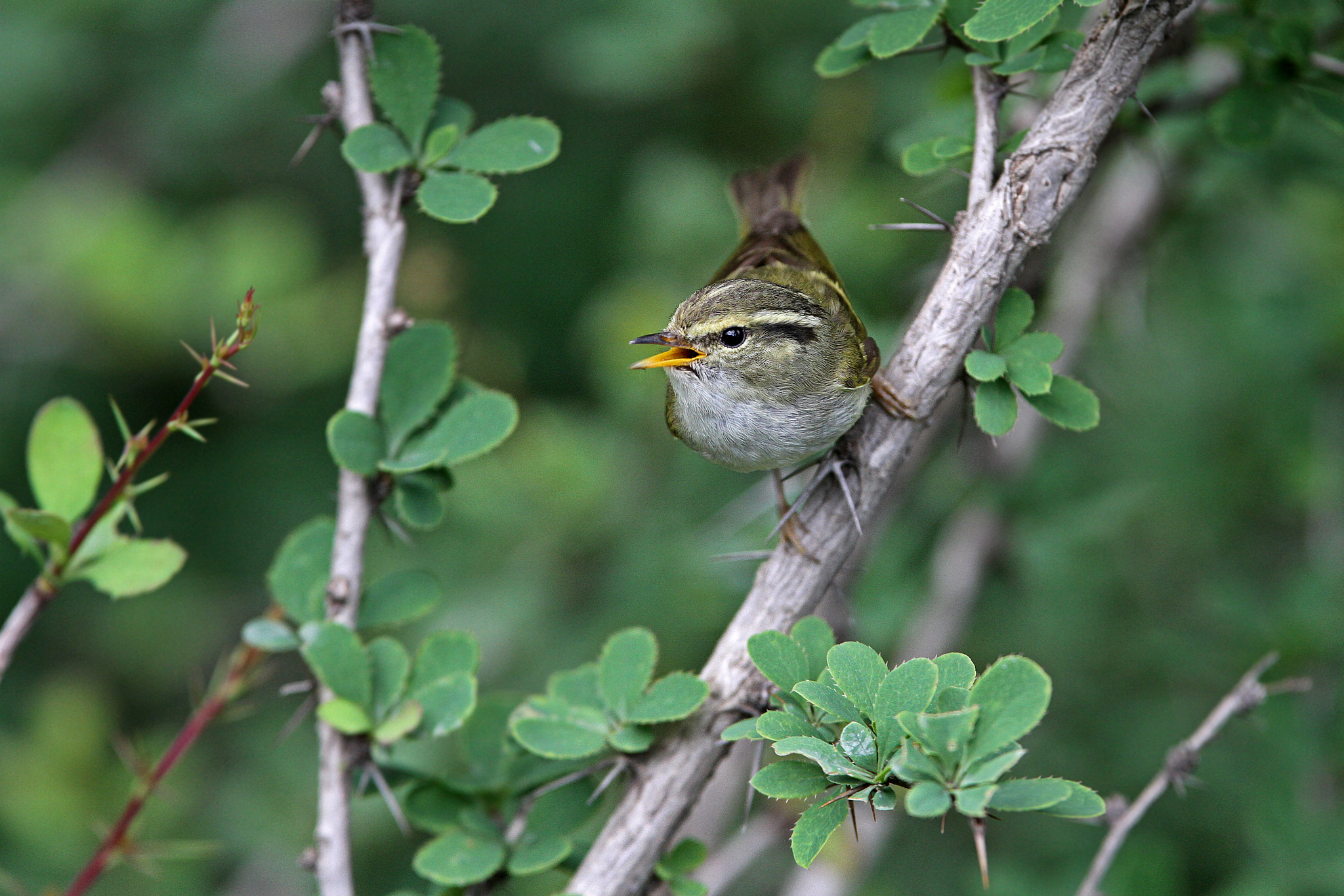
Gansu Leaf Warbler
Phylloscopus kansuensis
甘肃柳莺
Introduction
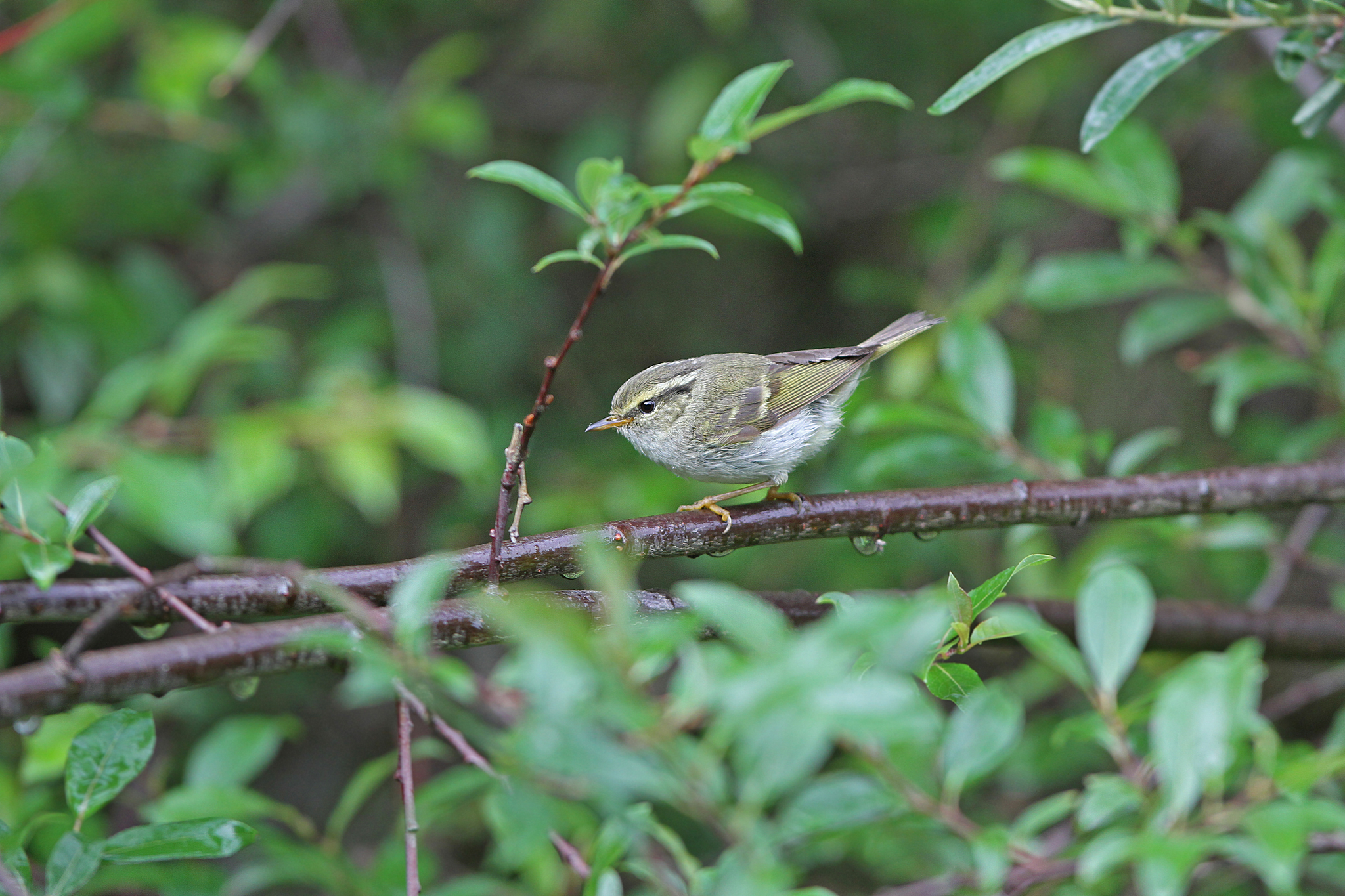
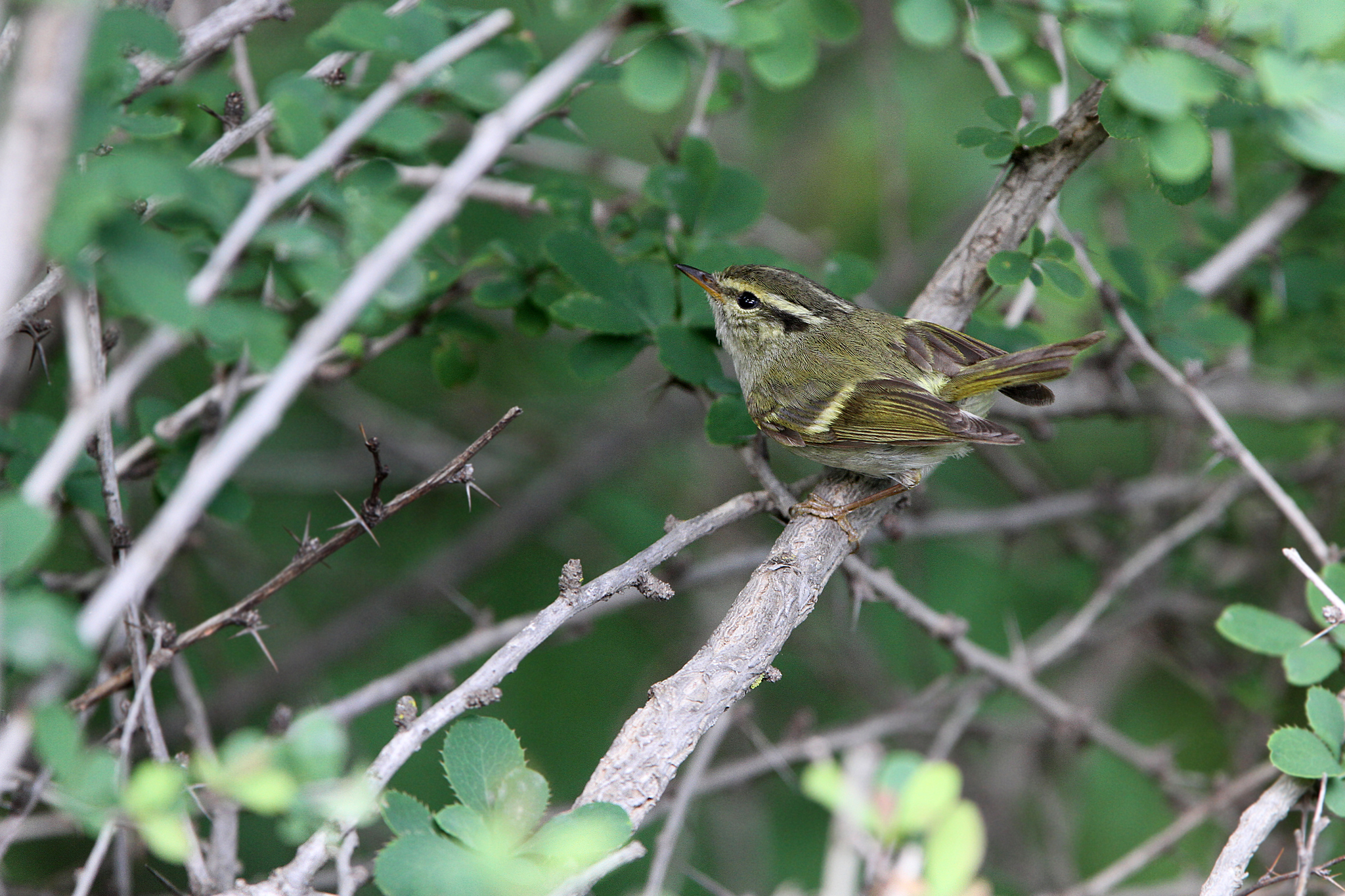
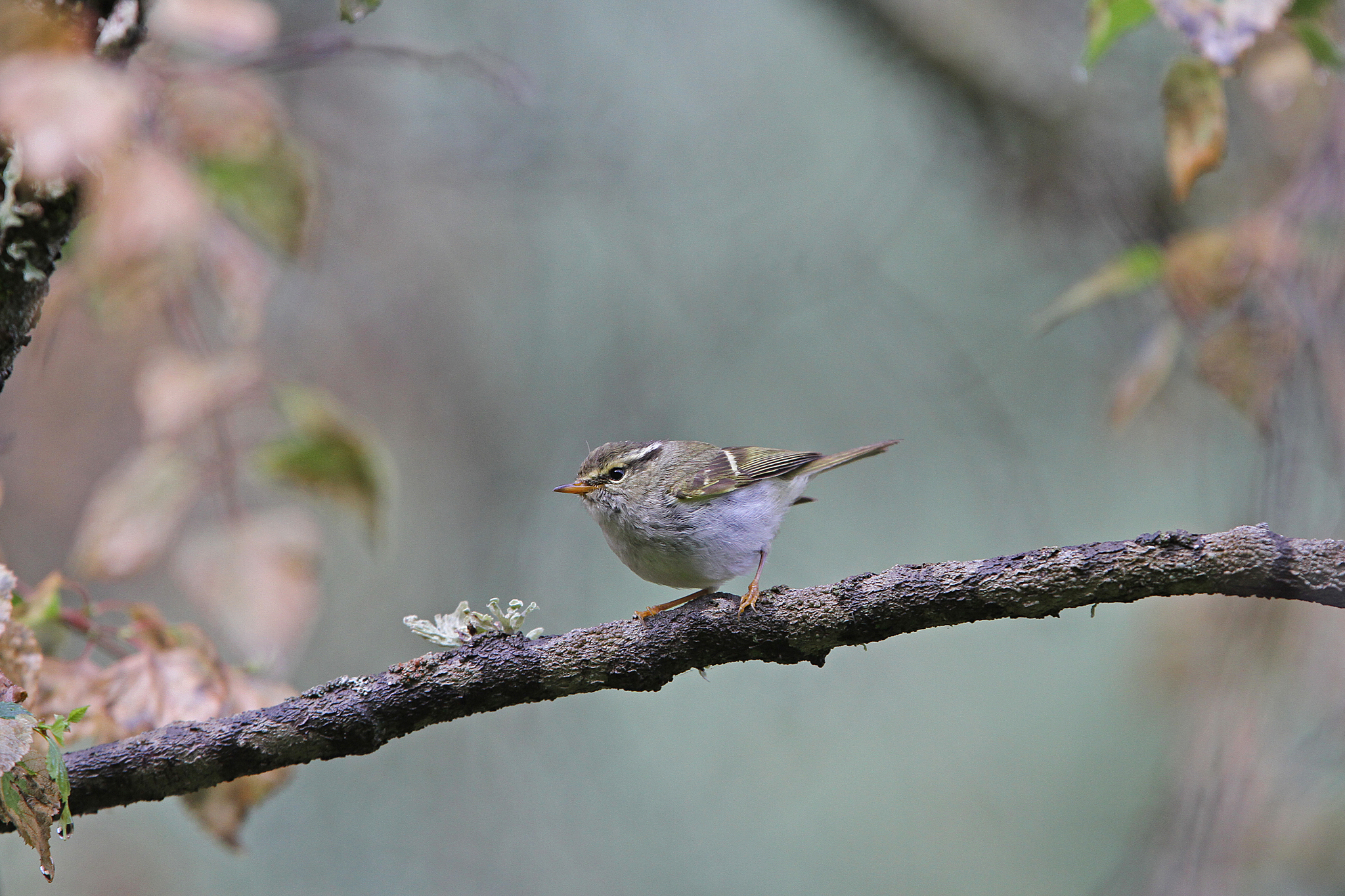
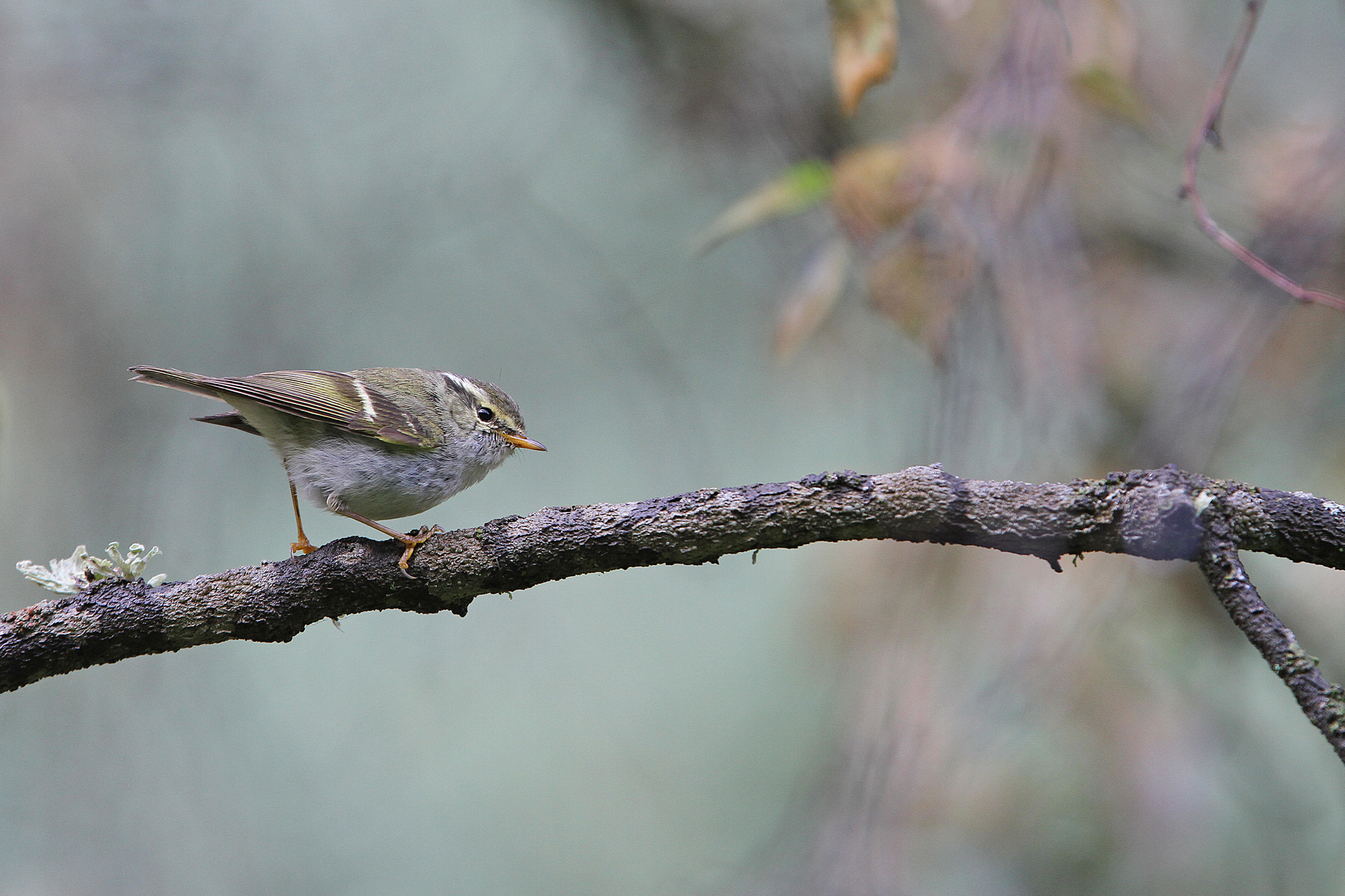
A small passerine bird in the leaf warbler family Phylloscopidae, formerly classified as a subspecies of Pallas's warbler (P. proregulus) but now recognized as a distinct species based on differences in vocalizations and cytochrome-b gene sequences. Endemic to China, breeding exclusively in Gansu and Qinghai provinces in the north, with wintering grounds likely in Yunnan province in the south. Inhabits deciduous forest with spruce and juniper up to 3,200 meters elevation. Classified as Least Concern by BirdLife International as it is not currently known to be threatened with extinction.
Description
A small warbler measuring 10 cm in length, slightly larger than Pallas's warbler. Upperparts are greenish, underparts pale, with a distinctive pale rump. The head features a long white supercilium and a pale central crown stripe. Wing plumage includes one conspicuous white wingbar, a more subtle second bar, and whitish edges to the tertials.
Identification
Very similar in appearance to Pallas's warbler but slightly larger in size. The primary distinguishing feature is voice, as the song differs markedly from that of Pallas's warbler. Wing pattern shows one prominent wingbar with a secondary faint bar, combined with whitish tertial edges.
Distribution & Habitat
Breeds only in Gansu and Qinghai provinces in northern China at elevations up to 3,200 meters. Wintering distribution is uncertain but believed to be in Yunnan province in southern China. Inhabits deciduous forest habitat with scattered spruce and juniper trees.
Behavior & Ecology
Song structure differs significantly from Pallas's warbler, consisting of a thin, high-pitched introductory note followed by a series of accelerating notes and concluding with a trill. No additional behavioral information is provided in the source.
Conservation
Assessed as Least Concern by BirdLife International. Currently not considered threatened with extinction, though population trends and exact distribution remain incompletely documented.
Source: Wikipedia · CC BY-SA 3.0
Taxonomy
- Order
- Passeriformes
- Family
- Phylloscopidae
- Genus
- Phylloscopus
- eBird Code
- ganlew1
Distribution
mountains of western China (Qinghai and Gansu)
Data Sources
Species description from Wikipedia, licensed under CC BY-SA 3.0.
Bird images and sounds sourced from GBIF, contributed by citizen scientists worldwide under Creative Commons licenses.
Taxonomy data from AviList 2025.