
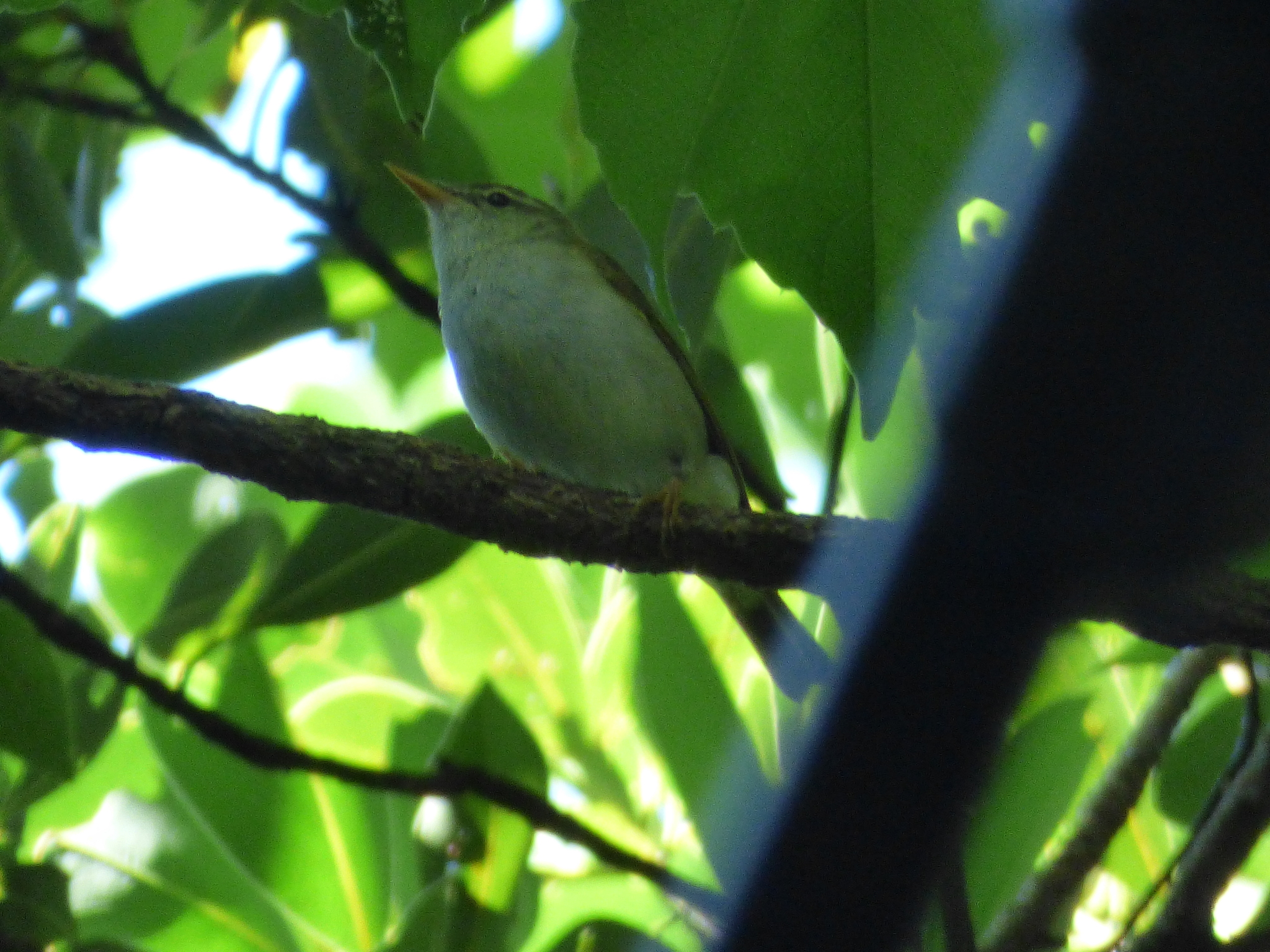
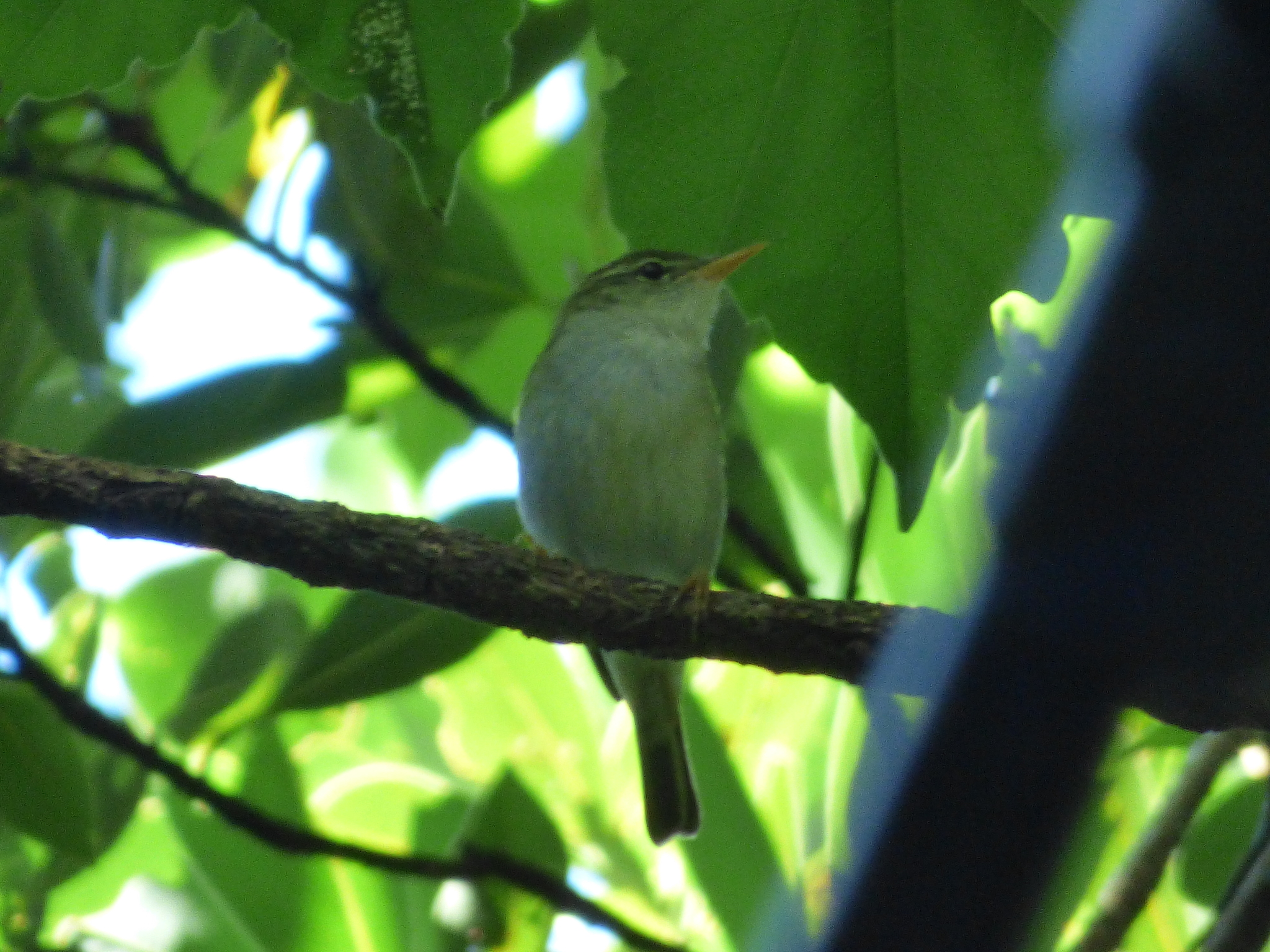
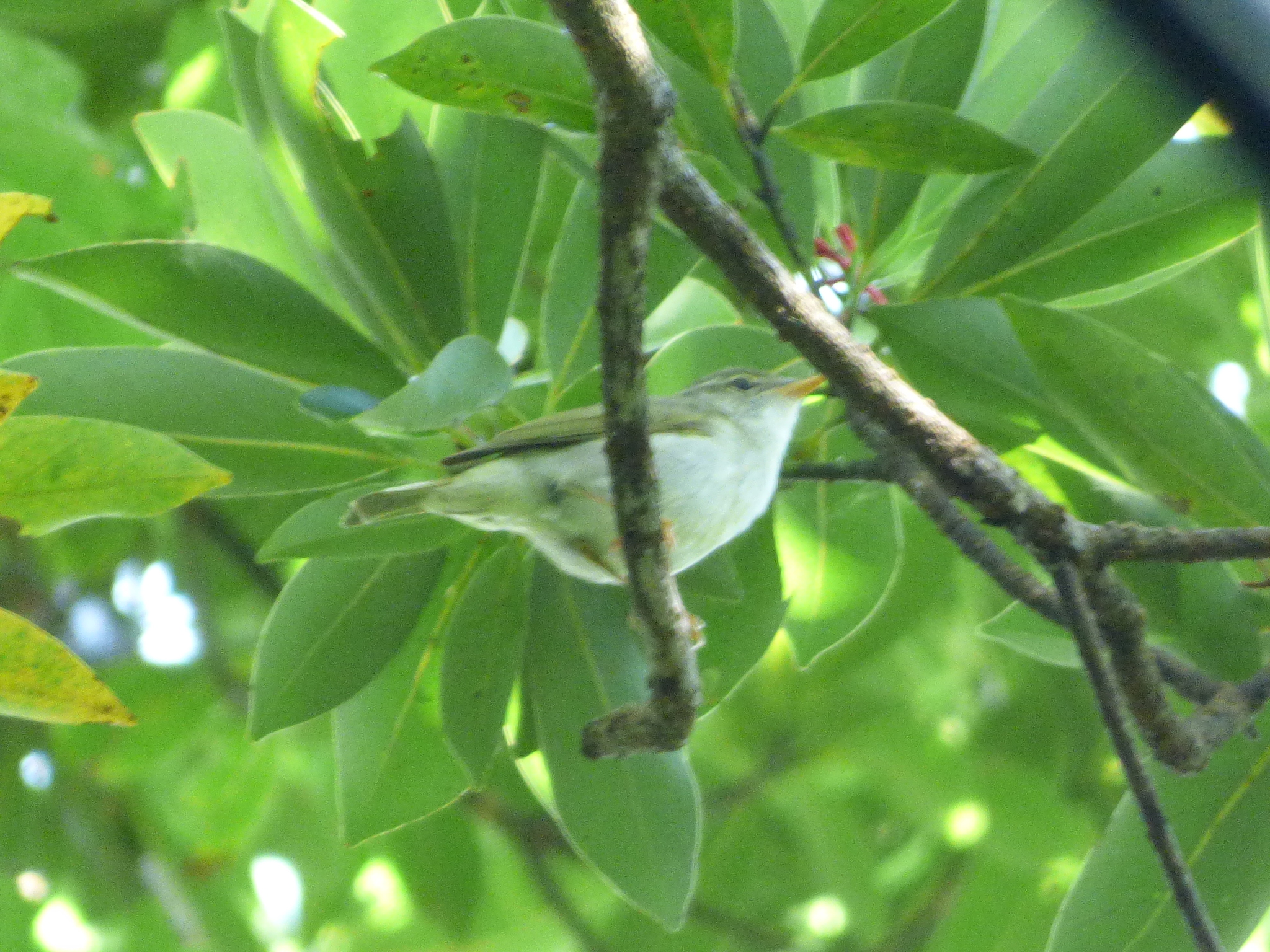
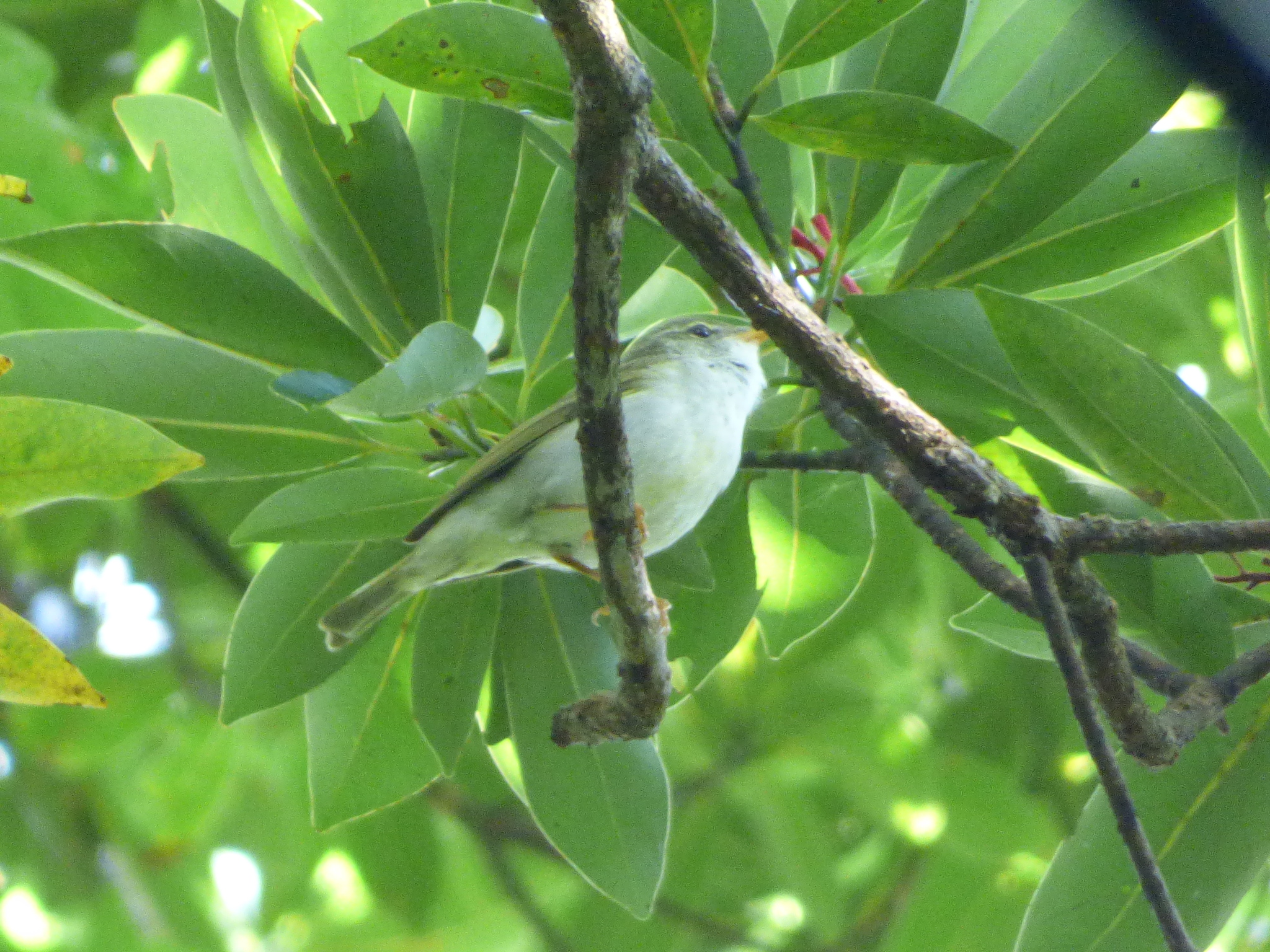

Ijima's Leaf Warbler
Phylloscopus ijimae
日本冕柳莺
Introduction
Old World warbler (Phylloscopidae), monotypic species. Endemic to Japan with records from Taiwan and the Philippines. Inhabits lowland deciduous and mixed subtropical evergreen forest, laurel forest, forest edge, and stands of alder and bamboo. Distinguished by its distinctive song that differs from the eastern crowned warbler and by its tree-nesting behavior (versus ground-nesting in eastern crowned warbler). Designated a Natural Monument under Japan's 1950 Law for the Protection of Cultural Properties. Considered vulnerable due to an estimated population under 10,000 individuals, threatened by habitat loss, fragmentation, pesticides, and the 2000 eruption of Miyake-jima.
Description
Small passerine measuring 11.5 cm (4.5 in) in length and weighing approximately 10 g (0.35 oz). Crown and nape are greenish-grey; upperparts bright olive green; flanks greyish; underparts white. Features a long white or buffish-white supercilium, blackish eyestripe, and dark brown iris. The beak is relatively long and broad-based, with dark brown upper mandible and yellowish lower mandible. Legs and feet are pinkish-brown.
Identification
Similar in appearance to the eastern crowned warbler (Phylloscopus coronatus). Distinguished by the absence of a central stripe on the crown and paler yellow undertail coverts. Song and calls differ distinctly: vocalizations include 'swss, swss, swss', 'swee-swee-swee-swee-swee', 'shwee-it, shweet, shweet, shweet', a soft 'se-chui, se-chui, se-chui', and 'phi-phi-phi', all differing from the eastern crowned warbler's calls.
Distribution & Habitat
Breeds in summer on the Izu Islands (from Izu Ōshima to Aogashima) and Nakanoshima in the Tokara Islands. Spring and autumn records exist from Honshū (Shizuoka, Aichi, Wakayama prefectures), Mizunoko-jima, Tanegashima, Yakushima, Okinawa Island, and the Yaeyama Islands. Wintering grounds are poorly understood; small numbers may overwinter in the Izu Islands (Miyake-jima and Hachijō-jima) and Ryūkyū Islands. Also recorded in Taiwan and Luzon, Philippines.
Behavior & Ecology
Insects form the principal diet (Japanese name means 'Ijima's insect-eater'), also consumes seeds. Forages singly or in small groups on lower branches, in the forest canopy, on the ground, and catches prey in mid-air. Sometimes associates with mixed-species flocks, particularly long-tailed tits. Breeding season spans April to June or July. Nests built 0.5–2 m from the ground in broad-leaved trees and bamboo (distinct from eastern crowned warbler's ground-nesting). Clutch size ranges from two to four eggs, most commonly three or four.
Conservation
IUCN assessment not explicitly stated in article, but listed as Vulnerable on multiple regional Red Lists. Japan's Ministry of the Environment Red List (2020) classifies it as Vulnerable, as did the 1998 and 2007 editions. Taiwan Red List of Birds (2016): Vulnerable (estimated 3% of global population). Philippines National List of Threatened Fauna: Vulnerable as a migrant on Luzon. China Red List of Vertebrates (2016): Near Threatened. Threats include habitat loss and fragmentation, pesticide use reducing prey availability, and the 2000 eruption of Miyake-jima. Population estimated at fewer than 10,000 individuals and declining.
Culture
Designated a Natural Monument under Japan's 1950 Law for the Protection of Cultural Properties. The specific name ijimae honors Ijima Isao for his contributions to Japanese ornithology. The Japanese name (飯島虫喰) translates to 'Ijima's insect-eater'.
Source: Wikipedia · CC BY-SA 3.0
Taxonomy
- Order
- Passeriformes
- Family
- Phylloscopidae
- Genus
- Phylloscopus
- eBird Code
- ijlwar1
Distribution
breeds Izu Islands (southern Japan); winters to northern Philippines
Data Sources
Species description from Wikipedia, licensed under CC BY-SA 3.0.
Bird images and sounds sourced from GBIF, contributed by citizen scientists worldwide under Creative Commons licenses.
Taxonomy data from AviList 2025.