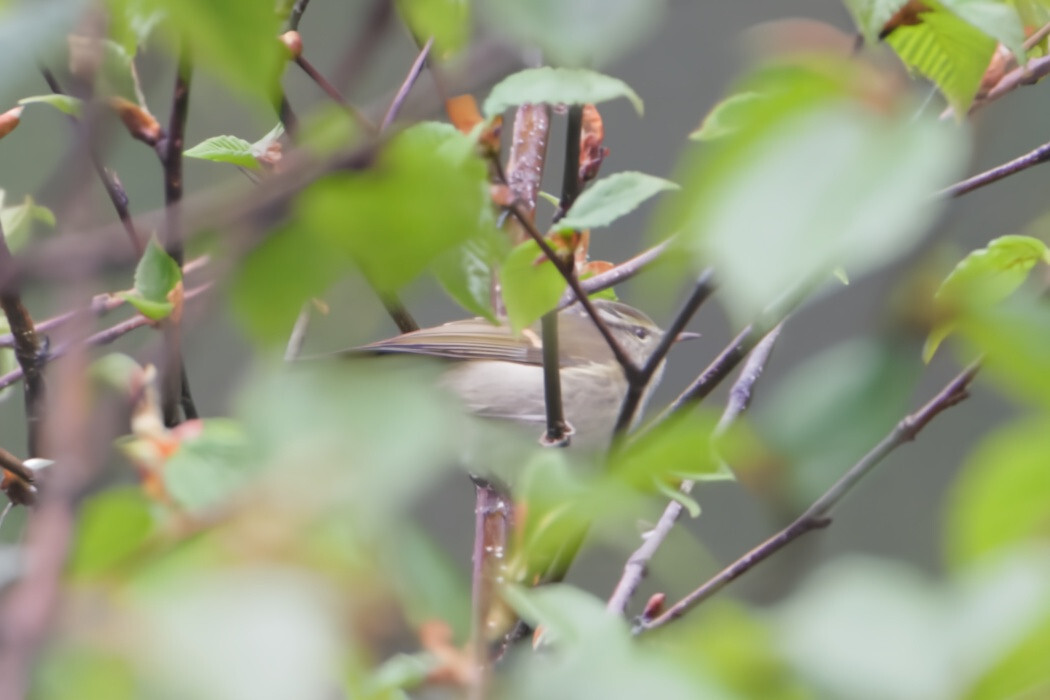
Hume's Leaf Warbler
Phylloscopus humei
淡眉柳莺
Introduction
This leaf warbler is one of the smallest members of the Old World warbler family. It inhabits high-altitude mountain woodlands across inner Asia. During breeding season, it occupies coniferous and mixed forests at elevations up to 3,500 meters. The species migrates across the Himalayas to wintering grounds in India. It has a distinctive buzzing, high-pitched song. The species was named after Allan Octavian Hume, a British civil servant who contributed to Indian ornithology.
Description
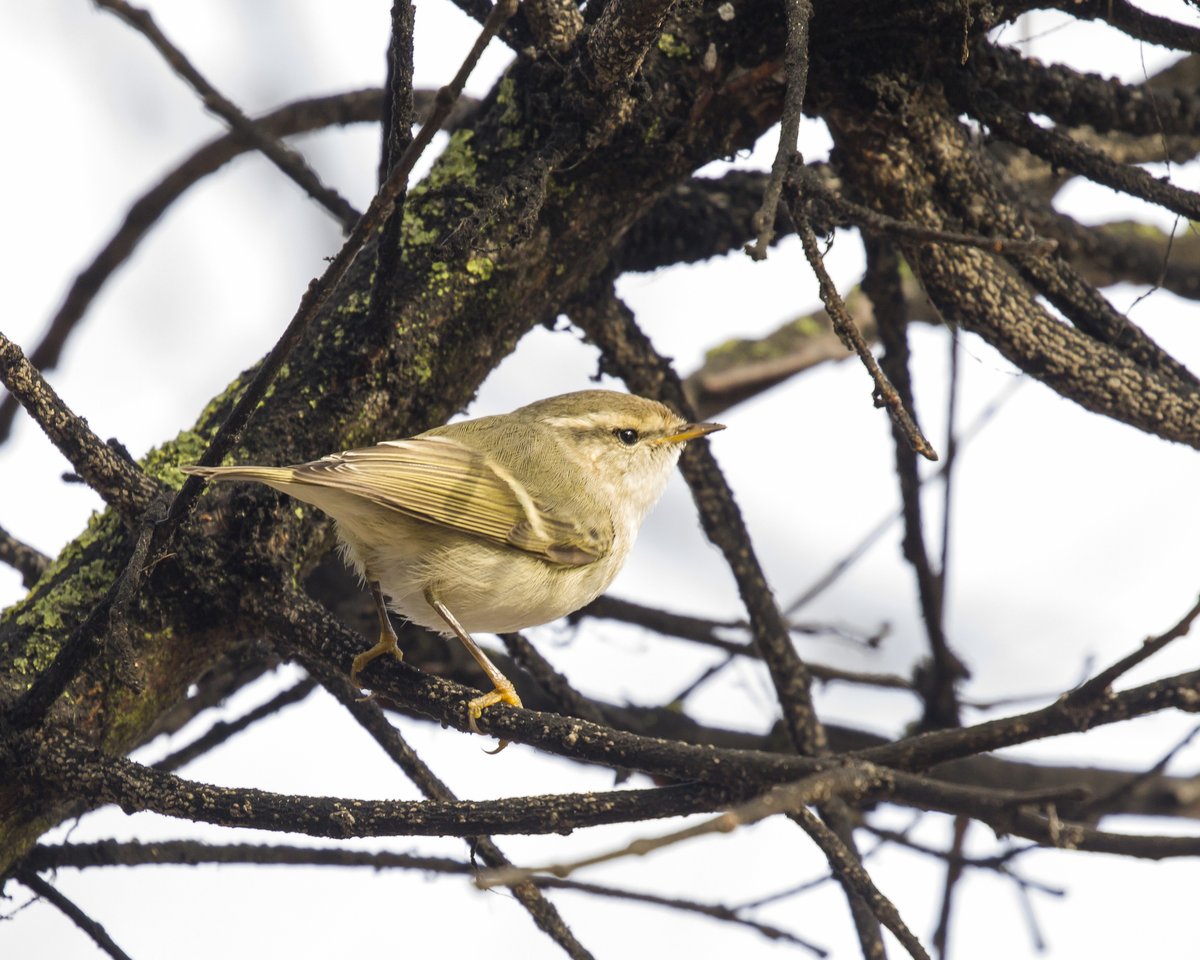
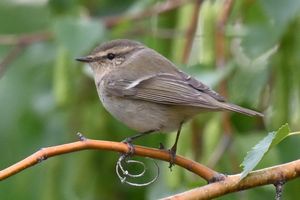
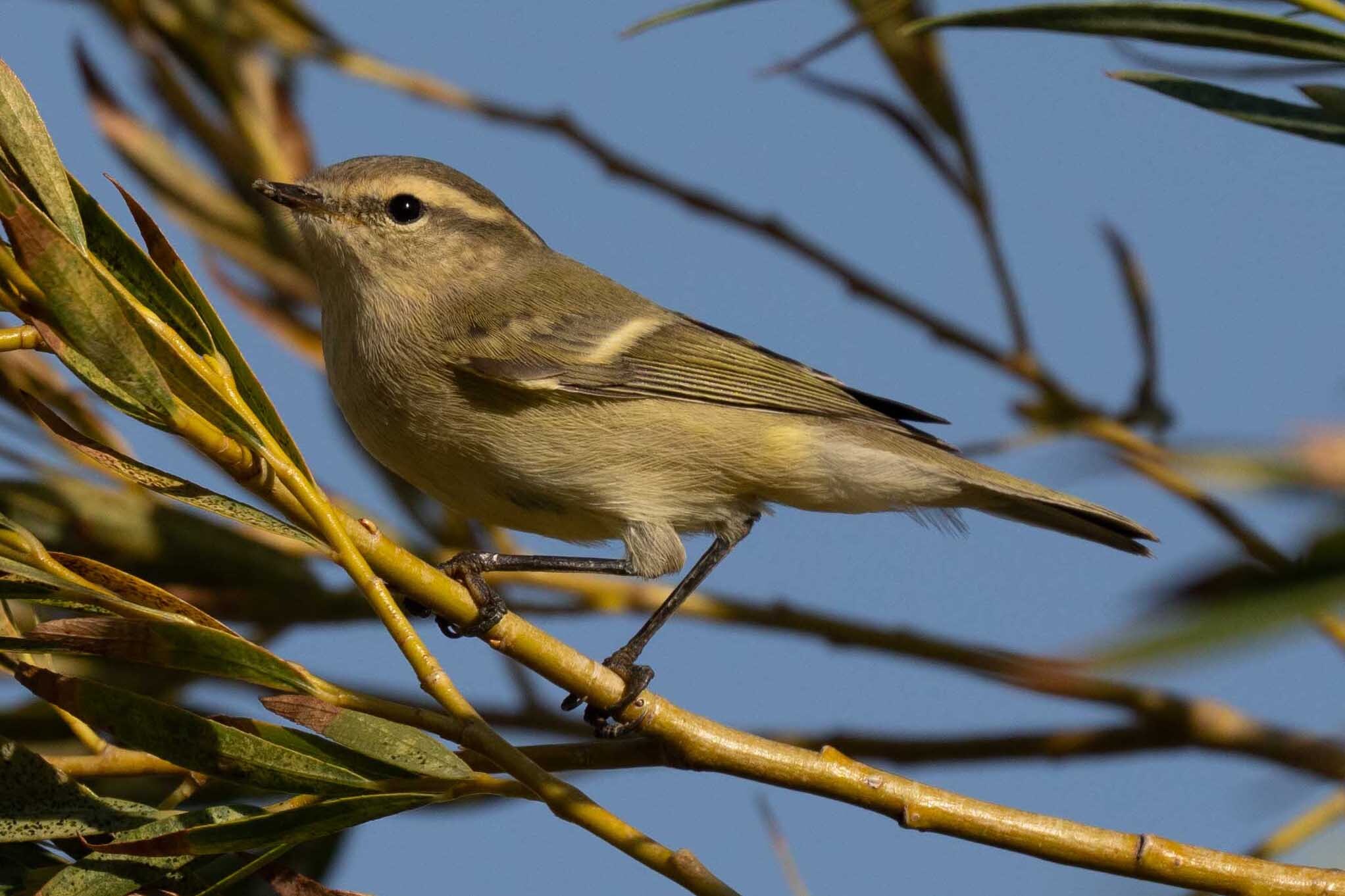
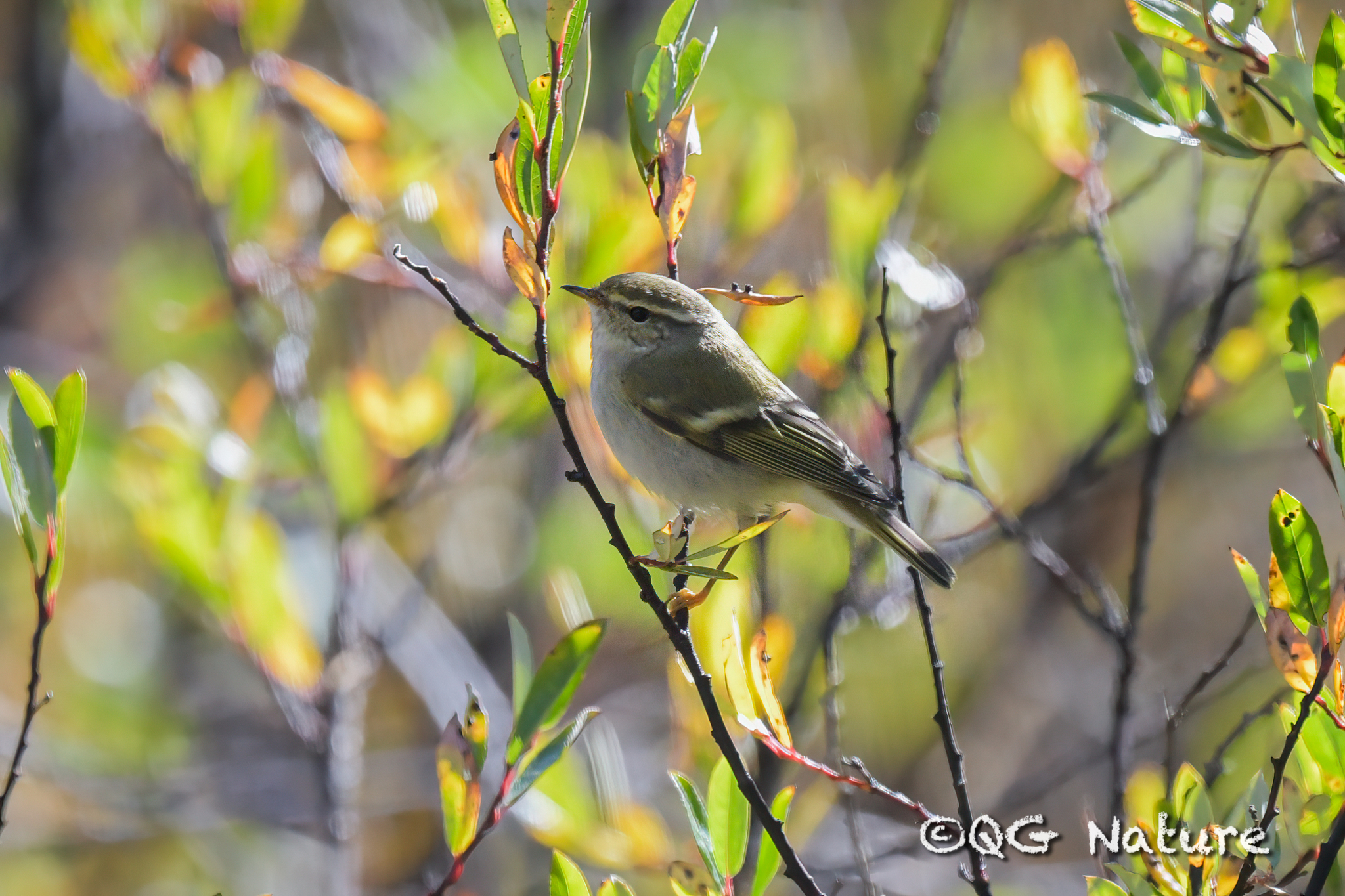
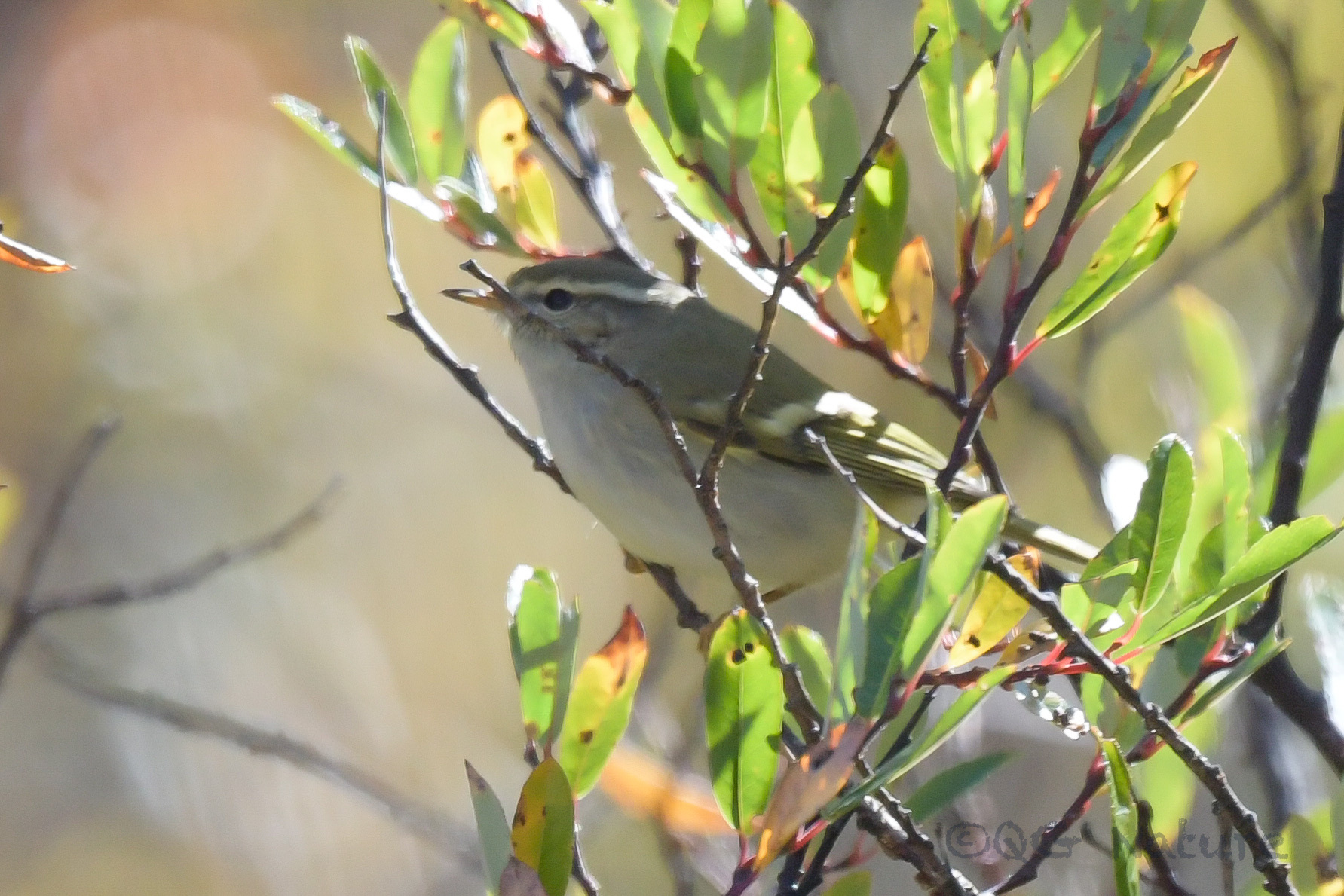
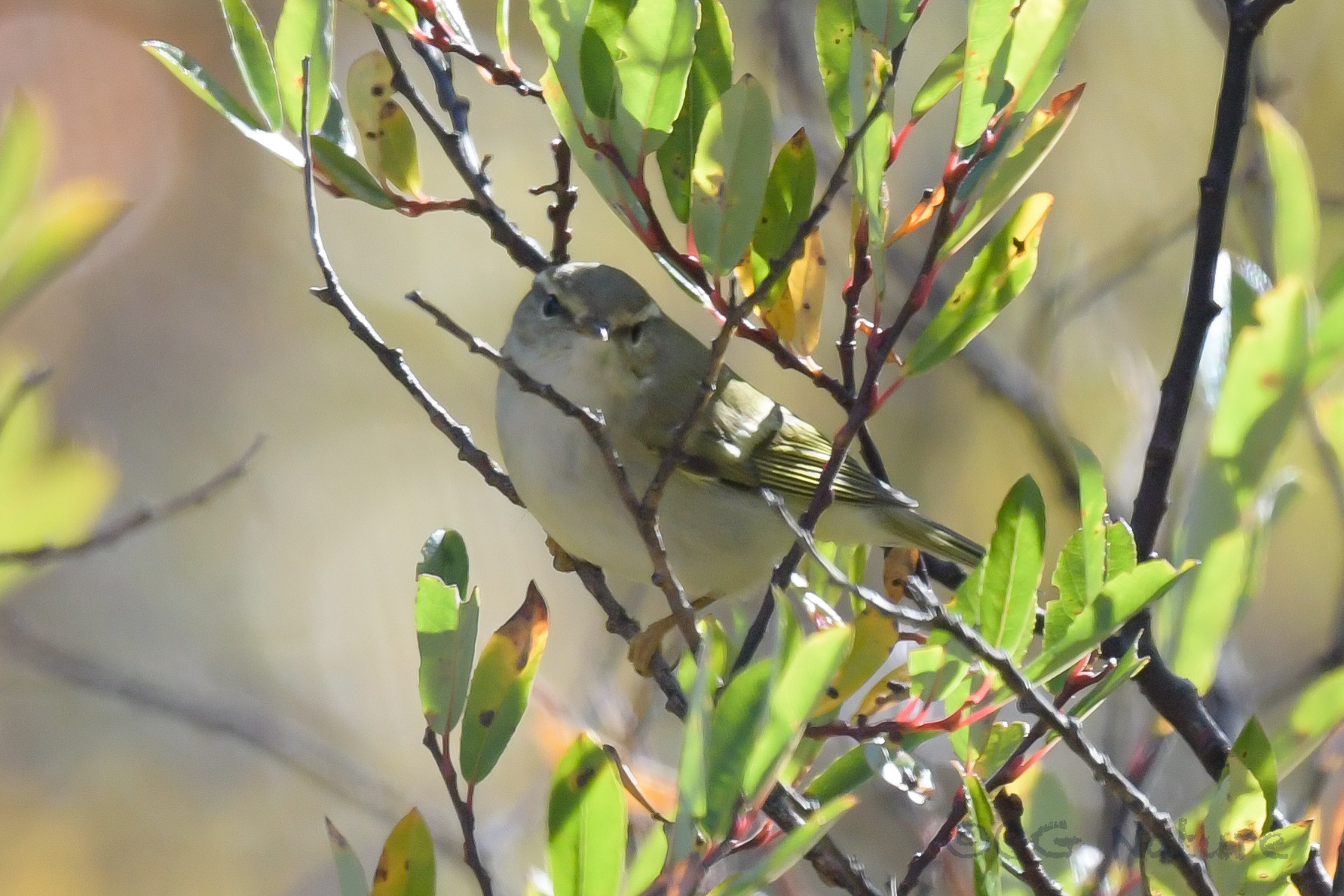
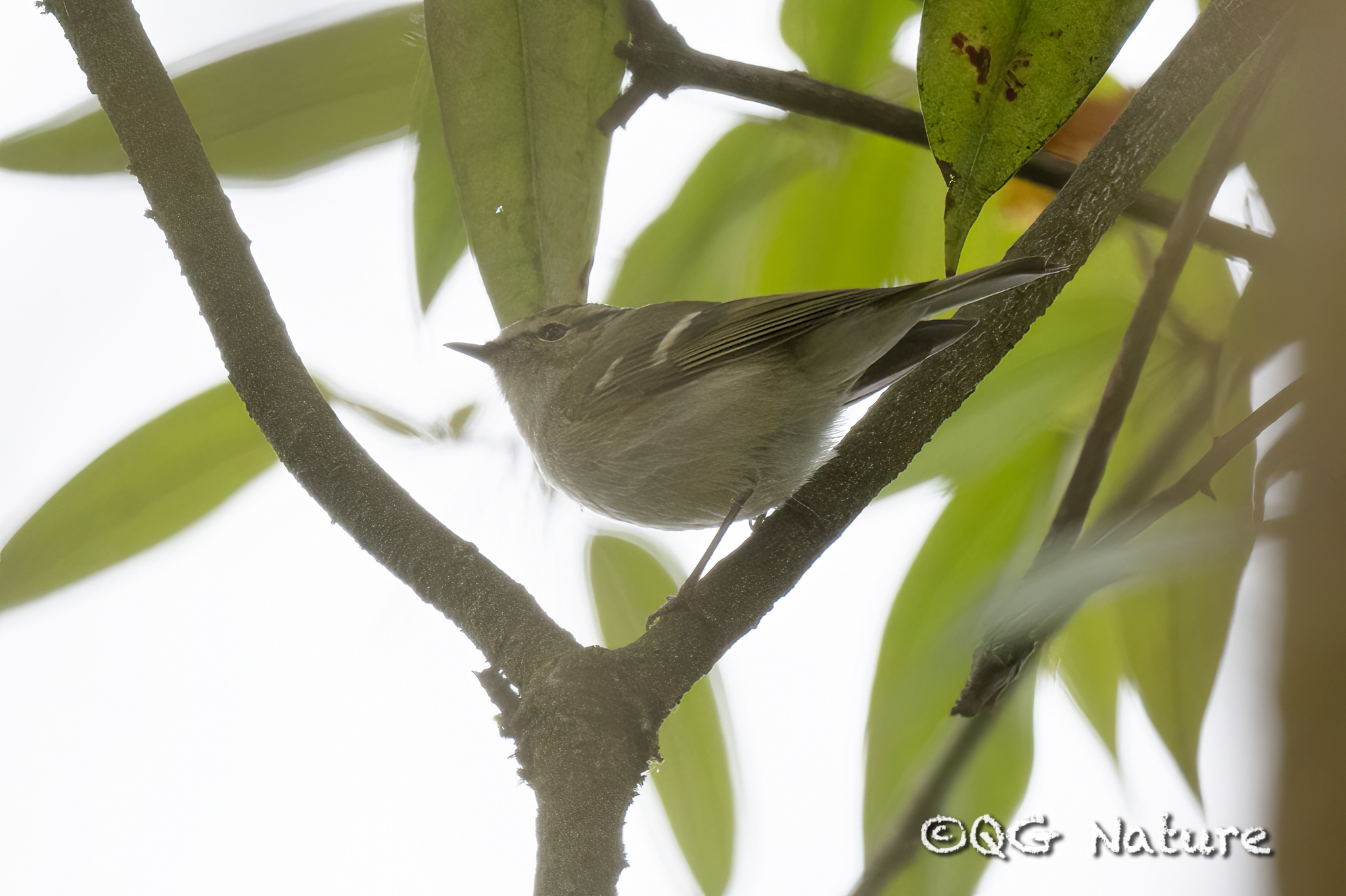
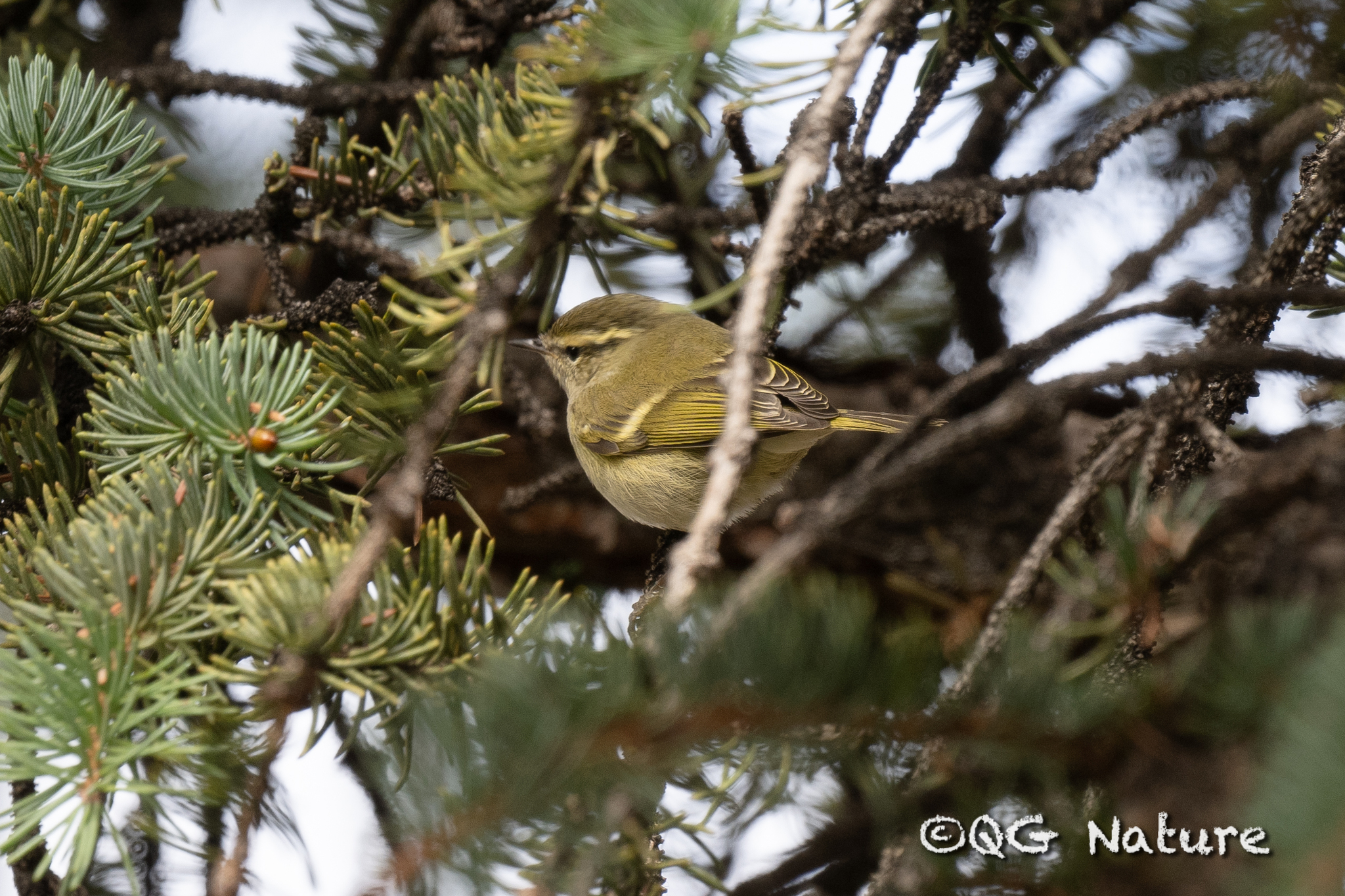
Among the smallest of Old World warblers, this species measures only a few centimeters in length. Its plumage features greenish upperparts contrasting with off-white underparts, while the face displays a prominent long supercilium and crown stripe. The wing feathers show yellow margins, creating subtle color on the tertials. Overall coloration appears duller than its closest relative, the yellow-browed warbler, with which it is easily confused. The single prominent light wing bar distinguishes it, showing only a faint trace of a second bar. Dark coloration on the lower mandible and legs provides additional identification clues.
Identification
The primary identification challenge involves separating this species from the similar yellow-browed warbler. The key distinguishing feature is the single prominent wing bar versus the two distinct bars of the yellow-browed warbler. Call is the most reliable field characteristic: this species gives a more disyllabic call compared to the yellow-browed warbler. The duller overall coloration and dark lower mandible also help separate the two. Subspecies differences exist between eastern and western populations in mtDNA sequence and calls, though visual differences are subtle.
Distribution & Habitat
Breeds across mountain ranges from the Hindu Kush and Karakoram eastward through the Tien Shan to China's Altay Mountains and the Tibetan Plateau. The nominate subspecies occupies western portions while mandellii occurs in eastern regions. All populations migrate over the Himalayas to winter in India and adjacent regions. Habitat consists of montane woodlands at 2,000-3,500 meters elevation, often in forests dominated by Bhutan fir, Himalayan hemlock, and rhododendrons. Vagrants occasionally reach western Europe during autumn migration, with rare winter records in Great Britain.
Behavior & Ecology
An active, constantly moving bird that forages actively through the canopy, making prolonged views difficult despite not being shy. Like most Old World warblers, it is strictly insectivorous, gleaning insects from leaves and branches. The species builds its nest on the ground, typical of many leaf warblers. During summer, non-breeding adults may wander widely beyond typical range. The song is distinctive—a buzzing, high-pitched series of notes—while calls are disyllabic, providing the best audio identification feature. Its arboreal lifestyle keeps it high in trees, though it may descend to lower vegetation.
Conservation
Classified as Least Concern by the IUCN, reflecting its status as a common species across much of its extensive range. The population appears stable with no significant threats identified. Its wide distribution across multiple mountain systems and large overall range buffer against localized pressures. The species was recently split from the yellow-browed warbler based on morphological, bioacoustic, and molecular evidence, though the two species show no hybridization where their ranges overlap in the western Sayan Mountains.
Culture
The species holds no significant folklore or cultural traditions. Its English name commemorates Allan Octavian Hume (1829-1912), a British civil servant and ornithologist who worked in India and made substantial contributions to South Asian ornithology during the colonial period. Hume was instrumental in founding the Indian National Congress and contributed extensively to the description and classification of Indian birds.
Source: Wikipedia · CC BY-SA 3.0
Taxonomy
- Order
- Passeriformes
- Family
- Phylloscopidae
- Genus
- Phylloscopus
- eBird Code
- humwar1
Vocalizations
Subspecies (2)
-
Phylloscopus humei humei
breeds from northeastern Afghanistan eastward to the northwestern Himalayas in southwestern China (Xinjiang) and northwestern India; winters in southern Afghanistan, Pakistan, and India
-
Phylloscopus humei mandellii
breeds southern Tibet to Sikkim, Myanmar, and southwestern China; winters to northern Thailand
Data Sources
Species description from Wikipedia, licensed under CC BY-SA 3.0.
Bird images and sounds sourced from GBIF, contributed by citizen scientists worldwide under Creative Commons licenses.
Taxonomy data from AviList 2025.