
Eastern Crowned Warbler
Phylloscopus coronatus
冕柳莺
Introduction
The eastern crowned warbler is a medium-sized leaf warbler that breeds in boreal and temperate forests across East Asia. During the breeding season, it is found in pairs or mixed feeding flocks, moving actively through the canopy and singing frequently. It migrates to Southeast Asia for the winter, where it inhabits various woodland habitats alongside other insectivorous birds. The species' first British record occurred in 2009, representing a range expansion into the Western Palearctic.
Description
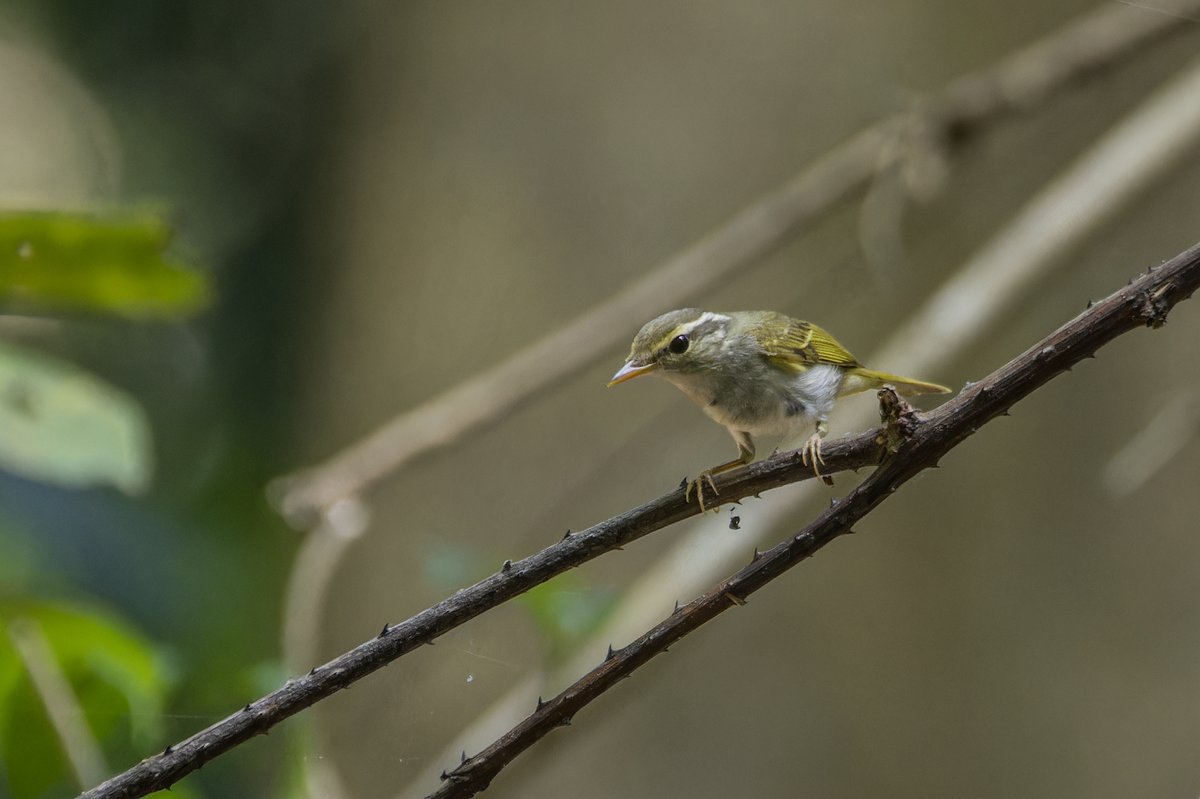
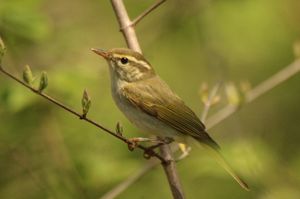
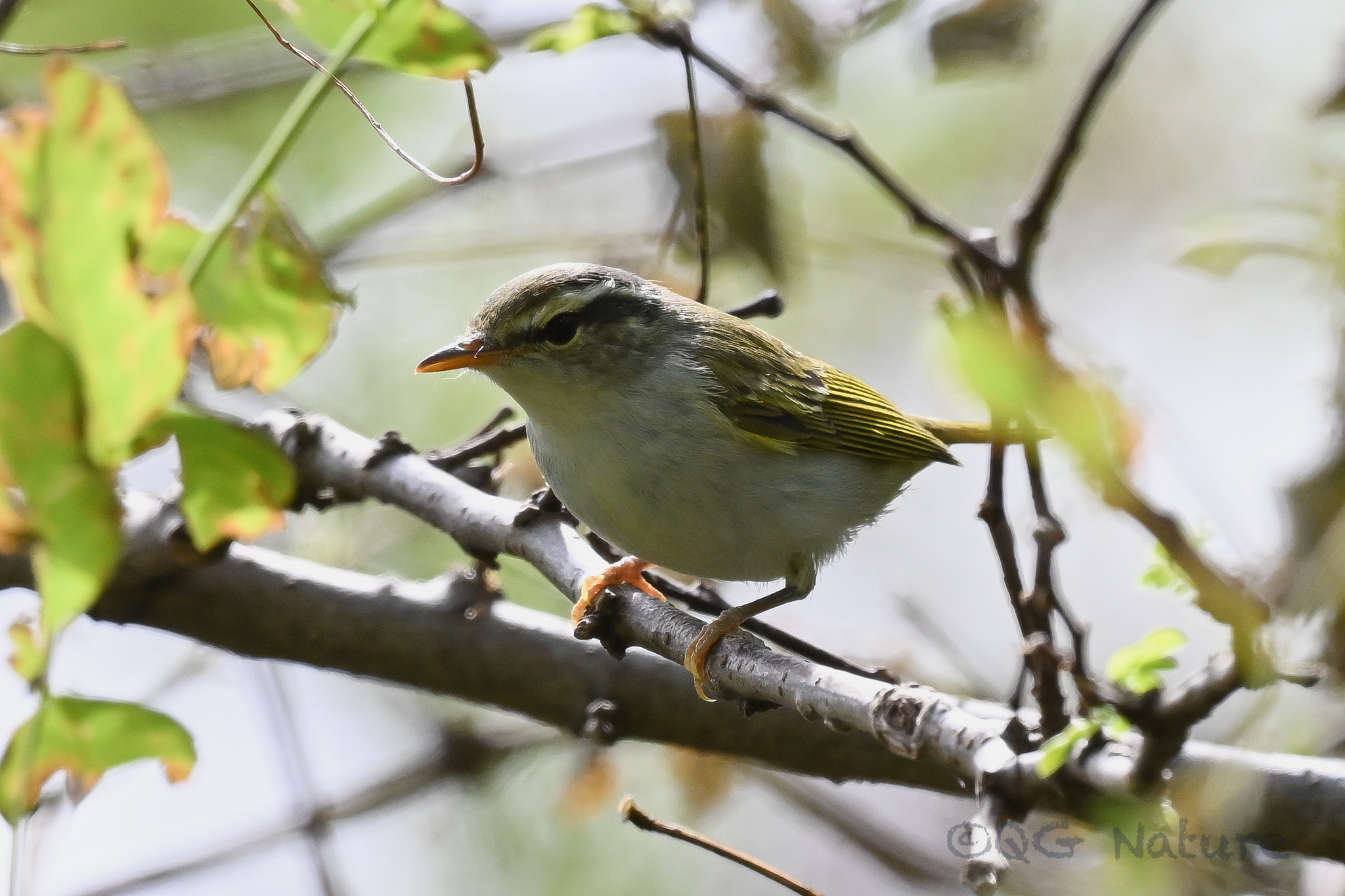
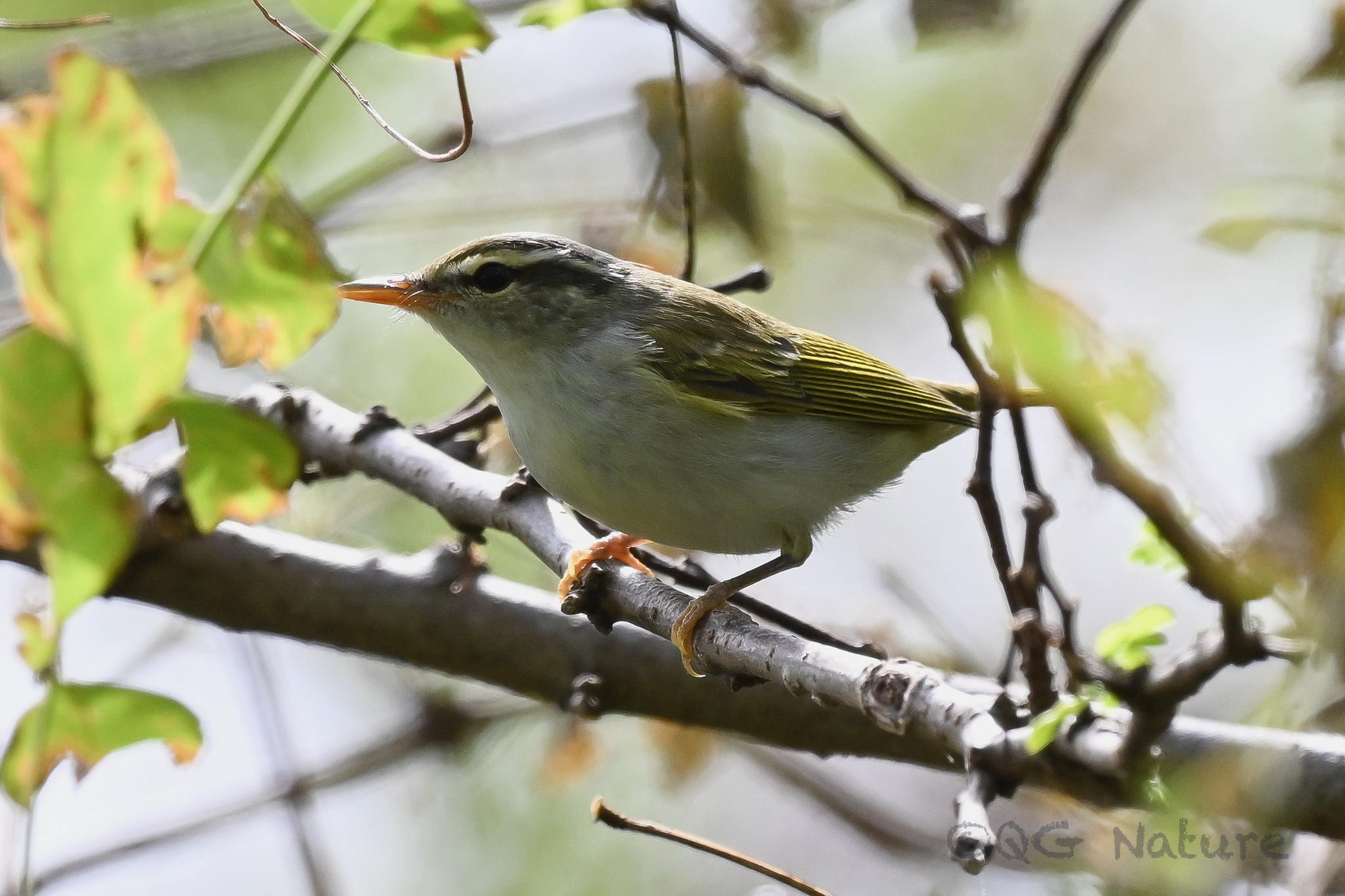
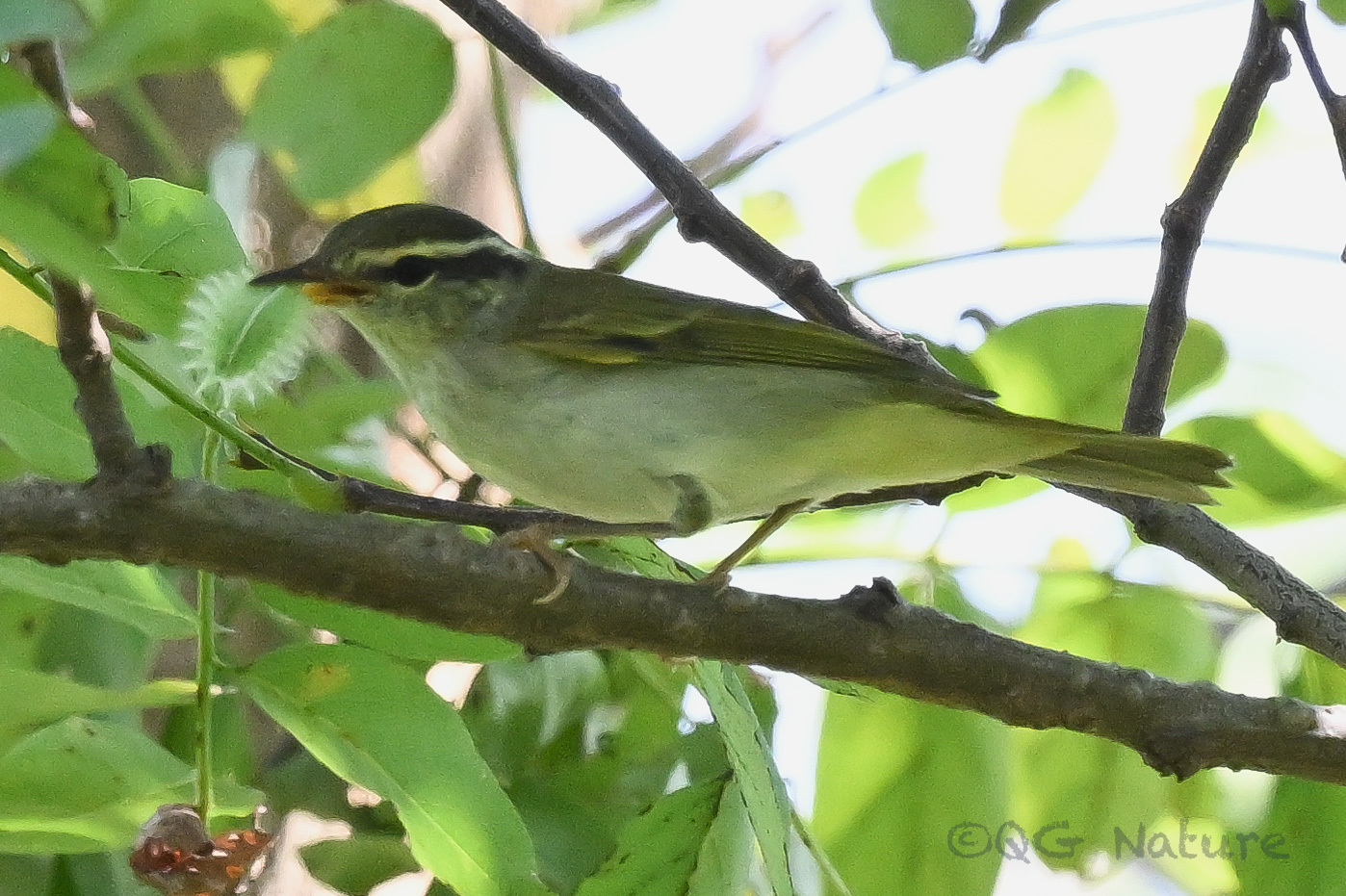
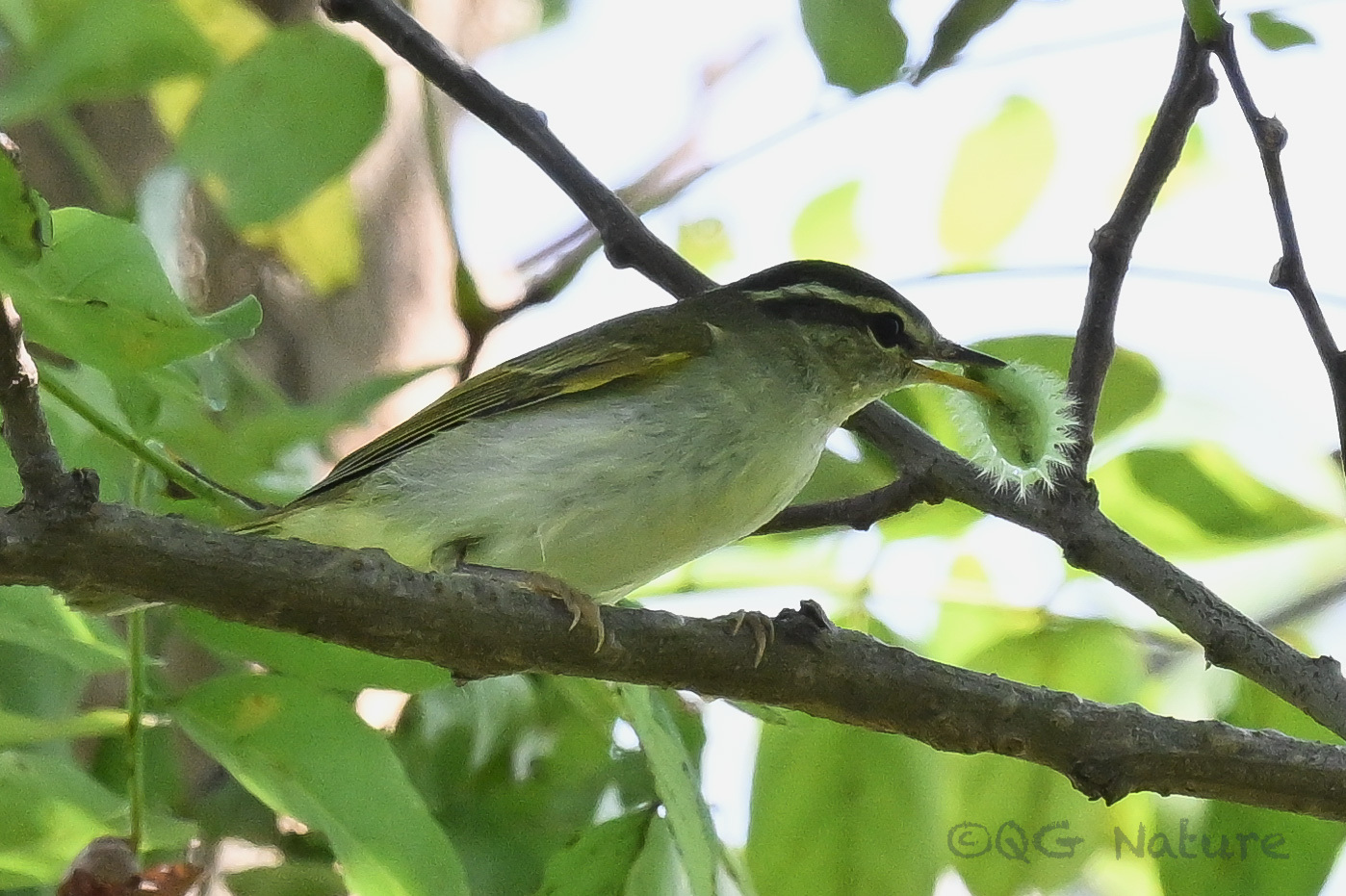
This is a medium-sized, robust leaf warbler with a notably bright and contrasting plumage pattern. The upperparts are dark olive-green, while the underparts are white. The most striking feature is the elaborate head pattern: dark grey lateral crown stripes border an indistinct yellowish median crown stripe. A long yellowish-white supercilium extends past the eye, which is crossed by a dark eye stripe. The lores are dark and the cheeks are dusky yellow. A single pale wingbar is visible on the darker wings. The square tail shows only a slight fork. The bill is relatively large, robust and pale-coloured, contrasting with the dark legs.
Identification
The eastern crowned warbler can be identified by its distinctive head pattern with the combination of grey lateral crown stripes and yellowish median stripe, together with the long yellowish supercilium and dark eye stripe. The single wingbar helps distinguish it from some similar leaf warbler species. The relatively robust build and large pale bill are also characteristic features. In the field, it appears darker and more contrastingly marked than several related species.
Distribution & Habitat
This species breeds across eastern Siberia from the Argun River eastwards and southwards through western Manchuria into central Sichuan, the Korean Peninsula and Japan. Its wintering grounds lie in Southeast Asia, from eastern India and Bangladesh eastwards to Java. The species has occurred as a vagrant in western Europe, with the first British record in County Durham in 2009, representing the fifth record for the Western Palearctic region.
Behavior & Ecology
The eastern crowned warbler inhabits open woodland at low to middle mountain altitudes, preferring mixed or deciduous forest. In the northern parts of its range, it occurs in dense taiga. Wintering birds use a variety of habitats including open woodland, deep jungle and mangroves. It is primarily arboreal but will forage at lower levels in vegetation. Outside the breeding season, it readily joins mixed flocks of small insectivorous birds. The species is most easily located by its frequent singing, and it readily flycatches by sallying from a perch to catch insects in flight.
Conservation
As a widespread and apparently common species across its extensive range, the eastern crowned warbler is not currently considered to be at significant conservation concern.
Culture
The species holds some interest for listers and armchair twitchers in western Europe following its first occurrence in Britain in 2009, which was considered a significant birding event. The scientific name Phylloscopus derives from Ancient Greek, meaning 'leaf seeker', while coronatus is Latin for 'crowned', referring to the distinctive head markings.
Source: Wikipedia · CC BY-SA 3.0
Taxonomy
- Order
- Passeriformes
- Family
- Phylloscopidae
- Genus
- Phylloscopus
- eBird Code
- eacwar1
Distribution
breeds Siberia and northern China; winters in southeastern Asia and Greater Sundas
Vocalizations
Data Sources
Species description from Wikipedia, licensed under CC BY-SA 3.0.
Bird images and sounds sourced from GBIF, contributed by citizen scientists worldwide under Creative Commons licenses.
Taxonomy data from AviList 2025.